Works › The Book on the Sacrament of the Eucharist
Volume 38 · pp. 444–445
Index of Things, Saffron-Wheat
A marker with ≈ is an approximate page boundary, placed by measure of the text; the page photographs remain the authority. In the paired views, clicking a page marker brings that page into view.
CROCUS subtilis ad penetrandum, et flagrans ad odorandum, et virtutem habet ad splendorem pulchritudinis conferendum. I, 3, n. 4.
D.
DECRETISTAE arguuntur ignorantiae. III-III, 1, n. 2.
In DELICIIS paradisi sumitur corpus Christi. III-IV, 5.
DEI esse bonitas, natura dulcedo, proprium misereri et parcere. I, 2, n. 2.
In DEO oportet affirmare omnium positiones, et omnes potentius negare. VI-II, 1, n. 12.
Solus Deus potest peccata dimittere. VI-I, 1, n. 1.
DEUS in homine et homo in Deo per Eucharistiam. IV, 6.
DILECTIO sincera et pulchra. III-I, 8, n. 4.
DONUM debet esse utile accipienti, proportionatum, et permanens. II-III, 1, n. 1.
DULCEDO qua Deus pauperi paravit Eucharistiam. I, 2, n. 5.
E.
ENGADDUM, fons haedi. II-II, 4, n. 1.
EUCHARISTIA non est nisi gratia. I, 1.
EUCHARISTIA non datur nobis nisi a gratissimo. I, 2.
EUCHARISTIA magnum pietatis sacramentum. I, 2, n. 4.
Nihil dulcius EUCHARISTIA. I, 2, n. 5.
EUCHARISTIA fructus suavissimus. I, 2, n. 6.
EUCHARISTIA placationis sacrificium. I, 2, n. 8.
EUCHARISTIA gratissimis praeparatur. I, 3.
EUCHARISTIA crocus. I, 3, n. 4.
EUCHARISTIA non nisi gratiam operatur. I, 4.
EUCHARISTIA cumulum continet gratiarum. I, 5.
EUCHARISTIA simul complectitur quod omnia sacramenta significant et continent divisim et particulariter. I, 6, n. 1.
EUCHARISTIA donum Dei electum. II-II, 1.
EUCHARISTIA munus sufficientissimum. II-II, 2.
EUCHARISTIA omnem in se habens utilitatem. II-II, 3.
EUCHARISTIA memoriale dulcissimae charitatis, amarissimae passionis, et transitus Christi ex hoc mundo ad Patrem. II-II, 4.
EUCHARISTIA habet unum effectum substantialem, et plures adjunctos. II-III, 1, n. 2.
EUCHARISTIA naturalem nostri ad Christum perficit unionem. Ibid.
EUCHARISTIA dat unicuique a se consideratam gratiam et delectationem. II-III, 2. Item, III-I, 1, n. 9.
EUCHARISTIA cibus regius, quia regibus praeparatus, quia filiis regis debitus, quia ex promptuariis summi regis assumptus. III-I, 1.
EUCHARISTIA multiplicem habet saporem. III-I, 2.
EUCHARISTIA cibus potentia Patris praeparatus, sapientia Filii inventus, bonitate Spiritus sancti conditus, ex abundantia totius Trinitatis administratus. III-I, 3.
SAFFRON is subtle for penetrating and fragrant for smelling, and it has power for conferring the splendor of beauty. I, 3, n. 4.
D.
DECRETISTS are accused of ignorance. III-III, 1, n. 2.
In the DELIGHTS of paradise the body of Christ is received. III-IV, 5.
The being of GOD is goodness, his nature sweetness, his property to have mercy and to spare. I, 2, n. 2.
In GOD one must affirm the positions of all things and deny all things more powerfully. VI-II, 1, n. 12.
God alone can remit sins. VI-I, 1, n. 1.
GOD in man and man in God through the Eucharist. IV, 6.
Sincere and beautiful LOVE. III-I, 8, n. 4.
A GIFT ought to be useful to the receiver, proportioned, and permanent. II-III, 1, n. 1.
The SWEETNESS by which God prepared the Eucharist for the poor man. I, 2, n. 5.
E.
ENGADDUM, fountain of the kid. II-II, 4, n. 1.
The EUCHARIST is nothing except grace. I, 1.
The EUCHARIST is not given to us except by the most gracious one. I, 2.
The EUCHARIST, the great sacrament of piety. I, 2, n. 4.
Nothing sweeter than the EUCHARIST. I, 2, n. 5.
The EUCHARIST, the sweetest fruit. I, 2, n. 6.
The EUCHARIST, sacrifice of placation. I, 2, n. 8.
The EUCHARIST is prepared for the most gracious. I, 3.
The EUCHARIST, saffron. I, 3, n. 4.
The EUCHARIST works nothing except grace. I, 4.
The EUCHARIST contains a heap of graces. I, 5.
The EUCHARIST at once embraces what all the sacraments signify and contain separately and particularly. I, 6, n. 1.
The EUCHARIST, the chosen gift of God. II-II, 1.
The EUCHARIST, the most sufficient present. II-II, 2.
The EUCHARIST having every usefulness in itself. II-II, 3.
The EUCHARIST, memorial of sweetest charity, bitterest passion, and Christ's passage from this world to the Father. II-II, 4.
The EUCHARIST has one substantial effect and several adjunct effects. II-III, 1, n. 2.
The EUCHARIST perfects our natural union to Christ. In the same place.
The EUCHARIST gives to each one grace and delight considered from itself. II-III, 2. Likewise, III-I, 1, n. 9.
The EUCHARIST, royal food, because prepared for kings, because due to the sons of the king, because taken from the storehouses of the highest king. III-I, 1.
The EUCHARIST has manifold savor. III-I, 2.
The EUCHARIST, food prepared by the power of the Father, found by the wisdom of the Son, seasoned by the goodness of the Holy Spirit, administered from the abundance of the whole Trinity. III-I, 3.
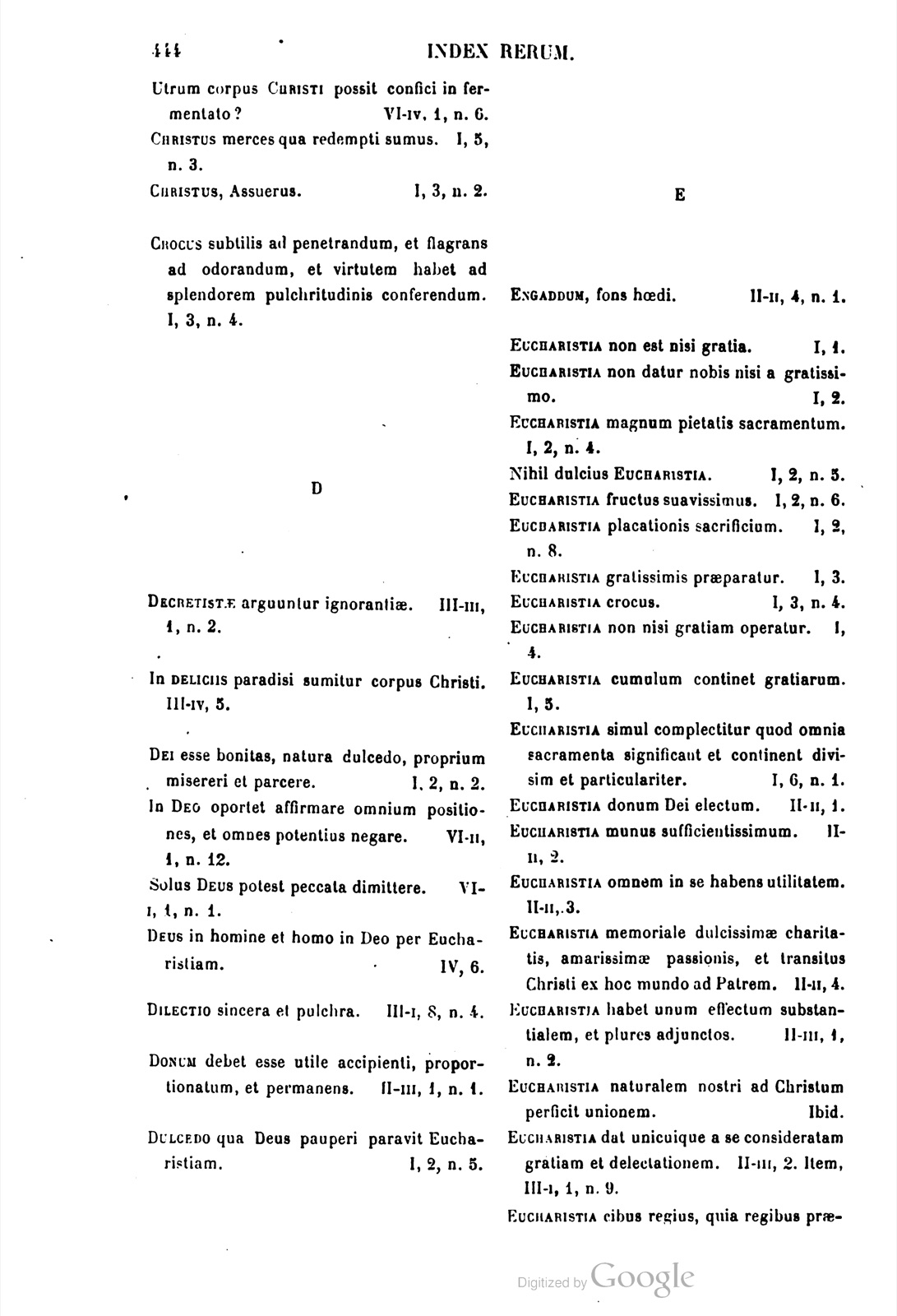
EUCHARISTIA cur dicitur coena? III-I, 3, n. 4.
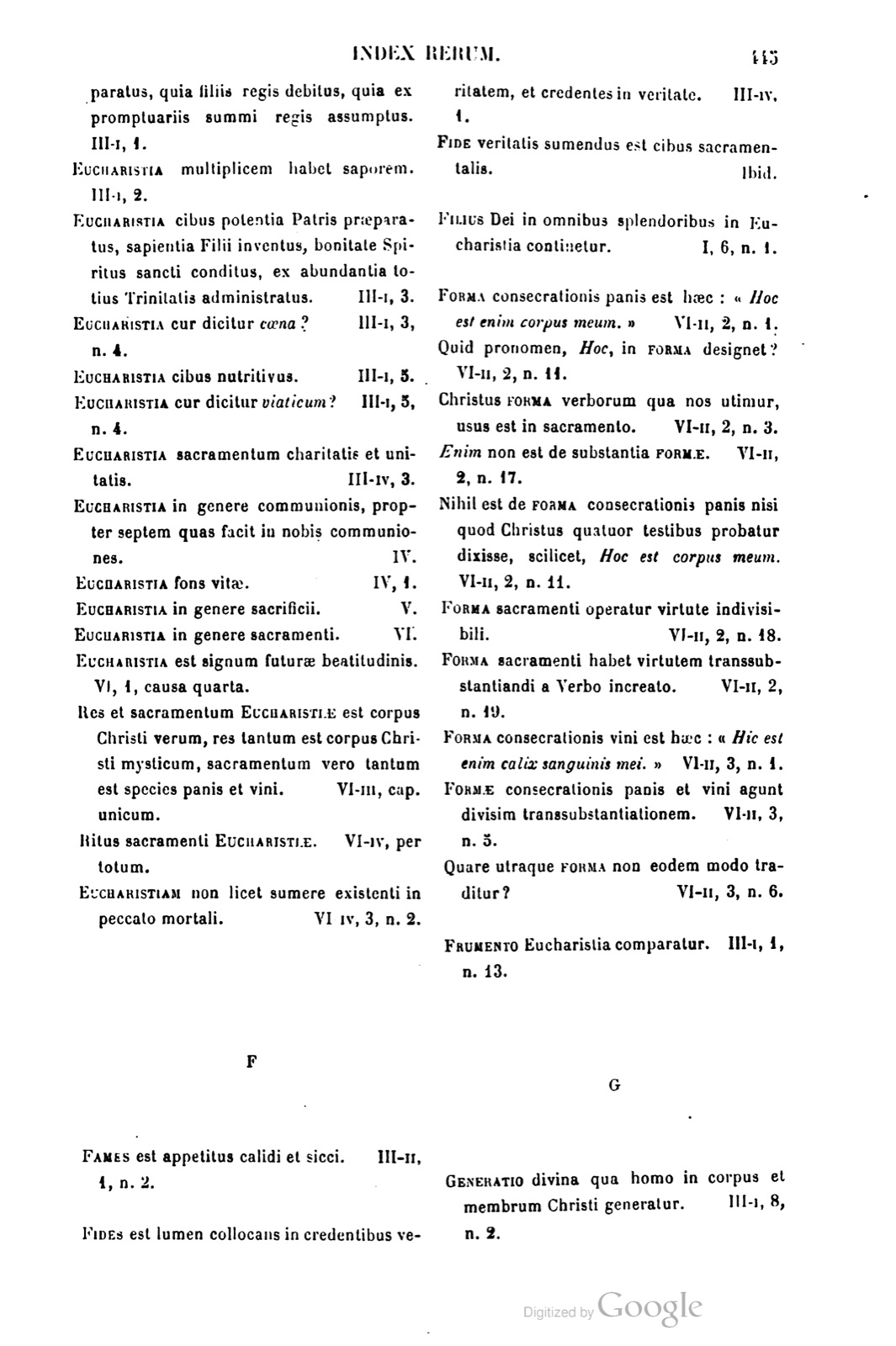
EUCHARISTIA cibus nutritivus. III-I, 5.
EUCHARISTIA cur dicitur viaticum? III-I, 5, n. 4.
EUCHARISTIA sacramentum charitatis et unitatis. III-IV, 3.
EUCHARISTIA in genere communionis, propter septem quas facit in nobis communiones. IV.
EUCHARISTIA fons vitae. IV, 1.
EUCHARISTIA in genere sacrificii. V.
EUCHARISTIA in genere sacramenti. VI.
EUCHARISTIA est signum futurae beatitudinis. VI, 1, causa quarta.
Res et sacramentum EUCHARISTIAE est corpus Christi verum, res tantum est corpus Christi mysticum, sacramentum vero tantum est species panis et vini. VI-III, cap. unicum.
Ritus sacramenti EUCHARISTIAE. VI-IV, per totum.
EUCHARISTIAM non licet sumere existenti in peccato mortali. VI-IV, 3, n. 2.
F.
FAMES est appetitus calidi et sicci. III-II, 1, n. 2.
FIDES est lumen collocans in credentibus veritatem, et credentes in veritate. III-IV, 1.
FIDE veritatis sumendus est cibus sacramentalis. Ibid.
FILIUS Dei in omnibus splendoribus in Eucharistia continetur. I, 6, n. 1.
FORMA consecrationis panis est haec: « Hoc est enim corpus meum. » VI-II, 2, n. 1.
Quid pronomen, Hoc, in FORMA designet? VI-II, 2, n. 11.
Christus FORMA verborum qua nos utimur, usus est in sacramento. VI-II, 2, n. 3.
Enim non est de substantia FORMAE. VI-II, 2, n. 17.
Nihil est de FORMA consecrationis panis nisi quod Christus quatuor testibus probatur dixisse, scilicet, Hoc est corpus meum. VI-II, 2, n. 11.
FORMA sacramenti operatur virtute indivisibili. VI-II, 2, n. 18.
FORMA sacramenti habet virtutem transsubstantiandi a Verbo increato. VI-II, 2, n. 19.
FORMA consecrationis vini est haec: « Hic est enim calix sanguinis mei. » VI-II, 3, n. 1.
FORMAE consecrationis panis et vini agunt divisim transsubstantiationem. VI-II, 3, n. 5.
Quare utraque FORMA non eodem modo traditur? VI-II, 3, n. 6.
FRUMENTO Eucharistia comparatur. III-I, 1, n. 13.
Why is the EUCHARIST called supper? III-I, 3, n. 4.
The EUCHARIST, nourishing food. III-I, 5.
Why is the EUCHARIST called viaticum? III-I, 5, n. 4.
The EUCHARIST, sacrament of charity and unity. III-IV, 3.
The EUCHARIST in the genus of communion, because of the seven communions which it makes in us. IV.
The EUCHARIST, fountain of life. IV, 1.
The EUCHARIST in the genus of sacrifice. V.
The EUCHARIST in the genus of sacrament. VI.
The EUCHARIST is the sign of future beatitude. VI, 1, fourth cause.
The thing and sacrament of the EUCHARIST is the true body of Christ; the thing only is the mystical body of Christ; but the sacrament only is the species of bread and wine. VI-III, single chapter.
The rite of the sacrament of the EUCHARIST. VI-IV, throughout.
It is not permitted to receive the EUCHARIST while existing in mortal sin. VI-IV, 3, n. 2.
F.
HUNGER is the appetite of the hot and dry. III-II, 1, n. 2.
FAITH is the light placing truth in believers and believers in truth. III-IV, 1.
The sacramental food is to be received in FAITH of truth. In the same place.
The SON of God is contained in the Eucharist in all splendors. I, 6, n. 1.
The FORM of the consecration of bread is this: "For this is my body." VI-II, 2, n. 1.
What does the pronoun This designate in the FORM? VI-II, 2, n. 11.
Christ used in the sacrament the FORM of words which we use. VI-II, 2, n. 3.
For is not of the substance of the FORM. VI-II, 2, n. 17.
Nothing belongs to the FORM of the consecration of bread except what Christ is proven by four witnesses to have said, namely, This is my body. VI-II, 2, n. 11.
The FORM of the sacrament works by indivisible power. VI-II, 2, n. 18.
The FORM of the sacrament has the power of transubstantiating from the uncreated Word. VI-II, 2, n. 19.
The FORM of consecration of wine is this: "For this is the chalice of my blood." VI-II, 3, n. 1.
The FORMS of consecration of bread and wine act separately for transubstantiation. VI-II, 3, n. 5.
Why is each FORM not handed down in the same way? VI-II, 3, n. 6.
The Eucharist is compared to WHEAT. III-I, 1, n. 13.
If a page does not appear, its photograph has not been uploaded yet.