Works › The Book on the Sacrifice of the Mass
Volume 38 · pp. 174–176
Index of Notable Things, D-H
A marker with ≈ is an approximate page boundary, placed by measure of the text; the page photographs remain the authority. In the paired views, clicking a page marker brings that page into view.
D
DAEMONES incensores malarum cogitationum et concupiscentiarum, non immissores. I, 1, n. 4.
DAEMONES non torquent animas in purgatorio. III, 16, n. 1.
DAMNATORUM poena an possit fieri tolerabilior vel tolli per suffragia? III, 16, n. 4.
DAMNATI non sunt susceptibiles gratiae. Ibidem.
Supplicatio pro DEFUNCTIS. III, 16.
DEFUNCTORUM quatuor ordines. III, 16, n. 3.
DEPRECATIO est oratio pro amovendis malis. I, 3, n. 19.
DEI est benedicere, et nostrum est invocare Deum ut benedicat. III, 6, n. 5.
DEO non possumus offerre nisi dona ejus. Ibidem.
DEUS pater clementissimus. III, 6, n. 3.
DEUS est nomen gubernationis. I, 3, n. 12.
DEUS unde dicatur? Ibid.
DEUS rex Angelorum et hominum. I, 3, n. 13.
DEUS omnipotens. I, 3, n. 14. Item, II, 9, n. 1.
Voluntas DEI duplex, scilicet beneplaciti et signi. Quae signa sunt praeceptio, consilium, prohibitio, operatio, permissio. III, 20, n. 6.
DEUM lucis et Deum tenebrarum posuit Manes. II, 10, n. 3.
DEI majestas laudanda in sacramento Eucharistiae. III, 4, n. 14.
DEUS multipliciter dicitur. III, 7, n. 5.
DIABOLI insidiae. I, 1, n. 4.
DIACONUS Evangelium lecturus quare librum accipit de altari? II, 7, n. 1.
Quare benedictionem postulat a sacerdote, et procedit cum candelis et cruce? II, 7, n. 2.
Quare vertitur ad Aquilonem, et signat cruce frontem, os et pectus? II, 7, n. 7.
Quare lecto Evangelio dat librum subdiacono portandum? II, 7, n. 9.
DOMINI absque Domino diabolus et quilibet impius. I, 1, n. 4.
DOMINUS est nomen superpositionis, et ideo ponitur in genere relativorum. I, 2, n. 3. Item, III, 3, n. 1.
Verus DOMINUS est dominationis incessanter appetitivus. Ibid.
DOMINUS est nomen potestatis. I, 2, n. 6.
DOMINUS est nomen auctoritatis. I, 3, n. 12.
DOMINUS vobiscum cur vultu ad populum converso dicitur a sacerdote? II, 2, n. 2.
Quare dicitur, DOMINUS, non Deus, vel Jesus, vel Christus vobiscum? Ibid.
Quare non dicitur: Vos sitis cum DOMINO, sed Dominus vobiscum. II, 1, n. 3.
Quinque modis optatur DOMINUS esse nobiscum. II, 1, n. 4.
Quare populus non respondet: DOMINUS sit tecum, sed dicit: Et cum spiritu tuo. II, 1, n. 5. Item, III, 1, n. 1. Item, III, 2, n. 1.
DOMINUS vobiscum quare dicitur ante Offertorium? III, 1, n. 1.
D
DEMONS are burners of evil thoughts and concupiscences, not implanters. I, 1, n. 4.
DEMONS do not torment souls in purgatory. III, 16, n. 1.
Whether the punishment of the DAMNED can be made more tolerable or taken away through suffrages? III, 16, n. 4.
The DAMNED are not receptive of grace. In the same place.
Supplication for the DEPARTED. III, 16.
The four orders of the DEPARTED. III, 16, n. 3.
DEPRECATION is prayer for evils to be removed. I, 3, n. 19.
It belongs to GOD to bless, and it belongs to us to invoke God that he may bless. III, 6, n. 5.
We cannot offer to GOD except his gifts. In the same place.
GOD, the most clement Father. III, 6, n. 3.
GOD is a name of governance. I, 3, n. 12.
Whence is GOD so called? Ibid.
GOD, king of Angels and human beings. I, 3, n. 13.
GOD almighty. I, 3, n. 14. Likewise, II, 9, n. 1.
The will of GOD is twofold, namely of good pleasure and of sign. These signs are command, counsel, prohibition, operation, permission. III, 20, n. 6.
Manes posited a GOD of light and a God of darkness. II, 10, n. 3.
The majesty of GOD is to be praised in the sacrament of the Eucharist. III, 4, n. 14.
GOD is said in multiple ways. III, 7, n. 5.
The snares of the DEVIL. I, 1, n. 4.
Why does the DEACON, when about to read the Gospel, receive the book from the altar? II, 7, n. 1.
Why does he ask blessing from the priest, and proceed with candles and cross? II, 7, n. 2.
Why is he turned to the North, and why does he sign his forehead, mouth, and breast with the cross? II, 7, n. 7.
Why, when the Gospel has been read, does he give the book to the subdeacon to be carried? II, 7, n. 9.
The devil and every impious one are LORDS without the Lord. I, 1, n. 4.
LORD is a name of superposition, and therefore it is placed in the genus of relatives. I, 2, n. 3. Likewise, III, 3, n. 1.
The true LORD has an unceasing appetite for domination. Ibid.
LORD is a name of power. I, 2, n. 6.
LORD is a name of authority. I, 3, n. 12.
Why is The Lord be with you said by the priest with his face turned to the people? II, 2, n. 2.
Why is it said, The LORD, not God, or Jesus, or Christ, be with you? Ibid.
Why is it not said, May you be with the LORD, but The Lord be with you? II, 1, n. 3.
In five ways the LORD is wished to be with us. II, 1, n. 4.
Why does the people not answer, The LORD be with you, but says, And with your spirit? II, 1, n. 5. Likewise, III, 1, n. 1. Likewise, III, 2, n. 1.
Why is The LORD be with you said before the Offertory? III, 1, n. 1.
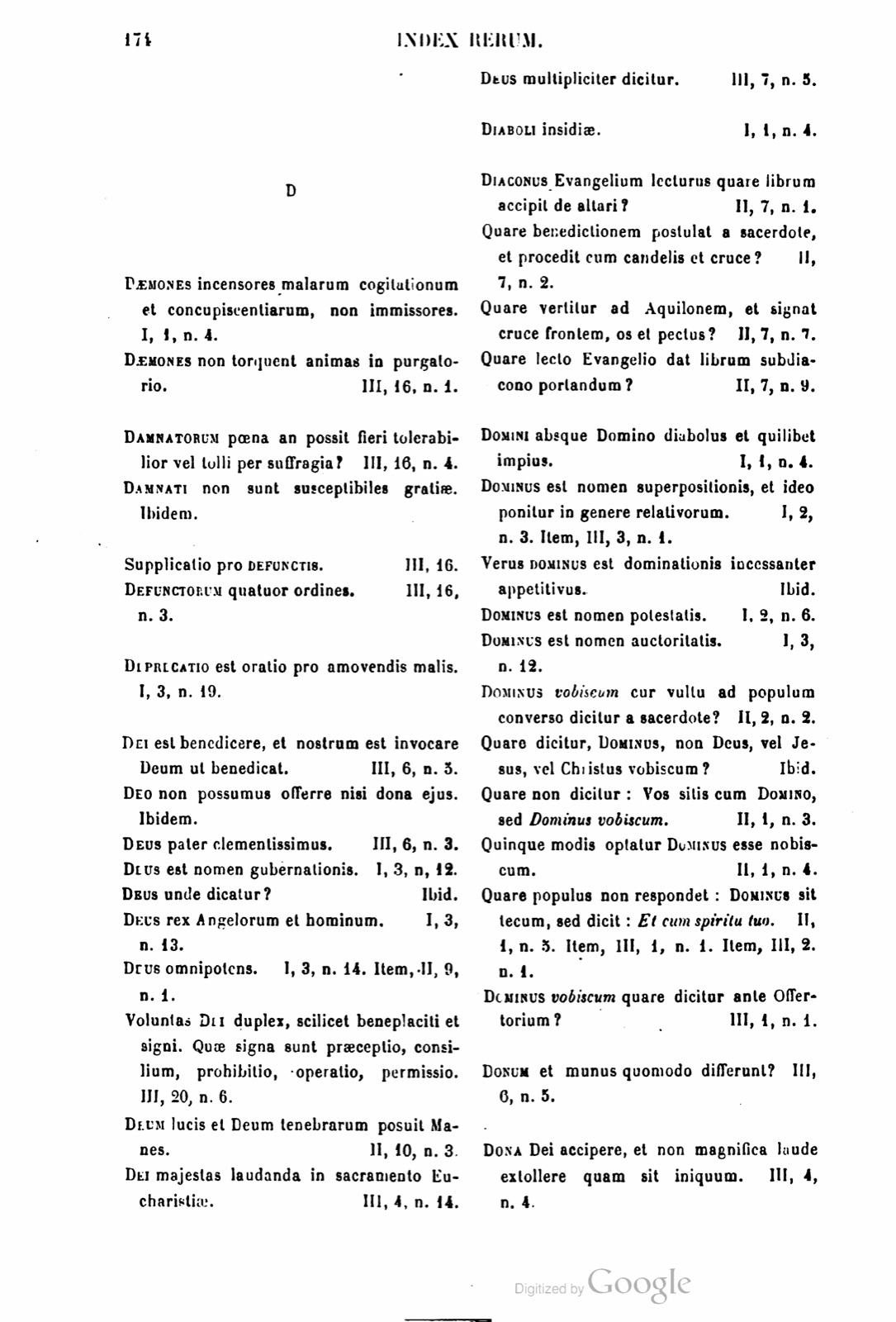
DONUM et munus quomodo differunt? III, 6, n. 5.
DONA Dei accipere, et non magnifica laude extollere quam sit iniquum. III, 4, n. 4.
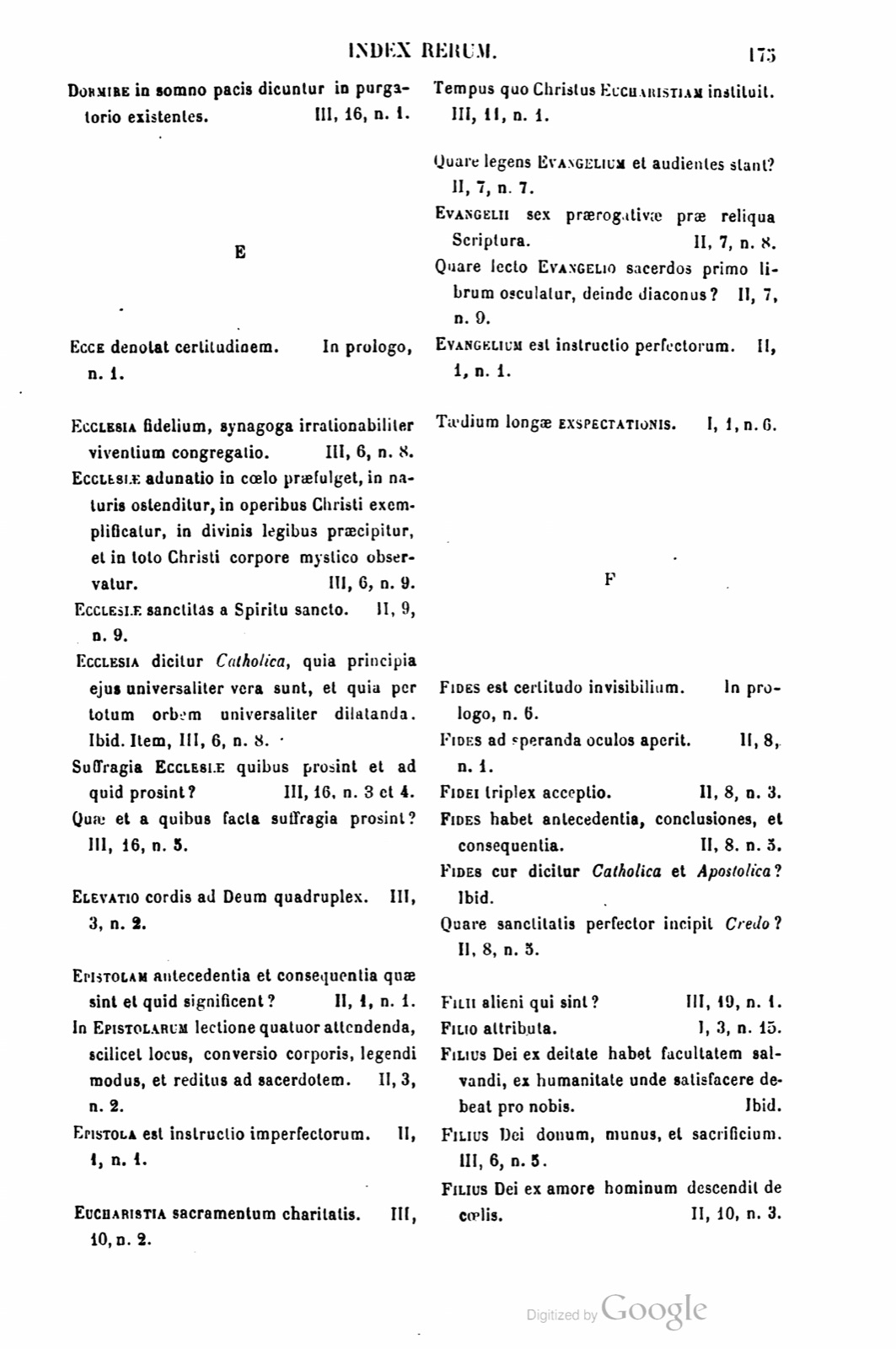
DORMIRE in somno pacis dicuntur in purgatorio existentes. III, 16, n. 1.
E
ECCE denotat certitudinem. In prologo, n. 1.
ECCLESIA fidelium, synagoga irrationabiliter viventium congregatio. III, 6, n. 8.
ECCLESIAE adunatio in caelo praefulget, in naturis ostenditur, in operibus Christi exemplificatur, in divinis legibus praecipitur, et in toto Christi corpore mystico observatur. III, 6, n. 9.
ECCLESIAE sanctitas a Spiritu sancto. II, 9, n. 9.
ECCLESIA dicitur Catholica, quia principia ejus universaliter vera sunt, et quia per totum orbem universaliter dilatanda. Ibid. Item, III, 6, n. 8.
Suffragia ECCLESIAE quibus prosint et ad quid prosint? III, 16, n. 3 et 4.
Quae et a quibus facta suffragia prosint? III, 16, n. 5.
ELEVATIO cordis ad Deum quadruplex. III, 3, n. 2.
EPISTOLAM antecedentia et consequentia quae sint et quid significent? II, 1, n. 1.
In EPISTOLARUM lectione quatuor attendenda, scilicet locus, conversio corporis, legendi modus, et reditus ad sacerdotem. II, 3, n. 2.
EPISTOLA est instructio imperfectorum. II, 1, n. 1.
EUCHARISTIA sacramentum charitatis. III, 10, n. 2.
Tempus quo Christus EUCHARISTIAM instituit. III, 11, n. 1.
Quare legens EVANGELIUM et audientes stant? II, 7, n. 7.
EVANGELII sex praerogativae prae reliqua Scriptura. II, 7, n. 8.
Quare lecto EVANGELIO sacerdos primo librum osculatur, deinde diaconus? II, 7, n. 9.
EVANGELIUM est instructio perfectorum. II, 1, n. 1.
Taedium longe EXSPECTATIONIS. I, 1, n. 6.
F
FIDES est certitudo invisibilium. In prologo, n. 6.
FIDES ad speranda oculos aperit. II, 8, n. 1.
FIDEI triplex acceptio. II, 8, n. 3.
FIDES habet antecedentia, conclusiones, et consequentia. II, 8, n. 5.
FIDES cur dicitur Catholica et Apostolica? Ibid.
Quare sanctitatis perfector incipit Credo? II, 8, n. 5.
FILII alieni qui sint? III, 19, n. 1.
FILIO attributa. I, 3, n. 15.
FILIUS Dei ex deitate habet facultatem salvandi, ex humanitate unde satisfacere debeat pro nobis. Ibid.
FILIUS Dei donum, munus, et sacrificium. III, 6, n. 5.
FILIUS Dei ex amore hominum descendit de coelis. II, 10, n. 3.
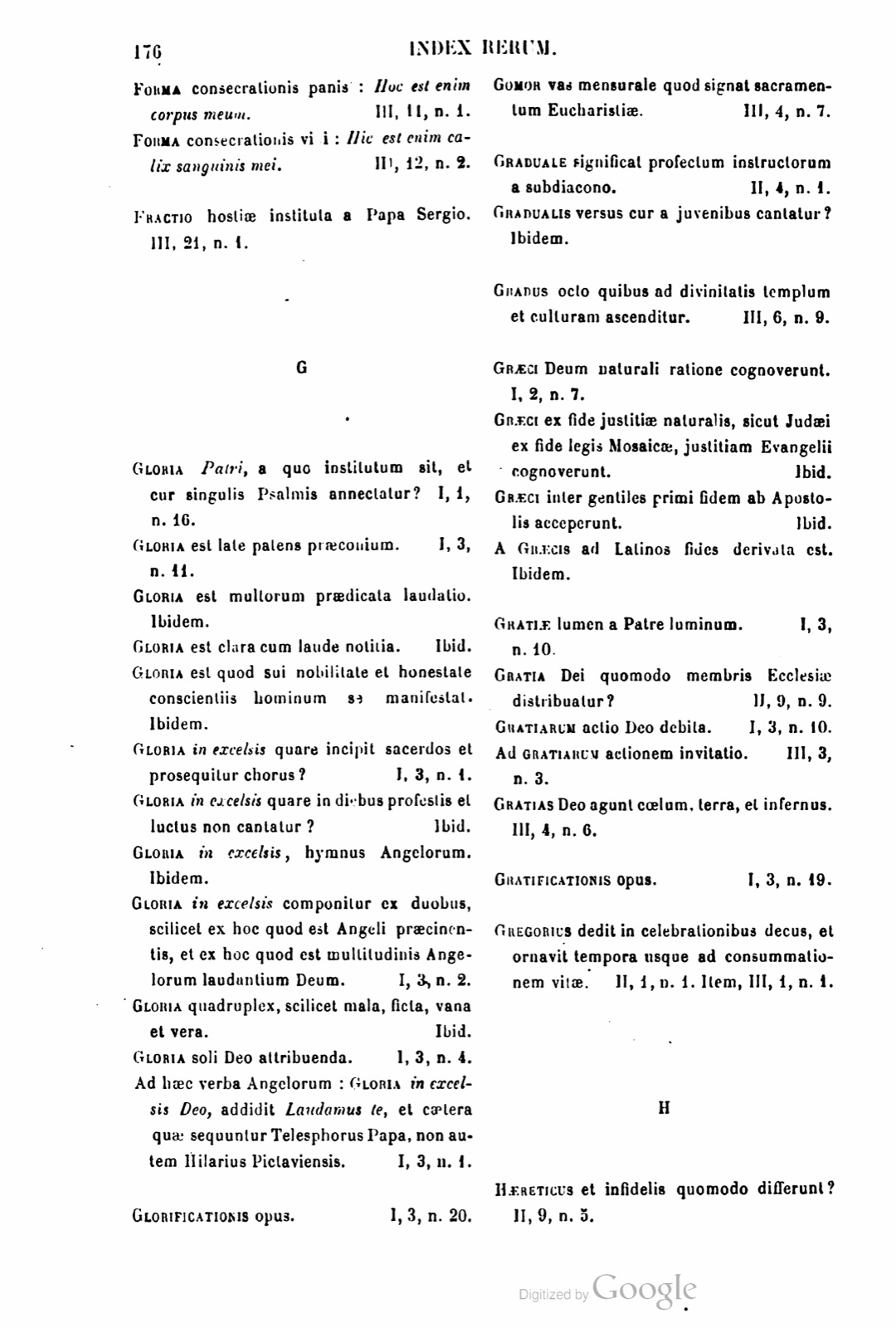
FORMA consecrationis panis: Hoc est enim corpus meum. III, 11, n. 1.
How do GIFT and present differ? III, 6, n. 5.
How unjust it is to receive the GIFTS of God and not to extol them with magnificent praise. III, 4, n. 4.
Those existing in purgatory are said TO SLEEP in the sleep of peace. III, 16, n. 1.
E
BEHOLD denotes certainty. In the prologue, n. 1.
The CHURCH is the congregation of the faithful; a synagogue is a congregation of those living irrationally. III, 6, n. 8.
The uniting of the CHURCH shines forth in heaven, is shown in natures, is exemplified in the works of Christ, is enjoined in the divine laws, and is observed in the whole mystical body of Christ. III, 6, n. 9.
The sanctity of the CHURCH is from the Holy Spirit. II, 9, n. 9.
The CHURCH is called Catholic because her principles are universally true, and because she is to be universally spread through the whole world. Ibid. Likewise, III, 6, n. 8.
To whom do the suffrages of the CHURCH profit, and for what do they profit? III, 16, n. 3 and 4.
Which suffrages profit, and by whom made? III, 16, n. 5.
The fourfold LIFTING of the heart to God. III, 3, n. 2.
What are the antecedents and consequents of the EPISTLE, and what do they signify? II, 1, n. 1.
In the reading of the EPISTLES four things must be attended to, namely the place, the turning of the body, the mode of reading, and the return to the priest. II, 3, n. 2.
The EPISTLE is the instruction of the imperfect. II, 1, n. 1.
The EUCHARIST is the sacrament of charity. III, 10, n. 2.
The time when Christ instituted the EUCHARIST. III, 11, n. 1.
Why do the one reading the GOSPEL and those hearing stand? II, 7, n. 7.
The six prerogatives of the GOSPEL before the rest of Scripture. II, 7, n. 8.
Why, when the GOSPEL has been read, does the priest first kiss the book, and then the deacon? II, 7, n. 9.
The GOSPEL is the instruction of the perfect. II, 1, n. 1.
The weariness of long EXPECTATION. I, 1, n. 6.
F
FAITH is certainty concerning invisible things. In the prologue, n. 6.
FAITH opens the eyes to things to be hoped for. II, 8, n. 1.
The threefold acceptation of FAITH. II, 8, n. 3.
FAITH has antecedents, conclusions, and consequents. II, 8, n. 5.
Why is FAITH called Catholic and Apostolic? Ibid.
Why does the perfecter of sanctity begin Credo? II, 8, n. 5.
Who are the alien SONS? III, 19, n. 1.
Things attributed to the SON. I, 3, n. 15.
The SON of God has from deity the capacity of saving, and from humanity that whence he ought to make satisfaction for us. Ibid.
The SON of God is gift, present, and sacrifice. III, 6, n. 5.
The SON of God descended from the heavens out of love of human beings. II, 10, n. 3.
The FORM of the consecration of bread: For this is my body. III, 11, n. 1.
FORMA consecrationis vini: Hic est enim calix sanguinis mei. III, 12, n. 2.
FRACTIO hostiae instituta a Papa Sergio. III, 21, n. 1.
G
GLORIA Patri, a quo institutum sit, et cur singulis Psalmis annectatur? I, 1, n. 16.
GLORIA est late patens praeconium. I, 3, n. 11.
GLORIA est multorum praedicata laudatio. Ibidem.
GLORIA est clara cum laude notitia. Ibid.
GLORIA est quod sui nobilitate et honestate conscientiis hominum se manifestat. Ibidem.
GLORIA in excelsis quare incipit sacerdos et prosequitur chorus? I, 3, n. 1.
GLORIA in excelsis quare in diebus profestis et luctus non cantatur? Ibid.
GLORIA in excelsis, hymnus Angelorum. Ibidem.
GLORIA in excelsis componitur ex duobus, scilicet ex hoc quod est Angeli praecinentis, et ex hoc quod est multitudinis Angelorum laudantium Deum. I, 3, n. 2.
GLORIA quadruplex, scilicet mala, ficta, vana et vera. Ibid.
GLORIA Soli Deo attribuenda. I, 3, n. 4.
Ad haec verba Angelorum: GLORIA in excelsis Deo, addidit Laudamus te, et caetera quae sequuntur Telesphorus Papa, non autem Hilarius Pictaviensis. I, 3, n. 1.
GLORIFICATIONIS opus. I, 3, n. 20.
GOMOR vas mensurale quod signat sacramentum Eucharistiae. III, 4, n. 7.
GRADUALE significat profectum instructorum a subdiacono. II, 4, n. 1.
GRADUALIS versus cur a juvenibus cantatur? Ibidem.
GRADUS octo quibus ad divinitatis templum et culturam ascenditur. III, 6, n. 9.
GRAECI Deum naturali ratione cognoverunt. I, 2, n. 7.
GRAECI ex fide justitiae naturalis, sicut Judaei ex fide legis Mosaicae, justitiam Evangelii cognoverunt. Ibid.
GRAECI inter gentiles primi fidem ab Apostolis acceperunt. Ibid.
A GRAECIS ad Latinos fides derivata est. Ibidem.
GRATIAE lumen a Patre luminum. I, 3, n. 10.
GRATIA Dei quomodo membris Ecclesiae distribuatur? II, 9, n. 9.
GRATIARUM actio Deo debita. I, 3, n. 10.
Ad GRATIARUM actionem invitatio. III, 3, n. 3.
GRATIAS Deo agunt caelum, terra, et infernus. III, 4, n. 6.
GRATIFICATIONIS opus. I, 3, n. 19.
GREGORIUS dedit in celebrationibus decus, et ornavit tempora usque ad consummationem vitae. II, 1, n. 1. Item, III, 1, n. 1.
H
HAERETICUS et infidelis quomodo differunt? II, 9, n. 5.
The FORM of the consecration of wine: For this is the chalice of my blood. III, 12, n. 2.
The BREAKING of the host was instituted by Pope Sergius. III, 21, n. 1.
G
GLORY be to the Father: by whom was it instituted, and why is it appended to each Psalm? I, 1, n. 16.
GLORY is a widely open proclamation. I, 3, n. 11.
GLORY is the preached praise of many. In the same place.
GLORY is clear knowledge with praise. Ibid.
GLORY is that which by its nobility and honorableness manifests itself to the consciences of human beings. In the same place.
Why does the priest begin GLORY in the highest, and why does the choir continue it? I, 3, n. 1.
Why is GLORY in the highest not sung on days of ordinary office and mourning? Ibid.
GLORY in the highest, the hymn of the Angels. In the same place.
GLORY in the highest is composed of two things, namely of that which belongs to the Angel singing before, and of that which belongs to the multitude of Angels praising God. I, 3, n. 2.
Fourfold GLORY, namely evil, feigned, vain, and true. Ibid.
GLORY to be attributed to God alone. I, 3, n. 4.
To these words of the Angels, GLORY in the highest to God, Pope Telesphorus added We praise you, and the other things which follow, but not Hilary of Poitiers. I, 3, n. 1.
The work of GLORIFICATION. I, 3, n. 20.
GOMOR, the vessel of measure which signifies the sacrament of the Eucharist. III, 4, n. 7.
The GRADUAL signifies the progress of those instructed by the subdeacon. II, 4, n. 1.
Why is the GRADUAL verse sung by youths? In the same place.
The eight STEPS by which one ascends to the temple and worship of divinity. III, 6, n. 9.
The GREEKS knew God by natural reason. I, 2, n. 7.
The GREEKS, from faith in natural justice, just as the Jews from faith in the Mosaic law, knew the justice of the Gospel. Ibid.
The GREEKS among the gentiles first received the faith from the Apostles. Ibid.
From the GREEKS faith was derived to the Latins. In the same place.
The light of GRACE from the Father of lights. I, 3, n. 10.
How is the GRACE of God distributed to the members of the Church? II, 9, n. 9.
The action of THANKSGIVING owed to God. I, 3, n. 10.
Invitation to the action of THANKSGIVING. III, 3, n. 3.
Heaven, earth, and hell give THANKS to God. III, 4, n. 6.
The work of GRATIFICATION. I, 3, n. 19.
GREGORY gave adornment in celebrations, and adorned the times until the consummation of life. II, 1, n. 1. Likewise, III, 1, n. 1.
H
How do a HERETIC and an infidel differ? II, 9, n. 5.
If a page does not appear, its photograph has not been uploaded yet.