Works › The Book on the Sacrifice of the Mass
Volume 38 · pp. 177–180
Index of Notable Things, H-S
A marker with ≈ is an approximate page boundary, placed by measure of the text; the page photographs remain the authority. In the paired views, clicking a page marker brings that page into view.
HOMINIBUS bonae voluntatis pax congrua. I, 3, n. 5.
HONOR est exhibitio reverentiae in testimonium virtutis. III, 4, n. 14.
Quare HOSTIA frangitur in tres partes? III, 21, n. 1.
HOSTIA pura, sancta, immaculata Christus. III, 13, n. 14.
Supplicatio ut HOSTIA jussu Dei et ministerio Angelorum sublevetur, et in altare Dei perferatur. III, 15.
HOSTIS nostri instantia. I, 1, n. 4.
I
Vera IMMORTALITAS est vera aeternitas et immutabilitas. III, 7, n. 5.
INFIDELIS et haereticus quomodo differunt? II, 9, n. 5.
INGRATITUDO est ventus urens exsiccans fontem pietatis. I, 3, n. 10.
INSTRUCTIO imperfectorum Epistola, perfectorum vero Evangelium. II, 1, n. 1.
In Evangelica INSTRUCTIONE duo notanda, scilicet ritus, et doctrinae excellentia. II, 7, n. 1.
INTROITUS Missae quid significet? In prologo, n. 8.
In INTROITU Missae suspiria Patrum repraesentantur. I, 1, n. 2.
INTROITUS non tam ab introitu celebrationis Missae, quam ab introitu salutis et gratiae dicitur. Ibid.
INTROITUS dicebatur ab antiquis antiphona. Ibidem.
J
JESUS dicit Deum humanatum, Christus hominem deificatum. I, 3, n. 16.
JUVENCULAE tympanistriae quae sint? I, 1, n. 15.
K
KYRIE, eleyson, quare in Missa inducatur, et quid significet? I, 2, n. 1.
KYRIE, eleyson, cur novies dicatur? I, 2, n. 2.
KYRIE, eleyson, quare ter primo cantatur? I, 2, n. 3.
CHRISTE, eleyson, quare ter subjungitur? I, 2, n. 5.
KYRIE, eleyson, quare iterum ter in fine cantatur? I, 2, n. 6.
KYRIE, eleyson, quare potius Graece quam Latine dicitur? I, 2, n. 7.
L
Inter LATINOS et Graecos controversia de processione Spiritus sancti. II, 10, n. 8.
LAUDAMUS Deum pro virtutibus et gratiis, benedicimus pro bonis naturalibus. I, 3, n. 7.
Laus est proprium virtutis praeconium. Ibidem.
LEX divinitatis est per prima media, et per media ultima reducere. III, 6, n. 9.
M
MANICHAEORUM secta in tres divisa. II, 10, n. 1.
MANICHAEI figmentum de praelio inter Deum lucis et Deum tenebrarum. II, 10, n. 3.
Peace is fitting for HUMAN BEINGS of good will. I, 3, n. 5.
HONOR is the showing of reverence in testimony to virtue. III, 4, n. 14.
Why is the HOST broken into three parts? III, 21, n. 1.
The pure, holy, immaculate HOST is Christ. III, 13, n. 14.
Supplication that the HOST may be lifted up by the command of God and the ministry of the Angels, and carried through to the altar of God. III, 15.
The urgency of our ENEMY. I, 1, n. 4.
I
True IMMORTALITY is true eternity and immutability. III, 7, n. 5.
How do an INFIDEL and a heretic differ? II, 9, n. 5.
INGRATITUDE is a burning wind drying up the fountain of piety. I, 3, n. 10.
The INSTRUCTION of the imperfect is the Epistle, but of the perfect, the Gospel. II, 1, n. 1.
In Evangelical INSTRUCTION two things must be noted, namely the rite, and the excellence of the doctrine. II, 7, n. 1.
What does the INTROIT of the Mass signify? In the prologue, n. 8.
In the INTROIT of the Mass the sighs of the Fathers are represented. I, 1, n. 2.
INTROIT is so called not so much from the entrance of the celebration of the Mass, as from the entrance of salvation and grace. Ibid.
The INTROIT was called antiphon by the ancients. In the same place.
J
JESUS indicates God made human; Christ, a human being made divine. I, 3, n. 16.
What are the YOUNG WOMEN, the female timbrel-players? I, 1, n. 15.
K
KYRIE, eleyson, why is it introduced in the Mass, and what does it signify? I, 2, n. 1.
KYRIE, eleyson, why is it said nine times? I, 2, n. 2.
KYRIE, eleyson, why is it first sung three times? I, 2, n. 3.
CHRISTE, eleyson, why is it added three times? I, 2, n. 5.
KYRIE, eleyson, why is it again sung three times at the end? I, 2, n. 6.
KYRIE, eleyson, why is it said in Greek rather than in Latin? I, 2, n. 7.
L
Between the LATINS and the Greeks there is controversy concerning the procession of the Holy Spirit. II, 10, n. 8.
We PRAISE God for virtues and graces; we bless him for natural goods. I, 3, n. 7.
Praise is the proper proclamation of virtue. In the same place.
The LAW of divinity is to lead back through first things, middle things, and through middle things, last things. III, 6, n. 9.
M
The sect of the MANICHAEANS divided into three. II, 10, n. 1.
The fiction of the MANICHAEAN about the battle between the God of light and the God of darkness. II, 10, n. 3.
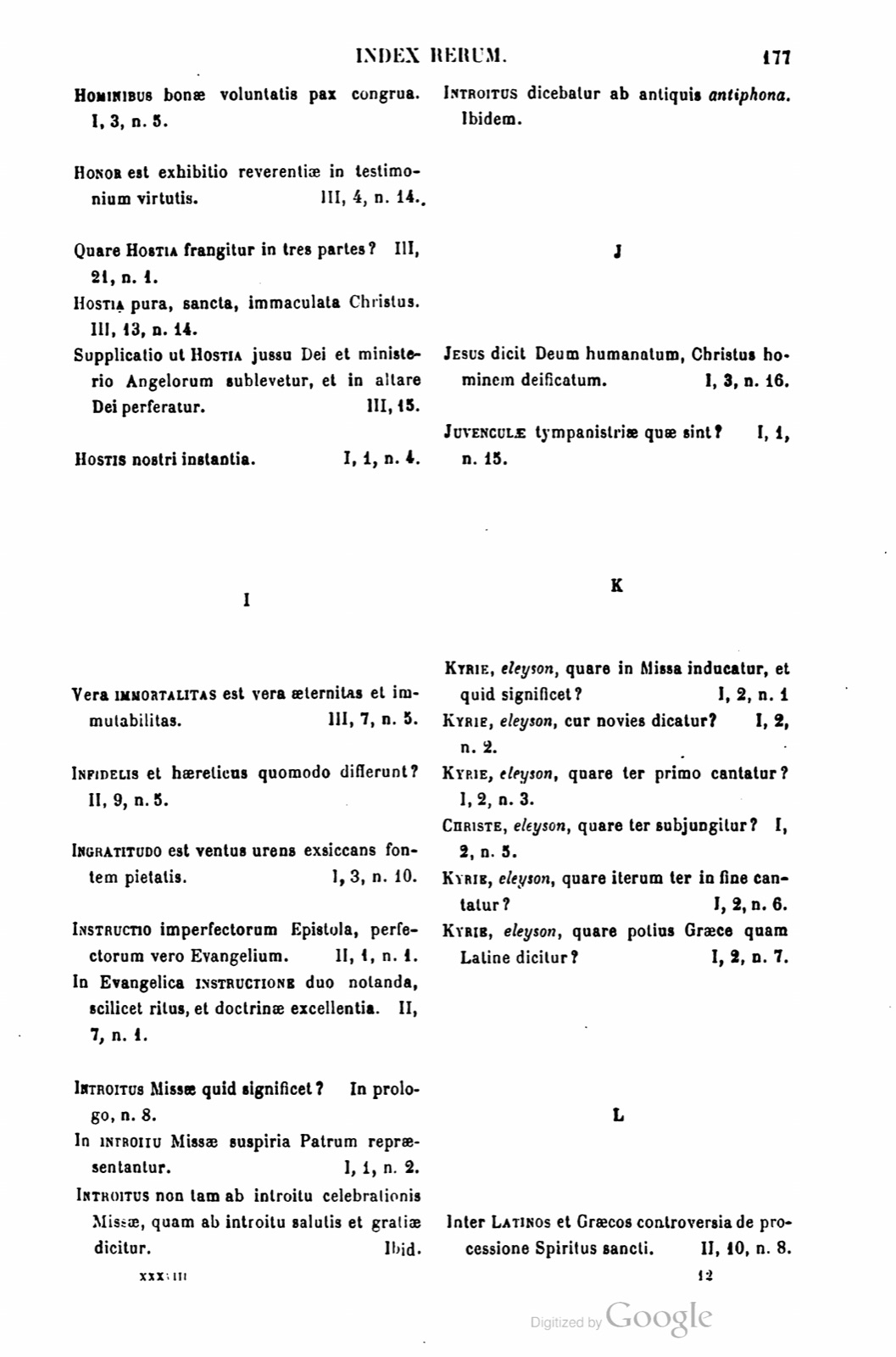
MARIA virgo gloriosa. III, 8, n. 2.
MARIA virgo in partu et post partum. II, 10, n. 3.
MARIA θεοτόκος. Ibid.
MARTYRUM Commemoratio cur fit in Canone? III, 8, n. 3.
Tres MEMBRORUM communiones in corpore. III, 6, n. 2.
MEMBRA alia officialia, alia simplicia. Ibid.
MEMORIA quomodo Deo et hominibus diversimode conveniat? III, 7, n. 1.
Quare Missa non incipit a precibus sicut aliae horae canonicae? I, 1, n. 2.
MISSA dividitur in tres partes: in introitum, in instructionem, et in oblationem. In prologo, n. 8.
MISERICORDIA Dei duplex, liberans et relaxans. III, 16, n. 4.
MISERIA conditionis nostrae. I, 1, n. 3.
IN MISERIAM triplicem incidimus per peccatum. I, 2, n. 4.
Quod in Angelis est casus, hoc est in hominibus MORS. III, 16, n. 4.
MORS piorum est somnus. III, 16, n. 1.
N
NATIVITAS duplex: una in utero, alia ex utero. II, 9, n. 3.
NOMINIS qualitas est illud a quo nomen est impositum: substantia vero illud cui est impositum. I, 2, n. 3.
NOMEN Patris quod sit, quod in oratione Dominica sanctificari petimus? III, 20, n. 3.
NOMEN Dei quomodo in nobis sanctificatur? III, 20, n. 4.
NECESSARIA vitae esse petenda, plurimorum exemplo ostenditur. III, 7, n. 4.
NUMERO impare cur Deus gaudeat? II, 2, n. 2.
NOTGHERUS abbas omnes antiquas fere Sequentias fecit. I, 6.
O
OBLATIONES Novi Testamenti in quinque differunt ab oblationibus Veteris Testamenti. III, 10, n. 1.
OBLATIO interior et exterior. III, 1, n. 2.
OBLATIO exterior qualis debet esse, utilis valore, pinguis devotione, oblata in charitatis dilectione, et munda acquisitione? III, 1, n. 3.
Monendus populus ut OBLATIONEM ad altare deferat. III, 7, n. 3.
OLEI actio, pascere, lucere, et ungere. I, 2, n. 6.
In ORATIONE tria notanda, scilicet nomen, ritus, et conclusio. II, 2, n. 1.
ORATIO est pius affectus mentis in Deum directus. III, 1, n. 2.
MARY, glorious virgin. III, 8, n. 2.
MARY, virgin in birth and after birth. II, 10, n. 3.
MARY, God-bearer. Ibid.
Why is Commemoration of the MARTYRS made in the Canon? III, 8, n. 3.
The three communions of the MEMBERS in the body. III, 6, n. 2.
Some MEMBERS are official, others simple. Ibid.
How does MEMORY belong to God and human beings in different ways? III, 7, n. 1.
Why does the Mass not begin with prayers as the other canonical hours do? I, 1, n. 2.
The MASS is divided into three parts: into the introit, into the instruction, and into the oblation. In the prologue, n. 8.
The twofold MERCY of God, freeing and remitting. III, 16, n. 4.
The MISERY of our condition. I, 1, n. 3.
Through sin we fall into threefold MISERY. I, 2, n. 4.
What fall is in Angels, this DEATH is in human beings. III, 16, n. 4.
The DEATH of the pious is sleep. III, 16, n. 1.
N
Twofold NATIVITY: one in the womb, another from the womb. II, 9, n. 3.
The quality of a NAME is that from which the name is imposed; the substance, however, is that on which it is imposed. I, 2, n. 3.
What is the NAME of the Father, which we ask to be sanctified in the Lord's Prayer? III, 20, n. 3.
How is the NAME of God sanctified in us? III, 20, n. 4.
That the NECESSARY things of life are to be asked is shown by the example of very many. III, 7, n. 4.
Why does God rejoice in an odd NUMBER? II, 2, n. 2.
Abbot NOTGHERUS made almost all the ancient Sequences. I, 6.
O
The OBLATIONS of the New Testament differ in five ways from the oblations of the Old Testament. III, 10, n. 1.
Interior and exterior OBLATION. III, 1, n. 2.
What should exterior OBLATION be like, useful in value, fat with devotion, offered in the love of charity, and clean in acquisition? III, 1, n. 3.
The people is to be admonished to carry the OBLATION to the altar. III, 7, n. 3.
The action of OIL: to feed, to shine, and to anoint. I, 2, n. 6.
In PRAYER three things must be noted, namely name, rite, and conclusion. II, 2, n. 1.
PRAYER is a pious affection of the mind directed into God. III, 1, n. 2.
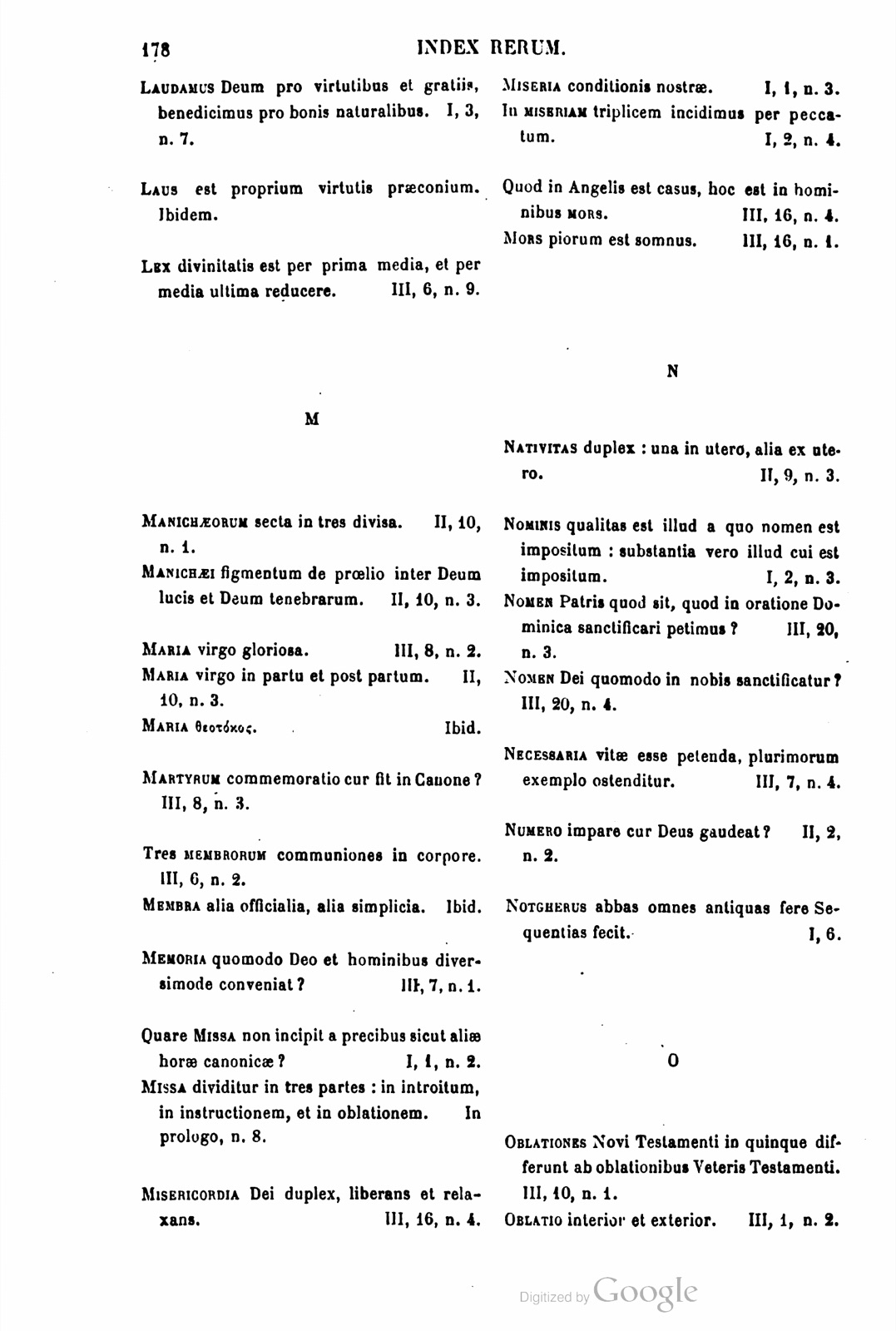
ORDO est relatio multorum in gradibus differentium ad unum. III, 6, n. 9.
ORIGENIS error Christum adhuc venturum passibilem in aereo corpore pro daemonibus. II, 10, n. 7.
P
PANIS noster quotidianus, Eucharistia. III, 20, n. 7.
PAPA, pater patrum, successor Petri, et vicarius Jesu Christi. III, 6, n. 12.
PATENA latitudinem signat charitatis. III, 20, n. 11.
Ardor desiderii PATRUM suspirantium in carne Christi praesentiam. I, 1, n. 8.
PATER nomen dulcedinis et formativae virtutis. III, 19, n. 1.
Deus trinitas PATER noster est. Ibid.
PATRI appropriata. I, 3, n. 12.
PATRES Christi praesentiam suspirantes. I, 1, n. 1.
Sex praecipue causae cur PATRES clamaverunt in desiderio adventus Domini. I, 1, n. 3.
PATRIARCHAE et Prophetae cur in Canone non ponantur? III, 8, n. 3.
PAX unde oriatur? III, 21, n. 5.
PACIS necessitas, veritas et congruitas. I, 3, n. 5.
PAX temporis, pectoris et aeternitatis. I, 3, n. 6.
Pax et quies vera ubi reperiatur? In prologo, n. 5.
PECCATUM mundi est peccatum originale. I, 3, n. 18.
PILATUS dicitur Pontius, quia Pontum insulam devicit. II, 9, n. 4.
PORPHYRII error dicens Prophetas spiritu fanatico esse locutos. II, 10, n. 8.
POTESTAS est ultrix iniquitatis, compressiva malae voluntatis, et defensiva virtutis. I, 2, n. 6.
POTESTATUM est libera severitate corrigere omne quod rectitudini legum divinarum non congruit. III, 4, n. 16.
PRAEFATIO dividitur in duas partes, scilicet excitationem populi ad attentionem, et ipsam instructoriam praefationem. III, 3, n. 1.
PRAEFATIONIS luculenta expositio. III, 4.
PRAEFATIONIS Auctor. Ibid.
Tria in PRAEFATIONE continentur, responsionis acceptae comprobatio, sacramenti supereminens ostensa magnitudo, et ut voces Ecclesiae vocibus angelicis misceantur supplicatio. III, 4, n. 1.
PROCESSIO personarum est causa processus creationis, et gratificationis, et glorificationis. II, 9, n. 1.
PROFECTUS in causa virtutis, in virtute, in effectu virtutis, in adjunctis ad virtutem, et in forma virtutum. II, 4, n. 2, 3 et seq.
ORDER is the relation of many things differing in grades to one. III, 6, n. 9.
The error of ORIGEN, that Christ was still going to come, passible in an airy body, for demons. II, 10, n. 7.
P
Our daily BREAD, the Eucharist. III, 20, n. 7.
POPE, father of fathers, successor of Peter, and vicar of Jesus Christ. III, 6, n. 12.
The PATEN signifies the breadth of charity. III, 20, n. 11.
The ardor of the desire of the FATHERS sighing for the presence of Christ in the flesh. I, 1, n. 8.
FATHER is a name of sweetness and formative virtue. III, 19, n. 1.
God the Trinity is our FATHER. Ibid.
Things appropriated to the FATHER. I, 3, n. 12.
The FATHERS sighing for the presence of Christ. I, 1, n. 1.
Six principal causes why the FATHERS cried out in desire of the advent of the Lord. I, 1, n. 3.
Why are the PATRIARCHS and Prophets not placed in the Canon? III, 8, n. 3.
Whence does PEACE arise? III, 21, n. 5.
The necessity, truth, and fittingness of PEACE. I, 3, n. 5.
PEACE of time, of breast, and of eternity. I, 3, n. 6.
Where is true peace and rest found? In the prologue, n. 5.
The SIN of the world is original sin. I, 3, n. 18.
Pilate is called Pontius because he conquered Pontus, an island. II, 9, n. 4.
The error of PORPHYRY, saying that the Prophets spoke by a fanatical spirit. II, 10, n. 8.
POWER is the avenger of iniquity, repressive of evil will, and defensive of virtue. I, 2, n. 6.
It belongs to the POWERS to correct with free severity everything that does not accord with the rectitude of the divine laws. III, 4, n. 16.
The PREFACE is divided into two parts, namely the stirring of the people to attention, and the instructive preface itself. III, 3, n. 1.
The lucid exposition of the PREFACE. III, 4.
The Author of the PREFACE. Ibid.
Three things are contained in the PREFACE: the proof of an accepted response, the shown supereminent magnitude of the sacrament, and the supplication that the voices of the Church may be mingled with angelic voices. III, 4, n. 1.
The PROCESSION of the persons is the cause of the process of creation, and of gratification, and of glorification. II, 9, n. 1.
PROGRESS in the cause of virtue, in virtue, in the effect of virtue, in things joined to virtue, and in the form of the virtues. II, 4, n. 2, 3 and following.
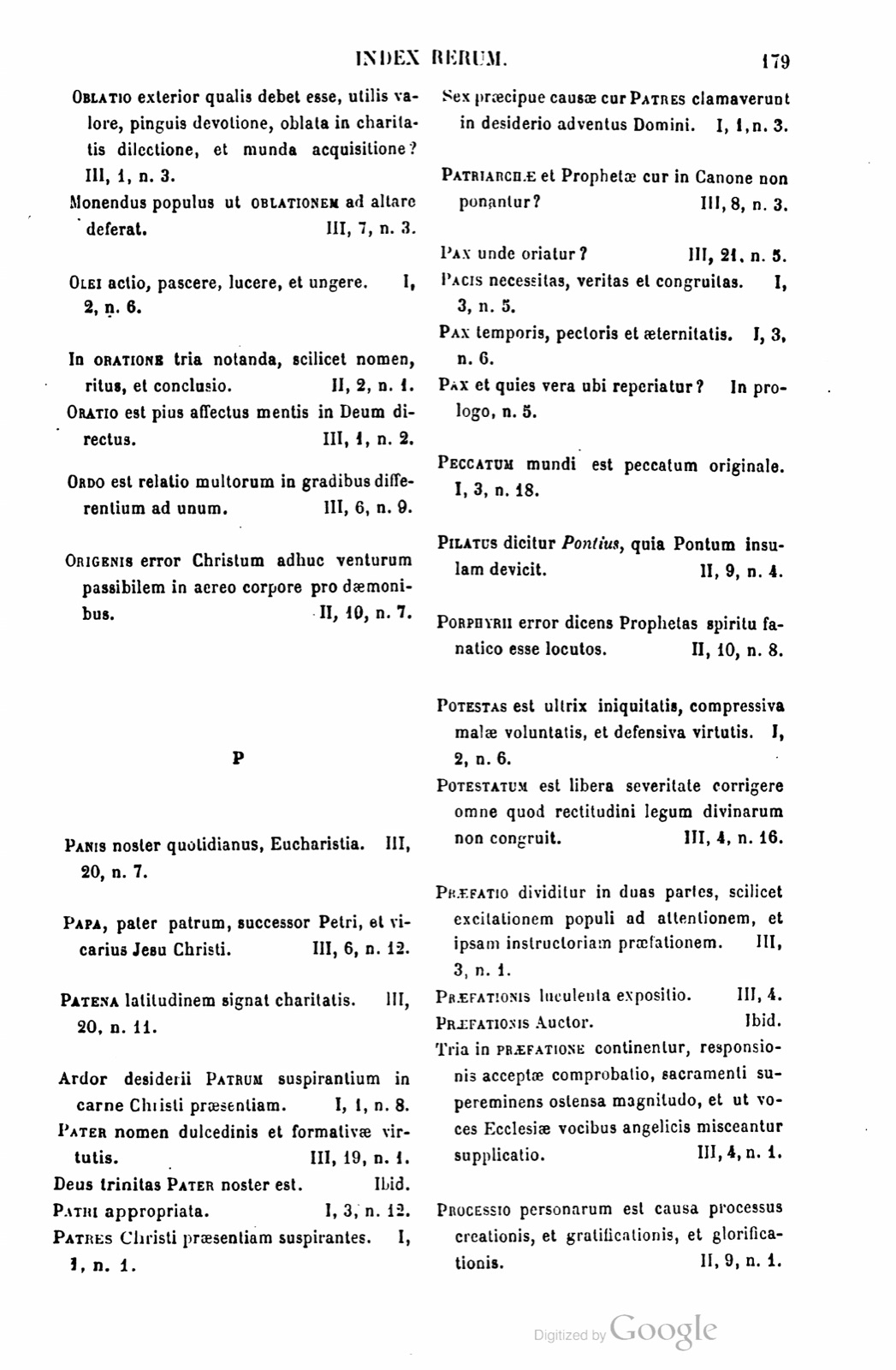
PROPHETA quilibet custos Domini. I, 1, n. 1.
R
REDEMPTIONIS opus. I, 3, n. 18.
Solus REDEMPTOR quomodo dicitur sanctus? I, 3, n. 18.
REFORMATIONI ad bonum tria in nobis reluctantia, scilicet naturae gravitas, infirmitatis fragilitas, et spiritualis nequitiae iniquitas. I, 3, n. 14.
RESURRECTIO duplex, animae scilicet et corporis. II, 9, n. 5.
RESURRECTIO Christi est causa nostrae resurrectionis. II, 9, n. 11.
RESURREXISSE Christum tertia die quomodo intelligitur? II, 10, n. 5.
RESURRECTIO mortuorum nondum facta, sed exspectatur. II, 10, n. 11.
REGNI virtus in quibus consistat? III, 20, n. 5.
Pro REGIBUS orandum. III, 6, n. 11.
REX debet habere justitiam pro anima. III, 20, n. 5.
S
SACERDOS praeparat se ad offerendum incenso, lotione, et oratione. III, 2, n. 1.
SACERDOS Angelus. II, 1, n. 2.
SACRAMENTA Christi per quae nos elevat. III, 13, n. 3.
SACRIFICIA sancta et illibata quae sint? III, 6, n. 6.
SANCTITAS est ab omni inquinamento libera munditia. II, 9, n. 8.
SANCTISSIMA populo celari debent, ne ea vilipendat et ad alios usus adhibeat. III, 2, n. 5.
SANCTUS multipliciter dicitur. I, 3, n. 21.
Solus Filius quomodo dicitur SANCTUS? Ibidem.
SANCTUS cur tribus vicibus dicatur? III, 5, n. 1.
SANGUINIS Christi effectus. III, 12, n. 2.
SANGUIS Christi vinum germinans virgines. III, 6, n. 6.
SANITAS et salus quomodo differunt? III, 7, n. 4.
In SECRETA Missae prima quid petatur? III, 2, n. 5.
SEQUENTIAM quis officio Missae primus addidit? II, 6.
SERAPHIM, incendentes vel ardentes. I, 1, n. 10.
SERAPHIM antonomastice beata. III, 4, n. 18.
SERVITUS Domini quae et qualis sit? III, 9, n. 1.
SOLUS Filius quomodo dicitur sanctus? I, 3, n. 21.
SPES est certa exspectatio boni ex meritis et gratia proveniens. In prologo, n. 6.
Every PROPHET is a guardian of the Lord. I, 1, n. 1.
R
The work of REDEMPTION. I, 3, n. 18.
How is the only REDEEMER called holy? I, 3, n. 18.
Three things resisting REFORMATION toward the good in us, namely the heaviness of nature, the fragility of infirmity, and the iniquity of spiritual wickedness. I, 3, n. 14.
A twofold RESURRECTION, namely of soul and of body. II, 9, n. 5.
The RESURRECTION of Christ is the cause of our resurrection. II, 9, n. 11.
How is it understood that Christ ROSE AGAIN on the third day? II, 10, n. 5.
The RESURRECTION of the dead has not yet been made, but is awaited. II, 10, n. 11.
In what does the virtue of a KINGDOM consist? III, 20, n. 5.
Prayer is to be made for KINGS. III, 6, n. 11.
A KING ought to have justice for a soul. III, 20, n. 5.
S
The PRIEST prepares himself for offering by incense, washing, and prayer. III, 2, n. 1.
The PRIEST is an Angel. II, 1, n. 2.
The SACRAMENTS of Christ by which he elevates us. III, 13, n. 3.
What are the holy and unstained SACRIFICES? III, 6, n. 6.
SANCTITY is cleanness free from every defilement. II, 9, n. 8.
The MOST HOLY THINGS ought to be hidden from the people, lest they cheapen them and employ them for other uses. III, 2, n. 5.
HOLY is said in multiple ways. I, 3, n. 21.
How is the Son alone called HOLY? In the same place.
Why is HOLY said three times? III, 5, n. 1.
The effect of the BLOOD of Christ. III, 12, n. 2.
The BLOOD of Christ, wine germinating virgins. III, 6, n. 6.
How do HEALTH and salvation differ? III, 7, n. 4.
In the first SECRET of the Mass what is asked? III, 2, n. 5.
Who first added the SEQUENCE to the office of the Mass? II, 6.
SERAPHIM, kindling or burning. I, 1, n. 10.
SERAPHIM, blessed by antonomasia. III, 4, n. 18.
What and what sort is the SERVICE of the Lord? III, 9, n. 1.
How is the Son ALONE called holy? I, 3, n. 21.
HOPE is the certain expectation of good coming forth from merits and grace. In the prologue, n. 6.
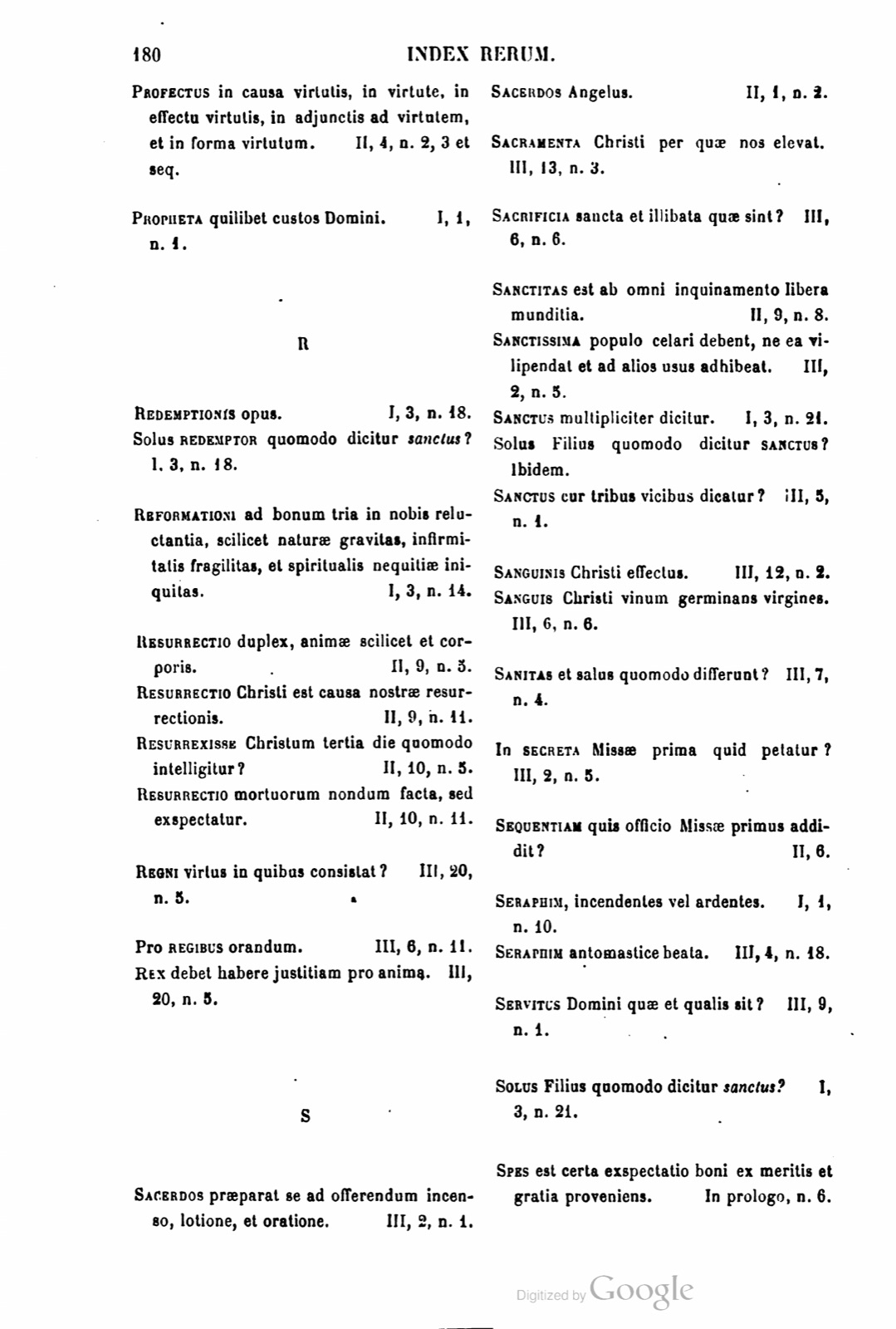
If a page does not appear, its photograph has not been uploaded yet.