Works › The Book on the Sacrifice of the Mass
Volume 38 · pp. 78–81
Tractate III, Chapter II
A marker with ≈ is an approximate page boundary, placed by measure of the text; the page photographs remain the authority. In the paired views, clicking a page marker brings that page into view.
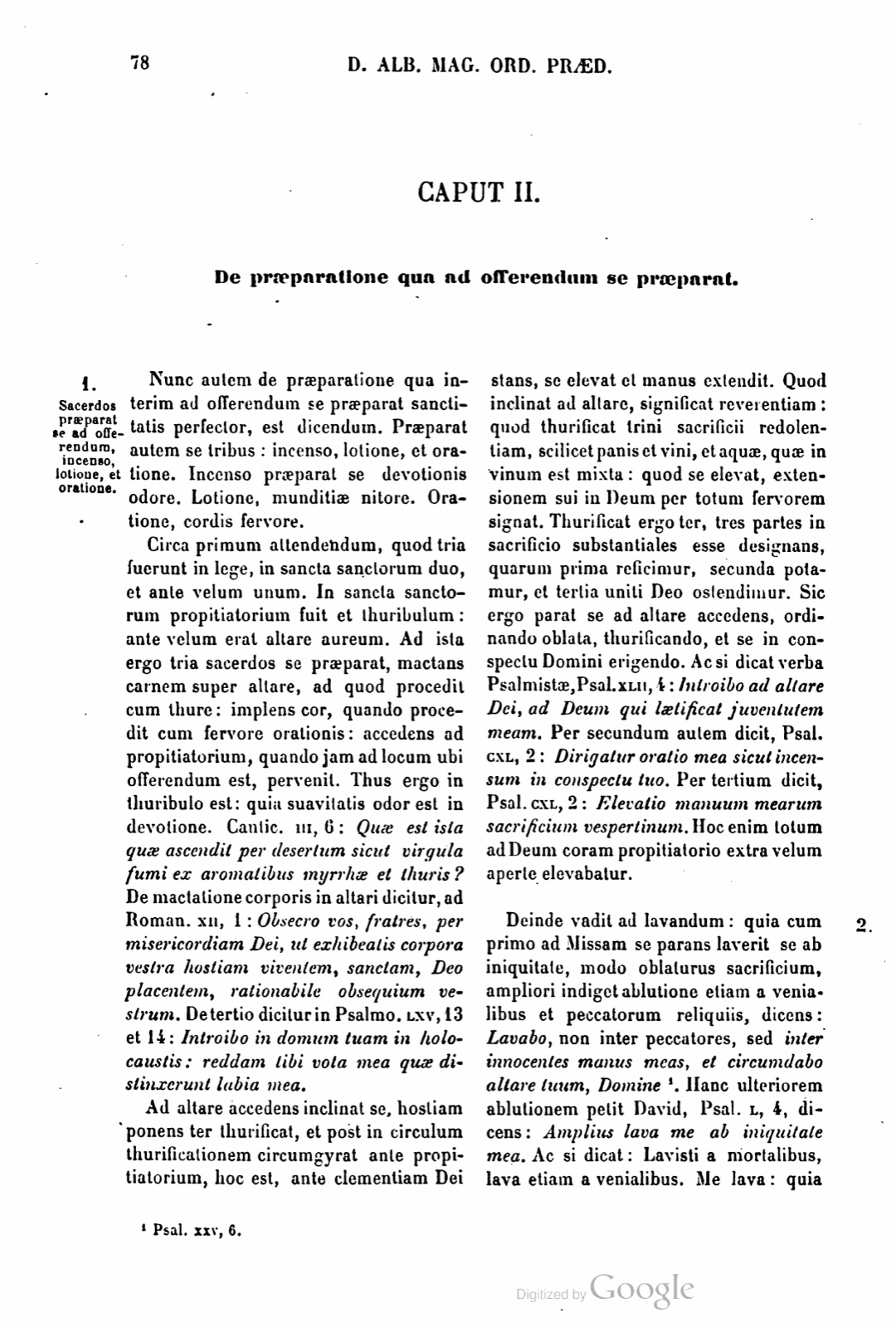
CAPUT II.
De praeparatione qua ad offerendum se praeparat.
[Marginal label: Sacerdos praeparat se ad offerendum, incenso, lotione, et oratione.] 1. Nunc autem de praeparatione qua interim ad offerendum se praeparat sanctitatis perfector, est dicendum. Praeparat autem se tribus: incenso, lotione, et oratione. Incenso praeparat se devotionis odore. Lotione, munditiae nitore. Oratione, cordis fervore.
Circa primum attendendum, quod tria fuerunt in lege, in sancta sanctorum duo, et ante velum unum. In sancta sanctorum propitiatorium fuit et thuribulum: ante velum erat altare aureum. Ad ista ergo tria sacerdos se praeparat, mactans carnem super altare, ad quod procedit cum thure: implens cor, quando procedit cum fervore orationis: accedens ad propitiatorium, quando jam ad locum ubi offerendum est, pervenit. Thus ergo in thuribulo est: quia suavitatis odor est in devotione. Cantic. III, 6: Quae est ista quae ascendit per desertum sicut virgula fumi ex aromatibus myrrhae et thuris? De mactatione corporis in altari dicitur, ad Roman. XII, 1: Obsecro vos, fratres, per misericordiam Dei, ut exhibeatis corpora vestra hostiam viventem, sanctam, Deo placentem, rationabile obsequium vestrum. De tertio dicitur in Psalmo LXV, 13 et 14: Introibo in domum tuam in holocaustis: reddam tibi vota mea quae distinxerunt labia mea.
Ad altare accedens inclinat se, hostiam ponens ter thurificat, et post in circulum thurificationem circumgyrat ante propitiatorium, hoc est, ante clementiam Dei stans, se elevat et manus extendit. Quod inclinat ad altare, significat reverentiam: quod thurificat trini sacrificii redolentiam, scilicet panis et vini, et aquae, quae in vinum est mixta: quod se elevat, extensionem sui in Deum per totum fervorem signat. Thurificat ergo ter, tres partes in sacrificio substantiales esse designans, quarum prima reficimur, secunda potamur, et tertia uniti Deo ostendimur. Sic ergo parat se ad altare accedens, ordinando oblata, thurificando, et se in conspectu Domini erigendo. Ac si dicat verba Psalmistae, Psal. XLII, 4: Introibo ad altare Dei, ad Deum qui laetificat juventutem meam. Per secundum autem dicit, Psal. CXL, 2: Dirigatur oratio mea sicut incensum in conspectu tuo. Per tertium dicit, Psal. CXL, 2: Elevatio manuum mearum sacrificium vespertinum. Hoc enim totum ad Deum coram propitiatorio extra velum aperte elevabatur.
2. Deinde vadit ad lavandum: quia cum primo ad Missam se parans laverit se ab iniquitate, modo oblaturus sacrificium, ampliori indiget ablutione etiam a venialibus et peccatorum reliquiis, dicens: Lavabo, non inter peccatores, sed inter innocentes manus meas, et circumdabo altare tuum, Domine 1. Hanc ulteriorem ablutionem petit David, Psal. L, 4, dicens: Amplius lava me ab iniquitate mea. Ac si dicat: Lavisti a mortalibus, lava etiam a venialibus. Me lava: quia nemo adeo lotus est, quin indigeat ulteriori lotione in tanti oblatione sacrificii. Hoc significavit Dominus, Joan. XIII, 10, quia cum loti essent Apostoli, et sic accederent ad refectionem mensae Domini agni paschalis, noluit eis exhibere corpus suum, nisi iterato lavaret pedes eorum, per quos signata est affectuum ablutio, dicens: Qui lotus est, non indiget nisi ut pedes lavet, sed est mundus totus. Sic etiam Salomon in templo, III Regum, VII, 23 et seq., fecit mare aeneum communem ablutionem sacerdotum, etiam fecit luterem specialem ad loturam eorum qui pro sacrificio ingrederentur in templum.
CHAPTER II.
On the preparation by which he prepares himself for offering.
[Marginal label: The priest prepares himself for offering, with incense, washing, and prayer.] 1. But now one must speak about the preparation by which, meanwhile, the perfecter of sanctity prepares himself for offering. He prepares himself by three things: incense, washing, and prayer. By incense he prepares himself with the odor of devotion; by washing, with the brightness of cleanness; by prayer, with the fervor of the heart.
Concerning the first one must attend that there were three things in the law: two in the holy of holies and one before the veil. In the holy of holies there was the propitiatory and the thurible; before the veil there was the golden altar. Therefore the priest prepares himself for these three things, slaughtering the flesh upon the altar, to which he proceeds with incense; filling the heart when he proceeds with the fervor of prayer; approaching the propitiatory when he has already come to the place where the offering is to be made. Therefore incense is in the thurible because the odor of sweetness is in devotion. Song of Songs 3:6: Who is she that ascends through the desert like a little rod of smoke from the aromatics of myrrh and frankincense? Concerning the slaughter of the body on the altar it is said, Romans 12:1: I beseech you, brothers, by the mercy of God, that you present your bodies as a living victim, holy, pleasing to God, your rational service. Concerning the third it is said in Psalm 65:13 and 14: I will enter into thy house with holocausts; I will render to thee my vows which my lips distinguished.
Approaching the altar he inclines himself; placing the host, he censes three times; and afterward he turns the censing around in a circle before the propitiatory, that is, standing before the clemency of God, he raises himself and extends his hands. That he inclines to the altar signifies reverence; that he censes signifies the fragrance of the threefold sacrifice, namely of bread and wine and water, which is mixed into the wine; that he raises himself signifies the extension of himself into God through his whole fervor. Therefore he censes three times, designating that there are three substantial parts in the sacrifice, by the first of which we are refreshed, by the second we are given drink, and by the third we are shown to be united to God. Thus therefore he prepares himself as he approaches the altar, by ordering the things offered, censing, and lifting himself in the sight of the Lord. As if he were saying the words of the Psalmist, Psalm 42:4: I will enter to the altar of God, to God who gladdens my youth. By the second he says, Psalm 140:2: Let my prayer be directed as incense in thy sight. By the third he says, Psalm 140:2: The lifting up of my hands is an evening sacrifice. For all this was openly lifted up to God before the propitiatory outside the veil.
2. Then he goes to wash, because since, when preparing himself for Mass at first, he washed himself from iniquity, now, when about to offer sacrifice, he needs a fuller washing even from venial sins and remnants of sins, saying: I will wash, not among sinners but among the innocent, my hands, and I will go around thy altar, O Lord 1. David asks for this further washing, Psalm 50:4, saying: Wash me yet more from my iniquity. As if he were saying: You have washed me from mortal sins; wash me also from venial sins. Wash me, because no one is so washed that he does not need a further washing in the oblation of so great a sacrifice. The Lord signified this, John 13:10, because when the Apostles had been washed and were thus approaching the refreshment of the table of the Lord's paschal lamb, he did not wish to present his body to them unless he again washed their feet, by which the washing of affections was signified, saying: One who has been washed does not need except to wash his feet, but is wholly clean. So also Solomon in the temple, 3 Kings 7:23 and following, made a bronze sea for the common washing of the priests, and also made a special laver for the washing of those who entered into the temple for sacrifice.
3. Hoc igitur modo paratus lotione, procedit ad medium altaris, parans se orationis suffragio: et hoc dupliciter, scilicet per se, et postulatione orationis adjuvantis a populo. Per se pronus inclinatur ante altare, dicens: In spiritu humilitatis, et in animo contrito suscipiamur a te, Domine: et sic fiat sacrificium nostrum in conspectu tuo hodie, ut placeat tibi, Domine Deus. Et sumuntur verba ista, Daniel. III, 39 et 40, ubi ista verba tres pueri in camino ignis ardentis dixerunt. Sacrificium enim offert in recordationem passionis Domini: et sic quando recordamur, quod pro nobis hoc sacrificium in ara crucis oblatum est pro peccatis nostris, offerimus in spiritu humilitatis, peccatum recognoscentes, et in animo contrito, peccati dolorem in corde sentientes. De primo dicit, Psal. L, 3: Quoniam iniquitatem meam ego cognosco. De secundo dicit, ibidem: Et peccatum meum contra me est semper. In hac igitur humilitate Ecclesiae et contritione Ecclesiae petit suscipi officium sacrificii sui sacerdos: quia certum est, quod in his numquam rejicitur. Quia de primo dicitur in Psalmo L, 19: Sacrificium Deo spiritus contribulatus. De secundo autem dicitur simul cum primo: Cor contritum et humiliatum, Deus, non despicies. Et sic placet Deo sacrificium. Malach. III, 4: Placebit Deo sacrificium Juda et Jerusalem, sicut dies saeculi, et sicut anni antiqui. Juda enim confitens interpretatur, et sacerdos jam lotus est ablutione et orationis confessione. Jerusalem autem est pacis et unitatis Ecclesiasticae suffragii intercessio.
4. Et ideo se convertit ad populum petens in unitate Ecclesiae orationis suffragium, dicens: Orate, fratres, ut meum ac vestrum sacrificium acceptabile fiat apud Deum Patrem omnipotentem. Appellatione enim fratrum et sororum innuit Ecclesiae in unitate charitatis colligationem et unionem. In hoc autem quod cum sit loco ejus qui omnis est perfector sanctitatis, et tamen petit orationis suffragium, innuit hoc quod dicit Apostolus, ad Hebr. V, 2: Quoniam et ipse circumdatus est infirmitate: et ideo ut homo infirmus indiget Ecclesiae adjutorio. Jacobi, V, 16: Orate pro invicem, ut salvemini: multum enim valet deprecatio justi assidua.
3. Therefore, prepared in this way by washing, he proceeds to the middle of the altar, preparing himself by the help of prayer; and this in two ways, namely by himself and by the request for the prayer of the people assisting. By himself he bends prone before the altar, saying: In the spirit of humility and in a contrite soul may we be received by thee, O Lord, and so may our sacrifice be made in thy sight today, so that it may please thee, O Lord God. And those words are taken from Daniel 3:39 and 40, where the three boys in the furnace of burning fire said those words. For he offers the sacrifice in remembrance of the passion of the Lord; and so when we remember that this sacrifice was offered for us on the altar of the cross for our sins, we offer in the spirit of humility, recognizing sin, and in a contrite soul, feeling the sorrow for sin in the heart. Concerning the first Psalm 50:3 says: For I know my iniquity. Concerning the second he says in the same place: And my sin is always against me. Therefore in this humility of the Church and contrition of the Church the priest asks that the office of his sacrifice be received, because it is certain that in these things it is never rejected. For concerning the first it is said in Psalm 50:19: A sacrifice to God is a troubled spirit. But concerning the second it is said together with the first: A contrite and humbled heart, O God, thou wilt not despise. And so the sacrifice pleases God. Malachi 3:4: The sacrifice of Judah and Jerusalem will please God, as in the days of the age, and as in ancient years. For Judah is interpreted "confessing," and the priest has already been washed by washing and by confession of prayer. But Jerusalem is the intercession of the help of ecclesiastical peace and unity.
4. And therefore he turns himself to the people, asking the help of prayer in the unity of the Church, saying: Pray, brothers, that my sacrifice and yours may be made acceptable before God the Father almighty. For by the naming of brothers and sisters he suggests the binding together and union of the Church in the unity of charity. But in this, that although he is in the place of him who is the perfecter of all sanctity, nevertheless he asks the help of prayer, he suggests what the Apostle says, Hebrews 5:2: Because he himself also is surrounded with infirmity; and therefore as a weak human being he needs the aid of the Church. James 5:16: Pray for one another, that you may be saved, for the continual prayer of the just man avails much.
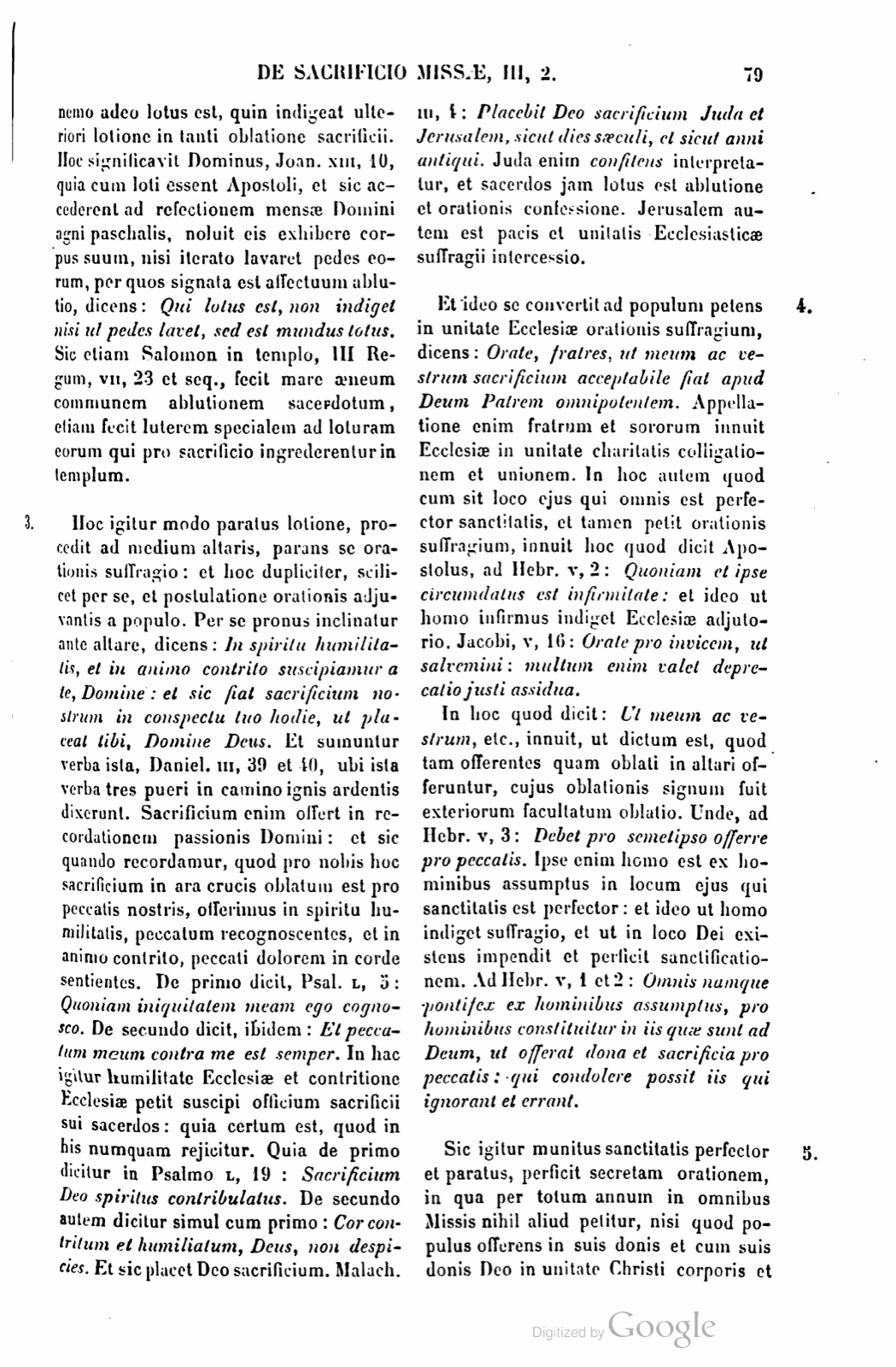
In hoc quod dicit: Ut meum ac vestrum, etc., innuit, ut dictum est, quod tam offerentes quam oblati in altari offeruntur, cujus oblationis signum fuit exteriorum facultatum oblatio. Unde, ad Hebr. V, 3: Debet pro semetipso offerre pro peccatis. Ipse enim homo est ex hominibus assumptus in locum ejus qui sanctitatis est perfector: et ideo ut homo indiget suffragio, et ut in loco Dei existens impendit et perficit sanctificationem. Ad Hebr. V, 1 et 2: Omnis namque pontifex ex hominibus assumptus, pro hominibus constituitur in iis quae sunt ad Deum, ut offerat dona et sacrificia pro peccatis: qui condolere possit iis qui ignorant et errant.
5. Sic igitur munitus sanctitatis perfector et paratus, perficit secretam orationem, in qua per totum annum in omnibus Missis nihil aliud petitur, nisi quod populus offerens in suis donis et cum suis donis Deo in unitate Christi corporis et incorporandus offeratur Deo. Hoc autem patet in secreta Missae primae quae sic dicit: "Haec sacra nos, Domine, potenti virtute mundatos, ad suum faciant puriores venire principium 2." Omnium enim horum principium quantum ad oblationem est oblatio qua Christus obtulit seipsum. Hoc facillime est invenire et videre in omnibus secretis, nisi quod aliquando propter festum quod agitur de Christo, vel Sanctis, in secretis mentio illius festi habetur, ut gratia festi populus offerens Christo incorporetur. Haec autem oratio ideo Secreta vocatur, quia sub silentio et secreto dicitur, cujus diversi diversas assignant causas, de quibus parum est curandum. Causa vero est, quia jam in ista oratione a sanctitatis perfectore sanctissima postulantur et offeruntur. [Marginal label: Sanctissima populo celari debent, ne ea vilipendat et ad alios usus adhibeat.] Et haec a populo communi celari debent, ut amplius venerentur: ostensa enim populo per usum discuntur et vilipenduntur, et forte ad usus alios adhibentur. Sic ergo verba consecrationis vulgo non sunt revelanda. In signum cujus, Numer. IV, 2 et seq., ad sensum dicitur de omnibus sacerdotibus: Aaron et filii ejus sacerdotes intrabunt, ipsique disponent onera singulorum, et divident quid portare quis debeat. Alii nulla curiositate videant quae sunt in sanctuario prius quam involvantur, alioquin morientur. Quia multi usu sanctissima contemnentes, quando eis publice ostenduntur, accipiunt occasionem mortis in eis, quae si essent operta et involuta et ab eis velata, venerarentur. Matth. VII, 6: Nolite dare sanctum canibus, neque mittatis margaritas vestras ante porcos: ne forte conculcent eas pedibus suis, et conversi dirumpant vos. Quia audita ista vilescunt, et sacerdotes verbis eorum dilacerarentur. Unde Dionysius loquitur in libro de Ecclesiastica hierarchia de ritu sacramentorum: "Laici hoc videntes late ridebunt, putantes humilibus verbis et rebus non posse inesse sanctificationem." Haec igitur est vera causa hujus silentii et sequentium silentiorum.
In what he says, that mine and yours, etc., he suggests, as has been said, that both those offering and those offered are offered on the altar; the sign of this oblation was the oblation of exterior possessions. Hence, Hebrews 5:3: He ought to offer for himself for sins. For he himself is a man taken from men into the place of him who is the perfecter of sanctity; and therefore as man he needs help, and as existing in the place of God he impends and perfects sanctification. Hebrews 5:1 and 2: For every high priest taken from men is appointed for men in the things that pertain to God, that he may offer gifts and sacrifices for sins, and may be able to have compassion on those who are ignorant and err.
5. Thus therefore the perfecter of sanctity, fortified and prepared, completes the secret prayer, in which throughout the whole year in all Masses nothing else is asked except that the people offering in their gifts and with their gifts be offered to God in the unity of the body of Christ and as to be incorporated into God. But this is clear in the secret of the first Mass, which says thus: "May these sacred things, O Lord, by powerful virtue cleanse us and make us come purer to their principle 2." For the principle of all these things, as regards oblation, is the oblation by which Christ offered himself. This is most easily found and seen in all the secrets, except that sometimes, on account of the feast which is being celebrated of Christ or the Saints, mention of that feast is had in the secrets, so that by the grace of the feast the offering people may be incorporated into Christ. But this prayer is therefore called Secret, because it is said under silence and in secret; different persons assign different causes of this, about which there is little need to care. But the true cause is that now in that prayer the most holy things are asked and offered by the perfecter of sanctity. [Marginal label: The most holy things must be hidden from the people, lest it cheapen them and use them for other uses.] And these things must be hidden from the common people, so that they may be more greatly venerated. For when shown to the people, by use they are learned and cheapened, and perhaps are applied to other uses. Thus therefore the words of consecration are not to be revealed to the common people. As a sign of this, Numbers 4:2 and following, according to the sense, says concerning all priests: Aaron and his sons the priests shall enter, and they themselves shall arrange the burdens of each one, and divide what each one ought to carry. Let others by no curiosity see the things which are in the sanctuary before they are wrapped, otherwise they shall die. For many, despising the most holy things by use, when they are shown publicly to them, take occasion of death in those things which, if they were covered and wrapped and veiled from them, they would venerate. Matthew 7:6: Do not give what is holy to dogs, nor cast your pearls before swine, lest perhaps they trample them under their feet, and, turning back, tear you. Because when those things have been heard, they grow cheap, and priests would be torn by their words. Hence Dionysius speaks in the book On the Ecclesiastical Hierarchy concerning the rite of the sacraments: "Laypersons, seeing this, will laugh broadly, thinking that sanctification cannot be present in humble words and things." Therefore this is the true cause of this silence and of the following silences.
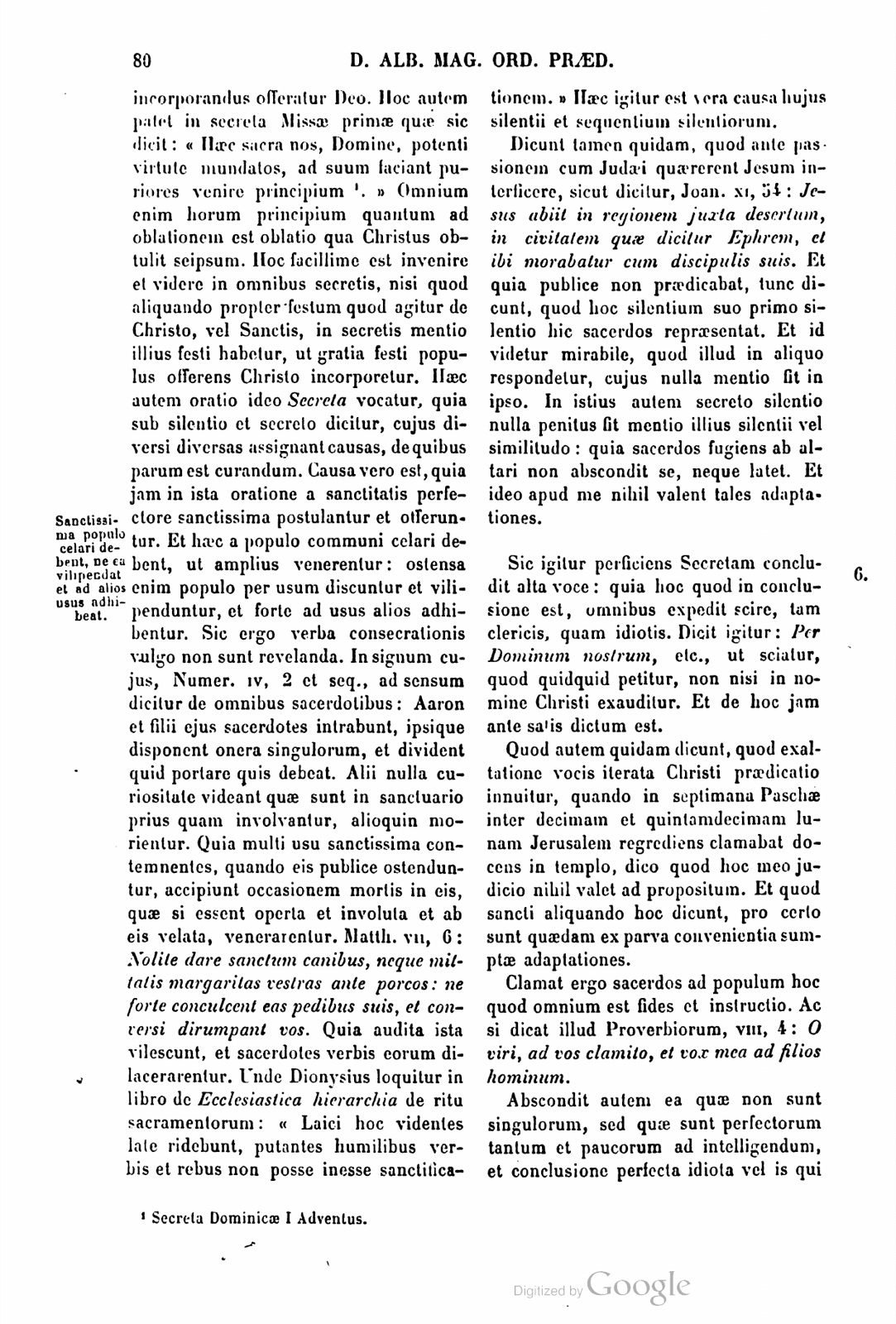
Dicunt tamen quidam, quod ante passionem cum Judaei quaererent Jesum interficere, sicut dicitur, Joan. XI, 54: Jesus abiit in regionem juxta desertum, in civitatem quae dicitur Ephrem, et ibi morabatur cum discipulis suis. Et quia publice non praedicabat, tunc dicunt, quod hoc silentium suo primo silentio hic sacerdos repraesentat. Et id videtur mirabile, quod illud in aliquo respondetur, cujus nulla mentio fit in ipso. In istius autem secreto silentio nulla penitus fit mentio illius silentii vel similitudo: quia sacerdos fugiens ab altari non abscondit se, neque latet. Et ideo apud me nihil valent tales adaptationes.
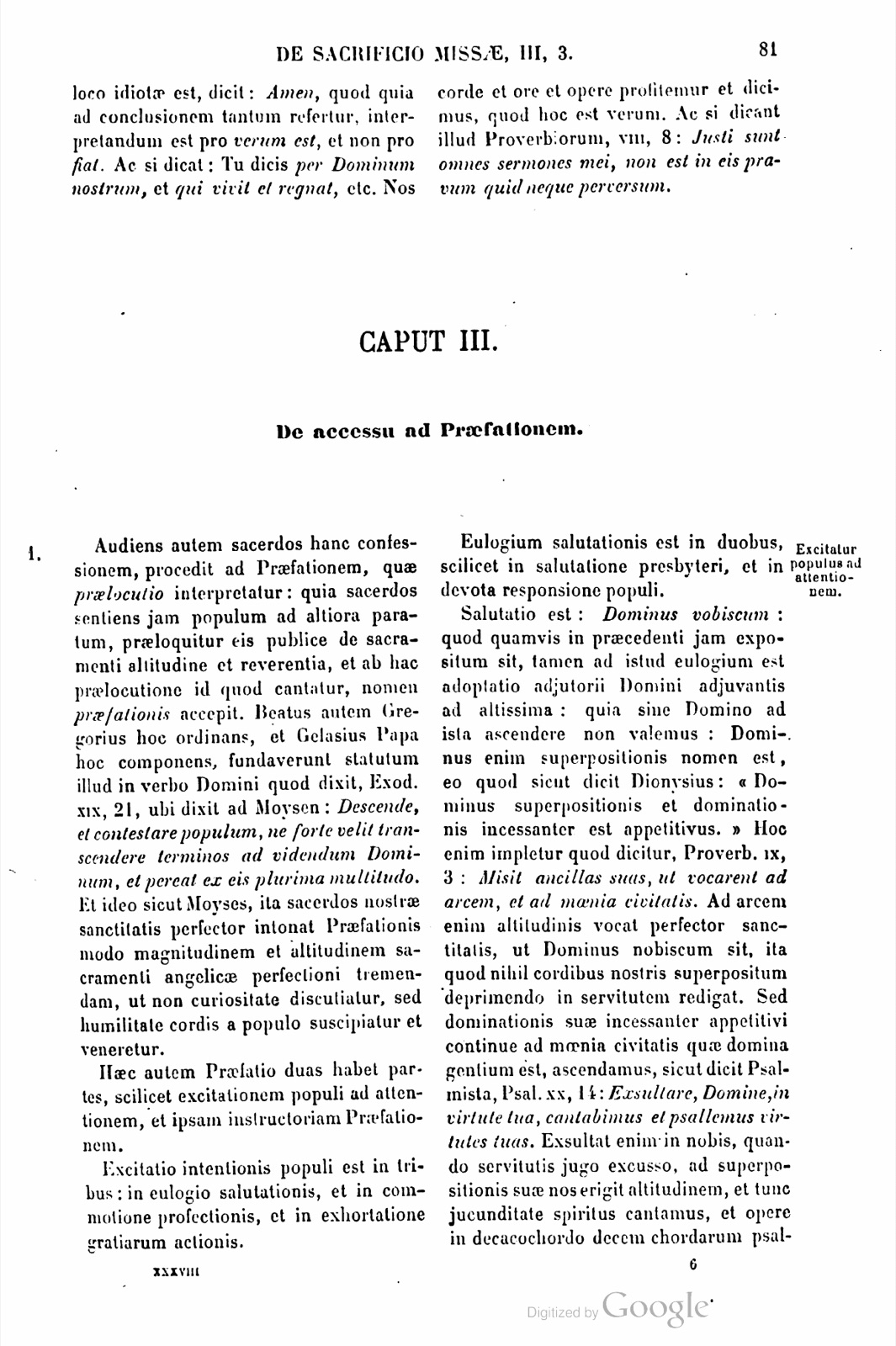
6. Sic igitur perficiens Secretam concludit alta voce: quia hoc quod in conclusione est, omnibus expedit scire, tam clericis, quam idiotis. Dicit igitur: Per Dominum nostrum, etc., ut sciatur, quod quidquid petitur, non nisi in nomine Christi exauditur. Et de hoc jam ante satis dictum est.
Quod autem quidam dicunt, quod exaltatione vocis iterata Christi praedicatio innuitur, quando in septimana Paschae inter decimam et quintamdecimam lunam Jerusalem regrediens clamabat docens in templo, dico quod hoc meo judicio nihil valet ad propositum. Et quod sancti aliquando hoc dicunt, pro certo sunt quaedam ex parva convenientia sumptae adaptationes.
Clamat ergo sacerdos ad populum hoc quod omnium est fides et instructio. Ac si dicat illud Proverbiorum, VIII, 4: O viri, ad vos clamito, et vox mea ad filios hominum.
Abscondit autem ea quae non sunt singulorum, sed quae sunt perfectorum tantum et paucorum ad intelligendum, et conclusione perfecta idiota vel is qui loco idiotae est, dicit: Amen, quod quia ad conclusionem tantum refertur, interpretandum est pro verum est, et non pro fiat. Ac si dicat: Tu dicis per Dominum nostrum, et qui vivit et regnat, etc. Nos corde et ore et opere profitemur et dicimus, quod hoc est verum. Ac si dicant illud Proverbiorum, VIII, 8: Justi sunt omnes sermones mei, non est in eis pravum quid neque perversum.
Nevertheless some say that before the passion, when the Jews were seeking to kill Jesus, as is said, John 11:54, Jesus went away into the region next to the desert, into the city which is called Ephrem, and there he remained with his disciples. And because he was not preaching publicly, then they say that here the priest represents this silence by his first silence. And it seems wondrous that that is answered in some respect, of which no mention is made in the thing itself. But in the secret silence of that priest absolutely no mention is made of that silence or likeness, because the priest fleeing from the altar neither hides himself nor lies concealed. And therefore such adaptations have no value with me.
6. Thus therefore, completing the Secret, he concludes in a high voice, because what is in the conclusion is useful for all to know, both clerics and simple persons. Therefore he says: Through our Lord, etc., so that it may be known that whatever is asked is heard only in the name of Christ. And about this enough has already been said above.
But as to what certain persons say, that by the raising of the voice the repeated preaching of Christ is suggested, when in the week of Passover, between the tenth and the fifteenth moon, returning to Jerusalem, he cried out teaching in the temple, I say that in my judgment this has no value for the matter proposed. And because saints sometimes say this, certainly these are adaptations taken from a small fittingness.
Therefore the priest cries aloud to the people what is the faith and instruction of all. As if he were saying that word of Proverbs 8:4: O men, to you I cry aloud, and my voice is to the sons of men.
But he hides those things which do not belong to individuals, but which belong only to the perfect and to the few for understanding; and when the conclusion has been completed, the simple person, or the one who is in the place of the simple person, says: Amen, which, because it is referred only to the conclusion, is to be interpreted as it is true, and not as let it be done. As if he were saying: You say through our Lord, and who lives and reigns, etc. We profess and say with heart and mouth and work that this is true. As if they were saying that word of Proverbs 8:8: All my speeches are just; there is in them nothing crooked or perverse.
If a page does not appear, its photograph has not been uploaded yet.