Works › The Book on the Sacrifice of the Mass
Volume 38 · pp. 127–128
Tractate III, Chapter XIV
A marker with ≈ is an approximate page boundary, placed by measure of the text; the page photographs remain the authority. In the paired views, clicking a page marker brings that page into view.
CAPUT XIV.
De his quae facta sunt in sacramenti figura et typo.
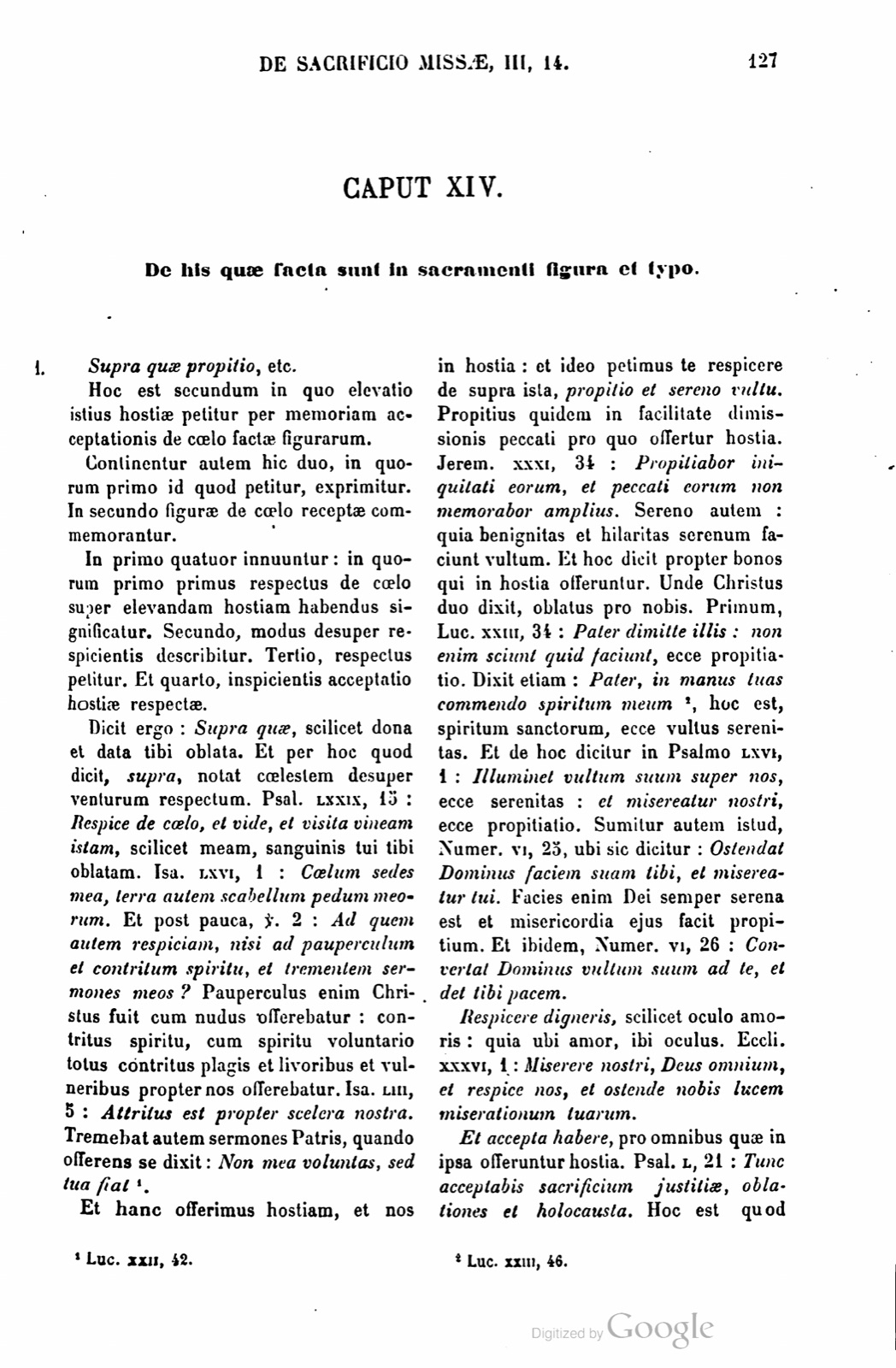
1. Supra quae propitio, etc. Hoc est secundum in quo elevatio istius hostiae petitur per memoriam acceptationis de coelo factae figurarum.
Continentur autem hic duo, in quorum primo id quod petitur, exprimitur. In secundo figurae de coelo receptae commemorantur.
In primo quatuor innuuntur: in quorum primo primus respectus de coelo super elevandam hostiam habendus significatur. Secundo, modus desuper respicientis describitur. Tertio, respectus petitur. Et quarto, inspicientis acceptatio hostiae respectae.
Dicit ergo: Supra quae, scilicet dona et data tibi oblata. Et per hoc quod dicit, supra, notat coelestem desuper venturum respectum. Psal. LXXIX, 15: Respice de coelo, et vide, et visita vineam istam, scilicet meam, sanguinis tui tibi oblatam. Isa. LXVI, 1: Coelum sedes mea, terra autem scabellum pedum meorum. Et post pauca, v. 2: Ad quem autem respiciam, nisi ad pauperculum et contritum spiritu, et trementem sermones meos? Pauperculus enim Christus fuit cum nudus offerebatur: contritus spiritu, cum spiritu voluntario totus contritus plagis et livoribus et vulneribus propter nos offerebatur. Isa. LIII, 5: Attritus est propter scelera nostra. Tremebat autem sermones Patris, quando offerens se dixit: Non mea voluntas, sed tua fiat 1.
Et hanc offerimus hostiam, et nos in hostia: et ideo petimus te respicere de supra ista, propitio et sereno vultu. Propitius quidem in facilitate dimissionis peccati pro quo offertur hostia. Jerem. XXXI, 34: Propitiabor iniquitati eorum, et peccati eorum non memorabor amplius. Sereno autem: quia benignitas et hilaritas serenum faciunt vultum. Et hoc dicit propter bonos qui in hostia offeruntur. Unde Christus duo dixit, oblatus pro nobis. Primum, Luc. XXIII, 34: Pater dimitte illis: non enim sciunt quid faciunt, ecce propitiatio. Dixit etiam: Pater, in manus tuas commendo spiritum meum 2, hoc est, spiritum sanctorum, ecce vultus serenitas. Et de hoc dicitur in Psalmo LXVI, 1: Illuminet vultum suum super nos, ecce serenitas: et misereatur nostri, ecce propitiatio. Sumitur autem istud, Numer. VI, 25, ubi sic dicitur: Ostendat Dominus faciem suam tibi, et misereatur tui. Facies enim Dei semper serena est et misericordia ejus facit propitium. Et ibidem, Numer. VI, 26: Convertat Dominus vultum suum ad te, et det tibi pacem.
Respicere digneris, scilicet oculo amoris: quia ubi amor, ibi oculus. Eccli. XXXVI, 1: Miserere nostri, Deus omnium, et respice nos, et ostende nobis lucem miserationum tuarum.
Et accepta habere, pro omnibus quae in ipsa offeruntur hostia. Psal. L, 21: Tunc acceptabis sacrificium justitiae, oblationes et holocausta. Hoc est quod pro omnibus fecit justitiam satisfactionis.
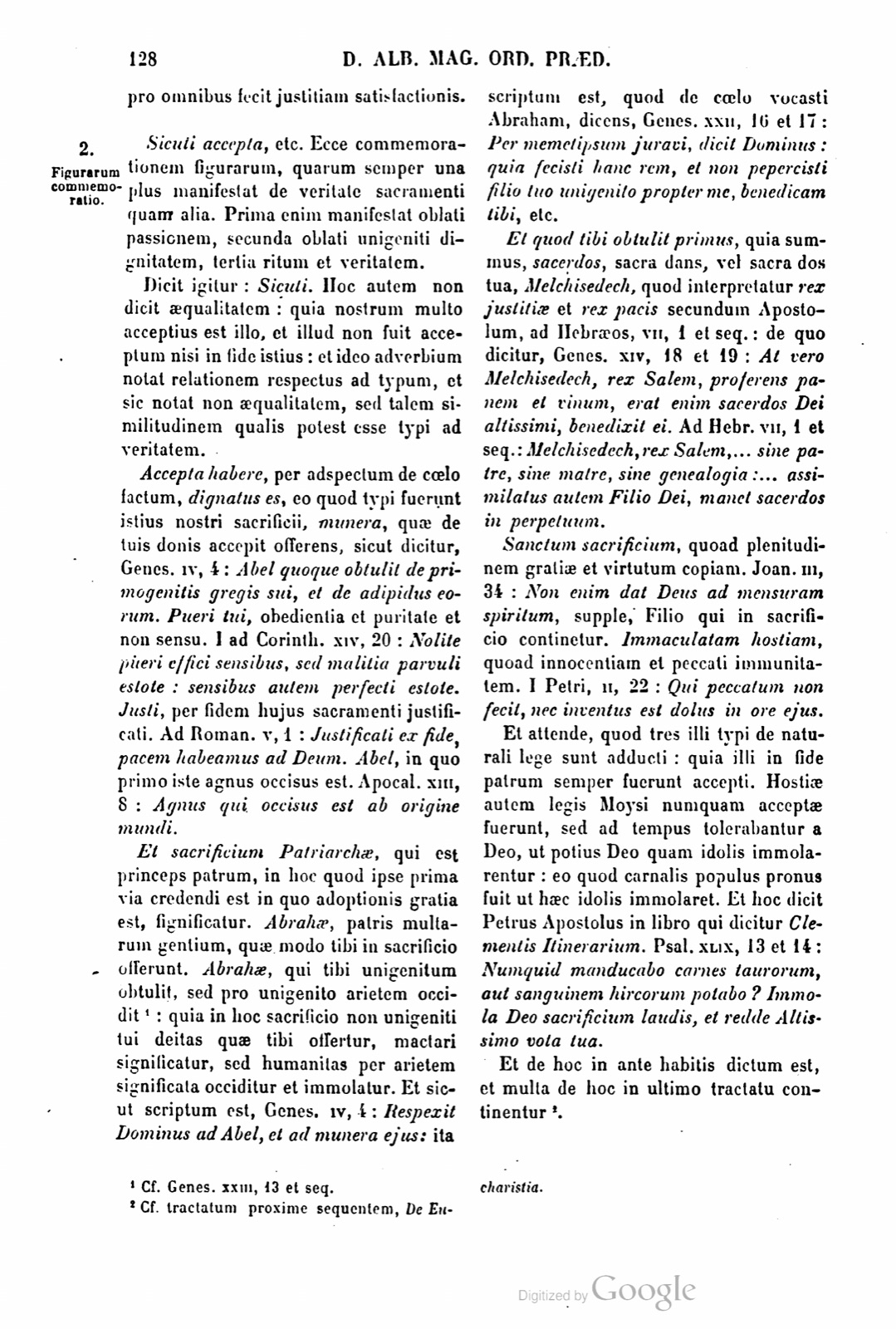
[Marginal label: Figurarum commemoratio.] 2. Sicuti accepta, etc. Ecce commemorationem figurarum, quarum semper una plus manifestat de veritate sacramenti quam alia. Prima enim manifestat oblati passionem, secunda oblati unigeniti dignitatem, tertia ritum et veritatem.
Dicit igitur: Sicuti. Hoc autem non dicit aequalitatem: quia nostrum multo acceptius est illo, et illud non fuit acceptum nisi in fide istius: et ideo adverbium notat relationem respectus ad typum, et sic notat non aequalitatem, sed talem similitudinem qualis potest esse typi ad veritatem.
CHAPTER XIV.
On those things which were done in figure and type of the sacrament.
1. Upon which with a propitious, etc. This is the second part, in which the elevation of this host is sought through memory of the acceptance of the figures made from heaven.
But two things are contained here: in the first of which that which is sought is expressed; in the second, the figures received from heaven are commemorated.
In the first four things are indicated: in the first of which the first regard from heaven to be had upon the host to be elevated is signified. Secondly, the mode of the one looking down from above is described. Thirdly, the regard is sought. And fourthly, the acceptance by the one inspecting of the host regarded.
Therefore he says: Upon which, namely the gifts and given things offered to thee. And by the fact that he says upon, he marks the heavenly regard about to come from above. Psalm 79:15: Look down from heaven, and see, and visit this vine, namely my vine, offered to thee by thy blood. Isaiah 66:1: Heaven is my seat, but the earth is the footstool of my feet. And after a few words, verse 2: But to whom shall I look, except to the poor little one and the contrite in spirit, and the one trembling at my words? For Christ was poor when he was offered naked; contrite in spirit, when with voluntary spirit he was wholly crushed by blows and stripes and wounds for us. Isaiah 53:5: He was crushed for our crimes. But he trembled at the words of the Father when, offering himself, he said: Not my will, but thine be done 1.
And we offer this host, and ourselves in the host; and therefore we ask thee to look upon those things from above, with a propitious and serene countenance. Propitious indeed in the ease of remission of the sin for which the host is offered. Jeremiah 31:34: I will be propitious to their iniquity, and their sin I will remember no more. But serene, because benignity and gladness make a serene face. And he says this because of the good who are offered in the host. Hence Christ said two things when offered for us. First, Luke 23:34: Father, forgive them, for they know not what they do: behold propitiation. He also said: Father, into thy hands I commend my spirit 2, that is, the spirit of the saints: behold the serenity of countenance. And concerning this it is said in Psalm 66:1: May he illuminate his countenance upon us: behold serenity; and may he have mercy on us: behold propitiation. But this is taken from Numbers 6:25, where it is said thus: May the Lord show his face to thee and have mercy on thee. For the face of God is always serene, and his mercy makes it propitious. And in the same place, Numbers 6:26: May the Lord turn his countenance toward thee and give thee peace.
That thou wouldest deign to regard, namely with the eye of love, because where love is, there is the eye. Ecclesiasticus 36:1: Have mercy on us, God of all, and look upon us, and show us the light of thy acts of mercy.
And to hold them accepted, for all things which are offered in that host. Psalm 50:21: Then thou shalt accept the sacrifice of justice, oblations and holocausts. This is what made the justice of satisfaction for all.
[Marginal label: Commemoration of the figures.] 2. As thou didst deign to hold accepted, etc. Behold the commemoration of the figures, of which always one manifests more of the truth of the sacrament than another. For the first manifests the passion of the one offered; the second, the dignity of the only-begotten one offered; the third, the rite and the truth.
Therefore he says: As. But this does not state equality, because ours is much more acceptable than that, and that was not accepted except in faith of this one; and therefore the adverb marks a relation of regard to the type, and thus it marks not equality, but such a likeness as can exist of a type to the truth.
Accepta habere, per adspectum de coelo factum, dignatus es, eo quod typi fuerunt istius nostri sacrificii, munera, quae de tuis donis accepit offerens, sicut dicitur, Genes. IV, 4: Abel quoque obtulit de primogenitis gregis sui, et de adipibus eorum. Pueri tui, obedientia et puritate et non sensu. I ad Corinth. XIV, 20: Nolite pueri effici sensibus, sed malitia parvuli estote: sensibus autem perfecti estote. Justi, per fidem hujus sacramenti justificati. Ad Roman. V, 1: Justificati ex fide, pacem habeamus ad Deum. Abel, in quo primo iste agnus occisus est. Apocal. XIII, 8: Agnus qui occisus est ab origine mundi.
Et sacrificium Patriarchae, qui est princeps patrum, in hoc quod ipse prima via credendi est in quo adoptionis gratia est, significatur. Abrahae, patris multarum gentium, quae modo tibi in sacrificio offerunt. Abrahae, qui tibi unigenitum obtulit, sed pro unigenito arietem occidit: quia in hoc sacrificio non unigeniti tui deitas quae tibi offertur, mactari significatur, sed humanitas per arietem significata occiditur et immolatur. Et sic ut scriptum est, Genes. IV, 4: Respexit Dominus ad Abel, et ad munera ejus: ita scriptum est, quod de coelo vocasti Abraham, dicens, Genes. XXII, 16 et 17: Per memetipsum juravi, dicit Dominus: quia fecisti hanc rem, et non pepercisti filio tuo unigenito propter me, benedicam tibi, etc. 3
Et quod tibi obtulit primus, quia summus, sacerdos, sacra dans, vel sacra dos tua, Melchisedech, quod interpretatur rex justitiae et rex pacis secundum Apostolum, ad Hebraeos, VII, 1 et seq.: de quo dicitur, Genes. XIV, 18 et 19: At vero Melchisedech, rex Salem, proferens panem et vinum, erat enim sacerdos Dei altissimi, benedixit ei. Ad Hebr. VII, 1 et seq.: Melchisedech, rex Salem, ... sine patre, sine matre, sine genealogia: ... assimilatus autem Filio Dei, manet sacerdos in perpetuum.
Sanctum sacrificium, quoad plenitudinem gratiae et virtutum copiam. Joan. III, 34: Non enim dat Deus ad mensuram spiritum, supple, Filio qui in sacrificio continetur. Immaculatam hostiam, quoad innocentiam et peccati immunitatem. I Petri, II, 22: Qui peccatum non fecit, nec inventus est dolus in ore ejus.
Et attende, quod tres illi typi de naturali lege sunt adducti: quia illi in fide patrum semper fuerunt accepti. Hostiae autem legis Moysi numquam acceptae fuerunt, sed ad tempus tolerabantur a Deo, ut potius Deo quam idolis immolarentur: eo quod carnalis populus pronus fuit ut haec idolis immolaret. Et hoc dicit Petrus Apostolus in libro qui dicitur Clementis Itinerarium. Psal. XLIX, 13 et 14: Numquid manducabo carnes taurorum, aut sanguinem hircorum potabo? Immola Deo sacrificium laudis, et redde Altissimo vota tua.
Et de hoc in ante habitis dictum est, et multa de hoc in ultimo tractatu continentur 4.
Thou didst deign to hold accepted, through a regard made from heaven, because they were types of this our sacrifice, the gifts which Abel received from thy gifts as one offering, as is said, Genesis 4:4: Abel also offered of the firstlings of his flock and of their fat. Thy boy, in obedience and purity and not in sense. 1 Corinthians 14:20: Do not become children in senses, but be little children in malice; yet be perfect in senses. Just, justified through faith in this sacrament. Romans 5:1: Justified by faith, let us have peace toward God. Abel, in whom this lamb was first slain. Apocalypse 13:8: The lamb who was slain from the origin of the world.
And the sacrifice of the Patriarch, who is the prince of the fathers, is signified in this, that he himself is the first way of believing in whom the grace of adoption is. Of Abraham, father of many nations, which now offer to thee in the sacrifice. Of Abraham, who offered to thee his only-begotten, but for the only-begotten killed a ram, because in this sacrifice it is not signified that the deity of thy only-begotten, which is offered to thee, is slain, but that the humanity signified by the ram is killed and immolated. And thus, as it is written, Genesis 4:4: The Lord looked upon Abel and upon his gifts, so it is written that from heaven thou calledst Abraham, saying, Genesis 22:16 and 17: By myself I have sworn, says the Lord: because thou hast done this thing and hast not spared thy only-begotten son for my sake, I will bless thee, etc. 3
And what the first, because highest, priest offered to thee, giving sacred things, or thy sacred dowry, Melchisedech, which is interpreted king of justice and king of peace according to the Apostle, Hebrews 7:1 and following: of whom it is said, Genesis 14:18 and 19: But Melchisedech, king of Salem, bringing forth bread and wine, for he was priest of God Most High, blessed him. Hebrews 7:1 and following: Melchisedech, king of Salem, ... without father, without mother, without genealogy: ... but likened to the Son of God, he remains a priest forever.
A holy sacrifice, with respect to the fullness of grace and the abundance of virtues. John 3:34: For God does not give the Spirit by measure, supply, to the Son who is contained in the sacrifice. An immaculate host, with respect to innocence and immunity from sin. 1 Peter 2:22: Who committed no sin, nor was guile found in his mouth.
And note that those three types are brought from the natural law, because those were always accepted in the faith of the fathers. But the hosts of the law of Moses were never accepted, but were tolerated by God for a time, so that they might be immolated to God rather than to idols, because the carnal people was prone to immolate these things to idols. And Peter the Apostle says this in the book which is called the Itinerary of Clement. Psalm 49:13 and 14: Shall I eat the flesh of bulls, or drink the blood of goats? Immolate to God the sacrifice of praise, and render thy vows to the Most High.
And concerning this it has been said in what came before, and many things concerning this are contained in the final treatise 4.
If a page does not appear, its photograph has not been uploaded yet.