Works › The Book on the Sacrifice of the Mass
Volume 38 · pp. 181–182
Index of Notable Things, S-V
A marker with ≈ is an approximate page boundary, placed by measure of the text; the page photographs remain the authority. In the paired views, clicking a page marker brings that page into view.
SPIRITUS est animae pars purior et simplicior et superior. I, 1, n. 1.
SPIRITUI sancto appropriata. I, 3, n. 23.
SPIRITUS sanctus est nexus et consensio et dilectio et delectatio Patris et Filii. Ibid.
SPIRITUS dicitur quia spirat vitam, et intelligentiam veritatis, et ad coelestia elevationem intentionis. Ibid. Et, II, 9, n. 8 et 11.
SPIRITUS sancti proprium opus est sanctificare Ecclesiam. II, 9, n. 9.
SPIRITUS sanctus non est pater Christi. II, 9, n. 3. Item, II, 10, n. 3.
SPIRITUS sanctus vivificator. II, 10, n. 8.
SPIRITUS sanctus a Patre et Filio procedit. Ibidem.
SPIRITU sancto Prophetae inspirati. Ibid.
SUBDIACONUS imperfectorum, diaconus perfectorum doctrinam pronuntiat. II, 3, n. 1.
Quare SUBDIACONUS lecturus Epistolam non accipit benedictionem a sacerdote? Ibid.
Quare SUBDIACONUS ad lectionem Evangelii pulvillum portat ante pectus? II, 7, n. 5.
SUPERPOSITIO perficitur ex tribus. I, 2, n. 3.
SYMBOLUM quid significet, et cur sacerdos et non populus incipiat Credo? II, 8, n. 1.
SYMBOLUM quid sit secundum nomen? II, 8, n. 2.
SYMBOLUM fidei quomodo ab Apostolis compositum? Ibid.
SYMBOLI Apostolorum divisio et expositio. II, 9.
SYMBOLUM Apostolorum quomodo in Nicaena synodo sit expositum? II, 10.
SPIRIT is the purer and simpler and higher part of the soul. I, 1, n. 1.
Things appropriated to the Holy SPIRIT. I, 3, n. 23.
The Holy SPIRIT is the bond and agreement and love and delight of the Father and the Son. Ibid.
SPIRIT is so called because it breathes life, and the understanding of truth, and an elevation of intention toward heavenly things. Ibid. And, II, 9, n. 8 and 11.
The proper work of the Holy SPIRIT is to sanctify the Church. II, 9, n. 9.
The Holy SPIRIT is not the father of Christ. II, 9, n. 3. Likewise, II, 10, n. 3.
The Holy SPIRIT is life-giver. II, 10, n. 8.
The Holy SPIRIT proceeds from the Father and the Son. In the same place.
The Prophets were inspired by the Holy SPIRIT. Ibid.
The SUBDEACON pronounces the doctrine of the imperfect, the deacon that of the perfect. II, 3, n. 1.
Why does the SUBDEACON, when about to read the Epistle, not receive a blessing from the priest? Ibid.
Why does the SUBDEACON, at the reading of the Gospel, carry a cushion before his breast? II, 7, n. 5.
SUPERPOSITION is perfected from three things. I, 2, n. 3.
What does the SYMBOL signify, and why does the priest, and not the people, begin Credo? II, 8, n. 1.
What is the SYMBOL according to the name? II, 8, n. 2.
How was the SYMBOL of faith composed by the Apostles? Ibid.
The division and exposition of the SYMBOL of the Apostles. II, 9.
How was the SYMBOL of the Apostles explained in the Nicene synod? II, 10.
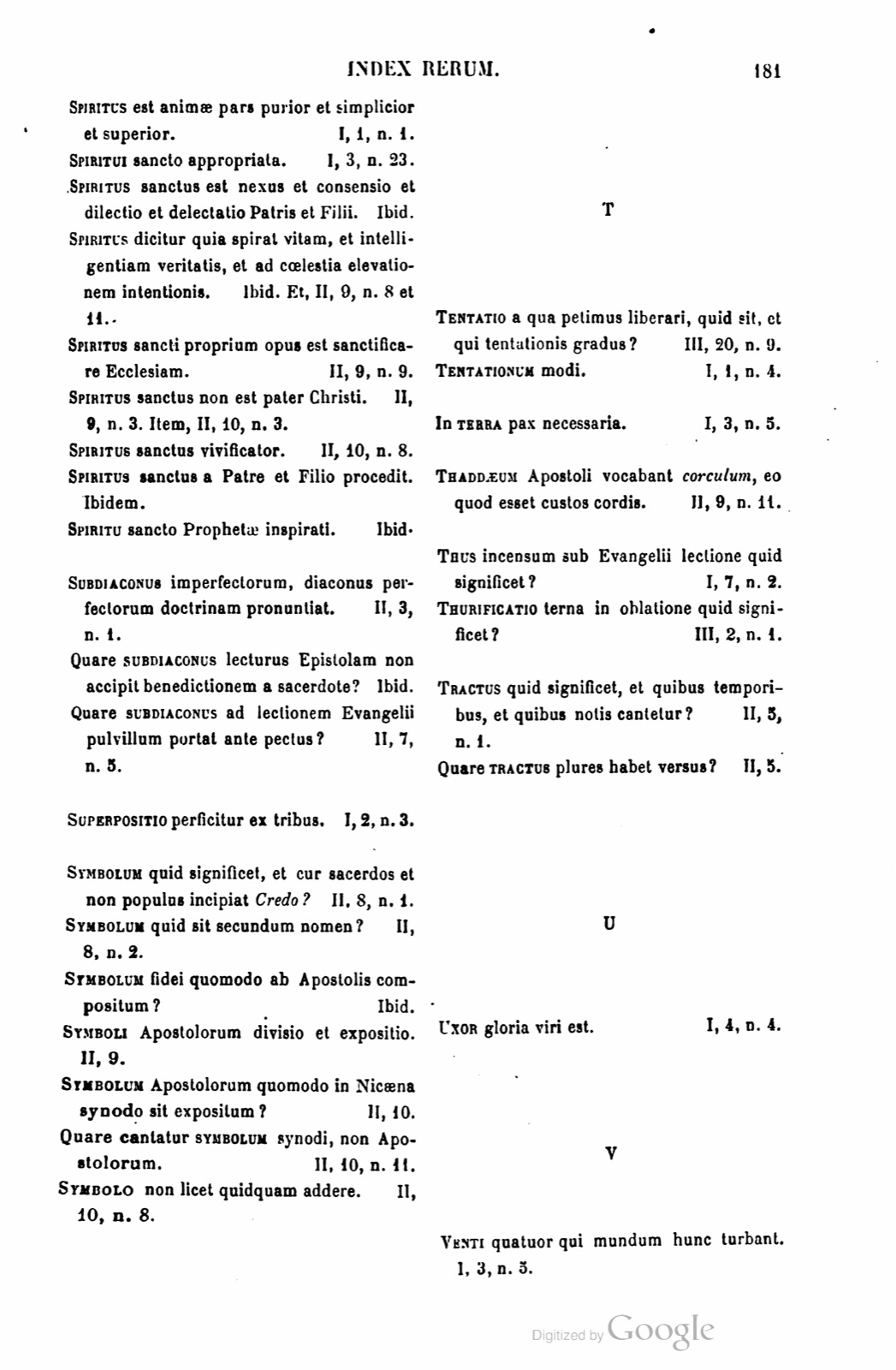
Quare cantatur SYMBOLUM synodi, non Apostolorum. II, 10, n. 11.
SYMBOLO non licet quidquam addere. II, 10, n. 8.
T
TENTATIO a qua petimus liberari, quid sit, et qui tentationis gradus? III, 20, n. 9.
TENTATIONUM modi. I, 1, n. 4.
In TERRA pax necessaria. I, 3, n. 5.
THADDAEUM Apostoli vocabant corculum, eo quod esset custos cordis. II, 9, n. 11.
THUS incensum sub Evangelii lectione quid significet? I, 7, n. 2.
THURIFICATIO terna in oblatione quid significet? III, 2, n. 1.
TRACTUS quid significet, et quibus temporibus, et quibus notis cantetur? II, 5, n. 1.
Quare TRACTUS plures habet versus? II, 5.
U
UXOR gloria viri est. I, 4, n. 4.
V
VENTI quatuor qui mundum hunc turbant. I, 3, n. 5.
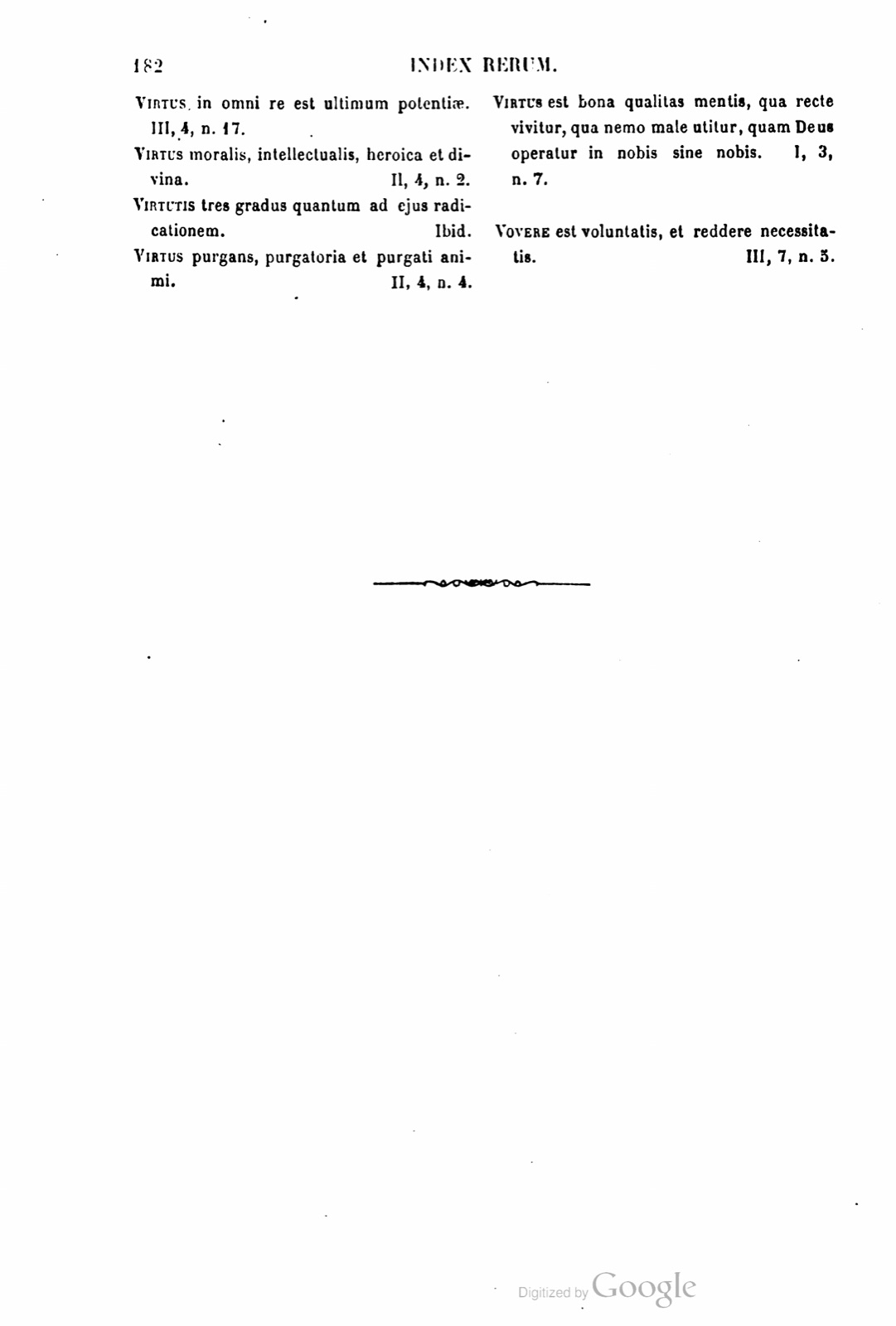
VIRTUS, in omni re est ultimum potentiae. III, 4, n. 17.
VIRTUS moralis, intellectualis, heroica et divina. II, 4, n. 2.
VIRTUTIS tres gradus quantum ad ejus radicationem. Ibid.
VIRTUS purgans, purgatoria et purgati animi. II, 4, n. 4.
VIRTUS est bona qualitas mentis, qua recte vivitur, qua nemo male utitur, quam Deus operatur in nobis sine nobis. I, 3, n. 7.
VOVERE est voluntatis, et reddere necessitatis. III, 7, n. 5.
Why is the SYMBOL of the synod sung, not that of the Apostles. II, 10, n. 11.
It is not permitted to add anything to the SYMBOL. II, 10, n. 8.
T
What is the TEMPTATION from which we ask to be freed, and what are the grades of temptation? III, 20, n. 9.
The modes of TEMPTATIONS. I, 1, n. 4.
On EARTH peace is necessary. I, 3, n. 5.
The Apostles used to call THADDAEUS little heart, because he was guardian of the heart. II, 9, n. 11.
What does INCENSE, the incense under the reading of the Gospel, signify? I, 7, n. 2.
What does the threefold INCENSING in the oblation signify? III, 2, n. 1.
What does the TRACT signify, and at what times, and by what notes is it sung? II, 5, n. 1.
Why does the TRACT have several verses? II, 5.
U
A WIFE is the glory of the man. I, 4, n. 4.
V
The four WINDS which disturb this world. I, 3, n. 5.
VIRTUE, in every thing, is the ultimate of potency. III, 4, n. 17.
Moral, intellectual, heroic, and divine VIRTUE. II, 4, n. 2.
The three grades of VIRTUE with respect to its rooting. Ibid.
Purging VIRTUE, purgatorial virtue, and virtue of a purged soul. II, 4, n. 4.
VIRTUE is a good quality of the mind, by which one lives rightly, which no one uses badly, which God works in us without us. I, 3, n. 7.
TO VOW belongs to the will, and to render belongs to necessity. III, 7, n. 5.
If a page does not appear, its photograph has not been uploaded yet.