Volume II, pages 1–19 of the 1732 edition, from K to LAC: everything printed on these pages, in order.
K כףCaph. T
קוף Koph.HE letter K answers to the Hebrew Koph, and sometimes to Caph too. It is almost entirely banished out of the French Language, and is scarce ever made use of, unless to express foreign Names. The Words which are most to be met with here under K, may be sought for under the Letter C.
KABALA, Tradition. See under the letter C CABALA.
KABZEEL, a City belonging to the Tribe of Judah, in the Southern Part of this Tribe. Joshua xv. 21.
KADESH, or Kadesh-barnea, otherwise Gen. xiv. 7. Numb. xx. 1.called the Fountain of Judgment. This City is celebrated for several Events. At Kadesh, Miriam the Sister of Moses died. Here it was that Moses and Aaron, shewing a Distrust of God’s Power, when they smote the Rock at the Waters of Strife, were condemned to dye, without having the Consolation of entring the promised Land. The Numb. xxvii. 14. Josh. xii. 22. Josh. xv. 24. Herodot. Lib. 2. Chap. 5. p. 2.King of Kadesh was one of the Princes killed by Joshua. This City was given to the Tribe of Judah. It was about eight Leagues from Hebron towards the South.
It is perhaps the same as Cadytis, mention’d by Herodotus, the Situation whereof he describes in this Manner. The Countrey of the Syrians, called Palestine, reaches from Phœnicia to the Mountains of Cadis. Now Cadis is a City, in my Opinion, not much less than Sardis. From Cadis, the trading Places which lye upon the Sea, as far as the City Jenysus, belong to Arabia. And from Jenysus to the Lake Sirbon, they again belong to Syria. Palestine extends therefore from Phœnicia, which ends about Mount Carmel, to the Mountains of Kadesh-barnea, which lye to the South of Palestine. From Kadesh to Jenysus, a Place which is unknown to us, the maritime Towns belong to the Arabians; and from Jenysus to the Lake Sirbon they again belong to the Palestines, or Syrians of Palestine. This seems to be pretty clear. Herodotus in another Herodot. Lib. 2. p. 156.Place says, that Nechos King of Egypt, having attacked the Syrians at Magdolum, defeated them, and took Cadytis from them, which is a large City in Syria. Some believe that he meant the Battle fought between Necho and Josiah King of Judah, wherein this last Prince was overcome 2 Kings xxiii. 29. 30.and wounded mortally. The Scripture says, that this battle was fought at Megiddo, which has some Resemblance to Magdolum, mentioned by Herodotus. Scaliger was of this Opinion.
Others have thought, that Cadytis signified the City of Jerusalem, called Cadyta or Cadyscha, as if it were said the holy City. But we do not read expressly in Scripture, that Necho took this City, either before or after his Expedition to Carchemish1. We were of Opinion formerly, that Cadys,
See our Comment. upon 2 Kings xxiii.Cadys, which Herodotus speaks of, is the same as Kadesh or Kedesh of Nephtali, in Upper-Galilee, which Necho might have taken after his Victory over Josiah at Megiddo, near the Foot of Mount Carmel. His road to Carchemish, upon the Euphrates, lay in the Neighbourhood of Kedesh of Nephtali.
Tob. i. 1, 2.KADMIEL, one of the Children of Hodoviah, who returned from the Captivity of Babylon. Ezra. ii. 40.
KADMONITES, that is to say, Eastern People, ancient Inhabitants of the promised Land, descended from Canaan the Son of Ham. Their Habitation was beyond Jordan, to the East of Phœnicia, about Mount Libanus. The celebrated Cadmus, the founder of Thebes in Bœotia, is thought to have been originally a Kadmonite, and his Wife Hermione to have taken her Name from Mount Hermon. The Kadmonites were Hivites, and the Word Hivites is derived from a Root which signifies a Serpent. The Fable says, that Cadmus sowed Serpents Teeth, and that from thence sprung up armed Men, because he settled his Hivites or Kadmonites at Thebes, who were the Fathers of a valiant and martial Nation.
KADUMIM. See CADUMIM. The Brook Cadumim.
KAIN, Father of the Kenites. Numb. xxiv. 22. See KENITES.
KALENDS, the first Day of the Month, according to the Style of the Latins2. The Greeks had no Kalends; hence proverbially People are referr’d to the Greek Kalends, that is to say, to some unknown and uncertain Time. Among the Hebrews there were particular Ceremonies observed on the first Day of every Month, whereof we shall say something under the Article Neomenia, which signifies the same thing in Greek as Kalends. And the Translators of the Scripture use indifferently both these Words to denote the first Day of the Month.
KANNA or Canna, a sort of Measure consisting of six Hebrew Cubits, whereof each included a Palm more than the Babylonian Cubit. The six Cubits or Kanna, or Hebrew Fathom, was ten Foot three Inches. See above CALAMUS.
KARAITES, a Sect of the Jews, who adhere principally to the Text and literal Sense of Scripture, and are opposite to the Rabbinists, who insist chiefly upon the Traditions of the Elders. See under the Letter C, CARAITES.
Josh. xv. 3.KARKAA, a Town upon the Confines of the Tribe of Judah, Southward. Eusebius places a Castle called Carcaria, at the Distance of a Day’s Journey from Petra.
KASIB or Kasbi, a City in the Tribe Judah. Gen. xxxviii. 5. See CASBI.
KASIDEANS. See ASSIDIANS, and 1 Macc. vii. 13. and Ps. lxxviii. 3.
KEDAR, the Son of Ishmael, is the Father of the Kedarenians, mentioned by Pliny, who dwelt in the Neighbourhood of the Nabathæans in Arabia the Desert. These People do not live in Towns or Houses, but under Tents; for which Reason Cant. i. we cannot easily shew the Place of their 4. Jerem.
xlii. 11. Habitation, because they so often change it.
Arabia-Deserta is sometimes called in Scripture Kedar; but the Dwelling of the Kedarenians was principally in the Southern Part of Arabia-Deserta, to the North of Arabia-Petræa and Arabia-Felix: There were some of them, even as far as the Red- Sea.
KEDEM. This is an Hebrew Word which we find in some Places of the Scripture, and is generally translated East. It is Gen. xi. 1, said, for Example, that the Sons of Noah 2. having but one Language, departed from the East and came into the Land of Shinar. Hereupon some Difficulties have been raised; for the Land of Shinar is not to the West of Armenia, where we know the Ark rested, and Armenia does not lye to the East of Babylonia, where the Land of Shinar was. On the contrary, we are sure that it is to the North of this Countrey. To disengage themselves out of these Perplexities, Interpreters and Commentators have imagined different Explanations of this Passage.
Capellus apud Boch. Phaleg. l. 1. c. 7. Gen. xxv. 15. Bochart. loco citato.Some by the Word Kedem have understood the Countrey which was afterwards peopled by Kedemah, the youngest Son of Ishmael. Others, that Kedem was used for, at the Beginning; and that Moses intended to describe the particular Time at which the first Men departed after the Deluge, in order to spread themselves into different Countries. Others, that Moses spoke according to the Custom of the Assyrians, who called all the Provinces of their Empire, which were situated beyond the Tigris, Kedem or East; and those on this Side the same River, the West or Arab. Drusius, instead of they departed from the East, translates, they departed to go towards the East. He relates some passages which seem to favour his Explanation: But we must confess that it is something forced.
It appears to us, from a great Number of Places in the Old, and even in the New Testament, that the sacred Writers called the Provinces which were beyond the Tigris and Euphrates, even Mesopotamia, Armenia, and Persia, Kedem or the East. Mo- their ses, who had been bred up in Egypt, and lived long in Arabia, in this likewise might probably follow the Custom of the Country. It is certain that Babylonia, Chaldæa, Susiana, Persia, and a Part of Mesopotamia, as well as the Rivers of Euphates and Tigris, for the greatest part of their Course are to the East of Palestine, Egypt, and Arabia.
It is farther certain, that the People who came from Armenia, Syria, Media, and Upper Mesopotamia, entred Palestine and Egypt from the East side, which was sufficient for the Hebrews to say, that these People lay to the East, with respect to them. Lastly, We prove that these Countries were known among the Hebrews under the Name of East, by the following Passages. Balaam Numb. xxiii. 7.says, that Balak King of Moab had brought him from the Mountains of the East; that is to say, from Pethor upon the Euphrates. If. xli. 2.Isaiah says, that Abraham came from the East into the Land of Canaan. We know he came from Mesopotamia and Chaldæa. The If. xlvi. 11.same Prophet says, that Cyrus should come from the East against Babylon. He places If. ix. 12.Syria to the East of Judæa. Daniel says, Antiochus should be troubled with the Dan. xi. 44.News which he received relating to the Revolt of the Eastern Provinces; that is to say, the Provinces on the other Side of the Euphrates. St. Matthew says, that the wise Men who came to worship Jesus Christ, set out from the East. Matt. ii. 1.
All this demonstrates, in my opinion, what we have advanced; that in the Scripture Style, the East is often used for the Provinces which lye to the North of Judæa and Egypt, from whence however people generally enter Palestine by the Way only of Damascus, which is to the North-East of this Country.
Gen. xxv. 15.KEDEMAH, Ishmael’s youngest Son, who dwelt, as did his Brethren likewise, Eastwards of the Mountains of Gilead. The Town of Kedemoth might at first, perhaps, belong to the Descendants of Kedemah. But we cannot look upon him as Father of the Kadmonites or Kedmonites, mentioned. Gen. xv. 19. For these are the ancient Inhabitants of Canaan, who were already powerful in the Time of Abraham, Kedemah’s Grandfather.
Josh. xiii. 18.KEDEMOTH, a Town in the Tribe of Reuben, Eastward of the Brook Arnon. It is one of the Stations of the Hebrews in the Deut. ii. 26.Wilderness. It was given to the Sons of Merari, of the Race of Levi, for their Abode.
Chr. vi. 79.KEDESH NEPHTALI. Josephus calls it Cadesa or Cædesa, and the Greek of Tobit, Cadis: It lay in Upper Galilee above Nasson, having Sephet to the Left or North. Kedesh Tob. i. 2.was given to the Tribe of NephtaliJosh. xix. 37. Josh. xxi. 32. Josh. xx. 7., and afterwards a Cession was made of it to the Levites of Gersham’s Family, for their Habitation; at length it was declared a City of Refuge.
KEHELATHAH, an Incampment of the Israelites in the Wilderness; when they left Rissa, they went to Kehelathah, Numb. xxxiii. 22. We are of Opinion, that it is the same as Keilah, a Town Southward of Judah, which we shall next speak of. But when we say they went to Keilah, our Meaning is only that they went into the Wilderness, which was about this City.
Josh. xv. 44.KEILAH, a Town in the Tribe of Judah. Eusebius places it at the Distance of seventeen Miles from Eleutheropolis, on the Side of Hebron. St. Jerom makes it to be only eight Miles from Hebron. It is said that Sozomen. Hist. Lib. 8. c. 29.the Prophet Habbakuk’s Tomb was shewn there.
KELITAH or Kelaiah, a Levite. Ezra. x.
23.KEMUEL, the third Son of Nahor.
Moses says, that he was the Father of the Gen. xxii. 21.Syrians, or rather of Aram. He had a Son of this Name, or he had a Son who was surnamed the Syrian or Aramite; for the Nation of the Syrians was derived from Aram, one of the Sons of Shem. Kemuel may have given his Name to the Kamilites, a People of Syria lying Westward of the Euphrates.
Strabo. Lib. 16. p. 710.KEMUEL the Son of Shiphtan, of the Tribe of Ephraim, was one of the Deputies appointed to make a Partition of the Numb. xxxiv. 24. Numb. xxxii. 52.promised Land, among the other Tribes.
KENATH, a Town in the Tribe of Manasseh, beyond Jordan. It took the Name of Nobah, after that one Nobah an Israelite had made a Conquest of it. Nevertheless it is now known by the Name of Kenath. Eusebius says, it is in the Trachonitis, somewhere about Bozra. Pliny places it among the Towns of the Decapolis.
Plin Lib. 5. c. 18.KENAZ, the Father of Othniel and Caleb. Joshua xv. 17. Judg. i. 13. iii. 9. &c.
KENAZ, the fourth Son of Eliphaz, the Son of Esau. He was one of the Dukes of Edom. He succeeded Zepho, and was succeeded by Korah. Gen. xxxvi. 15.
KENITES, People who dwelt Westward of the Dead-Sea, and extended themselves pretty far into Arabia-Petræa; for Jethro, Moses’s Father-in-law and a Priest of MidianJudg. i. 16 and 1 Chr. xi. 55. 1 Sam. xv. 6. Gen. xv. 19., was a Kenite, and in Saul’s Time the Kenites were mingled with the Amalekites. Altho’ the Kenites were some of those People, whose Lands God had promised to the Descendants of Abraham, nevertheless, in Consideration of Jethro, the Father-in-law of Moses, all of them who submitted to the Hebrews, were suffered to live in their own Country: The rest fled, in all Probability, to the Edo
mites and Amalekites. The Lands of the Kenites were in Judah’s Partition.
Balaam having been invited by Balak King of Moab, to devote and curse the IsraelitesNumb. xxiv. 21.; he stood upon a Mountain, from whence he could view the Camp of Israel, and the Land of Kain, and said these Words, addressing himself to the Kenites. Strong is thy Dwelling-Place, and thou puttest thy Nest in a Rock; nevertheless the Kenite shall be wasted, until Ashur shall carry thee away captive. The Kenites dwelt in Mountains and Rocks, which were almost inaccessible. The Word Ken signifies a Nest, a Hole, a Cave; and Kinnim, in Greek, may be translated Troglodytes. The Kenites were conquered and carried into Captivity by NebuchadnezzarJoseph. Antiq. I. 1. and c. 2. p. 345.. After Saul there is no more Mention of the Kenites; but they still subsisted, being mingled among the Edomites, and other Arabians of Arabia-Petræa. We have elsewhere spoken of Eber or Heber the Kenite.
KENIZZITES, ancient People of Canaan, whose Land God promised to the Gen. xv. 19.Descendants of Abraham. It is believed that the Kenizzites dwelt in the Mountains Southward of Judæa. Kenaz, the Son of Eliphaz, probably took his Name from the Kenizzites, among whom he settled.
KEPHA, Kaipha or Keipha, or Hepha, a Town situated at the Foot of Mount Carmel, on the North Side, opposite to Ptolemais. It is likewise called Sycaminon, the City of wild Fig-Trees. See SYCAMINON.
KEREM. See CHEREM, Anathema or Excommunication. It should not be written with a K, but with Ch.
חרםCherem Anathem.KERMES. See VERMICULUS WORM.
KEROS, one of the Nethinims, of whom there is Mention made in Ezra xi. 44.
KESITAH. This Word is to be met with in Genesis3 and in Job4, and is translated Sheep or Lambs; so that Jacob bought the Field, where he had set up his Tents, for the Price of an hundred Lambs; and every one of Job’s Friends and Relations, after his Recovery, made him a present of a Lamb or young Ewe. But the Rabbins and modern Interpreters are generally of Opinion, that Kesitah signifies rather a Piece of Money; for to give such a Man as Job a young Ewe, seems to be a Present unworthy of the Generosity of his Friends and Relations, and no Way suitable to his Wants, or to his and their Quality. But may we not make Gen. xxv. 1, 2, &c.the same Objection, if we admit that Kesitah signifies a Piece of Money? Unless we will suppose that it was Gold, and of a considerable Value; for there are some who make it very small5. Bochart and Eugubinus are of Opinion that the Septuagint meant Minæ, and not Lambs; in Greek hecaton mnôn, instead of hecaton amnôn: Now a Mina was worth sixty Hebrew Shekels, and consequently six Pounds sixteen Shillings and ten Pence Half-Penny Sterling6. M. Le Pelletier of Roan, is of Opinion, that Kesitah was a Persian Coin, stamped on one Side with an Archer, (Kesitah or Keseth, in Hebrew signifies a Bow) and on the other with a Lamb; that this was a Gold Coin, known in the East by the Name of a Daric7, and was in Value about twelve Livres and ten Pence French Money. Several learned Men, without mentioning the Value of the Kesitah, say it was a Silver Coin, the Impression whereof was a Sheep; for which Reason the Septuagint and Vulgate translate it by this Name. It is our Opinion, that Kesitah was a Purse of Gold or Silver. In the East they reckon at present by Purses. A Purse in Persia consists of fifty Tomans, which make two thousand five hundred eighteen Penny Pieces of French Money. The Word Kista, in Chaldée, signifies a Measure, a Vessel. And Eustathius says, that Kista is a Persian Measure. Jonathan and the Targum of Jerusalem translate Kesitah, a Pearl. See our COMMENT upon Gen. xxxiii. 19.
KETURAH, Abraham’s second Wife. The Jews say, that Keturah and Hagar, whom Abraham after the Death of Sarah invited again to his House, are the same Person. Others think she was a Canaanite. But we had better own, that we know nothing of the Matter. It is surprizing to some, that Abraham at the Age of an hundred and forty Years should go again and marry a Wife, and perhaps a Canaanite, and that he Aug. l. iii. contra Julian.could have the Children by her, whom we shall name in this Article. Some say, as Saint Austin, that God miraculously preserved his prolifick Virtue to this Age, in Order to his begetting Isaac. Others will have it, that he married Keturah long before Sarah’s Death, 1 Chr. i. 32 and Gen. xxv. 6.and that he kept her in the Quality of a Wife of the second Rank, till after Sarah’s Death; and that then, and not before, he gave her the Rank and Quality of Matron and Wife of the first Order; that at last he had the
Children by her who are mentioned in Scripture, a little after the Birth of Isaac, and the Expulsion of Hagar. The Sons who were born of Keturah and Abraham are these, Zimran, Jokshan, Medan, Midian, Ishbak, and Shuah. Abraham gave Presents to all these Children, and sent them to dwell towards the East in Arabia Deserta, being unwilling that they should abide in the Country, which the Lord had promised Isaac.
KEY. There is frequent mention of Keys in Scripture, as well in a litteral and natural, as in a figurative and moral Sense. The Keys of the Ancients in general were very different from ours; because their Doors and Trunks were closed generally with Bands, and the Key served only to loose or fasten these Bands in a certain artificial Manner. The Keys which are still at this Day used in the East are very unlike ours. Chardin says, that a Lock among the Eastern People is like a little Harrow, which enters half way into a wooden Staple, and the Key is a wooden Handle with Points at the End of it, which are pushed into the Staple, and so raise this little Harrow. See likewise Dandini’s Voyage to Mount Libanus, Ch. 14. and our Dissertation upon the Dwellings of the ancient Hebrews, before our Comment on the Book of Judges.
KEY in a moral Sense has many Significations. For Example, Isai. xxii. 22. And the Key of the House of David will I lay upon his Shoulders. So he shall open and none shall shut, and he shall shut and none shall open. He shall be grand Master and principal Officer of his Prince’s House. He shall open and shut with an intire Authority, without any one’s being able to open what he shall shut, or shut what he shall open. Thus Jesus Christ gives St. Peter the principal Matth. xvi. 19.Authority in his Church: He gives him the Key of the Kingdom of Heaven, the Power of binding and loosing, that is to say, of opening and shutting; for this frequently consisted only as we have said, in tying and untying. Isaiah remarks, that Eliakim should wear his Key upon his Shoulder, as a Mark of Distinction. These Keys were of Wood, and pretty long and large, as they are at present in the East. Callimachus says, that Ceres carried a Key upon her Shoulder8.
Luke xi. 52.Jesus Christ reproaches the Scribes and
ἐλέφαντος ἐπῆεν. Pharisees with having taken the Key of Knowledge, and neither entring themselves nor suffering others to enter into the Kingdom of God; that is to say, with reading and studying the Scriptures, without making any Advantage of them themselves, and without discovering to others the Truth, which in some Sort they held captive in Unrighteousness.
Lastly Jesus Christ in the Revelations says, that he has the Key of Death and Hell, that is to say, that it is in his Power to bring any one to the Grave, or, if he pleases, to rescue any one from it; to give Life or Death. And in another Place St. John applies to him, what Isaiah said of Eliakim, that he has the Key of David’s House, that he shuts and no one can open; that he opens, and no one can shut. Which is very certain and strictly true when spoken of Jesus Christ, who is the Lord of Life and Death, of eternal Destruction or Salvation. The Rabbins say, that God hath reserved to himself four Sorts of Keys, with which he hath entrusted no one, not even the Angels; the Key of Rain, the Key of the Grave, the Key of Fruitfulness, and the Key of Barrenness.
KEZIA, the Name of the second Daughter, whom Job had after his Misfortunes, Job xlii. 14.
KEZIZ, The Valley of Keziz, Joshua xviii. 21. in the Tribe of Benjamin.
KIBERATH-HAARETZ, we meet with this Word in Genesis xxxv. 16, and xlviii. 7, and 2 Kings v. 19. St. Jerom in two several Passages translates it Spring, Verno tempore; and in the third, electo terræ tempore. The Septuagint keep to the Hebrew Word Chaphrata, and join it with Hippodromos, intending perhaps to shew, that Kiberath-Haaretz was the Space which a Horse run in the Hippodrom, that is, two Furlongs or three hundred Paces. Aquila translates it along the Ways; others an Arm of Land; others, the Way which a Chald. Syr. Vatab.Man might go from Meal to Meal. It is our Opinion, that Kiberath comes from the Hebrew, Kerab, or Kabar, which signifies to plough; and that Kiberath-Haaretz signifies a Ridge of Land, or the Length of a Piece of Ground which two Oxen might plough in a Day. This Length is an hundred and twenty Feet9 whereof an Acre of Land is double. Jugum vocabatur, says Plin. l. 18. c 3.Pliny, quod uno jugo boum in die arari posset. Actus, in quo boves aguntur cum aratro, uno impetu justo. Hic erat cxx pedum; duplicatusque in longitudine jugerum faciebat. Compare Columella. l. 5. c. 1. Isidor. Origin. l. 15. c. 15. See likewise 1 Sam. xiv. 14, where it is said, that Jonathan and his Armour-bearer killed twenty men, within as it were half an Acre of Land, which a Yoke of Oxen might plough.
Numb xi. 34, 35.KIBEROTH-AVAH or Kiberoth-hattaavah, the Graves of Lust. One of the Incampments of the Israelites in the Wilderness was called by this Name, because when they desired of God Food for their Sustenance, declaring that they were tir’d with Manna, God sent them Quails in so great Quantity, that they had enough of them for several Days. But while the Meat was yet Ps. lxxviii. 30.in their Mouth, God smote them, and killed so great a Number of them, that the Place from thence was called the Graves of Lust10.
KIDRON, the Brook Kidron, which was in a Valley Eastward of Jerusalem, between the City and the Mount of Olives, and discharged itself into the Dead Sea. It is generally not much filled with Water, and oftentimes has none at all in it. But upon Storms or great Rains it swells exceedingly, and runs with great Impetuosity. Some are of Opinion, that the Name of Cedron or Kidron came from the Abundance of Cedars which they say were formerly planted upon its Banks. But there is no Proof of this Fact; and the Name of Kidron is deriv’d rather from the Obscurity of this Brook, which runs in a deep Vale, and was formerly overshadowed קדרוןà קדר Obtenebratus fuit.with many Trees; or from the common Sewers of the City which empty themselves into it. Josephus declines always Kidron, Kidronos, Kidroni. The Valley of Kidron, particularly the Southern Part of it, קדרוןAb Arabico קדרspurcus fuit.was as it were the Sink of Jerusalem. The Kings Asa, and Hezekiah, and Josiah burnt there the Idols and Abominations, which 1 Kings xv. 13.were made Use of chiefly by the Apostate 2 Chr. xxix. 16.Jews in their Worship.
2 Kings xxiii. 4.KIKAJON. We read this Word in Jonah iv. 6, where S. Jerom uses Hedera, Ivy. The Septuagint translate it Gourd11. Aquila translates it Ivy, as well as S. Jerom. Vide Hieronym. in Jonam iv.This Father confesses, that the Word Ivy does not answer the Signification of the Hebrew Kikajon; but as he could not find any Latin Words proper to express it, he chose rather to set down Hedera, than to leave Kikajon, which might be taken for a monstrous Animal in the Indies, or Mountains of Bœotia. His Account of Kikajon is this. It is a Shrub which grows in the Sandy Places of Palestine, and encreases so suddenly, that within few Days it comes to a considerable Height. The Leaves of it are large, and like those almost of the Vine. It is supported by its Trunk, without being upheld by any thing else, and furnishes a very agreeable Shade under the Thickness of its Leaves.
Modern Interpreters almost all agree, that the Hebrew Kikajon signifies the Kimchi. Bochart. Mont. Jun. Pisc. Mercer. Grot. Buxt. Drus. Ursin. Burman alii.Palma Christi, or Ricinus, in Egyptian called Kiki, and in Greek, Seli-cyprion. It is a Plant like a Lilly, the Leaves whereof are smooth, scattered here and there, and spotted with black Spots. The Stem of it is round and glossy, and produces Flowers of divers Colours. Doscorides says, that there is a Sort of it which grows large like a Tree, and as high as a Figtree. The Leaves of it are like those of the Plum-tree, tho’ broader, smoother and blacker. The Branches and Trunk of it are hollow like a Reed. Jonah in all Probability speaks of this last Species. St. Austin relates, that an African Bishop appointing St. Jerom’s Translation to be 1 Aug. Ep. 71. & Hieronym. inter Augustin. 75. n. 22.read in the Congregation of his People, all who were present were offended, when they heard an Ivy nam’d instead of a Gourd, which they were used to hear; that they found it necessary to refer themselves hereupon to the Jews who were in the City, and out of Malice or Ignorance declared, that the Hebrew signified a Gourd: So that the Bishop, to appease his People, and prevent their leaving his Communion, was forced to say, that St. Jerom’s Translation was faulty in this Place.
KINAH, a Town in the Tribe of Judah, Josh. xv. 22.
KINGDOM OF HEAVEN, an Expression often used in the New Testament, to signify the Kingdom of Jesus Christ, the Calling of the People to the Faith, the Preaching of the Gospel. The Old Prophets, when they described the Characters of the Messiah, scarce ever failed of inserting the Name of King and Deliverer; and when they spoke even of his Humiliations and Sufferings, they interspersed some Touches which shewed his Power, his Reign, his Divinity. For Example, when Zachary foretold Jesus Christ’s Entry at Jerusalem: Behold, said he, thy King cometh unto thee. He is Just and having Salvation, lowly and riding upon an Ass, and upon a Colt the Fole of an Ass. The Jews and the Apostles, who were accustomed to these ways of speaking in the Prophets, expected the Kingdom of the Messiah to be like to that of a temporal King, who was to exercise his Power upon his Enemies, to make great Conquests, restore the Monarchy of the Jews, and raise the Throne of David once more to all its Splendor, subdue the Nations to his Dominion,
and reward his Friends and faithful Servants, in Proportion to their Fidelity and Services. Hence it was that the Apostles had so often Contests about Precedency in this Kingdom; and that the Sons of Zebedee prevailed with their Mother to desire of our Saviour the two first Places in it; and Jesus Christ to prove that he was the true Messiah, Mat. xviii. 11. Mark ix. 13. 34. Mat xx. 21.declared to them often, that the Kingdom of Heaven was come, or was at Hand; and when he spoke of what was to happen in his Church after his Resurrection, he said in like Manner, that such a Thing would be seen in the Kingdom of Heaven. Lastly, he very frequently began his Parables in these Words: “ The Kingdom “ of Heaven is like unto a rich Man, a Father of a Family, a Treasure, &c.
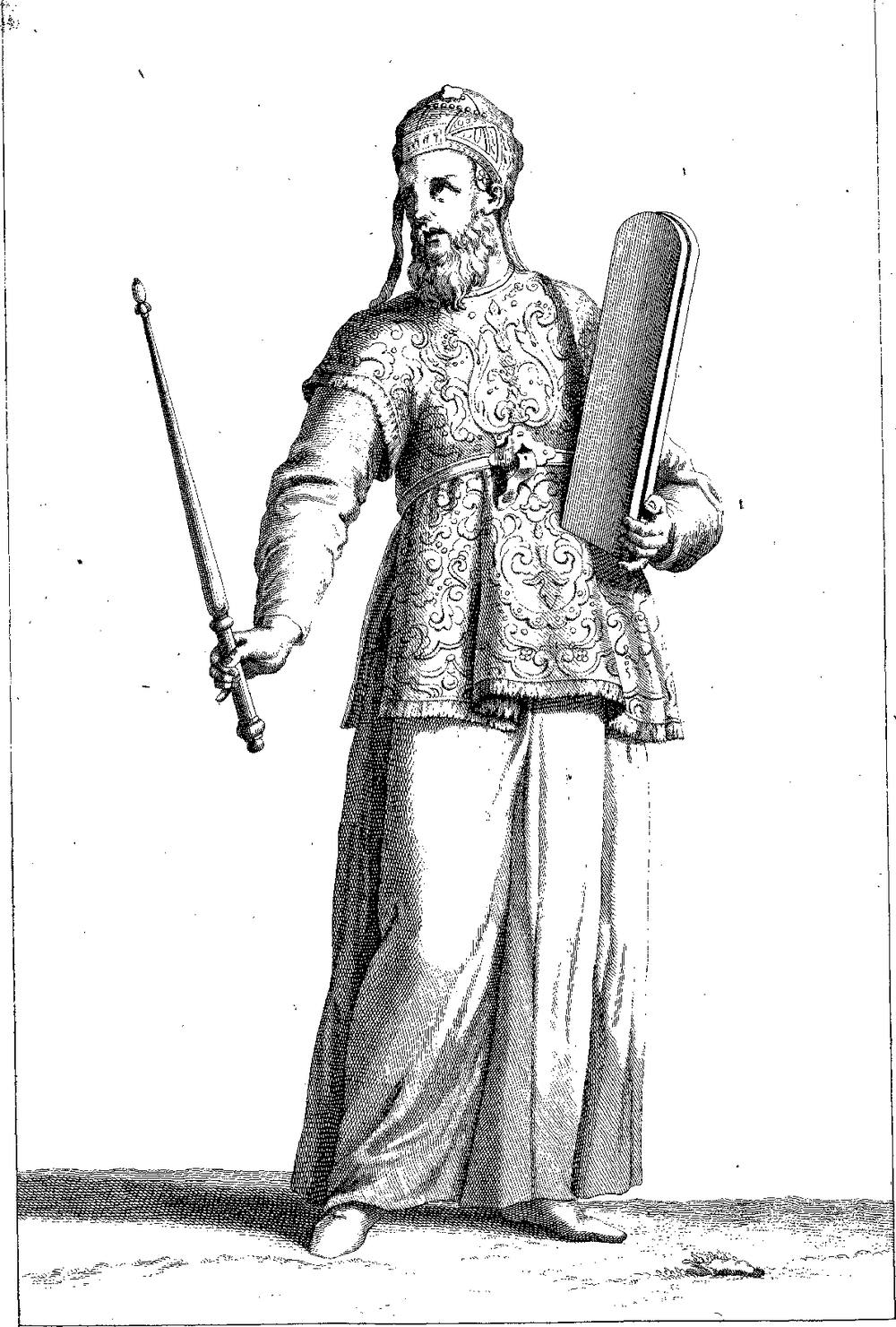
We therefore may observe in the Gospel, several Acceptations of these Words, the Kingdom of Heaven.
-
They are taken for the first coming of the Son of God, for his temporal Birth, his Preaching, his Manifestation to the World. Luke xi. 20.For Example: If I with the Finger of God cast out Devils, no doubt the Kingdom of God is come upon you. Saint Matthew in another Place says, that Jesus Christ went about all Luke xvii. 21.the Cities and Villages preaching the Gospel of the Kingdom. And Saint Luke, The Kingdom of God is within you. Which is parallel to John i. 26.what Saint John says; There standeth one among you whom ye know not.
-
These Terms are made Use of to shew the Vengeance which God was to exercise upon the incredulous Jews, and which accordingly he exercised after the the Death of our Saviour upon Jerusalem, by the Arms of the Romans, who destroyed this City and the Temple in it, and committed such Cruelties there, as have occasioned the last Siege of it to be looked upon, as one of the most lively Images of the last Judgment. In this Sense the Kingdom of Heaven is taken in Saint Mat iii 2.Matthew: Repent, for the Kingdom of Heaven is at Hand. God is ready to let his Arm fall heavy on the wicked; he hath the Ax already in his Hand wherewithal to hew down Trees that are good for nothing. See likewise the Parable of the ten Virgins, and Mat. xxv. 1, 2, 3.that of the Servants with whom the Father of the Family left a certain Number of Talents to be improved by them: The foolish Virgins Mat. xxv. 23,24,&c.excluded from the Wedding, and the unprofitable Servant cast into a Dungeon, denote the incredulous Jews forsaken by God, and given up to the Vengeance of their Enemies.
-
The Kingdom of Heaven signifies eternal Bliss, the Reward of God’s faithful Servants: Mat. vii. 21.He who doth the Will of the Father which is in Heaven, shall enter into the Kingdom of Heaven. And in another Place; Suffer Mat. xix. 14.the little Children to come unto me, for of such is the Kingdom of Heaven. And again: Mat. v. 3Blessed are the Poor in Spirit, for theirs is the Kingdom of Heaven.
Mat. viii. 12.4. This Expression is made Use of to signify the Calling of the Gentiles, exclusive of the Jews. For Example, Jesus Christ, after having spoken of the Centurion’s Faith, foretells the calling of the Gentiles, and Rejection of the Jews in these Words: The Children of the Kingdom shall be cast out. In the same Sense are related the Parables of the Feast which Strangers were called to, upon the Refusal of those Friends, whom the Father of Mat. xxii. 2.the Family had invited to it; and that of the Husbandmen who drove their Masters Servants Mark xii. 2. Mat. xiii. 44.out of the Vineyard, and killed his Son.
- The Kingdom of Heaven most frequently denotes the Church of Jesus Christ, the preaching of the Gospel, the Manner of God’s Conduct towards the Elect in Order to bring them to the Faith, and afterwards to Happiness. In this Sense Jesus Christ says, that the Kingdom of Heaven is like unto a Treasure hid in a Field, which a Man discovers, and purchases at the Price of his whole Fortune; and unto goodly Pearls, for which a Mat. xiii. 45.Merchant gives all that he is worth. By this Treasure, and these Pearls, nothing else is meant but Faith in Jesus Christ. In another Place he compares the Kingdom of Heaven to a Field, where Tares are found mixed with Mat. xiii. 47, 48. Mat. xiii. 3, 4, 18.the good Seed; to a Net with which good and bad Fish are gathered; by which the Church is meant, that containing always in this World good and bad Christians. He says frequently, that his Reign will begin after his Resurrection, that the Gospel will be preached then principally, and his Elect called by him to the Faith.
The Kingdom of God is often synonymous with the Kingdom of Heaven. But in the Old Testament the Kingdom, or the Reign of God signifies his infinite Power, the sovereign Authority exercised by him over all Creatures, over the Kingdoms of the World, over the Hearts of Mankind. The Author of the Book Wisd. x. 10. Wisd. x. 14.of Wisdom says, that God shewed his Kingdom to Jacob, who fled from the Anger of Esau; he opened the Kingdom of Heaven to him in shewing him the mysterious Ladder by which the Angels ascended and descended; Ecclus xlvii. 13.and Ecclesiasticus, that God gave unto David, Testamentum Regni, the Covenant, Assurance, the Promise of the Kingdom for him and his Successors: It is said likewise, that God did not forsake Jacob, and that he procured for him Sceptrum Regni, the Scepter in Egypt; not that in Reality he reigned there, but had an Authority there almost equal to the King’s, See Gen. xli, 40. Only in the Throne will I be greater than thou. Nebuchadonozar swears by his Throne, and by his Kingdom, that he would surely be Judith i. 12.avenged.
The Kingdom of Hell, the Kingdom of Satan, signifies either the Empire which the Devil exercises over other Devils, or that which he exercises over the Wicked in this Life; or lastly, that which he has over the Souls of the wicked who are in Hell. The Author of the Book of Wisdom says, that the Kingdom of Hell was not upon the Earth before the Sin of the first Man, Nec Wisd. i. 14. Οὐδὲ ᾿Αδου βασίλειον ἐπὶ γῆς.infernum regnum in Terra. Or according to the Greek, That Pluto had not then his royal Palace upon the Earth. He did not exercise his Dominion over Mankind. And our Saviour in the Gospel, Every Kingdom divided against itself is brought to Desolation; and if Satan cast out Satan, he is divided against himself. How then shall his Kingdom stand? He answers the Accusation of the Pharisees, who said, that he cast out Devils in the Name of Belzebub Prince of the Devils. He shews the Impossibility of this, because it must then be said, that Satan endeavours to destroy his own Dominion, and that the Kingdom of Hell is at Variance with its own Subjects.
The Psalmist represents the Wicked to us in Hell like a Flock of Sheep, of whom Death is the King and Shepherd; Sicut Ps. xlviii. 15.oves in inferno positi sunt, mors depascet eos. The Prophets describe Hell as a sort of Commonwealth, where the Kings and Potentates of the Earth still preserve some vain Appearance of their first Grandure. See Isai. xiv. 9, 10, &c. And Ezek. xxxi. 15, 16, 17. and xxxii. 20, 21, &c.
In the Book of Job, and in the first of Job i. 6. 1 Kings xxii. 20, 21.Kings, Satan is represented as appearing before God’s Tribunal, and receiving Orders from his Majesty to afflict or to deceive Mankind. Thus the Hebrews did not believe that he had an absolute Power, or an independent Kingdom, even to do Evil: They acknowledged only that he was the Executioner of God’s Orders, and the Minister of his Justice, or Vengeance, or of his Trials of Mankind.
KINGS. The Israelites had no King of their Nation till Saul. Before him, they were governed, at first by Elders, as in Egypt, then by Princes of God’s Appointment, as Moses and Joshua; then by Judges, such as Othniel, Ehud, Shamgar, Gideon, Jephthah, Samson, Eli, Samuel; and last of all by Kings, as Saul, David, Solomon, Reboboam. A Chronological List of the Kings of the Hebrews.
Saul, the first King of the Israelites, reigned forty Years, from the Year of the World 2949, to 2909.
Ishbosheth, the Son of Saul succeeded him, and reigned six or seven Years over Part of Israel, from 2949, to 2956.
David was anointed King by Samuel in the Year of the World 2934, but did not enjoy the Regal Power till the Death of Saul in 2949, and was not acknowledged King of all Israel till after the Death of Ishbosheth in 2956. He died in 2990, at the Age of Seventy.
Solomon his Son succeeded him; he received the royal Unction in the Year 2989. He reigned alone after the Death of David in 2990. He died in 3029, after a Reign of forty Years.
After his Death the Kingdom was divided; and the ten Tribes having chosen Jeroboam for their King, Reboboam, the Son of Solomon, reigned only over the Tribes of Judah and Benjamin.
The Kings of Judah.
Reboboam, the Son and Successor of Solomon, reigned seventeen Years; from the Year 3029, to 3046.
Abijam, three Years, from 3046, to 3049. Asa, one and forty Years, from 3049, to 3090.
Jehoshaphat, five and twenty Years; from 3090, to 3115.
Jehoram, four Years; from 3115, to 3119.
Ahaziah, one Year; from 3119, to 3120.
Athaliah his Mother, reigned six Years; from 3120, to 3126.
Joash was set upon the Throne by Jehoiada the High Priest, in 3126. He reigned forty Years, to the Year 3165.
Amaziah, thirty nine Years; from
3165, to 3194.
Uzziah, otherwise called Azariah, reigned seven and twenty Years, to the Year 3221. Then attempting to offer Incense in the Temple, he was struck with a Leprosy, and obliged to quit the Government. He lived after this six and twenty Years, and died in 3246.
Jotham his Son took upon him the Government in the Year of the World 3221. He reigned alone in 3246, and died in 3262.
Ahaz succeeded Jotham in the Year of the World 3262. He reigned sixteen Years, to 3278.
Hezekiah, eight and twenty Years; from 3278, to 3306.
Manasseh, five and fifty Years; from the Year of the World 3306, to 3361.
Amon, two Years; from 3361, to 3363.
Josiah, nine and twenty Years; from
3363, to 3394.
Jehoahaz, three Months. Eliakim, or Jehoiakim, eleven Years; from the Year 3394, to 3405.
Jehoiachin, or Jechoniah, reigned three Months and ten Days, in the Year 3405.
Mattaniah, or Zedekiah, reigned eleven Years; from 3405, to 3416. In the last Year of his Reign Jerusalem was taken, the Temple burnt, and Judah carried into Captivity, beyond the Euphrates.
Kings of Israel.
Jeroboam reigned two and twenty Years; from 3030, to 3051.
Nadab, one Year. He died in 3051. Baasha, two and twenty Years; from 3052, to 3074.
Elah, two Years. He died in 3075. Zimri, seven Days.
Omri, eleven Years; from 3075, to 3086. He had a Competitor, Tibni, who succeeded and died, in what Year we know not.
Ahab, one and twenty Years; from 3086, to 3107.
Ahaziah, two Years; from 3106, to 3108.
Jehoram, the Son of Ahab, succeeded him in 3108. He reigned twelve Years, and died in 3120.
Jehu usurped the Kingdom in 3120, reigned eight and twenty Years, and died in 3148.
Jehoahaz, reigned seventeen Years; from 3148, to 3165.
Joash, reigned fourteen Years; from 3165, to 3179.
Jeroboam II. reigned one and forty Years, from 3179, to 3220.
Zachariah, twelve Years; from 3220, to 3232.
Shallum, reigned a Month. He was killed in 3233.
Menahem, ten Years; from 3233, to 3243.
Pekahiah, two Years; from 3243, to 3245.
Pekah, twenty Years; from 3245, to 3265.
Hosea, eighteen Years; from 3265, to 3283. Here the Kingdom of Israel had an End after a Duration of two Hundred fifty three Years.
The Jews, after their Return out of Captivity, which happened in 3468, lived under the Dominion of the Persians an hundred and four Years, till the Reign of Alexander the Great, who came to Jerusalem in the Year of the World 3672. After his Death, which fell out in 3681, Judæa at first was obedient to the Kings of Egypt, then to the Kings of Syria; till at last Antiochus Epiphanes having forced the Jews to take Arms for the Defence of their Religion, in the Year of the World 3836, the Maccabes recovered by Degrees their ancient Liberty, and lived in a State of Independency, from the Government of John Hyrcanus, in the Year of the World 3874, till Judea was reduced into a Province by the Romans.
A List of the Maccabees or Asmonean Princes, who governed the Jewish Commonwealth, as Princes and High Priests, till the Reign of Herod the Great.
Mattathias, the Father of Judas Maccabæus, died in 3838, in the Beginning of the Persecution set on Foot by Antiochus Epiphanes. Judas Maccabæus governed five Years to the Time of his Death, which happened in 3843.
Jonathan Maccabæus governed seventeen Years, from 3843, to 3860.
Simon Maccabæus, governed nine Years; from 3860, to 3869.
John Hyrcanus, governed nine and twenty Years; from 3869, to 3898. He was perfectly at Liberty after the Death of Antiochus Sidetes, King of Syria, in 3874.
Aristobulus took upon him the Title of King, and reigned one Year. He died in 3899. Alexander Jannæus, reigned seven and twenty Years; from 3899, to 3926.
Salome, or Alexandra, the Wife of Alexander Jannæus, governed nine Years, while her eldest Son Hyrcanus exercised the Office of High Priest. She died in 3935.
Hyrcanus, King and High Priest of the Jews, began to reign after his Mother’s Death in 3935; but he reigned peaceably for three Months only.
Aristobulus, the Brother of Hyrcanus, made himself Master of the Kingdom and High Priesthood, which he enjoyed three Years and three Months, to the Year 3940: Then Pompey took Jerusalem, and restored the High Priesthood to Hyrcanus, together with the Quality of King; but without allowing him to wear the Diadem. Aristobulus was taken in Jerusalem, and carried to Rome by Pompey.
Hyrcanus did not quietly enjoy the Honours and Dignities which Pompey had restored to him. Antigonus his Nephew, the Son of Aristobulus, sent for the Parthians to Jerusalem, and made himself Master of the Crown and High Priesthood, in the Year of the World 3964. Hyrcanus was taken, his Ears were cut off, in Order to render him incapable for the Future of exercising the Functions of the Priesthood, and he was carried to Babylon, from whence he did not return till 3968. He was put to Death by Herod in 3974, eight and forty Years after the Death of his Father Alexander Jannæus, and nine and thirty after that of his Mother Salome, or Alexandra.
Antigonus, his Nephew, who had got Possession of the Crown and High Priesthood, enjoyed them no longer than about two Years and seven Months. He was taken in Jerusalem by Sosius, in 3967, and afterwards beheaded the same Year at Antioch, by the Order of Mark Antony.
Herod the Great, the Son of Antipater, and by Extraction an Idumæan, was declared King of the Jews by the Roman Senate, in the Year of the World 3964. He died after a Reign of six or seven and thirty Years, at the Age of Seventy, in the Year of the World 4001, and the first of J. C. three Years before the Vulgar Æra.
His Dominions were divided between his three Sons Archelaüs, Herod Antipas, and Philip.
Herod Antipas had Galilee and Peræa. He was banished to Lions in the Year of J. C. 43 of the Vulgar Æra 39. From thence he was sent in Exile into Spain, where he died. He reigned two and forty Years; from the Year of the World 4001, to 4042, of J. C. 42, of the vulgar Æra 39. The Emperor Caius gave his Tetrarchy to Agrippa I. of whom we shall say something hereafter.
Philip for his Share had the Batanea, the Trachonitis, & Auranitis. He died in the Year of J. C. 37. of the vulgar Æra 33. His Tetrarchy was then reduced into a Province.
Archelaus possessed the Kingdom of Judæa under the Title of an Ethnarchy, from the Year of the World 4001, which is the first Year of J. C. and three Years before the vulgar Æra. He was banished to Vienne in France, in the Year of J. C. 9. of the vulgar Æra 6.
Judæa was then reduced into a Province, and made subject to Governors, till the Year of J. C. 40, which is the 37 of the vulgar Æra. See the List of Governors who governed this Province, under the Article GOVERNOR.
Agrippa I. the Son of Aristobulus, and Grandson of Herod the Great and Mariamne, received Part of Judæa from Caius, with the Title of King, in the Year of J. C. 40, of the vulgar Æra 37. Four Years after, that is to say, in the Year of J. C. 44, of the vulgar Æra 37, the Emperor Claudius added all the rest of Judæa. Caius Caligula gave him the Kingdom or Tetrarchy, which his Uncle Herod Antipas had enjoyed, who was banished to Lions with Herodias, in the Year 42 of J. C. of the vulgar Æra 39. Agrippa died in the Year of J. C. 7, which is the Year 44 of the vulgar Æra; Judæa then returned again to the Romans, and was put under the Administration of Governors till its intire Ruin, which happened in the Year of J. C. 73 of the vulgar Æra 70. See the Article GOVERNORS.
Agrippa II. his Son, called Young Agrippa, not being of Age to possess the Kingdom of Judæa; (he was but seventeen at his Father’s Death) the Emperor Claudius sent Cuspius Fadus thither as Governor; but Agrippa obtained of the Emperor some Authority over the Temple, and the sacred Treasury, and the Power of appointing or depriving the High Priests; which Power he enjoyed till the Destruction of Jerusalem and the Temple. He used his utmost Endeavours to contain the Jews within the Bounds of Duty to the Romans, and to prevent their Revolt: But not being able to accomplish this, he was at the Siege of Jerusalem with Titus, and made Use of his Arms in reducing the Rebels to the Obedience of the Romans. Claudius, in the Year of J. C. 52 of the vulgar Æra 49, gave him the Kingdom of Chalcis; and in the Year 53, he gave him the Trachonitis, instead of the Kingdom of Chalcis. In the Year 54, Nero added some Towns of Galilee to his Dominions. Agrippa II. died after the Year 77 of the vulgar Æra, and before the Year 93, but the particular Year of his Death we do not know.
See the Lives of these Kings, and an exact Account of their Actions in the several Articles relating to them under their Names.
Books of Kings. We have four Books in our Bibles which are called the Books of Kings. Anciently there were but two in the Hebrew Bibles, the first whereof was called Samuel, and the other Kings or Kingdoms. At present in the Hebrew Copies, as well as in the Greek and Latin, there are four Books, the two first whereof in the Hebrew are called Samuel, and the two last Kings. The Greeks cite them all four under the Name of the Books of Kingdoms, and the Latins under the Name of the Books of Kings.
The first Book of Kings contains the History of an hundred Years; from the Birth of Samuel in 2849, to the Death of Saul, in 2949. Herein he have an Account of the Birth of Samuel, the War between the Philistines and Hebrews, wherein the Ark of the Lord was taken; the Death of Eli the High Priest, and his Sons Hophni and Phineas, the Restitution of the Ark sent back by the Philistines; of Samuel’s being acknowledged Judge of Israel, of Saul’s Election to be King, his successful Beginnings, his Wars and Victories, his Rejection, the anointing of David, his brave Actions, his Misfortunes, his Flight, the War between Saul and the Philistines, and the Death of this Prince.
The second Book of Kings contains the History of nine and thirty Years; from the second anointing of David at Hebron, in the Year of the World 2949, to the Year 2988, wherein David appointed Solomon to be his Successor, two Years before his Death, which happened in 2990. Here we have an Account of David’s being acknowledged King by the Tribe of Judah, while the other Tribes of Israel obeyed Ishbosheth, the Son of Saul. Ishbosheth being killed seven Years after, in 2956, David was acknowledged King of all Israel. He received the royal Unction a third Time; took Jerusalem from the Jebusites, brought back the Ark from Kirjathjearim to the City of David, had the Advantage of the Philistines, Moabites, Syrians, and Edomites, upon several Occasions. Hanun, King of the Ammonites, having insulted David’s Ambassadors, this Prince made War upon his Countrey, and brought it under his Obedience. During this War David lived with Bathsheba, and procured the Murder of Uriah. Nathan reproved him for his Adultery and
Murder; David did Pennance for them; God punished him with the Rebellion of Absalom. After this War, wherein his unnatural Son perished miserably, David being quiet in his Dominions, ordered the People to be numbered. The Lord punished his Curiosity with the Plague. Lastly, David prepared every Thing necessary for erecting the Temple.
The Third Book of Kings comprises the History of an hundred and twenty six Years; from Solomon’s being anointed, and his Admission as a Partner with David, in the Year of the World 2989, to the Death of Jehoshaphat King of Judah in 3115. Here we have an Account of Adonijah’s aiming at the Crown, and thereby giving Nathan and Bathsheba an Opportunity to persuade David to declare his Successor, and make Solomon his Associate in the Throne. Here we read of David’s Death, of Adonijah’s, Joab’s and Shimei’s; of the building and finishing the Temple by Solomon, of this Prince’s Riches, Wisdom, Reputation, Fall into Idolatry and Death, of his Son Rehoboam’s alienating the Minds of the Israelites by his Imprudence, and occasioning the Schism of the Ten Tribes, and the Choice of Jeroboam for their King. Of Rehoboam’s Successors Abijam, Asa and Jehosaphat, who died in 3115. Of Jeroboam’s Successors Nadab, Baasha, Elah, Zimri, Omri, Tibni, Ahab and Ahaziah. The last of these died in 1708. The third Book of Kings gives the History of all these Princes.
The fourth Book of Kings includes the History of two hundred and twenty seven Years; from the Death of Jehoshaphat, and the Beginning of Jehoram in 3115, to the Beginning of the Reign of Evilmerodach King of Babylon, who delivered Jechoniah out of Prison in 3442. We have here a long Succession of wicked Princes in the Kingdom of Israel; Ahaziah, Jehoram the Son of Ahab, Jehu, Jehoahaz, Joash, Jeroboam, Zachariah, Shallum, Menahem, Pekahiah, Pekah, Hosea the Son of Elah, in whose Reign Samaria was taken by Salmanezer, and the ten Tribes carried Captive into Assyria. There are several eminent Prophets named during this Interval in the Kingdom of the Ten Tribes. Iddo, Oded, Abijah, Elijah, Elisha, Hosea, Amos, Jonah, and many others.
In the Kingdom of Judah, we find some few pious Princes among many others who were very corrupt. Jehoshaphat was succeeded by Jehoram, Ahaziah, Athaliah, Joash, Amaziah, Uzziah, otherwise Azariah, Jotham, Ahaz, Hezekiah, Manasseh, Amon, Josiah, Jehoahaz, Eliakim, or Jehoiakim, Jechoniah, or Jehoiachin, Mattaniah, or Zedekiah, in whose Reign Jerusalem was taken by the Chaldæans, the Temple burnt, and the People carried away in Captivity to Babylon, in 3416. After this we read of the sad Death of Gedaliah, whom the Chal dæans had left in the Countrey to govern the Remains of the People of Judah; the Retreat of this People into Egypt, and the Favour shewn by Evilmerodach King of Babylon to Jehoiachin, or Jechoniah King of Judah, whom he took out of Prison, and placed with Honour in his Palace.
In this Interval God raised up many Prophets in Judah; such as Iddo, Abijah, Shemaiah, Hanani, Azariah, Jehu, Isaiah, Jeremiah, Zephaniah, Huldah, Micaiah, Joel, and many others. The fourth Book of Kings has preserved several Particulars of the Lives of these great Men, as well as of the Prophets who lived at the same Time in the Kingdom of Israel, or the Ten Tribes.
As to the Author of the four Books of Kings, the World is not agreed. Many ascribe the two first to Samuel, whose Name we read in the Front of these Books in the original Hebrew. The Jews allow him the Honour only of seven and twenty Chapters Talmudistæ & Kimchi.in the first, which include the History of his Life, and a Recital of what was done by Saul and David, while he was living. The rest they believe was continued by Gad and Nathan, according to these Words of the the 1 Ch. xxix. 29. 1 Sam. iii. 1.Chronicles: Now the Acts of David the King first and last, behold, they are written in the Book of Samuel the Seer, and in the Book of Nathan the Prophet, and in the Book of Gad the Seer. This Opinion is very probable; but notwithstanding it labours under great Difficulties, since there are certain Remarks visible in it, which could not have any Place in the Time of Samuel, or even in the Time of Nathan: For Example, it is said 1 Sam. i. 10. 1 Kings xii. 15.that while Samuel was living, Prophecy was rare in Israel; which intimates, that when the Author wrote, it was more frequent. He says in another Place, that Bethel was called 2 Sam. xiii. 5. 1 Sam. xxvii. 6.Bethaven, or the House of Iniquity; a Name whereby it did not go till Jeroboam had set up there one of his golden Calves.
The Author observes likewise upon David’s invading the Geshurites and Gezrites, that this Countrey of old was well peopled, from Shur even unto the Land of Egypt; that is to say, it was so in David’s 1 Sam. xxvii. 8.Time, but not when the Author was living. He says elsewhere, that they who formerly were called Seers, were in his Time termed Nabi or Prophets. Now in Samuel’s Time the Name of Seer was very common; the Author therefore of these Books is more modern than this Prophet. He speaks of Samuel as of a Person who had been dead long before, and praises him. He takes Notice that the City of Ziklag belonged to the Kings of Judah, ever since the Cession which Achish made of it to David. This Remark must have been made since the Separation of the Kingdoms of Judah and Israel; and consequently this Author lived not only after Samuel, but even after David and Solomon.
Several other Observations of this Nature have been made, whereby some have been persuaded, that David, Hezekiah, Jeremiah, or Ezra compiled these Books from Memoirs which were prepared in the Time of Samuel and the Prophets, who lived in the Reign of David and Solomon; and it is certain, that if we compare the different Characters of these two Books, we shall on one Side see that the Circumstances, Facts and Remarks are for the most Part the same. The Uniformity of the Style and the Sequel of the Narration prove likewise, that there was but one Author of them, and he Contemporary with the Persons whom he speaks of. But on the other Side, there are some new Circumstances, which make us think, that a more modern Writer had a Hand in them, and added some Particulars, and certain Terms proper to explain, what the Distance of Time render’d obscure and inexplicable. Now, if we suppose that Ezra, who was an inspired Author, had in his Hands the Original Writings of Samuel, and the antient Writers of Saul and David’s Times, and that he digested them into Order and connected them, all Difficulties are easily resolved, and the seeming Contradictions by some observed to be in the Text of these Books are reconciled.
That these Works are Authentick and Canonical, is a Point not disputed; both the Jewish and the Christian Church unanimously receive them as inspired Scripture, Matt. xii. 2. Mark xii. 25. Luke vi. 3.and Jesus Christ quotes them in the Gospel.
There are the same Difficulties almost with Relation to the Author of the third and fourth Books of Kings, and the Time when they were composed. Some have been of Opinion, that David, Solomon, and Hezekiah, wrote the History of their own Reigns. Others have asserted, that the Prophets took this Care upon them, who lived under their Government in Israel and Judah; for example, Isaiah, Jeremiah, Gad, and Nathan. We know very certainly, that several of the Prophets have written the Lives of those Kings, who reigned in their Times; and the Names and Writings of See 1 Chr. xxix. 29. 2 Chr. ix. 29. 2 Chr. xii. 15. 2 Chr. xiii. 22. 2 Chr. xvi. 7. 2 Chr. xx. 34, & 37. xxvi. 22. & xxii. 32.these Prophets are mentioned in several Places of the Books of Kings and Chronicles. Besides, the Memoirs and Annals of the Kings of Judah and Israel are cited almost every Moment, and these included the Particulars of those Princes Actions, whereof the Sacred Books have handed down to us Summaries only, and Abridgments.
It must be confessed therefore, that there are two Sorts of Writers, who have been concerned in penning the Books of Kings. Those original, primitive and contemporary Authors, who wrote the Annals, Journals, and Memoirs of what passed in their Times; from whence the Matter and Substance of of our Sacred History has been formed; and from whence the Authors which came afterwards have taken what they left us. These antient Memoirs have not descended down to us, but were certainly in the Hands of those sacred Penmen, whose Writings are in our Possession, since they cited them, and refer to them: But who are the Authors who compiled and digested these antient Writings, and in what Time did they live?
2 King. xxv. 22, 23, &c.It is generally believed that Ezra is the Author of the four Books of Kings, and of the Chronicles, as we have them at present; and the Proofs whereupon this Opinion is grounded, are these. 1. The Author who digested these Writings into Order, lived after the Captivity of Babylon. At the End of the fourth or second Book of Kings he speaks of the Return from the Captivity. 2. He says, that in his Time the Ten Tribes were still Captives in Assyria, whither they had been carried into Captivity as a Punishment for their Sins. 3. In the xvii. Chapter of the fourth or second Book of Kings, he makes some Reflections upon the Calamities of Judah and Israel, which demonstrate that he wrote after the Event. 4. He refers almost every where to antient Memoirs, which he had before him, and abridged. 5. The Author, as far as we are able to judge of this Matter, was a Priest, and very much attached to the House of David. Now all these Marks suit very well with Ezra, a learned and very curious Priest, who lived during the Captivity, and after it, who might have collected an infinite Number of Monuments, which Time and the Persecutions, which the Jews have suffered, might have deprived us of.
1 King. viii. 8. 1 King. xii. 19. 1 King. vi. 1, & 28.I confess, that there are some Particulars in these Books which do not agree with the time of Ezra: For Example, he says, that in his Time the Ark of the Covenant was still in the Temple; that the Kingdom of Judah and Israel were still subsisting. In another Place, he speaks of the Months Sif and Bul, Names, which in the Time of Ezra were no longer in Use. Lastly, He expresses himself throughout as a Contemporary, and as an Author would have done, who had been a Witness of what he wrote. But this pretended Contradiction may be easily reconciled. Ezra generally transcribes Word for Word the Memoirs which he had in his Possession; he copies them, without giving himself the Trouble to reconcile them. This is a Proof of his Exactness, his Fidelity and Honesty. In other Places, some Reflexions or Illustrations are inserted by him, which arise naturally from his Subject. This shews he was Master of the Matter which he had in Hand, and that being inspired by God, he was not afraid of intermixing his own Words with those of the Prophets, whose Writings lay before him.
The King’s Rights. The Israelites having desired Samuel to give them a King, such as
other Nations had shewn round about them: 1 Sam. viii. 2.He hereupon replied to them, the King who shall govern you will have the following Prerogatives: “ He will take your Sons to “ guide his Chariots, and make Horsemen “ of them to march before him. He will “ make them his Officers to command some “ a Thousand, others an Hundred Men: “ Some he will take to plow his Fields, and “ gather in his Corn; others to make his “ Arms and Chariots. Your Daughters he “ will take to be his Confectionaries, Cooks “ and Bakers. He will likewise take your “ best Fields, Vineyards, and other Gardens, “ and give them to his Servants. He will “ make you pay Tythe of your Corn and “ Vineyards, that he may have wherewithal “ to gratify his Officers and Eunuchs. He “ will take your Men and Maid Servants, “ and the strongest of your young People, “ together with your Asses, and will employ them in working for him. He will “ also take the Tenth of your Flocks, and “ ye shall be his Servants. Ye shall cry out “ in that Day against your King, and the “ Lord will not hear you, because ye yourselves desired to have a King.”
There is a considerable Difficulty proposed relating to these Words. The Question is, whether Samuel only foretold here what should happen to the Israelites from their King, without pretending to authorize or approve it; or whether he declared to them what the real Privileges of a King would be, and the lawful Use of their Authority: Opinions are divided about this Matter. The Commentators for the most part think, that the Prophet here describes in what Manner the Prince would abuse his Power, and what would be his excessive Pretensions, rather than the just and legal Exercise of his Rights12. As to the last Opinion Grotius may be consulted in his De jure Belli & Pacis, l. 1. c. 1. & c. 4. Art. 3. & 4. and Schicardus de Jure Regni.
Kings of the Feast. At great Entertainments a King was created, who assigned to every one his Place. He was chosen by Lot, or by the Person who gave the Banquet. He commanded, and every one was obliged to obey him. The Author of the Book of EcclesiasticusEcclus xxxii. 1. speaks of this Custom: If thou be made the Master of a Feast, lift not thy self up, but be among them as one of the rest: Take diligent Care for them, and so sit down. And when thou hast done all thy Office, take thy Place, that thou mayst be merry with them, and receive a Crown for the well ordering of the Feast. This Practice seems to have been in use not only among the Greeks and Latins, but among the Persians too. At Ahasuerus’s Feast there was no King of it: Nec erat qui nolentes cogerit ad bibendum. Every Man drank to satisfy his Thirst, without there being any such Officer to prescribe to any the Number of Cups which they should drink. Empedocles complained of one who was King of the Feast, and had commanded him to drink, or if he did not, that the Wine should be poured upon his Head.
KINGS. The Idolatrous Nations, and even the Hebrews, called their Gods Kings. Moloch, Milchom, Adramelech, and Anamelech, are Names of Deities derived from that of Kings. The Words of Isaiah in ch. xxxvii. 13, Where is the King of Hamath, and the King of Arphad, and the King of the City of Sepharvaim, Henah and Ivah? seem parallel to those of the preceding Chapter xxxvi. 19, Where are the Gods of Hamath and Arphad? Where are the Gods of Sepharvaim? And in Amos, ch. i. 15. God threatens Melchom, the God of the Moabites, with sending him and his Princes into Captivity. Ibit Melchom in captivitatem ipse, & principes ejus simul. In the Scripture God is called in every Page almost, the King of the Hebrews.
KINNEROTH or Cinneroth, Tiberias. Lake of Cinneroth, Lake of Tiberias.
Amos v. 25, 26.KINNOR. See the Article CINYRA.
KION. Amos reproaches the Israelites with having worshipped Idols in the Wildernes, and carried the Base of their Idols; in Hebrew, Kion of your Images. See above CHIUN, and the Articles REMPHAN, כפור Chippur Expiatio.and SAMARITANS.
KIPPUR, or rather Chippur, the Feast of Pardon, or solemn Expiation. Levit. xvi. See EXPIATION.
KIR-HARESHETH. See Art. AREOPOLIS, the Capital of the Moabites.
KIRJATH. This Word signifies a City; hence it is that we so often meet with it in the Names of Places in Palestine. There was a Town of this Name near Gibeon in the Tribe of Benjamin, Josh. xviii. 28.
KIRJATHAIM or Cariada, a Town beyond Jordan, ten Miles from Medaba, westward. See Josh. xiii. 19.
KIRJATHAIM, a City in the Tribe of Nephtali, 1 Chr. vi. 76.
KIRJATH-ARBA. A City in the Tribe of Judah. Josh. xv. 13.
KIRJATH-JEARIM, or Kirjath-Baal, or Baale of Judah or Bela, a City of Judah upon the Confines of Benjamin, where
the Ark was lodged for many Years in the House of Abinadab, till David removed it 2 Sam. vi.to Jerusalem. See BALA.
KIRJATH-SANNAH, a City in the Tribe of Judah, Josh. xv. 49.
KIRJATH-SEPHER, that is to say the City of Letters, or Books13, otherwise called Debir, a City in the Tribe of Judah, one of those which fell by Lot to this Tribe, and were afterwards given to Caleb. It was taken by Othniel, to whom Caleb for his Reward gave his Daughter Achsah in Marriage.
Josh. xiv. 6, 7. and Judg. i. 10, 11, 12. 13.I. KISH, the Son of Abi-Gibeon and Maachah, 1 Chr. viii. 9.
II. KISH, the Son of Ner, and Father of Saul, 1 Sam. ix. 1. and 1 Chr. viii. 33. ix. 38, 39.
III. KISH, the Son of Abdi, a Levite of Merari’s Family, 2 Chron. xxix. 12.
KISHION, of the Tribe of Issachar, was yielded to the Levites of Gershom’s Family.
1 Josh. xix. 20.KISHON. The Brook Kishon has its Source in the Valley of Jezreel. It runs along this Valley, to the South of Mount Tabor, and discharges itself into the Port of Acco, otherwise called Ptolemaïs, in the Mediterranean.
KISS. There are in the Scripture Style Kisses of Friendship, Adoration, Homage and Respect, Kisses of Peace and Reconciliation. Saint Paul speaks frequently of the Kiss of Peace, which was in Use among Believers, and was given by them to one another, as a Token of Charity and Union, publickly Heb. xi. 21.in their religious Assemblies. Salute each other with an holy Kiss. We have already spoken of the Kiss of Adoration under the Word Adore. Joseph coming to visit his Father Jacob, who was on his Death-Bed, the good old Man kissed the End of the Staff of Command which he held in his Hand. Adoravit fastigium virgæ ejus. Vide LXX in Gen. xlvii. 31. Esth. v. 2. Ps. xi. 12. juxta Heb.Esther kissed the End of King Ahasuerus’s Scepter, in the Way of Homage and Adoration. The Psalmist exhorts us, to embrace the Son of God, and acknowledge his Dominion. We kiss the Text of the holy Gospels, the Cross, Relicks, Altars, and sacred Vessels, out of Respect, and with a kind of relative Worship, which we pay them: And with this same Spirit the converted Adulteress kissed our Saviour’s Feet, washed them with her Tears, and wiped them with her Hair.
Luke vii. 38.KITE, a Bird of Prey, in Latin called Milvus, and in Hebrew Daah: Some translate this Word Magpye; and others Vultur. The Hebrew Daah, signifies to fly. The Kite flies very swiftly and very high. Moses places it among the unclean Birds.
KITHLISH, a Town belonging to the Tribe of Judah. Joshua xv. 40.
KITRON, a City of Zebulun, which they of that Tribe could not take from the Canaanites. Judg. i. 30.
1 Mac. i. 1 Mac. viii. 5. Dan. xi. 30.KITTIM, the Son of Javan, and Grandson to Noah. We have shewn in the Comment upon Genesis x. 4. that Kittim peopled Macedonia. Josephus by Kittim understands the Isle of Cyprus; others the Isle of Chios; others Cilicia; others again Achaia. But the Author of the first Book of Maccabees understands it as we do, of the Macedonians; for he calls Alexander King of the Kittims, and says, that Perseus King of the Kittims was overcome by the Romans. Daniel speaks of the Ships of the Kittims, which Bochart takes to be meant of the Roman Fleet. He will have it, that Kittim signifies Italy. It is true Daniel speaks in this Place of the Roman Fleet, but he calls it the Fleet of the Kittims, because it lay in the Harbours of Macedonia, when it departed to attack Antiochus, under the Conduct of Caïus Popilius; and of this Event Daniel was speaking in the Passage cited by Bochart. Thus the Fleet of the Kittims and Macedonia is in this Circumstance the Roman Fleet also.
KNIVES of Stone, made Use of in circumcising People. See hereafter the Article STONE.
Ex. xxxiii. 12, 17. Numb. xxxi. 17.TO KNOW. I know thee by Name, I know thee very particularly, I know who thou art: Thou art my peculiar Servant, whom I have named. It is God who speaks thus to Moses. Otherwise; I have called thee to my Service by Name. Kill every Woman that hath known Man: All the married Women, and those who are not Virgins. Thus; Adam cognovit uxorem suam; Virum non cognosco; Rex non cognovit eam. All these Expressions describe in a decent Manner the Act of Marriage.
To know the Lord, to know the Way and Judgments of the Lord. And in a contrary Jer. xxxi. 34. Hosea xiii. 4, &c.Sense, they have not known the Lord, nor his Ways, does not signify a mere speculative Knowledge, but a practical Knowledge accompanied with Actions, and with Charity. The Ox knoweth his Master, but Hosea xiii. 5.Israel doth not know him. Is. i. 3.
I did know thee in the Wilderness; I chose thee for my People, and gave my Law to Amos iii. 2.thee in the Wilderness. And Amos; You only have I known of all the Families of the Earth. You only have I taken for my People. Hosea viii. 4.And again; They have made Princes, and I knew it not. They have set themselves over my People without my Mission or Consent.
I do not know thee, I know not who thou art;
that is to say, I have nothing to do with thee, I design to treat you as a Stranger, as an indifferent Person, as one whom I have never seen.
To know denotes frequently the View of any Thing with Approbation, Esteem and Friendship. The Lord knoweth the Ways of the Righteous, Ps. i. 6. The Lord knoweth the Days of the Upright. Ps. xxxvii. 18. And, the Lord knoweth the Ways which are on the right Hand, he approves, he loves them. Prov. iv. 2714.
KNOWLEDGE. God planted in Paradise the Tree of the Knowledge of Good and Evil; that is to say, of the Knowledge of all Things; for to know Good and Evil signifies a general Knowledge, at least in Morals. Some are of Opinion that this Tree of Knowledge was different from the Tree of Life, and that Eve was inclined to eat the Fruit of Knowledge, with the Hopes of becoming a little Deity, abounding with Light and Knowledge; ye shall be as Gods, knowing Good and Evil.
Gen. iii. 5. 1 Sam. ii. 3.The Lord is a God of Knowledge, says Hannah in her Thanksgiving Song. That is to say, he sees, perceives, and knows every Thing; what is past, present and to come lies open to his View; he penetrates our deepest Thoughts, and most concealed Inclinations; he is the Author of all Science and Knowledge.
Thy Knowledge, Lord, is infinitely too high for me, I cannot attain unto it. Mirabilis facta est Scientia tua ex me. It would be ridiculous for Man not only to pretend to equal the Knowledge of God, but even to believe that he Psalm cxxxviii. 6.can form a just Idea of it. We may easily discern, that our Notices of Things are very limited and imperfect, and that the Knowledge of God is without the Defects of ours; but to desire to learn how far it extends, is to aim at numbering the Drops of Water in the Sea.
The Knowledge of God, of Salvation, of the Saints, may denote those serious and useful Notices of Things relating to Religion, which guide us to God and Holiness; or the Knowledge which is given and inspired by God, and has Things holy for its Object.
There is no Knowledge or Wisdom in the Grave whither thou goest in the other Life: These Qualities of Wise and Learned which the World esteems, and procure you some Honour Eccles. ix. 10.and Reputation in this Life, will disappear at Death. There will be then no Question about any Thing but of a good Life and good Works. These are the only Advantages which will be of any Benefit or Use to us at the Hour of Death. It may be explained likewise as if it were an Objection offered by Libertines, Let us enjoy present Pleasure, for every Thing perishes with the Body; in the other Life there will be neither Work, nor Reason, nor Wisdom, nor Knowledge.
Knowledge puffeth up, but Charity edifieth. The empty Knowledge of Speculative and useless Things, which tend only to gratify Curiosity 1 Cor. viii. 1.and Vanity, the Object whereof is such Knowledge only as contributes neither to our own Salvation nor our Neighbours, neither to the publick Good, nor God’s Glory; such Sort of Knowledge is much more dangerous than profitable. The true Science is that of Salvation, to know God, and love him, to know and to despise our selves; to employ our Knowledge in sanctifying ourselves, in glorifying God, and edifying our Neighbour, this is the only sound Knowledge.
Saint Paul says himself that he was rude in Speech, but not in Knowledge; that he had none of that insolent and ostentatious Knowledge which consists in imposing upon others 2 Cor. xi. 6.with pompous, sublime and eloquent Discourses; his Knowledge was humble and simple, but solid, elevated, pure, and suited to the Capacity of those, who heard him with holy Dispositions, and with the Desire of being edified and instructed.
Our Saviour reproaches the Pharisees with having taken away the Key of Knowledge, and neither entring in themselves, nor suffering others to enter into the Kingdom of Heaven. Luke xi. 52. The Pharisees made particular Profession of studying the Law. They passed for the most learned of the Jews. They could not endure that others should be in any Reputation for Learning. In a Word, they seized on the Key of Knowledge, but what did they do with it? They did not live the better for it; they did not enter into the Kingdom of Heaven; their Lives were nothing but Ostentation and Hypocrisy. The Traditions wherewith they had overloaded the Law, were rather a Corruption than a good Explanation of the Will of God. So that they not only did not follow the Way which leads to the Kingdom of Heaven, but farther misled others out of it by their bad Explanations.
Knowledge of the Egyptians, wherein Moses was instructed. See the Articles WISDOM and MOSES.
KOHATH, the Son of Levi, and Father Gen. xlvi. 11. Exod. vi. 18. Numb iv. 4, 5, 6, &c.of Amram, Jehar, Hebron and Uzziel. Kohath’s Family was appointed to carry the Ark and sacred Vessels of the Tabernacle, while the Israelites marched through the Wilderness.
I. KORAH, the Son of Esau and Abolibamah. He succeeded Korah in Part of Genesis xxxvi. 15, 16.the Kingdom of Edom, and was succeeded by Gatam.
II. KORAH, the Son of Jehar, of the Race of Levi, and Father of Asher, Elkanah and Aliasaph, and Head of the Korites, a celebrated Family among the Levites. Korah being dissatisfied with the Rank he held among the Sons of Levi, and envying the Authority which Moses and Aaron enjoyed, formed a Party against them; wherein he engaged Dathan, Abiram and On, with two Hundred and fifty of the principal Levites. Numb. xvi. 1, 2, 3, &c.Korah at the Head of the Rebels went to Moses and Aaron, and complained that they alone arrogated to themselves all the Authority over the People of the Lord. Moses falling with his Face upon the Earth, answered them: To Morrow in the Morning the Lord will discover who are his. Let every one of you take therefore his Censer, and to Morrow he shall put Incense into them; and offer it before the Lord; and he shall be acknowledged Priest, whom the Lord shall choose and approve.
The next Day Korah with two Hundred and fifty of his Faction, presenting themselves with their Censers before the Lord, the Glory of the Lord appeared visibly over the Tabernacle; and a Voice was heard to say, separate your selves from among this Congregation, that I may consume them in a Moment. Moses and Aaron hereupon falling with their Faces to the Ground, said, O God, the God of the Spirits of all Flesh, shall one Man sin, and wilt thou be Wrath with all the Congregation? And the Lord said unto Moses, command all the People to depart from about the Tents of Korah, Dathan, and Abiram. When therefore the People were retired, Moses said, If these Men dye the common Death of all Men, then the Lord hath not sent me; but if the Earth open and swallow them up quick, then ye shall know that they have blasphemed the Lord. As soon as he had spoken, the Earth opened from under their Feet, and swallowed them up with what belonged to them.
But one Thing there was which added to this surprizing Wonder, and that was, that when Korah was thus swallowed up in the Earth, his Sons were preserved from this Misfortune. We do not know the Year particularly when the Death of Korah and his Companions happened. The Sons of Korah continued as before, to serve in the Tabernacle of the Lord. David appointed them their Office in the Temple, to guard the Doors, and sing the Praises of God. There are several Psalms ascribed to them, which go by the Name of Korah: As the 41, 43, 44, 45, 46, 47, 48, and the 83, 84, 86, 87; that is to say, eleven Psalms.
The Mahometans have several Traditions relating to Korah, which it may be proper to produce here, tho’ no great Account is to be made of them: They say, Korah, whom they call Karum, was the Son of Masaab, Cousin German to Moses. Moses seeing he was poor, taught him Chymistry, by which Means he acquired such immense Riches, that forty Camels were necessary to carry his Gold and Silver. There are some who assert, that he had several Camels loaded only with the Keys of his strong Boxes.
Moses having commanded the Israelites to pay the Tythe of all their Fortunes, Korah refused to obey him, he even rebelled against his Benefactor, and spread several Calumnies against him, which had such an Effect, as to destroy almost all his Authority with the People. Moses hereupon made his Complaint to God, who permitted him to punish Korah as he should think proper. He therefore cursed him, and commanded the Earth to open, and swallow him up; which was immediately executed.
The Mahometans have another Tradition, that Korah, seeing his Treasures sunk under Ground, then that his Tent was swallowed up, after that his Family, and lastly discerning himself to be already as high as his Knees in the Earth, begged of Moses four several Times to pardon him, but found him inflexible. Sometime after God appeared to this Prophet, and said to him: Thou couldst not forgive Korah, though he four Times desired it of thee; had he addressed himself to me once only, I should not have refused him my Pardon.
KOZEBAH, a City in the Kingdom of Moab. See the Hebrew of 1 Chr. iv. 22. or Kishi the Son of Abdi.
KUSHAIAH, or Kishi, the Son of Abdi, and Father of Ethan, a Levite of Merari’s Family, 1 Chr. xv. 17. He was a Singer, and stood always before the Ark. 1 Chr. vi. 44.
LAADAH,
L
LAADAH, the Son of Shelah, and Father of Mareshah, of the Tribe of Judah, 1 Chr. iv. 21.
LAADAN, the Son of Gershon, 1 Chr. xxiii. 7, 8. and xxvi. 21. He had several Sons.
LABAN, the Son of Bathuel, and Grandson of Nahor, Brother to Rebekah, and Father to Rachel and Leah. When Jacob came into Mesopotamia15, he was very well received by his Uncle Laban. A Month after his Arrival, Genesis xxviii. xxix.Laban said to him, must you, because you are my Nephew, serve me without any Gratuity? Consider what Reward will be agreeable to you. Jacob proposed therefore to serve him seven Years, for his youngest Daughter Rachel, Laban consented, and Jacob engaged to serve him for seven Years16. Then said Jacob to Laban, give me my Wife, for my Time is accomplished. Laban therefore made a Wedding Feast, and at Night conveyed Leah into Jacob’s Chamber, so that Jacob perceived nothing of the Fraud, till the next Morning; then he complained sharply of it. But Laban replied, that it was not the Custom to marry the younger Daughters before the Elder, and if he was willing to serve him seven Years more, he would give him Rachel: Jacob consented, and married Rachel, after he had lived seven Years with Leah.
When Jacob had spent these fourteen Years in the Service of Laban17, he was desirous to return into the Land of Canaan: But Gen. xxx. 26, 27.Laban detained him, and importuned him to continue in his Service. He said to him, Ask what Recompence of me you please; Jacob demanded all the young ones which his Flocks should produce, of a brown Colour, spotted and speckled: That is to say, all that seemed least desirable for the Advantage of good Wool, and for their Fleece. Laban consented, and separated all that were spotted and of divers Colours in his Flocks, and committed them to the Keeping of his own Sons; and left none for Jacob but such as were of one Colour only, fearing, in all Probability, lest he should use some Art to produce Cattle of divers Colours, by the Mixture of spotted Sheep and Goats, with those which were not so. But Jacob had a Vision, wherein he discovered a very simple and natural Means of producing Lambs and Kids of different Colours, which was by placing several Branches of different Colours before the Females, while they were warm and eager for the Males. This Method succeeding, he became so powerful and rich, that Laban and his Sons could not look upon him without Envy.
Gen. xxxi. 1, 2, 3, &c.Jacob perceiving that they did not regard him with the same Kindness as formerly, resolved to go away18, without Laban’s Knowledge, and he executed his Resolution in so private a Manner, that Laban knew nothing of his Departure till the third Day after. Then he set out upon the Pursuit of him, and overtook him at Mount-Gilead. God appear’d by Night to Laban, and forbad him to say any Thing disobliging to Jacob; so that when he went to Jacob, he only complained, that before he left him, he had not given him the Comfort of embracing his Daughters and Grand-Children, and of conducting them on their Journey with instruments of Musick. He was not so moderate on the Subject of their See hereafter the Article TERAPHIM.stealing from him his Gods or Teraphims. Of this he made great Complaints; and Jacob replied with some Vehemence, that he consented with all his Heart, that he who had committed this Theft should be put to Death, not knowing that Rachel was the Person who had carried them off. Laban therefore searched all the Tents belonging to Jacob, without finding any Thing that appertained to him; for Rachel with great Precaution had concealed these Images under the Furniture of her Camel. See the Article RACHEL.
After this Jacob in his Turn made great Complaints to Laban of his Conduct towards him, and reproached him with having changed the Reward which was due to him. He added, if the God of my Father had not assisted me, you had sent me perhaps naked to my Father’s House. Laban answered, behold my Daughters and my Grand-Children, what can I do against them? All that is yours is as dear to me as what belongs any Way to my self. Come, let us make a Covenant together, and set up here a Monument to preserve the Memory of it. They swore therefore reciprocally to each other Friendship and Alliance; they eat and drank together upon a great Heap
of Stones, which Laban called19 Jegar-Sahadutha, the Heap of Testimony; and Jacob Galeed, the Heap of Witness, each according to the Difference of his Language. Laban spoke Chaldee, and Jacob Hebrew or Phœnician. And Laban said, Let the Lord be Judge between me and thee, if thou treat my Daughters ill, and take other Wives with them: May these Heaps serve as Witnesses between me and thee, against either of us who shall pass beyond them, to go with any evil Intentions into the other’s Countrey. The God of Abraham, the God of Nabor, and the God of our Fathers judge betwixt us. And having offered Sacrifice, they eat and drank together; and the next Morning Laban took his Leave of his Daughters and Grand-Sons, and returned to Haran. This is all we know of him.
LABAN, a Place unknown beyond Jordan, in the Plains of Moab. Deut. i. 1.
LABOR. This Word, which properly signifies Labour, is sometimes made Use of in Scripture for Sin, Iniquity, Falshood, the Punishment of Sin: For Example, Sub Lingua ejus labor & dolor. He has under his Tongue Ungodliness and Sorrow, or according to the Hebrew, Mischief and Iniquity; he thinks only of doing Mischief, of injuring and afflicting his Neighbour. And elsewhere Labor in medio ejus & injustitia; Sin and Injustice are in the Midst of the City. And again, Labor labiorum ipsorum operiet eos. Let the Mischief of their own Lips cover them: Let the Punishment of their Sin, of their evil Discourses fall upon them. And Isaiah ch. lix 4. Conceperunt laborem & peperunt iniquitatem. These Words were in a Manner proverbial. They are in the seventh Psalm, and are again met with in Job, ch. xv. ℣ 15. And Habakkuk speaking to God, ch. i. ℣ 3. Quare ostendisti mihi iniquitatem & laborem: That is to say, Iniquity and the Crimes of the wicked who conspire against me.
Labor is often used for all Sorts of Misfortunes, Fatigues and Troubles. Nosti omnem Num. xx. 14.laborem qui apprehendit nos. All the Evils which we have suffered. Narravit universum laborem qui accidisset eis in itinere; the Uneasiness Ex xviii. 8.which attended their Journey. Labor is also taken for the Fruit of Labour. Labores Ps civ. 44populorum possederunt. They possessed the Labours of the People. And elsewhere, let the Strangers spoil his Labour, and the first Fruits of their Labours; that is to say, what they have acquired by their Labours.
Labor is sometimes used for the Uneasiness we give others. Labor labiorum ipsorum Ps. cxxxix. 10.operiet eos. The Mischief they do others will fall upon them, or the Pain occasioned by their evil Discourses and Calumnies will overwhelm them. Labor stultorum affliget eos. The wicked shall be punished with those very Evils which they would inflict on others; and the Psalmist,20 Numquid adhæret tibi sedes iniquitatis, qui fingis laborem in præcepto? Shall the Throne of Iniquity have Fellowship with thee which frameth Mischief, Iniquity, by its Precepts; for the Hebrew reads fingit in the third Person, and not fingis. The Throne of Iniquity are the Wicked, they who abuse the Power which God hath put into their Hands; they frame Mischief by a Law, they overwhelm the Weak with their Authority; they afflict, oppress them.
LABOUR. See BEGGING, and Gen. iii. 17, 18, 19. Psalm cxxvii. 1, 2, 3, 4. And Prov. vi. 6, 7, 8, 9, 10, 11. Eccius. xxix. 28, 29, 30, 31. Acts xviii. 1, 2, 3, 4. and xx. 33, 34, 35. And 1 Thes. xi. 9, 10, &c.
LABOSARDACH or Laborosoarchod, King of Babylon, the Son of Neriglissar, reigned nine Months according to Berosus. He was put to Death by his own People, and succeeded by Nabonidas, according to the same Berosus; or Nabannidoch, according to Abydenus; or Labynitus according to Herodotus. Many are of Opinion, that this last is the same with Belshazzar in Daniel. The Succession of Nebuchadnezzar’s Sons is extremely perplexed. See the Chronologists and Commentators upon Daniel, and hereafter NIGLISSAR.
LABRUSCA. See WILD-GRAPES.
LABYNITUS. See NABONIDAS.
LACEDÆMON, otherwise called Sparta, a celebrated City in the Peloponnesus. It is very ancient, and said to have been called at first Lelegia, from Lelex, its first King, who was, they say, Contemporary with Creon and Erichthonius. It afterwards took the Name of Lacedæmon from Lacedæmon the Son of Jupiter and Semele: Lastly, it went likewise by the Name of Sparta, from Queen Sparta, Wife to Lacedæmon.
We know of three Dynasties of Kings who reigned formerly at Lacedæmon. The first began with Lelex, first King of this City, and continued as far as Tizamenes, the Son of Orestes, thirteenth and last King of the first Dynasty, who was driven out by the Heraclidæ. The Dynasty of the Heraclidæ was divided into two Families, that of the Eurysthenidæ or the Agidæ, of whom there were one and thirty Kings of Lacedæmon, and that of the Proclidæ, or Euripontidæ; of whom there were four and twenty.
The Lacedæmonians were always distinguished by their Valour. Lycurgus formed their Government and gave them Laws. He settled a Council composed of two and thirty, of whom the King was the first. This Council could conclude nothing without the Consent of the People. Many of Lycurgus’s
Laws have some Resemblance with those of Moses; for Example, the Equality observed in the Partition of Lands, the Respect required to old Men and Magistrates, Frugality, Abhorrence of Drunkenness, and Intemperance; they brought up their Sons and even their Daughters in the laborious Exercises of War; they inspired them with an infinite Love of Liberty and Independency, they spoke little, and said much in few Words. The Laconick Style grew into a Proverb.
The Hebrews did not begin to have a Knowledge of the Lacedæmonians, and carry on any Commerce with them, till after the Maccabees. We said in the first Edition of this Dictionary, that Arius King of Lacedæmon, wrote to the High-Priest Onias III. in the Year of the World 3821, before J. C. 179, before the Vulgar Æra 183.21 that having been informed how nearly the Jews and Lacedæmonians were related, as being both of the Race of Abraham, he desired them to send him an Account of the State of their Affairs. Onias received Arius’s Envoys very well, and wrote back to the Lacedæmonians, acknowledging with Pleasure the Relation between the two Nations.
Many Years after °, Jonathan Maccabæus having sent Deputies to Rome, in Order to renew the Alliance between the Jews and Romans, gave Orders to his People to return by the Way of Lacedæmon, and carry a Letter to the Lacedæmonians, wherein he declares all that we have been speaking of, and says, that although the Jews do not want the Testimony of Arius, to be convinced of the Relation which was between them, since they had sacred Books which informed them of it; and although in the present Situation of their Commonwealth they were under no Necessity to have Recourse to them for any Assistance; they however would not neglect an Opportunity of sending Ambassadors to them, to renew their Union and Friendship, and to give them some Account of the Posture wherein the Affairs of their Nation stood, telling them they were exposed to many Persecutions, but the Lord in a very miraculous Manner had delivered them out of all. We have not the Answer of the Lacedæmonians.
Some Time before Jason, the pretended High-Priest of the Jews, and Brother to Onias III. having been obliged to fly from his Countrey, by Reason of his Crimes, retired to the Lacedæmonians22, hoping to find 2 Mac. v. 7.a Sanctuary among them; but the Lacedæmonians understanding the Reason of his Flight, deserted him, and he died without receiving from them the Honour of a Burial.
We at first supposed with Josephus23 and Ussher24, that it was the High-Priest Onias III. to whom the King of Lacedæmon had written; there are Difficulties notwithstanding against this Supposition, which ought not to be concealed. It is said25; that there was no King at Lacedæmon in the Time of Onias III. of the Name of Arius; for as to him who is mentioned in the History of Onias’s Time, he had neither the Title nor Quality of King; no Author ever gave it him. The two Royal Families of Lacedæmon were extinct before this Arius came into the World, and the Government of this City had taken another Form, after having passed through the Hands of certain Tyrants. Besides this, the High-Priest Jonathan in his Letter to the Macc. xii. 10.Lacedæmonians, taking Notice of that of Arius, says, that it had been written long before: Now he never would have spoke thus, if Arius’s Letters had been written to Onias III. Since from the Death of Onias III. which happened in the Year of the World 3834, to the Beginning of Jonathan in 3843, there were but nine Years.
It were therefore more advisable to say, that it was Areus, or Arius I. King of Lacedæmon, who wrote to Onias I. High-Priest of the Jews. This Prince was certainly Contemporary with Onias, and all History agrees very well in this Opinion. The Beginning of Onias I. we fix in the Year of the World 3682, and his Death in 3702.
As to the Relation between the Jews and Lacedæmonians, we shall offer the principal Conjectures which are brought to give some Colour to this Opinion. It may be proper to remark first, that according to the Greek Text they were the Lacedæmonians who first wrote to the Jews, and certified to them, that they had found in some old Books, that they were Relations, and had the Patriarch Abraham for their common Father. The Jews, who have been always proud of their noble Original, did not reject this Pretension of the Lacedæmonians. Both the one and the other believed very seriously, that they were related. We have Arius’s Letter to Onias, but we do not find Onias’s Answer to Arius; it appears however by the Sequel of the History, that the Matter was very well received in Judæa, and that both People maintained sincerely their Alliance and Relation.
The High-Priest Jason being obliged to quit Judæa his Countrey, and Arabia whither he had retired, went to Lacedæmon, v. 9.and there desired Protection. The High-Priest 2 Macc.26
Lacedæmon continues on the next page
Footnotes
-
Translators’ note. It is certain, notwithstanding our Author’s Assertion, and we are assured of it from Scripture, that after the Battle of Megiddo, Necho did take Jerusalem; for he was there when he made Jehoiakim King. And altho’ there is no mention of the Name Kadytis, in either the Scriptures or Josephus, yet that it was so called by the Syrians and Arabians in Herodotus’s Time, appears from this; that by them and all the Eastern Nations, it is even to this Day, called by no other Name than one of the same Original and Signification. Jerusalem is now a Name as strange to them, as Kadytis to us. They call it Al kuds, which signifies the same as Kadytis, The Holy. The Inscription on the Jewish Shekels was Jerusalem Kedushah, whence the neighbouring Nations for Brevity sake, called it Kedushah, in the Syriac Dialect Kedutha; whence Herodotus giving it a Greek Termination, called it Kadytis. See Prid. Connect, &c. Part I. Book 1. ↩
-
It was a Custom among the Romans, for the High-Priests to call together the People on the Day of the Calends, (from whence the Name of Calends a calando plebem,) and instruct them in the divine Duties which they were to perform that Month. Macrob. 1. Saturnal. ↩
-
Gen. xxxiii. 19. Hebr. 70 . .מאה קשיטהΕκατον αμνων. Vulg. centum Agnis. Idem repetitur apud Jos. xxiv. 13. ↩
-
Job. xli. 11. קשיטה אחת אישUnus quisque ovem unam. ↩
-
David Kimchi explains Kesitah by ,מצהwhich signifies no more that the Hebrew Gerah, worth an Obolus, or a little more in Value than a Penny and seven Deniers. The Hebrews had no Piece of Money smaller than the Gerah, which in the Chaldee is translated Mehah. 1 Sam xi. 37. ↩
-
Translators’ note. Or nine Pounds English, supposing, as Dr. Prideaux does, that a Shekel is worth three Shillings. ↩
-
Translators’ note. A Daric is a Piece of Gold worth, as Dr. Prideaux says, five and twenty Shillings English. See his Connect. Part I. p. 101. Εἵλετο δ’ ἦ κληῖδ’, εὐκαμπέα χειρὶ παχείῃ, Καλῶν, χαλκείῳ· κώπη δ’ ↩
-
Translators’ note. This Custom of carrying Keys upon Shoulders is very strange to us. The Ancients had their Keys made very large, and in the Form of a Sickle, and the Weight and Shape of them was such, that they could no otherwise be carried conveniently, but as we see our Reapers carry their Sickles. Homer having said, that Penelope took several Things out of her Store-room, adds, Odyss. 21. Whereby he seems to represent, that it required some Strength to lift up. For the same Reason therefore they were called Καλωμαδία. See Huet. Demonstr. Evangel. Prop. ix. c. cv. ↩
-
Gen. xxxv. 16. ויהי עוד כברת הארץ LXX. Κατὰ τὸ Ἱππόδρομον Χαβραθὰ τῆς γῆς Aquil. Κατὰ ὁδὸν τῆς γῆς. ↩
-
Numb. xi. 34, 35. קברות התאוהKibaroth-Hattaavah, Sepulcra concupiscentiæ. ↩
-
Jonah iv. 6. קיקיוןKikajon, LXX. Κολοκύνθη, Cucurbita. Aqu. Κισσὸς, Hedera. ↩
-
Translators’ note. I cannot deny my self the Satisfaction here of transcribing the Sentiments of a very judicious and ingenious Writer, whom I have occasionally cited in other Places relating to the Point here in Question: His Words are these; It is a vile Opinion of those Men, and might be punished without Tyranny, if they teach it, who hold, that the Right of Kings is set down in this Place by Samuel. Neither did the People of Israel ever allow, or the Kings avow the Assumption of such a Power, as appears by the Story of Ahab and Naboth. Some indeed did ex- ercise it; but that is no more a Proof of the Right than their Practice was of the Lawfulness of Idolatry. The Reader may likewise consult Barbeyrac’s Notes upon the Passages of Grotius which are referr’d to by our Author, and his Remarks upon Puffendorf’s Law of Nations. Book vii. ch. vi. Sect. 9. ↩
-
Translators’ note. This City was so called long before Moses appeared in the World; which proves that there were Books before this Legislator, and that he is not the oldest Writer that ever was, as the Fathers have asserted. It is possible the Canaanites might have lodged their Records here, and those few Monuments of Antiquity which they had remaining. ↩
-
Translators’ note. The Author’s Citation is here taken from the Vulgate, wherein the 27th Verse is inserted with Additions which the Translator has copied from the Septuagint, but are not to be found in the Original Hebrew; this concludes the Chapter with the Words following ,הסר רגלך מרעand the English Version accordingly with these, remove thy Foot from Evil. The Septuagint continue; ὁδοὺς γὰρ τὰς ἐκ δεξιῶν οἶδεν ὁ Θεὸς, and so on. ↩
-
In the Year of the World 2245, before J. C. 1755, before the Vulgar Æra 1759. ↩
-
Many are of Opinion, that Ja- cob served him seven Years, before he married Rachel; but others assert the contrary, and think that these Words, My Time is accomplished, signify, I am of Age to think of supporting my Family, of marrying. Jacob was then seventy Years of Age. ↩
-
In the Year of the World 2259, before J. C. 1741, before the Vulgar Æra 1745. ↩
-
About the Year 2265, before J. C. 1735, before the Vulgar Æra 1739. ↩
-
Gen. xxxi. 47: וגר שהדותהJegar Sahahdduthah, ,גלהעדGalhaed, or baad. ↩
-
Ps. xciii. 20. ,יצר עמל עלי חקLXX. Aq. πλάσων κόπον, Sym. πλάσων ταλαιπωρίαν. ↩
-
Macc. vii, &c. The Latin Text says that the Jews wrote first to the Spartans. But the Greek Text says on the contrary, that the Lacedæmonians began. ↩
-
About the Year of the World 3835, before J. C. 165, before the Vulgar Æra 169. ↩
-
Joseph. Antiq. l. xii. c. 4, 5. ↩
-
Usser. Annal. V. I. ad An. Jul. Per. 4531. ↩
-
Scaliger animadv. in Euseb. Chronic. p. 139. & Canon. Isag. iii. 340. ↩
-
About the Year of the World 3860, before J. C. 140. before the Vulgar Æra 144. See 1 Macc. xii. 7, 8, &c. & Joseph. Antiq. l. xii. c. 5. ↩