Volume III, pages 1–19 of the 1732 edition, from T to TE: everything printed on these pages, in order.
TABATHA, a Town or Village five Miles from the City of Gaza, towards the South. ‘Twas at Tabatha that St. Hieron. vita S. Hilarion. Niceph. Calist. hist. l. 9. c. 15. Judg. vii. 22.Hilarion was born. Nicephorus Calistus places Tabatha, or Thabasa as he calls it, at fifteen Miles from Gaza.
TABBATH. When the Midianites encamped in the Valley of Jezreel in the Time of Gideon, they turned their Arms upon themselves, and fled to Beth-shittah, and as far as the Eminence of Abel-meholah to Tabbath. Where this Tabbath was is unknown, unless it be the City of Thebes, three Miles from Scythopolis.
TABEAL, or Tabeel; the two Kings Rezin and Pekah having declared War against King Ahab, had resolved to place Isa. vii. 6.upon the Throne of Judah the Son of Tabeal. We have no other Knowledge of this Man, than what we receive from this Passage.
TABEEL. He was one of those that opposed the Re-establishment of the Temple in Nehem. iv. 7.the Time of Nehemiah.
TABERAH, or Tabeera, an Encampment of the Children of Israel in the Desart, Numb. xi. 3. Deut. ix. 22. ‘Tis call’d Incendium in the Vulgate, which is the literal Signification of the Hebrew word Taberah. They gave it this Name, because a Fire went out from the Tabernacle of the Lord, and burnt up a great Part of the Camp of Israel, as a Punishment for the murmuring of the People, Numb. xi. 1, 2, 3, 4.
TABERNACLE; in Latin, Tabernaculum; in Greek, Scene; in Hebrew, Obel; which אהלO-hel. Σκήνη. Tabernaculum.Word properly signifies a Tent. The Patriarchs of old lived in Tents or Tabernacles. In the Camp of Israel in Moses’s Time were two Taberna- T.
Exod. xxvi, xxvii.cles, of which frequent mention is made in Scripture. The first was call’d Tabernaculum Conventûs, the Tent of the Congregation, wherein the People assembled for the Dispatch of their ordinary secular Affairs. The other was Tabernaculum Testimonii, the Tent of Testimony, or the Tabernacle of the Lord, or simply the Tabernacle. This was the Place wherein the Israelites, during their Journeyings in the Wilderness, perform’d the chief of their religious Exercises, offer’d their Sacrifices, and worshipp’d the Lord.
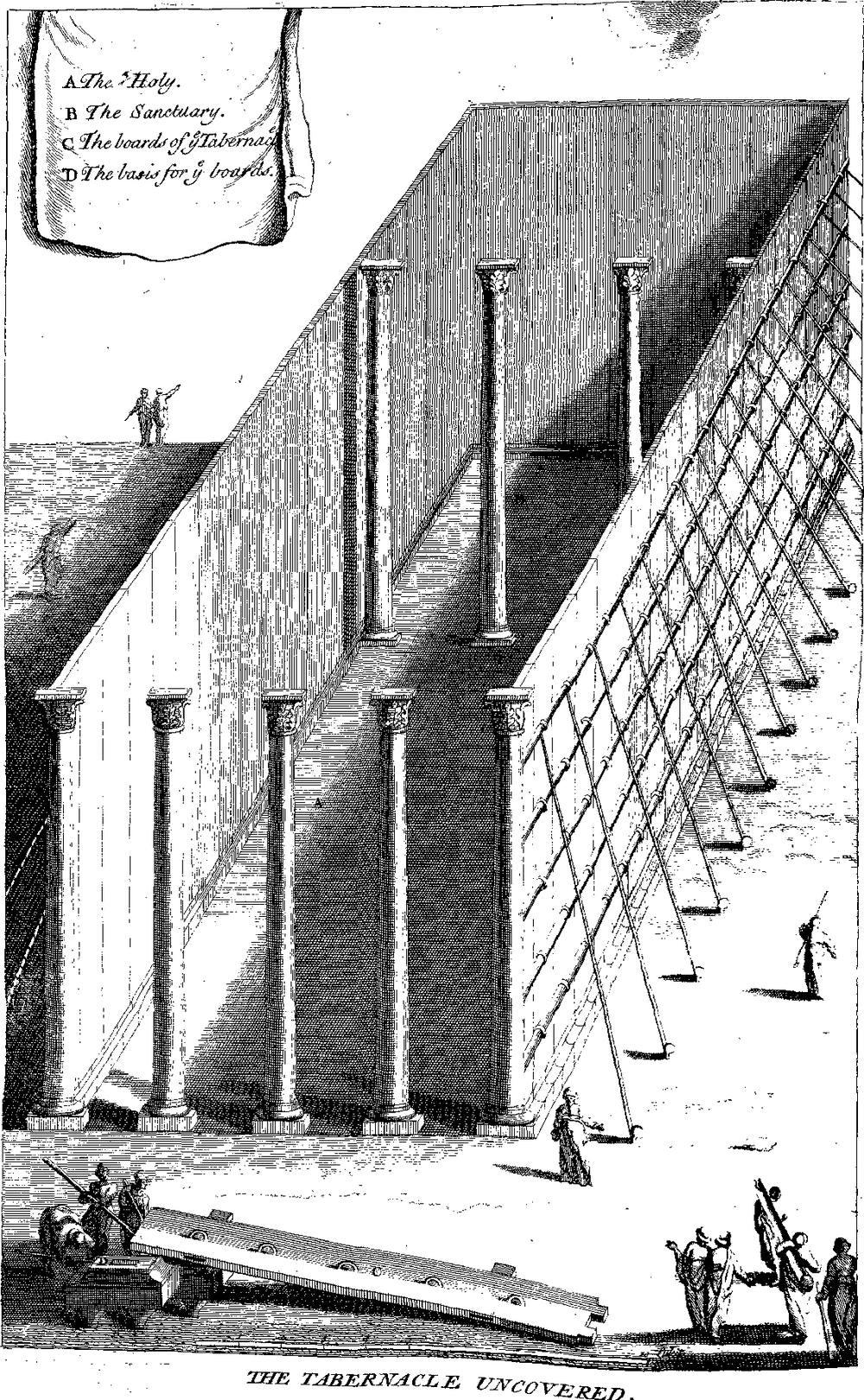
Here is the Description of this Tabernacle: It was an oblong Square, thirty Cubits in length, and ten in breadth and in height. It was divided into two Partitions. The first was call’d the Sanctum, or holy Place, which was twenty Cubits long, and ten wide. Here were placed the Table of Shew-bread, the golden Candlestick with seven Branches, and the golden Altar of Incense. The second Part was the Sanctuary, or Sanctum Sanctorum, whose Length was ten Cubits, and Breadth also ten Cubits. ‘Twas here that the Ark of the Covenant was placed. The Sanctuary was divided from the Sanctum by a Curtain or Veil of very rich Cloth, which hung upon four Pillars of Shittim Wood, that were cover’d with Plates of Gold. And the Sanctum was also inclosed before by a Veil, hung upon five Pillars of Shittim Wood overlaid with Plates of Gold, having their Bases of Brass.
On the West, North and South Sides, the Tabernacle was inclosed by Boards or Planks of Shittim-wood, overlaid with Plates of Gold, having their Bases of Brass. These Boards were eight in Number on the West Side, but on the North and South Sides there were twenty of them. They
were all of an equal Height, which was ten Cubits, and the Breadth of each was a Cubit and half. They were let into each other by two Tenons above and below. And as the whole Machine of the Tabernacle was to be moveable, and was to be often taken down, these Boards were carry’d by two Bases, wherein were two Mortice-holes, by which they were joined together. And to support them, each had five golden Rings, at proper Distances; through which they put five Poles of Shittim-wood, cover’d with Plates of Gold, which supported the whole Machine.
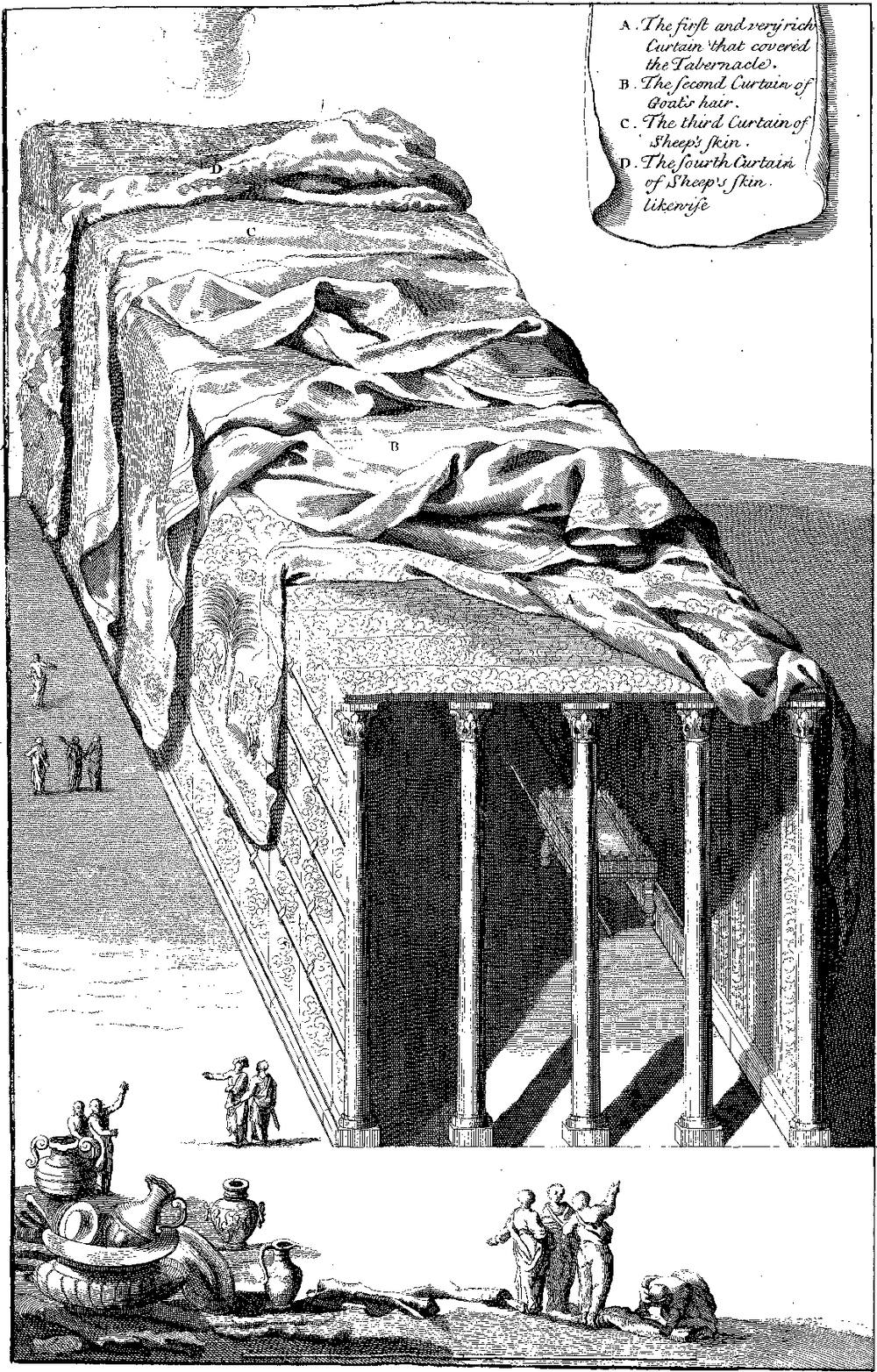
Ex. xxvi. 1, 2, 3, &c.The Tabernacle had no Window. It was cover’d with several Curtains; of which the first on the Inside was of the Colour of Hyacinth, striped with Purple, Scarlet, and Crimson. Over these Curtains there were others of Goats Hair, which hinder’d the Rain from soaking through, and preserv’d the rich Curtains from the wet. There were none of these Curtains before, but only on the Sides and behind; so that at the Entrance of the Tabernacle might be seen the first rich Curtain aforemention’d, which inclosed the whole Front. Over these Veils of Goats Hair there were two others; one was made of Sheep-skins dy’d red, the other of Sheep-skins dy’d of the Colour of Hyacinth, or Azure-blue.
Round about the Tabernacle was a large Ex. xxvii. 9, 10, 11, 12, &c.oblong Court, of the Length of an hundred Cubits, and fifty in Breadth. All this Space was encompass’d with Pillars overlaid with Plates of Silver, with Capitals of the same Metal; but their Bases were of Brass. There were ten Pillars towards the West, six to the East, twenty towards the North, and twenty to the South. On these Pillars hung Curtains made of twined Linen-thread, in manner of Net-work, which surrounded the Tabernacle on all Sides; except at the Entrance of the Court, which was shut by another Curtain of richer Materials, having embroider’d Work of the Colour of Hyacinth, Purple, and Scarlet. This Entrance was twenty Cubits wide, and the Curtain was of the same length, and was sustain’d by four Pillars overlaid with Plates of Silver, with their Capitals and Bases of Brass.
‘Twas in this Court, and opposite to the Entrance of the Tabernacle or the Sanctum, that the Altar of Burnt-offerings Ex. xxvii. 1, 2, 3, &c.was placed, upon which were burnt all the Sacrifices that were offer’d to the Lord. There was also a Pond and a Fountain for the Use of the Priests. It was allow’d the Laity to bring their Victims as far as the Altar: There they were kill’d, flea’d, and offer’d to the Lord, according to the several Rites and Ceremonies express’d in Leviticus. See before the Articles, ALTAR OF BURNT-OFFERINGS, PRIESTS, SACRIFICES, &c.
The Tabernacle was placed in such manner, that the Entrance look’d towards the East, and the Sanctuary to the West, and the two Sides to the North and South. This Tent was, as it were, the Palace of the Most High, the Dwelling of the God of Israel, who was consider’d as being in the midst of the Camp of his People. Round about him were encamp’d all the Numb. ii. 1, 2, 3, &c.Tribes in their several Stations. Judah, Zebulun and Issachar were to the East; Ephraim, Benjamin and Manasseh were to the West; Dan, Asher and Napthali were to the North; Reuben, Simeon and Gad were to the South. The Tribe of Levi, as being entirely employ’d in the Service of the Lord, were spread all round the Tabernacle; so that Moses and Aaron were to the East, the Family of Gershon to the West, that of Merari to the North, and that of Kohath to the South.
The Priests enter’d into the Sanctum every Morning to offer the Incense, and to put out the Lamps; and every Evening they went in to light them again. Every Morning they offer’d a Lamb for a Burntsacrifice upon the brazen Altar, and every Evening they offer’d another upon the same Altar.
The Tabernacle of the Covenant was erected and consecrated at the Foot of Mount Sinai, the first Day of the first Month of the second Year after the coming forth out of Egypt, in the Year of the World 2514, before Christ 1486, before the Vulgar Æra 1490. Spencer de legib. Hebr. Ritual. Dissert. 1. l. 3.Spencer has endeavour’d to prove, that the Tabernacle of the Covenant, in which Moses placed the Ark, the golden Candlestick, the Altars of Shew-bread, of Burnt-offerings, and of Incense, and where he says the Israelites paid their publick Worship and Adoration to the Lord; I say, that this Tabernacle, the Ark, the Cherubims, and all the rest, were only an Imitation of that Worship that the Egyptians and other idolatrous People paid to their Gods; and that the Lord appointed them to his People out of pure Complaisance and Condescension, with a Design of putting a stop to that strong Inclination they had for Idolatry, by sanctifying these Customs, and correcting them; by cutting off all such Practices from them, as were impious, superstitious, or idolatrous, with which the Pagans had polluted them.
He undertakes to prove this Opinion by the Comparison he makes between these and the portative Temples of the Heathen, and of the Tents in which they inclosed what was most sacred and venerable
rable in their Religion. It is easy to shew, that the Gentiles carry’d their Gods along with them in their Voyages, and in their Processions, upon the Shoulders of their Apulæi Metam. l. xi. Virgil. Æneid.Priests. Apuleius describes the Pomp, or the Procession of the Goddess Isis. Virgil speaks of the Trojan Deities carry’d by Æneas in his Travels:
Errantesq; deos, agitataq; numina Trojæ.
He founds this Opinion upon that famous Amos v. 25, 26. Acts vii. 42.Passage of Amos; Have ye offer’d unto me sacrifices and offerings in the wilderness forty Years, O house of Israel? But ye have born the tabernacle of your Moloch, and Chiun your images, the star of your God, which ye made to yourselves. Here, says he, is the Tabernacle of Moloch and of Remphan, which the Israelites carry’d along with them in the Desart, even under the very Nose of Moses. Therefore to obviate that violent Prepossession they were under towards visible Gods and their Worship, Moses himself gives them a Tabernacle, an Ark, with Sacrifices and Rites like to those of Idolaters, but purged from all Idolatry and Superstition. This is the Opinion of this learned Man.
TABERNACLE of Moloch. See before the Articles NICHES, MOLOCH, and SUCCOTH-BENOTH.
TABERNACLE, in the Acceptation of a House or Dwelling. The Books of the Old Testament are full of these kinds of Expressions. Israel dwelt in Peace in their Tabernacles. Israel, return to your Tabernacles. Japhet shall dwell in the Tabernacles of Shem. Every one return’d to his own Tabernacle. And this sort of Expressions are to be understood literally in some Cases. For Example: When mention is made of the Patriarchs, that lived in the Land of Canaan before their going into Egypt. Their Dwelling was only in Tents; they built no Houses, and inhabited no Cities. The same is to be understood of an Army in the Field, which abode in Tents or Tabernacles. But in a multitude of other places, by Tent or Tabernacle a House is to be understood. The Hebrews having long dwelt under Tents before they went down into Egypt, and afterwards in their Pilgrimages in the Wilderness, brought this kind of speaking into Use among the People.
This Name is also given to the Temple of Solomon, tho’ it was built of very solid and durable Materials; and that because in its Construction it had a great Resemblance to the Tabernacle set up by Moses. For Example: Psalm cxxxii. 3, 7. Psal. lxx.David says he would not allow himself any Rest, till he had built a Tabernacle to the Lord. Elsewhere the Author of the lxxivth Psalm complains, that the Chaldeans or Syrians had defiled the Tabernacle of the Lord.
Psal. xv. 1. Psal. lxi. 4. Ps. lxxxiv. 1. Luk. xvi. 9. Heb. viii. 2.Tabernacle is sometimes put for Heaven, for the Dwelling-place of the Blessed. Lord, who shall abide in thy Tabernacle? Who shall dwell in thy holy hill? And elsewhere, I will abide in thy Tabernacle for ever. And again, How amiable are thy Tabernacles, O Lord of Hosts! I acknowledge that these Passages may be also literally explain’d of the Temple of Jerusalem. But it appears from the Authors of the New Testament, that the Jews often understood Heaven in such Forms of Speech as these. As for Example: Our Saviour advises us to make Friends of the Mammon of Unrighteousness, that they may receive us into everlasting Tabernacles. And St. Paul says to the Hebrews; of Jesus Christ, that he was a Minister of the Sanctuary, and of the true Tabernacle, which the Lord pitched, and Heb. ix. 11. 2 Cor. v. 4.not Man. And again, But Christ being become an High-priest of good things to come, by a greater and more perfect Tabernacle, not made with hands, that is to say, not of this building. See also Rev. xiii. 6. xxi. 3. The same St. Paul speaks of his own Body, as of a Tent or Tabernacle; For we that are in 2 Pet. i. 13, 14.this Tabernacle do groan, being burthened. And St. Peter; I think it meet, as long as I am in this Tabernacle, to stir you up, by putting you in remembrance, knowing that shortly I must put off this my Tabernacle.
The Tabernacle of David that God was to raise, Amos ix. 11. Acts xv. 16. is no other than the Church of Christ, which is the House of Jesus Christ, the Offspring of David, and Heir of the Promises that were made to this Patriarch.
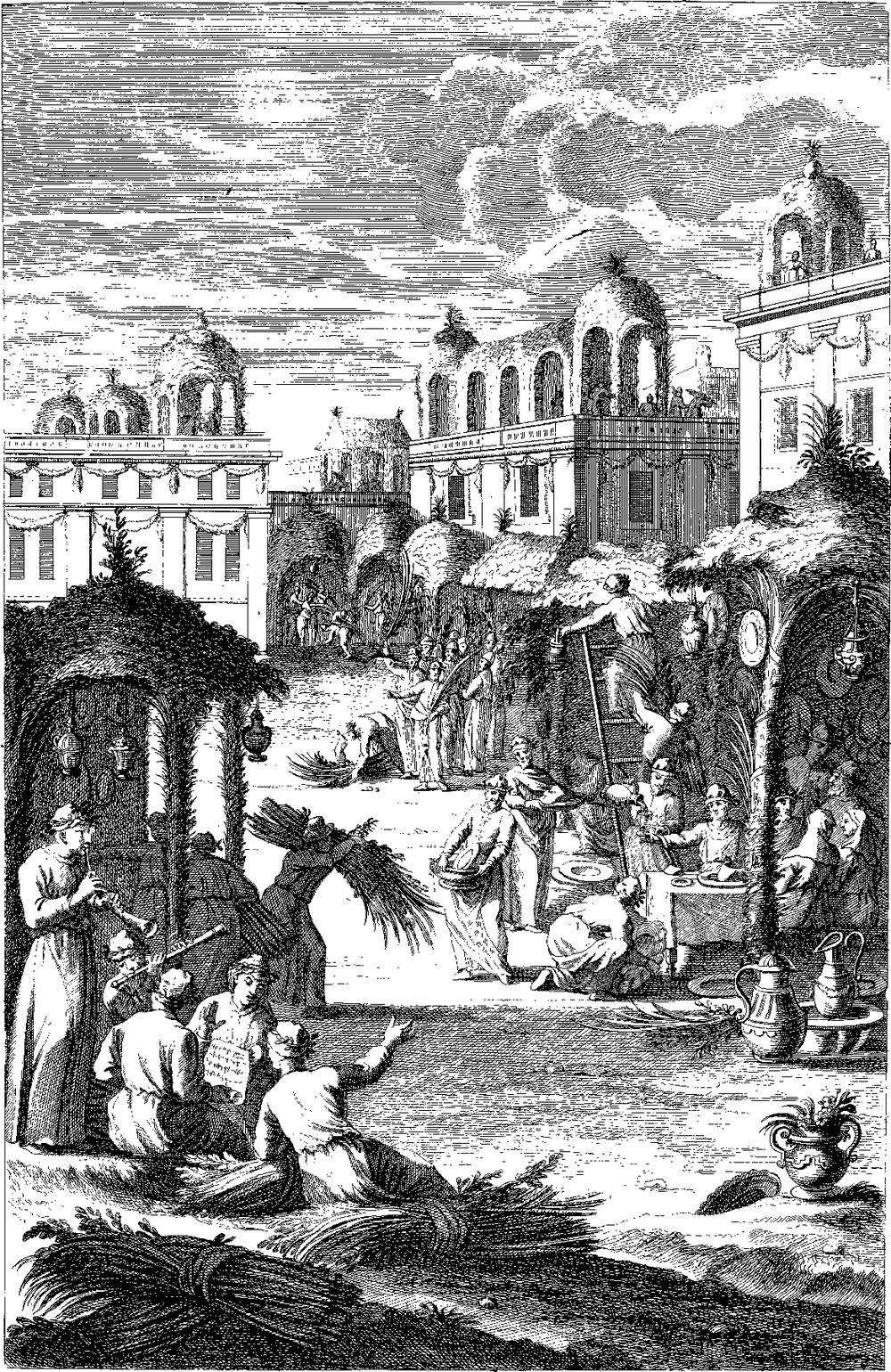
The Feast of TABERNACLES; call’d John vii. 2. Σκηνοπηγία.in the Gospel Scenopegia; which in the Greek signifies the Feast wherein they set up Tents or Tabernacles. The word Scenopegia 1 Macc. x. 21. 2 Macc. i. 8, 18.is also found in the Maccabees. The Hebrews call it Chag-hassuchoth; the Feast of Tents, because it was kept under green Tents or Arbours, in Memory of their dwelling in Tents in their Passage through חג הסכותChaghassucot. Lev. xxiii. 42,43,44.the Wilderness. ‘Twas one of the three great Solemnities of the Hebrews, wherein all the Males were oblig’d to present themselves before the Lord. It was celebrated after Harvest, on the 15th Day of the Month Tizri; which was the first Month of the Civil Year, and answers to the Moon of September. Herein they return’d Thanks to God for the Fruits of the Earth they had then Ex. xxiii. 16.gather’d in. The Feast continu’d eight Days; but the first Day and the last were the most solemn, Levit. xxiii. 34, 35, &c. It was not allow’d to do any Labour on this Feast; and particular Sacrifices were offer’d, of which mention shall be made presently.
Lev. xxiii. 40. Neh. viii. 16.The first Day of the Feast they cut down Branches of the handsomest Trees,
with their Fruit, Branches of Palm-trees, and such as were fullest of Leaves, and Boughs of the Willow-trees that grew upon Brook-sides. They made choice of the neatest of these Branches, and carry’d them in Ceremony to the Synagogue, where they perform’d what they call’d Lulab. That is, holding in their right Hand a Branch of a Palm-tree, three Branches of Myrtle, and two of Willow ty’d together; and having in their Left-hand a Branch of a Citron with its Fruit, they brought them together, waving them towards the four Quarters of the World, and singing certain Songs. These Branches were also call’d Hosanna, because when they carried them and waved them, they cry’d Hosanna; not unlike what the Jews did at our Saviour’s Entry into Jerusalem. On the eighth Day they perform’d Matt. xxi. 8, 9.this Ceremony oftner, and with greater Solemnity, than upon the other Days of the Feast. Wherefore they call’d this Day Hosannah Rabbah, or the great Hosanna.
The Jews acquaint us, that every Israelite, upon the Feast-day, in the Morning, was obliged to bring these Branches of Trees now mention’d, upon Penalty of fasting all that Day. Then they made a Procession round the Altar of Burnt-offerings, shaking their Branches and singing. At present they carry these Branches into their Synagogue, and provide themselves with Oranges and Citrons, in Countries where they do not grow, that nothing may be wanting for the Celebration of the Feast. They make it a Part of their Ceremony to take a turn round the Desk in the middle of the Synagogue, once a day at least; and they eat nothing till they have done this.
The Psalm cxviii. O give thanks unto the Lord, for he is good —— Let Israel now say, &c. seems to have been sung at the Feast of Tabernacles. The Psalmist makes a plain Allusion to it, in Ver. 25, 26, 27, &c. Save now, I beseech thee, O Lord; O Lord, I beseech thee send now prosperity. Blessed be he that cometh in the name of the Lord. The Hebrew says, Ana Jehovah, &c. which are the Words that the Jews sing even to this Day, when they make a Procession about their Desk, at the Feast of Tabernacles; and which were sung at our Saviour’s triumphant Entry into Jerusalem. The Psalmist goes on, We have blessed you out of the house of the Lord, &c.
‘Twas probably upon the Occasion of Plutarch. Sympos. Prob. 5.these Ceremonies, that Plutarch says of the Hebrews, that they kept this Feast in Honour of Bacchus. They enter, says he, into their Temple, carrying Vine-branches and Wands in their Hands; but what they do there, I know not. He calls these Feasts Cladophoria, and Thyrsophoria; and as in the Feasts of Bacchus, they carry’d green Branches wrapt about their Wands or Lances, which the Greeks call Thyrsos, he has concluded from thence, that probably the Jews would do Honour to Bacchus in this Solemnity. Josephus1, speaking of this Feast, makes use of the Greek word Eiresione, which signifies a Posy or Bundle, composed of a Branch of Olive wrapt about with Wool, upon which were hung all kinds of Fruits; which a Child, whose Father and Mother were still living, us’d to lay at the Door of Apollo’s Temple. This is what the Greeks understand by Eiresione. But Josephus explains himself by saying, that among the Hebrews it was a Wisp or Posy of Myrtle, Willow, and Sprigs of the Palm-tree, upon which Citrons were hung. It is observable, that tho’ Moses does not expressly mention Myrtle, yet Nehemiah, Neh. viii. 16.Josephus, and after them the Rabbins and the Syriac, take notice of it as necessary in this Ceremony; and the Jews understand of this Tree what Moses says, Levit. xxiii. 40. And ye shall take you, on the first day, the boughs of goodly trees, branches of palm-trees, and the boughs of thick trees, and willows of the brook; and ye shall rejoice before the Lord your God seven days.
Numb. xxix. 12, 13, 14, &c.The first Day of the Feast, besides the ordinary Sacrifices, they offer’d as a Burnt-offering thirteen Calves, two Rams, and fourteen Lambs; with the Offerings of Flower, and the Libations of Wine, that were to accompany them. They offer’d also a Goat for a Sin-offering.
The second Day they offer’d twelve Calves, two Rams, and fourteen Lambs for a Burnt-offering, with their Offerings of Flower, Oil, and Wine, which were always added to these Sacrifices. Besides which, they offer’d a Goat for a Sin-offering; and this without including the ordinary Morning and Evening Sacrifices, which were never interrupted, nor those that the Israelites us’d to offer out of their own private Devotion, or for the Expiation of their Sins. These we now mention were offer’d in the Name of the whole People of Israel. On the third, fourth, fifth, sixth, and seventh Days of the Feast were offer’d the same Sacrifices as on the second Day; with this Difference, that every Day they came short of the former by one Calf; so that on the third Day they offer’d eleven, on the fourth ten, on the fifth nine, on the sixth eight, and on the seventh but seven. As to the other Victims, they offer’d the same Number every Day. But the eighth Day, which
was kept with greater Solemnity than the foregoing, they offer’d but one Calf, one Ram, and seven Lambs for a Burnt-offering, and one Goat for a Sin-offering, with the other accustomed Offerings and Libations.
We are assured, that on the eighth Day of the Feast the Jews presented at the Temple the first Fruits of their later Crop, or of such things as were the slowest in coming to Maturity; that they drew Water out of the Fountain of Siloam, which was brought into the Temple, and, being first mingled with Wine, was pour’d out by the Priests at the foot of the Altar of Burnt-Offerings. The People in the mean time sung these Words of the Prophet Isaiah, Isa. xii. 3.Therefore with joy shall ye draw Water out of the Wells of Salvation. ‘Tis pretended that this Ceremony was instituted by Haggai and Zechariah, at the return from the Captivity; and some have believed that Jesus Christ alluded to it, when he cry’d out in the Temple, on the last Day of the Solemnity of the Feast of Tabernacles, If John vii. 37, 38.any man thirst, let him come unto me and drink. He that believeth on me, as the scripture hath said, out of his belly shall flow rivers of living water. By which he meant, according to St. John’s Observation, the Holy Ghost that was to be given to those that believed on him. Some Commentators think, that at this Feast were rehearsed the Psalms entitled Pro torcularibus, for the Presses, which are the xxth, lxxxth, and lxxxiiid, according to the Vulgate. But Leo Leo of Modena, his Ceremonies of the Jews. p. 2. c. 7.of Modena says, that they rehearsed those Psalms whose Titles are Hallelujah, or Praise God, which are, according to the reckoning of the Hebrews, the cxiiith, cxivth, cxvth, cxvith, cxviith, cxviiith, cxixth.
The same Author tells us, that the modern Jews not having now an Opportunity of going to the Temple, nor of performing all the Ceremonies prescribed by Moses, each makes for himself, in some open place, a Bower or Arbour of the Branches of Trees, hung round about, and adorned as much as they can. There they eat and drink, and some even lie there; but at least they pass as much time there as they used to pass in their Houses, and this for the whole eight Days of the Festival. Such as are sick, or worn out with Old Age, are dispensed Munster. in Levit. xxiii.with from observing this Ceremony; and when it rains very hard they are permitted to retire to their Houses; for these Bowers are not made so close as to keep out the Weather. Leo of Modena adds, that tho’ Moses appointed but eight Days for this Feast, yet Custom and the Devotion of the People have added a ninth to them. The two first Days and the two last, are observed very strictly, but the five Days between not so much. On the seventh Day of the Feast, which they call Hosanna Rabba, they quit their Myrtle and Palm Branches, and take only those of Willow, with which they make seven Turns round the Desk in the middle of their Synagogue, singing the xxixth Psalm; Give unto the Lord, O ye mighty, &c. And this Day of the Feast is as solemn again as any of the others. The ninth and last Day, which is an Institution of the Rabbins, is called The Joy of the Law, because on this they compleat the reading of the Pentateuch. The Reader may consult upon this Subject such Authors as have expressly treated on the Festivals of the Jews; the Mishna, under the Title Suca, with its Commentators; such Writers as have composed Treatises on the Republick of the Hebrews, as Sigonius, Bertrand, Cunæus, and Godwin, de Ritibus Hebræorum, l. 5. c. 6. &c.
TABITHA. There lived at Joppa a Christian Widow called Tabitha,a who abounded in Alms-deeds, and other good Works. She fell sick in the 34th Year of the vulgar Æra, of which Sickness she died; and after she had been washed, as the Custom was, she was laid out upon a Table in an upper Chamber, in order to be put into her Coffin; and it being known that St. Peter was at Lydda, which was not far from Joppa, he was sent to, and desired to come over. He soon came, and was presently conducted to the Chamber where the Corps lay: Then all the Widows presented themselves to him, weeping, and shewed the Cloaths that Tabitha had made for them. Peter caused all the People to go out, betook himself to Prayers; and turning to the Body said, Tabitha, arise: She immediately opened her Eyes, and seeing Peter, she sat up; and Peter lending her his Hand, she stood quite up. Then he called the Saints and Widows, and presented Tabitha to them, alive and well.
TABLES of the Law. Those that were given to Moses upon Mount Sinai were written by the Finger of God, and contained the Decalogue, or Ten Commandments of the Law, as they are rehearsed in Exodus xx. Many Questions have been started, about these Tables, about their Matter, their Form, their Number, he that wrote them, and what they contained. D’ Herbelot. Bibl. Orient. p. 649.Some Oriental Authors make them amount to ten in number, others to seven; but the Hebrews reckon but two. Some suppose them to have been of Wood, others of precious Stone. And these again are divided, some supposing them to have been Vol. III.a Acts ix. 36. Tabitha, quæ interpretatur Dorcas. Syr. Hebrew, Tabitha. Gr. Greek, a Doe.
been of Ruby, or Carbuncle; but the greatest part are for Carbuncle. Those that make them of Wood, suppose it to have been a Wood called Sedr, or Sedras, which is a kind of Lotum, with which the Mussulmen plant their Paradise.
Moses observes,2 that these Tables were written on both Sides. Many think they were transparent, so that they might be read through; on one Side towards the right, and on the other Side towards the left. Others will have it, that the Law-giver only makes this Observation, that the Tables were written on both Sides, because generally in writing Tables, they only wrote on one Side. O’easter & Rivet. in Exod. xxxii.Others thus translate the Hebrew Text; they were written on the two parts that were contiguous to each other: Because being shut upon one another, the two Faces that were wrote upon touched one another, so that no Writing was seen on the Outside. Some think that the same Ten Commandments were wrote on each of the two Tables; others that the Ten were divided, and only five on one Table, and five on the other. Some make the Tables to have been of ten or twelve Cubits.
Moses says expressly that the Tables we are speaking of were wrote by the Hand of God: Scriptas digito Dei. These last Words are diversly explained: Some understand them simply and literally, that they were wrote by the Operation of God himself; others understand it of the Ministry of an Angel; others of the Spirit of God, which is sometimes called the Finger of God. Others See Exod. viii. 19. Luke xi. 20.explain it by an Order of God to Moses to write them: This Opinion may be maintained from Chap. xxxiv. 27, 28. where, speaking of the second Tables which God gave to Moses, God ordered him to write down the Words of the Covenant which he had made with Israel; and a little after, Moses relates that he had written the Words of the Covenant upon Tables. In the same Chapter it is said, that he hewed two other Tables like the former which he had broken. From hence St. Austin and St. Cyprian have concluded, that the second Aug. qu. 186. in Exod. Cyprian. l. de Spiritu Sanct. Deut. x. 4.Tables were not written by the Hand of God, though the first were. But Moses in Deuteronomy, repeating what had been before said of the second Tables that God had given him, takes express notice that God himself wrote them: Scripsitque in tabulis, juxta id quod priùs scripserat. Whence it follows, that neither the one nor the other were written by the Finger of God, or that both of them were so written. But it is sufficient that God inspired Moses, and by his Spirit enabled him to write, in order to procure Authority to his Words; and it is needless to have recourse D’Herbelot. Bibl. Orient. p. 649.to a new Miracle.
The Mussulmen say, that God commanded the celestial Graver to write, or to engrave these Tables: Or that he commanded the Archangel Gabriel to make use of the Pen, which is the Invocation of the Name of God, and of the Ink, which is taken out of the River of Light, wherewith to write the Tables of the Law. They add, that when Moses let fall the first Tables, and brake them, the Angels carried the Pieces into Heaven, except one Piece of the bigness of a Cubit, which continued upon Earth, and was put into the Ark of the Covenant.
TABLE of Shew-Bread. See Altar.
TABLE of the Lord. This was the Altar of Burnt-Offerings: See its Article. The Lord was considered in his Temple, as a Monarch in his Palace. Tables were set for him, he was served with Bread, with Wine, Salt, Victuals: Lamps were lighted up for him, Perfumes were burnt for him. The Name of the Tables of Moses more particularly belongs to the Altar of Shew-Bread, because there was served up Bread, Wine, Mal. i. 7, 12.and Salt. Malachi complains that the Table of the Lord was contemned; Mensa Domini despecta est; because they offered on the Altar of Burnt-Offerings such vile Animals which had not the Qualities that the Law of Victims required. In the Books of the New Testament, the Table of the Lord is the holy Altar, on which was offered the unbloody Sacrifice of the Body and Blood of Jesus Christ: Non potestis mensæ Domini participes esse, & mensæ demoniorum. Jesus 1 Cor. x. 21.Christ, in his Gospel, represents his Kingdom, or the Heavenly Kingdom, as a Feast, where the Elect are sat at Table; That ye may eat and drink at my table, in my Kingdom, and sit on thrones judging the twelve Luke xxii. 30.tribes of Israel.
TABLES of Heaven: See Heaven.
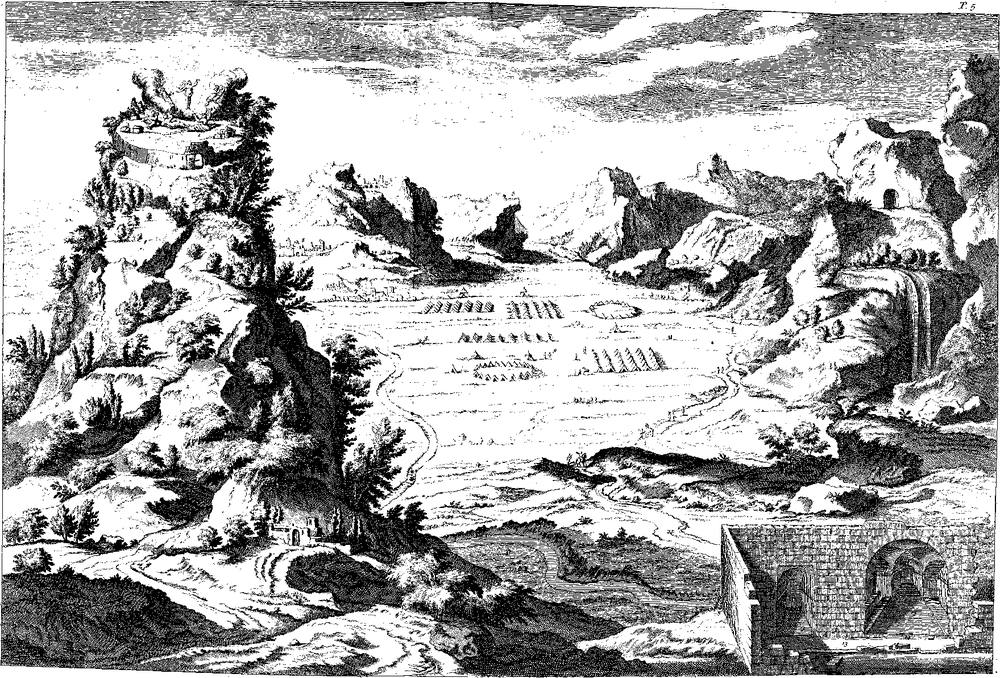
I. TABOR, or Thabor; a Mountain of Euseb. in locis. in Θαβώρ.Galilee, called by the Greeks, Ithaburius, or Athaburius.3 Eusebius says, it was upon the Frontiers of Zebulun, in the middle of Joseph. de bell. l. 4. c. 2. seu 5. in Gr. p. 866.Galilee, ten Miles from Diocæsarea, towards the East; and that it was also in the Confines of Issachar and Naphthali. Joshua xix. 22. puts it upon the Borders of the Tribe of Issachar. The Word Tabor, in Hebrew, signifies an Eminence, and the Navel; because this Mountain rises up in the midst of a wide champion Country, called the Valley of Jezreel, or the great Plain. Josephus says, that the Height of Tabor is thirty Stadia, and that there is a Plain on the top of it, of twenty-six Stadia in Circumference, surrounded with Walls, and inaccessible on the
North Side. Polybius assures us, that there was a City on the Top of it; and Josephus Polyb. l. 5. c. 70.insinuates the same thing, when he says that he caused the top of Mount Ithabirius to be inclosed with Walls in forty Days, the Inhabitants of which had no other Water but that of the Rain. He adds, that Tabor is situated between the great Plain and Scythopolis; which cannot be understood of the great Plain of Jezreel, in the midst of which Tabor stood, but of another great Plain, which is at the foot of Mount Carmel, and See M. Reland. Palæstin. l. 1. c. 55. p. 366, 367, &c.which stretches out to the South, to the East, and to the North of this Mountain.
Tabor is entirely by itself, in the midst of a great Plain, in which it rises up like a Sugar-loaf: Est autem Thabor mons in Galilæa, situs in campestribus, rotundus atque sublimis, & ex omni parte finitus æqualiter, says St. Jerom. This is confirmed by all Hieron. in Osee v.Travellers, who add, that it makes a very beautiful Prospect, being covered with Verdure and green Trees; and that on its top there is a large Plain, where there was formerly a City, and where since a great Monastery has been built. This Mountain at present is entirely forsaken. Mention is made of the City of Tabor in 1 Chron. vi. 77. Sanutus speaks of a River, the Spring Adamnan. l. 2. de locis SS. & S. Villibrord. Sanut. secret. Sidel. cruc. p. 252.whereof was at the foot of Tabor, towards the East, and which discharged itself into the Jordan, at the end of the Lake of Genezareth. Tabor was opposite to Mount Hermon, which was on the other side of the Valley of Jezreel, towards the South. Hermon was desart and barren, but Tabor was inhabited, and covered with Trees and Verdure: The Psalmist puts these two Mountains in opposition; The north and the south thou hast created them; Tabor and Hermon Psalm lxxxix. 12.shall rejoice in thy name.
Deborah and Barak assembled their Army Judg. iv. 6, &c.together upon Tabor, and gave Battel to Sisera, General of the Forces of Jabin King of Hazor, at the foot of this Mountain, in the Year of the World 2719, before Jesus Christ 1281, before the Vulgar Æra 1285.
Hos. v. 1. Hosea reproaches the Princes of Israel, and the Priests of the Golden Calves, because ye have been a snare on Mizpah, and a Net spread upon Tabor. These Snares and these Nets, were probably Idols, or superstitious Altars, that were set up at Mizpah beyond Jordan, and upon Tabor in Galilee, to entice the Children of Israel to Idolatry and Superstition.
Some think it was upon Tabor that Melchizedech came to Abraham, and that it was there he offered his Sacrifice to the Lord. Adricomius says, that even in his time was shewn the Altar upon which this Sacrifice was offered. We read in some Apocryphal Histories, that Melchizedech Vid. apud Athanas. Edit. R.P. de Montfauc. t. 3. p. 239.continued seven Years upon Mount Tabor, in the exercise of Repentance, and that Abraham, by God’s Order, went thither to him, and received from him the Holy Unction, and his Blessing. But no Credit is to be given to such Relations.
When Josephus the Historian was Governor Joseph. de bell. l. 4. c. 6. p. 866, 867. In the Year 67 of the vulgar Æra.of Galilee, he had the top of Tabor strongly fortified, thinking to make an impregnable Place of it. But Vespasian sent Placidus, one of his Officers, who by Stratagem drew down the Jews from the Mountain into the open Country, where he cut them to pieces.
It has been believed for several Ages, that it was upon Mount Tabor that our Saviour Matt. xvii. 1. Luk. ix. 27, &c.was transfigured, in the presence of St. Peter, St. James, and St. John. Eusebius expresly says so upon Psal. lxxxix. 12. and St. Jerom in the Epitaph or Historical Encomium of St. Paula, and in his 17th Letter to Marcella. John Damascenus affirms it also; and for a long time the matter was Damasc. homil. de Transfig.looked upon as indisputable. Yet Maldonate, Lightfoot, Reland, and some others, have made a doubt of it. The old Itinerary Reland. Palæstin. l. 1. c. 51. p. 334, 335, &c.of Bourdeaux will have it, that our Saviour was transfigured upon the Mount of Olives. The ancient Fathers who have spoke of the Transfiguration have not marked out Tabor for it. The Evangelists do not name it, and the Journey they insinuate our Saviour to have made for this purpose, does not seem favourable to the Opinion of those who think it was performed upon Mount Tabor. See our Commentary upon St. Matth. xvii. 1.
2. TABOR, a City situate upon the Summit of Mount Tabor: It was assigned to the Levites of the Family of Merari, 1 Chron. vi. 77. We have mentioned it before under the foregoing Article. Polybius and Josephus take notice of it.
3. TABOR. The Plain of Tabor, or the Oak of Tabor, spoken of 1 Sam. x. 3. cannot be near Tabor of Galilee, as appears from the Passage wherein it is mentioned. This Oak must be between Bethlehem and Bethel. It might be translated, The Oak of the Hill or Eminence. We find elsewhere the Word Tabor in an appellative Sense, to signify an Eminence or high Place. See the Hebrew of Judg. ix. 36.
Chisloth-Tabor, or Chesulloth-Tabor, mentioned Josh. xix. 12, 18. or Chasalus, as it is called in Eusebius and St. Jerom, was at the foot of Mount Tabor, ten Miles from Diocæsarea, towards the East.
TABRIMON, or Tabremon, Father of Ben -hadad King of Syria, 1 Kings xv. 18.
1 Kings ix. 18. תדמור Palmyra.TADMOR, or Thadamor, a City built by Solomon. This is the City Palmyra; which see.
1. TAHAN, or Theben, Son of Ephraim, Head of the Family of the Tabanites. Numb. xxvi. 35.
2. TAHAN, or Thaan, Son of Telah, and Father of Laadan, of the Tribe of Ephraim. 1 Chron. vii. 25.
1. TAHATH, or Thabat, an Encampment of the Israelites in the Desart. From Makeloth they went to Tabath, and from thence to Tarah, Numb. xxxiii. 26, 27.
2. TAHATH, Son of Kobath, and Father 1 Chron. vi. 24. Jerem. ii. 16. xliii. 7, 8, 9. xliv. 1. xlvi. 14. 1 Chron. vii. 20.of Uriel.
3. TAHATH, Son of Bered, and Grandson of Ephraim.
TAHAPANES, Tahpankes, or Taphnis, a City of Egypt. Jeremiah often speaks of it, and we are told he was buried there. ‘Tis thought that Taphnis, or Tapknæ, is the same as Daphnæ Pelusiæ, sixteen Miles from Pelusium towards the South, according to the Itinerary of Antonine. Jeremiah and the Israelites that were along with him retired to Taphnis; and when they were come thither, the Lord revealed it to Jeremiah that Nebuchadnezzar should take this City, and should set up his Throne in the very Place where the Prophet had hid Stones. This was then a royal City. Herodotus says, that in the time of Psammiticus King of Egypt, Jerem. xliii. 7, 8, 9. Herodot. l. 2. c. 30.there was a Garison at Daphnæ Pelusiæ, against the Incursions of the Barbarians.
TAHPENES, or Taphne, a Queen of Egypt. Pharaoh King of Egypt took such Affection to Hadad Son of the King of Idumea, who had took refuge with him, that he gave him to Wife the Sister of his Queen Tahpenes. 1 Kings xi. 19, 20.
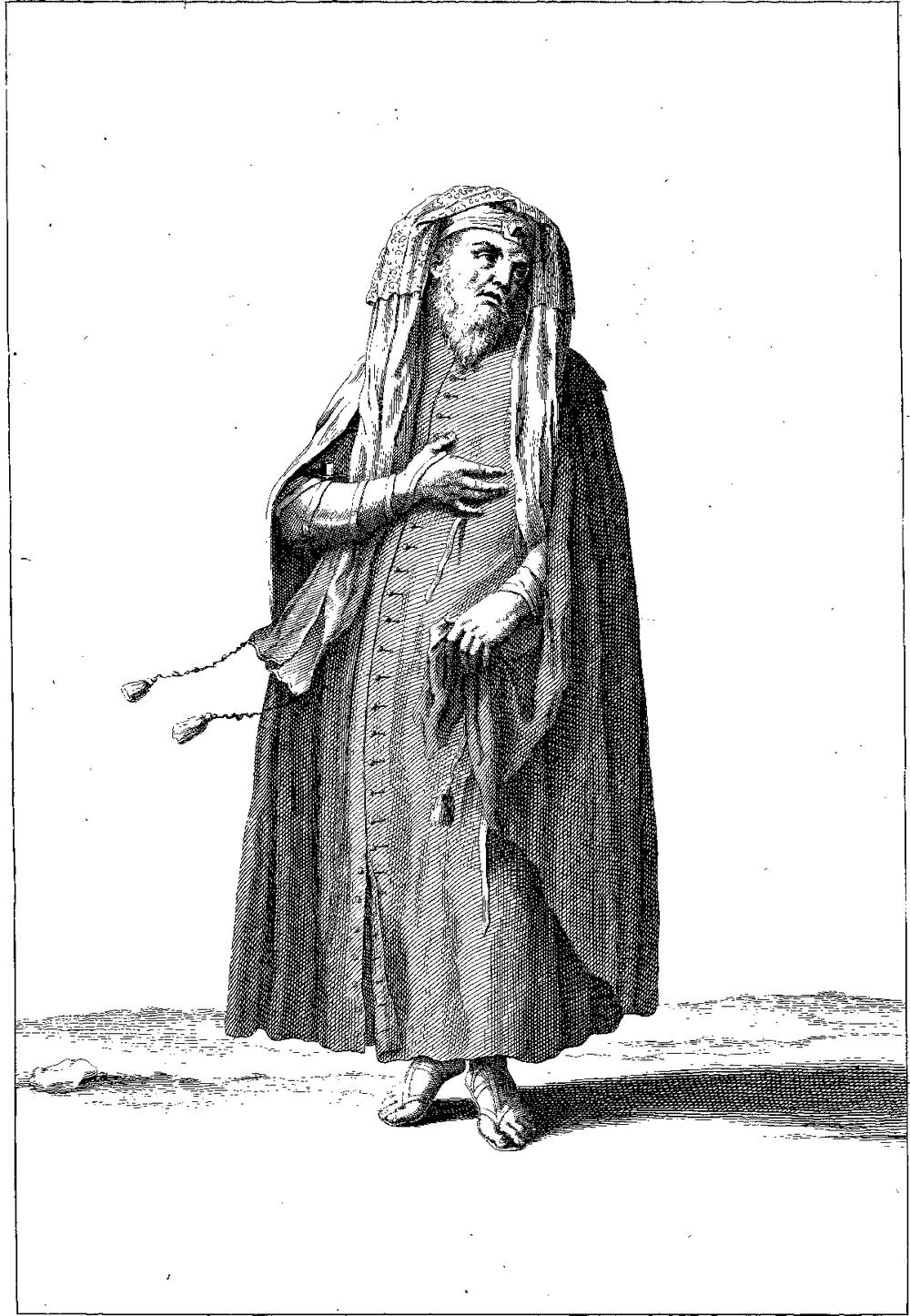
TALED, a sort of Habit that the Jews wore, chiefly when they repeated their Prayers in the Synagoge. It was instead of that square Garment they wore heretofore, to which Moses had appointed that they should fasten Borders of blue to the four Quarters, and Fringes or Ribband all along the Borders. But at present, that they may not be exposed to the Laughter of the People for the Numb. xv. 38. Deut. xxii. 12.too great Singularity of their Dress, they content themselves with wearing a square piece of Cloth underneath, with four Tufts at the four Corners; and when they meet in the Synagogue to say their Prayers there, they cover their Heads with a square Woolen Veil, which has four Tufts at the four Corners. ‘Tis Leo of Modena, Ceremonies of the Jews, p. 1. ch. 5. 11.this Veil they call Thaled, or Taled.
כברChichar. Τάλαντον.TALENT, Talentum, in Hebrew, Chichar. The Hebrew Talent [of Silver] was equivalent to three thousand Shekels, Exod. xxxviii, 24, 25, 26. and consequently was of the Weight of fifteen hundred Roman Ounces, or twenty-five Roman Pounds; and of our [French] Weight [reduced to English] one hundred and fourteen Pounds and fifteen penny-weight Troy.³ And its Value in [English] Money was three hundred forty-two Pounds three Shillings and nine Pence. The Talent of Gold was of the same Weight, and its Value was five thousand four hundred and seventy-five Pounds Sterling.
The common Attick Talent was of the Value of Two thousand four hundred Pounds.
Several Authors have pretended that among the Hebrews there were two sorts of Talents, the larger, and the smaller; the Talent of the Sanctuary, and the common Talent: The first, they say, was double to the other. But I cannot find any Foundation for this Distinction in Scripture. The Reader may see the Reduction of the Talent to our Money, in the Tables printed at the End of this Dictionary, and in such Authors as have made express Treatises concerning the Coins of the Ancients.
Deut. xix. 21.TALIO, Lex talionis. The Punishment of the Talio is appointed by the Law of Moses, against such as had maimed their Neighbour in his Body: Life shall go for Life, Eye for Eye, Tooth for Tooth, Hand for Hand, Foot for Foot. Interpreters are not agreed about the Sense of these Laws: Some take them in their full rigor, and this Text seems to favour them. So shalt thou put away the evil from among you: And those which remain shall hear, and fear, and shall henceforth commit no more any such evil among you. The Sadduces admitted of no Mitigation to this Law; but the other Jews, and many Christian Commentators pretend, that as these Laws would produce great Inconveniencies in the literal Execution of them, they ought to be taken in a restrained and mitigated Sense, and that the Offender was to pay a pecuniary Mulct to the Party offended, or to undergo some other Penalty proportionable to the Offence. A Man, for instance, who had struck out his Neighbour’s Eye, was condemned to lose one of his own Eyes, or else to redeem it by a good round Sum: And so of the rest.
Aug. l. 19. c. 25. contra Faust.God did not allow Revenge in this, but restrained it, as St. Austin says; Non fomes, sed limes furoris est. He with-held the Hands of private Persons, by appointing the Law of Retaliation, and by
threatening them with the like Punishment that they should make others suffer. This Idem in Ps. cviii.Law is Justice, says St. Austin again; ‘tis the Justice of unjust Men: Not that there can be Injustice in punishing the Guilty, but the Desire of Revenge is unjust. Oculum pro oculo, &c. injustorum justitia est, non quia iniquum est ut recipiat unusquisque quod fecerit, sed quia ulciscendi libido vitiosa est.
Philo de legib.Philo assures us, that the Lex Talionis was not rigorously put in execution, except the Injury was done to a Free-man. But the Rabins did not acknowledge this Distinction: Joseph. Antiq. l.4. c. 8.And Josephus informs us, that it was in the power of the wounded Person to pursue his Vengeance if he pleased, and he could not be forced against his Will to accept of Money instead of a Retaliation. The Greek and Roman Laws, and even the Ecclesiastical and Canon Laws, authorize the Lex Talionis. See Revenge and Revenger.
TALISMAN. This Name is given to certain Figures, or Characters, of a Celestial Sign, of a Constellation, or of a Planet, engraven upon a sympathetick Stone, or upon a Metal corresponding to the Star, to receive the Influences of it. Some think the Word Talisman is a mere Arabick Word; others that it is Persian, and signifies a starry Engraving. Others derive it from the Greek Word Talesma, Conservation. M. du Cange makes it come from Talemasca, which signifies Illusion, Phantom; whence literæ Talemascæ, unknown Letters or Characters, such as Sorcerers use. Some Rabbins, and after them Sir Robert Marsham, have pretended that the Brazen Serpent in the Wilderness, which Moses set up to cure the Israelites that were bitten by Serpents, was a Talisman. The Arabians give the Surname of Talismatick to Apollonius Tyanæus, because he made use of a Talisman to perform his false Miracles, by which he abused the ignorant People of that Age. Abulpharage relates that he used to say, Woe to me, because I came into the World after the Son of Mary. The Jews think that Jesus Christ performed his Miracles by means of the Name Jehovah, which he had stolen out of the Temple, the true Pronunciation of which he had found, tho’ it was unknown to them.
TALITHA-CUMI. These are the Words that Jesus Christ made use of when he raised up the Daughter of Jairus, Chief of the Synagogue of Capernaum. They are not pure Hebrew,4 but Syriack, and signify, My Daughter arise.
1. TALMAI, or Tholmai, Son of Anak, of the Race of the Giants. He was one of those who were destroyed by the Israelites. Numb. xiii. 23, Josh. vi. 14.
2. TALMAI, Son of Ammibud, King of 2 Sam. iii. 3.Geshur, and Father of Maachah Wife of David, and Mother of Absalom and of Tamar. After Absalom had slain his Brother Ammon, he took refuge with his Grandfather at Geshur.5
TALMON, or Telmon, a Levite, a Porter of the Temple. 1 Chron. ix. 17.
TALMUD, or Thalmud.6 The Talmud contains the Body of the Doctrine, of the Religion, and of the Morality of the Jews. They have two Works that bear this Name: The first is called the Talmud of Jerusalem, and the other the Talmud of Babylon. The first was compiled by the Rabbi Johanan, who presided in the Academy of Palestine for fourscore Years, and who finished it, as they say, in the 230th Year after the Ruin of the Temple; that is, about the Year 300 of the Vulgar Era, for the use of the Jews that dwelt in Judea. This Talmud is shorter and more obscure than that of Babylon, but is of an older Date.
It is composed of two Parts, the Mishna, and the Gemara. The Mishna is the Work of Rabbi Judah, surnamed the Holy, who compiled it about the Year 120 after the Destruction of the Temple of Jerusalem by the Romans, and the Year 190 of the Vulgar Era. The Mishna signifies the Second Law, and is a Collection of all the Traditions of the Jewish Doctors, which Judah gathered into one Body, for fear they should be lost, and come into Oblivion, because of the Dispersion of the Israelites, and the Interruption of their Schools. About an hundred Years afterwards Rabbi Johanan composed the Gemara, which is as much as to say, Completion or Perfection, to compleat and finish the Mishna of Rabbi Judah the Holy. And these two Works together make up the Body of the Talmud of Jerusalem, now described.
The Talmud of Babylon is composed of the Mishna of Judah the Holy, whom we have just now mentioned, and of the Gemara composed by Rabbi Asa,7 who lived at Babylon about an hundred Years after Rabbi Johanan. This Collection is called the Talmud of Babylon, because it was compiled at Babylon, and was chiefly in request among the Jews beyond the Euphrates. The Jews rather make use of this than of that of Jerusalem, because it is clearer and more extensive. It abounds C
with a multitude of Fables and ridiculous Stories, of which however they must entertain no doubt, except they would pass for Hereticks. They even prefer the Authority of the Talmud to that of the Scripture, and compare the Bible to Water, the Mishna to Wine, and the Gemara to Hypocras. They believe the Traditions and Explications contained in this Book are derived from God himself, that Moses revealed them to Aaron, to his Sons, and to the Elders of Israel; that these communicated them to the Prophets, and the Prophets transmitted them to the Members of the great Synagogue; who passed them from hand to hand, till they came to the Doctors that reduced them to the Form of the Mishna and the Gemara. The Mishna is written in Hebrew, in a very close and obscure Style; and the Gemara is written in a Style composed of Hebrew, Chaldee, and several Terms of other Languages.
The Rabbi Asa being prevented by Death from finishing his Work, his Children or Disciples, who went on with it, did not finish it till a good while after; that is, according8Serrarius,9Bartolocci,
to10Trigland, and several others, till the Year of Christ 500, or 505. Father Morinus proceeds so far as to maintain,11 that the Mishna could not be composed before the Year of Christ 500, and that the Talmud of Babylon was not finished till towards the Year 700, or thereabouts: And as to the Talmud of Jerusalem, he thinks it not earlier than the fifth Centry. And surely, if the Mishna itself was not before the Year 500, or thereabouts, the Talmud of Jerusalem must be still more modern. Concerning these Matters, the Reader may consult the Rabbinical Library of Bartolocci, the Exercitationes Biblicæ of Father Morinus, and the Continuation of Josephus’s History of the Jews, t. 6. l. 9. c. 3, 4. Edit. of Paris.
The Talmud of Jerusalem, and the Mishna, after the Chaldee Paraphrases of Onkelos and Jonathan, are the most ancient Books of Doctrine the Jews have, except the sacred Authors. Lightfoot has derived a great deal of Light from them, for the explaining many Passages of the New Testament, by comparing the Expressions of the Mishna with those of the Apostles and Evangelists. Maimonides has made an Extract or Abridgment of the Talmud of Babylon, which, in the judgment of the most knowing, is preferable to the Talmud itself: For he neglects what he finds there that is fabulous, childish, or useless, and applies himself to collect only the Decisions of Cases, with which that great Work abounds. To this Work he has given the Title of Jad-bachazacah, or The Strong Hand. ‘Tis a Digest of the Jewish Laws, and the most compleat that was ever made: Not in respect of the Matter, but as to the Perspicuity of the Style, the Method, and the regular Disposition of the Parts.
The TALMUDISTS; that is to say, those that teach the Traditions of the Jews contained in the Talmud, have been known by several Names, according to the Difference of the Times. From the time of the great Synagogue to the Mishna, they were called Tannaim, which is as much as to say, Traditioners, derived from the Word Tanach, which in Chaldee signifies To give by Tradition. After the Mishna to the Talmud, they were called Amoraim, pronouncing, speaking, dictating, because they explained and dictated to their Pupils the Explications of which the Gemara consists. After the Talmud, they were named Openers. Lastly, they obtained the Name of Geoniim, excellent, sublime. At present these pompous Names are disused among them. They are contented with the Appellation of Rabbi, or Chacham, of which the first signifies Master, the other Wiseman.
About the Year 1236, a Jew of Rochelle being converted to Christianity, and at his Baptism having received the Name of Thomas, he went to visit Pope Gregory IX. in the second Year of his Pontificate, that is, in the Year 1238, and made a Discovery to him of the Errors of the Talmud. The Pope sent them in thirty-five Articles to the Archbishops of France in 1239, with a Letter, in which he required them to seize all the Books of the Jews, and to burn all such in which any Errors should be found. He wrote in the same Terms to the Kings of France, England, Arragon, Castile, Leon, Navar, and Portugal. And, in consequence of this Order, there were burnt in France to the quantity of twenty Cart-loads of Hebrew Books.
Gregory’s Successor, Innocent IV. gave Commission to his Legate Ludes de Chateau -roux, to examine the Talmud, and other Books of the Jews; and after he had carefully recognized them, he tolerated them so far as they were not contrary to the Christian Religion, and restored them to them again. But the Legate wrote to the Pope, telling him, that to tolerate them was the same thing as to approve them; wherefore, on May 15. 1248. he juridically condemned them.
The two Talmuds are in Print: That of Jerusalem in one good Volume in folio, and that of Babylon in twelve Volumes in folio, at Amsterdam, and also at other Places.
Ita Rabbini.1. TAMAR, or Thamar, Daughter-in-law to the Patriarch Judah, Wife of Er and Onan, and Mother to Pharez and Zarah. The Book of the Testament of the twelve Patriarchs says, that Tamar was of Mesopotamia, and Daughter of Aram, that is, originally a Syrian: That Bathshuah the Wife of Judah could not endure her, because she was of a Nation different from her own, and inspired the same Hatred of her to her Son Er, who refusing to use Tamar as his Wife, was slain by an Angel of the Lord, on the third day after his Marriage. Others believe that this Wretch was so very much taken with the extraordinary Beauty of his Wife, that he maliciously hinder’d her from becoming a Mother, lest that should impair it. But the Scripture tells us no other Particular of the Life of Er, except that he was very wicked before the Lord, for which reason Genesis xxxviii. 7.the Lord slew him.
Judah then said to Onan, his second Son, Go in unto thy brother’s wife, and marry her, and raise up seed unto thy brother, Onan took her in obedience to his Father’s Command; but knowing that the Children that should be born from this Marriage, would not be to him, but his Brother, he prevented by a detestable Action that Tamar should become a Mother by him: Wherefore the Lord put him to death also. Judah said then to Tamar, Continue a widow in thy father’s house till my son Shelah shall be of age to marry; for he was afraid that Shelah also might die as his Brothers did before. Tamar therefore lived with her Father for a considerable time, and Judah no longer thought of performing his Promise. Some Years after, when Judah when to a Sheep-shearing to his Friend Hirah the Adullamite, Tamar was informed of it, and went in the Disguise of an Harlot upon the way to Timnath, and sat in a Place where Judah was to pass by. Judah taking her for an Harlot, promised her a Kid, went in unto her, and gave her for a Pledge his Ring, his Bracelets, and his Staff.
Q uickly after he sent her the Kid, but she was not to be found, nor could any one tell what was become of her. But after some Months her Big-belly began to appear, and Judah was informed of it, who would have her burnt alive: And as this Sentence was going to be put in execution, she produced the Ring, the Bracelets, and the Staff, and said she was with Child by him who owned those Pledges. Judah himself owned them, and acknowledged that she was more just than he had been. When she lay in, she was brought to bed of two Twins, of which the one was called Pharez, and the other Zarah, as is said under their Articles. This happened about the Year of the World 2277, before Christ 1723, before the Vulgar Era 1727.
Opus imperfect. in Matth. Homil. 1.The Author of the Imperfect Work upon St. Matthew says, that the Mother of Er the Son of Judah being a Canaanitish Woman, could not approve of the Marriage of her Son with Tamar, who was an Aramean or Syrian; she therefore advised her Son not to come near his Wife: Er followed this Advice, and God struck him dead. His Brother Onan then married her, and considering that the Children which should be born from him and Tamar would be reputed the Children of Er, prevented Tamar from becoming a Mother, by committing a detestable Action, and God put him to death also; so that Tamar still continued a Virgin. Judah being much troubled at the Death of his two Sons, and at the Disappointment of his Daughter-in-law, the Cause of which he knew not, continued a long time in Tears, and in the exercise of Penitence. God being moved at his Concern, let him know what had passed; and Judah made a scruple at marrying Tamar himself, tho’ he was apprized that the Marriage of neither of his two Sons had been consummated.
Testamen. xii. Patriarch in Juda.The Testament of the twelve Patriarchs, from whence the greatest part of these Particulars are taken, intimates that Onan lived a whole Year with Tamar, without using her as a Wife: That when Judah threatened him with his Anger, if he did not consummate his Marriage, he pretended to be willing to do it, but he prevented Tamar from conceiving, as was said before, which made God put him to death. Judah intended to give Tamar as a Wife to his third Son, Shelah; but Bathshuah, the Wife of Judah, hinder’d it, and made Selah to take a Canaanitish Woman to Wife. This so much provoked Judah, that he gave his Wife a Curse, and she died soon after. Two Years afterwards, when Judah went to shear his Sheep, Tamar, his Daughter-in-law dressed herself up as a young Bride, and sat at the Gate of the City. The Custom of the Amorites was, according to this Author, that young Brides were to prostitute themselves for seven Days at the Gate of their City. Judah, being overtaken with Wine, came near her, without perceiving who she was. This is what we read in this Apochryphal Book.
2. TAMAR, Daughter of David and Maachah, and Sister of Absalom. Her extraordinary Beauty was the occasion of her Brother Amnon’s falling desperately in love with her.12 He pretended himself sick, and desired the King his Father to send Tamar to him, to prepare him something to eat. Tamar came, and served up to him what she had prepared for him. Amnon caused every one to withdraw, and then ravished Tamar, notwithstanding all the Prayers and Intreaties she made him, not to load her with perpetual Disgrace, and draw upon himself the Scandal of so shameful an Action. Amnon having thus dishonoured her, his Love presently was changed into the most violent Hatred, so that he drove her out by Force from his Presence. Tamar poured Ashes upon her Head, tore her Cloaths, and covering her Face with her Hands, went away weeping. Absalom, her Brother both by Father and Mother, met her in this Distress, and easily guessing at the reason of her Complaints, took her to his own House, and bid her say nothing of it, but leave it to him. As to himself, he kept up so much Resentment of this Injury in his Heart, and took such a signal piece of Revenge for it, that he killed Amnon some time after.13 See the Articles of Absalom and Amnon.
3. TAMAR, Daughter of Absalom, who was of an extraordinary Beauty. Some Greek 2 Sam. xiv. 27.and Latin Copies insinuate that she married Rehoboam King of Judah, and was Mother to Abijam the Successor of Rehoboam: But neither the Hebrew nor Vulgate acknowledge this Interpolation, which is therefore of no Authority. We read in the Chronicles that 2 Chron. xi. 20.Rehoboam married Maachah the Daughter of Absalom; that is, probably, the Grandaughter of Absalom by Tamar; for often the Name of Daughter is put for Grandaughter.
4. TAMAR, a City of Judea, mentioned in Ezekiel, as one of the Southern Limits of Ezek. xlvii. 19. xlvithis ii. 28.Country: It must be about the Southern Point of the Dead-Sea. Eusebius says, that Eufeb. in Thamara.Thamara is one Day’s Journey from Malis, or Malasha, going towards Elia or Jerusalem. He adds, that the Romans kept a Garison there. Ptolemy, and the Tables of Peutinger, set down also Thamar or Thamara in Judea.
TAMMUS, Thamus, or Thammus, a Month of the Jews, which answers to the Moon of June, and which was the fourth of the Holy Year, and the tenth of the Civil Year. It has but twenty-nine Days. On the seventeenth Day of this Exod. xxxii.Month the Jews kept a Fast, in commemoration of the Worship of the Golden Calf, and the Punishment that follow’d thereon. In this same Month they keep a Memorial of what happened to Miriam the Sister of Moses, who was struck with a Leprosy for murmuring against Moses.
Numb. xii. 1—10.The Syrians make use of this Word to express in their Calandar the Month that answers to July. The Arabians, the Persians, and the Turks, also use it, to express the hottest part of the Summer. The Jewish Astronomers still at this day call the Sun’s Entrance into the Sign Cancer by the Name of Tekupha Tammus, or the Revolution of Thamus.
Manetho apud Plutarc. de Iside & Oside.TAMMUZ, or Thamus, a Pagan Deity, which is thought to be the same as Adonis. It is mentioned in Ezekiel14; Mulieres plangentes Adonidem; the Hebrew says, plangentes Tammuz. The Rabbi David Kimchi says, that Thammuz was an Idol of Brass, whose Eyes the Pagans used to fill with Lead; then making a Fire in the hollow parts of the Idol, the Lead would melt, and the Image seem to shed Tears. Other Rabbins think that Tammuz was an idolatrous Prophet, who had made an Image of the Sun, all of Gold, which was suspended between Heaven and Earth: And that the King of Babylon having put this Prophet to death, all the Idols of the Country assembled themselves together to bewail his Death, before this Image of the Sun now mentioned; which gave occasion to the observation of a Feast, which was kept at the beginning of the Month Thammus, on which they lamented the Death of the Prophet of this Name. Other Jews say that Thammuz was an Animal, to which the Heathens paid divine Honours. All these are mere Inventions, produced by the fruitful Imaginations of the Rabbins.
St. Jerom has render’d Tammuz by Adonis; and there is great probability that this is the true Signification of it. The Word Ammuz, which is the same as Tammuz, signifies abstruse or concealed. The manner of Construction of the Hebrew Text of Ezekiel gives reason to judge, that Tammuz is put in an appellative Sense. But nothing can agree better with Adonis than the Epithet secret, or hidden, whether we consider that Secresy and Obscurity in which his Mysteries were involved, or the Condition in which he was represented during his Festival. He was put into a Coffin, and lamented over as if dead. Moses in some places calls him The Dead, by way of Levit. xix. 27, 28. Deut. xiv. 1. See also Psal. cvi. 28.Derision.
Lastly, the Circumstance of Women bewailing Tammuz has determined the greatest part of Commentators to explain these Passages of Ezekiel by the Feasts of Adonis. See his Title.
‘Tis thought that the Israelitish Women who bewailed Tammuz in Ezek. viii. 15. had for the Object of their false Worship the same Sun as was adored by the Men in the same place of Ezek. ver. 15, 16. Thou shalt see greater abominations than these. And he brought me into the inner Court of the Lords house, and behold, at the door of the temple of the Lord, between the porch and the altar, were about five and twenty Men, with their backs toward the temple of the Lord, and their faces toward the east, and they worshipped the Sun toward the east.
This is not at all inconsistent with their Opinion who take Tammuz for Adonis, because in the Pagan Theology Adonis was the Sun also.
Those learned Men who have most studied profane Antiquity, as it has any relation to Scripture, think they can trace out in Tammuz the Patriarchs Ham, Joseph, and Moses. They that would have Tammuz and Ham to be the same Person, found their Opinion upon a Similitude of Names, and upon the Worship that was common to Ham and Tammuz in Egypt. Those that maintain Tammuz to be Joseph, observe that Tammuz or Adonis is a Symbol of the Sun as well as Apis and Osiris; and as Apis represented the Patriarch Joseph, Adonis, or Tammuz, might also represent him. But these are weak Reasons, and idle Conjectures. See Vossius de Idolat. l. 1. c. 29. p. 112.
Huetius Demonst. Evang. propos. 4. c. 3, 4.Mr. Huet, the ancient Bishop of Auranch, thinks that Tammuz was Moses. He supposes that the King of Egypt, under whom Moses was born, was called Tammuz or Thermosis; that his Daughter Thermuthis, when she preserved Moses, gave him her Father’s Name, and called him Tammuz. He goes on with the pretended Characters of Resemblance between Moses and Adonis: But all this is so little certain, that it deserves no Consideration. The Pagan Religion was the Result of the Fancy and Imagination, of the Disorders and Irregularities of the Heart of Man; ‘tis only imposing upon ourselves to seek for any rational System in it. The Systems of the Pagan Theology were invented to serve a Turn afterward, and very late; and to endeavour to hide the Shame, the Vanity, and the Extravagance of it.
TAMNA, Thamna, or Tamnatha, a famous City in Palestine, upon the Road from Euseb. inJerusalem to Diospolis. It was the Capital of Toparchia Thamnitica, which became famous in the later Times of the Jewish Republick.
Josh. xxi. 25. xii. 21. Judg. i. 27.TANACH, or Thanac, or Taanach; a City of the half Tribe of Manasseh, on this side Jordan. It was yielded up to the Levites. Eusebius, St. Jerom, and Procopius of Gaza, say, that even in their Time it was a considerable Place, three Miles distant from Legio.
Numb. xiii. 23.TANIS, a City of Egypt, called in Hebrew, Zoan. Moses affirms that Tanis, or Zoan, Tanis. Psalm lxxvii. 12, 43. Isa. xix. 11. 13. xxx. 2.Zoan, is more modern by seven Years than the City of Hebron in the Country of Canaan; and the Psalmist asserts, that Moses performed his Miracles in the Fields of Tanis, in campo Taneos. This City was within the Delta. Isaiah addresses himself to the Princes of Tanis, who were much conceited of their own Wisdom and Prudence. He derides their false Politicks. It appears that even in the time of this Prophet, Tanis was still the capital City of the lower Egypt. Ezekiel, xxx. 14. speaks of Zoan, but St. Jerom has translated it by Taphnis, instead of Tanis, which two Cities were very different from each other. Tanis was situate upon that Arm of the Nile which was nearest to that of Damieta, towards the West. We shall afterwards speak of Taphnis, or Daphnæ.
Gen. i. 21. Vulg. Cet. grandia. 70. Exod. vii. 9.TANNIM, or Thannim, signifies in general, great Fishes, Sea-monsters, Dragons. When Moses threw down his Rod before Pharaoh, it was changed into a Dragon; the Hebrew says Thannim. And elsewhere, their Poison is as the Venom of the Tannim. We think that sometimes it expresses the Crocodile. For example, in Psal. lxxiv. 13. Thou breakest the heads of the Dragons in the waters; of the Tannim, or Thanninim. The Seventy, and even St. Jerom, sometimes translate Tannim by Syrens. supposing this Word to signify Sea-Monsters, whose Figure partakes of both a Man and a Fish. See, for example, Job xxx. 29. Isaiah xxxiv. 13. xliii. 20. in the Version of the Seventy, and Isai. xiii. 22. in the Vulgate. In one Passage St. Jerom renders Thannim by Lamiæ, Lament. iv. 3.Witches, or Sorceresses; but the general and better Interpretation is Dragons, or Sea-monsters.
TAPHATH, or Taphu, Daughter of Solomon. She married Ben-abinadab, or the Son of Abinadab, Governor of the whole Province of Dor. 1 Kings iv. 11.
TAPHON, or Thopho, a City in Judea, fortified by Bacchides, 1 Macc. ix. 50. This is the same as Tappuah, which see.
Jerem. li. 27. Taphsar, or Tiphsar. Nah. iii. 17.TAPHSAR. This Word is found in Jeremiah, which St. Jerom has left as it is, without translating it; and in Nahum, where he has rendered it by little Children, reading in the Text Tappapim,
instead of Taphsarim. Our best Interpreters are of opinion that this Word is a Name of Dignity; perhaps the same as Achasdrapne, whence Satrapa is formed. Some have thought Taphsar to be the Name of a Province, but there is no Proof to support this Conjecture.
1. TAPPUAH, or Taphua, a City upon the Frontiers of the Tribe of Manasseh, but belonging to the Tribe of Ephraim. Josh. xvii. 8. This is probably the same as En-tappuah, in Josh. xvii. 7. called in the Vulgate the Fountain of Taphua.
2. TAPPUAH, a City of the Tribe of Judah, Josh. xv. 34. This may be the same as Beth-tappuah, Josh. xv. 53. which is also attributed to the Tribe of Judah, and Euseb. in Beth-ta-phu.which Eusebius places beyond Raphia, fourteen Miles from this City towards Egypt.
TARAH, or Thare, an Encampment of the Israelites in the Desart. They came hither from Tabath, and went hence to Mithcah, Numb. xxxiii. 27. Ptolemy speaks of a City call’d Thana, in Arabia Joseph. Antiq. l. 14. c. 2.Petrea, and Josephus mentions a City call’d Tharabasa, which the Jews took from the Arabians.
TARALAH, or Tharela, a City of the Tribe of Benjamin, Josh. xviii. 27.
TAREA, or Tharaa, or Tabrea, Son of Micah, and Grandson of Jonathan the Son of Saul. 1 Chron. viii. 35.
TARES, Zizadnium, Lolium; ‘tis a Plant with a longish rough Leaf, not easily distinguish’d from Corn, or other Grain, among which is grows. Its Stem is smaller than that of Wheat, and at the top of this Stem there comes forth a long Ear with little Husks, which surround it at equal Distances, and which contain three or four Grains heap’d together, and cover’d with Down or Fluff, which are not easily broke. Bread made of Corn wherein there are many Tares, is very unwholsome; it intoxicates, it loads the Stomach, and creates Heaviness, Drowsiness, and Head-achs, to those that eat it. When the Plant is grown up, and ready to blossom, it is easily distinguish’d from the Corn. Hence it is that our Saviour, in his Parable of the good Corn and the Tares, bids his Reapers to wait for the time of Harvest, when it would be easy to pluck up the Tares, to make them up into Bundles, and to cast them into the Fire. In the Church the Tares must be Matth. vi. 26,27,28. &c.mingled with the Wheat, the Wicked with the Righteous, the Reprobate with the Elect, till the Day of Judgment. Sometimes the Pastors can rake out the Hereticks, the Schismaticks, and scandalous Offenders, by Excommunication, which ought to be esteemed as a Prelude to the final Judgment of God.
The Word Tares is not used in its proper Signification, but is often used in its figurative Sense. To sow Tares in a Family is to raise Discord in it. The Enemy has sown Tares in the Field of the Church: The Hereticks have spread their Errors therein: The Devil has propagated Division among the Members.
The Ear of this Plant is a Foot long, and of a particular Form; for it is divided into several Parts, ranged alternatively, so that each appears to be a little Ear, made up of Grains that are smaller than those of Wheat, but a little mealy, of a reddish Colour. Its Blade is very different from that of Wheat, but it is chiefly distinguished when it grows up, and when it begins to blossom. In French it has obtained the Name of Ivroye, or Ivraye, as they say, because it enivre, or inebriates those that eat Bread made of it, or that drink Beer in which there is any considerable quantity of this Grain. Some Botanists think that Tares are produced from Grains of Wheat or Barley corrupted, and which have degenerated from their Nature; whence it is that there are certain Years and certain Quarters, wherein much Tares are gathered, tho’ good Corn was sowed; and, on the contrary, we are assured that Tares are sometimes changed into Wheat, when it lights upon good Ground. I have seen Persons who affirm’d, that they had made the Experiment of both these things.
תרגוםThargum, from the Chaldee תרגםexposuit, interpretatus est.TARGUM; in the Plural, Targumim; that is, Expositions or Explications. This name is given to the Chaldee Paraphrases of the Books of the Old Testament. They are called Paraphrases or Expositions, because they are rather Comments and Explications Ezra viii. 8, 9. מפרש ושום שכלthan literal Translations of the Text. They are written in the Chaldee Tongue, which became familiar to the Jews after the time of the Captivity of Babylon, and was more known to them than the Hebrew itself. So that when the Hebrew Text was read in the Synagogue, or in the Temple, they generally added to it an Explication in the Chaldee Tongue, for the service of the People, who had but a very imperfect Knowledge of the Hebrew Tongue. It is probable, that even from the time of Esdras, or Ezra, this Custom began, since this learned Scribe reading the Law to the People in the Temple, explained it, with the other Priests that were with him, to make it understood by the People: Whether they explained it in the Hebrew Language, or, which to us appears most probable, in the Chaldee or Syriack; for these
two Languages had then a very great Conformity to each other, a and were almost entirely the same, and even at this Day they have a very near Agreement; whether, I say, they explained in Syriack or or Chaldee what they read in Hebrew.
But tho’ the Custom of making these sorts of Expositions in the Chaldee Language be very ancient among the Hebrews, yet have they no written Paraphrases or Targumims but since Onkelos and Jonathan, who lived about the time of our Saviour. Jonathan is placed about thirty Years before Christ, under the Reign of Herod the Great: Onkelos is something more modern. The Targum of Onkelos is the most of all esteem’d, and Copies are to be found in which it is inserted Verse for Verse with the Hebrew. It is so short, and so simple, that it cannot be suspected of being corrupted. See the Article of Onkelos before. This Paraphrast wrote only upon the Books of Moses, and his Style approaches nearly to the Purity of the Chaldee, as it is found in Daniel and Ezra. This Targum is quoted in the Mishna, but was not known either to Eusebius, St. Jerom, or Origen.
The Targum of Jonathan Son of Uziel, is upon the Greater and Lesser Prophets. He is much more diffuse than Onkelos, and especially upon the Lesser Prophets, where he takes great Liberties, and runs on in Allegories. His Style is pure enough, and approaches pretty near to the Chaldee of Onkolos. ‘Tis thought that the Jewish Doctors who lived above seven hundred Years after him, made some Additions to him. See the Article Jonathan Ben-Uziel, before. They ascribe to him a Paraphrase upon the Pentateuch also; but this is none of his.
The Targum of Joseph the Blind, is upon the Hagiographa. This Author is much more modern, and less esteemed than those we have now mention’d. He has wrote upon the Psalms, Job, the Proverbs, the Canticles, Ecclesiastes, Ruth, and Esther. His Style is a very corrupt Chaldee, with a great Mixture of Words from foreign Languages. See the Article Joseph the Blind.
The Targum of Jerusalem is only upon the Pentateuch; nor is that entire or perfect. There are whole Verses wanting, others transposed, others mutilated; which has made many of opinion that this is only a Fragment of some ancient Paraphrase that is now lost.
Upon this Subject the Reader may consult the Prolegomena of Walton, Proleg. 12. Father Morinus in his Exercitationes Biblicæ, and Father Le Long in his Bibliotheca Sacra, c. 2. sect. 2. p. 132, &c. There is no Targum upon Daniel, or upon the Books of Ezra and Nehemiah. They have lately published that which is upon the Chronicles. The Editions of the Chaldee Paraphrases that are in the Polyglots of Complutum, Antwerp, and Paris, and even in the Rabbinnical Bibles printed at Venice, are imperfect: Those of Basil, and those of the English Polyglot, are more entire.
TARICHEA, a City of Galilee, often mentioned by Josephus. He says it was Joseph. in vitâ suâ. p. 1010. Joseph. de bell. l. 2. c. 16.thirty Stadia, from Tiberias: He intimates it was a Maritime Town, since he went on Ship-board there to come to Tiberias. Pliny places it to the South of the Lake of Gennesareth, and Tiberias to the West.
TARPELITES, Terphalæi; a People Ezr. iv. 9.sent from beyond the Euphrates into Samaria. Some think the Tarpelites to be the Sapires, or Saspires, see Sephar, before; or the Tripolitaus, or People of Tripolis.
1. TARSHISH, or Tharsis, the second Son of Javan, Gen. x. 4. We think he founded Tarsus in Cilicia, and that he gave the Name of Tarsis to the whole Province.
2. TARSHISH, one of the chief Nobles of Persia, and most in the favour of Abasuerus, Esth. i. 14.
TARSUS, the capital City of Cilicia, and probably the same as Tarshish, mentioned in Scripture. We have spoke of it under Acts ix. 11. xxi. 39.Tarshish. St. Paul was a Native of Tarsus in Cilicia. Some think it obtained the Privileges of a Roman Colony because of its firm Adherence to Julius Cæsar; and this Privilege gave the Inhabitants the favour of being Citizens of Rome, which St. Paul enjoy’d by being born herein. Others mantain that Tarsus was only a free City, but not a Roman Colony, in the time of St. Paul; and that in the Medals no Footstep is found of this before the Reign of Caracalla or Heliogabalus; and therefore the Privilege of being a Citizen of Rome belonged to the Apostle, not barely as being a Denison of Tarsus, but by some personal Right that his Father or Ancestors had obtained. See the Commentators upon Acts xvi. 37.
2 Kings xvii. 31. Tartak.TARTAK, or Thartbac, a false Deity of the Avites. The Rabbins say he had the Shape of an Ass. By pronouncing it Sarsac, Shar-shac. Jer. xxv. 26. li. 40. Sheshac. Athen. l. 14. c. 10. Dio Chry. Orat. 4. de Regno.instead of Tartak, one might easily find under this Name the God Sesak, or Sheshac, of whom Jeremiah speaks in some Places, and whose Feasts were not unknown to the Pagans, under the Name of Saccæa, or Sacea. See what we have said in our Commentary upon Jeremiah.15
TARTAN, Tharthan, Thanathan, or Thathanai, an Officer of King Sennacherib, who was sent with Rabshakeh on a Message to King Hezekiah.16 The Name Thanathan may signify one that presides over the Presents or Tributes.
TATNAI, or Thathanai, Governor of Samaria, and of the Provinces on this side Jordan. He opposed himself to the Undertaking of the Jews, who were for rebuilding the Temple and the Walls of Jerusalem. He wrote about it to Darius King of Persia, who gave Orders that they should go on with their Building, Ezr. v. vi. In the Year of the World 3485, before Christ 515, before the Vulgar Era 519.
TEBAH, Son of Nabor and of Reumah his Concubine, Gen. xxii. 24.
TEBET, or Thevet, the fourth Month of the Civil Year of the Hebrews, and the tenth of their Ecclesiastical Year. It answer’d to our Moon of December, and has but 29 Days. The second Day of this Month is the last of the Octave of the Dedication of the Temple, after it was purified by Judas Maccabeus. See 1 Mac. iv. 59. John x. 22.
On the tenth Day the Jews fast, because of the Translation which was made of the Law, from Hebrew into Greek, by the Command of Ptolemy Philadelphus. This Fast holds for three Days, as they say. See the Article Septuagint.
TEHINNAH, Son of Esthon, of the Family of Caleb, 1 Chron. iv. 12. Tehinnah was Father of the Family of Nabash.
TEKEL, or Thechel, that is to say, he was weighed. This was one of the Words that appeared written upon the Wall, at the sacrilegious Feast of King Belshazzar. God intended to shew by it, that this wretched Prince had been weigh’d in the Balance, and had been found wanting. See Dan. v. 25.the Articles Belshazzar and Daniel.
TEKOA, Thecue, or Thecua, a City of the Tribe of Judah, 2 Chron. xi. 6. It is also in the Greek of Joshua, xv. 60, but it is not found in the Hebrew. Eusebius and St. Jerome place Tekoa twelve Miles from Jerusalem, towards the South. In another Place St. Jerome says, that it was six Miles from Bethlehem towards the South: See his Prologue to Amos. It stood upon a Mountain, and was the farthest Place that was to be found that way, as far as the Red Sea. Joseph. de bell. l. 5. c. 7.Josephus says that Tekoa was not far from the Castle of Herodium. There is mention made of the Wilderness of Tekoa, 2 Chron. xx. 20.
Which Wilderness is not far from the Red Sea. 1 Macc. ix. 4.
TELAH, or Thale, Son of Resheph, of the Tribe of Ephraim, and Father to Tahan, 1 Chron. vii. 25.
TELASSER, or Thalassar, a Province of Asia. Rabshakeh, Cup-bearer to King If. xxxvii. 12. 2 Kings xix. 12.Sennacherib, tells Hezekiah, that the Gods of the Nations could not deliver out of his Master’s Hands the Children of Eden that were at Telassar, or Thelasar. The exact Situation of this Province is unknown, but it is thought to be towards Armenia and Mesopotomia, and about the Sources of the Euphrates and Tigris, because of the Children of Eden, that inhabited this Country.
TELEM, a City of the Tribe of Judah, Josh. xv. 24. Probably the same as Telaim in the same Tribe. 1 Sam. xv. 4.
TEL-HARSA, or Thelharsa, perhaps the same as Telasser. Those that returned with Zerubbabel out of this Country,17 could not prove their Genealogies, or even shew that they were of the Race of Israel.
TEL-MELAH, or Thelma. Those that returned from Tel-melah with Zerubbabel,18 could not prove themselves to be Descendants from the Children of Israel. The Situation Gen. xxv. 15. Job vi. 19.of Tel-melah is unknown.
TEMA, or Thema, Son of Ishmael. ‘Tis thought he peopled the City of Thema in Arabia Deserta. Job speaks of the Caravans of Tema and Sheba. Ptolemy places a City called Themma, or Thamma, in Arabia Deserta, towards the Mountains of the Genesis xxxvi. 15. Ibid. 34. Jerem. xlix. 7.20. Amos i. 11, 12. Euseb. in Θαιμάν.Chaldeans.
TEMAN, or Theman, Son of Eliphaz, and Grandson of Esau. We find a King of Idumea called Itusham, of the Country of the Temani. Jeremiah and Amos speak of Teman; and Eusebius places Thæman in Arabia Petrea, five Miles from Petra, and says there was a Roman Garison there.
TEMENI, or Temani, Son of Ashur and of Naarah, 1 Chron. iv. 6.
TEMPLE, the House of God, the Sanctuary, the Tabernacle of the Lord, the Palace of the Most-High, &c. These Terms are often synonymous in Scripture, tho’, strictly speaking, they signify very different things: For the Sanctuary was but one part of the Tabernacle or Temple; and the Word Temple does not agree to the Tabernacle, or the Tabernacle to the Temple. Lastly tho the Hebrews before Solomon could not properly be said to have a Temple, yet they did not scruple sometimes to use the Word Tenple for the Tabernacle; as, on the contrary, they sometimes
Lord to express the Temple built by Solomon.
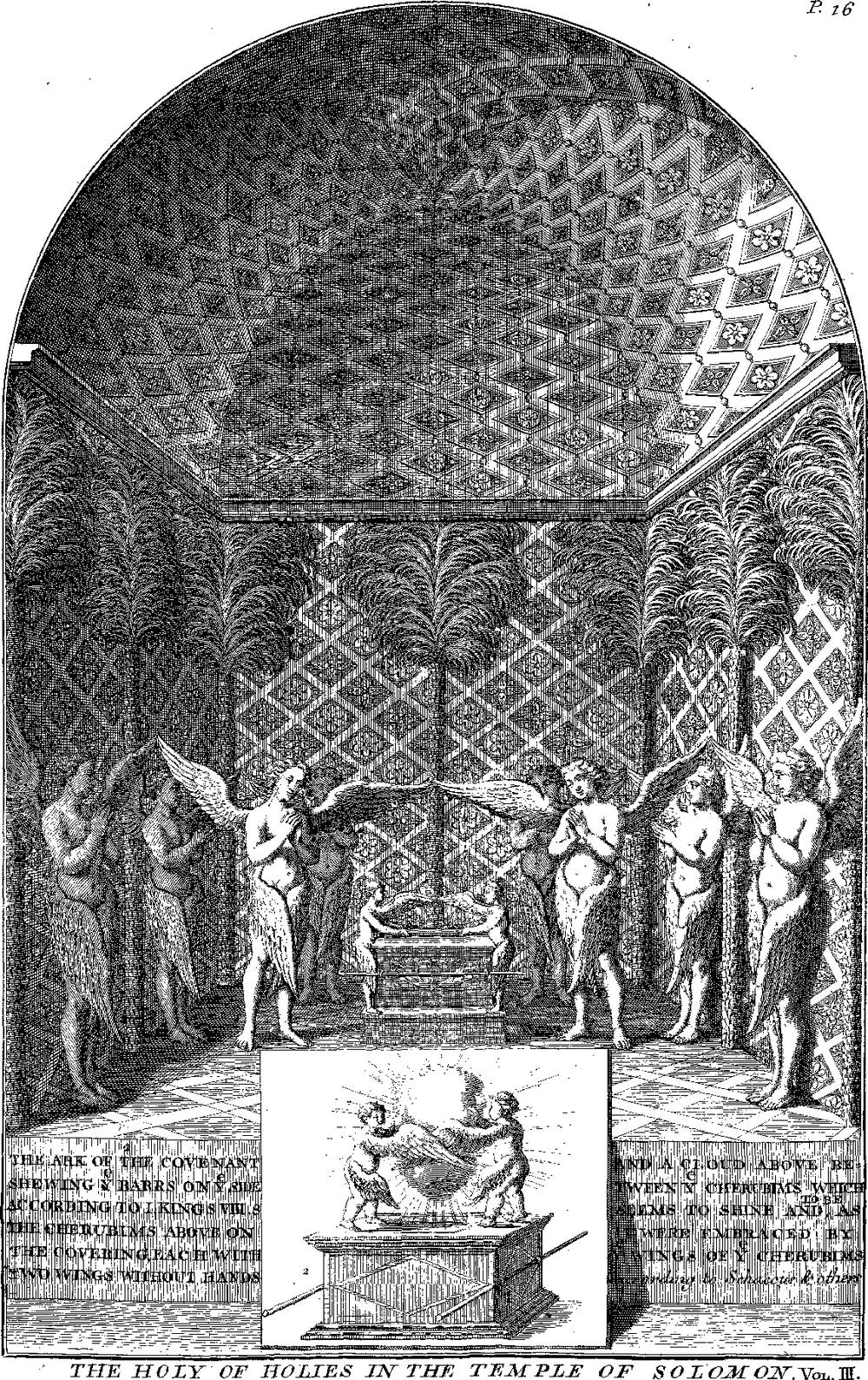
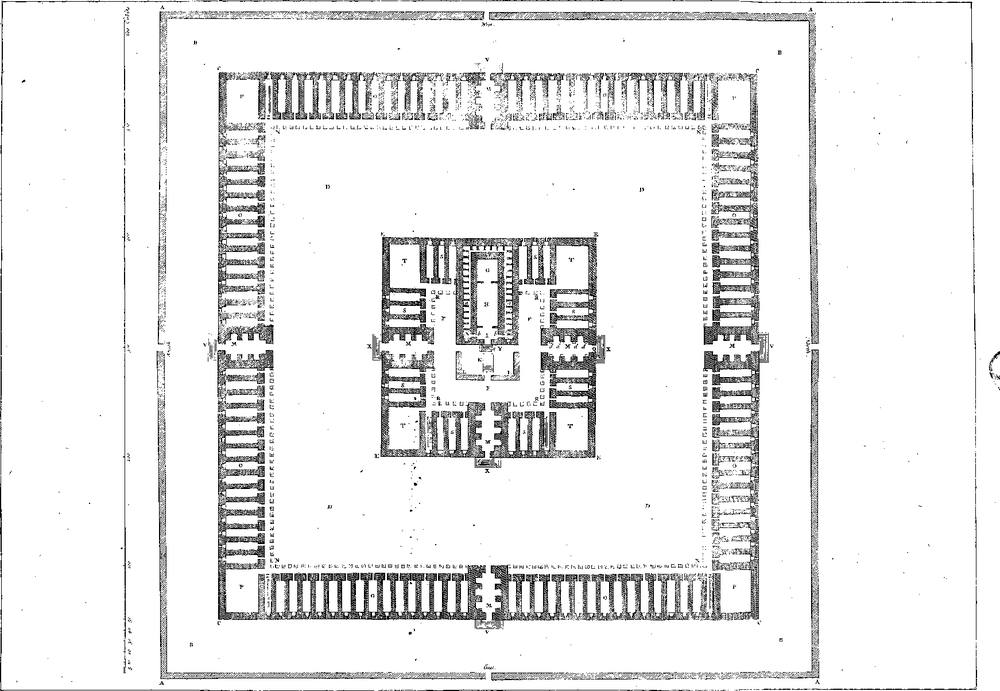
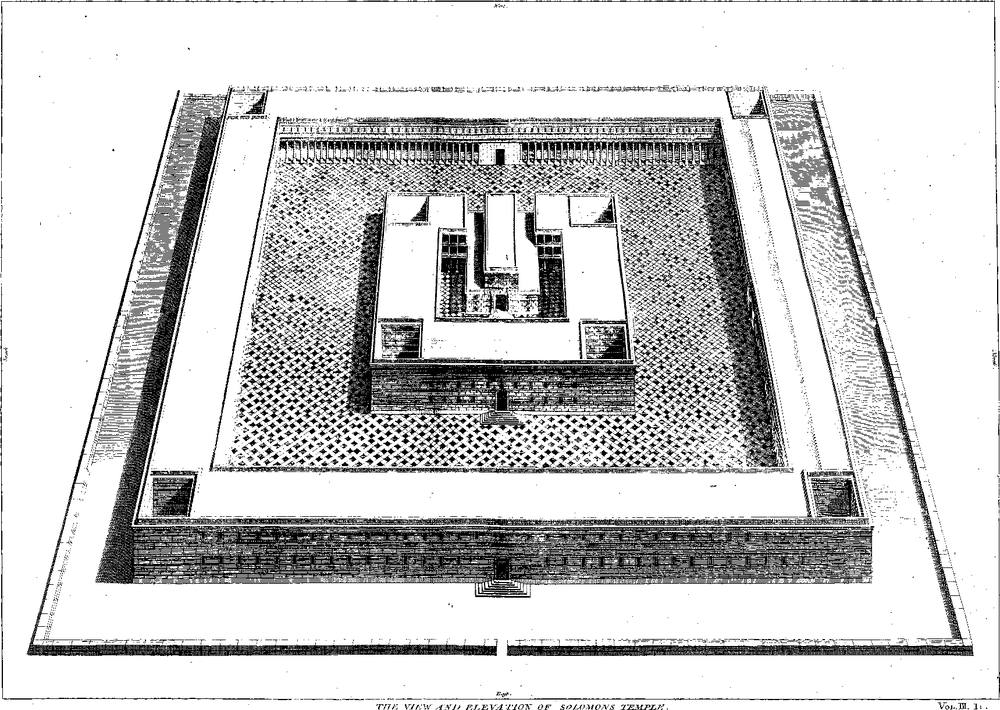
After the Lord had revealed to David that Jerusalem was the Place he had chosen, in which to fix his Dwelling, this pious Prince began to think of executing the Design he had projected, of preparing a Temple for the Lord, that might be something worthy of his divine Majesty. He open’d his mind to the Prophet Nathan,19 declaring to him that he thought it a Scandal for him to dwell in a House of Cedar, whereas the Ark of the Lord was as yet in a Tent of Skins. But the Lord did not think fit that David should execute this Design, however laudable it was; he acquainted David by the Prophet above named, that this Honour was reserved for Solomon, his Son and Successor, who was to be a peaceable Prince; for as to himself, he had shed much Blood in the many Wars he had waged. Therefore God accepted of the good Intentions of David; and David applied himself to the collecting great Quantities of Gold, Silver, Brass, and Iron, and such other Materials as were necessary for the Accomplishment of this great Undertaking.
Solomon laid the Foundations of the 1 Kings viii. 2 Chron. v, vi, vii.Temple in the Year of the World 2992, before Christ 1008, before the Vulgar Æra 1012, and it was finished in the Year of the World 3000, and dedicated in 3001, before Christ 999, before the Vulgar Æra 1003. The Place that was pitch’d upon for erecting this magnificent Structure, was one side of Mount Sion, called Moriah. Its Entrance or Frontispiece stood towards the East, and the most holy and most retired part was towards the West. The Author of the First Book of Kings, and of the Second of the Chronicles, has chiefly made it his business to describe the Temple, properly so called; that is, the Sanctuary, the Sanctum, and the Apartments belonging to them; as also the Vessels, the Implements, and the Ornaments of the Temple, without giving any Description almost of the Courts and open Areas, which however made a principal Part of the Grandeur of this august Edifice. But Ezekiel has supplied this Defect, by the exact Plan he has delineated of these necessary Parts. Indeed it must be owned, that the Temple, as described by Ezekiel, was never restored after the Captivity of Babylon, according to the Model and the Mensurations that this Prophet has given of it. But as the Measures he sets down for the Sanctum and the Sanctuary, are within a small matter the same as those of the Temple of Solomon; and as this Prophet, who Temple, it is to be supposed that the Description he gives us of the Temple of Jerusalem, is the same as that of the Temple of Solomon.
Ezek. xlv 2.The Ground-plot upon which the Temple was built was a Square of six hundred Cubits, or twenty-five thousand Royal Feet. This Space was encompassed with a Wall of the Height of six Cubits, and of the same Breadth. Beyond this Wall was the Court of the Gentiles, being fifty Cubits wide. After this was seen a great Wall, which encompassed the whole Court of the Children of Israel. This Wall was a Square of five hundred Cubits. The Court of Israel was an hundred Cubits in square, and was encompassed all round with magnificent Galleries, supported by two or three Rows of Pillars. It had four Gates or Entrances; one to the East, another to the West, a third to the North, and the fourth to the South. They were all of the same Form and Largeness, and each had an Ascent of seven Steps. The Court was paved with Marble of divers Colours, and had no Covering; but the People, in case of need, could retire under the Galleries that were all round about. The Court of the Priests was placed in the midst of the Court of the People, and was a perfect Square, having every side the Length of an hundred Cubits. It was encompassed without by a great Wall of an hundred Cubits in the Square; and all within were covered Galleries, and Apartments round about. These Apartments were to lodge the Priests in, and to lay up such things as were necessary for the use of the Temple. There were but three ways to come in, to the East, to the North, and to the South, and they went to it by an Ascent of eight Steps. Before, and over-against the Gate of the Court of the Priests, in the Court of Israel, was erected a Throne for the King, being a magnificent Alcove, where the King seated himself when he came into the Temple. Within the Court of the Priests, and over-against the same Eastern Gate, was the Altar of Burnt-offerings, of twelve Cubits square, according to Ezekiel xliii. 12, 13. or of ten Cubits high, and twenty broad, according to 2 Chron. iv. 1.; they went up to it by Stairs on the Eastern side.
Beyond this, and to the West of the Altar of Burnt-offerings, was the Temple, properly so called; that is to say, the Sanctuary, the Sanctum, and the Porch or Entrance. The Porch was twenty Cubits wide, and six Cubits deep. Its Gate was fourteen Cubits wide. The Sanctum was forty Cubits wide and twenty deep.
F
deep. There stood the Golden Candlestick, the Table of Shew-bread, and the Golden Altar upon which the Incense was offered. The Sanctuary was a Square of twenty Cubits. There was nothing in the Sanctuary but the Ark of the Covenant, which included the Tables of the Law. The High-Priest entered here but once a Year, and none but himself was permitted to enter. Solomon had embellish’d the Inside of this holy Place with Palm-trees in Relief, and Cherubims of Wood covered with Plates of Gold; and in general the whole Sanctuary was adorn’d, and as it were, overlaid with Plates of Gold.
Round the Sanctum and Sanctuary were three Stories of Chambers, to the number of thirty-three. Ezekiel makes them but four Cubits wide; but the first Book of Kings, vi. 5. allows five Cubits to the first Story, six to the second, and seven to the third. But all this will be better apprehended, by casting the Eye upon the Plate here adjoined, and upon the annex’d Description there referr’d to. Besides, we have spoke in particular to the several Parts of the Temple, under their proper Articles, which the Reader may consult.
Since the Consecration or Dedication of the Temple by Solomon, in the Year of the World 3001, this Edifice has suffered many Revolutions, which it is proper to take notice of here.
In the Year of the World 3033, before Christ 967, before the Vulgar Ǣra 971, Shishack King of Egypt having declared War with Rehoboam King of Judah, he 1 Kings xiv. 2 Chron. xii.took Jerusalem, and carried away the Treasures of the Temple.
In 3146, Joash, King of Judah, got Silver 1 Kings xii. 4, 5, &c. 2 Chron. xxiv. 7, 8, 9, &c.together, to go upon the Repairs of the Temple; they began to work up-it in earnest in 3148, before Christ 852, before the Vulgar Ǣra 856.
Ahaz King of Judah, having called to his Assistance Tiglath-Pilneser King of Assyria, against the Kings of Israel and Damascus, who were at war with him, robb’d the Temple of the Lord of its Riches, to give away to this strange King;20 and, not contented with this, he profaned this holy Place, by setting up there an Altar like one he had seen at Damascus, and taking away the Brazen Altar 2 Kings xvi. 10, 11, 12, &c.that Solomon had made. He also took away the Brazen Sea from off the Brazen Oxen that supported it, and the Brazen Basons from their Pedestals, and the King’s Throne or Oratory, which was of Brass. These he took away, to prevent their being carried away by the King of Assyria. Nor did he stop here, but carried his Wickedness so far, as to sacrifice to strange 2 Chron. xxviii. 24, 25.Gods, and to erect profane Altars in all the Corners of the Streets of Jerusalem. He pillaged the Temple of the Lord, broke the sacred Vessels, and, lastly, shut up the House of God. This happened from the Year of the World 3264, before Christ 736, before the Vulgar Ǣra 740, to his Death, which happened in 3278, before Christ 722, before the Vulgar Ǣra 726.
Hezekiah, the Son and Successor of Ahaz, opened again, and repaired the Gates of the Temple, which his Father had shut up, and robb’d of their Ornaments.21 He restored the Worship of the Lord, and the Sacrifices, and made new sacred Vessels, in the place of those that Ahaz had destroyed. But in the 14th Year of his Reign,22 Sennacherib King of Assyria coming with an Army into the Land of Judah, Hezekiah was forced to take all the Riches of the Temple, and even the Plates of Gold that he himself had put upon the Gates of the Temple, to give them to the King of Assyria. But when Sennacherib was gone back into his own Country, there is no doubt but that Hezekiah restored all these things to their first Condition.
Manasseh, Son and Successor of Hezekiah, profaned the Temple of the Lord, by setting up Altars to all the Host of Heaven, even in the Courts of the House of the Lord.23 He set up Idols there, and worshipped them. God delivered him into the Hands of the King of Babylon, who loaded him with Chains, and carried him away beyond the Euphrates.24 There he acknowledged and repented of his Sins; and, being sent back to his Dominions, he redressed the Profanations he had made of the Temple of the Lord, by taking away the Idols, destroying the profane Altars, restoring the Altar of Burnt-offerings, upon which he offer’d his Sacrifices.
Josiah King of Judah laboured with all his Might in repairing the Edifices of the Temple,25 which had been either neglected or demolished by the Kings of Judah, his Predecessors. He also commanded the Priests and Levites to replace the Ark of
the Lord in the Sanctuary, in its appointed Place; and order’d that it should not any more be removed from Place to Place, as it had been during the Reigns of the wicked 2 Chron. xxxv. 3.Kings his Predecessors.
Nebuchadnezzar took away a part of the sacred Vessels of the Temple of the Lord, and placed them in the Temple of his God at Babylon, under the Reign of Jehoiakim King of Judah. a He also carried away others under the Reign of Jeconiah.26 Lastly, he took the City of Jerusalem, and entirely destroyed the Temple, in the 2 Kings xxv. 1, 2, 3, &c. 2 Chron. xxxvi. 18, 19.eleventh Year of Zedekiah, in the Year of the World 3416, before Christ 584, before the Vulgar Æra 588.
The Temple continued buried in its Ruins for the space of fifty-two Years, till the first Year of Cyrus at Babylon, in the Year of the World 3468, before Christ 532, before the Vulgar Æra 536. Then Cyrus gave Permission to the Jews to return to Jerusalem, and there to rebuild the Temple Ezr. i. 1, 2, 3, &c.of the Lord. The following Year they laid the Foundations of the second Temple; but Ezr. iii. 8.they had hardly been at work upon it one Year, but either Cyrus or his Officers being gained over by the Enemies of the Jews, forbid them to go on with the Work.27 After the Death of Cyrus and Cambyses, they were again forbid by the Magian, who reigned after Cambyses, and whom the Scripture calls by the Name of Artaxerxes.28 Lastly, these Prohibitions being superseded under the Reign of Darius Son of Hystaspes,29 the Temple was finished and dedicated four Years after,30 in the Year of the World 3489, before Christ 511, before the Vulgar Æra 515, twenty Years after the Return from the Captivity.
This Temple was profaned by the Order of Antiochus Epiphanes, in the Year of the World 3837. The ordinary Sacrifices were discontinued therein, and the Idol of Jupiter Olympius was set up upon the Altar. It continued in this Condition for three 1 Macc. i. 62.Years: Then Judas Maccabeus purified it, and restored the Sacrifices and the Worship 1 Macc. iv. 36.of the Lord, in the Year of the World 3840, before Christ 160, before the Vulgar Æra 164.
Herod the Great undertook to rebuild the whole Temple of Jerusalem a-new, in Joseph. Antiq. l. 15. c. 14.the eighteenth Year of his Reign, and in the Year of the World 3986. He began to lay the Foundation of it in the Year of the World 3987, forty-six Years before the first Passover of Jesus Christ, as John ii. 20.the Jews observe to him by saying, Forty and six years was this Temple in building, and wilt thou rear it up in three days? This is not saying that Herod had employ’d six and forty Years in building it; for Josephus Joseph. Antiq. l. 15. c. 14. p. 545.assures us, that he finished it in nine Years and an half. But after the Time of this Prince, they still continued to make some new Additions to it; and the same Josephus Joseph. Antiq. l. 20. c. 8.tells us, that they went on working upon it, even till the beginning of the Jewish War.
This Temple built by Herod did not subsist above seventy-seven Years, being destroyed in the Year of the World 4073, of Christ 73, of the Vulgar Æra 70. It was begun by Herod in 3987, finished in 3996, burnt and destroyed by the Romans in 4073.
This Temple of Herod was very different from that of Solomon, and from that which was rebuilt by Zerubbabel after the Captivity: This is the Description that Josephus has left us of it, who himself had seen it.
The Temple, properly so called, was but sixty Cubits high, and as many broad; but there were two Sides of Front, like two Arms or Shoulderings, which advanced twenty Cubits on each side; which gave in the whole Front an hundred Cubits wide, as Joseph. de Bell. l. 6. p. 917.well as in Height. The Stones made use of in this Building were white and hard, twenty-five Cubits long, eight in height, and twelve in width.
The Front of this magnificent Building resembled that of a Royal Palace. The two Extremes of each Face were lower than the Middle, which Middle was so exalted, that those which were over-against the Temple, or that approached towards it at a distance, might see it tho’ they were many Furlongs from it. The Gates were almost of the same height as the Temple, and on the top of the Gate were Veils, or Tapestry, of several Colours, embellished with purple Flowers. On the two sides of the Doors were two Pillars, the Cornishes of which were adorned with the Branches of a Golden Vine, which hung down with their Grapes and Clusters, and were so well imitated, that Art did not at all yield to Nature. Herod made very large and high Galleries about the Temple, which were suitable to the Magnificence of the rest of the Building, and exceeded in Beauty and Sumptuousness all of the kind that had been seen before.31
Temple continues on the next page
Footnotes
-
Joseph. Antiq. l. iii. c. 10. p. 92. Φέροντας ἐν τῇ χερσὶν εἰρεσιώνην μυρσίνης καὶ ἰτέας σὺν κεράδῃ φοίνικος πεποιημένην, τὸ μῆλον τὸ τῆς πέρσέας περιόν. ↩
-
Exod. xxxii. 15. לחת כתבים משני עבריהם ↩
-
טבורThabor, Ithaburius; ‘Ιταβύριον, or ‘Αταβύριον. ² The Weight of the Jewish Talent, according to Dr. Arbuthnot, was 113 Pounds, 10 Ounces, 1 Penny-weight, and 10 2/7 Grains, of our Troy-weight; and its Value, both in Gold and Silver, was as is here assigned, according to the same Author. ↩
-
Mark v. 14. טליתא קומיΤὸ κοράσιον ἔγειραι. ↩
-
2 Sam. xiii. 37. In the Year of the World 2974; before Christ 1026; before the Vulgar Æra 1030. ↩
-
תלמודThalmud, from למדto teach. Thus Talmud may be translated by Doctrinale. ↩
-
He kept his School at Sara near Babylon, where, after he had presided for forty Years, he produced his Commentary upon the Mishna. He did not finish it himself; but his Disciples, or Children, put the last Hand to it. ↩
-
Serrar. de Rabbin. l. 1. c. 9. ↩
-
Bartholocci, t. 1. p. 448. t. 3. p. 359. Bibliot. Rab. ↩
-
Trigland. Differt. de Caraitis, p. 17. 35. ↩
-
Morin. Exercit. Biblic. l. 2. exer. 6. c. 2, 3, &c. ↩
-
2 Sam. xiii. 1, 2, 3, &c. In the Year of the World 2972, before Christ 1028, before the Vulgar Æra 1032. ↩
-
2 Sam. xiii. 28, 29, 30. In the Year of the World 2974, before Christ 1030, before the Vulgar Æra 1034. ↩
-
Ezek. viii. 14. 70 .מבכות את התמוןΤὸν θαμμούς. Alius, Βδελύγματα, abominationes. Alius, Παρεξυσμούς, irritationes. ↩
-
See Ezra iv. 7. 2 Kings xviii. 26. Dan. ii. 4. where the Chaldee Tongue is called Aramean, or Syri- ack. ↩
-
2 Kings xviii. 17. תרתןTartan, Ezra v. 3, 6. vi. 6. 13. תתניTathanai. Ita & Isai. xx. 1. 70. Ταναθὰν. ↩
-
Ezra ii. 59. In the Year of the World 3468, before Christ 532, before the Vulgar Æra 536. ↩
-
Ezra ii. 59. In the Year of the World 3468, before Christ 532, before the Vulgar Æra 536. ↩
-
2 Sam. vii. 1 Chron. xvii. xxii. 8, 9, 10, &c. In the Year of the World, 2960 before Christ 1040, before the Vulgar Æra 1044. ↩
-
2 Chron. xxviii. 21, 22, &c. In the Year of the World 3264, before Christ 736 before the Vulgar Ǣra 740. ↩
-
2 Chron. xxix. 3, 4, &c. In the Year of the World 3278, before Christ 722, before the Vulgar Ǣra 726. ↩
-
2 Kings xviii. 15, 16. In the Year of the World 3291, before Christ 709, before the Vulgar Ǣra 713. ↩
-
2 Kings xxi. 4, 5, 6, 7. 2 Chron. xxxiii. 5, 6, 7. In the Year of the World 3306, and the following Years. ↩
-
2 Chron. xxxiii. 11, 12, &c. In the Year of the World 3323, before Christ 672, before the Vulgar Ǣra 676. ↩
-
2 Kings xxii. 4, 5, 6, &c. 2 Chron. 8, 9, 10. In the Year of the World 3380, before Christ 620, before the Vulgar Ǣra 624. ↩
-
2 Chron. xxxvi. 10. In the Year of the World 3405, before Christ 595, before the Vulgar Æra 599. ↩
-
Ezr. iv. 5. In the Year of the World 3470, before Christ 530, before the Vulgar Æra 534. ↩
-
Ezr. iv. 7. 17. 18. In the Year of the World 3483, before Christ 517, before the Vulgar Æra 521. ↩
-
Ezr. v. 1. vi. 1, 14. Hag. i. 1, &c. In the Year of the World 3485, before Christ 515, before the Vulgar Æra 519. ↩
-
Ezr. vi. 15. 18. In the Year of the World 3489. ↩
-
2 Chron. xxxvi. 6, 7. In the Year of the World 3398, before Christ 703, before the Vulgar Æra 706. 20 The Hall, with a common Fire for the ↩