- ZACHARIAH, the eleventh of the twelve Lesser Prophets. He was Son of Barachiah, and Grandson of Iddo. He returned from Babylon with Zerubbabel, and begun to prophesy in the Second Year of the Reign of Darius Son of Hystaspes, in the Year of the Word 3484, before Christ 516, before the Vulgar Æra 520, in the eighth Month of the Holy Year, and two Months after Haggai had begun to prophesy. These two Prophets, with united Zeal, encouraged at the same time the People to go on with the Work of the Temple, which had been discontinued for some Years. The Time and Place of the Birth of Zachariah are unknown. Some will have him to have been born at Babylon, during the Captivity. Others think he was born at Jerusalem, before the Tribes of Judah and Benjamin were carried away. Some maintain that he was a Priest, and impute to him what we have said in the foregoing Article of the Discovery of the High-Priest Zachariah. But others affirm that he was no Priest. Many say he was the immediate Son of Iddo. Others believe, with much more Reason, Ezr. v. 1.that he was Son of Barachiah, and Grandson of Iddo.
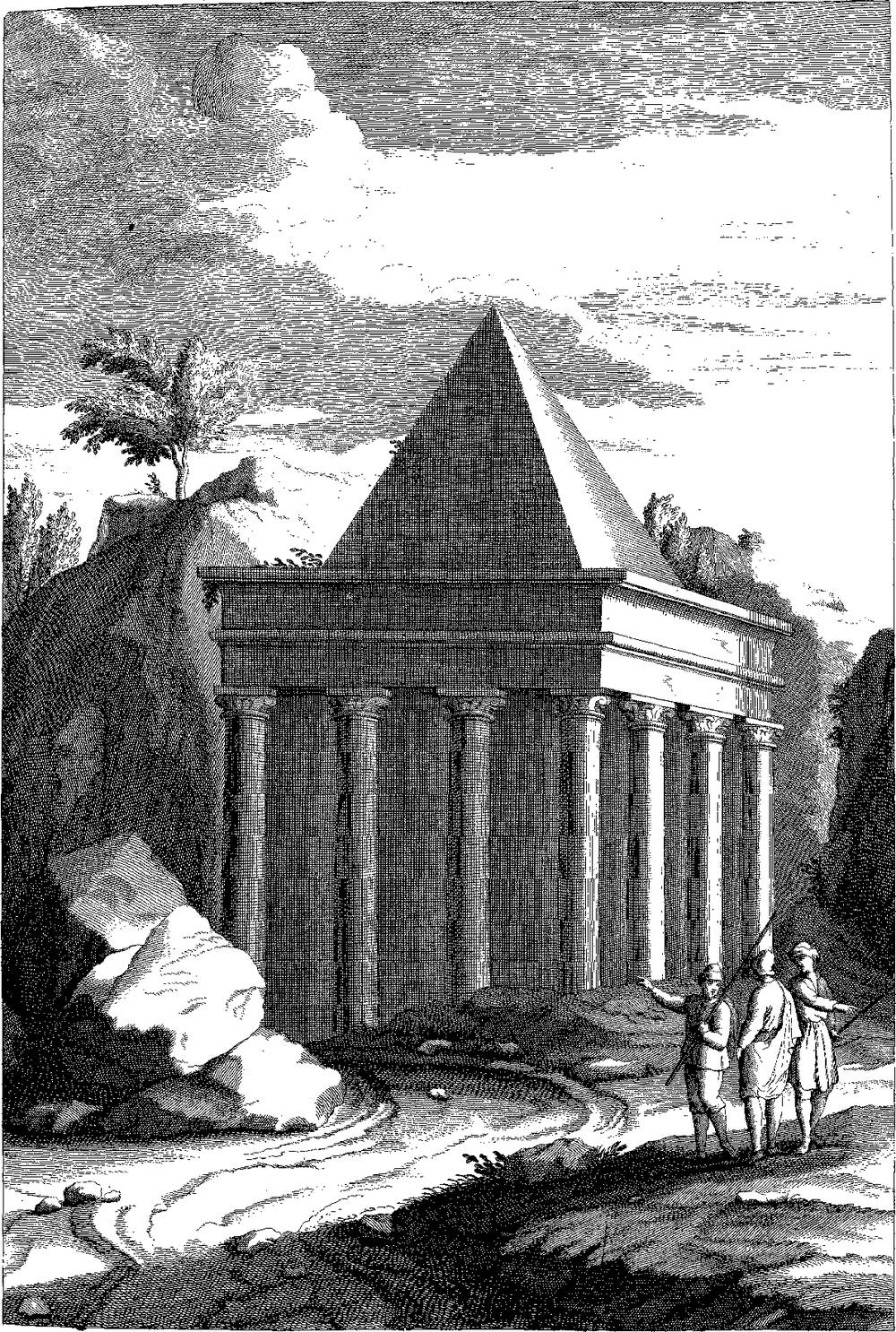
He has been confounded with one Zachariah the Son of Barachiah, who lived Isai. viii. 2.in the time of Isaiah; and with Zachariah the Father of John the Baptist; which Opinion is plainly incongruous. Lastly, he has been thought to be Zachariah Son of Barachiah, whom our Saviour mentions, and says, he was killed between the Temple and the Altar; though no such thing is any where said of our Prophet. At this Day, at the Foot of the Mount of Olives, they shew a Tomb which they pretend to belong to the Prophet Zachariah. Dorotheus maintains, that he was buried in a Place called Bethariah, an hundred and fifty Furlongs from Jerusalem.
St. Epiphanius ascribes to him some Prophecies which he composed while he was yet at Babylon. He there foretold the Birth of Jesus, or Joshua, the Son of Josedech, and that of Zerubbabel the Son of Salathiel, or Shealtiel; and he declared to Cyrus the Victory he should obtain over Crœsus and Astyages, and that this Prince should set up at Jerusalem the Publick Exercise of Religion. But we make but small account of such Particulars as these, which are not found in Scripture.
Zachariah begins his Prophecy with an Exhortation to the People, to be converted to the Lord, and not to imitate the Stubbornness of their Fathers. Three Months afterwards the Lord caused to appear to him an Angel on Horseback, in the midst of a Myrtle Grove, standing by the Side of a River. Several other Angels come to the first, and acquaint him, that the whole Country was at peace, and abounded with Inhabitants. He thence takes occasion to intreat the Lord, that he would have Compassion on the Cities of Judah. The Lord gives him a gracious and comfortable Answer, and complies with his Request. Then the Prophet saw four Horns, and four Men going to break them in pieces with Hammers; and he was told that these four Horns denoted so many Powers that had oppressed his People; but that the time was come wherein they should be overthrown and broke to pieces. Thus we read in the first Chapter.
In the second Chapter God causes him to see a Man measuring Jerusalem with a Line; and Zachariah is told, that henceforth Jerusalem should be so well peopled, as not to be able to contain its Inhabitants. He relates in the third Chapter, that he saw the High-Priest Jesus the Son of Josedech standing upright before the Angel of the Lord, and Satan accusing him: Of which Accusation Jesus was acquitted, and raised to Honour. God told him that he was going to bring forth the Branch, that is, his Servant the Messiah, and that he should be as a precious Stone, upon which were seven Eyes.
He had afterwards a Vision of a Candlestick with seven Branches, placed between two Olive-trees, from whence Oil trickled into the Lamps of the Candlestick. This is what we find in the fourth Chapter. In the following Chapter the Prophet saw a flying Roll, wherein was written the Curse of the whole Earth; and a Vessel wherein sat a Woman, upon whom a Mass of Lead fell down, and closed up the Mouth of the Vessel. Then he saw two Women with Wings, who lifted up the Vessel between Heaven and Earth. The Woman enclosed in the Vessel denoted the Iniquity of Babylon; the Mass of Lead that fell down upon her was the Vengeance of the Lord; and the two Women that lifted her up into the Air were the Medes and Persians, who destroyed the Empire of Babylon.
In the sixth Chapter God shews Zachariah four Chariots, which came forth from between two brazen Mountains, and which represented the Persians, Greeks, Egyptians, and Syrians, each of which were to be made use of in their turns, to execute the Wrath of the Lord against the Countries of the North and South. After this Zachariah receives from Heldai, Tobijah, and Jedaiah, a certain Quantity of Gold, of which he makes two Crowns; one for the High-Priest Joshua, and the other for the Branch, or Zerubbabel, as being the Type of the Messiah.
In the fourth Year of Darius, of the World 3486, before Christ 514, before the Vulgar Æra 518, on the fourth Day of the ninth Month, the Prophet was consulted by Sherezer, Regem-melech, and some others, whether they ought to continue to fast on the fifth Month, as they had hitherto done, since the Ruin of the Temple? He gave them this Answer, That these Fasts were of their own Invention, and that what God chiefly required of them, was, to practise Piety and Justice; and that, finally, their Days of Fasting should be soon changed into Days of Joy and Thanksgiving. This we read in the seventh and eighth Chapters.
The ninth Chapter contains menacing Prophecies against the Countries of Hadrach, Syria, and the Philistines. Then he foretels, in a very express manner, the Coming of Jesus Christ, a Saviour, poor, and sitting upon an Ass, and a Colt the Foal of an Ass. In the ninth Chapter he speaks of the Reign of the Messiah, and of the Vengeance that the Lord will pour out upon the Persecutors of Israel. Lastly, in the eleventh Chapter he speaks of the War of the Romans against the Jews, of the breach of the Covenant between God and his People; of thirty Pieces of Silver given for a Recompence to the Shepherd; of three Shepherds put to death in one Month.
In the twelfth Chapter he describes the War of Antiochus Epiphanes against the Jews, the Victories of the Maccabees, the Mourning for the Death of Judas Maccabeus. In the thirteenth Chapter he describes the flourishing Estate of the Jews after the Death of Antiochus Epiphanes, to that of the Messiah. In the seventh, and the two following Verses, we see the Calamities that were to fall upon the Jews after the Death of Jesus Christ; and he continues the same Subject in the Chapter following. He describes the Siege of Jerusalem by the Romans; he foretels the great Extent of the Christian Church, the Conversion of the Gentiles, the Prosecutions raised against the Faithful, and the Punishment that God inflicts upon these Persecutors.
Zachary is the longest and the most obscure of all the Twelve Lesser Prophets.a His Style is interrupted and without Connexion. His Prophecies concerning the Messiah are more particular and express than those of the other Prophets. Some modern Criticks, as Mede,1 and Hammond,2 have been of opinion, that Chap. ix. x. xi. of this Prophet were written by Jeremiah; because in Matthew xxvii. 9; 10. under the Name of Jeremiah we find quoted Zach. xi. 12. and as the aforesaid Chapters make but one continued Discourse, they concluded from thence, that all three belonged to Jeremiah. But it is much more natural to suppose, that the Name of Jeremiah, by some unlucky Mistake, has slipt into the Text of St. Matthew, instead of that of Zachariah.
Isai. xlviii. 20.The Prophet Zachariah foretold in a very punctual manner the Siege of Babylon by Darius Son of Hystaspes. This Prince laid Siege to this rebellious City at the Beginning of the fifth Year of his Reign,3 and reduced it at the End of twenty Months. The Prophets Isaiah and Jeremiah had foretold this Calamity, and had admonished the Jews that inhabited there, to make their Escape when they perceived the time draw nigh. Isaiah says to them, Go ye forth of Babylon; flee from the Chaldeans; with a voice of singing declare ye, tell this, utter it even to the End of the Earth: Say ye, the Lord hath redeemed his servant Jacob. And Jeremiah says, Remove out of the midst of Jerem. i. 8.Babylon, and go forth out of the land of the Chaldeans, and be as the He-goats before the flocks. And elsewhere, Flee out of the midst Jerem. li. 6, 9, 45.of Babylon, and deliver every Man his soul; be not cut off in her iniquity; for this is the time of the Lord’s vengeance, he will render unto her a recompence. Lastly, Zachariah, a little before the time of her Fall, writes thus to the Jews, that were still in this City; Ho, ho, come forth, and flee from the land of the Zech. ii. 6, 7, 9.North, saith the Lord; for I have spread you abroad as the four winds of the heaven, saith the Lord. Deliver thy self, O Sion, that dwellest with the daughter of Babylon. For thus saith the Lord of Hosts, after the glory hath he sent me unto the nations which spoiled you, for he that toucheth you, toucheth the apple of his eye. For, behold, I will shake mine hand upon them, and they shall be spoil to their servants; and ye shall know that the Lord of Hosts hath sent me. There is great Probability that the Jews made their Advantage of these Admonitions, and returned from Babylon into their own Country, or, at least, withdrew into a Place of more Security, till the City was taken. We cannot perceive, either from History, or the Prophecies, that they suffered any thing by this Siege, or that Darius the Son of Hystaspes bore them any Grudge for the Revolt of Babylon; which seems to insinuate that they had no share in it.
The Mahometans do not distinguish between the Prophet Zachary, and Zachary the Father of John the Baptist.4 Some of them make him to be descended from David;5 David, and others from Levi. By an Anachronism that is still more insupportable, these confound Mary the Mother of Jesus Christ, with Mary, or Miriam, the Sister of Moses, which they derive even from the Alcoran itself. The Author of Tarik Monshekeb relates, that when Jesus Christ was born of the Virgin, the Prophet Zachariah could not believe that a Child could be born without a Father; and that declaring his Sentiments, upon this Point, the Jews entertained a Suspicion of him, and obliged him to betake himself to Flight. He withdrew upon this, and hid himself in a hollow Oak, which the Jews sawed in two. Such is the Ignorance of the Mussulmen in the History of both the Old and New Testament.
Read this article in its place on the printed pages