TIBERIAS, a famous City of Galilee, situated at the Southern Extremity, and upon the Western Shore of the Lake of Genesareth, otherwise called the Sea of Tiberias. ‘Tis thought that its old Name was Cinnereth, or Hammath, or Emath, or Rakkath, or Recchath: But M. Reland shews, that this is very doubtful, and is Reland. l. 2. p. 1037. Josh. xix. 35.only founded upon this, that the Sea of Cinnereth was afterwards called the Sea of Tiberias; which by no means proved that Cinnereth and Tiberias are the same thing. Besides, he observes, that the Portion of Naphthali did not begin towards the South, but at Capernaum,1 which is more to the North than Tiberias; and yet Cinnereth, Hammath, Rakkath, belong to the Portion of Naphthali. Tiberias therefore could not, since it is known that it was quite to the South of the Lake of Tiberias.
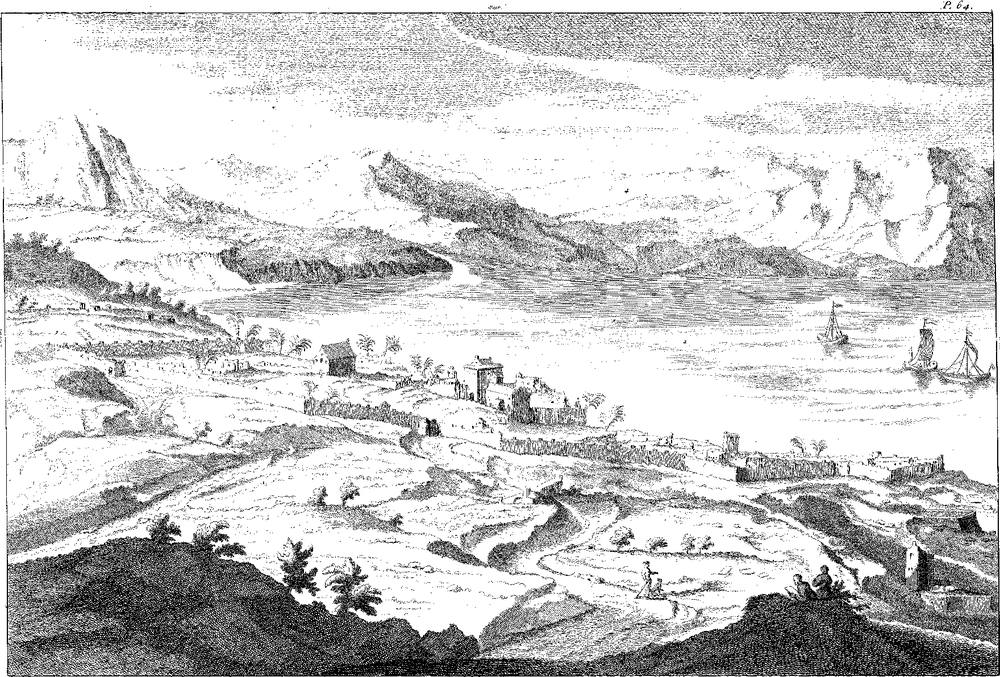
Josephus tells us,a that this City was built in honour to Tiberius by King Herod Agrippa. Pretty near this were Baths of hot Water; and it stood in a Place where were Joseph. Antiq. l. 18. c. 3.many Tombs and dead Bodies; which was very contrary to the Usages and Customs of the Jews. Tiberias was thirty Furlongs Idem. de vitâ suâ. p. 1025. Ibid. p. 1010.from Hippos, sixty from Gadara, and an hundred and twenty from Scythopolis, and thirty from Tarichea.
Herod the Tetrarch, who built this City, endowed it with great Advantages. Its convenient Situation soon made it become a considerable City: It grew up to be the Metropolis of all Galilee. When Agrippa was obliged to leave Rome, he retired thither with his Uncle Herod: The Emperor Claudius afterwards bestowed it on him; for which Reason in Medals it has the Name of Claudia Tiberias. Josephus took possession of it at the time of the Wars of the Jews, and gave the Bastinado to the Officer who came to propose Terms of Peace to it from the Romans. Vespatian intended to put all the Inhabitants to the Edge of the Sword; but Agrippa, to whom it belonged, prevailed with him to satisfy himself with only beating down a Part of its Walls. Tiberias was much frequented by Fishermen and Seamen; whence it is, that we see a Boat on the Reverse of some Medals that were struck in this City. In another Medal, struck under Trajan, we find the Goddess Salus surrounded by a Serpent, and sitting upon a Mountain, from whence proceeds a great quantity of Water; to shew that Tiberias was famous for its Baths of Hot Waters, from whence diseased People received great Benefit.
It was in this City, that some Jews, and some of the most learned of their Priests, after the Destruction of Jerusalem by the Romans, assembled themselves together, and there laid the Foundation of an Academy, which became famous by the Mishna which was composed in it by the cebrated Labours of the Masorites, the Authors of the Pointed Vowels, and by the Reputation of the Doctors which there kept their Schools. In the same City also resided the Patriarch of their whole Nation.
Epiphanius observes,2 that in the Time of Constantine the Great, the Gospel of St. John, and the Acts of the Apostles, translated into Hebrew, were discovered by Count Joseph, in the Archives or Treasury of Tiberias; and that before this time no Christian was permitted to dwell at Tiberias, nor at Capernaum, or Naza-reth, or Diocæsarea; and that Count Joseph, having obtained Leave from Constantine to build a Church there in the Name of Jesus Christ, he made use of a great Temple called Adrianeum, which had never been finished or consecrated. This he compleated, and dedicated it to the use of the Christians. Lampridius informs us, that the Emperors Alexander, Severus, and Adrian, had an Intention of placing Jesus Christ among the Gods, and to consecrate Temples to him: From whence it proceeds, that at this Day, says the Author, Temples without Statues were to be seen in every City, which, for this reason, were called Adrianea.
The Lake, the Pool, the Sea of Tiberias, is the same as the Lake of Genesar, or Genesereth, or the Sea of Cinnereth, or of Galilee. See CINNERETH.
TIBERIUS ALEXANDER LYSIMACHUS, Nephew to Philo the Jew, and Son of Alexander Lysimachus, Alabarcha, or Chief of the Jews of Alexandria, and Brother to Philo the Jew. Tiberius Alexander was therefore a Jew by Nation, and even of the Sacerdotal Race: But he quitted the Religion of his Fore-fathers, and became a Pagan. He was appointed to succeed Cuspius Fadus in the Government of Judæa,3 in the 46th Year of the Vulgar Æra. He made no Innovations in the Province, any more than his Predecessor before him; which kept all things in Tranquility. He caused to be crucified James and Simon, Sons of Judas the Galilean, who had made an Insurrection forty Years before. He govern’d Judæa till the 88th Year of Christ, or of the Vulgar Æra, and had for Successor Ventidius Cumanus. He was given Joseph. Antiq. l. 20. c. 3. p. 694.as an Hostage to the Parthians, when Corbulo engaged Tiridates to come to Rome, to receive the Crown from Tiberius4 in the 63d Year of the Vulgar Æra. He was Prefect of Egypt in the Year 66. He was the first that acknowledged Vespasian as Emperor, on the first of July, in the Year 69, and was Lieutenant-General to Titus at the Siege of Jerusalem,5 in the Year 70. Titus had a great Esteem for him, and Tiberius Alexander was in a manner the principal Man of his Council.
Read this article in its place on the printed pages
Footnotes
-
Matth. iv. 13. says, that Capernaum was on the Confines of Zebulun and Naphthali; and Joshua says, xix. 34. that Naphthali passes into Zebulun, towards the South. ↩
-
Epiphan. adverf. Hæres. p. 127, 128. ↩
-
Joseph. Antiq. l. 20. c. 3. De Bell. l. 2. c. 19. p. 793. ↩
-
Tacit. Annal. l. 15. c. 26. 29. Dio. l. 62. ↩
-
Joseph. de Bell. l. 5. c. 6. & l. 6. c. 24. p. 956. & de vitâ, p. 1030. ↩