Volume I, pages 360–374, 377, 376–377 of the 1732 edition, from CAP to CHA: everything printed on these pages, in order.
Continued from Captivity
after a siege of three years, in 3283, and transplanted the Tribes, which had been spared by Tiglath-pileser, to the Provinces 2 Kings xxii. 6 xviii. 10, 11.beyond the Euphrates. It is generally believed, that there was no return from this Captivity, and that the ten Tribes never came back again after their dispersion. Josephus1 assures us, that they never returned after their exile, and that in his time they were still known in the Provinces beyond the Euphrates, where, says he, they are so numerous, that there is no computing their multitude. And S. Jerom writing upon the following words of the Prophet Hosea2, Call her name Lo-ruhamah; for I will no more have mercy upon the house of Israel, but I will utterly take them away, says, that the Captivity of the ten Tribes still continued, and that in his time they were subject to the King of Persia: Usque hodie Persarum regibus serviunt, & nunquam est eorum soluta captivitas.
Nevertheless when we examine carefully the Writings of the Prophets, we find the Return of Israel from the Captivity pointed out in a manner almost as clear as that of the Tribes of Judah and Benjamin. The same Hosea, who is cited to prove, that the ten Tribes did not return from Hosea i. 10.their Captivity, says elsewhere, The number of the children of Israel shall be as the sand of the Sea which cannot be measured nor numbred; and it shall come to pass, that in the place where it was said unto them, Ye are not my people; there it shall be said unto them, Ye are the Sons of the living God. Hosea xi. 11.And again, They shall tremble as a bird out of Egypt, and as a dove out of the land of Assyria, and I will place them in their houses, saith the Lord, &c. And Amos, Amos ix. 14.And I will bring again my people Israel from their Captivity, they shall build their ruined Cities and inhabit them, &c. Obadiah: Obadiah v. 18. & 20.The house of Jacob shall be a fire, and the house of Esau for stubble, and they shall kindle in them and devour them. The captivity of this host of the Children of Israel shall possess that of the Canaanites even unto Zarephat, &c.
Jerem. iii. 18.The great Prophets Isaiah, Jeremiah, and Ezekiel, are no less clear to the same If. xi. 13, 14. See likewise xxvii. 12, 13.purpose. Isaiah: The Lord shall assemble the outcasts of Israel, and gather together the dispersed of Judah from the four corners of the earth. Ephraim shall not envy Judah, and Judah shall not vex Ephraim. Ezekiel received an order from God, to take two pieces of wood, and write on one, for Judah Ezek. xxxvii. 16.and for the Children of Israel. And upon the other, for Joseph and for all the house of Israel, to join these two pieces of wood, that so one might be made of them, and this to shew the re-union of Judah and Israel. Jeremiah is as express, The house of Judah shall walk with the house of Israel, and they shall come together out of the North, to the land which I have given for an inheritance unto their fathers. See likewise Jeremiah xxxi. 7, 8, 9, 16 17, 20. xvi. 15. xlix. 2, &c. The Reader may consult Zachary ix. 13. x. 6, 10. and Micah ii. 12.
If with the Prophecies we join the historical Books of Scripture, we shall there see the Israelites as well as those of Judah and Benjamin, were to return from the Tobit. xiv. 6. Vide & xiii. 12, 17.Captivity. Tobit assures his Son, that the word of the Lord is not faln to the ground, that his Brethren of the ten Tribes, which were dispersed out of the land of Israel, should return thither. Among those who came back with Zerobabel from Captivity, those of Ephraim and Manasseh are reckoned, 1 Chron. ix. 34.who settled at Jerusalem, with others belonging to the Tribe of Judah. When Esdras numbred those who returned from the Captivity, he made no other enquiry than whether they were of Ezra ii. 59.the race of Israel: Utrum ex Israel essent. And at the first Passover, which was then celebrated in the Temple, there was a Sacrifice of twelve He-goats for the whole house of Israel according to the number of Ezra vi. 16, 17. viii. 35.the Tribes. Under the Maccabees, and in our Saviour’s time, we see all Palestine peopled with Israelites of all the Tribes indifferently. The Samaritan Chronicle3 asserts, that in the 35th year of the Pontificate of Abdelus, the Israelites by the permission of King Sauredius, returned from their Captivity to the number of three thousand, under the conduct of Adus Son of Simon.
The Captivities of Judah. They are generally reckoned to be four: the first falls out in the year of the world 3398, under King Jehoiakim, at which time Daniel and his companions were carried captive to 2 Kings xxiii. 36. 2 Chron. xxxv. 5, 6. Jerem. xxvi. 1, &c. 2 Kings xxiv. 2. Jerem. lii. 28.Babylon; the second in the 3401, in the seventh of Jehoiakim, when Nebuchadnezzar carried with him 3023 Jews to Babylon; the third in 3406, and in the fourth year of Jehoiachin, when this Prince together with part of his people was sent to Babylon; lastly, the fourth and last in the year of the world 3416. Under Zedekiah; from this Period begin the seventy years Captivity foretold by the Prophet JeremiahJerem. xxv. 11. xxix. 10. Jerem. xxxii. 4. xxxiv. 3. Ezek. xii. 13..
The Jews were removed to Babylon and Babylonia, by Nebuchadnezzar, who designing to make this City the Capital of the East, transplanted thither very great numbers of the several people subdued by him in different Countries, in order to the better peopling of it. The Jews had Judges and Elders there, who governed them, and decided juridically in all contests according to their Laws. A proof of
this we see in the story of Susanna, who was tried and condemned to death by the Elders of her own Nation.
Dan. xiii. 41, &c.King Cyrus in the year of the world 3457, and in the first year of his reign at Babylon, permitted the Jews to return into their own Country; but they did not obtain leave to rebuild the Temple of Jerusalem, and the perfect completion of the Prophecies, which foretold the end of the Captivity after the expiration of seventy years, was not seen till the year of the world 3486, when Darius the Son of Hystaspes, by a particular Edict, allowed them to rebuild the Temple. Lastly in 3537 Artaxerxes Longimanus sent back Ezra vii. 1, 7, 8.Nehemiah to Jerusalem. The Jews assure us, that none but the bran, the refuse of their Nation return’d from the Captivity, the principal of them continued in the places where they had settled near Babylon, and the country belonging to it, where indeed they grew very numerous after the transplanting of them thither under Nebuchadnezzar.
Since the destruction of the Temple by the Romans, the Hebrews boast, that they have always had their Heads or particular Princes.
Princes of the Captivity in the East and West. The Prince of the Captivity in the East governed the Jews who dwelt at Babylon, in Chaldæa, Assyria, and Persia; and the Prince of the Captivity in the West governed those who dwelt in Judæa, Egypt, Italy, and in other parts of the Roman Empire4. The Jews make a great difference between the Patriarchs of Judæa and the Princes of the Captivity at Babylon. The first are called Rabban, and the other Rabbana; these descended from David in a direct line by the Males, whereas the Patriarchs descended from him only by the Females. They say moreover, that the house of David is in all its vigour, because there are illustrious persons of this Family at Bagdad, among whom the Princes of the Jewish Nation are chosen, as has been always the custom from time immemorial. This is the Story the Jews tell us.
The Prince of the Captivity who resided in Judæa, resided commonly at Tiberias, and assumed the title of Rosch-Abboth, Head of the Fathers or Patriarchs. He presided in Assemblies, and in the Synagogues; he decided the important affairs of the Nation, and cases of Conscience. He levied taxes to provide for the expences of his visits; he had Officers under him, who were dispatched through the Provinces for the execution of his orders. The Jews maintain, that the Institution of these Patriarchs preceded the destruction of the Temple by an hundred years; for they reckon, that thirty years before the Birth of Jesus Christ, Hillel sirnamed the Babylonian came to Jerusalem, was consulted concerning the celebration of the Feast of the Passover, which fell out this year upon Saturday, and that people were so well satisfied with his decision, as to make him Patriarch of their Nation, and that his posterity succeeded him till the fifth Age of the Christian Church, in which the Patriarchs of Judæa were abolished.
The Jewish Authors are not agreed concerning the number of these Patriarchs; some reckon thirteen from Hillel, others only ten. Their names are as follow:
-
Hillel the Babylonian. 2. Simeon his Son. 3. Gamaliel the Son of Simeon. 4. Simeon II. Son of Gamaliel. 5. Gamaliel II. Son of Simeon. 6. Simeon III. Son of Simeon II. 7. Judas Son of Simeon III. 8 Gamaliel III. Son of Judas.
-
Judas II. Son of Gamaliel III. 10. Hillel II. Son of Judas. 11. Judas III. Son of Hillel II. 12. Hillel III. Son of Judas.
-
Gamaliel IV. Son of Hillel. See Basnage’s History of the Jews, l. iv. c. 1, 2, 3, 4, 5. where he gives a very large account of these Princes of the Captivity in the West, and examines particularly whatsoever the Jews relate of them, shewing that in the whole there is a great deal false and dubious.
As to the Princes of the Captivity of Babylon or the East5, we know neither the original nor succession of them; it appears only, that they were not in being before the end of the second Century. They did not concern themselves about making Princes of the Captivity while the Temple subsisted; the Eastern Jews as well as Western continued subject to the High Priest. No Historian has said any thing of these supposed Princes of the Captivity before the destruction of the Temple. The first of these Princes who appeared upon the stage, was Huna, who did not live till the close of the second Century, and from Huna to the perfection of the Talmud, that is to say, for the space of three hundred years, they scarce produce three. The Jews affirm, that among these Princes of the Captivity of Babylon, who were all of the tribe of Judah and race of David, was found the Scepter of Judah mentioned by the Patriarch Jacob, and that in Judæa, among the Gen. xlix. 10.Patriarchs spoken of above, was found the Law-giver taken notice of in the same place.
The Jewish Authors describe very pompously the manner of appointing the Prince of the Captivity in the East6. The Heads of the neighbouring Universities, the Senators and People came in crowds to Babylon. The Prince of the Captivity was seated on a Throne, and the Head of the University of Syria harangued him, exhorting him not to abuse his power. The Thursday following the Heads of the several Universities laid their hands on him in the Synagogue. On Saturday morning he was conducted in great Ceremony to the Synagogue ; there he made a sermon, and gave the blessing to the people. Some days after he went to the King of Babylon’s Audience, who did him very great honours.
The Princes of the Captivity in the East have sometimes dwelt at Mahazia, but their residence was transferr’d from thence to Babylon or Bagdad.
There there were ten Courts of Justice in which he presided. There were likewise eight and twenty Synagogues, among which that of the Prince was distinguished by the beauty and magnificence of the Structure. Before the press, wherein the Law was shut up, was a Pew raised ten steps from the ground, in which seats were placed for the Prince of the Captivity and his Family. His Dominion extended over all the Jews dispersed throughout Assyria, Chaldæa, and the whole Kingdom of the Parthians. Benjamin of Tudela, who lived in the twelfth Century, says, that he found even in his time a Prince of the Captivity there. But there have been none known there since, and perhaps they were suppressed before.
It were to be wished, that the Succession and History of these Princes of the Captivity, both in the East and West, were better proved, and more connected: the Jewish Historians are very unaccurate, and Historians that are not of their Nation say nothing at all relating to these Princes of the Captivity. I except the Patriarch of the West, of Palestine, or Egypt, of whom the Emperor Adrian, Origen, S. Jerom, and the Theodosian Code make mention ; but they take no notice of the Prince of the Captivity at Babylon, because he lived under the dominion of the Persians.
After the first intelligence brought to Portugal, of the discovery which had been made of Prestejan or King of Ethiopia, which reported this Prince to be of the race of Solomon7, that all his subjects were circumcised, that they observed the Sabbath, and abstained from swine’s flesh, and had diverse other Jewish customs, it was immediately believed, that these people were Jews. As there were two Jews chosen among others to make this discovery, they did not fail to aggravate all these circumstances to those of their own Nation. This was sufficient without any thing more to persuade them that there was a Jewish King in Africk: from whence they drew all the consequences that might most favour their prejudices.
Rabbi Abarbanel who was then at Lisbon, in some places of his Comments on the Prophets, made use of the first relations given by the Portugueze, concerning the great number of Jews found by them in the Indies. They of Constantinople had a Spanish Translation printed of a suppostitious Letter from Prestejan in Hebrew characters, and it was every where dispersed in several languages. But it was not long before the falsity of this opinion of the Jews was discovered ; for the Portugueze having got admittance into Ethiopia, discovered, that notwithstanding these people had many Jewish practices, for which some modern Authors have in vain endeavoured to justify them, they were nevertheless Christians. Thus the whole system which had been built on this foundation, to prove that the Scepter was not yet departed from Judah, of itself fell to the ground.
CARAITES, a sort of Sect among the Jews. This name comes from the Hebrew, Caraï, or Caraim8, which signifies persons consummate in the study of Scripture, and adhering closely to the Text and Letter of Scripture. This is the distinguishing mark of the Caraïtes. They are opposite to the Rabbinists in this particularly, that whereas the Rabbinists admit of all the Traditions of the Ancients, the Caraïtes strictly keep to the Text and Letter of the Scriptures, and do not easily receive what others would pass upon them for Traditions, till they have first carefully examined them, and are well assured, that they are really transmitted from the Ancients, and contain nothing contrary to the Text and Spirit of Scripture9.
The Caraïtes are said to glory in a descent from Esdras, and to prove the Succession of their Churches by an exact Catalogue of all those persons, who have either taught, or contended against Caraïsm. There are some who boast of a still greater Antiquity ;
Antiquity; for they who live at present in Poland and Lithuania, pretend to be descended from the ten Tribes, which were led into Captivity by Salmanesèr. The Rabbinists, who always run counter to the Caraïtes, inform us, that the Sect of the Caraïtes was in being at Jerusalem in the time of Alexander the Great; that Jaddus, who was Principal of the Rabbinists performed a miracle in the presence of this Prince, which Ananus and Crescanatus the Chief of the Caraïtes could not do. All this deserves not to be any way regarded. It is believed10, with more probability, that the Caraïtes did not appear till about the eighth Age, or at least that their Sect was then restored by Ananus, when the Talmudists endeavoured to authorize their Traditions, and rank them with the most sacred truths and practices of Religion. At that time there was a good number of the Jews, who were zealous for the Law, that opposed this attempt, and were therefore called Caraïtes, as people adhering only to the Text of Scripture.
The Rabbinists charge the Caraïtes11 with the generality of those Errors, that are maintained by the Sadducees; as the denying the Immortality of the Soul, and the Existence of Spirits. But the Caraïtes reject these accusations, and shew the purity of their Faith, and their particular sense of these Articles. There are some very good Caraïte Authors, who may be consulted with advantage, by enquirers into the true meaning of the Scripture; but few of them are printed; for the most part they are in manuscript, and lye concealed in great Libraries. They expect the Messiah, whom with the rest of the Jews, they look upon as a temporal King; they forbid all computation of the years wherein he is to appear. They reject all those books, which are not in the old Canon of the Jews, and require an implicit faith in the Holy Scripture, without permitting to examine, whether any article of the Law be true or false. They have neither Phylacteries, nor Parchments upon the doors of their houses, nor those Frontlets, which the Jews wear upon their fore-heads. They call the rest of the Jews, bridled Asses, when they see them thus in their Synagogues with Parchments on their forehead; the passages, wherein these Phylacteries are mentioned, and which are understood literally by other Jews, they explain figuratively. There are Caraïtes not only at Constantinople, in Syria, Palestine, and beyond the Euphrates; but in Poland also and Lithuania.
Wolfius in his account of the Caraïtes12, describes likewise their Original, Progress and Fall, from the Memoirs of Mordecai one of this Sect. Alexander Jannæus King of the Jews having put to death all the Doctors of the Law, and almost all the learned Men of the Nation, occasioned the Schism which divided the Jews. Simeon the Son of Setah, and the Queen’s Brother, having been rescued by his Sister from the King’s fury, fled into Egypt, where he imagined the system of pretended Traditions. At his return to Jerusalem he spread abroad his Visions, and interpreted the Law after his mode, making his boasts of being entrusted with those particular notices of things, which God communicated to Moses. He had many Disciples and Opposers: the latter of these asserted, that all which God spake to Moses was written. This division produced two Sects, that of the Caraïtes, who adhered only to the Text, and that of the Traditionists, who supported the Traditions. Hillel distinguished himself among the latter, and Judah the Son of Sabbaï among the former.
Wolfius places the Scribes and Sadducees mentioned in the Gospel among the Caraïtes; but the Traditionists otherwise called Rabbinists or Pharisees, were the strongest and had the advantage of the Caraïtes. They had sunk intirely in the eighth Century, had they not been supported by some of their Sect, and in particular by Rabbi Anan. In the ninth Century Rabbi Solomon, the Son of Jeruchamı, imitated the zeal of Anan, and attacked Saadias Gaon. The following Ages were not less fortunate to the Caraïtes, and produced several celebrated Writers. Their Sect has become something weaker ever since the fourteenth Century.
Trigland, who printed a Treatise at Delph in 1703. concerning the Caraïtes, explains the original of them in a manner something different from Wolfius. In some short time after the Death of the Prophets, the Jews were divided concerning works of Supererogation; some maintaining that they were necessary, according to the Traditions; others adhering to what is written in the Law; these last gave birth to the Sect of Caraïtes, who value themselves upon their descent from the Prophets Haggai, Zachary, Malachi, and Esdras. One of their principal Authors13 says, that after much search he had
discovered, that in the time of John Hircanus and Alexander his Son King of the Jews, Rabbi Judah the Son of Thaddai, set up in opposition to Rabbi Simeon the Son of Setach, who endeavoured to introduce a new Law; this Judah therefore is one of the first Authors of the Caraïtes. The Mishnah makes mention of this Sect where it speaks of the Tephilims; which shews their Antiquity.
CARAITES. We have again another History of their Original from Dr. Prideaux14. The compilation of the Talmud appearing in the beginning of the sixth Century, all people of good sense were so shocked with the trifles, the Stuff, the ridiculous and incredible fables it was cram’d with, and to see at the same time a set of men should dare to assert all this to come from God, that many gave it up, and were resolved to found their Faith only upon the Word of God contained in the Scriptures, looking upon the Talmud as a meer human composition, not to be received without examination. This refusal to admit the Talmud an as irrefragable rule of Faith, did not however for a long time produce any Schism amongst them.
But about the year 750 Anan a Babylonish Jew of the race of David, and his Son Saul, declared openly for the written Word of God alone, exclusive of Traditions which were not conformable to it. Their declaration produced a Schism: they who maintained the Talmud with all the Traditions, being almost all Rabbins, or Disciples of the Rabbins, were called Rabbinists: the others who rejected human Traditions, receiving the Scripture only for a Rule, were called Caraïtes, or Scripturists, from the word Cara, which in the Babylonish language signifies Scripture.
The Jews15 pretend, that the true cause of this Schism proceeded from the Ambition of Anan, who exasperated at his being refused the degree of Gaon, that is to say, Excellent, (for this is a title given to certain Doctors,) and out of humour at his disappointment in pursuing after the office of Prince of the Captivity, to which he had pretended as one descended from David, gave the first rise to the Schism we are speaking of.
The Caraïtes pass for the most learned of the Jewish Doctors: there are few of them in the West: the greatest part of them are in Poland, Muscovy, and the East. About the middle of the last Age there was a particular account taken of their number: there were two thousand of them in Poland, at Caffa in Crim Tartary twelve thousand, at Cairo three hundred, at Damascus two hundred, at Jerusalem thirty, in Babylon an hundred, in Persia six hundred: in all four thousand, four hundred, and thirty: the whole of them together makes but a very small number, compared with the gross of the Nation which is of the Rabbinists party.
The Rabbinists or Traditionists have so great an aversion for the Caraïtes16, that they will have no alliances, nor even any conversation with them; they treat them as Mamzerim, or bastards, because they observe none of the constitutions of the Rabbins in their marriages, divorces and purifications of their Wives. Their aversion is such, that if a Caraïte would turn Rabbinist, the other Jews would not receive him.
To give an example of the Method of the Caraïtes, we may take what is said in Deut. vi. 8, 9. Exod. xxiii. 19. xxxiv. 26. Deut. xiv. 21.Moses: Thou shalt bind my words upon thy hands, and they shall be as frontlets between thine eyes, and thou shalt write them upon the posts of thy house and upon thy gates. The Rabbinists understand all this literally, and practise it accordingly. The Caraïtes on the contrary believe, that God by these words intended nothing more than that the Law of God ought always to be present to the mind of every Israelite, whether they go in or out, &c. In like manner Moses forbids them to seeth a kid in his mother’s milk; which the Rabbinists understand literally, or as if the eating both the flesh and milk at the same meal were a thing prohibited. The Caraïtes on the contrary explain this by another Deut. xxii. 6.passage in Deuteronomy, Thou shalt not take the dam with the young, &c. It is a precept of humanity given by God to his people.
Rabbi Caleb, a Caraïte, reduces the particulars wherein the Rabbinists differ from the Caraïtes, to three points. 1°. The Caraïtes deny that the oral Law comes from Moses, and reject the Cabbala or Traditions. 2°. They have an abhorrence for the Talmud. 3°. They observe the Sabbath much more rigorously in many things than the Rabbinists. Moreover, they set no limits almost to the prohibited degrees of Marriage; and as to their copies of the Law, they have them as well as the Rabbinists, but concern themselves little about dictions full or defective; they are nevertheless of opinion according to Peringer, that the vowel Points are derived from Moses.
CARBUNCLE, in Latin, Carbunculus, in Greek, Anthrax, and in Hebrew, Nophec. A Carbuncle is as it were a large Ruby or Grenat, of a dark red, and of a deep colour, something like bull’s blood.
It casts forth rays, which glitter even in the night, and sparkle much more than those of Rubies. Braunius observes after Boëtius de Boot, that the Anthrax or Carbunculus of the Ancients, was no other than the Ruby.
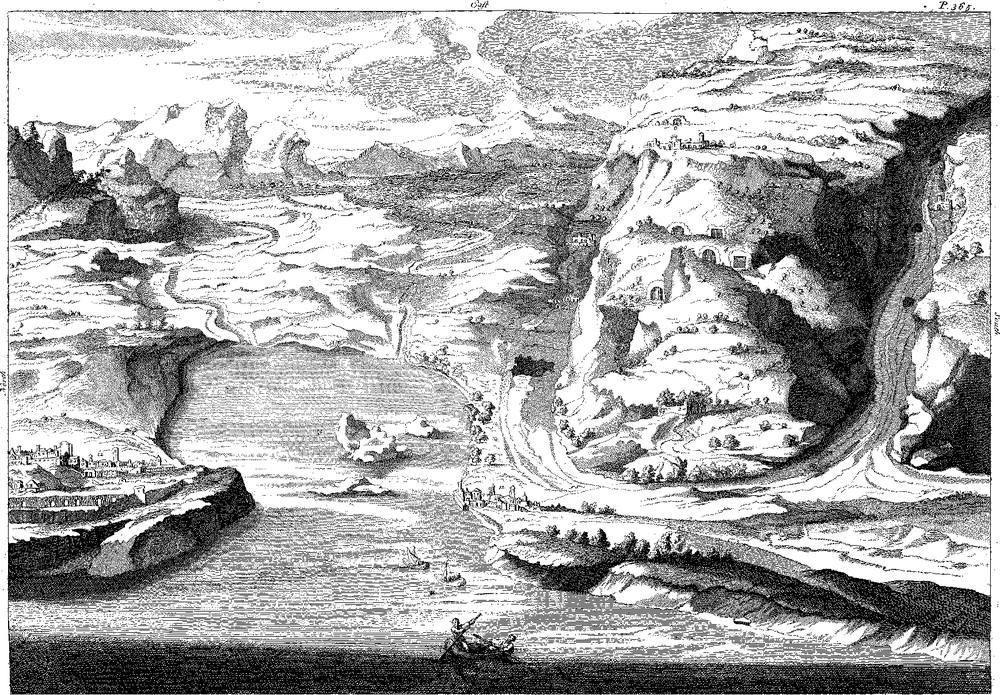
CARCAS, one of the seven principal Eunuchs belonging to Ahasuerus, Esther’s Husband. Esth. i. 10.
CARCHEMISH, a Town lying upon the Euphrates, and belonging to the Assyrians. Necho King of Egypt took it from 2 Chron. xxxv. 20. 2 Kings xxiii. 29. Jerem. lxvi. 1, 2. Isai. x. 9. Part. ii. Book v.the King of Assyria. Necho left a Garison in it, which was taken and cut in pieces in the fourth year of Jehoiachin King of Judah, by Nebuchadnezzar King of Babylon. Isaiah speaks of Carchemish, and seems to say, that Tiglath-pileser made a conquest of it; perhaps from the Egyptians. Profane Authors say nothing either of this or of these Wars. But it is very probable that Carchemish is the same as Cercusium, or Circesium, or Circeium, situated in the Angle formed by the conjunction of the Chaboras or Chebar, and the Euphrates.
2 Kings xxv. 23.CAREAH, the Father of Johanan.
I. CARMEL, a City in the Tribe of Judah, situated on a Mountain of the same name, in the Southern-part of Palestine. Josh. xv. 55. and 2 Kings xxv. 5. 1 Sam. xxv. 5.There Nabal the Carmelite, Abigail’s Husband dwelt. S. Jerom17 says, that in his time the Romans had a Garison at Carmel, which is to be understood of the City of this name, South of Judah. Upon this very Mountain Saul returning from his expedition against Amalek, erected a triumphal Arch. 1 Sam. xv. 11.
II. CARMEL, a Mountain to the South of Ptolemaïs, and the North of Dora, upon the Mediterranean. At the foot of this Mountain, on the North side run the brook Kishon, and a little farther the river Beleus. Josephus makes Carmel to be a part of Galilee18, but it belonged rather to the Tribe of Manasseh, and to the Southern Josh. xix. 26.part of the Tribe of Asher. The word Carmel signifies the Vineyard; and S. Jerom informs us, that the top of this Mountain abounded with good pastures. Upon it an old Deity was worshipped, called likewise Carmel19: but there was, as Tacitus says, neither Statue nor Temple belonging to it; there was only an Altar there, and religious worship was paid to this Divinity: Nec simulacrum Deo aut Templum; sic tradidere majores; Aram & reverentiam. Jamblichus tells us, that Pythagoras went often to this Mountain, and remained alone there in the Temple. On the side next towards the Sea, there is a cave shewn, where some suppose the Prophet Elijah desired Abab to bring Baal’s false Prophets, and fire from Heaven to have descended upon the burnt Sacrifice, which he 1 Kings xviii.prepared there.
III. CARMEL. This name is sometimes given in general to all sorts of places planted with vines and fruit-trees, and remarkable for their fertility. It is said likewise that purple is called by this name20; because at the foot of Mount Carmel Northward, a certain Shell-fish was caught, which was of great use in dying of this Colour.
I. CARMI, the fourth Son of Reuben, and Head of the Family of the Carmites. Numb. xxvi. 6.
II. CARMI, the Father of Achan, of the Tribe of Judah. Josh. vii. 1, 18.
III. CARMI, sirnamed Othniel, was in Bethulia, when Holofernes besieged it. Judith vi. 10.
CARNAIM, or Astaroth Carnaïm, that is to say, Astaroth with two horns, a City beyond Jordan, in the land of Gilead. See above Astaroth-Carnaïm. This City is also called Carnion. 2 Macc. xii. 21.
CAROBS. Carob-beans, fruits which the prodigal Son fed upon. Luke xv. 16. See hereafter Husks.
CARPUS, a Disciple of S. Paul’s, who dwelt at Troas. S. Paul coming into Asia in the year of J. C. 65, and landing at Troas, lodged with Carpus, and left a cloke 2 Tim. iv. 13.at his house21, or, as others explain it, a bag to put books in22; and besides, some other writings, and parchments, or books written upon vellum, and believed to have been the Holy Scriptures. We know very little of the Life of Carpus. The Greeks tell us a great many particulars of it, which are very uncertain. They affirm that he was one of the seventy Disciples, that he propagated the truth in several places, that he wrought abundance of Miracles, that he was S. Paul’s assistant in preaching of the Gospel, and was imployed by him in carrying his Letters. They make him to be Bishop of Beræa, and say he died in peace23. The Latins commemorate him, on the 13th of October, and the Greeks on the 26th of May.
CARSHENA, one of the principal Officers of Ahasuerus’s Palace. Esth. i. 14.
CART. In Latin Traha, or Plaustrum, made use of in Palestine, to force the Corn out of the Ear, and bruise the Straw. There is frequent mention of it in the Scripture; for example Isaiah: Triturabitur Moab sicut teruntur paleæ in plaustro. And in another place, chap. xxviii. v. 27. For the fitches are not threshed with a threshing instrument;
instrument; neither is a cart-wheel turned about the cummin. And again, chap. xli. 15. Ego posui te sicut plaustrum triturans novum habens rostra serrantia. And Amos i. 3. Eo quod trituraverit in plaustris ferreis Gelaad. These Carts or Drays were born upon very low and very thick Wheels, bound with Iron, which were rolled up and down upon the Sheaves and Straw, in order to break them, and force the Corn out. This is the Description which S. Jerom gives of them in his comment upon Isaiah, chap. xxv. Sunt autem carpenta ferrata rotis per medium in terrarum modum se volventibus, quæ stipulam conterunt, comminuunt in palea.
There were several sorts of these Machines; in some places they were large wooden Rollers, armed with Iron Spikes or Stones drawn over the Sheaves. Virgil speaks of these Machines called Plaustra, tribulæ, trabeæ.
Tardaque Eleusinæ matris volventia plaustra, Tribulaque, trabeæque. Whereupon Servius remarks, that trahea is a Cart without Wheels, tribula a kind of Cart armed every where with Teeth, omni ex parte dentatum, made use of principally in Africk to thresh Corn.
The Septuagint24 and S. Jerom sometimes call these Carts a kind of Saws, Isai. xii. 15. 70.Plaustrum habens rostra serrantia25; because in reality the superficies of them was all thick set with Teeth like those of a Saw. David having made himself Master of Rabbah the Capital of the Ammonites, ordered all the Inhabitants of it to be crushed to pieces under Wheels bound about with Iron, and under such sort of 2 Sam. xii. 31. Amos i. 3.Carts as we are speaking of, Populum adducens serravit, & circumegit super eos ferrata carpenta. Amos says, that the King of Damascus treated the Israelites of the Land of Gilead in this manner. This had some relation to the practice of the Romans, Carthaginians, and antient Germans, who used to execute People, by putting them under Hurdles loaded with great Stones, sub crate necare. Plautus sub cratim ut jubeas sese supponi, atque eo lapides imponi multos, ut sese neces. See the Article Punishments.
CARTHAGE, a celebrated City seated on the coasts of Africk, and a Colony from Ezek. xxvii. 12.Tyre in Phœnicia. Ezekiel says, the Carthaginians came to Tyre to carry on a Trade there: Carthaginenses negotiatores tui. But the Hebrew Text instead of Carthaginenses reads Tarshish, which rather signifies the City of Tarsus in Cilicia, which formerly was a place famous for its Trade.
CASIPHIA, Ezra says, that being upon the point of returning to Judæa, he sent to Iddo, who dwelt at Casiphia: We are of opinion, that he meant Mount Casius near the Caspian Sea, between Media and Hyrcania, where there were many Captives. Ezra viii. 17.
I. CASIUS, a Mountain which separates Syria from Egypt, and lies between the City of Pelusium, and the lake Sirbon. Jupiter sirnamed Casius, and represented with a Pomegranate in his hand, was formerly adored here.26 The word Casius seems to come from the Hebrew Kez or Cass, which signifies extremity, bound or limit; because Casius divided Palestine and Egypt.
II. CASIUS, a Mountain of Syria near Seleucia. We are of opinion that it is described Numb. xxxiv. 7,8.by Moses in these words, the Mountain of Mountains,27 or the very high Mountain, by reason of its excessive height. This was the northern boundary to the land of Promise, as the other Casius near Palestine, was the southern.
I. CASLUHIM. People descended from Mizraim, whose Country and Place of habitation we are unacquainted with. They dwelt probably in upper Egypt. See the Comments on Genes. x. 14. and 1 Chr. i. 12. See the next Article.
II. CASLUHIM. One of the Sons of Mizraïm. There is a great diversity of opinion concerning the place of his abode, and the Nation whereof he was the Founder. The Paraphrast Jonathan explains Casluhim by Pentapolitans, the Inhabitants of the Pentapolis or Cyrenaïca; the Jerusalem Paraphrast understands it as meaning the Inhabitants of Pentaschænos in the lower Egypt. And in the Arabick Translation it is rendered the Inhabitants of Saïs, in the Thebaïs. Bochart, and many others after him, understand it of the Colchians. Herodotus28 says, that the People of Colchos were circumcised, as well as the Egyptians, that they were of a tawney Complexion, that their hair was black and curled, and that their Language and way of living were the same as were in use among the Egyptians. He assures us, that Sesostris King of Egypt left a Colony of his Troops in the Colchis. He confesses notwithstanding, that the Egyptians had no remembrance of the Colchians being originally of their Country.
These are plausible Reasons. But altho’ we were to allow all that Herodotus says, it would not prove the Colchians and the Casluhim to be the same People. Nor, supposing it were certain, that Sesostris left a Colony of Egyptians at Colchos,
would it follow, that he had left there the whole Nation, or the greatest part of the Casluhim? Will any one affirm that before Sesostris Colchis did not bear this name, and that it began to be so called only after the coming of these pretended Casluhim? Moses tells us, that the Philistines and the Caphtorim were descended from the Genes. x.Casluhim; and the Prophets Jeremiah and 14. Jer. xlvii. 4. Amos ix. 7.Amos inform us, that the Philistines came from Caphtor. In order therefore to reconcile Moses with these two Prophets, it must be said, that the Caphtorim sprang immediately from the Casluhim, and the Philistines from the Caphtorim.
We have shewn before, under the Article Caphtor, that the Isle of Crete was called by this name. The Casluhim therefore must have sent a Colony from the Cyrenaica into the Isle of Crete, and the Philistines must have come from thence; who nevertheless had been long in Palestine before Sesostris and his supposed Colony at Colchos. In our Comment on Chap. x. 14. of Genesis, we have proposed some other Conjectures concerning the Country of the Casluhim, and have there said, that the Casluhim may have dwelt upon the western Coasts of the Red Sea, opposite to the Island of Colocasitus or Coloca. These different opinions ought no way to surprise People: In matters of this obscure nature, it is very allowable to propose conjectures; which sometimes make way for discoveries of consequence.
CASPHAN. The same as Heshbon, or Esbus beyond Jordan. It is more generally known by the name of Heshbon. See the Article belonging to it.
CASPHOR, a city in the Land of 1 Macc. v. 26.Gilead, taken by Judas Maccabæus. It is in all probability Heshbon.
CASPIAN. Caspian Mountains. This term is not to be met with expressly in the Text of the whole Bible, unless Esdras intended to have mentioned it in the following Ezra xiii. 17.passage, Misi eos ad Eddo, qui est primus in Casphiæ loco. I sent them to Iddo, the chief of those who dwelt at Casiphia. Esdras being upon the point of departing, in order to undertake a Journey into Palestine, desired to have some of the Nethenims to do service in the Temple of the Lord. He sent therefore to Iddo, the head of these Nethenims, who in all probability worked at the Mines in and about the Caspian Mountains, situated between Media and Hyrcania. In these Mountains many place the Caspian Gates, which are a very narrow strait, through which People pass out of Media into Albania, westward of the Caspian Sea. According to others, the Caspian Gates are in Mount Taurus, and make the Communication between Assyria and Media. The eastern People29 are of opinion, that Alexander the Great ordered a very long Wall to be built, so contrived at Places where the Mountain opened, as to shut up the Passage into Persia against the northern People, called by them Gog and Magog. There is a city near called Derbend, which in the Persian Language, signifies the Passage stop’d, or Barrier. The Turks give it the name of Demircapi, Iron Gates. The Wall which was built by Alexander sirnamed Dhoul- Carnein, different from Alexander the Great, is called by the Arabians, Alexander’s Bank, or Gog and Magog’s Rampart.
It was destroyed by Time, or some attempt of the Scythians, but Jezdegierd Son of Baharam King of Persia repaired it, and Chosroës, sirnamed Nuschirvan, one of his Successors, compleatly fortified it. The Province wherein the City of Derbend and the Wall we are speaking of stand, is called Schirvan. Formerly it went by the name of the Throne of Gold; because the King of Persia permitted the Governor of this Province to sit, while he was administring Justice, upon a Throne of Gold, in consideration of the Importance of the Post he held. It is said,30 that Artaxerxes Ochus having taken part of Judea, or rather having conquered Egypt, transplanted a great number of Jews from thence into Hyrcania, near the Caspian Sea. Orosius tells us, that the Jews transplanted upon the Coasts of this Sea, were very much increased there in his time, and were in hopes of returning from thence to people Judæa; and the Author of the History says, that Alexander the Great having found a great number of Jews in this Country, shut them up within the Caspian Gates above-mentioned.
The Caspian Sea, is a kind of large Lake, which has no Communication with any Sea; it is called a Sea, by reason of its vast extent. The Hebrews name all great Lakes thus, as that of Sodom and Genesareth. We have lately received an exact description of this Sea, and the Country adjacent, from the Memoirs sent by the late Czar of Muscovy, to the Gentlemen of the Academy of Sciences at Paris. The Waters of the Caspian Sea are salt and bitter, like those of other Seas, excepting on the Coast of Hyrcania, where they are neither sweet nor salt: This Sea abounds extremely with Fish. Several great Rivers, as the Volga, the Araxes, the Jaik, the Chesel, and the Jehan lose themselves in the Caspian Sea, and yet it
Eccl. i. 1, 7.never seems to increase or diminish; and in this rather than any other, what Solomon says is sensibly verified: All the rivers run into the sea, yet the sea is not full. It is the conjecture of some, that these waters run through subterraneous Channels, either into the Persian Gulph or Black Sea, or that they rise in several places in order to produce the Rivers Euphrates and Tygris, and that in their passage under Ground they are filtrated, and lose their saltness.
2 Macc. xii. 13. Exod.xxx. 24.CASPIS.31 This is the same as Heshbon in the tribe of Reuben.
CASSIA, a sweet Spice mentioned by Moses, as an Ingredient in the composition of the holy Oil, which was to be made use of in the composition of the sacred Vessels of the Tabernacle. The Hebrew calls it Kidda; and the Septuagint Iris. As to this קדהKiddah.aromatick Cassia, it is said to be the Bark of a Tree, very like Cinnamon, and grows in the Indies, without being cultivated.
CASSIUS, firnamed Longinus, was Quæstor to Crassus in Syria, while this General was upon the famous Expedition against the Parthians. Crassus having been defeated, and put to death, Cassius gathered up the broken remains of the Roman Army, and drove the Parthians out of Syria, into which Province they had marched as far as Antioch. From thence he went to Tyre; and after he had put affairs on this side in order, he proceeded towards Judæa32, and laid siege to Tarichæa upon the Lake of Genesareth, in which place Philolaus had shut himself up with the remains of Aristobulus’s Faction, whose Party he had of late embraced. Cassius carried the Town, and made Slaves of all the Persons whom he found in it, excepting Philolaus, whom he ordared to be executed, by the advice of Antipater, as the most certain means of destroying Aristobulus’s Faction. He afterwards obliged Alexander the Son of this last named person to sue for Peace, which he granted him, and marched towards the Banks of the Euphrates against the Parthians, who threatned an Invasion.
After the murder of Julius Cæsar committed by Brutus and Cassius, these two Heads of the Conspirators resolved to restore the Liberty of the Commonwealth. Cassius went into Syria, where he was in great esteem, and soon saw himself at the head of eight Legions. He afterwards marched into Phœnicia and Judæa, and secured both without much trouble33. While he was there, four Legions passed through Palestine, sent by Cleopatra Queen of Egypt, to the assistance of Dolabella, who was of the Party opposite to Cassius. The latter hem’d them in with his Troops, engaged them to come over to his party, and by this means encreased his Army to twelve Legions.
To support these Troops, he was obliged to levy large Sums upon the Province. Judæa for its share was taxed In the year of the World 3961.at seven hundred Talents. Antipater had the care of seeing this Sum levied speedily by his two Sons Phasael and Herod, together with one Malichus and others, to whom he assigned particular divisions. Herod was the first who brought his part, which procured him the favour of Cassius.
The Cities of Gophna, Emmaus, Lydda, Thamna, and some others not having furnished their Contingents in proper time, Cassius ordered all the Inhabitants to be sold by Auction, to raise the Sums which were to be supplied by them; and Malichus thought he should be made to answer with his Head for the neglect with which he had acquitted himself of his Commission. Hircanus rescued him from this danger, by sending an hundred Talents to Cassius out of his own Purse. The rest of Cassius’s History has no relation to the Scripture, nor the affairs of the Jews. He was defeated with Brutus at Philippi in Macedonia, and constrained to kill himself in the year of the World 3963, before Jesus Christ 37, before the vulgar Æra 40.
Acts xxviii. 11.CASTOR and POLLUX. It is said in the Acts of the Apostles,34 that the Vessel which S. Paul embarked in when he was carried to Rome, in order to appear before the Emperor, had the Sign of Castor and Pollux. Now, Castor and Pollux were two Brothers, Sons of Jupiter and Leda, who sprung, as they say, from the same Egg; for which reason they were represented each with half an Egg Shell in his hand. Jupiter was thought to have conversed with Leda in the form of a Swan. Castor and Pollux were in great Reputation for their Valour, and particularly for the War which they made against Corsairs and Pirates. For this piece of merit they had Divine Honours paid them, and Seamen particularly shewed a great deal of Devotion to them. They were called upon in all Storms, and People made Vows to them when they took shipping. The Vessel which S. Paul sailed in, was called Dioscuri, or Castor and Pollux; because their Images were either painted or carved upon the Prow. There was besides some other Deity upon the Stern; and these were looked upon as the Patrons and tutelary
Gods of the Vessel. See our Comment upon the Acts, xxviii. 11.
CATA-MANE, or rather Kata-mane, that is to say, every morning. The term Cata is a Greek Preposition, which is preserved in the Latin Version of Ezekiel. Ezek xlvi. 14, 15.
CATARACTS. The Latin word Cataracta comes from the Greek, Cataractes, which signifies something that falls with swiftness and impetuosity. A fall of Water, a Cascade, or River which runs with rapidity down some rock, are what is principally so called. The Cataracts of Nile, which fall from a very high precipice, are celebrated. Moses says, that God opened the Cataracts of Heaven, and caused a deluge of water to fall from Gen. vii. 11. viii. 1. ארבות Καταῤῥακτα,thence in order to drown the wicked world. The Hebrew word Aruboth, which is translated Cataracts, may be taken for Windows, Openings contrived in some elevated place; and the Scripture makes use of the same term to denote a Storm or abundance of Rain falling from the Heavens. It is said that the Cataracts of Heaven were opened for this purpose. Isai. xxiv. 18. Mal. iii. 10.
The Psalmist, to express the misfortunes with which he was as it were overwhelmed, Ps. xlii 9. לקול צנוריןsays, One deep calleth another at the noise of the Cataracts of Heaven which were opened, in order to drown him. The Hebrew word made use of in this place, is different from that used in the other passages, where we meet with the word Cataracta. That in Psalm xlii. is Zenor, which signifies Channels, Gutters. The deep of the waters in the Sea hath called the deep of the waters of Heaven, at the noise of thy gutters, to overflow me. The waters of the Sea, and those of Heaven are, as I may say, called, that they may altogether overwhelm me.
CATECHISM, catechize, are Greek terms, which signify Instruction, to instruct; Catechist, he who instructs; Catechumen, the person to be instructed, in order to be admitted as a member of the Gal. vi. 6.Christian Church. S. Paul requires those who receive instructions from others, to communicate unto them in all good things, as an acknowledgment of the service and favour they receive from them: Communicet autem is, qui catechizatur verbo, ei qui se catechizat in omnibus bonis.
I. CATHOLICK. This term is originally Greek. It signifies universal or general. The Church of Jesus Christ is called Catholick, because it extends throughout the world, and is not limited by time. We say some truths are catholick, because they are received by all the Faithful. Catholick is often set in opposition to Heretick, or Sectary, and to Schismatick or one separated from the true Church.
II. CATHOLICK, or Canonical Epistles. They are seven in number, namely, that of S. James, two of S. Peter, three of S. John, and that of S. Jude. They are called Catholick, because they are directed to all the Faithful, and not to any particular Church; and Canonical, because they contain excellent rules of Faith and Morality. There is some difference with relation to the order, wherein these Epistles stand at present in our Bibles, and that wherein they were placed formerly among the Greeks35. As to this particular, the Reader may consult our general Preface to these Epistles. The Ancients were divided about the number of them. Some received all the seven; others three only, and rejected the second of S. Peter, the second and third of S. John, and that of S. Jude36. The principal design of these seven Epistles is to confute the Heresies of Simon, Nicholas, Cerinthus, and other primitive and arch- Hereticks: who abusing the liberty which the Gospel hath procured for us, denied the Necessity of good Works37.
CATTATH, a City in the Tribe of Zebulun. Josh. xix. 15.
CATULUS, Governor of Lybia Pentapolitana, destroyed an infinite number of the Jews of this Province, who were got together in a Desart, under the conduct of one Jonathan a Weaver, who seduced these poor wretches with promises of performing all sorts of Miracles in their presence. Catulus, who had exceeded all bounds in the prosecution and punishment of the guilty, was in this world afflicted with very terrible pains, and seized with such extreme horrors, as permitted him to enjoy no rest38.
CAVE, double. Gen. xxiii. 9. See Makpelah.
CAVES, there were abundance of them in Palestine. See hereafter the Article Rock.
CAYRO, or Cairo. The great City of Cairos is at this day called Mezer by the Arabians. Some say it is the ancient Memphis, others that it is Babylon in Egypt. See Memphis and Babylon. The name of Cairo is no where to be met with in the Scripture, because it is more modern than the sacred Books of the Old and new Testament. Memphis was situated upon the western shore of the Nile, whereas Cairo lies to the East of this river. Babylon was seated very near the place, where we now see the ruins of old Cairo. There is a particular place shewn there, where our
Saviour is said to have abode some time during his retreat in Egypt.
CEDAR-TREE, a Tree much celebrated in the Scriptures. There are some still growing on Mount Libanus, but in a very small number above, Byblos and Tripoli to the East; and there are none elsewhere to be seen in all these Mountains. But it is probable, that in former times there was a much greater abundance of them, since they were made use of in so many great buildings. These Trees are prodigiously thick and tall. There are some among those which are at this day to be seen on Libanus, that are five and thirty and forty feet in the girt. The Cedar-tree shoots out its branches at ten or twelve feet from the ground. Its branches are large and at a distance from one another; its leaves are something like those of Rosemary; it is always green and distils a kind of gum, to which different effects are attributed. The wood of it is incorruptible, beautiful, solid, and inclining to a brown colour, It bears a small Apple like that of the Pine, except that the outward skin of it is finer, smoother, and not so open39.
There are Cedars growing not only on Mount Libanus, but in some places also of Africk, in the Isle of Cyprus, and in that of Crete, or Candia. Cedars were used in making Statues, which were designed for long duration. The Temple of Jerusalem, and King Solomon’s Palace were built with Cedar; and there was so great a quantity of it in the Temple, that it is sometimes called Lebanon: Open thy doors, O Lebanon; Zech. xi. 1.Aperi, Libane, portas tuas: and the house which Solomon dwelt in at Jerusalem, is called the house of the forest of Libanon, 1 Kings vii. 2. and x. 10.Domus saltûs Libani. The roof of the Temple of Diana at Ephesus was likewise of Cedar, according to the account we have of it from Pliny40. Josephus says, that Solomon planted Cedars in Judæa in so great a quantity, that there were as many of them in that Country as there were Sycomores, which are very common Trees there.
The Cedar loves cold and mountainous places, and if the top of it is cut, it dies. The branches which it shoots out at distant spaces and certain intervals lessening continually as they grow higher, form as it were a kind of wheel, and rise in the form of a pyramid41. Bruyn in his journey to the Holy Land says, that the leaves of the Cedar point upwards, and that the fruit hangs downwards. The Fruit grows like Persian Apples, but longer, harder, and fuller, and is not easily to be separated from the stalk. It contains seed like that of the Cypress-tree, and casts out a glutinous thick sort of rosin, transparent, and of a strong smell, which does not run, but falls drop by drop. This Author tells us, that having had the curiosity to measure two Cedars of Libanus which to him appeared to be the largest there, he found one to be fifty seven palms about, and the other forty seven. The Naturalists distinguish several sorts of Cedars; but we confine ourselves to that of Libanus, which is the only one the Scripture speaks of.
They made use of this wood not only for the beams and planks which covered edifices, and serv’d for cielings to apartments, but they placed them likewise in the substance of their walls, and so disposed them and the stone together, that there were, for example, three rows of stone, and 1 Kings vi. 36. and vii. 12. and Ezra vi. 3, 4.one of Cedar-wood. Sometimes these planks were laid from one course of the wall to the other42 alternately with rows of stone, which went likewise from one course to the other, and at every course made a sort of chequer-work.
The Cedar was thought in all probability to have a purging quality, since Moses ordains, that in the purification of a Leper this wood, together with hyssop, should be used in making up a Wisp, wherewith the Lev. xiv. 4.Leper was to be sprinkled. The manner of making this Wisp was as follows: they took a branch of Cedar, another of Hyssop, and a clean Bird: the whole was tied up together with a purple or crimson ribbon, so however that the bird’s head should be beside the handle: this Wisp they dip’d in water wherein the blood of another clean bird had been distilled, and with it sprinkled the Leper, then they loosed the living bird and set it at liberty. They used much such a Wisp, excepting only that no live bird was fastened to it, in the aspersions made on the great day of Expiation with Numb. xix. 6.the blood of a red heifer.
CELER, a Colonel in Cumanus’s Army, being convicted of many Violences committed by him against the Jewish people, was sent back to Jerusalem by the Emperor Claudius, with orders to have
him drag’d through the streets till he expired43.
CELEUSMA. This word is to be met with in three places of Jeremiah. It is used Jer. xxv. 20. xlviii. 33. li. 14.to signify the joyful Acclamations of Vintagers, and in proportion for the shouts of Conquerors, who insult the conquered. Jeremiah seems to mean by it an Hymn after Victory. The Greek word Keleusma literally signifies the noise of Mariners. The Hebrew Heidad is used properly of Vintagers, who cry hedad, hedad, hedad.
CENCHREA, a Sea-port belonging to Corinth in the Archipelago. Cenchrea was a Town at some distance from Corinth, but was esteemed to be a kind of Suburb to the City. S. Paul being ready to imbark, in order to go to Jerusalem, had his hair cut off at Cenchrea, in compliance with a vow, Acts xviii. 18.which he had made. It is believed that this vow made by him while he was at Corinth, was something like that of the Nazarens; and consisted in drinking no Wine for a certain season; after the expiration whereof, he who had thus performed his vow, cut off his hair at the Temple-gate, and Numb. vi. 18.offered certain Sacrifices. But as the Apostle could not arrive soon enough at Jerusalem to cut off his hair there, he acquitted himself of this Ceremony at Cenchrea, leaving the rest relating to this vow to be performed, when he should come to Jerusalem.
CENDEBEUS, General of the Troops belonging to Antiochus Sidetes, the Son of Demetrius King of Syria. This Prince having quarrelled with Simon the High Priest and Prince of the Jews, took from him the government of the Coasts along the Mediterranean, and gave it to Cendebeus, with orders to fortify Cedron, and to make all the havock he was able in Judæa. Cendebeus came 1 Macc. xv. 38. In the year of the world 3866, before J. C. 134, before the vulg. Æra 138.therefore to Jamnia, fortified Cedron, and made excursions upon the lands belonging to the Jews. John gave notice to his Father Simon of all that passed, who sent his two Sons John and Judas with Troops to oppose Cendebeus; he himself not being in a condition to undertake this March, by reason of his great age. John ingaged the Enemy, and as soon as the sacred Trumpets were sounded, Cendebeus fled with all his forces. John and Judas pursued them, and killed many of them. The rest with their General Cendebeus got safe into Cedron, which he had so lately fortified.
We shall here add some Observations relating to the defeat of his Troops by John Maccabæus the Son of Simon.
of Cendebeus by John Maccabæus the Son of Simon. Macc. 1. i. ch. xvi. Observations on the Defeat☞ The Book of Maccabees is that of all others in Scripture, wherein we may learn most of the Art military; and here I observe almost all the same principles with those in the Tacticks of the ancient Hebrews. Nothing is finer, more instructive, 1 Macc. xvi. 1.or more capable of forming a Christian Hero, and an excellent General. God favours men of great Courage, noble and intrepid Souls, without respect of persons; he makes use of them in the execution of his will and intentions, either for the punishment, or for the preservation and glory of his people; so that, if I am not mistaken, I see no where in the sacred Writings, that he made choice of a Man, who wanted bravery to carry on the Wars ordained by him, or suggested to some particular people for the punishment of others. All the Maccabees were Heroes; the Father of them was the first who brought his name into so great reputation, and the Sons shewed they were not unworthy of it, they acquired no less Glory than their Ancestor by military atchievements. It is something wonderful and uncommon, for the Sons of Heroes to resemble their Fathers.
The Book of Maccabees is more particular; let us hear what the Scripture says, John gives notice to his Father Simon of all that Cendebeus had done against their people. Simon hereupon sends for his two Sons, and tells them, I and my brethren, and all my father’s house have humbled and defeated the enemies of Israel; from our youth we have fought against them unto this day, and affairs have succeeded under our conduct, we have several times delivered Israel. Here we have three generations of Heroes and great Generals; not one Son only of this miraculous Stock, but all resemble their Fathers and their Grandfathers. If any one should discover something so extraordinary in any other place besides the book of Maccabees, I should be much surprized; I do not know that I ever read any thing like it in any Historian. A decrepit Father, worn out with fatigues and age, exhorts his Sons to imitate his glorious Actions, and those of the Heroes of their name. John animated by his Father, takes the field at the head of an Army of twenty thousand men, and marches to the Enemy with all the hope, courage, and resolution possible; and possessed with his Father’s principles and maxims, begins with an Action worthy of so great a General; nor was his success owing to chance or fortune, but to order and good conduct. Victory, say some, is on the side of those who have the most numerous Squadrons; but certainly they are mistaken, it declares often for the lesser number, provided they be well
conducted and led on; if so, they must necessarily get the better of the others; for in War number does nothing, on the contrary it is very contemptible, even with good conduct, if another power that is weaker opposes with more dexterity and skill. Thus the maxim which favours greater numbers falls of itself; but this may be disagreable to many Generals, who are prepossessed with it.
Cendebeus’s Army was superior to that of John, and had besides the advantage of a Brook which separated the two Armies, and was to be passed necessarily by the Hebrews, before they could engage their Enemies.
John, says the Scripture, caused his Troops to advance towards them; and when he saw his people were afraid of passing over the brook, he went first over himself, which the Troops perceiving, followed him. Here is a General who himself first begins to give the example, in order to cure his Soldiers of the fears they had of some disadvantage. But this is not what the people who understand military Affairs should, like others, most admire in this new General, whose first attempt was managed by him like an old Soldier, that is to say, was a Master-piece; but rather the order and disposition of his Forces which are what we rarely meet with. I have published a Dissertation in my new Discoveries relating to War; wherein I shew the folly of placing the Cavalry on the wings, and the Foot in the center. For it is the Foot which, like a very strong armour, should rather secure and cover the wings of Horse. I think this example very rational and important, and am sorry that I forgot to produce it as a proof of my opinion.
John having passed the brook with very great expedition, (for so he must have done to be so soon formed on the other side,) divided, says the sacred Author, his Infantry into two Bodies, and placed his Cavalry in the middle; as to the Enemy, they had a great number of Horse.
It is probable that Cendebeus, who knew nothing of the order wherein his Enemy was to be disposed, followed the military discipline used generally by the Asiatick Nations; for this is a disposition which enters not into the heads of those who are sticklers for the common method; he should therefore have lodged his Horse upon the wings, and his Foot in the center; for to change his order in the presence of the Enemy was too ticklish a movement; it appears that he did not so much as think on it, since he marched directly to him. This Order of Battle observed by John must have surprized Cendebeus and his Army. The Infantry, who saw the Cavalry confronted against them instead of Infantry, must be very much amazed, which was sufficient to discourage them; for it is common for the Foot, who are not accustomed to fight the Horse, to apprehend adversaries whom they think more formidable in a plain than in reality they are. It is the same with the Horse against the Foot; but the latter would be too hard for the Horse and continually beat them if they knew their own strength. In this affair it seems as if the eyes of the people in Cendebeus’s Army had been first conquered, and that John’s Victory almost without a conflict was owing to this; for if any will have it to have been a Miracle, it is no more than this, that God favours those always who undertake the defence of Justice and Religion.
CENDEVIA x, the name of a Pool, out of which issues the river Beleus or Belus, which falls into the Mediterranean near Ptolemaïs.
CENTURION, an Officer commanding an hundred Soldiers; he was much the same as our Captains. Centurion is a word often mentioned in the books of the New Testament. In the Hebrew of the Old Testament, he is called, The Chief of an hundred men.
CEPHA, or Keipha, in Syriac signifies a Rock, or a Stone. Jesus Christ changed S. Peter’s name from Simon into Cephas, which by the Greeks was rendred Petros, and by the Latins Petrus, both which have the same signification of Stone or Rock.
CEPHA. See above Caipha, or hereafter, Gal. i. 18. ii. 9, 10, &c.Sycaminon.
CEPHAS. S. Paul in his Epistle to the Galatians says, that being come to Jerusalem, he confer’d with the Apostles, lest by any means he should run or had run in vain; the Apostles having acknowledged that God had committed to him the care of preaching to the Gentiles, as he had given the Apostleship to Peter for the circumcised. James, Cephas, and John who seem’d to be pillars of the Church gave to me and Barnabas the right hands of fellowship, that we should go unto the Heathen and they unto the Circumcision. … But when Cephas was come to Antioch I withstood him to the face, because he was to be blamed. I said unto Cephas before them all, If thou, being a Jew, livest after the manner of Gentiles, and not as do the Jews, why compellest thou the Gentiles to live as do the Jews?
There is a considerable difficulty proposed with relation to these words, which consists in knowing, whether Cephas here reproved by S. Paul is the same with S. Peter, or a different person. We have examined this Question in a particular Dissertation prefixed to S. Paul’s Epistles, the x Plin. l. v. c. 19. & l. xxxvi. c. 26.
the sum whereof I shall here lay before you, because we have been informed, that the opinion of S. Peter’s being different from Cephas, made a progress in the World, and that it was of importance to put a stop to it.
The most plausible Arguments therefore that can be produced in favour of this opinion are these. First of all, the Hypotyposes of Clemens Alexandrinus44, who distinguishes Peter from Cephas. S. Chrysostom45, S. Jerom46, Gregory the Great47, Oecumenius, and the Author of the Comment on the Epistle to the Galatians, under the name of S. Anselm, evidence that some doubted whether Cephas were the same with S. Peter; Dorotheus of Tyre48, and the Author of the Alexandrian Chronicle,49 speak of one Cephas among the seventy two Disciples; the Person, they say, whom S. Paul resisted to his Face.
To these Authorities the following reasons are added. If he whom S. Paul resisted to his Face, is S. Peter, it must be said, that the Prince of the Apostles was fallen into Heresy, since at Antioch he taught the Faithful by his Example the quite contrary of what had been decided in his presence at the Council of Jerusalem. But we cannot lay such an Accusation to the charge of this holy Apostle; besides St. Paul, in his Epistle to the Galatians, calls S. Peter twice by his name, Peter, and speaks of him with suitable respect: How then in the same Epistle, and the same discourse, should he call him Cephas, and value himself upon having resisted him to his Face? The Text of this Epistle intimates, that St. Paul looked upon Cephas as much inferior to Barnabas. Cephas, says he, withdrawing from the Gentiles, and designing to eat no more with them, the other Jews imitated his disguise, insomuch that Barnabas also was carried away with their dissimulation. What wonder could it be for Barnabas to imitate the Prince of the Apostles? But to have followed the example of Cephas, a vulgar Man, despised, and of no Reputation50, might indeed have given S. Paul some uneasiness.
Another proof that Cephas was not S. Peter, is S. Paul’s reproving him with haughtiness, in publick, and with Authority, which he never would have done to the Prince of the Apostles. F. Hardouin, who has written expressly to maintain the opinion which distinguishes Cephas from S. Peter, believes the Cephas mentioned by S. Paul in his first Epistle to the Corinthians, whom our Lord appeared to, who preached at Corinth, and led about a Sister 1 Cor. i. 12. iii. 22. ix. 5 xv. 5.with him, to be the same Cephas whom S. Paul resisted at Antioch. It is observed likewise as a consequent reason, that in the Vulgate, declared authentick by the Council of Trent, they have departed from the Greek Text, and the Antients, who read Petrus instead of Cephas, v. 9, 11, 14.
Lastly, endeavours are used to shew, that S. Peter was at Jerusalem, when S. Paul resisted Cephas to his Face at Antioch, and that the Journey to Jerusalem performed by Paul and Silas, which was followed with convening the Council of Jerusalem, did not happen till some Months after this event; but nevertheless, in the same year of Jesus Christ 49.
Let us now see what is urged in opposition to this opinion. S. Jerom51 remarks, that no one had ever thought of distinguishing S. Peter from Cephas, had not the reproaches of Porphyry, and some other Enemies of Christianity, obliged them to it, who pretended to make an advantage of this Dispute between two principal Apostles of the Christian Religion, in order to accuse one of Error, the other of Pride, both of Falshood, and the Christians of vain Credulity. The antient Fathers, in their reply to the Objections proposed by the Enemies of our Religion, have had recourse to different mediums. Some have said, that this Dispute between the two Apostles was only a kind of feint, which they had both concerted together for the instruction of the Faithful, and particularly of the Jews. Others distinguished Peter from Cephas: But this last Party continued almost unknown, and buried in forgetfulness, till these latter Ages, when some Men of Learning, as we have shewn, renewed it.
The Antients who are alledged in favour of this distinction, either proposed it with some doubts, or expressly confuted it, or are of themselves so little worth our Consideration, that they scarce deserve to be confuted. The Book of Hypotyposes, whether it was Clemens Alexandrinus’s, or any other Clemens’s, is now not in being. Photius52 who had seen it, speaks of it with the utmost Contempt, as a work abounding with Faults, gross Errors, Fables, and impious Opinions. S. Chrysostom, who has not concealed the force of those Arguments, which might be offered against the common opinion, nevertheless concludes, that all that goes before and follows, demonstrates the whole place to be understood of S. Peter. S. Jerom having related Porphyry’s objection, and the opinion which distinguishes Ce
phas from S. Peter, concludes with saying, that he knows no other Cephas besides him, who in the Gospel, and S. Paul’s Epistles, is indifferently called sometimes Peter, sometimes Cephas; and if any to answer Porphyry would allow of a second Cephas, several Passages of Scripture must be erased, which this Enemy of our Religion attacks for no other reason, but because he does not understand them.
S. Gregory the Great confutes the opinion, which distinguishes Peter from Cephas. Oecumenius does not adopt it, no more than the Author of the Comment printed under the name of S. Anselm. Dorotheus of Tyre is a Writer of no Authority; the Alexandrian Chronicle not of much more; and after all, they produce no proof for what they advance. The chronological Order invented by F. Hardouin, to shew that S. Peter was not at Antioch, when the Dispute in question was there stated, is purely arbitrary, and founded upon no solid Argument. The other reasons which are reported, with a design of destroying the common opinion, are only decencies, which cannot be of any force against a Fact clearly set forth in the Text of S. Paul. To pretend that S. Peter never was called Cephas in the Scripture, excepting in the passage only where our Saviour says to him, Thou art Simon the son of Jonah; thou shalt be called Cephas; which is by interpretation a stone, or a Rock, is strange.
If Cephas, whom S. Paul speaks of in so many places of his Epistles, was a Man of so little consideration in the Church, as hitherto to have been almost forgotten, why is the Apostle so concerned to cite him, and make use of his Authority and Approbation? Gal. ii. 9. Gal. ii. 14.Why does he with so much care precaution the Faithful against the Impression of his example? Why lay so much stress upon the appearance of our Saviour to Cephas, as a solid proof of his Resurrection? 1 Cor. xv. 5.How comes this Cephas to have been so neglected by the Evangelists, as not to have been ever mentioned by them? We know the respect and veneration which is due to S. Peter, and to the Pope his Successor; we have all the inclination and interest possible to support his Rights, his Primacy, and Prerogatives: But should this prevent our owning, that S. Peter denied Jesus Christ? and that he was liable to reproof at Antioch? But here is enough of the matter for this Dictionary. If any one would be more particularly informed with relation to this difficulty, he may consult F. Hardouin’s Dissertation, M. Abbot Boileau’s, that of M. Deling. t. 2. Observ. c. 45. and that which we have printed on the same Subject before S. Paul’s Epistles.
CERASTES, that is to say, cornu, a kind of Serpent so called, because it has, as they say, four pair of horns upon its Head. It hides itself in the Sand, without suffering any thing to appear besides its horns, which the Birds take for Flesh, and when they offer to come near and eat it, the Cerastes makes a Prey of them. It is said farther to be of a sandy colour; it walks, or rather crawls slanting on its side, and seems to hiss, when it is in motion. This is what is said of the Cerastes. This word is to be found but once in Scripture, Dan shall be a serpent in Gen. xlix. 17.the way, a cerastes53 in the path. The Hebrew term for Cerastes is Schephiphon, which some interpret Asp, others Basilisk. But Bochart, to whose Authority in matters of this nature we very readily pay great deference; Bochart, I say, is of opinion that we should keep to the Translation, which renders it Cerastes.
CEREALIS, Tribune of the fifth Roman Legion, was sent by Vespasian with six hundred Horse, and three thousand Foot, against eleven thousand six hundred Samaritans, who had got together on mount Gerizim. Cerealis defeated, and cut them all in pieces54. The same Cerealis committed great Depredations in the upper Idumæa, and took some places there, while the Jews were at War with the Romans55. This perhaps is the same Cerealis, who was firnamed Vetilianus, and was left in Judæa, after the taking of Jerusalem. Lucilius Bassus was sent thither in his room, and Cerealis resigned to him the Troops which he commanded56.
CEREMONIES. This word comes from the Latin ceremonia, which signifies the external rites and manner wherein the Ministers of Religion should acquit themselves of their sacred Functions. The true Worship of God, the essential Worship which he requires is the Sacrifice of our John iv. 24.Hearts and Minds. They that worship God, must worship him in spirit and in truth. Notwithstanding this no way hinders but that Ceremonies, and external Worship may make a part, and that too a necessary and essential one of Religion, when we conceive Mankind to be united in the same holy Society, and forming one Body of a Church or Religion, of what nature soever it may be57. Without this their Religion would be nothing but Confusion, and their Worship would easily degenerate into Superstition, while every one followed only his own fancy or inclination:
By which means that Union and good understanding would be soon lost, which ought to be the Soul of it.
In the old Covenant, God first of all delivered the great Precepts of his Law, which included the essential obligations of Mankind towards God and towards their Neighbour. He prescribed no Ceremonies till afterwards. By this multitude of external Observances, he intended to check the Inclination, which the Hebrews discovered to Idolatry, and oppress them, as I may say, with the yoke of Ceremonies; that Acts xv. 10.hereby they might be induced to desire their Liberty with more ardour, and the coming of their great Deliverer. In the new Covenant, neither Jesus Christ, nor the Apostles, who were directed by his Spirit, have scarce any where injoined Ceremonies. They looked upon these as accessories only to Christianity; they were not ignorant, that this Religion, how holy and spiritual soever it might be, could not intirely be without them; but they thought they should be imployed as means only to keep up the internal Worship of God, and in condescention to the weaker part of Mankind.
The term Ceremony is to be met with often in the Vulgate of the Old Testament; but S. Jerom, who is the Author of this Translation, has not always used the same word to express the Hebrew, which he sometimes translates ceremonia; and indeed the Hebrews have not one which exactly signifies the same thing with the Latin, ceremonia. The words which Moses makes use of, signify Worship, Service, Ordinances, Statutes, Precepts; all Gen. xxvi. 5. he renders Levit. v. 15.which are sometimes translated ceremonia.
It is a great Question, whether the Ceremonies of the Jews are Imitations of those practised by the Egyptians, or those of the Egyptians on the contrary copied from the practice of the Jews. The Conformity which has in all times been observed between the Laws, Observances and Ceremonies of these two People, has divided the generality of learned Men. In the reign of the first Roman Emperors,58 the Jewish and Egyptian superstitions were commonly confounded, and were equally odious to Strangers. Sir John Marsham59, and Dr. John Spencer60, both Englishmen, have attempted to prove, that Moses in many things imitated the Egyptians. Their Opinion has had many followers among the Learned.
It may be remarked at first view, that indeed there is a great deal of resemblance between certain Ceremonies which are common to both these people. And again, that in other particulars there is a very great difference, which appears to be even studied and affected. Besides, there seems to be a very great strangeness reciprocally between these two People, and notwithstanding a very great propensity in the Israelites, to imitate the Worship and Superstitions of the Egyptians, and in proportion a very strong passion in the Egyptians to introduce the Ceremonies of the neighbouring people into their Religion. These so opposite inclinations must have necessarily produced on one part many Laws and Ceremonies intirely opposite between the two Nations, and on the other many absolutely alike.
When after all, we come to an Examination of the Laws and particular Ceremonies of both People, there are certain Ceremonies to be distinguished, wherein Moses intended, out of condescention to the humour, inclination, custom, prejudices, and even hardness of the Hebrews Hearts, to permit, or disallow of certain practices, which were permitted or forbidden among the Egyptians; for example, he might have conform’d to them in the point of Habits and Ornaments peculiar to the Priests, in the choice of some Sacrifices, their Hair, Sex, Age, and manner of offering them: He might have borrowed something from the form of their Temples and Altars. So likewise as to the judicial Laws, there are many in use among the Hebrews, which seem to have been copied from those of the Egyptians. And the reason of this is easily to be understood: The Israelites continued for a long time in Egypt: They began to form a People in this country; they were obliged to follow the Laws of this Nation. Moses like a prudent and discreet Legislator, preserved many profitable, or even indifferent things, to which the People were accustomed, contenting himself with suppressing or condemning such Laws and Usages as were contrary to Justice, Modesty, and Religion.
Hence so many Regulations and Ceremonies were derived, the causes and motives whereof we are scarce able to discover, and so many others which seem frivolous, and of no importance to us. They are very wisely established, and very serious as to the design of them, which was to alienate the Hebrews from the opinions, customs and superstitions of the Egyptians, and to keep these two People at such a distance as was necessary to secure the Jews from Idolatry, and to cure them of their inclination to imitate the Worship and Abominations of the Egyptians. We do not enter here into a detail of the
particular Ceremonies, Laws and Sacrifices of the Hebrews, there would be no bounds to such an undertaking; some Examples of them we shall produce in the course of this Work.
CESENNIUS GALLUS, or Gallus only, according to the Greek, Commander of the twelfth Legion of the Roman Army in Syria, was sent by Cestius to reduce Galilee61. He took Sephoris, and several other places, and defeated a great Body of the Jews, who had intrenched themselves on mount Azamon in Galilee.
CESTIUS GALLUS, Governour of Syria for the Romans. The Jews began their Rebellion under his Government. Florus Governor of Judæa had quite tired out the patience of this People, by his repeated Injuries, Vexations and Cruelties. He desired nothing more, than to see them in Rebellion, and to have a War kindled in this Country, knowing very well, that if his Conduct were at any time examined, he could not possibly escape punishment with Death. For this reason he omitted nothing which might tempt the Jews to be the Aggressors, by forcing them in some measure to take Arms against the Romans62. Cestius Gallus coming to Jerusalem at the Passover in the year of J. C. 66, the Jews made great Complaints to him against Florus63. He encouraged them to hope that Florus would behave himself better; but he laugh’d at this, and as soon as Cestius was returned, began afresh to torment the Jews; which reduced them to despair.
While Cestius was at Jerusalem, as he saw the Province very much disposed for a Revolt, he had a mind to know the number of the Jews who were come up to the Passover; by which means he might be able to inform Nero, that this Nation was not so contemptible as he believed it to be. He desired the Priests therefore to reckon up the Lambs which were sacrificed on this solemn Commemoration of the Passover, from three to five a Clock in the Evening64. None but the Jews sacrificed any, and of the Jews none eat of them besides those who had been purified. A Lamb sometimes served twenty Persons, and never fewer than ten. Upon a computation of the Lambs which were then killed, there was found to be two hundred fifty five thousand and six hundred of them; which allowing ten persons only to each Lamb, made two Millions five hundred and fifty thousand persons.
In some short time after the return of Cestius, the Jews revolted, and took Arms. Cestius upon intelligence of this, advanced with a powerful Army towards Palestine. He first of all sent Cesennius Gallus into Galilee, who reduced it. He then took Lidda and Joppa in his way, and incamped near Gibeon, at two leagues distance from Jerusalem s. The Jews neglected the Feast of Tabernacles, which was then celebrated, and fell upon Cestius with so much vigour and impetuosity, that they gave the Roman Army a great shock, and had almost broke it. Cestius continued three days in this place, encompassed with Jews, and in danger of sustaining great loss, whenever he attempted to remove. But Agrippa having sent proposals to the Jews of Peace and Pardon, upon Condition that they would lay down their Arms, a division hereupon arose among them; and Cestius taking this opportunity, pushed them so briskly, that he put them into disorder, and pursued them as far as Jerusalem.
He remained three days incamped in a place called Scopos, or the Centry-box, at a good quarter of a league from the city, without however attacking it, as if he had believed, that the Jews would of themselves surrender. Upon the fourth day, which was the thirtieth of October, he advanced in order of Battel, and so terrified the Seditious, that they shut themselves up within the last inclosure of the City, and in the Temple, abandoning the rest, which he set Fire to. It was agreed, that if he had then given the Assault, he had carried the City, and had on that day finished the War. But he was diverted from it by several of his Officers, who, as Josephus believes, had been corrupted by Florus.
For the five days following he fought for some weak place in the Walls which he might force, but found none, the Seditious keeping a good guard every where. On the sixth day, which was the fifth of November, he gave orders for assaulting vigorously one of the Temple Gates; which so frightned the Seditious, that they were ready to forsake the City and retire; and the People, who desired Peace, were disposed to open the Gates to the Romans. But on a sudden Cestius, who knew nothing of his advantage, put a stop to his Assault, left the City, and returned to the Camp at Scopos. The Seditious pursued him, and killed many both of his Horse and Foot in their retreat.
The next day he decamped from Scopos, with a design to reach his first Camp at Gibeon: But he was continually harrassed by the Jews, who attacking him in Flank and Rear, killed a great number of his Soldiers, and took a great part of his Baggage. He halted two days at Gibeon, without knowing what to resolve on: At last, upon the third day, which65
was the eighth of November, observing the number of the Jews to be every day increasing, he begun to march, abandoning the Baggage, and killing all the beasts of burden, excepting those which carried the Machines and Javelins. The Jews pursued them but very faintly, till they came to a very narrow descent, where they attacked them in the Front, and on every side. The combat lasted till night: The Romans lost four thousand Foot, and about four hundred Horse. The night gave the Romans an opportunity of retiring to Bethoron.
But Cestius seeing himself every way encompassed by the Jews, did not think it convenient to wait for day light to decamp; but broke up in the dark, and left four hundred Men in Bethoron, with orders to get upon the Platforms of the Houses, and every now and then to cry as the Centinels do in the night time. By which means the Jews might believe the whole Army to be there still. The next morning the Jews fell upon these four hundred Men, cut them in pieces, and began to pursue Cestius. But he had marched with so much speed, that they could not overtake him. He left them his Machines, which were afterwards very useful to them, during the Siege of Jerusalem. Cestius survived this Defeat but a very little while: He died the next year, of J. C. the 67th.
CHABALON, Chabelon, or Chabulon, or Cabul. There is mention in the first 1 Kings ix. 13.Book of Kings of the land of Cabul66. Thus Hiram King of Tyre called the twenty Cities whereof Solomon made a present to him, in acknowledgment for the great services he had done him in building of the Temple. There are some disputes concerning the signification of Cabul, and the situation of this Country. Josephus says67, that Cabul in the Phœnician language, signifies that which is displeasing, others, that it signifies a barren, sandy, dry Soil; or as others on the contrary say, a miry wet Soil, over-run with weeds. The Septuagint have it, He called them from the frontier, as if they had read Gabal instead of Cabul. Others think, that Cabul in Hebrew may signify something of no value, Cabul, quasi nihil.
As to the situation of Cabul, Josephus says, that the Cities of Cabul were in the Neighbourhood of Tyre. Others place them beyond Jordan in the Decapolis68. Grotius is of opinion, that the Cities which Pharaoh had conquered from the Philistines, and yielded up to Solomon, were comprised among the Cities of Cabul. Josh. xix. 27.The generality are persuaded, that the City of Cabul, mentioned in Joshua, was one of these, and it was probably on this occasion that Hiram gave this name to the other Cities, whereof Solomon had made a cession to him. Now Cabul was in all probability the same as Chabalon, or Chabul, which Josephus places in the neighbourhood of Ptolemais, south of Tyre.
Judith viii. 9.CHABRIS and CHARMIS, two Priests or Elders, who were in Bethulia, when Holofernes laid siege to it. Judith complained to them that Ozias had promised to surrender the City, if it was not relieved within five days; thereby intending in some sort to prescribe Laws to God.
CHADCHOD. Ezekiel mentions Chadchod among the several Merchandises which Ezek. xxvii. 16. כרכר Chadchod.were brought to Tyre. The old Interpreters not very well knowing the meaning of this term, continued it in their Translation. S. Jerom acknowledges, that he could not discover the signification of it. The Chaldee interprets it Pearls; others think that the Onyx, Ruby, Carbuncle, Chrystal, or Diamond is meant by it: Every one according to their particular conjectures.
2 Mac. x. 32, 37.I. CHÆREAS, Brother to Timotheus and Apollophanes Governour of Gazara. He and his Brothers were killed in a marsh, where after the taking of Gazara, they had endeavoured to conceal themselves.
II. CHÆREAS, a Roman Knight, who killed the Emperor Caïus Caligula.
CHALCIS, a City and Principality of Syria, situated between Libanus and Antilibanus69. There is no mention of it in the sacred Books. But Josephus often speaks of it; and it was possessed by some of Herod’s Posterity with the title of a Kingdom; as it was likewise by Ptolemy the Son of Mennæus.
CHALDÆA, a Country in Asia, near the Place where the Tigris and Euphrates meet, the Capital whereof was Babylon. The name of Chaldæa is no where to be met with in the Hebrew Text, but that of Chasdim; whether the Chaldæans derived this name from Cased, the Son of Nahor, Abraham’s Brother, or from any other, who was more ancient. Chaldæa in itself was originally included within a narrow compass, but the Empire of Chaldæa being afterwards very much inlarged, the name of Chaldæa is likewise taken in a more uncertain and extensive meaning.
CHALDÆANS. This name is taken either for the people of Chaldæa, and the subjects70
subjects belonging to the Empire of Chaldæa, or for a sort of Philosophers or Soothsayers, who were called Chaldæans, and in Hebrew, Casdim. The principal employment of these Philosophers was the study of Mathematicks and Astrology : they pretended by an inspection of the Stars to know the good or bad destiny71 of men, who were born under certain constellations.72 Chaldæ73 non ex artis sed ex gentis vocabulo nominati, diuturnâ observatione siderum, scientiam putantur effecisse, ut prædici posset quid cuique eventurum, a quo quisque fato natus esset. They gloried in having astronomical observations among them for four hundred and seventy two thousand years74 ; Cicero says75, for four hundred and seventy thousand ; Epigenes, as he is cited in Pliny76, for seven hundred and twenty thousand ; lastly, they who are lowest in their computation of their Antiquity, make their observations to be of four hundred and fourscore thousand years standing.77 But this Antiquity has always been suspected to be false. Aristotle, who was curious to know the truth of it, wrote to Callisthenes, who was at Babylon with Alexander, desiring him to give him the most certain account of this matter, that he could procure in the Country. Hereupon Callisthenes sent him celestial Observations for nineteen hundred and three years ;78 from the beginning of the Chaldee Monarchy to the reign of Alexander the Great. Now if we go back from Alexander, that is to say, from his Victory over Darius in 3674, we find the year of the world 1771, which comes very near the time, wherein the Tower of Babel was founded.
As to the Empire of the Chaldæans, we know it began under Nimrod, but the sequel Gen. xiv. About the year of the World 2092.of it is what we are not particularly acquainted with. In the time of Abraham, we find a King of Shinar, who in all probability was King likewise of Chaldæa79. Julius Africanus says Evechoüs reigned in Chaldæa two hundred and twenty four years before the Arabians, that is to say, in the year of the world 2242, when Isaac was living. The Arabians conquered the Empire of Chaldæa in 2466, and kept possession of it for two hundred and sixteen years till 2682. Belus the Assyrian succeeded the Arabians. He reigned five and fifty years before the Foundation of the Assyrian Empire laid by Ninus.
The Chaldæans continued under the dominion of the Assyrian Kings till the Isai. xxxix. 1.time of Sardanapalus. In the year of the world 3254, before J. C. 750, Arbaces Governor of Media, and Belesis Governor of Babylon, rebell’d against Sardanapalus, compell’d him to shut himself up in Nineveh, and there burn himself. Belesis freed the Chaldæans from the dominion of the Assyrians, and was acknowledged King of Babylon80. He is the same person, who in Scripture is called Baladan and Nabonassar in Hipparchus, Censorinus and Ptolemy. He was succeeded in the Kingdom of Chaldæa by Berodach-Baladan, or Merodach-Baladan, who is mentioned in 2 Kings xx. 12.the second book of Kings, and sent Ambassadors to Hezekiah King of Judah.
It appears that the Babylonians soon fell again under the power of the Assyrians, since in the year of the world 3378 under the reign of Josiah King of Judah, Nabopolassar having been established Governor of Babylon by Chinaladanus or Sarack King of Assyria, rebell’d against his King, and having entred into a confederacy with Cyaxares Governor of Media, they laid siege to Nineveh, took it, killed King Chinaladanus, and divided the Assyrian Empire between them81. Cyaxares had Media and Armenia; and Nabopolassar Assyria and Chaldæa. It was properly under Nabopolassar that the great and famous Monarchy of Chaldæa began, which subsisted under the several Kings Nabopolassar, Nebuchadnezzar, Evilmerodach, and Belshazzar, till the reign of Darius the Mede, who was succeeded at Babylon by Cyrus.
CHALIZA k. The Jews call by this name the Ceremony whereby a Woman who is left a Widow, pulls off her Brotherin-law’s Shoes, who should espouse her, and by this means is allowed to be at liberty to marry whom she pleases.
CHAMANIM. Thus they call that in Hebrew, which the Greeks name Pyræïa, or Pyrateria, and S. Jerom in Leviticus82 Lev. xxvi. 30. Isai. xxvii. 9.has translated Simulachra, in Isaiah i Delubra. These Chamanim were, according to Rabbi Solomon, Idols exposed to the Sun upon the tops of houses. Abenezra says, they were portable Chapels or Temples, made in the form of Chariots in honour of the Sun.
What the Greeks call Pyræïa were Temples consecrated to the Sun and Fire, wherein a perpetual Fire was kept up. They were built upon eminences; and were large enclosures without covering,83
where the Sun was worshipped. Herodotus84 and Strabo85 speak of them, and the Guebres or Worshippers of Fire in Persia and the Indies have some of these Pyræia still at this day. Strabo says, that in his time there were many of these Temples to be seen in Cappadocia, consecrated to the Goddess Anaïta and the God Homanus: Anaïta is in all probality the Moon, and Homanus the Sun. The word Chamanim is derived from Chaman, which signifies to warm, to burn.
CHAMARIM. We meet with this word in several places of the Hebrew Bible, and generally it is translated, the Priests of the Idols, or Priests cloathed in black, because Chamar signifies black or blackness. S. Jerom in the second Book of Kings86 renders 2 Kings xxiii. 5. Hos. x. 5. וכמריו Zeph. i. 4.it Aruspices. In Hosea and Zephaniah he translates it Æditui, Churchwardens; but the best Commentators are of opinion, that by this word we are to understand the Priests of the false Gods, and in particular of the Worshippers of Fire87, because they were, as they say, dressed in black; or perhaps the Hebrews gave them this name in derision, because as they were continually employed in taking care about the fewel and keeping up the Fire, they were as black as Smiths or Colliers. We find Priests among those of Isis called Melanephori, that is to say, that wear black. But I cannot tell whether this might be by reason of their dressing in black, or whether it were because they wore a certain black shining Vail in the Processions of this Goddess.88 Quæ longe lateque meum confutabat obtutum pallanigerrima, splendescens atro nitore. Camar in Arabic signifies the Moon: Isis is the same Deity. Grotius thinks the Roman Priests called Camilli, came from the Hebrew, Chamarim. They among the Heathens who sacrificed to the infernal Gods, were dressed in black89.
Vidi egomet nigrâ succinctam vadere pallâ Canidiam pedibus nudis, passoque capillo.
CHAMOS, or Chemosh, the Idol or God of the Moabites. The name of Chamos comes כמוש Chamos.from a Root, which in Arabic signifies to make haste: For which reason many believe Chamos to be the Sun, whose precipitate course might well procure it the name of swift, or speedy. Others have confounded Chamos with the God Hammon; adored not only in Libya and Egypt, but also in Arabia, Ethiopia and the Indies90. Macrobius shews that Hammon was the Sun,91 and the Horns xxv. 1, 2, 3, &c.with which he was represented, denoted his Rays. We are of opinion, that the God Hamanus, and Apollo Chomeus, mentioned by Strabo92 and Ammianus Marcellinus93, was the very same as Chamos or the Sun. These Deities were worshipped in many of the eastern Provinces. Some who go upon the resemblance of the Hebrew term Chamos, with the Greek Comos, have believed Chamos to signify the God Bacchus, the God of Drunkenness, according to the signification of the Greek Comos94. S. Jerom v, and with him most Interpreters take Chamos and Peor for the same Divinity. But we have made it appear, that Baal Peor was the same as Tammuz or Adonis; so that Chamos must be the God whom the Heathens call the Sun.
כמס Chamos occultarit. חמוזThemus.They who derive this word from the Hebrew Camos with a Caph, Mem, and Samech, pretend that it signifies the hidden God, or Pluto, whose abode is in Hell; in this sense it will be the same as Tammuz, which signifies the same thing, and is taken for Adonis, because this God was adored as one that had been conceal’d and buried in a Coffin, then rais’d from the dead, and appearing alive again. But the God Chamos is never written in Scripture after the manner we have been speaking of, so as to signify the hidden God.
These are particulars which may be seen more at length in our Dissertation on Baal- Peor and Chamos prefixed to our Comment on the Book of Numbers.
CHANTERS, or Singing-men. In the Temple of Jerusalem there was a great number of Levites, who were imployed in singing the Praises of God, and in playing upon Instruments before his Altar. In the reign of David there were four thousand Singing-men, with their Heads and Presidents. Asaph, Heman, and Jeduthun were Masters of the Musick belonging to the Temple in the Reigns of David and Solomon. Asaph had four Sons, Jeduthun six, and Heman fourteen. These four and twenty Levites, the Sons of the three principal Musick Masters, were set at the head of four and twenty Companies of Singers. Each of these had eleven Masters of an inferior Order under him, who presided over other Singers, and instructed them: Those of Kohath’s Family were placed in the middle of the Temple, those of Merari’s on the left, and those of Gershon’s on the right. They seem to have been farther distinguish’d by the Instruments of Musick which they used. The Sons of Jeduthun played on the Kinnor or Harp, those of Asaph on the Nabal or Psaltery; and those of He
Chanters continues on the next page
Footnotes
-
Joseph. Antiq. l. xi. c. 5. ↩
-
Hieron. in Osee i. v. 6. ↩
-
Chron. Samar. sub an. 3905. ↩
-
Basnage Hist. des Juifs, t. ii. l. iv. c. 3. ↩
-
Basnage Hist. des Juifs. l. iv. c. 6, 7, &c. ↩
-
Basnage Hist. des Juifs, t. ii. l. iv. c. 6. Abbot Renaudot in his Notes upon a Journey to China by two Arabians in the ninth Century, p. 332, 333. says, that what the Jews tell us of this Prince or Head of the Captivity is true ; that the manner of installing him, was almost the same as that of the Christian Patriarchs in the same Country. Any one may read what he says of this matter. ↩
-
Renaudot. Notes sur le Voyage de deux Arabes, &c. ↩
-
קראיםKaraïm. ↩
-
Morinus and others maintain, that they receive no Traditions at all. See Basnage’s Hist. of the Jews, t. vi. l. ix. c. i. p. 206, 207, 208, &c. ↩
-
Basnage t. vi. l. ix. c. 2. p. 225, &c. ↩
-
Translators’ note. They who would see a more particular History of these Caraïtes, and their Opinions from the time of their Original to this present Age, may find a very copious and entertaining account of both in Basnage, Hist. des Juifs. l. ii. c. 16, 17. ↩
-
Wolf. Notitia Car. at Hamburg and Lipsick. 1714. ↩
-
Rab Mos. Reschitzi. ↩
-
Prideaux History of the Jews, t. iv. Juchasin. David Ganz in Zemach David. ↩
-
Rab. Abrah. Ben. David Cab. historica. Zachut. in ↩
-
Leo of Modena’s Ceremonies of the Jews, Pt. v. c. 1. ↩
-
Vide Euseb. in χάρμαλλα. Procop. in 1 Sam. xxv. & Theodoret. in 1 Sam. quæst. 59. ↩
-
Joseph. l. iii. de Bello, c. 2. c. 48. & parte ii. l. v. c. 9. ↩
-
Tacit. Hist. 2. ↩
-
Vide Boch. de Animal. sacr. part. i. l. ii. ↩
-
Τὸν φελόνην, Penulam. ↩
-
Vide Chrysost. in 2 Timoth. Homil. x. ↩
-
Menæa die 26. Maij. ↩
-
τροχὸς πρισηροειδεῖς. ↩
-
Virgil. Georg. 1. ↩
-
Achilles Tatius. l. iii. ↩
-
Translators’ note. In the English Mount Hor. הר ההר ↩
-
Herodot. l. ii. c. 164. & alii post eum passim. ↩
-
Bibl. Orient. p. 291. Col. 2. & 157. ↩
-
Hieronym. VOL I. in Chronic. ↩
-
Joseph. Antiq. l. xii. c. 12. ↩
-
Joseph. Antiq. l. xiv. c. 12. & de Bello, l. i. c. 6. ↩
-
Joseph. Antiq. l. xiv. c. 18. & de Bello Jud. l. i. c. 9. ↩
-
Cui erat in signe Castorum. The Greek, Παρασήμῳ Διοσκούροις. ↩
-
Prolog. sub nomine S. Hyeronym. in Ep. Catholic. ↩
-
Greg. Nazianz carm. de Scriptur. Canone. ↩
-
Aug. de Fide & Operib. c. 14. ↩
-
Joseph. de Bello, l. vii. c. 28. ↩
-
Cedar-wood rots very soon if it be exposed to the wet. Cedrus durabilis nisi humore tangatur. Pallad. l. ii c. 16. ↩
-
Plin. l. xvi. c. 40. ↩
-
Translators’ note. There is something very particular in the description of this tree, which M. de la Roque received in a Letter from one who was Secretary to the Patriarch of the Marionites, part of which I shall here transcribe. Cedri in altum ascendunt, extensis tamen ramis in gyrum solo parallelis, conficientibus suo gyro fere umbellam solarem. Sed superveniente nive, quia coacervaretur in magnâ quantitate eos desuper, neque possent pati tantum pondus, tanto tempore premens, sine certo fractionis discrimine, natura, rerum omnium mater provida, ipsis concessit, ut adveniente hyeme, & descendente nive, statim rami in altum assurgunt, & secum invicem uniti, constituant quasi conum, ut melius sese ab adveniente hoste tueantur. Naturâ enim ipsâ verum est, virtutem quamlibet unitam simul, reddi fortiorem. De la Roque Voyage du Mont. Liban. T. i. p. 91. ↩
-
Vitruvius l. i. c. 5. and M. Perrault’s Notes on this place. ↩
-
Joseph. Antiq. l. xx. c. 5. ↩
-
Apud Euseb. l. i. c. 11. Eccles. Hist. ↩
-
Chrysost. Hom. 61. t. 5. p. 719., 720. ↩
-
Hieronym. in Ep. ad Gal. ii. ↩
-
Greg. Mag. Hom. 18. in Ezech. ↩
-
Chronic. Paschal. ↩
-
Chronic. Alex. p. 213. ↩
-
Chrysost. Homil. 61. t. 5. 719. 720. ↩
-
Hioronym. in Gal. ii. 10. & in Prologo Comment. in Galat. ↩
-
Photius Cod. 109. ↩
-
Translators’ note. In the English Text it is Adder, in the Margin Arrow Snake. ↩
-
Joseph. de Bello, l. iii. c. 12. in Lat. Κεφ. κβ. in Græco, & l. iv. c. 33. in Græco. ↩
-
Joseph. de Bello, l. v. c. 8. in Lat. ↩
-
Idem, l. vii. c. 25. in Lat. & c. 20. in Græco. ↩
-
Aug. l. 19. contra Faust. In nullum nomen religionis seu verum seu falsum coagulari possunt homines, nisi aliquo signaculorum vel Sacramentorum visibilium consortio colligentur. ↩
-
Sueton. in Tiberio. c. 36. Tacit. Annal. 2. ↩
-
Marsham Canon. Chronolog. ac. Sæc. ix. ↩
-
Joan. Spenc. de Legibus Hebræorum Ritualibus. ↩
-
See Joseph. Antiq. l. xx. c. 9. p. 702. ↩
-
De Bello, l. ii. c. 24. ↩
-
De Bello, l. vi. c. 43. p. 968. ↩
-
De Bello, l. ii. c. 37. ↩
-
De Bello, l. ii. c. 23. in Lat. & c. 37. in Græco, p. 818. deBello, l. ii. c. 25. ↩
-
Joseph. Antiq. l. viii c. 2. ↩
-
Hieronym. in Amos. ↩
-
Joseph. in vita sua, p. 1015. and 1016. c. 13. p. 480. ↩
-
Vide Strabo, l. xvi. p. 753. & Joseph. Antiq. l. xiv. ↩
-
70 .ארצכבולἐκάλεσεν αὐτὰς Ὅριον. ↩
-
Translators’ note. Cicero seems to be out of all patience, while he is confuting the folly of these pretensions, O delirationem incredibilem ! O vim maximam erroris ! See his second Book de Divinatione. ↩
-
Cicero de nat. Deorum, l. i. c. 1. ↩
-
70 .חמניםὥσπερ δρυμὸς μακρών. ↩
-
Diodor. Sicul. l. ii. p. 83. Bibliot. ↩
-
Cicero. l. i. & l. ii. de Divinat. ↩
-
Plin. l. vii. c. 56. ↩
-
Berof. & Critodem. apud eund. Plin. ibidem. ↩
-
Apud simplic. l. iii. de Cœlo. ↩
-
Cicero. l. i. & l. ii. de Divinat. ↩
-
See Diodor. Sic. l. ii. & Uffer. ad an. 3254. ↩
-
Uffer. ex Alexandro Polyhist. ad an. 3378. ante Æram vulg. 626. ante nat. Christ. 623. ↩
-
70 .חמניםτὰ ξύλινα χειροποίητα. ↩
-
חליצהChaliza. Extractio vel Exuviæ. See 1 Chr. ↩
-
Herodot. l. i p. 87. ↩
-
Strabo. l. 15. ↩
-
השבית את הכמרים ↩
-
Kimchi in Sophon. i. 4. ↩
-
Apul. l. x. Milef. ↩
-
Horat. l. i. Satyr. 8. v. 23. Quamvis Æthiopum populis, Arabumque beatis Gentibus, atque Indis unus sit Jupiter Ammon. ↩
-
Lucan. l. ix. Pharsal. ↩
-
Macrob. Saturn. l. i. c. 21. ↩
-
Strabo, l. xv. v Hieronym. in Isai. xxi. ↩
-
Ammian. l. xxiii. ↩
-
Vos. de orig. & progress. Idol. l. ii. c. 8. ↩