Volume I, pages 179–199 of the 1732 edition, from ARA to ARP: everything printed on these pages, in order.
Continued from Aram (I)
cause the Cities of Damascus, Soba, Bethrohob, and Maachah, were in Syria; or at least because Syria contained the Cantons or Provinces of Soba, Maachah, Rohob, &c. Homer and Hesiod call those Aramæans, whom the Greeks of more modern times call Syrians. The Prophet Amos seems to Amos ix. 7.say that the first Aramæans dwelt in the Country of Kir, in Iberia, where the river Cyrus runs; and that God brought them from thence, as he did the Hebrews out of Egypt. But when this transmigration happened, no one knows. It must be very ancient, since Moses always calls the Syrians, and people of Mesopotamia, Aramites. The people of Syria often made war against the Hebrews. David subdued them, and obliged them to pay him tribute. Solomon preserved the same authority over them. But after the separation of the ten Tribes, it does not appear that the Syrians were generally subject to the Kings of Israel; unless perhaps under Jeroboam the Second, who restored the Kingdom of Israel to its ancient boundaries, 2 Kings xiv. 25.
II. ARAM, the Son of Esrom, and Father of Amminadab. Ruth iv. 20. Matt. i. 34. Luke iii. 33.
ARAN, the Son of Dishan, and Brother of Uz, of the race of Esau. Gen. xxxvi. 28.
ARAPHA, or rather Rapha, Father of the Giants of Raphaim. The word Rapha may likewise signify simply a Giant, and it is possible that the Giants of Anak’s race, who were formerly in Palestine, are called Raphaim, only because of their gigantick stature, and the generical signification of the name Rapha. See RAPHA, and RAPHAIM.
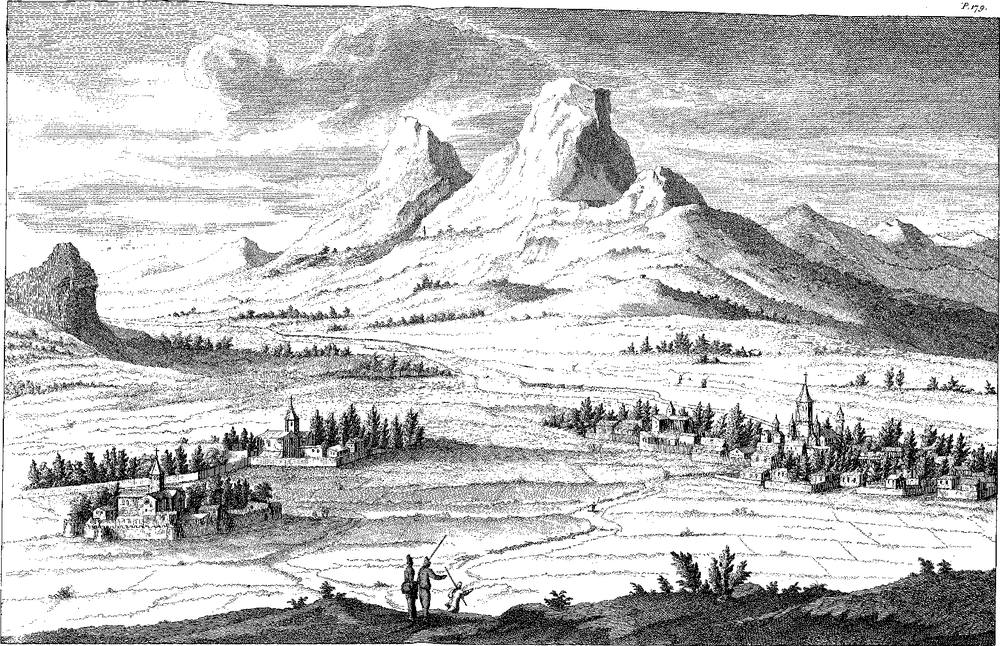
ARARAT, a famous Mountain in Armenia, on which the Ark is said to have Gen. xiii. 4.rested after the deluge. It is affirmed, but without any good proof, that some remains of Noah’s Ark are still to be seen upon the top of this Mountain. John Struis in his Voyages assures us, that he went up to the highest part of it, and that an Hermit who abode there, declared to him, that some broken pieces of the Ark were to be seen there; and at the same time presented him with a Cross made out of the wood belonging to this famous Vessel. But M. de Tournefort, who was upon the spot, has assured me that there was nothing like it; that the top of Mount Ararat is inaccessible, both by reason of its great height, and of the snow which perpetually covers it. Mount Ararat is twelve leagues from Erivan, Eastward, and is situated in a vast plain in the midst whereof it rises, and has nothing contiguous to it on any side. See our Comment upon Gen. viii. 4.
Josephus1 says that the remains of Noah’s Ark were still to be seen in his time, in the Canton of Adiabene, called Cæron, which is a country that produces Cinnamon very plentifully.
The Eastern people call Mount Ararat, upon which the Ark settled, Ar-dag, or Parmak-dagh2, the finger Mountain; because it is strait, and stands by it self, like a finger when held up. It is so high as to be seen at the distance of ten days journey, according to the stages of the Caravans. The City of Tauris is not far from it. Tavernier says that there are many Monasteries upon Mount Ararat3; that the Armenians call it Meresoussar, because the Ark stop’d there. It is as it were taken off from the other Mountains of Armenia, which make a long chain; and from the middle to the top of it is often covered with snow for three or four months of the year. He adds4, that the City of Nekgivan, or Nakschivan, which is built at three leagues distance from Mount Ararat, is the most ancient in the world; that Noah settled there when he came out of the Ark; that the word Nak-schivan is derived from Nak, which signifies ship, and schivan, stopt or settled; in memory of the Ark’s resting on Mount Ararat. Others5 call this Mountain Gioud, or Giouda, in the Country of Moussal, or Diar-rabiah, in Mesopotamia, at the foot whereof there is still a Village which goes by the name of Thamanin and Corda; by Thamanin is meant eight, in memory of the eight persons who came out of the Ark; and Corda denotes the Gordian Mountains so well known among the Ancients. We have before taken notice of their opinion who affirm that the Ark rested on a Mountain near Aramea in Phrygia6.
The Persians call Ararat Mount Asis; as if they should say, the happy or fortunate Mountain, by reason of the choice which God made of it to serve as a port for Noah’s Ark. The Armenians maintain, by tradition, that since Noah no one has been able to climb this Mountain, because it is perpetually covered with snow which never melts, but to make room for some newly fallen; that Noah, when he left the Ark, settled at Erivan, twelve leagues from Ararat, and that at a league from this City, in a very happy aspect, this Patriarch planted the vine, in a place
where at present there is excellent wine made.
ARAUNAH or Ornan. During the Pestilence which ravaged Jerusalem, the 1 Chron. xxi. 18. & seq. and 2 Sam. xxiv. 18.Angel of the Lord commanded Gad to bid David come and raise an Altar to the Lord, in the Threshing-floor of Araunah the Jebusite. Araunah was probably an old inhabitant of Jerusalem, whose Habitation and Threshing-floor were upon Mount Moria, where afterwards the Temple of Jerusalem was built. David therefore went immediately towards the place of Araunah’s abode, with a design to execute the Lord’s order. As soon as Araunah perceived him, he ran to meet him, threw himself prostrate before him, and asked what it was that he desired of him. David told him, he came to buy his Threshing-floor, with an intention to erect There an Altar to the Lord, that so he might be pleased to put a stop to the Plague, which made great havock among the people. Araunah offered him not only the Threshing-floor, but wood likewise and oxen for a burnt Sacrifice. But the King would not accept them, till he told him what the price of them should be; for said he, God forbid that I should offer unto the Lord of that which cost me nothing. David therefore bought the Threshing-floor and the oxen for fifty shekels of silver, or as the Chronicles have it, six hundred shekels of gold. Concerning this diversity, the exposition of Interpreters may be consulted.
2 Sam. xxiv. 16, 18. גרן .הארונהARAUNAH, his Threshing-floor, or as it is called in Chronicles, the Threshing-floor of Ornan, was situated upon mount Sion, where the Temple of Jerusalem afterwards 1 Chron. xxi. 18. & seq. 2 Chron. iii. 1. גרן .ארנן Area Ornan.was built. This Threshing-floor belonged to Araunah or Ornan the Jebusite. David having seen the Angel of the Lord there preparing to afflict the City of Jerusalem with the Plague, and having understood likewise that this was the place, whereon the Lord had directed to have his worship established, bought the floor at the price of fifty shekels of silver, or six hundred shekels of gold, as the Chronicles import; and there offered to the Lord a burnt Sacrifice of the oxen which he had bought of Ornan, and consumed it on a fire made out of the wood belonging to the waggons, and the yokes.
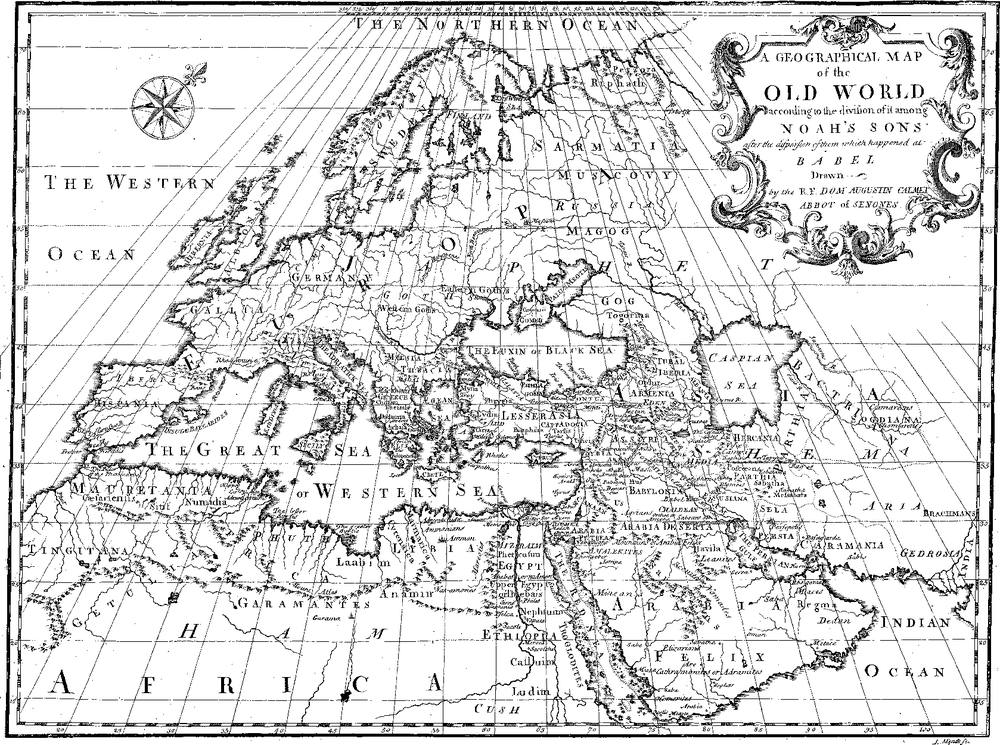
ARAXES, a celebrated river which springs from mount Ararat, six miles from the source of the Euphrates, and empties itself into the Caspian Sea. This river is so large and rapid, when it is swelled by the melted snow, that the banks which are raised against it, and other structures of any kind are carried away with it7. The noise of its waters terrifies those who hear it. The current drives boats with so much impetuosity, as to make them go half a mile in an instant. Attempts have been often made to build bridges over this river, but all those that have been built, have constantly been overset with its waters. Paul Lucas8 says, notwithstanding, that at present there is a bridge over the Araxes; and there is a tradition in the country, that the spring-head of this river is in the place where Paradise was. We believe it to be the same with Genes. ii. 13.Gihon mentioned by Moses. The name of Gihon in Hebrew signifies to flow with impetuosity, as Araxes does in Greek. See our Comment upon Genesis, Chap. ii. ver. 13.
ARBACES, General of the Medes, and Governor of Media by the appointment of Sardanapalus King of Assyria9. He seeing the softness and effeminate manners of Sardanapalus, could not prevail with himself to obey him any longer. He took arms against him in conjunction with the principal Officers of the Median Army: He made an alliance with Belesis Governor of Babylon, and both together attacked Sardanapalus with an Army of four hundred thousand men. Arbaces was worsted in the three first battles which he fought with the King of Assyria: but in the fourth the Bactrians coming over to him, he fell suddenly in the night upon Sardanapalus, and drove him from his Camp. This Prince retired to Nineveh, and gave the command of the Army to Salamenes his wife’s brother. Salamenes lost two battles against the conspirators, and almost all his Troops were cut in pieces. Nineveh was besieged three years, from the year of the world 3254 to 3257. But this last year, the river Tigris, being swelled in an extraordinary manner by reason of the rains, overflowed its banks, and beat down two and twenty furlongs, or two thousand five hundred and fifty paces of the city wall. The conspirators hereupon entred the Breach and saluted their principal Commander Arbaces , as their King. But Arbaces was content with having restored his Country to its liberty, and would not take upon him the title of King. After his death, there was an interregnum, which lasted to the year 3296,
when Dejoces was acknowledged to be King of the Medes.
ARBATTIS, a City of Galilee, which was taken and destroyed by Simon Maccabæus, 1 Macc. v. 23.
ARBE, otherwise Hebron. Arbe was probably the first founder of Hebron, as Iconius intimates. Arbe was at first possessed by the Giants of the race of Anak; afterwards it was given to the Tribe of Judah, and the property of it yielded to Caleb. The Rabbins have a tradition, which is related by S. Jerom in his Hebrew Questions upon Genesis, that Hebron was called Arbe, that is to say, four, because the four most illustrious Patriarchs Adam, Abraham, Isaac and Jacob were buried there; or as others think, because four of the most celebrated Matrons of Antiquity were interr’d there, viz. Eve, Sarah, Rebeccah and Leah. But there is no account to be made of these rabbinical Traditions.
I. ARBELA. We know more Cities than one of this name in Palestine. Josephus speaks of a place called Arbela in Galilee, near Sephoris10. Bacchides in his way from Antioch to Judæa incamped at Arbela. There were caverns near Arbela, of a very difficult access, whither thieves sometimes retired. Herod found means to force them thence11, but they returned afterwards, and did a great deal of mischief in the country. He says, that being sent Governour of Galilee in the beginning of the war against the Romans, he fortified a place called Arbela12.
II. ARBELA, a City situated in the great plain nine miles from Legio, probably towards the East. Eusebius and S. Jerom.
III. ARBELA, a City beyond Jordan, belonging to the region of Pella. Eusebius.
IV. ARBELA, a place spoken of in Hosea x. 14. where we read in the Vulgate, Sicut vastatus est Salmana à domo ejus, qui vindicavit Baal: As Shalman was overcome, by him who made war against him after having destroyed the Altar of Baal. His design is to describe Gideon. See Judg. vi. 25. vii. viii. 10, &c. But the Hebrew imports, As Shalman spoiled Betharbel in the day of battel. Which by some Commentators is explained, as relating to the taking of the City Arbela by Salmanefer. But as this event is not taken notice of in History, it were better to read in this place with S. Jerom and the Alexandrian Manuscript Jerobaal; and understand it, as the Vulgate does, of the victory obtained by Gideon over Zalmunna.
1 Macc. ix. 2.Arbela or Arbah-el13 signifies very fine countries, countries of God: for which reason we find so many places named Arbela. It is said in the Maccabees, that Bacchides and Alcimus came into Galilee, and incamped at Maseloth which is in Arbela. The city Masal or Misheal was in the Josh. xix. 26.Tribe of Asher, near unto which were very fine fields, and a place called Arbela.
ARCA, a City of Phœnicia. See Araca and Araceans. It was allotted to the Tribe of Asher. It is situated between Arad and Tripolis. Josephus places the river Sabbaticus between Arca and Raphanæa.
ARCE, otherwise called Rekem or Petra, the Capital of Arabia Petræa. See Rekem and Petra.
ARCEUTINUS. There is mention in the 2 Chron. ii. 8. of Ligna Arceutina, Juniper-wood. But the Hebrew Berushim signifies 1 Chron. xi. 8. ברושים עצי.properly Fir or Deal.
ARCH-TRIUMPHAL. It is said in the first Book of Samuel, that Saul after 1 Sam. xv. 12.the defeat of the Amalekites erected a triumphal Arch on Carmel: Eo quod venisset Saul in Carmelum, & erexisset sibi fornicem triumphalem. The Hebrew imports, that he lifted up an hand, that is to say, a monument. We do not know what nature or form this monument was of. But it was probably some heap of stones or column to preserve the memory of his victory over Amalek. The Author of the Hebrew Traditions on the Books of Kings says, that Saul’s triumphal Arch was composed of branches of myrtle, palm and olive-trees.
ARCHELAIS, a City or Town of Judæa, built by Archelaus, Ethnarch of the Country, and Son to Herod the Great, some time before his exile at Vienne in Dauphiny. Peutinger’s Tables place it between Jericho and Scythopolis, probably in that large plain which lies upon the Western shore of the River Jordan.
I. ARCHELAUS, King of Cappadocia, the Father of Glaphyra the Wife of Alexander Son to Herod the Great. Archelaus was a wise and judicious Prince, who having learned how ill disposed Herod was to Alexander his Son-in-law, came to Jerusalem14, seemed at first to espouse Herod’s passion, declared to him that he was ready to break off the marriage of his Daughter with Alexander, condemned extremely the conduct of this young Prince, and commended that of Herod; then when he saw the King softned, he began dexterously to lay the faults which Alexander was accused of, upon those who were about him; and Pheroras Herod’s
Brother being come to visit Archelaus, and to desire him to make his peace with his Brother, Archelaus engaged him to confess to Herod, that he was the cause of all the trouble that was in his family, and to beg his pardon for it; and that then he, Archelaus, would join with him, in order to restore him to the King’s good graces. Pheroras believed him, and Archelaus by his prudence re-established peace in Herod’s Court, and reconciled him with his Sons Alexander and Aristobulus, and with Pheroras his Brother.
Some time after Alexander having been accused to Herod of designing to retire with his Wife to his Father-in-law Archelaus, and having owned the thing, Herod conceived great suspicions against Archelaus, and in the last Assembly convened by him at Berytus, where the death of Alexander and Aristobulus was determined, he would not suffer Archelaus to be present, tho’ the Emperor Augustus had expresly appointed that he should, in the letter which he wrote to Herod upon this occasion15.
II. ARCHELAUS, Son of Herod the Great and Maltace his fifth Wife. Herod having put to death his Sons Alexander, Aristobulus, and Antipater, and expunged Herod Antipas out of his will, whom at first he had declared King, substituted in his room Archelaus, and gave Antipas the title of Tetrarch only. After the death of Herod16, Archelaus ordered his will to be read, wherein he was declared King, upon condition nevertheless that Augustus was consenting. Hereupon the whole Assembly cried out, Long live King Archelaus; and the Soldiers promised to be as faithful to him, as they had been to his Father. After that Archelaus had buried his Father in a magnificent manner, he came to Jerusalem, and there mourned seven days, according to the custom; then gave a splendid entertainment to all the people. He went to the Temple, harangued the multitude, promised them all manner of good treatment, and declared that he would not take upon himself the title of King, till the Emperor had confirmed it to In the Year of the World 4001. 3 years before the vulg. Æra, and in the first year of J. C.him.
The people notwithstanding in a tumultuous manner demanded to have those put to death, who had advised Herod to execute certain Zealots that had pulled down a golden Eagle which was fixed upon one of the Temple Gates. Moreover, they required Archelaus to divest Joazas of the High Priesthood, and loaded the memory of the late King with reproaches and ill language. Archelaus sent troops to suppress the Mutineers, and his forces killed near three thousand of them about the Temple. After this he imbarked at Cæsarea, in order to go to Rome, and desire of Augustus the confirmation of Herod’s will, whereby he was declared King of Judæa. Antipas his Brother went to Rome likewise, with an intention to dispute the Kingdom with him, pretending that Herod’s first will, by which he was appointed King, should be preferr’d to the last, which was made by him when his understanding was not so entire as it had been.
The two Brothers Archelaus and Antipas procured able Orators to set forth their pretensions before the Emperor; and when they had done speaking, Archelaus threw himself at Augustus’s feet; Augustus gently raised him, and told him that he would do nothing contrary to Herod’s intention, or his interests. He refused nevertheless to decide any thing concerning this affair at that time. Some time after the Jews sent a solemn Embassy to Rome, to desire of Augustus that he would permit them to live according to their own laws, and continue upon the footing of a Roman Province, without being subject to the Kings of Herod’s family, but to the Governours of Syria only. Augustus gave them audience, and heard likewise what Archelaus had to say against this; then broke up the Assembly without declaring himself.
In the Year of the World 4002. of J.C. 2. before the vulgar Æra 2.At length, after some days, he sent for Archelaus, gave him the title, not of King, but of Ethnarch, with one moiety of the Territories which his Father Herod had enjoyed. He promised him the Crown likewise, if it appeared by his good conduct that he deserved it. Archelaus, upon his return to Judæa, deprived Joazas of the High Priesthood, under pretence that he had countenanced the seditious against him, and gave this dignity to his Brother Eleazar. He governed Judæa with so much violence, that seven years after his return from Rome v, the chief Men of the Samaritans and Jews accused him before Augustus. The Emperor immediately sent for the Agent employed by Archelaus at Rome, and without condescending so much as to write to Archelaus, he commanded the Agent to set out instantly for Judæa, and enjoin Archelaus, from him, to come speedily to Rome, and there give an account of his conduct.
Upon this Prince’s arrival at Rome, the In the Year of the World 4010. of J. C. 10. of the vulgar Æra 7.Emperor call’d for his Accusers, and permitted him to defend himself. He did this so ill, that Augustus banished him to Vienne in Gaul w, where he continued in exile to the end of his life; the year whereof is not very well known.
ARCHI17
Ecclus. xxxii. 1,2. Josh. xvi. 2. Col. iv. 17.ARCHI, a City in the Tribe of Manasseh, beyond Jordan.
ARCHIPPUS, whom St. Paul speaks of to the Colossians. Some are of opinion, that Archippus was Bishop of Colosse. Others will have it, that he was Priest only, or Deacon of this Church. The Author of the Apostolical Constitutions maintains18, that he was Bishop of Laodicea in Phrygia. The Greeks observe his Festival upon the 22d of November; and say that he suffered Martyrdom at Colosse, in the reign of Nero. The Latins honour him upon the 20th of March.
ARCHISYNAGOGUS, Chief of the Synagogue. This was the title of an Office among the Jews. There were generally many men of eminency who presided in the Synagogues, and in all Assemblies that were held there; their number was not fixed, nor equal in all places: this depended upon the extent of the several Cities they were in, or the number of the people who came to their Synagogues. In some particular Synagogues there were perhaps seventy Elders, who presided; others perhaps had but ten, others nine, others four or five only, or no more than one Head or Archisynagogus. They are sometimes called the Angels or Princes of the Synagogue. The Jews give them the name likewise of Chachamim, or Wise. They presided in religious Assemblies, invited those to speak who were thought capable of it; judged of affairs relating to money, of thefts, and other matters of this nature. They had a right to have those whipt who were convicted of acting contrary to the Law. They had a power likewise to excommunicate and expel those out of the Synagogue who had deserved this punishment. See Basnage’s History of the Jews, l. vii. c. 7. and Vitringa de Synagog.
ARCHITRICLINUS, which is generally translated Steward, signifies rather the Master or Intendant of the Feast; one, says Gaudentius of Brescia19, who is the Husband’s friend, and is charged with the order and œconomy of the Feast. He gave his directions to the servants, had an eye over every thing, commanded the tables to be covered, or to be cleared of the dishes, as he thought most proper. Qui conviviorum apparatum, ministros atque ordinem dispensaret; & hic pro officio Architriclinus, hoc est, triclinii præpositus, dicebatur. He tasted and distributed wine to the Guests. See how the Author of Ecclesiasticus describes this office of Master of the Feast, If thou be made the Master of a Feast, lift not thy self up, but be among them as one of the rest, take diligent care of them, and so sit down. And when thou hast done all thy office, take thy place, that thou mayest be merry with them, and receive a Crown for the well-ordering of the Feast.
ARCTURUS, signifies properly the Bear’s tail, and denotes a star, which was behind the great Bear’s tail, the rising and setting whereof presaged, as was said, storms and bad weather20.
Arcturus signum sum omnium quam acerrimum. Vehemens sum, cùm exorior, cùm occido, vehementior.
Job ix. 9. Arcturus.Job speaks of Arcturus, or the Bear, under the name of Ash; and of Orion, under the name of Chesil. The Astronomers place this star, which is of the second magnitude, in the heart of Scorpius. The Pleiades he mentions by the name of Chimah; and lastly, the Antarctick Pole in what he calls the Chambers of the South. See our Comment upon Job ix. 9. and xxxvii. 9.
I. ARD, the youngest Son of Benjamin, Gen. xlvi. 21.
II. ARD, the Son of Gera, the Son of Benjamin, Gen. xlvi. 21.
III. ARD, the Son of Bela, of the Tribe of Benjamin, Head of the Family of the Ardites, Numb. xxvi. 40.
ARDON, the Son of Caleb and Azuba, 1 Chron. ii. 18.
ARELI, the youngest Son of Gad, Gen. xlvi. 16.
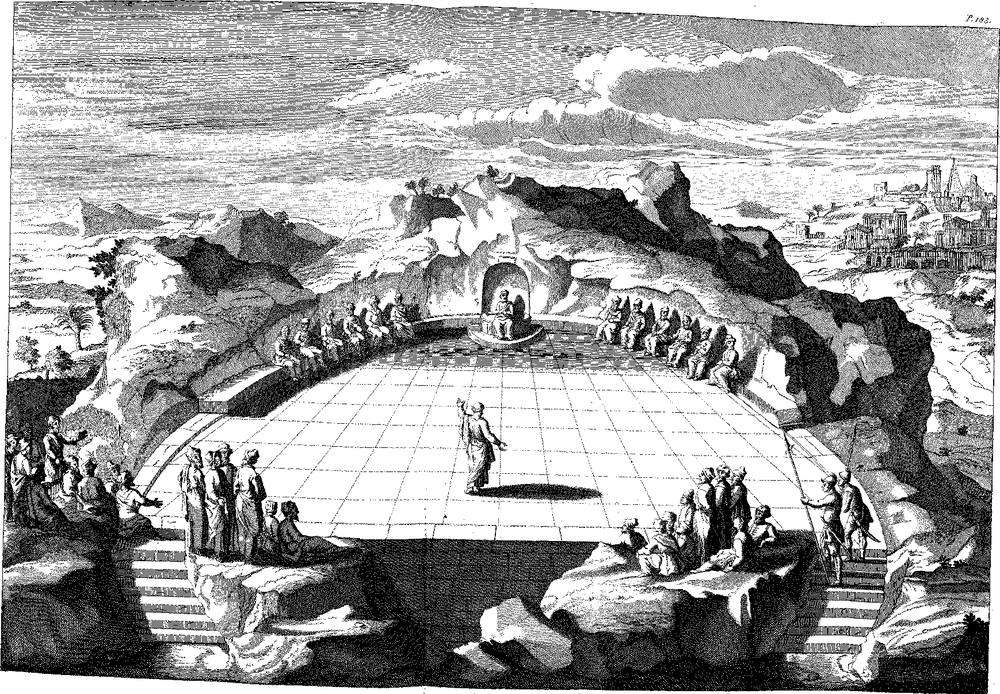
AREOPAGUS, the place where the Areopagites, who were the celebrated Judges of Athens, formerly assembled21. The Areopagus is situated upon an eminence, which in old times was almost in the middle of the City. At present it is out of Athens. There are some remains of it still visible in the foundations, which form a semi-circle, built with square stones of a prodigious size. These foundations support a terrass or plat-form of about an hundred and forty paces, which was the court, where this august Senate was held. In the midst of it there was a Tribunal cut in a rock, and all about were seats cut likewise in stone, wherein the Judges of the Areopagus formerly heard causes in the open air, and without any covering z. Not22
far from hence there were some caves hewn likewise in the rock, where probably the prisoners were kept in custody, who were to appear before the Judges. It is said that they pronounced sentence in the night time, that so they might not be affected by the sight of the persons who spoke and defended themselves. S. Paul having preached at Athens against the plurality of Gods, and declared, that he came to reveal that God to the Athenians, whom they adored without knowing him, was carried before the Areopagites, as the introducer of a new Religion. Acts xvii. 19, 22, & seq.He spoke there upon this occasion with so much wisdom, that he converted Dionysius one of his Judges, and was dismissed without any one’s having any thing to say to him.
AREOPOLIS, the same as Ariel, or Ar, or Rabbath-Moab. See Ar.
I. ARETAS, King of Arabia. There are many Princes of this name in Arabia. Josephus23 speaks of a King Aretas, who was Antipater’s great friend, and not only received Hircanus, the High-Priest and Prince of the Jews, at the time when he was dispossessed of his dignity by his Brother Aristobulus, but undertook likewise to re-instate him in his Kingdom; to this end he marched against Aristobulus with an Army of fifty thousand Arabians, defeated him, and obliged him to fly for safety to Jerusalem, whither Aretas followed, and In the Year of the World 3939, before J. C. 61, before the vulgar Æra 65.besieged him. The City was already in the possession of the King of the Arabians, and Aristobulus was master of the Temple only, where he was defending himself with the Priests, when Scaurus, sent by Pompey came to Damascus: Aristobulus and Hircanus sent Ambassadors to him, and promised him large sums of money to ingage him in their party. Scaurus preferr’d the offers made by Aristobulus, whose wealth and liberality were well known to him, and obliged Aretas to quit the siege of the Temple, threatning, in case of his refusal, to declare him an enemy to the Roman people. Aretas therefore returned into his own country, but not without interruptions in the way: for Aristobulus marched against him and Hircanus with a powerful Army, and giving him battle in a place called Papyron, killed about seven thousand of his men.
In the Year of the World 3942, before J. C. 56, before the vulgar Æra 60.Three or four years after Scaurus, whom Pompey had left Governour of Judæa, marched against Aretas24; but as he could not march his Army as far as Petra, the capital of Arabia Deserta, by reason of the difficulty of the ways, and the unevenness of the country, he pillaged all the neighbouring places. But his Troops at last suffering by famine, he deputed Antipater to go to Aretas, ingage him to make peace, and to pay a sum of money to prevent the farther ravaging his country. Aretas gave three hundred talents, and so the War was ended as much to the advantage of Scaurus as of Aretas. It is said, that when Scaurus was Ædile, he struck a medal, on which was represented a King of the Barbarians on his knees before him, presenting him with a Crown borne upon a camel’s back, with this Inscription, Marcus Scaurus Ædile had this medal struck by order of the Senate. And at the bottom: King Aretas25.
II. ARETAS, called before Æneas, King of Arabia, Son or Grandson to him, of whom we have been speaking, succeeded Obodas in the Kingdom of Arabia26. One Syllæus having prejudiced Augustus against him, by accusing him with having assumed the Crown of Arabia without waiting for the Emperor’s consent; he was for some time very much perplexed, not being within distance to be heard, and confute the calumnies of his Enemy. But the Emperor having at length discovered the impostures of Syllæus27, confirmed Aretas in possession of the Kingdom. Herod-Antipas married Aretas’s Daughter. But some In the Year of the World 3998, before J. C. 2, and 5 years before the vulgar Æra. In the Year of the World 5040, of J. C. 40. of the vulgar Æra 37.time after Antipas divorced her, and took Herodias his Sister-in-law, his Brother Philip’s Wife28. The Princess, Aretas’s Daughter, retiring to her Father’s, he declared war against Antipas, under pretence of some difficulties concerning the limits of Gamala. Aretas’s Army was successful, and Antipas’s was intirely defeated. All the world thought this a just punishment for the murder of John-Baptist, whom Herod had beheaded for the liberty he took in reproving him for his Incest.
Antipas wrote to Tiberius an account of what happened, and of the war which Aretas had carried on against him; which so provoked the Emperor, that he sent a letter to Vitellius, who was then Governor of Syria, commanding him to make war against Aretas, and if he could take him alive, to bring him to him; if not, to send his head to him. Vitellius took the field, and advanced with his Army as far as Ptolemais, and the Jews intreating him not to pass through their country with his Troops, by reason of the images, which they bore in their Standards, he marched his Army through the great plain with a design in all probability to pass the Jordan at Scythopolis. As to himself, he went
with his friends to Jerusalem, where he continued three days. During his stay here news was brought of Tiberius’s death, and Caïus’s elevation to the Empire. Whereupon Vitellius commanded his Army to return, being unwilling to begin this war, without orders from the new Emperor.
In the Year of the World 4041. of J. C. 41. of the vulgar Æra 38.The year following, the Apostle S. Paul, who had been for some time at Damascus, and had preached the Gospel with much zeal there, was persecuted by the Jews of that City, which was then under Aretas’s obedience. They prevailed with the Governor to keep the gates shut day and night, to prevent Paul from making his escape. But he being informed of their design, consented to the request of the Brethren, and by them was let down in a basket from the City walls: and so Acts ix. 23, 24, &c. 1 Sam. xii. 5. 2 Cor. xi. 13.happily escaped the snares which they had laid for him.
ARETH or Hareth, a Forest in the Tribe of Juda, whereof there is mention in the first book of Samuel. In this place David secured himself from the persecution of Saul.
ARETHUSA, a City of Judæa in the neighbourhood of Marissa, and Azoth, and Jamnia29. This City is not mentioned in the sacred Writings, but in process of time it became very famous.
ARGENTEUS, a piece of Silver. This word is generally understood to signify a Shekel, which according to our computation, is worth two shillings, three pence farthing and a half.
I. ARGOB, a Canton lying beyond Jordan in the half-tribe of Manasseh, and in the country of Bashan, one of the most fruitful on the other side of Jordan. In the region of Argob were the sixty cities called Chavoth-Jair, which had very high walls and strong gates, without reckoning many villages and hamlets, which were not inclosed. There are some remains of the word Argob observable in Ragaba, a City beyond Deut. iii. 4, 14. and 1 Kings iv. 13.Jordan. See the following Article.
II. ARGOB, the capital City of the region of Argob, whereof we have been speaking. Eusebius30 says, that in his time Argob was a place fifteen miles distant from Gerasa, westward. It is probably the same as Ragab or Ragaba mentioned in the Mishna31 and Josephus32. The Samaritan Translation instead of Argob, generally puts Rigoba.
III. ARGOB, a place in Samaria near 2 Kings xv. 25.the royal palace, where Pekah the Son of Remaliah assassinated Pekahiah, the Son of Menahem King of Israel.
ARIARATHES, King of Cappadocia, Son of another Ariarathes. He, whom we are speaking of was forced out of his Dominions by Orophernes, and was afterwards restored by the Romans33, in the year of the world 3847. The Roman Senate wrote to him in favour of the Jews, about the year 3861. See 1 Macc. xv. 22.
Esth. ix. 9.ARIDAI, the ninth Son of Haman, who was hanged upon a gibbet with his nine Brethren.
ARIDATHA, the sixth Son of Haman. Ibid.
ARIEL of Moab. There are two Ariels 1 Chron. xi. 22.of Moab spoken of in Scripture, which are no other than the same City of Ar or Areopolis, the capital of Moab, divided by the river Arnon into two. See above Ar.
ARIEL, is taken likewise for the Altar of burnt Offerings, or for the City of Jerusalem in Isaiah xxix. 1, 2, 7. and Ezekiel xl. 15, 16. Ariel literally signifies a Lion of God, a very great Lion.
III. ARIEL. Eusebius34 says it is the name of an Idol worshipped by the Moabites, whose capital City was Ariel.
ARIMANON, a City of refuge beyond Jordan35. It is probably the same as Ramoth in Gilead. See Joshuah xxi. 38.
ARIMATHÆA, or Ramatha, a City from whence came Joseph of Arimathæa, Luke xxiii. 52.mentioned in the Gospel. S. Jerom places it between Lydda and Joppa. Modern travellers speak of a City called Ramatha, between Joppa and Jerusalem, situated on a mountain. The name of Ramatha, whence Arimathæa is formed, signifies Height. But this place is very different from Ramathaïm-zophim, Samuel’s country. Arimathæa lay Westward of Jerusalem, and Ramathaïm to the North 1 Sam. i. 1.of the same City in the mountains of Ephraim. Besides, the way which Saul took, when he was seeking after his Father’s Asses, will not allow us to place Ramathaïm Westward of Jerusalem, as we 1 Sam. ix. 4, 5, 6.may be easily convinced, if we follow him. For he set out from Gibeah, from thence he advanced Northward to the mountains of Ephraim; then he turned towards the West, and went to Shalisha Westward of Jerusalem, from thence he passed through the land of Shalim or Salem; that is to say, the country about Jerusalem, and so proceeding still towards the East, he went through the Tribe of Benjamin; and as he intended to return towards Gibeah, he came Northward into the land of Zuph, or Zophim, near Ramathaïm Zophim, where he spoke to Samuel. (It is my opi36
nion that the City Ramathaïm-Zophim, is the fame as Ramah near Bethel, four leagues distant from Jerufalem.) When he 1 Kings x. 2, 3.went from thence, Samuel told Saul, that as he returned to Gibeah, he would find two men who came from Rachel’s fepulchre in the neighbourhood of Bethlehem, and by these he would be informed, that his Father’s Affes were found; that a little farther he should meet three men, going in pilgrimage to Bethel; and that at last he should come to an eminence above Gibeah, the place of his birth, which was then in the poffeffion of the Philitines. See the Map.
ARIMI37 are the fame as Arameans or Syrians, descendants of Aram. See Aram.
ARINDELA, a City of Palestine. In the Councils we meet with Bishops of Arindela.
Judith i. 6.I. ARIOCH, King of the Elicians according to the Vulgate, or King of the Elymæans according to the Syriac. We find one Arioch King of Ellafar in the Genef. xiv. 1.book of Genefis. The country of the Elicians we have no knowledge of; of the Elymæans or Elamites we have, which is that of the ancient Perfians. The Scripture informs us, that the battle between Arphaxad King of the Medes and Nabuchodonozor King of Affyria, was fought at Ragau, near the Tigris and Euphrates, in the plain of Arioch King of the Elimeans.
II. ARIOCH, King of Pontus, or, according to the Hebrew, King of Ellafar; or according to the Paraphrast Jonathan and the Syriac King of Telaffar. Now Telaffar was a Province beyond the Euphrates, not far from Armenia; for Ifaiah Ifai. xxxvii. 1, 2.speaks of the children of Eden that were at Telaffar. Arioch was in league with Chedorlaomer, and join’d with him in war against the Kings of Sodom and Gomorrha. See Genef. xiv. 1, 2, 3, &c.
III. ARIOCH, General of King Nebuchadnezzar’s Troops. This Prince having had a dream which he had forgotten, was determined to compel the Magi, and the Interpreters of dreams, who were at Babylon, not only to interpret the dream which he had had, but likewise to recal it to his memory; and as this exceeded the power of the Magi to perform, he commanded Arioch to have them all put to death. Daniel having understood the King’s orders from Arioch, required time for deliberation; and foon after discovered to the King both his dream and the signification of it.
ARISAI, the seventh Son of Haman, Esth. ix. 9.who was hanged with his Father and his Brethren.
ARISSA, the Wife of Japhet, according to the tradition of the Eastern People38.
Coloff. iv. 10. Philemon. v. 24. Acts xix. & xx. 5. xxvii. 2.ARISTARCHUS, spoken of by S. Paul in his Epistles to the Coloffians and Philemon, and often mentioned in the Acts of the Apostles, was a Macedonian, and a native of Theffalonica. He accompanied S. Paul to Ephefus, and there continued with him for the two years of his abode there, partaking with him in all the dangers and labours of the Apostleship. He was very near being killed in a tumult raised by the Ephefian Goldsmiths. He left this City with the Apostle, and went along with him into Greece. From thence he followed him into Afia, from Afia into Judæa, and from Judæa to Rome. Ado and the Roman Martyrology make him Bishop of Theffalonica: but the Greeks fay he was Bishop of Apamea in Syria, and was beheaded with S. Paul at Rome in Nero’s reign; continuing to the very last constantly attached to the Apostle.
ARISTEAS, the author of the History or rather Romance concerning the version of the Septuagint, is an Author, whose Original, Age and Country we are strangers to. He gives himself out to be an Egyptian, one of Ptolemy Philadelphus’s life-guard, a great favourite of this Prince, and by religion an Heathen. But upon examining his work and his discourses, we may easily discover that he was a Jew. The sentiments, language, and expreflions of a Jew appear in all he fays. We know not in what time he lived; whether in the reign of Philadelphus King of Egypt, or of Philometor, as is differently related, or whether he were more modern. Dodwel in his Differtation upon Aristeas39, thinks he lived after Philo the Jew, and that this last is the first writer who has spoken of a Translation of the holy Scriptures out of Hebrew into Greek40, undertaken by the direction of Ptolemy Philadelphus. Aristobulus, who is supposed to be a Jew of the Peripatetick Sect of Philosophers, and is cited in Eusebius41, speaks likewise of this Translation: but he names neither Aristeas nor Philo. Josephus the Historian is the first, who has particularly mentioned him. As to Aristobulus we shall say something of him hereafter. It is sufficient here to shew, that what is said of the person and history of Aristeas labours under very great difficulties, and is dress’d up with abundance of fables42.
I. ARISTOBULUS, was a Jew of the 2 Macc. i. 10.Priests family, a Philosopher, and Preceptor to Ptolemy King of Egypt. Clemens of Alexandria43 cites the first book of Aristobulus dedicated to King Philometor, wherein he affirms, that before the Translation procured by Demetrius Phalereus, there was another, out of which Pythagoras and Plato borrowed many of their opinions. Anatolius, who is quoted in Eusebius44, says, that this same Aristobulus was one of the seventy Interpreters, and that he wrote Comments on the books of Moses, which he dedicated to Ptolemy the Son of Lagus, and his Son Ptolemy Philadelphus. The same Clemens and Eusebius45 believe this to be the Aristobulus mentioned in the Preface to the second book of Maccabees, and called there King Ptolemy’s Master, who was of the stock of the anointed Priests; that is to say, of the Priests of the God of Israel, who were consecrated by the holy Unction.
Rom. xvi. 11.It is generally asserted, that the Ptolemy, who had Aristobulus for his Præceptor, was he, who is sirnamed Philometor. The letter wherein we find his name, is dated in the Ibid.hundred four-score and eighth year of the Greeks, which comes to the year of the world 3880. Philometor died in 3860, twenty years before: notwithstanding which Aristobulus may be styled this Prince’s Præceptor. The difficulty does not lye here. But how shall we make it out that Aristobulus lived so long as to the year 3880, since he dedicated books to Ptolemy the Son of Lagus, who died in 3720, that is to say, an hundred and sixty years before ? He must have been at least twenty years of age, when he composed and dedicated these Books; so that in 3880 he would have been an hundred and ten years old, which does not seem to be at all credible. We had better therefore acknowledge, that the true Aristobulus mentioned in the Maccabees is very different from him, whom Clemens of Alexandria and Eusebius speak of; or at least that the latter is a spurious Author, under whose name several works have been published, which were written long since the Maccabees, and were unknown to all the ancients before Clemens of Alexandria. The Reader may consult Dodwel’s Dissertation on the History of Aristeas. Chap. xxviii.
II. ARISTOBULUS, whom S. Paul speaks of in his Epistle to the Romans, was, according to the modern Greeks, Brother to S. Barnabas. They say he was one of the seventy Disciples; that he was ordained a Bishop by S. Barnabas, or by S. Paul, whom he followed in his travels; that he was sent into England, where he laboured very much, made many converts, and at last ended his life. They keep his Festival on the 13th and 16th of March, and again upon the 31st of October. Others46 have doubted, whether Aristobulus whom S. Paul speaks of were a Christian; because S. Paul does not salute him, but those only who were met together in his house. Others47 make him to be the Father of the Apostles S. John the Evangelist and S. James Major, and confound him with Zebedee. But it is to no purpose to heap together a crowd of fables, since we know, that there is nothing certain concerning this Aristobulus.
III. ARISTOBULUS, otherwise called Judas and Philellen, or a Lover of the Greeks, Son of Hircanus, and Grandson of Simon Maccabæus, High-Priest and Prince of the Jews, gave several proofs of his valour in his Father’s life time, during the siege of Samaria, which he directed together with his Brother Antigonus48. After that the City was taken49, Hircanus intirely demolished it, and cast the materials into the brooks which run along by the foot of the mountain, upon which Samaria was built. Three years after, that is to say, in the year of the world 3898, Hircanus died and Aristobulus succeeded him50: but he reigned one year only. He put his Mother and three of his Brothers into prison; he was so cruel as to starve his Mother in her confinement, but gave his Brother Antigonus a large share of the Government.
He made war with the Itureans51, people descended from Jethur one of Ishmael’s Sons, who dwelt in Arabia beyond Jordan between the country of Damascus to the North, and the half tribe of Manasseh to the South. He subdued them, and forced them to Genes. xxv. 15.receive Circumcision by offering the alternative either of embracing Judaism or of departing out of their country, and going to seek a settlement in some other place. They chose rather to remain there, and perform what was required of them. Some time after he procured the death of his Brother Antigonus, by a very tragical accident. Aristobulus being indisposed sent his Brother Antigonus upon a military expedition, from which he returned successful. They who envied him, represented to the King, his Brother, that he had designs upon the Crown, that he was gone to the Temple in an equipage not becoming a private man, and that he would come very soon with a troop of armied Soldiers and kill him. The King at first could not imagine, that there was any thing in what they told him, and sent a message to his Brother, desiring him to come unarmed to him; and commanded
his guards, if he came with arms, to dispatch him in a dark subterraneous place, thro’ which he was to pass, in his way from the Temple to the King’s Apartment.
The persons whom Aristobulus sent on this errand, instead of telling Antigonus that he should make his visit without arms, on the contrary informed him that the King was very desirous of seeing him in that beautiful suit of armour, which he was reported to have brought back with him from the war. Antigonus went immediately, and the guards who had orders to kill him if he came armed, massacred him as he was pressing to go forward. No sooner had Aristobulus committed this crime, but a fit of severe repentance seized him, which contributed not a little to the increase of his indisposition, and to the shortning of his life. Upon a certain day, as one of his servants was carrying out some blood which this Prince had vomited, he by chance let it fall, in that very spot where the marks of Antigonus’s blood were still visible. They who were present made a great Outcry, which was heard by the King, who desiring to know the cause of it, and understanding what it was, he was so sensibly touched with it, that with many tears and sighs he broke out into this exclamation, Great God! thou dost revenge very justly the parricide which I have committed! How long will my guilty soul be thus confined within my body? As soon as he had pronounced these words, he expired; in the year of the World 3899. He was succeeded by his Brother Alexander Jannæus, whom Salome, or Alexandra, the Wife of Aristobulus, took out of prison immediately after the King’s death.
IV. ARISTOBULUS, was the second Son of Alexander Jannæus, and younger Bro ther to the High Priest Hircanus. He de clared openly, that he disapproved of his Mother Alexandra’s conduct towards some of the King his Father’s old servants, who were imprisoned and put to death by her order, to gratify the Pharisees52; one day the friends and partisans of the late King waited on the Queen with Aristobulus at their head, and laid before her the services which they had done the late King, and their adherence to him in the course of all his wars; that it was very hard to make every thing at present criminal which they had performed for him; that they humbly intreated for permission to retire out of the Country, or at least to be disposed in places where she had Garrisons, that so they might be secured from the persecution of their enemies. The Queen, moved with their complaints, but unable to perform for them all that she could have wished, allowed them to retreat into those Castles where she had Garrisons.
Some time after she sent the Prince Aristobulus her Son53 against Ptolemy the Son of Mennæus King of Chalcis, whose abode was at the foot of Mount Libanus, and who extremely incommoded his neigh bours, particularly the inhabitants of Da mascus. Aristobulus marched with his troops towards Damascus, entred the City, and returned without having done any thing very considerable in this expedition. His great ambition was, to engage the troops in his interests, in order to make himself Master of the Kingdom, at his Mother’s death.
In the year of the World 3935.As he saw his Mother Alexandra in a very low condition of health, he54 stole privately out of Jerusalem, and visited the several Castles which were in the custody of his Father’s friends, by whom he was very well received. He made himself Master of fifteen Fortresses in two and twenty days; which put the Queen and leading Men among the Jews into great consternation. In this extremity they seized Aristobulus’s Wife and Children, and lodg’d them in the Fort which was adjoining to the Temple of Jerusalem; thinking by this means to put a stop to Aristobulus’s undertakings. But he continued to gather troops, and possess himself of all the most advantageous posts in the Country; so that nothing more was wanting besides the name of King.
In the year of the World 3938.Queen Alexandra was carried off very soon after, by the violence of her disease. She gave the Kingdom to her eldest Son Hircanus, and left the care of the govern ment to the Jews of greatest quality. But Aristobulus every day grew stronger, and made new progresses. So that three years after the death of Alexandra55, the two Brothers engaging in the plains of Jericho56, Aristobulus remained Conqueror, and Hircanus was obliged to fly for safety to Jerusalem, and shut himself up in the Fortress where the Wife and Children of Aristobulus were kept prisoners. Here in a short time he was besieged, and Hircanus’s troops not being in a condition to maintain the siege, an agreement or treaty of peace was concluded between the two Brothers, whereby it was stipulated, that Hircanus should live as a private person, enjoying his fortune and estate; and that Aristobulus should have the title of King, and the honour of the High Priesthood. This Treaty was ratified in the Temple by the oaths both of Hircanus and Aristobulus; and after they had mutually embraced one another, Aristobulus took up his lodging in the Royal Palace, and Hircanus re
tired to the house which had been inhabited by his Brother Aristobulus.
The last of these enjoyed the Crown and the High Priesthood for three years and three months57; and had enjoyed it for a much longer time, had it not been for Antipater the Idumæan, Father of Herod the Great, who persuaded Hircanus to retire to Aretas King of Arabia, and afterwards prevailed with Aretas to make war against In the Year of the World 3939, before J. C. 61, before the vulgar Æra 65. In the same year.Aristobulus. Aretas obtained a great victory over him, and besieged him with an Army of fifty thousand men in the Temple of Jerusalem58, where Aristobulus defended himself, with the Priests who were of his party. Some months after, Scaurus, being sent by Pompey into Syria, came to Damascus, where he received Embassies from the two Brothers Hircanus and Aristobulus59; who made him great offers, with hopes of engaging him each in his interests. Aristobulus offered him three hundred talents; and Scaurus declared for him. He accordingly sent word to Aretas, that he expected he would raise the siege, otherwise he should be proclaimed an Enemy to the Roman People.
Thus Aristobulus was set at liberty. But Pompey himself coming to Damascus about the end of the same year, Aristobulus sent him a present of a vine wrought in gold, valued at five hundred talents. Some time after, Ambassadors came to Damascus,In the Year of the World 3940. before J. C. 60. before the vulg. Æra 64. both from Hircanus and Aristobulus. Those from Aristobulus accused Gabinius and Scaurus with receiving money, Gabinius three hundred talents, and Scaurus four hundred; which made these two Romans his enemies, who might have procured Pompey’s favour for him. But as Pompey could make no certain judgment upon the reports of two Ambassadors, he commanded Hircanus and Aristobulus to appear personally before him, to make good their several pretensions. Hircanus complained of the violence which he had suffered from Aristobulus, who had unjustly robb’d him of his Crown. Aristobulus, on the contrary, maintained, that Hircanus had forfeited this dignity by his own negligence and want of courage. On the other side, the Jews complained of both the Brothers, and desired that they might be no longer subject to Kings, but to Priests, according to the ancient custom of their nation.
Pompey, after having heard them, blam’d the violence of Aristobulus, and dismissed them both in peace, saying that he would reconcile them as soon as he had regulated the affairs of the Nabathæans. Accordingly, he came into Judæa, towards the end of the year, and sent for Aristobulus, who was then in the Castle of Alexandrium.60 Aristobulus waited on him, and Pompey permitted him to return two or three times. But at last having commanded him to give up his Fortresses, and write to those who held them by his authority to surrender them; Aristobulus obeyed, but with a great deal of regret; so that he retired immediately to Jerusalem, with an intention to prepare for war. Pompey followed him so close that he had not time to execute his design. He was at Jericho, upon his march against Jerusalem with his Army, when Aristobulus, fearing the consequences of a war, met Pompey, and desired him not to push things to an extremity, promising to put the City into his hands, and to give him a large sum of money. Pompey consented to these proposals, and sent Gabinius to Jerusalem to receive the money which had been stipulated. But Aristobulus’s soldiers refused to open the gates, and he was obliged to return without doing any thing.
Pompey, provok’d by this refusal, detained Aristobulus as his prisoner, and laid siege to Jerusalem. The City was taken after three months, and Hircanus was confirmed in the dignity of Prince and High Priest of the Jews, exclusive of Aristobulus, who was carried prisoner to Rome, with his two Sons Antigonus and Alexander, and his two Daughters61. Alexander escaped from his guards, and returned into Judæa; but Antigonus was carried to Rome, with his two Sisters, and Aristobulus their Father. There he continued eight years; after Till the year of the World 3948. before J. C. 52. before the vulgar Æra 56.which he made his escape, with his Son Antigonus, and returned into Judæa62. There he got some troops together, with which he was resolved to fortify himself in the Castle of Alexandrium. But Gabinius Governour of Syria sent some forces against him, which prevented him. He endeavoured afterwards to make himself Master of Macharus, with a design of fortifying himself in it; but the leisure necessary for this was not allowed him; the place was invested, and after a siege of two days he surrendred, all covered with wounds, with his Son Antigonus, and was carried as a Captive to Gabinius, by whose order he was once more conducted to Rome.
When he arrived there, the Senate decreed, that Aristobulus should be continued in fetters, but that his Sons should be sent back into Judæa; because Gabinius in a letter had informed them, that he had made this promise to their Mother, and that it was only upon this condition that she had put those places of the country into his hands, which were in her possession63.
He remained at Rome seven or eight years, from the year of the world 3948 to 3955, when Julius Cæsar set him at liberty, and propos’d to send him into Palestine, there to undertake something against Pompey64. He appointed two Legions to be under his command, that by their assistance he might secure the Province: but those of Pompey’s party poisoned him, before he could get out of Rome, and they who were in Cæsar’s interests paid him the honours of a Funeral, in the year of the world 3955, before J. C. 45, before the vulgar Æra 49. His body remained a long time at Rome inbalmed in honey, till Mark Antony procured it to be carried back into Judæa, to be interr’d in the sepulchre of the Kings.
V. ARISTOBULUS, the Son of Alexander and Grandson of Aristobulus, whom we have been speaking of; his Mother was Alexandra, the Daughter of Hircanus, and Mariamne the Wife of Herod the Great was his Sister. Aristobulus was one of the handsomest Princes of his time. As he was the last of the Asmonæan family, Herod his Brother-in-law did what he could to prevent his having the High-Priesthood, which he had by birth a right to expect. Nevertheless being over-powered by the pressing sollicitations of his Wife Mariamne, and his Motherin-law Alexandra, he invested young Aristobulus with this dignity, who was then but seventeen years of age65. But having observed In the Year of the World 3969. before J. C. 31. before the vulg. Æra 35.too great an inclination in the people to this young Prince, he conceived so much jealousy of him, that he resolved to procure his destruction; for which he found an opportunity one day at Jericho. Aristobulus desiring to bathe with some other young people in a conservatory of Water, which was near the palace, Herod gave orders secretly to have him drowned, by plunging him under water, as it were in the way of diversion66. This happened in the year of the world 3970, before J. C. 30, before the vulgar Æra 34. Aristobulus had not been High-Priest a whole year.
VI. ARISTOBULUS, the Son of Herod the Great and Mariamne, and Brother to Alexander. He married Berenice Joseph’s Daughter, and Herod the Great’s Sister. He left three Sons, and two Daughters, viz. Herod, who was King of Chalcis; Agrippa, who was King of the Jews, and firnamed the Great, and Aristobulus, who married Jotape Daughter to the King of Emesa. The Daughters were 1°. Herodias, who married first Herod, otherwise called Philip her Uncle; then Antipas. 2°. Mariamne who married Antipater her Uncle by the Father’s side. Aristobulus the Father of all these children was put to death by Herod the Great’s orders, together In the Year of the World 3999. and before the birth of J. C.with his Brother Alexander. As the ill fortune of these two Brothers was always common, and the events of their lives are perpetually intermixed67, the reader may consult the Life of Alexander, whereof we have given some account above.
ARIUS, or Areus, King of Sparta, of whom there is mention in 1 Macc. xii. 7. and in Josephus, Antiq. l. xii. c. 5. This Prince wrote a letter to the High-Priest Onias, the terms whereof are to be seen in the first book of Maccabees xii. 20. One particular of it was this, that the Lacedæmonians were the Jews Brethren, that is to say, sprung from the same original, having Abraham for their Father. Hereupon the reader may see our Dissertation concerning the Relation between the Jews and Spartans, in the beginning of the books of Maccabees68. Areus’s letter was written upon a square piece of paper, and the seal was an eagle holding a dragon in his claws v. The date of this letter we do not know, nor what Onias it was addressed to, or by what Arius it was written. But we know, that Onias the third was made High-Priest in 3805, and was depos’d in 3829; and that Arius the second King of Lacedæmon reigned after the year 549 from the foundation of Rome, that is to say, since the year of the world 3805. He died at eight years of age. Acrotatus the second was his Father and Predecessor, and Leonidas the Son of Cleonymus was his Successor. So that if this letter be his, it must be consider’d rather as the work of his Council, not as his own, since he died so young. We know of another Arius, King of Lacedæmon, who is more celebrated in history. He died four and forty years before Onias the third was made High-Priest. But in his reign we find Onias the first, who governed or was High-Priest from the year 3682 to 3702. And as Arius the first began to reign in 3700, we may likewise fix the epoch of this letter under Onias the first, in the first or second year of Arius the first.
ARK, Noah’s, in Hebrew, Thebath69, a kind of Coffer. The term made use of by Moses to express it, is different from the common name whereby he describes a Coffer. He imploys the same Hebrew word Thebath, when he speaks of the little basket wherein he was expos’d upon the Nile. It was a sort of bark in form much like a chest or trunk. The ancients inform
form us, that the Egyptians used barks made of bulrush on the Nile70, and that they were so light as to be carried sometimes on their shoulders, when they met with falls of water, which prevented their passage.
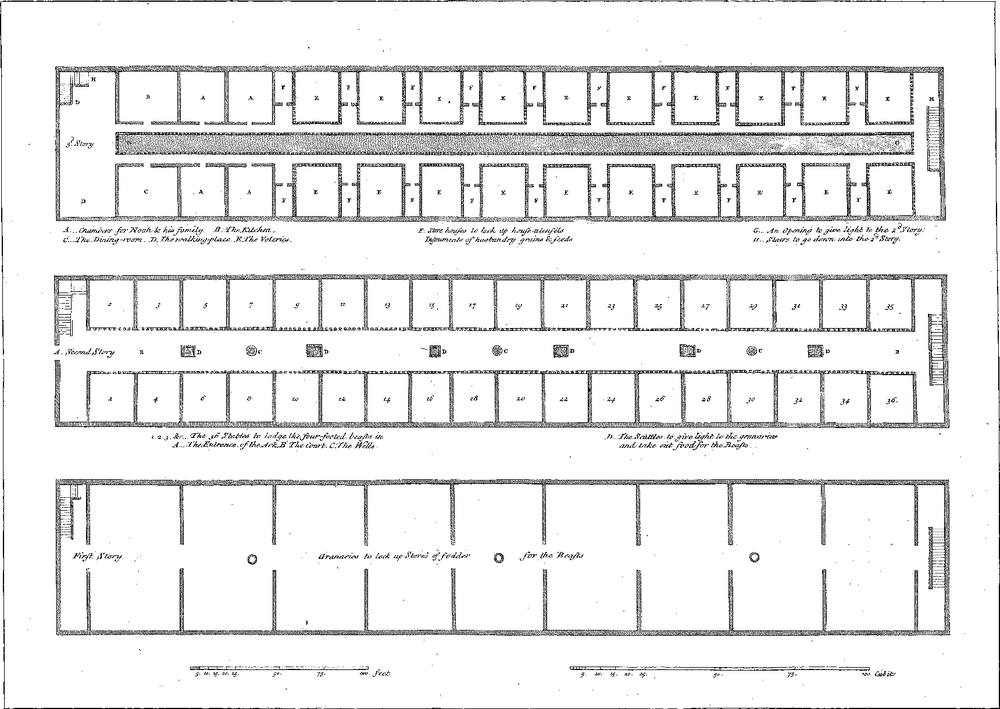
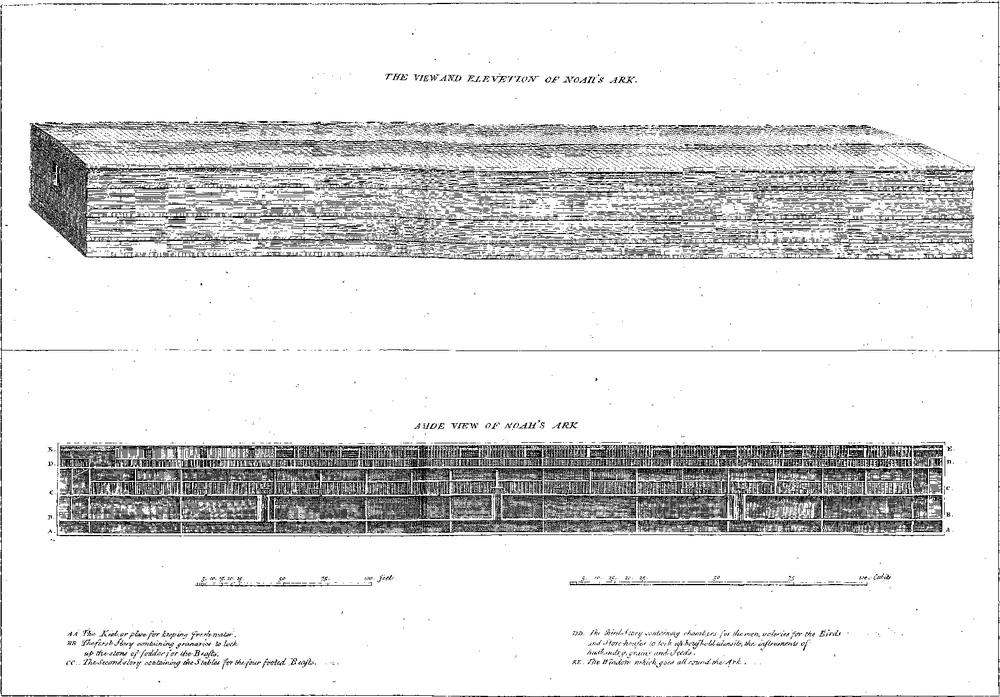
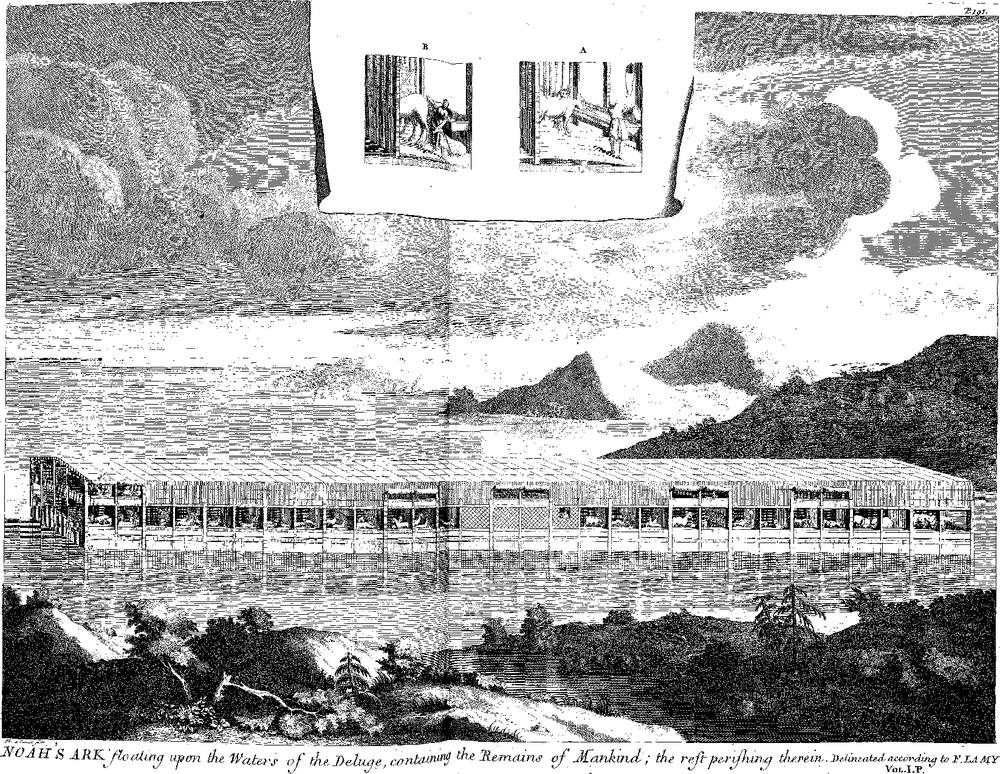
As to Noah’s Ark, there is all the probability in the world, that it was made in the form of these Egyptian boats, but of an infinitely larger size. If we reckon the Hebrew cubit at twenty inches ⁴⁄₉, or almost twenty inches and an half of Paris measure, the outside of Noah’s Ark must be five hundred twelve feet and ¹⁄₉ long, fourscore five feet and ¹⁄₉ wide, and one and fifty feet ¹⁄₉ high; and the whole capacity of the hollow part of the Ark was three hundred fifty seven thousand six hundred cubical Hebrew cubits; and supposing every cubit to be only eighteen inches, its length was four hundred and fifty feet; its width seventy five, and its height forty five feet. Its figure was an oblong square, the covering whereof might have something of a declivity in order to carry off the water that fell upon it. Its length was such that there are few Churches in Europe exceeding it. The height of it might be divided into four Stories, allowing three cubits and an half to the first, seven to the second, eight to the third, and five and an half to the fourth, and leaving the remaining five cubits of the thirty in height for the thickness from top to bottom, and the three bridges or floors of the three last Stories.
The first of these Stories might be the bottom, or what is called the keel of Ships. The second might be used for a granary or magazine. The third might contain the stables; and the fourth places for the fowls. But the keel not being reckoned as a Story, and serving only for a conservatory of fresh water, Moses says, that there were but three Stories in the Ark, and if interpreters set down four, they include the keel. In the stables the four-footed beasts were lodged, and in the voleries, the birds: Some count as many stables as there were sorts of beasts, which is not at all necessary; because there are many kinds of birds and beasts, which use the same food, and may live very well together.
The number of beasts which must have entred into the Ark, is not so great as might be imagined. We do not know above an hundred and thirty species of four -footed beasts; of birds about the same number; and of reptiles at most not above thirty species. We know not of more than six species of beasts larger than an horse. There are very few equal to this creature, and many much less, and which are under the size even of sheep: So that all the four-footed beasts, including three thousand six hundred and fifty sheep, which may be supposed necessary for the nourishment of such animals as live on flesh, take up scarce any more room, than an hundred and twenty oxen, three thousand seven hundred and thirty sheep, and fourscore wolves.
Of birds or fowls few are larger than the swan, and almost all are less.
As for reptiles, or creeping animals, their number is not great. They generally are small. Many of them can live in water, and it might not be necessary to bring them into the Ark.
All the four-footed beasts might have been easily lodged in six and thirty stables; and all the birds in as many voleries, allowing for each stable and volery, five and twenty feet and an half in length, nine and twenty in width, and thirteen and an half in height.
There might be more than thirty one thousand, one hundred and seventy four bushels of fresh water in the keel; which is more than is sufficient for four times as many men and beasts to drink in one year, as were in the Ark.
The granary and magazine, which was in the first Story, might contain more provisions than were necessary for the nourishment of all the animals in the Ark for one year; whether they all lived on hay, fruits and herbs; (which is very probable at this juncture, there being none, which in cases of necessity might not do well enough without flesh;) or whether there were sheep designed for the food of such animals as live on flesh.
Besides the places requisite for the beasts, and birds, and their provisions, Noah might spare room in the third Story for six and thirty cabbins to lock up houshold utensils, the instruments of husbandry, grains and seeds to sow the earth with after the deluge. He might make room in it for a kitchen, a hall, four chambers, and a space of about eight and forty cubits in length to walk in. The Reader may consult M. Le Pelletier’s work upon Noah’s Ark, and that of John Buteo an Englishman on the same Subject; and our Comment upon Genesis vi. 14.
There are several difficulties proposed with relation to Noah’s Ark. For example, one question is, How long time Noah was a building it? Interpreters generally believe, that he was an hundred and twenty years; and this opinion is founded upon the following Gen. vi. 3.words of Genesis, My Spirit shall not always strive with Man; his Days shall be an hundred and twenty years. Some have pretended71, that God in this intended to declare, that there were not
But his answer to them was, I shall have my turn, and you will learn, at your expence, who he is that punishes the wicked in this world, and reserves chastisements hereafter for them in the other.
The greatest difficulty which is formed relating to Noah’s Ark, turns principally upon the size and capacity of it; and how they were able to build a Vessel sufficient to contain the Men and Beasts, besides the provisions necessary for the support of both during a whole year. To resolve these difficulties it has been requisite to be very particular in enquiring into the largeness of the Cubit mentioned by Moses, into the number of the Beasts which were admitted into the Ark, and all the dimensions of this vast Building; and after the nicest examination, computations, and taking the dimensions, with all the greatest geometrical exactness, the most learned and accurate Calculators, and most understanding in building Ships72, conclude, that if the ablest Mathematicians had been consulted about regulating the proportions of the several apartments in the Ark, they could not have done it with more exactness than Moses has done; and the narration in the Sacred History of this particular, is so far from furnishing Deists with weapons wherewithal to weaken the authority of the Holy Scriptures, that on the contrary it supplies us with good arguments to confirm it; since it seems as it were impossible for a man in Noah’s time, wherein Navigation was not as yet perfected, by his own wit and invention, to discover such an accuracy and regularity in proportions, as is remarkable in the different apartments of the Ark, and the end for which they were designed. Whence it follows, that it is therefore to be attributed to the inspiration of God, and a supernatural light.
Some have started difficulties with regard to the square and oblong figure of the Ark; but they did not consider that this Vessel was not made for rowing, but for floating only, to be upon the water for some considerable time, and to preserve the several species of Men, Animals and Plants, which were contained in it: besides, it may be proved to them by examples73, that it was not less commodious for rowing than for carrying a great deal. George Hornius, in his history of the several Empires, tells us that in the beginning of the seventeenth Century one Peter Hans, of Horne, had two Ships built after the model and proportions of the Ark, one whereof was an hundred and twenty foot long, twenty wide, and twelve deep. These Vessels had the same fate with Noah’s, they were at first the subject of ridicule and raillery to those who saw them; but experience demonstrated, that they carried a third part more than others, tho’ there was no occasion for a larger Crew, they were better Sailors, and made their way with much more swiftness. All the inconveniency which was found in them was, that they discovered them to be fit only for times of peace, because they were not proper to carry guns.
The number of Men and Animals which were to enter into the Ark, supplies the Criticks plentifully with matter of dispute. As to the number of Men, if we kept to the texts of Moses and St Peter, we shou’d have no contests about it; for Moses expressly Gen. vii. 13. 1 Pet. iii. 20. Gen. vii. 2.says, that Noah went into the Ark, he, his Wife, his three Sons, and their three Wives. And St. Peter tells us, that there were but eight persons saved from the waters of the Deluge. But the mind of Man, which is fruitful in imaginations, and always curious and unquiet, has considerably augmented this number. Some have hereby thought to do God service, supposing eight persons not to be sufficient to supply the wants of so many Animals. Others have imagined, that to affirm eight persons only to have been preserved from the Deluge would be to set too narrow bounds to God’s mercy. Mahomet in the Alcoran says74, that Noah climbing up to the top of the Ark cried out to the incredulous, In the name of God imbark; and while he was saying thus, the Ark moved forward, and stop’d at the invocation of the Lord’s name. God had commanded them to receive as many as should offer themselves, even the Infidels; but foretold that there would be very few. The Mahometan Interpreters believe, that besides the eight persons whom we have mentioned, there were seventy two more who entred, not the Sons only of Noah, but their servants likewise. Of all Noah’s family, his Grandson Canaan, according to the Alcoran, was the only one who refused to go into the Ark; and he was swallowed up by the flood.
Some Rabbins inform us, that a certain King of Basan was preserved from the waters of the Deluge, by getting up on horseback on the top of the Ark. Others affirm, that Philemon, an Egyptian Priest, and his Family, retired thither with Noah. The Babylonian Sybil says, she was saved there, together with her Husband. Mere Fables! It is beyond comparison more difficult to fix the number of Animals, than that of Man. Moses himself helps to perplex us in these words of his75, Of every clean beast thou shalt
Mark vi. 7. Ver. 39, 40.take to thee by scores, the male and his female; and of beasts that are not clean, by two, the male and his female. Several questions are raised concerning these words; first, what these clean and unclean Animals were; and secondly, whether fourteen clean and four unclean were put into the Ark, or only seven clean and two unclean. The reading of the Hebrew Text runs thus: Of Beasts thou shalt take seven clean, seven males and females, and of unclean beasts two, (he places two here but once,) male and female. But the Samaritan Text, the Septuagint, and the Vulgate, read two twice; and the Hebrew itself, ver. 9. of chap. vii. reads twice two, duo & duo; which leaves the difficulty in all its force, the text being equally to be construed seven and seven; in like manner as it is said in the Gospel, that our Saviour sent his Disciples two and two; and that he made the Multitude to sit down by companies; and they sat down in ranks, by hundreds, and fifties: that is to say, they sat down in distinct ranks of an hundred, and of fifty; and they went away two and two, not four and four.
This opinion is followed by Josephus the Historian76, by several of the Fathers77, and by almost all the Commentators. But the contrary opinion is not without defenders, and the original Text may favour them. It may signify, Thou shalt introduce them into the Ark, fourteen clean beasts, or seven pair; and if they are unclean two pair; or only one pair two and two. Origen78, the Author of Questions to the Orthodox, under the name of Justin79, Abenezra, Dionysius the Carthaginian, Oleaster, and some others, have followed this last opinion.
But what are we to understand here by the name of clean and unclean beasts? The distinction declared by Moses in the Law between Animals whereof there was a permission to eat, and those the use whereof was unlawful, was this distinction known and practised before the Deluge, or did Moses here mention it in the way of anticipation? It is probable that this distinction was not unknown to Noah, since God, without explaining himself farther, commands him to take a greater number of pure than of impure Animals; and that the same Animals were pure and impure, with regard both to Noah and the Jews, since Moses makes no difference. Now it is manifest, that by pure Animals in general, those only were meant which might be offered up in sacrifice, as Bulls, Sheep, Goats, and the several species of them; and some sorts of Birds, such as Pigeons, Turtles, Hens and Sparrows. For the common uses of life Moses allows of a greater number of Animals; but I question whether in the place which we are examining we are to extend the name of pure Animals beyond those which were sacrificed. The couple of unclean Beasts could be meant only of one male and one female; but the seven clean Beasts might be two males, and five females; one of the males was reserved for the Sacrifice, and the other for the multiplication of the species.
Aran, Arca.We have explained our selves above, with relation to the place where the Ark settled, in the Articles ARARAT, and APAMEA of Phrygia.
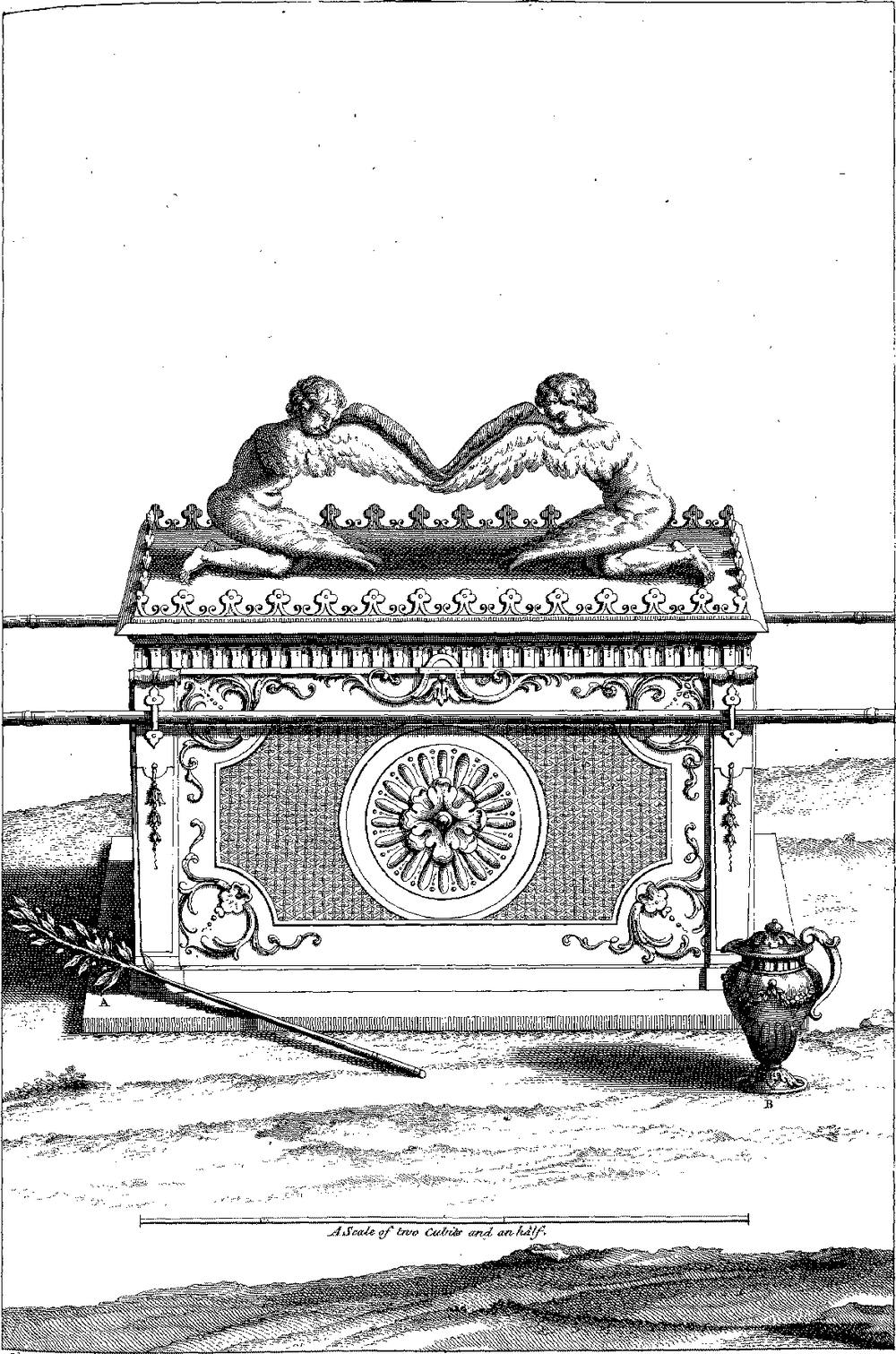
ARK. The Latin word Arca signifies properly a Coffer, and this is the true meaning of the Hebrew, Aran, which Moses makes use of to denote the Coffer, or Chest wherein the Tables were deposited, upon which the words of the Covenant or the principal Commandments of the Law were written. This Coffer was of Shittim wood, covered with plates or leaves of gold, being two cubits and an half in length, a cubit and an half wide, and a cubit and an half high. Upon the top of it there was all round it a kind of gold Crown, and two Cherubims were fastned to the cover. On the two sides of this coffer there were four rings of gold, two on each side, thro’ which staves were put, by the help whereof they carried it as they marched thro’ the Wilderness. This was the Ark of the Covenant, a Chest or Coffer of great value, wherein the two Tables of Stone were placed, written by the hand of God.
After the passage of Jordan, the Ark continued for some time at Gilgal, from thence it was removed to Shiloh. Here it was when the Israelites took it thence to carry it to their camp. They gave battle to the Philistines, and the Ark of the Lord fell into the Enemy’s hands. The Philistines oppressed by the hand of God, which lay heavy upon them, sent back the Ark, and it was lodged at Kirjath-jearim. It was afterwards, in the reign of Saul, at Nob. David conveyed it from Kirjath-jearim to the House of Obededom, from thence to his Palace at Sion; and last of all, Solomon brought it into the Temple which he had built at Jerusalem.
It remained in the Temple with all suitable respect, till the times of the last Kings of Judah, who gave themselves up to Idolatry, and were so daring as to put their Idols in the very Holy Place itself. The Priests being unable to endure this prophanation, took the Ark, and car
ried it from place to place, that so they might preserve it from the fury of these impious Princes. Josiah commanded them to bring it 2 Chron. xxxv. 3.back to the Sanctuary, and forbad them to carry it as they had hitherto done, into the Country.
Some time before the Captivity of Babylon, Jeremiah foreseeing the calamities which would happen to his Nation, and enlightened in a supernatural manner, removed the Tabernacle and the Ark of 2 Macc. ii. 4—9.the Covenant into a Cave of that Mountain, which Moses ascended some little time before his death, and saw from thence the heritage of God. To this Mountain Jeremiah went, and in a hollow Cave of it concealed this sacred Depositum: the Priests who accompanied him, had a mind to set a mark upon the place, in order to remember it, but were never able afterwards to find it. The Prophet reproved them for their curiosity, and declared to them that this place should continue unknown, till the Lord should gather together once more his people that were dispersed, and should be reconciled with them. It is questioned, with good reason, whether the Ark was placed again in the Temple after the return of the Jews from the captivity of Babylon80. See our Dissertation on this matter, inserted before the Books of Maccabees.
The Talmudists81 relate, that Solomon having learned by revelation, that the Assyrians would one day burn the Temple lately built by him, and carry away all the rich materials which he had placed there, took care to have a private hole made under ground, where, in case of necessity, he might conceal the most precious ornaments and sacred things belonging to the Temple from the knowledge of any Enemies. Josiah having a foresight of the calamities which were upon the point of falling on the Hebrew Nation, hid here the Ark of the Covenant, together with Aaron’s Rod, the Pot of Manna, the High Priest’s Pectoral, and the Holy Oil. But during the Babylonish Captivity, the Priests having lost all knowledge of the place where these things had been concealed, they were never afterwards seen more, and were not in the second Temple.
Others affirm, that Nebuchadnezzar conveyed the Ark to Babylon, and that it was among the rest of the rich vessels which were carried off by him from the Temple. Some are of opinion, that King Manasseh having set up Idols in the Temple, took away the Ark, which was not settled there again during his reign. The 2 Esdr. x. 22.Author of the fourth Book of Esdras represents the Jews lamenting that the Ark of the Covenant was taken by the Chaldæans in the plunder of the Temple.
Jer. iii. 16.The Gemara of Jerusalem82, and that of Babylon83, both acknowledge that the Ark of the Covenant is one of the things which were wanting in the second Temple, after the return from the Captivity of Babylon. The Jews flatter themselves84 that it will appear again with the Messiah, who is expected by them. But Jeremiah, speaking of the time of the Messiah, and the calling of the Gentiles to the Faith, says that they shall neither talk nor think of the Ark, nor remember it any more. Esdras, Nehemiah, the Maccabees, and Josephus, never make any mention of the Ark in the second Temple; and Josephus85 tells us expressly, that when Jerusalem was taken by Titus, there was nothing at all in the Sanctuary.
S. Epiphanius86 relates, without doubt from some ancient tradition of the Jews, that Jeremiah foreseeing the approaching ruin of the Temple, carried the Ark of the Covenant into a Cave, and by his prayers prevail’d that it might be sunk and swallow’d up in the rock, so that it never more was seen. This done, he addressed himself to the Priests and Elders who accompanied him in the following words. ” The Lord is ascended from Sion ” into Heaven, from whence he must one ” day descend with his celestial Host; and ” it shall be a sign of his coming, when ” all Nations shall adore the Cross. No ” one shall discover the Ark except Moses ” the Prophet of the Lord; and no Priest ” nor Prophet shall open the Tables which ” are enclosed in it, except Aaron the ” Elect of God. But at the second Resurrection the Ark shall be raised and ” come forth out of the Rock, it shall be ” placed on Mount Sinai, and all the ” Saints shall be assembled about it, waiting for the Lord’s return, and endeavouring to defend themselves from the ” Enemy who would take it. Jeremiah ” at the same time sealed the stone, writing with his own fingers the name of ” God upon the place, in like manner as ” if it had been cut with iron. From ” this moment a dark cloud was spread ” over
” over the name of God, and has kept it ” concealed to this very day; so that no ” one has been able to discover the place, ” nor read this divine Name. This cloud ” appears every night with great brightness over the Cave, to shew as it were ” that the glory of the Lord does not forsake his Law. And the Rock abovementioned lies between the two Mountains where Moses and Aaron died.
Josephus the Son of Gorion, who had seen the Books of the Maccabees, having first related that Jeremiah had concealed the Ark, and the veils of Moses’s Tabernacle, puts these words into the mouth of Jeremiah, to the Priests who followed him, and desired to know where these things were hidden, The Lord hath sworn, that no man should know this place, nor discover it, till the Prophet Isaiah and my self return into the world; then we will lodge the Ark again in the Sanctuary, and under the Cherubims wings. Lastly, the Rabbins agree in saying that the Ark no more was seen after the Captivity of Babylon, and that the Foundation-Stone, which they believe to be the center of the Holy Mountain, was placed in the Sanctuary in its room. The Fathers, and Christian Commentators agree generally with the Jews in this point, that the Ark was never found again after the Captivity. See our Dissertation on this matter before the Book of Maccabees, and that by Frischmuth, de non speranda Arcæ fœderis restitutione.
Besides the Tables of the Covenant placed by Moses in the sacred Coffer, God appointed the blooming Rod of Aaron to Numb. xvii. 10. Exod. xvii. 33. Heb. ix. 3, 4. Josh. iv. 4, 5.be lodged there87, and the Omer of Manna which was gathered in the Wilderness. Tertullian88 will have it that the twelve Stones taken from the bottom of Jordan, when the Israelites passed this River dry-shod, were likewise put there. The Mahometans89 assure us, that Moses’s Shoes were likewise preserved there, which he pull’d off before the burning Bush; that besides Exod. iii. 5.these Aaron’s Pontifical Tiara was kept there, and a piece of Wood called Alouah, which Moses made use of when he sweetned the Waters of Mara. They add, that the Ark was given by God to Adam ready made, and that it passed from hand to hand, and from Patriarch to Patriarch, down to Moses: That all the Portraitures of the Patriarchs and Prophets were represented about the Ark; and that Shekinah, or the Majesty of God rested upon it: That in times of war an impetuous wind rushed out of the Ark, which blew fiercely upon the Enemies of Israel, and intirely defeated them: And that for this reason they often carried the Ark of the Covenant at the head of their Armies.
The Heathens likewise had in their Religion little Chests, or Cistæ, wherein they locked up the most sacred things they had90. Apuleius91 says, that in certain profane Processions made in Egypt, there was a person whose office it was to be Chest-bearer. He held a Box including the richest things for their religious uses. Plutarch, in his Book intitled, Of Isis and Osiris, tells us almost the same thing. Pausanias92 speaks of a Chest in which the Trojans locked up their mysteries; and that being taken at the siege of Troy it fell to Euripilus’s share. The ancient Hetrurians93 had also Cistæ among their sacred Vessels. There was the same custom among the Greeks and Romans. But these Boxes inclosed often things of a lewd, profane, superstitious and ridiculous nature94; whereas the Ark of God contained the most sacred and serious things in the world, such as the Tables of God’s Law, &c.
ARM, Brachium. The Arm is the symbol of strength. God delivered his people from bondage in Egypt with a Deut. v. 5.stretched out Arm, in brachio extenso; by the force of his Arm, in magnitudine brachii sui; with an Arm lifted up, in brachio excelso. To express the reducing one to a state of humiliation, to want, and impotency, it is said that his Arm shall be 1 Sam. ii. 31.cut off; Præcidam brachium tuum, & brachium domus patrui tui, I will cut off thine Arm, and the Arm of thy Father’s house, says the Lord to the High Priest Eli. He teacheth my hands to fight, and mine Arm shall break even a bow of Psal. xviii. 34.steel, says David. Woe to him who putteth his confidence in the Arm of flesh, Quia ponit carnem brachium suum. The Arm of the wicked shall be dried up, and Zach. xi. 17. Jer. xvii. 5. Isai. ix. 20. Dan. xi. 31. Eccluf. vii. 31. Lev. vii. 32. Ex. xxix. 22.he shall not be able to make use of it, Brachium ejus ariditate siccabitur.
Isaiah, to express an extreme famine, says, that every one shall eat the flesh of his own Arm; so great will be the famine, and their despair. In Daniel, Arms, absolutely taken, denote strong and powerful men. And Arms shall stand on his part, and they shall pollute the Sanctuary of strength. And in Ecclesiasticus, Brachia signifies the shoulder of the Peace-offering, which was given to the Priest as his fee, Propurga te cum brachiis. And a little after, Datum brachiorum tuorum, & sacrificium sanctificationis offeres Domino, Offer to the Lord the shoulders of thy victims.
ARMAGEDDON. This place is spoken of in the Revelations, xvi. 16. This
term, in Hebrew, signifies the Mountain of Mageddon, or Megiddo. Megiddo is a City situated in the great plain at the foot of Mount Carmel. There it was that good King Josiah receiv’d his mortal wound in the battle against Necho King of Egypt. 2 Chron. xxxv. 22, 23.At Armageddon the evil Angel95 coming out of the Dragon’s mouth, shall gather together the Kings of all the earth to the battle of the Great Day of God Almighty, as it is said in the Revelations. See our Comment on this place.
ARMENIA, a Province of Asia which includes the sources of the Tigris and Euphrates, the Araxes and Phasis, wherein also we suppose the Province of Eden to be, where Paradise was situated. The name of Armenia is derived either from Aram the Father of the Syrians, or from Harminni the Mountain of the Mineans. Minni, or the Mineans, are taken notice of Jer. li. 27. Gen. viii. 4.in Jeremiah; in Genesis, where Moses says that the Ark rested upon the Mountains of Armenia, or according to the Hebrew reading, upon the Mountains of Ararat; 2 Kings xix. 37.and in the second Book of Kings, where it is said, that the two Sons of Sennacherib, after having killed their Father, escaped into Armenia, in terram Armeniorum; or, as the Hebrew reads it, in the land of Ararat.
ARMIES. The Lord, in Scripture, assumes the name of God of Hosts. The יהוה צבאות Cant. ii. 7. Jer. iii. 19, &c. 1 Sam. xv. 4. Jer. vi. 3.Hebrew word Zebaoth, which signifies Armies, is often understood to mean flocks of Sheep; and in several places of the Sacred Books Armies are compared to flocks. Saul made a review of his Army as of a flock of Sheep96. Jeremiah, speaking of the Assyrian Army, says it shall come before Sion like a flock under the conduct of its Shepherd. The Hebrew Nation, in infinite many places is called the Army of the Lord, because God was looked upon as their Head and General It was he who named the Captains of their Armies, who ordained war and peace; his Priests were with them, they founded the trumpet, and gave the signal of battle. Their wars likewise were generally attended with prodigies.
The Armies of Israel were not composed of regular Troops kept in pay; the whole Nation consisted of fighting men, ready to march against the Enemy, as soon as either necessity or the orders of God required it. The Army expected no other reward besides the glory of conquering, nor any other salary than the spoils taken from the Enemy, which were divided by the chief Officers. Every one furnished himself with Arms and Provisions, and their Wars were generally but of a short duration. They fought on foot, and there were no horse in their Armies till the reign of Solomon. David is the first who had regular Troops; his successors for the most part had none but the militia, excepting their body guards, which were not very numerous.
When they were ready to give battle, proclamation was made at the head of Deut. xx. 5.every battalion, in the terms following, “What man is there that hath built a new house and hath not dedicated it? “let him go and return to his house, lest “he die in the battle, and another man “dedicate it. And what man is he that “hath planted a vineyard and hath not “yet eaten of it? let him also go and “return unto his house, lest he die in the “battle, and another man eat of it. “And what man is there that hath betrothed a wife, and hath not taken her? “let him go and return unto his house, “lest he die in the battle, and another “man take her. What man is there that “is fearful and faint-hearted? let him go “and return unto his house, lest his brethren’s heart faint as well as his heart.”
At the same time the Priest put himself at the head of the Army, and said to the people, “Hear, O Israel, thou art this “day to give thine Enemy battle; fear “not, neither be dismayed, nor give “ground, for the Lord thy God is in the “midst of thee, to fight for thee, and to “deliver thee out of the hands of thine “Enemies.
The Ark of God was generally borne in the Army; it was not once out of the Camp of Israel during the whole time of their travelling in the Wilderness. Joshua ordered it to be carried almost always with him in the several Wars which he made against the Canaanites. The Israelites being put to flight by the Philistines in the 1 Sam. iv. 4, 5.time of Eli the High Priest, they sent for the Ark, upon the coming whereof they were filled with joy, and terror was spread throughout the Camp of the Philistines. David commanded it to be carried to the siege of Rabbah, before which the Army of 2 Sam. xi. 11. xv. 24.Israel then lay; and this Prince being compell’d to fly before his Son Absalom, the High Priest Zadok brought the Ark to him, but David ordered it to be carried back to Jerusalem. The Israelites of the ten Tribes, in imitation of those of Judah, carried their golden Calves with them,
them in their Camp, and the Philistines 1 Chron. xiv. 12. 2 Chron. xiii. 8.their Idols.
ARMILLUS. The Jews call Antichrist by this name97. He is to issue from the conjunction of certain Villains of different Nations with the statue of a perfectly beautiful Virgin, which will be to be seen at Rome. His stature will be prodigious; he shall proclaim himself to be the Messiah, and the God who ought to be adored. All the posterity of Esau, for so they call the Romans, shall submit to his laws. Nehemiah the Son of Joseph, the first Messiah (for they expect two) shall make War with him, and shall march against him at the head of thirty thousand Jews: Armillus shall be beaten, and two hundred thousand men shall perish in the first combat: Armillus shall return to the Charge, and after having lost an infinite number of Soldiers, shall unknowingly kill the Messiah Nehemiah.
Hereupon the Jews shall lose courage, and betake themselves to flight: all nations shall persecute them, and upon no occasion will they ever be treated with more rigour. At length they shall recover themselves. The Archangel Michael shall sound the trumpet three times: immediately the Messiah the Son of David shall appear together with the Prophet Elias; the Jews shall gather about him, and make war with Armillus, who shall be slain in the battle. After this will follow the reign of the Messiah, and the entire ruin of Christians and Infidels. Such is the idea which the Rabbins form to themselves of Antichrist. We find the name of Armillus in the Paraphrast Jonathan: but whether it be there from the first hand, or whether it be added and inserted afterwards we cannot tell.
I. ARMON, mentioned in the Vulgate translation of Amos, iv. 3. Projiciemini in Armon, signifies according to S. Jerom, the Chaldee, Syriac, Symmachus, Grotius, Bochart, and many others, Armenia, whither the ten Tribes were removed by the Kings of Assyria.
II. ARMON or Armoni, the Son of Saul and Rizpah. He was crucified with his Brethren by the Gibeonites, 2 Sam. xxi. 8.
ARMS of the Hebrews. The Hebrews made use of all the Arms which were employed by other people of their time and country, such as Swords, Darts, Lances, Javelins, Bows, Arrows and Slings. For defensive Arms they had Helmets Cuirasses, Bucklers, and Armour for their Thighs. It is observable that at particular times, especially of oppression and servitude, whole armies of Israelites were without any good Weapons. In the War which Deborah and Barak carried on against Jabin, there were neither Shields nor Lances in an Army of Israelites which consisted Judg. v. 8.of forty thousand men. In the time of Saul, upon the day of Battle with the Philistines (1 Sam. viii. 22.) there were none in all Israel, besides Saul and Jonathan armed with Swords and Spears, because the Philistines, who were masters of the country, had forbidden the Hebrews to use the trades of Smiths and Farriers, and obliged them to go down into their territories to sharpen their tools of husbandry, but would make no Arms for them.
Job xx. 24. Ps. xvii. 35.Arms were of old made indifferently either of brass or iron98. We meet with accounts in Scripture of brazen Shields, Helmets, and Bows. Goliath wore an Helmet of brass, his Greaves and Target were of the same metal. The Hebrews were both expert Archers and Slingers: we know in what manner David used his Sling against Goliath1 Kings xiv. 27.. The Benjamites were so skilful in flinging, that they could cast stones at an 1 Sam. xvii. 5, 6, 7. Judg. xx. 36.hair’s-breadth without missing. The Scripture adds, that for the most part they used both hands alike.
In the original text of Scripture we meet with four terms to signify Bucklers99. There was without doubt some difference in them; but it would be very hard to fix the particular form and use of them. They were made of wood or ozier, and covered with brass, iron or leather: sometimes they only were bordered with metal, and at other times with several foldings of leather. When Goliath advanced against the Army of Israel, his shoulders were covered with a large Shield of Brass.
1 Sam. xvii. 5. קשקשים שריון 2 Sam. i. 9. Ezek. xxvii. 10.Their Cuirasses were sometimes of linen, woollen or cotton beaten like felt; at other times they were made of brass or copper, like coats of mail, or composed of scales or thin plates laid one upon another, and sometimes they were solid plates of copper, iron, or steel. Goliath had a Coat of Mail, Loricam squameam. Saul had one of very solid and almost impenetrable linen100. We have shewn in our Dissertation on the Militia of the Hebrews, that Cuirasses of these kinds were not unknown to the Ancients. It was a custom to hang up Arms and Shields on the towers of strong places: there is mention in the Canticles of Bucklers hung on David’s tower. Ezekiel speaks of the Bucklers and Helmets which the Tyrians, Persians, Libyans, and Lydians hung upon the walls of Tyre. The Maccabees 1 Macc. iv. 57.having purified and dedicated a-new the Temple, adorned the portal of it with gold Crowns and Bucklers. Simon Maccabæus embellished the Mausolæum erected for his Brethren, with
1 Macc.xiii. 29. with Arms and Ships carved upon the stone.
St. Paul in almost all his Epistles has allusions Ephes. vi. 11,12,13, &c. 1 Thess. v. 8.to Arms, War, military Exercises, and those of Wrestlers at the publick games.
He requires Christians to use their members as the armour of righteousness, for the service of God, not as the armour of iniquity, for the committing of sin; that they should put on the armour of light, or bright and shining armour; that they are not to engage with mortal enemies composed of flesh and blood, but with the rulers of darkness, with the powers of the air, with Devils; for this reason says he to them, Take the armour of God, put on the breast-plate of righteousness, and have your feet shod with the preparation of the Gospel of peace: take the helmet of Salvation, the 1 Cor. ix. 25.word of the Spirit, which is the word of God, &c. And in another place, Let us put on the breast-plate of faith and love, and for an helmet the hope of salvation. They who combat in the publick games abstain from 2 Tim. xi. 5.many things to obtain a perishable crown, &c. He who contends in the publick games is not to be crowned, unless he has contended according to the rules established, &c.
ARNON, a river or brook, whereof there is frequent mention in the Scripture. Its spring-head is in the mountains of Gilead or of the Moabites, and it discharges itself into the Dead Sea. It runs at first from North to South, then from East to West, and falls into the Eastern part of the Dead Sea.
ARNONA, is a Canton beyond Jordan, which reaches along the river Arnon. See Reland. Palæst. t. 1. l. ii. c. 12. p. 495.
AROD, the fifth Son of Gad. Numb. Numb. xxxii. 34. Deut. xi. 36. iii. 12. iv. 48. Josh. xii. 2. Deut. iv. 48.xxvi. 17.
I. AROER, a City in the Tribe of Gad. It was situated on the Northern Banks of the brook Arnon, at the extremity of the Country which the Hebrews possessed beyond Jordan. Eusebius says, that in his time Aroer was seated on a mountain.
II. AROER. Reland t. 2. p. 583. thinks that there was a City of this name near Rabbah of the Ammonites, otherwise called Philadelphia; and that this is the Aroer meant by Joshuah xiii. 25. and in Judg. ii. 33.
III. AROER, in the Tribe of Judah, 1 Sam. xxx. 28. which may be understood likewise of Aroer beyond Jordan. David dwelt for some time in the land of Moab, and might have left some of his Relations at Aroer. But in Joshuah xv. 22. and in the Septuagint we read Aroer or 2 Kings xviii. 34. xix. 13. Isai. x. 9. xxxvi. 19. xxxvii. 13. Jerem. lxix. 23.Aroel, which may very well be Aroer of Judah; and Eusebius and S. Jerom speak of Aruïr, twenty miles from Jerusalem towards the North. Aroer in Heb·ew signifies Heath; it is very possible therefore, that several places in the country may have taken their name from Aroër, understood in this signification.
ARPAD. This probably is a famous City of Syria. Arpad in Scripture is always placed with Hamath. Sennacherib boasts of having reduced Arpad and Hamath, or of having destroyed the Gods of these two places. Hamath we know is Emesa, and as far as we are able to conjecture, Arpad must be the City of Arad or Arvad, as it is sometimes called in Hebrew. Others are of opinion, that it is the Town of Arphas, taken notice of in Josephus1, as limiting the Provinces or Cantons of Gamalitis, Gaulanitis, Batanæa, and Trachonitis on the North-East Side, as Julias was the Boundary to them on the South-West. This position would agree well enough with Arpad, near Hamath; and Josephus had obliged us if he had shewn us more exactly the position of Arpad. It is my conjecture, that this City of Arphas mentioned by Josephus, is no other than Raphanæa, or Raphan, lying between Mount Casius and Anticasius. Josephus says101, the river Sabbaticus runs between Arce and Raphanæa; and Stephens the Geographer sets Raphanæa near Epiphania, in the neighbourhood of Arad102.
Judith i. 1.I. ARPHAXAD, the Son of Shem and Father of Salah. Arphaxad was born in the year of the world 1658, a year after the deluge, and died in the year of the world 2096, at the Age of four hundred thirty eight years. See Gen. xi. 12, &c.
II. ARPHAXAD, King of the Medes, of whom there is mention in the book of Judith. We take him to be the same with Phraortes, the Son and Successor of Dejoces King of the Medes103. See Herodotus’s Book the 1st, 97 and following Chapters. He says Phraortes first subdued the Persians, and afterwards made himself master of almost all Asia, passing successively from one Nation to another, with victory continually attending him; but that at last coming to attack Nineveh and the Assyrian Empire, he was overcome and killed, in the twenty second year of his reign. The book of Judith informs us, that he built Ecbatane, and was defeated in the great plains of Ragau, those probably which are about the City of Rages in Media. See Tobit i. 16. iii. 7. iv. 11. and our Comment upon
Arphaxad (II) continues on the next page
Footnotes
-
Joseph. Antiq. l. x. c. 2. Ἔστι δὲ αὐτῇ καὶ τὰ λείψανα τῆς λάρνακος - - - καὶ μέχρι νῦν ταῦτα τοῖς ἰδεῖν βουλομένοις ἐπιδείκνυται. ↩
-
Voyage de la Boulaye, p. 42. Bibl. Orient. p. 404. ↩
-
Tavernier Voyage de Perse, t. 1. ↩
-
Idem t. 4. p. 398. ↩
-
Bibl. Orient. p. 404. Giond. ↩
-
See M. Saurin’s Differt. Hist. p. 115, 131, &c. ↩
-
Chardin. Voyage de Perse. ↩
-
Lucas, T. i. c. 27. p. 362, 363. ↩
-
Diodor. l. ii. Herodot. l. i. Justin. l. i. Dr. Prideaux asserts, that Tiglath-Pilesèr and Arbaces are the same persons expressed under these two distinct names; contrary to the opinion of Archbishop Usher, who supposes one to have possessed Media, the other Assyria. Diodorus Siculus positively tells us, that Arbaces had Assyria as well as Media for his share in the partition of the former Empire, therefore there is no room for a Tiglath-Pilesèr, or a Ninus Junior distinct from him, to reign in Assyria during his time. Prid. Connect. Part. 1. Book 1. ↩
-
Antiq. l. xii. c. 18. Vide & l. xiv. c. 27. ↩
-
Ibid. ↩
-
De Bello, l. ii. c. 25. & de vita sua. p. 1013. ↩
-
ערבה אלCampestria Dei. ↩
-
Antiq. l. xvi. c. 12. & de Bello Jud. l. i. c. 17. p. 757, 759. ↩
-
Antiq. l. xvi. c. 16. in fine, & c. 17. initio. De Bello, l. i. c. 17. p. 760. ↩
-
Antiq. l. xvii. c. 10. w Antiq. l. xvii. c. ult. & l. ii. de Bello, c. 6. ↩
-
Ibid. c. 11. v Antiq. l. xvii. c. ult. & de Bello, l. i. c. 6. ↩
-
Constitut. l. vii. c. 46. ↩
-
Gaudent. Brixian. tract. 9. ↩
-
Plaut. in Rudente, Prolog. ↩
-
Translators’ note. Father Hardouin, in his de Nummis Herod, p. 351. extravagantly declares, that the Areopagus was not a Senate, but a Town, whither the people of Athens used to walk for their diversion, and entertain themselves with hearing and relating news. See the confutation of this opinion in Basnage Histoire des Juifs, T. 1. c. 14. in whose writings we have a confutation of many groundless and surprizing novelties in the criticisms of this learned Jesuit, which contradict the most authentick histories. ↩
-
See Mr. Spon’s Voyage into Greece in 1676. ↩
-
Antiq. l. xiv. c. 2, 3, 4. ↩
-
Antiq. l. xiv. c. 9. & de Bello, l. i. c. 6. ↩
-
Pigh. Annal. Rom. l. iii. apud Usser. anno 3943. M. SCAURUS ÆD. EX S. C. Et infra, REX ARETAS. ↩
-
Antiq. lib. xvi. c. 15. ↩
-
Antiq. l. xvi. c. 16. p. 557. d. ↩
-
Antiq. l. xviii. c. 7. ↩
-
Joseph. Antiq. l. xiv. c. 8. & de Bello, l. i. c. 5. ↩
-
Euseb. in Argob. ↩
-
Mishna in Menachoth. viii. 3. ↩
-
Antiq. l. xiii. c. 23. ↩
-
Appian. Syriac. p. 118. Polyb. Legat. 126. ↩
-
Euseb. in Ariel. ↩
-
Antiq. l. iv. c. 7. ↩
-
Hieronym. in Epitaphio Paulæ. of ↩
-
Strabo lib. xvi. ad finem. ↩
-
Eufeb. Patriarch of Alex. tom. i. Annal. ↩
-
Dodwel Differt. super Hist. Arist. c. 1. ↩
-
Philo de Vita Mosis, l. ii. ↩
-
Præparat. Evangel. l. iii. c. 9. ↩
-
Translators’ note. See a fuller account of this matter in Dr. Hoddy’s Book de Bibliorum testibus originalibus, versionibus Græcis & Latinâ vulgatâ; in Dr. Prideaux’s Connection &c. Part ii. Book i. and Basnage’s History of the Jews. tom. vii. c. 7. ↩
-
Clem. Alex. l. i. Stromat. ↩
-
Euseb. l. vii. c. 32. Hist. Eccl. ↩
-
Clem. Alex. l. v. Stromat. Euseb. Hist. Eccl. l. iii. c. 9. ↩
-
Vide Paræum in Rom. xvi. 11. ↩
-
Ibid. ↩
-
Antiq. l. xiii. c. 18. ↩
-
The Siege of Samaria lasted for a whole year, from 3894 to 3895. ↩
-
Antiq. l. xiii. c. 19. ↩
-
Ibid. ↩
-
Joseph. Antiq. l. xiii. c. 24. ↩
-
Ibid. p. 464. & De Bello, l. i. c. 4. p. 717. ↩
-
Antiq. l. xiv. c. ult. & l. xiii. c. 1. ↩
-
Josephus, Antiq. l. xv. c. 9. says that Hircanus reigned peaceably but three months: But Usher, in his Annals of this year, shews very well, that we should read three years. ↩
-
Antiq. l. xiv. c. 1. ↩
-
Joseph. Antiq. l. xx. c. 8. & l. i. De Bello, c. 5. ↩
-
Antiq. l. xiv. c. 2, 3. ↩
-
Ibid. c. 4, 5. ↩
-
Ibid. c. 6. ↩
-
Ibid. c. 8. ↩
-
Antiq. l. xiv. c. 11. & De Bello, l. 1. c. 6. ↩
-
Antiq. l. xiv. c. 11. & l. i. De Bello, c. 6. ↩
-
Dio. l. xli. Joseph. Antiq. l. xiv. c. 13. & de Bello, l. i. c. 7. ↩
-
Antiq. l. xv. c. 2, 3. ↩
-
Antiq. lib. xvi. c. 3. ↩
-
Antiq. lib. xvi. c. ult. & lib. i. de Bello, c. 17. v Apud Joseph. Antiq. lib. xii. c. 5. ↩
-
Translators’ note. The Reader may likewise, if he pleases, consult Scaliger on the same Subject, in his Canon. Isagog. p. 332. Bochartin Chanaan. l. i. c. 22. Huet. in Demonstr. Evang. Prop. iv. Sect. 10. and more particularly Selden in his second Book de Synedriis, c. 3. Sect. 5. and Grotius upon the first of the Maccabees, c. xii. ver. 7. ↩
-
חבתThebat. Arca. Græc. Κιβωτὸς or Λάρναξ a Coffer. ↩
-
See Herodot. l. ii. Diodor. l. i. Plin. l. vii. c. 56. & lib. xiii. c. 11. Genes. Aug. l. xv. de Civit. c. 24. Hieronym. l. de qu. Heb. ↩
-
Chrysost. Homil. xxii. in ↩
-
Wilkins Bishop of Chester’s Essay towards a real Character, Part II. c. 5. p. 162. Saurin Discours Histori. &c. T. 1. p. 87, 88. ↩
-
Le Pelletier Dissert. sur l’Arche de Noe. c. 2. p. 29, 30. ↩
-
Bibl. Orient. p. 676. col. 2. ↩
-
תקח לך שבעה שבעה איש ואשתו … אשר לא טהורה הוא שנים איש ואשתו 70. Ἑπτὰ ἑπτὰ ἄρσεν καὶ θῆλυ … δύο δύο ἄρσεν καὶ θῆλυ. ↩
-
Joseph. Antiq. l. i. c. 3. ↩
-
Chrysost. Hom. 24. in Genes. Theodor. qu. 50. in Gen. Hi- eron. l. i. contra Jovinian. Aug. de Civit. l. xv. c. 27, &c. ↩
-
Origen. l. iv. contra Cels. ↩
-
Justin. Martyr. q. 43. ad orthodox. ↩
-
Translators’ note. Dr. Prideaux is of opinion, that as the Jews found it nec- essary for the carrying on their worship in the second Temple, to have a new Altar of Incense, a new Shew-Bread Table, and a new Candlestick, so they had likewise a new Ark. That since the Holy of Holies, and the veil drawn be- fore it, were wholly for the sake of the Ark, what need had there been of these in the second Temple, if there had not been the other also? &c. Hist. of the Connect. &c. P. I. p.117. ↩
-
Galatin. l. iv. de Arcanis c. 9. Genebr. Chronol. l ii. Rab. Juda & Abarbanel. in Daniel. Maimonid. &c. ↩
-
Gemar. Jerosolym. tit. Maccoth. ↩
-
Gemar. Babil. tit. c. I. ↩
-
Abarbanel. in Daniel. ix. ↩
-
Joseph. de Bello, l. v. c. 14. in Græco. ↩
-
Epiphan. vita Jerem. Prophetæ. ↩
-
Arcam Testamenti in qua urna aurea & virga Aaron. ↩
-
Tertull. ↩
-
Bibl. Orient. p. 1022, & 834. ↩
-
Vide Spencer. de legib. Hebræorum. ↩
-
Apul. de Asino aureo, l. ix. & l. xi ↩
-
Pausan. l. vii. p. 435. ↩
-
Clem. Alex. in protreptico. Euseb. præpar. Evang. l. ii. c. 5. ↩
-
Vide Clem. Alex. admonit. ad Gentes, p. 12, 14. ↩
-
Translators’ note. Our Author says, Le mauvais Ange sorti de la gueule du Dragon; the Evil Angel, or Evil Spirit, coming out of the Dragon’s mouth. But in the original Greek we read πνεύματα τρία ἀκάθαρτα, three unclean Spirits; and accordingly, in the Vulgate, Tres immundos Spiritus. And why F. Calmet should chuse to translate it rather one Evil Spirit, or Angel, than three, is not easy to con- jecture. ↩
-
Translators’ note. The Author here, according to his custom, follows his Latin Vulgate, which says indeed, recensuit eos quasi agnos; which is a different reading from that either of the Hebrew*, or the Septuagint, with both which our* English version agrees, that saying, he numbred them in Telaïm, ויפקדם בטלאים ↩
-
Vide Huls. de Theol. Jud. l. i. p. 52. 78. 80. 138. 142. 150. ↩
-
See our Dissertation on the Militia of the Hebrews. ↩
-
כידוןChidon. מגןMagen. צנהZinna. סחרהScherah. ↩
-
Tenent me angustiæ. Heb. כי אחוני השבץNow the Hebrew שבץsignifies an imbroidered Coat. Exod. xxviii. 3. and Ps. xlv. 14. 1 De Bello, l. iii. c. 2. p. 834. a. ↩
-
De Bello, l. vii. c. 24. ↩
-
Stephan. in ‘Επιφάνεια. ↩
-
Translators’ note. Herein our Author differs in opinion from the learned Prideaux, who thinks Arphaxad to be Dejoces and not Phraortes his Successor. For, as he observes, Arphaxad is said to be that King of Media, who was the founder of Ecbatane, which all other Writers agree to have been Dejoces. And the beginning of the twelfth year of Saosduchinus exactly agreeth with the last year of Dejoces, when this battel of Ragau is said to have been fought, &c. Prid. Connect. &c. Part 1. B. 1. ↩