Library / Calmet's Dictionary of the Holy Bible, Complete and Unabridged

Volume II · M

Mustard

Matth. iii. 31, 32.MUSTARD, Sinapi. Jesus Christ compares the Kingdom of Heaven to a Grain of Mustard-Seed, which is the least of all Grains, and which being sown upon good Land, becomes a great Tree; so that the Birds of the Air come and sit upon its Branches. This would seem to be incredible, if we did not know, that in Palestine there grew Plants and Shrubs, very much larger than in most other Countries. The Talmuds of Jerusalem and Babylon make Mention1, that one Simon had a Stock or Stem of Mustard, which grew so high and strong, that a Man might climb up into it without breaking it. Mention is there made also of another Mustard Plant, which had three Branches, one of which served as a Shade to some Potters, who worked under it in the Summer. This Branch alone, as they say, afforded three Barrels of Mustard.
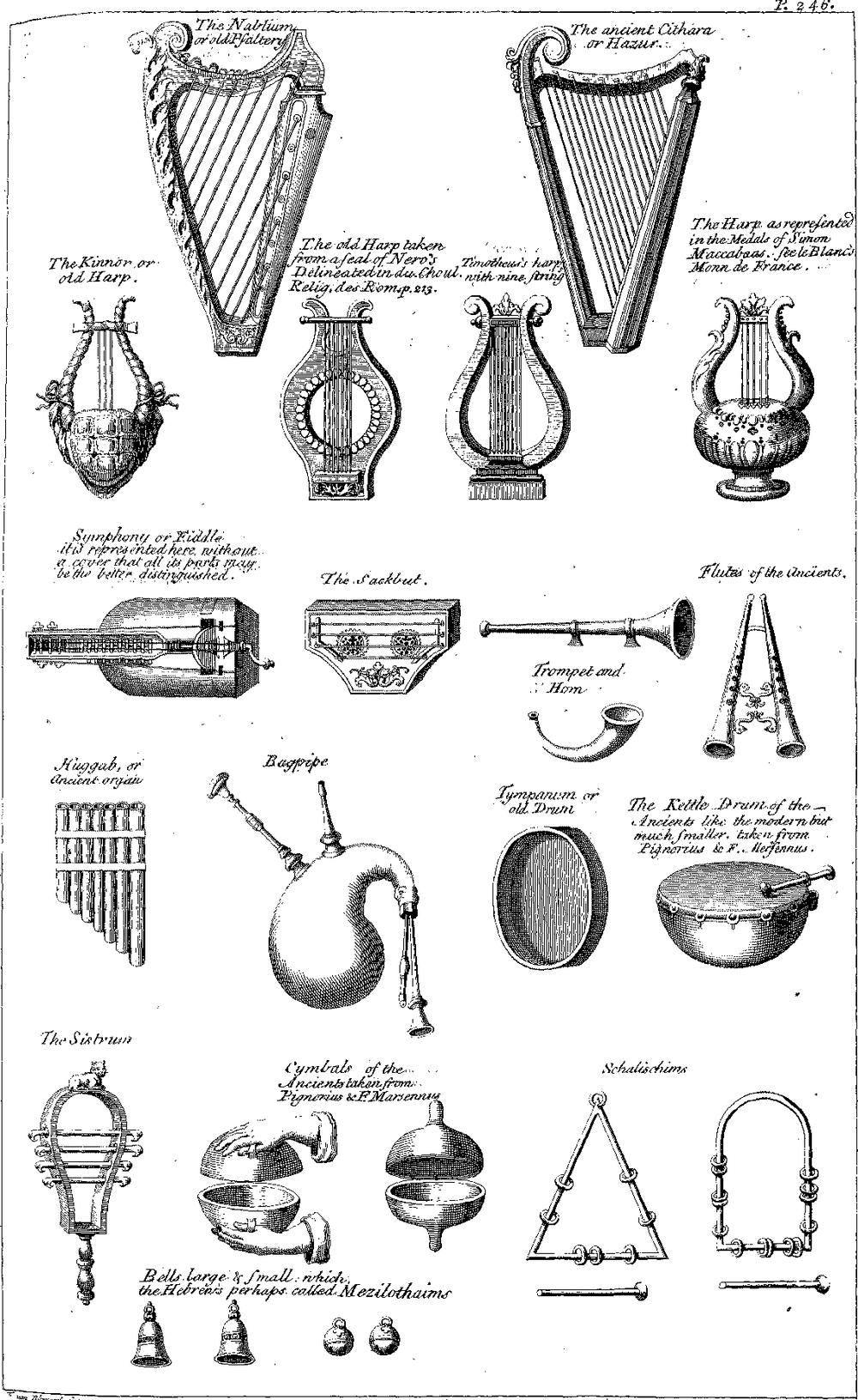
Plate
The Nablium The ancient Cithara or old Psalter or Hazur. The Harp as represented in the Medals of Simon The old Harp taken Maccabæus. see le Blanc's from a seal of Nero's Timotheus's harp, Monn de France. Delineated in du. Choul. with nine string Relig. des Rom. p. 213. Symphony or Fiddle it is represented here without a cover that all its parts may be the better distinguished. Flutes of the Ancients. The Sackbut. Trompet and Horn Tympanum or old Drum The Kettle Drum of the Ancients like the modern but much smaller. taken from Pignorius & F. Mersennus. Cymbals of the Ancients Schalischims taken from Pignorius & F. Marsennus

Read this article in its place on the printed pages

Footnotes

  1. Talmud teras, c. 7. Peach; & Talmud Babyl. c. Chetub. ↩

Preview of the quotation image

Drag across the words below to colour them in the picture.

To cite this page

Augustin Calmet, O.S.B., “Mustard,” in Calmet's Dictionary of the Holy Bible, Complete and Unabridged, English translation, Mind of the Church, https://mindofthechurch.com/works/calmet-dictionary/m/mustard/.

Receive the new translations

One email when a new work or note is published — nothing else, ever.