Works › The Mariale: Questions on “Missus est”
Volume 37 · pp. 147–148
Question 91. Whether faith was in her
A marker with ≈ is an approximate page boundary, placed by measure of the text; the page photographs remain the authority. In the paired views, clicking a page marker brings that page into view.
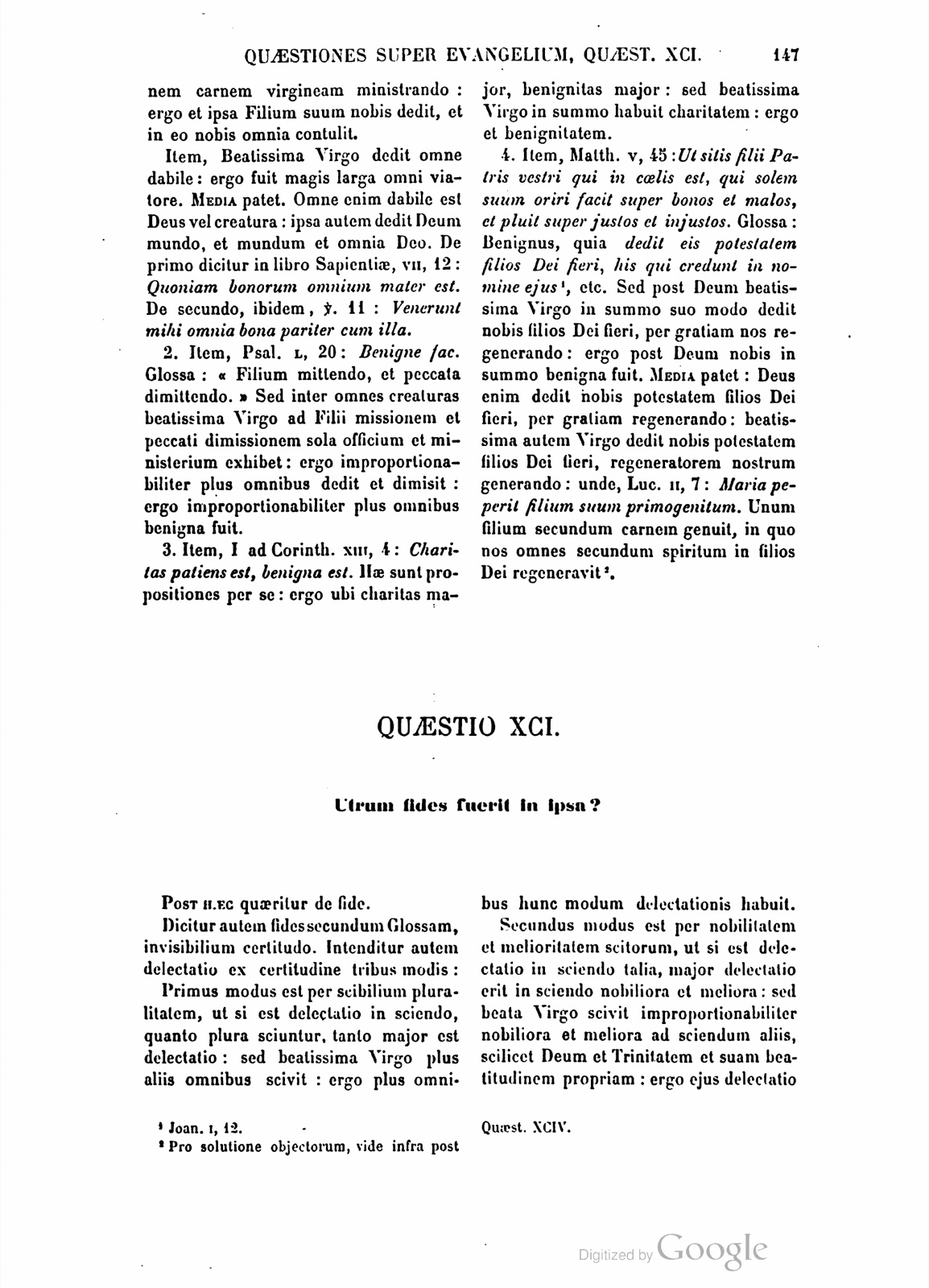
QUAESTIO XCI.
Utrum fides fuerit in ipsa?
Post haec quaeritur de fide.
Dicitur autem fides secundum Glossam, invisibilium certitudo. Intenditur autem delectatio ex certitudine tribus modis:
Primus modus est per scibilium pluralitatem, ut si est delectatio in sciendo, quanto plura sciuntur, tanto major est delectatio: sed beatissima Virgo plus aliis omnibus scivit: ergo plus omnibus hunc modum delectationis habuit.
Secundus modus est per nobilitatem et melioritatem scitorum, ut si est delectatio in sciendo talia, major delectatio erit in sciendo nobiliora et meliora: sed beata Virgo scivit improportionabiliter nobiliora et meliora ad sciendum aliis, scilicet Deum et Trinitatem et suam beatitudinem propriam: ergo ejus delectatio quam habuit in sciendo, omnium aliorum delectationibus fuit improportionabilis: nihil enim delectabilius scire animae quam scire Dominum Deum, et se ab ipso scire numquam separandam.
QUESTION 91.
Whether faith was in her.
After these things inquiry is made concerning faith.
Now faith is called, according to the Gloss, the certainty of invisible things. But delight from certainty is intended in three ways:
The first way is through the plurality of knowable things, so that if there is delight in knowing, the more things are known, the greater the delight is. But the most blessed Virgin knew more than all others; therefore more than all she had this mode of delight.
The second way is through the nobility and goodness of the things known, so that if there is delight in knowing such things, there will be greater delight in knowing things more noble and better. But the blessed Virgin knew things disproportionately more noble and better to be known than others did, namely God and the Trinity and her own proper beatitude. Therefore the delight she had in knowing was disproportionate to the delights of all others; for nothing is more delightful for the soul to know than to know the Lord God, and to know itself never to be separated from him.
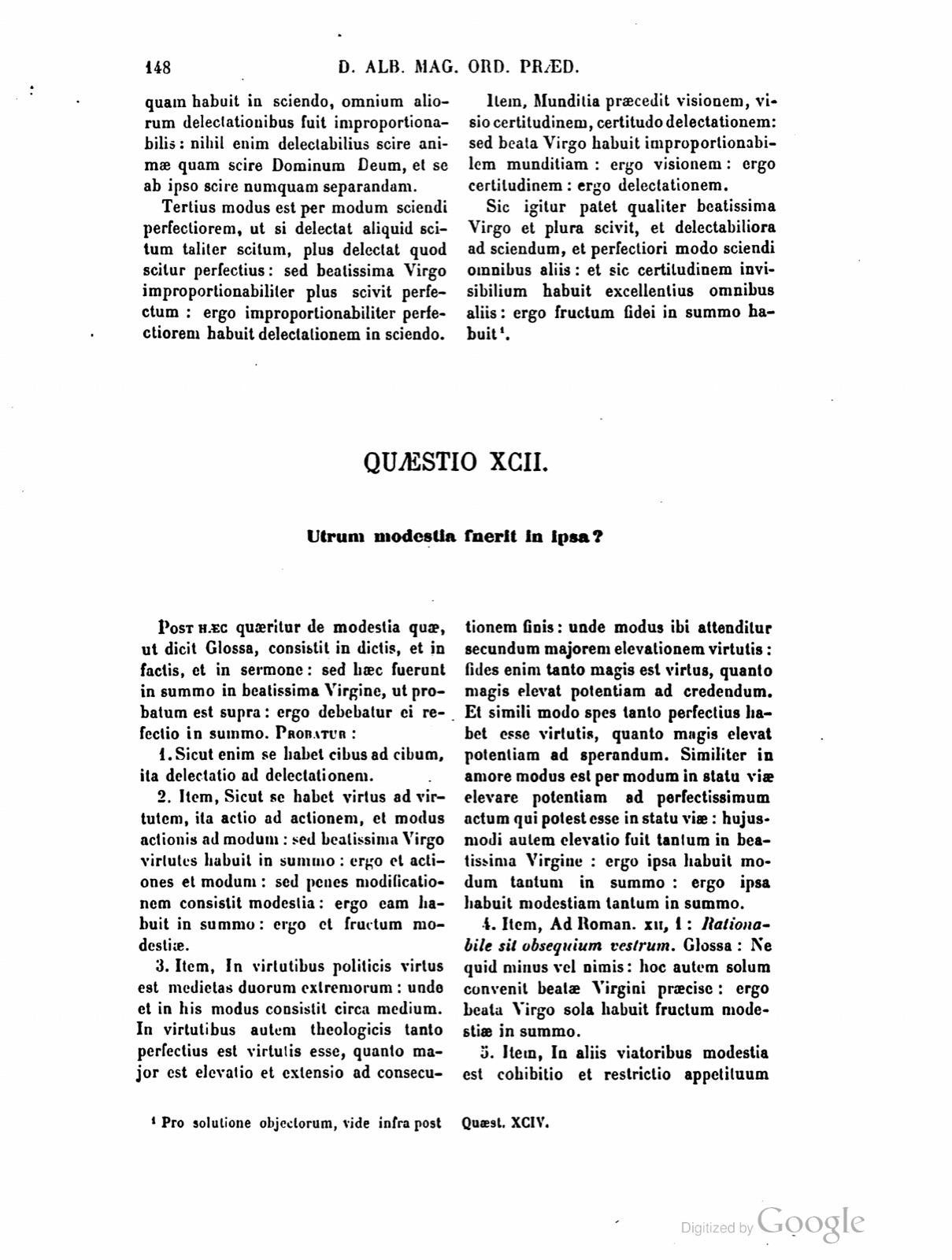
Tertius modus est per modum sciendi perfectiorem, ut si delectat aliquid scitum taliter scitum, plus delectat quod scitur perfectius: sed beatissima Virgo improportionabiliter plus scivit perfectum: ergo improportionabiliter perfectiorem habuit delectationem in sciendo.
Item, Munditia praecedit visionem, visio certitudinem, certitudo delectationem: sed beata Virgo habuit improportionabilem munditiam: ergo visionem: ergo certitudinem: ergo delectationem.
Sic igitur patet qualiter beatissima Virgo et plura scivit, et delectabiliora ad sciendum, et perfectiori modo sciendi omnibus aliis: et sic certitudinem invisibilium habuit excellentius omnibus aliis: ergo fructum fidei in summo habuit 1.
The third way is through a more perfect mode of knowing, so that if something known as thus known delights, what is known more perfectly delights more. But the most blessed Virgin knew what is perfect disproportionately more; therefore she had a disproportionately more perfect delight in knowing.
Likewise, cleanness precedes vision, vision precedes certainty, certainty precedes delight; but the blessed Virgin had disproportionate cleanness; therefore vision; therefore certainty; therefore delight.
Thus, therefore, it is plain how the most blessed Virgin both knew more things, and things more delightful to know, and with a more perfect mode of knowing than all others; and thus she had certainty of invisible things more excellently than all others; therefore she had the fruit of faith in the highest degree 1.
Notes
- For the solution of the objections, see below after Question 94. (Pro solutione objectorum, vide infra post Quaest. XCIV.) ↩
If a page does not appear, its photograph has not been uploaded yet.