Works › The Mariale: Questions on “Missus est”
Volume 37 · pp. 76–77
Question XXXVII. Whether the blessed Virgin was confirmed?
A marker with ≈ is an approximate page boundary, placed by measure of the text; the page photographs remain the authority. In the paired views, clicking a page marker brings that page into view.
QUAESTIO XXXVII. Utrum B. Virgo fuerit confirmata?
Post hoc quaeritur de confirmatione, utrum fuerit confirmata?
Videtur autem, quod potius debuit confirmari quam baptizari: quia
1. Sacramentum confirmationis est majori reverentia tenendum. Unde Melchiades: « Scitote utrumque esse magnum sacramentum, sed unum majori veneratione tenendum, sicut a majoribus datur 1. »
2. Item, Beata Virgo fuit plene Christiana: sed hoc fit per sacramentum confirmationis: ergo, etc. Media patet per Urbanum Papam, qui dicit: « Omnes fideles per manus impositionem Episcoporum post baptismum debent accipere Spiritum sanctum, ut pleni Christiani inveniantur. »
Si concedatur. Contra:
QUESTION XXXVII. Whether the blessed Virgin was confirmed?
After this it is asked concerning confirmation, whether she was confirmed.
But it seems that she ought rather to have been confirmed than baptized, because:
1. The sacrament of confirmation is to be held with greater reverence. Hence Melchiades says: "Know that each is a great sacrament, but one is to be held in greater veneration, just as it is given by greater persons 1."
2. Likewise, the blessed Virgin was fully Christian. But this is done through the sacrament of confirmation. Therefore, and so forth. The middle term is clear through Pope Urban, who says: "All the faithful, through the laying on of the hands of Bishops after baptism, ought to receive the Holy Spirit, that they may be found full Christians."
If this is granted, to the contrary:
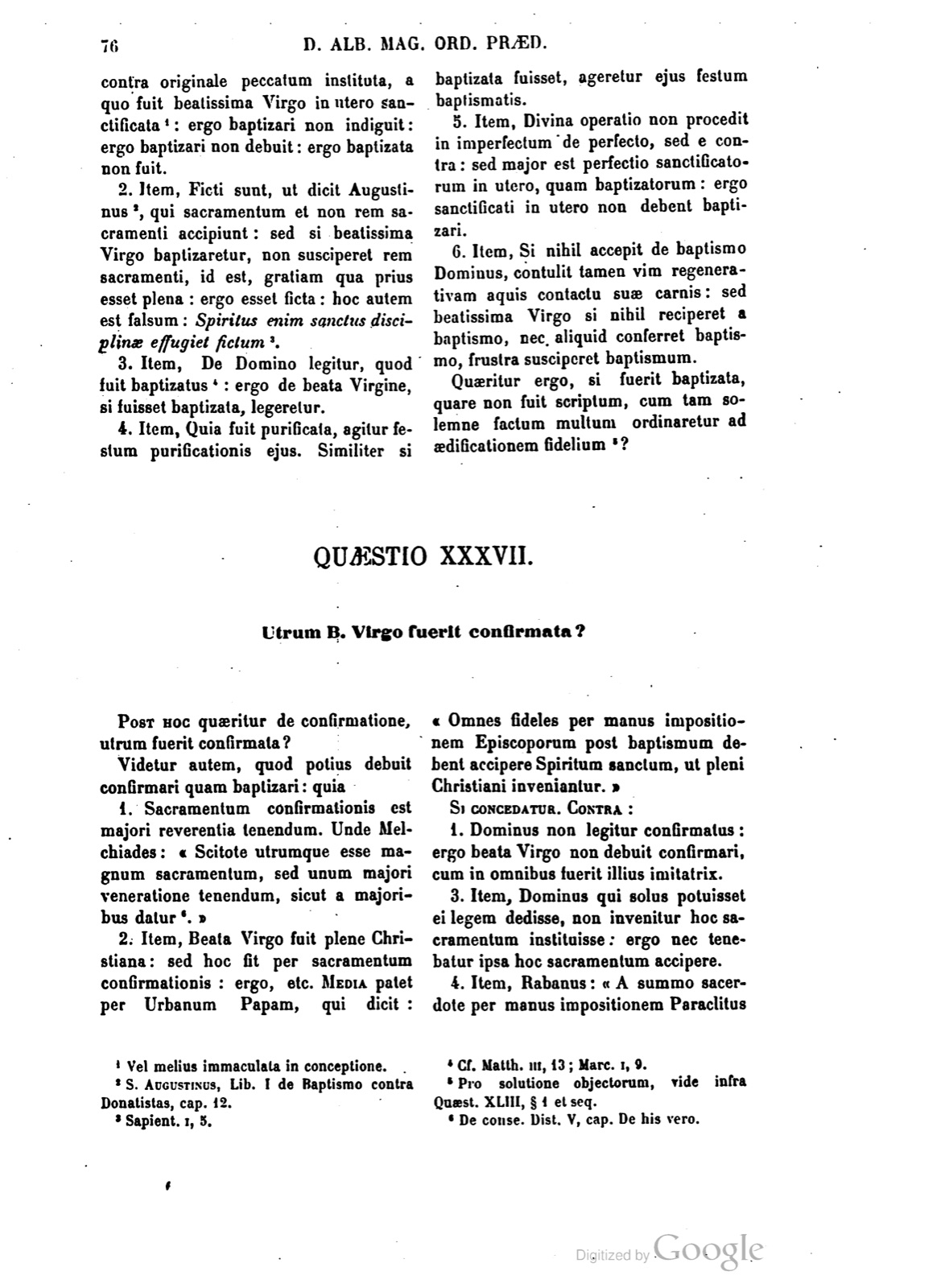
1. Dominus non legitur confirmatus: ergo beata Virgo non debuit confirmari, cum in omnibus fuerit illius imitatrix.
3. Item, Dominus qui solus potuisset ei legem dedisse, non invenitur hoc sacramentum instituisse: ergo nec tenebatur ipsa hoc sacramentum accipere.
4. Item, Rabanus: « A summo sacerdote per manus impositionem Paraclitus traditur baptizato, ut roboretur per Spiritum sanctum ad praedicandum, si necesse fuerit, aliis, quod ipse est consecutus in baptismo. » Sed beata Virgo ad nullius manus impositionem Paraclitum recepit, nec robore Spiritus indiguit, quia plenitudinem habuit: et etiam praedicare non debuit. Ergo confirmata non fuit 2.
1. The Lord is not read to have been confirmed. Therefore the blessed Virgin ought not to have been confirmed, since in all things she was his imitator.
3. Likewise, the Lord, who alone could have given a law to her, is not found to have instituted this sacrament. Therefore neither was she bound to receive this sacrament.
4. Likewise, Rabanus says: "By the laying on of hands by the highest priest, the Paraclete is handed on to the baptized person, so that he may be strengthened through the Holy Spirit for preaching to others, if it should be necessary, what he himself obtained in baptism." But the blessed Virgin received the Paraclete through the laying on of no one's hands, nor did she need the strength of the Spirit, because she had fullness; and also she ought not to preach. Therefore she was not confirmed 2.
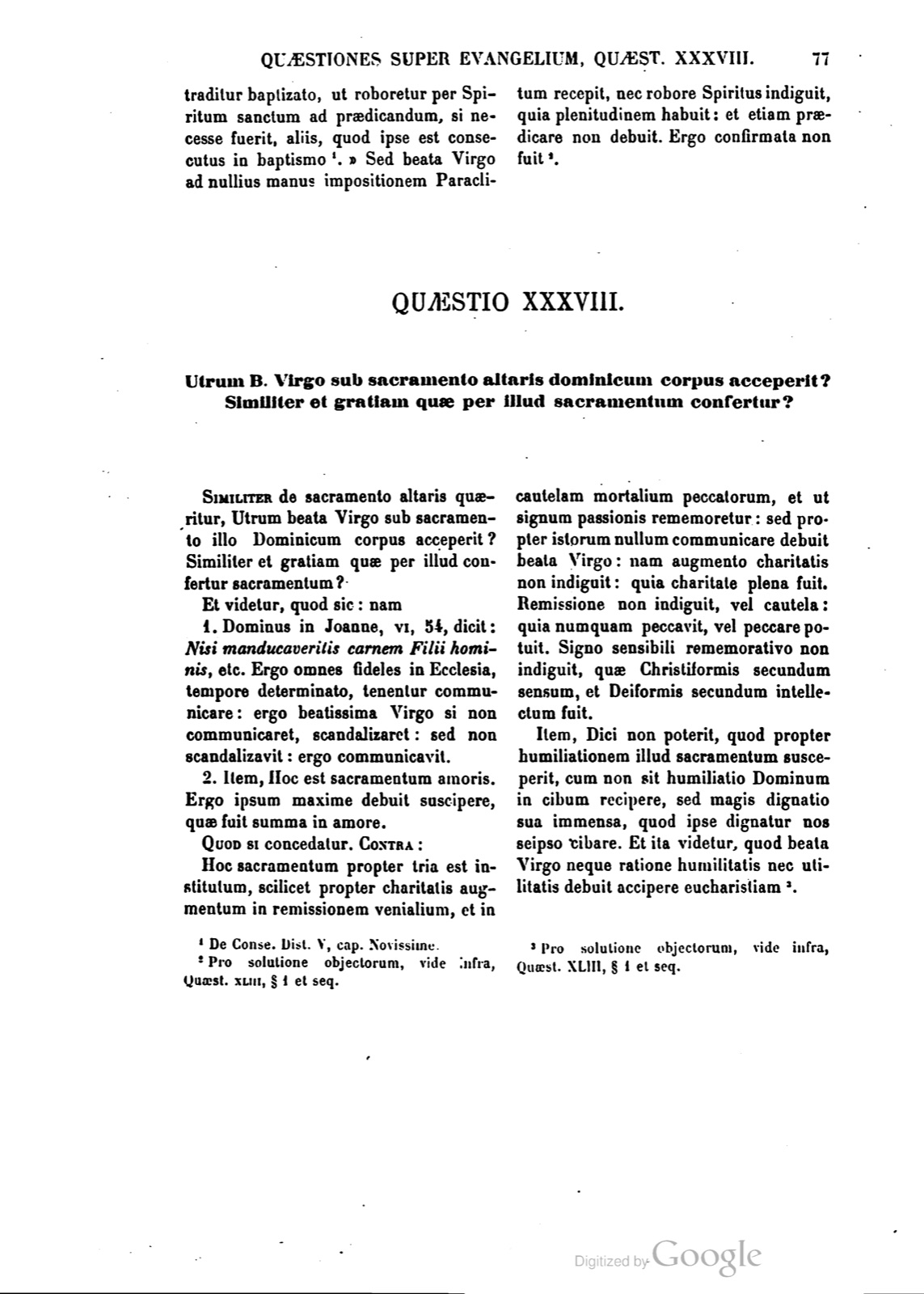
Notes
- On Consecration, Distinction V, chapter De his vero. (De conse. Dist. V, cap. De his vero.) ↩
- For the solution of the objections, see below, Question XLIII, § 1 and following. (Pro solutione objectorum, vide infra Quaest. XLIII, § 1 et seq.) ↩
If a page does not appear, its photograph has not been uploaded yet.