Works › The Mariale: Questions on “Missus est”
Volume 37 · pp. 81–82
Question XLIII. Whether the grace of the sacrament of extreme unction is contained in this fullness?
A marker with ≈ is an approximate page boundary, placed by measure of the text; the page photographs remain the authority. In the paired views, clicking a page marker brings that page into view.
QUAESTIO XLIII. Utrum in hac plenitudine contineatur gratia extremae unctionis sacramenti?
Ultimo quaeritur de extrema unctione, utrum in hac plenitudine contineatur ipsius gratia?
Et videtur, quod sic:
1. Jacobi, II, 10: Quicumque totam legem servaverit, offendat autem in uno factus est omnium reus. Ergo qui tenetur ad legem, ad totam legem tenetur: sed extrema unctio fuit de lege a Domino instituta et ab Ecclesia: unde in Matthaeo, XIX, 35 et X, 1, legitur, quod Apostoli circuibant castella oleo curantes infirmos. Ergo beata Virgo tenebatur ad extremam unctionem.
2. Item, Scandalizasset, si non accepisset Ecclesiae sacramenta.
3. Item, Si aliqua propter humilitatem suscepit, et illud suscipere debuit.
Sed contra:
1. Matth. IX, 12: Non est opus valentibus medicus, sed male habentibus. Ergo medicina curativa perditur, quae sanis confertur: ergo et Apostoli animarum medici si medicinam suam Dominae nostrae contulerunt, eam perdiderunt.
2. Item, Secundum generalem consuetudinem parvuli non inunguntur: ergo multo minus beata Virgo quae sanctior et sanior est omni puero.
QUESTION XLIII. Whether the grace of the sacrament of extreme unction is contained in this fullness?
Lastly it is asked concerning extreme unction, whether its grace is contained in this fullness.
And it seems that it is:
1. James 2:10 says: Whoever shall have kept the whole law, but offends in one point, has become guilty of all. Therefore one who is bound to the law is bound to the whole law. But extreme unction was of the law instituted by the Lord and by the Church; hence in Matthew 19:35 and 10:1 it is read that the Apostles went about the towns, curing the sick with oil. Therefore the blessed Virgin was bound to extreme unction.
2. Likewise, she would have scandalized if she had not received the sacraments of the Church.
3. Likewise, if she received some sacrament because of humility, she ought to have received that one also.
But to the contrary:
1. Matthew 9:12 says: Those who are well have no need of a physician, but those who are ill. Therefore curative medicine is lost when it is conferred on the healthy. Therefore the Apostles also, physicians of souls, if they conferred their medicine on our Lady, lost it.
2. Likewise, according to general custom little children are not anointed. Therefore much less the blessed Virgin, who is holier and healthier than every child.
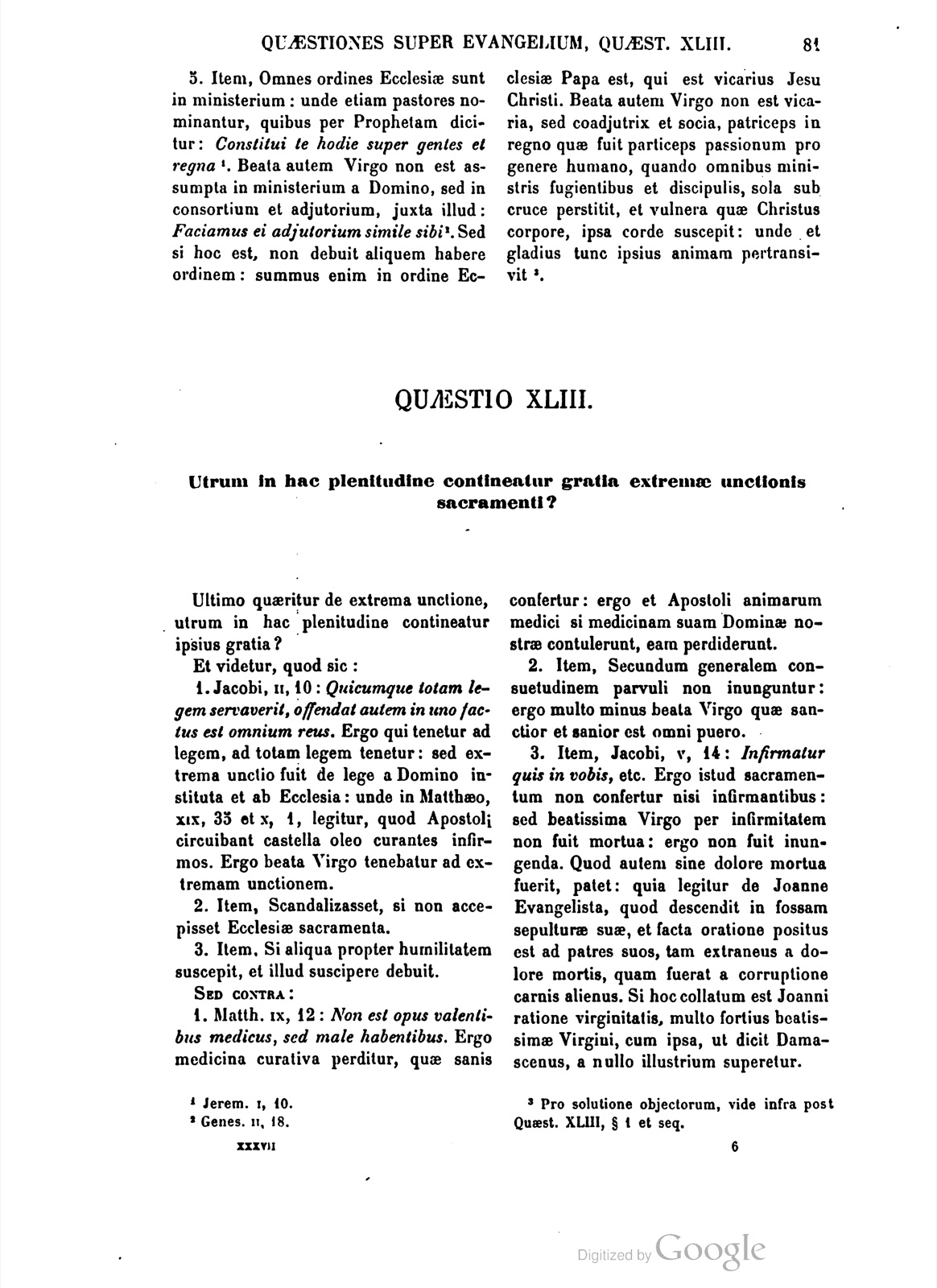
3. Item, Jacobi, V, 14: Infirmatur quis in vobis, etc. Ergo istud sacramentum non confertur nisi infirmantibus: sed beatissima Virgo per infirmitatem non fuit mortua: ergo non fuit inungenda. Quod autem sine dolore mortua fuerit, patet: quia legitur de Joanne Evangelista, quod descendit in fossam sepulturae suae, et facta oratione positus est ad patres suos, tam extraneus a dolore mortis, quam fuerat a corruptione carnis alienus. Si hoc collatum est Joanni ratione virginitatis, multo fortius beatissimae Virgini, cum ipsa, ut dicit Damascenus, a nullo illustrium superetur.
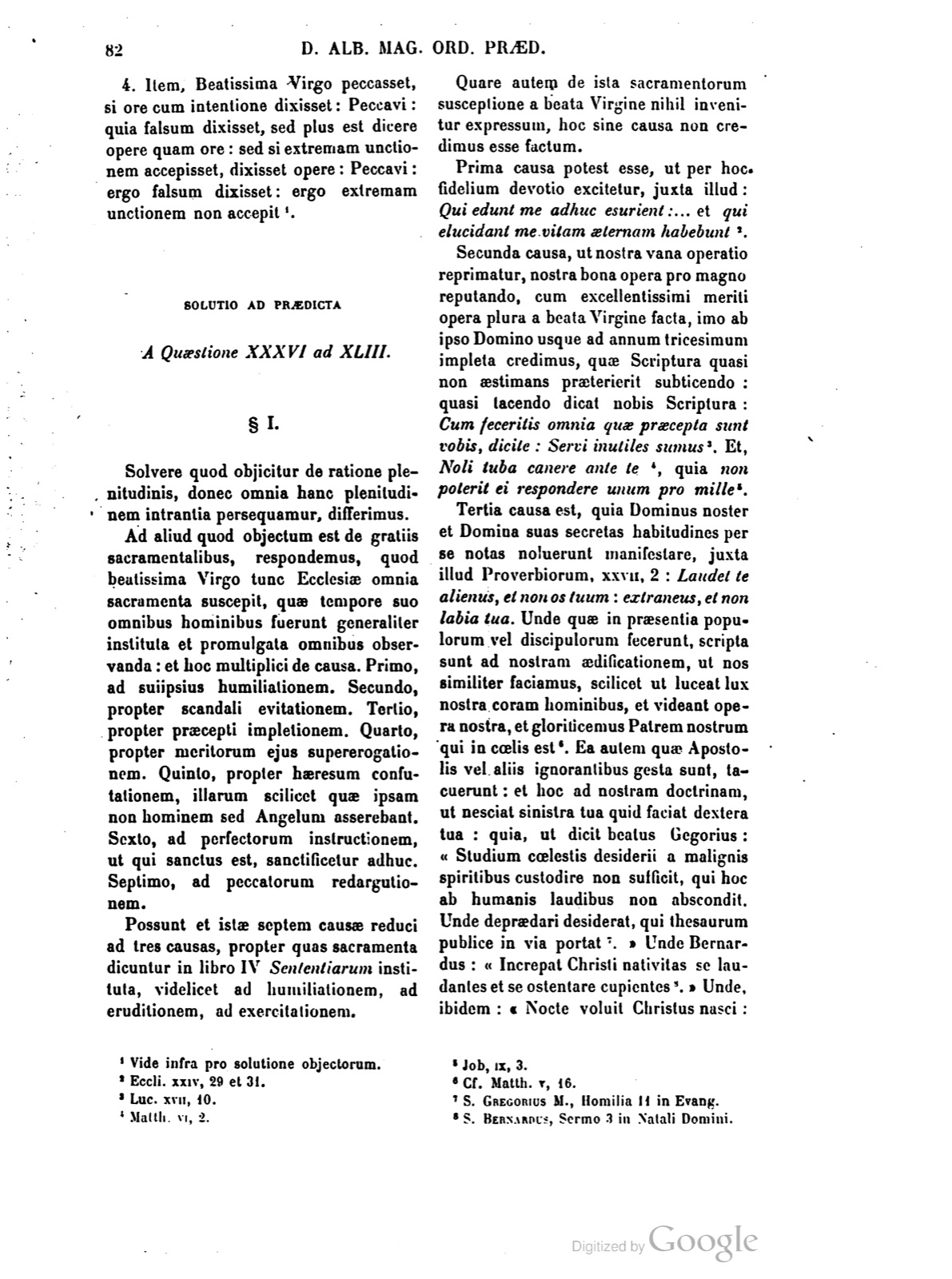
4. Item, Beatissima Virgo peccasset, si ore cum intentione dixisset: Peccavi: quia falsum dixisset, sed plus est dicere opere quam ore: sed si extremam unctionem accepisset, dixisset opere: Peccavi: ergo falsum dixisset: ergo extremam unctionem non accepit 1.
3. Likewise, James 5:14 says: Is anyone sick among you, and so forth. Therefore that sacrament is not conferred except on the sick. But the most blessed Virgin did not die through sickness. Therefore she was not to be anointed. But that she died without pain is clear, because it is read concerning John the Evangelist that he descended into the pit of his burial, and, prayer having been made, was placed with his fathers, as foreign to the pain of death as he had been alien from the corruption of flesh. If this was conferred on John by reason of virginity, much more on the most blessed Virgin, since she, as Damascene says, is surpassed by none of the illustrious.
4. Likewise, the most blessed Virgin would have sinned if with her mouth and intention she had said: I have sinned, because she would have said something false. But to say something by deed is more than to say it by mouth. But if she had received extreme unction, she would have said by deed: I have sinned. Therefore she would have said something false. Therefore she did not receive extreme unction 1.
Notes
- See below for the solution of the objections. (Vide infra pro solutione objectorum.) ↩
If a page does not appear, its photograph has not been uploaded yet.