Volume II, pages 98–117 of the 1732 edition, from MAC to MAN: everything printed on these pages, in order.
Continued from Maccabees
against the Jews of Judæa1. ‘Tis probably because of the Conformity of the Subject, and the Zeal that the Jews of Egypt shewed for their Law, and for the Religion of their Fathers; that the Name of the Book of the Maccabees was given to this Work. Josephus in the Body of his History makes no Mention of this Persecution, but he just speaks of it in his first Book against Appion; but what he says of it, agrees but little with what we read in the third Book of the Maccabees.
The Greeks and Latins at this Day reject this Book as an Apocryphal Writing. The ancient Latin Writers no where quote it, as I remember, and they do not seem so much as to have known it. But it was known to the Greeks, who have sometimes quoted it as holy Scripture, putting it on the same Foot as the two other Books of the Maccabees. The twenty-fourth of the Apostolical Canons owns it as a holy Book; Theodoret2 cites it as a divine Writing. St. Athanasius in his Synopsis, and Nicephorus at the End of his Chronology, put this in the Number of the controverted Books of Scripture, or such as are not received unanimously by the Church, as well as the two first Books of the Maccabees: It may also be seen in some Catalogues of the holy Books, in the same Circumstances as the other Books of the Maccabees. Grotius believes it was writ after the two first Books, and a little while after the Book of Ecclesiasticus; which is the Reason that it had the Name of the third Book of Maccabees. See the Article of Ptolemy Eupator, where you will find the History contained in the third Book of the Maccabees.
THE FOURTH BOOK OF THE MACCABEES is so little known among the Latins, that we do not clearly know what it is. It is not found in any of our Latin Bibles. True it is, that in the ancient Greek Manuscripts of the Bible, and in some Greek Editions, we find the Book concerning the Government of Reason, ascribed to Josephus, after the three first Books of the Maccabees. But the Learned have much doubted, whether this was the Book that the Ancients knew, by the Name of the fourth Book of the Maccabees. However, when we carefully examine what they have said about it, and compare it with the Book of the Government of Reason, we shall be easily persuaded to believe, that they knew no other but this. For in the first Place several Manuscripts, and some printed Greek Bibles, give it the Name of the fourth of the Maccabees. Philostratus3, Eusebius4, and Saint Jerome5, have known the Book of the Government of Reason, and have ascribed it to Josephus, by the Name of the Book of the Maccabees. Saint Gregory Nazianzen6, Saint Ambrose7, and Saint Chrysostom8, in the Characters they have given of the seven Maccabees, and of old Eleazer, have plainly followed what we find written in this Book. Marius Victorinus Africanus, who taught Rhetorick at Rome under the Emperor Constantius, in his Poem of the Maccabees, appears also to have had before him the Books we are now speaking of.
The Author of the fourth Book of the Maccabees has enlarged upon and adorned the History of the holy old Man Eleazar, and of the seven Brothers the Maccabees, who suffered Martyrdom at Antioch with their Mother, as it is related more succinctly in the second Book of the Maccabees, Chap. vi. and vii. One might suspect that this Piece is a Fragment of Jason’s Performance, such as it was, before it was abridged, if the Author of the fourth of the Maccabees had not put a long Preface before it, which shews that this is a separate Work, and has no Relation to any other; and if he did not sometimes much wander from the Text, which is, as it were, the Original upon which he enlarges. He supposes all along, that the Scene of the Martyrdom of the seven Brethren was at Jerusalem. He says that Apollonius, Governor of Syria and Phœnicia, was sent with a Deputation to Jerusalem by King Seleucus Nicator, to take away the Treasures from the Temple; which is contrary to the true History which informs us, that it was Heliodorus who was sent for this Purpose by Seleucus Philopater. Besides this, there are other Mistakes against the Truth of History, which we have displayed in our Preface upon the fourth Book of the Maccabees. This Work is found in the Collection of the Works of Josephus the Historian, and it bears his Name in the printed Books, and in several Manuscripts. But I can hardly believe him to be the Author; not only because of the Difference of Style, but also because of the Accounts of some Facts differing from Josephus, in several Passages of his History.
Sixtus Senensis9 having found a Greek Manuscript, containing the History of the Pontificate of Johannes Hircanus, in the Library of the Dominicans at Lyons, did not doubt but that it was the fourth Book
of the Maccabees. He asserted this, and prevailed with several to believe him.
Some Time after this Library being burnt, the M.S. was consumed also, so that there was no longer any Hope of retrieving it. But M. le Jay in his Polyglot having printed an Arabick History of the Maccabees, from King Seleucus, Son of Antiochus the Great; to the Time of Jesus Christ; all the Characters that Sixtus Senensis had observed in his Greek Manuscript, were found in this Arabic History. And this prevailed so far with F. la Haye, as to print it in Latin in his great Bibliotheca, under the Name of the fourth Book of the Maccabees. But as this History was never known to the Ancients by this Name, and as it makes a Part of a great Work, which was never cited by this Name, it is better to suppose, that Sixtus Senensis was mistaken, when he took it for the fourth Book of the Maccabees, which he did only by Conjecture, and without any Proof taken either from the Title of the Work, or from the Testimony of the Ancients. Our Prefaces may be consulted in this Matter, upon the Books of the Maccabees; and particularly that upon the fourth of these Books.
MACEDONIA, a Kingdom of Greece, situated between Thrace to the North, Thessaly to the South, Epirus to the West, and the Ægean Sea to the East, We believe that Macedonia was peopled by Kittim Son of Javan, and that as often as Kittim is mentioned in the Hebrew Text, Macedonia is to be understood. See Kittim before. Alexander the Great, Son of Philip King of Macedonia, having made the Conquest of Asia, and subverted the Empire of the Persians, the Name of the Macedonians became very famous in all the East; and the Name of Macedonians is often given to the Greeks, who were Successors to Alexander in the Monarchy. See Esther xvi. 10, 14. and 2 Mac. viii. 20. And in like Manner the general Gen. x. 4. See Dan. viii. 21. x. 20. 1 Mac viii. 18. 2 Mac. iv. 36.Name of Greeks is often put for the Macedonians, from the Time of the Conquest of Alexander the Great. Saint Paul was invited by the Angel of this Province, which appeared to him at Troas, to come to preach the Gospel in Macedonia10. After this Vision, Saint Paul no longer doubted that God had called him to preach in Macedonia; and the Success that attended his Preaching confirmed him more in this Opinion. There he laid the Foundations of the Churches of Thessalonica and Philippi, and had the Satisfaction of seeing them flourishing and numerous, and abounding in all spiritual Gifts and Graces.
MACEDONIAN, in the Books of Scripture written in Greek; this Word is sometimes used in an appellative Sense, for an Enemy to the Jews. Thus in the Additions to the Book of Esther, it is said that Haman was a Macedonian by Nation and Inclination; and that he was desirous to transfer the Empire of the Persians to the Macedonians; that is to say, to the greatest Enemies of the State, taking Matters upon the Footing they were when these Additions were written, which was evidently after the Fall of the Empire of the Persians, by the Conquests of Alexander the Great. For before this Time the Macedonians gave but little Umbrage to the Persians; and in the Time of Esther and Mordecai, they were not much feared at Shushan.
MACER. See MACRON.
MACHÆRA, General of the Roman Forces in the Army of Marc-Anthony. He was sent to the Succour of Herod against Antigonus, with two Legions and a Thousand Horse11. But being corrupted by Antigonus, he not only declined to assist Herod, but would also join his Troops to those of his Enemy. Yet Antigonus did not think fit to trust him, but on the contrary set upon him. This so exasperated Machæra, that he retired to Emmaus, and put to the Sword all the Jews that he found in his March. After this he took Party with Herod, and joining his own Troops to those commanded by Joseph, Herod’s Brother, they made War together against Antigonus12.
MACHBANAI, or Machabanai, one of the valiant Men in David’s Army, 1 Chr. xii. 13.
MACHBENAH, or Machabena, Son of Shevab, and Father of Gibea, 1 Chron. ii. 49.
MACHERONTE, or Machærus, a City and Fort beyond Jordan; in the Tribe of Reuben; to the North and East of the Lake Asphaltites, two or three Leagues from Jordan, and not far from the Place where this River discharges itself into the Dead Sea. This Castle had been fortified by the Asmoneans. Gabinius demolished it13, and Aristobulus fortified it anew14. Herod the great made it much stronger than before. Either there or in the Neighbourhood was a Spring of hot Waters, very useful for Health. John the Baptist was put in Prison, and beheaded at Macheronte15; by the Order of Herod Antipas.
MACHINES of War. Warlike Machines,
such as are proper for besieging of Cities and Fortresses, are of a very modern Invention, in Respect of the earlier Antiquity. There is no Mention of them in Homer; and Diodorus Siculus observes16, that Sardanapalus, King of Assyria, held out a Siege of seven Years in the City of Niniveh, because at that Time such Machines as were fit for demolishing and taking Cities, were not yet invented. But about the same Time we read, that Uzziah King of Judah, had laid 2 Chron. xxvi. 14, 15.up in his Magazines, Shields, and Spears, and Helmets, and Harbergeons, and Bows, and Slings to cast Stones. And that he made in Jerusalem Engines invented by cunning Men, to be on the Towers, and upon the Bulwarks, to shoot Arrows and great Stones withal; and his Name spread far abroad, for he was marvellously helped till he was strong. Here we may see perhaps the first Instance of Machines of War.
About seventy Years after17, in the Sieges that Nebuchadnezzar laid to the Cities of Tyre and Jerusalem, he made Use of battering Rams and Slings. The Hebrew Word Car, which the Scripture uses to express this warlike Machine, signifies a real Ram18, and by a Metaphor it signifies a Machine, by which they battered down Gates, and beat down the Walls of Cities. The Prophet Ezekiel speaking of the Siege of Tyre by Nebuchadnezzar, insinuates the antient Ezek. xxvi. 8, 9.Manner of besieging Places. He shall slay with the Sword thy Daughters in the Field, and he shall make a Fort against thee, and cast a Mount against thee, and lift up the Buckler against thee. And he shall set Ensigns of War against thy Walls, and with his Axes he shall break down thy Towers.
Diodor. l. xvii.When the Ancients besieged a Place, they usually surrounded it with Mounds, Towers, and Trenches, that the Besieged might not be able to make any Sallies, or to receive any Succours from without. To lift up the Buckler may intimate what the Romans called facere testudinem, to make a Tortoise; when they caused their Soldiers to approach near to each other to join their Bucklers close to one another, in the Form of a Tortoise, in Order to sap the Walls, or to beat down Gates, or to set Fire to ‘em. The Engines of War here mentioned, or Machines of Cords, were the Balistæ or Catapultæ, which were used for hurling Stones or Darts; or else by this Name may be understood those great Hooks which were fastened to Cords, and thrown on the Tops of Walls, to tear them down and demolish them. Of these Iron Hooks or Fangs, may be understood that Passage of the second Book of Samuel. If he be gotten into a 2 Sam. xvii. 13.City, then shall all Israel bring Ropes to that City, and we will draw it into the River, until there be not one small Stone found there.
I. MACHIR, Son of Manasseh, and Grandson of the Patriarch Joseph, chief and Prince of the Family of the Machirites. His Sons were Peresh and Sheresh, and he had a Daughter that was married to Hezron of the Tribe of Judah. She was Mother to Segub, and Grandmother to Jair. See 1 Chron. ii. 21, 22. vii. 16.
II. MACHIR, Son of Ammiel, of the City of Lodebar, in whose Family Mephibosheth was brought up, 2 Sam. ix. 5.
MACHPELAH, or Macphela. This Word in Hebrew signifies double; and the Author of the Vulgate has taken it in this Sense, speaking of the Cave that Abraham bought of Ephron, in the Territory of the City Hebron, wherein to bury his Wife Sarah. But others with more Probability are of Opinion, that in this Place Machpelah is the Name of the Plain wherein this Cave was situate, and that therefore we should translate Gen. xxiii. 9. The Cave which is at Machpelah: And Verse 17. The Field of Ephron, which was in Machpelah; [as in the English Translation.] A Person of good Skill in the Arabick Tongue has informed us, that in this Language Machpelah signifies shut up, or walled up. He believes that the Cave called Machpelah, was a Tomb hewn into a Rock, and exactly closed up, or walled up, that no one might enter therein, or that Thieves might not make it a Place of Retreat; or that it might not be violated or prophaned in any Manner. Tombs thus shut or walled up, are still to be seen in the Eastern Countries. This Conjecture is at least very probable; so that it might be translated, the Cave that was shut up, instead of the Cave of Machpelah.
MACRON, or Macer. Ptolemy Macer, or Macron, Son of Dorymenes, 1 Mac. iii. 38. 2 Mac. x. 12, &c. See Ptolemy.
MADAI, the third Son of Japheth, Gen. x. 2. ‘Tis commonly thought that he was the Father of the Medes; but Media is too far distant from the other Countries peopled by Japheth and his Descendants; and besides, it cannot be comprehended under the Name of The Isles of the Gentiles, which according to Moses were the Division of the Sons of Japheth. These Reasons have so far prevailed with some learned Men19, as to make them to be of Opinion, that Madai was the Father of the
Macedonians. Macedonia was otherwise called Æmathia, a Name formed from the Hebrew Ei an Island, and Madai; as if it were, the Isle of Madai20; or deriving it from the Greek Aia-madai, the Land of Madai. Near this Countrey are to be found a People called Mædi or Madi21; and in Macedonia a King called Medus.
The Name of Media given to the Countrey beyond the Euphrates, seems not to be more antient than Medea, or the Voyage of Jason to Colchis. See our Commentary upon Gen. x. 2. Also see MEDES.
I. MADMANNAH, or Madmena, Son of Shaaph, 1 Chr. ii. 49.
II. MADMANNAH, or Medemene, a City belonging to Simeon, Josh. xv. 31. It was first given to Judah, and was very far to the South of Judah. Eusebius places it towards Gaza. See Isai. x. 31 and 1 Chron. ii. 49.
MADON, a City of the Land of Canaan. Jobab King of Madon made a Confederacy with Jabin King of Hazor, and several others, against Joshua22; but he was taken and killed, and his City pillaged and destroyed. The Situation of the City of Madon is unknown, nor is it mentioned any where but in Josh. xi. 1. and xii. 19. I believe the true reading is Maron, instead of Madon; and we know a Place called Maronia in Syria, about thirty Miles from Antioch, to the North of Mount Libanus23. Maron or Meron is read in the Hebrew of Joshua, xii. 20.
MAGBISH, or MAGPIASH, 156 of his Children returned from the Captivity, Ezr. ii. 30.
MAGDALEN. See MARY MAGDALEN
I. MAGDIEL, a Place five Miles from Dora, towards Ptolemais. We think it to be Megiddo, or Magdolos.
II. MAGDIEL, Prince of the Idumeans. He succeeded Mibzar. Gen. xxxvi. 43.
MAGDOLOS, mentioned by Herodotus, l. ii. c. 159. is probably the same as Megiddo, to be mentioned hereafter, and which is found 2 Kings xxiii, 29, 30, &c.
Josh. xii. 5. xiii. 11. 13. מעכתMAGED, or Mageth, a City beyond Jordan, which was taken by Judas Maccabæus, 1 Mac. v. 36. ‘Tis called Maked in the Greek, and is probably the same as Maachath.
MAGEDAN, or Majedan, or Medan, in the Canton of Dalmanutha. See what has been observed before upon DALMANUTHA.
MAGHBIS, or Magbish, or Megbis, Ezr. ii. 30. 1 Esd. v. 21. The Children of Magbish returned from the Captivity, to the Number of one hundred and fifty Persons. Megbis is probably the same as Megabyses; which is a Persian Name.
MAGI, or Magians. The Magi of Persia are the Worshippers of Fire, and Disciples of Zoroaster, whom they confound with Abraham. They have three Books, which contain the whole of their Religion24. The Names of these Books are Zend, Pazend, and Abesta. They ascribe them to Abraham, and Abesta is a Commentary upon the other two. The Tradition of the Magi is, that Abraham read Books in the Midst of the Furnace, in which Nimrod had ordered him to be thrown. After their Master Zoroaster, the Magi maintain that there are two Principles in the World; one of good, which they call Oromazd, and the other of evil, named Aherman. They worship Fire in Temples called Atesch-kanah, or Ateschkade, that is to say, the House of Fire, where they take great Care to keep in the Fire. There was formerly a great Number of these Buildings upon the Mountain Alborz, in the Province of Adherbigran; which is Media. To Fire they give the Name of Bab, that is to say, Part, because they acknowledge this Element as the Principle of all Things, which System among the Greeks was embraced by Anaxagoras.
The Magi observe a mysterious Silence, when they wash or eat, having first said certain Words25. This Silence, which they never break, makes a Part of their Religion. Pythagoras very likely might imitate this Silence of the Magi, as well as the Reverence for Fire, which he inculcated to his Disciples. To every Month of the Year, to every Day, and also to every Star, to the Mountains, Mines, Waters, Trees, they ascribe particular Genii, or some of those Angels who were created before Man, and fell into Infidelity and Disobedience, and therefore were confined to what they call the Countrey of Genii, not unlike to what is meant by the Land of the Fairies. We shall say something more of the Magi under the Article ZOROASTER. It may however be observed here, that the three Books before mentioned, and which the Guebres or Fire-worshippers impute to Abraham, but which really belong to Ibrahim Zerdoust, otherwise called Zoroaster by the Grecians; these Books, I say, are very rare and unknown, because the Guebres keep them religiously secret among themselves, and never communicate them to Strangers. They are written in the antient Persian Language, and have not been yet seen in Europe26.
‘Tis pretended the Word Magi signifies
a Man whose Ears are cut off. And indeed in the Language then in Use in Persia, Mige -gusch had that Signification, at the Time that the false Smerdis, who was one of the Magi, usurped the Throne of Cyrus. ‘Tis known this Usurper had no Ears, and ‘twas by this Token he was discovered by the Daughter of Ozanes, one of the Grandees of Persia. The Magi went by another Name before, and their Reputation was very great in Persia; but it was diminished very much by this Accident of Smerdis.
Tho’ these Philosophers maintained two Principles in Nature, one good and the other evil27; the first being represented by Light, and the other by Darkness; both owned as Gods, and addressed to by them with Prayers and Adorations; yet they were divided in their Opinions, because some thought both to be from all Eternity, and others maintained that only the good Principle was eternal, and the evil one was created: In like Manner as we believe, that the Devil is a Creature, who is fallen from his original Purity and Perfection.
They also agree, that these two Principles are in continual Opposition to each other, which is to continue to the End of the World, when the good Principle will have the upper Hand. After which each will have his own World; that is, the Good, with all good People about him, will reign in his World; and the bad one, with all the wicked People, will likewise govern in his World. The Magi gave divine Honours to Light, to the Sun, to the consecrated Fire in their Temples, and even to the Fire in their Houses, before which they performed all the Acts of their Religion.
On the contrary they had Darkness in the greatest Horror, which they held as the Symbol of the evil Principle, and which they hated as we do the Devil. In their Writings, when they found the Name Aberman, or that of the evil Principle, they writ it backwards; and when Xerxes heard that the Athenians had banished Themistocles28, he directed his Prayer to this evil Deity, and not to Oromazdes, or the good God, beseeching him to inspire his Enemies always with that Resolution, of driving out all brave Men from among them.
Such were the antient Magi of the Persians, and such are still the Guebres, or Worshippers of Fire, among the Persians and Indians; which probably are the same as those intended by Saint Matthew, by the Word Magi.
MAGI, or Wise-men, who came to adore Jesus Christ, being newly born at Bethlehem. Many Questions have been started concerning these Magi. ‘Tis asked, who they were? Whence they came? How many there were of ‘em? At what Time they arrived at Jerusalem? And what was the Star that appeared to ‘em? ‘Tis commonly thought that the Magi were Philosophers, had the Knowledge of future Events, and whose chief Study was Astronomy. That those who came to worship Jesus Christ were Disciples and Descendants of Balaam, who had prophecied several Ages before29, that there shall come a Star out of Jacob, and a Scepter shall rise out of Israel, and shall smite the Corners of Moab, and destroy all the Children of Sheth, or, all the Children of Numb. xxiv. 17 Numb. xxiii. 7. Matthew ii. 1.Pride. This Opinion is founded upon Scripture, which expressly says, that the wise Men came from the East, that is to say, from Arabia Deserta, or from Mesopotamia, which the sacred Authors express by the East. Balaam himself says, that he came from Aram, out of the Mountains of the East. But he came from the City of Pethora, situated upon the Euphrates30. Isaiah speaking of Abraham’s coming into the Land of Promise, says that he came from the East31; who has caused the Just to come from the East.
The Arabians, the Eastern Idumæans, the Chaldæans, all Oriental People in Respect of Judæa, valued themselves much upon their Wisdom. The Name of Magus was appropriated in these Countries to signify a Philosopher, a Man that made a Profession of Wisdom. Tertullian32, Justin Martyr33, Epiphanius34, and among the Moderns, Tostat, Mariana, Barradius, Grotius, Cornelius à lapide, and several others, as well as our selves, suppose the Magi to come from beyond the Euphrates, or from Mesopotamia, that is, from the East of Judæa. I shall not here undertake to confute the Opinion of those, who pretend that the Magi came from Persia, or from Armenia, or from Africa, or from Æthiopia, or from the three several Parts of the World, Asia, Africa, and Europe. Those who would see this Matter discussed at large, may consult those Writers who have expressly treated upon this Subject; and particularly the Dissertation I have published before my Commentary on Saint Matthew.
Some of the ancient Fathers seem to have thought, that the Magi were three
in Number, and that they were Kings in their several Countries. Tertullian35 seems zealous to maintain their Royalty, but his Proofs are insufficient. He supposes that the Orientals had commonly Magi for their Kings, which is far from being certain. Saint Ambrose36, or rather Cæsarius of Arles, gives them the Names of Kings; but it is suspected that this Word has been foisted into the Text. Saint Cyprian37 is quoted, in a Sermon upon Baptism, who says that they were Kings; but this Sermon belongs to an Abbot of Bonnevalle, named Arnold, who lived in the Time of Saint Bernard. Paschasius Radbertus38, who lived in the ninth Age in the Abbey of Corbie, affirms, that no Body can be ignorant that the Magi were Kings, who are acquainted with profane History. Lastly, Theophylact39 among the Greeks has expresly contended that they were Kings. This is all that has been delivered by the Ancients with any Assurance, for as to what has been quoted from others, they are by no Means express; and as to the Moderns, their Authority can be of no Moment, in a Matter of this Nature. What has contributed most to give the Magi the Title of Kings, are these Words of Psalm lxxii. Verse 10. The Kings of Tarshish and of the Isles shall bring Presents, the Kings of Sheba and Seba shall offer Gifts.
The Opinions of Men are as much divided as to the Profession of the Magi. Some40 have imagined, that they exercised curious and diabolical Arts of Divination, judicial Astrology, and Inchantments. The ancient Gospel of the Infancy of our Saviour affirms, that they were Disciples of Zoroaster. But others41 have had a more favourable Opinion of them, thinking that their Magick was natural and lawful. Saint Epiphanius believes that they were of the Race of Abraham and Kethura. Abbot Rupert gives them the Name of Prophets and inspired Persons. Origen42 imagines, that the Magi having perceived by their magical Operations, that the Power of the Devil was much weakened, they were inquisitive to discover the Cause of it; and having observed at the same Time a new Star in the Heavens, they judged it was this of which Balaam had spoke, and which was to mark out the Place of the Birth of a new King of Israel. This is what made them resolve to go in Quest of him, to pay him their Adoration. Saint Basil43 and Saint Ambrose44 have pretty nearly the same Thoughts. Saint Jerome upon the xix of Isaiah says, that they had learned from Demons, or rather from the Prophecy of Balaam, that Christ was born; and Tertullian seems to say, that it was by Astrology they found out the Birth of the Messiah, since (as he maintains) this Science was allowed till the Time of Christ, but afterwards was forbidden, that no one henceforward might take upon him to calculate Nativities by the Stars.45 Scientia ista usque ad Evangelium fuit concessa, ut Christo edito nemo exinde nativitatem alicujus de Cælo interpretetur.
The Number of the Magi has been fixt to three for a very long Time. Leo supposes it in several Places46, Cæsarius affirms it expresly47. The same Thing is to be seen in two Sermons, formerly ascribed to Saint Austin48, but one of which is Leo’s, and the other is elsewhere found under the Name of Eusebius Emesius. Bede, Abbot Rupert49, and after them a Multitude of Commentators, teach in the same Manner. This Opinion seems chiefly to be founded upon the three Sorts of Presents that are mentioned in the Gospel. They presented him with Gold, Myrrhe, and Frankincense. We commonly give ‘em the Names of Gaspar, Melchior, and Balthasar; but these Names were unknown to Antiquity, as well as those other Names given to ‘em in some Writings, which are modern enough, and therefore of but little Authority. As likewise these Greek Names, Apellius, Amerus, and Damascus; or these Hebrew, Magalat, Galgalat, Saraim; or lastly these, Ator, Sato, Paratoras50.
We read at the End of the third Tome of the Works of Bede, in a Book intitled, Extracts from the Fathers; that Melchior, the first of the Magi, was a bald old Man, having a great Beard of long white Hair; his Garment was of the Colour of Hyacinth, or Sky-blue, with a yellow or Orange Cloak, (Sago Mileno, or rather, Melino) his Stockings of a Colour mixed with blue and white, and his Diadem of several Colours. He offered Gold to Jesus Christ, as to a King. The second Magus was called Gaspar. He was young, without a Beard, of a ruddy Countenance,
had on an Orange Robe, and a red Cloak. His Stockings were of the Colour of Hyacinth. He offered Incense in Acknowledgment of the Divinity of our Saviour. The third was called Balthasar. He was brown, had a long Beard, was clothed with a red Robe, with a Cloak of several Colours, and his Stockings were yellow. He offered Myrrhe to our Saviour, in Signification of his Mortality. But the Work wherein these Particularities are recorded, is unworthy of the venerable Bede, and without Doubt is much more modern.
Jerome Osorius, Bishop of Algarbe in Portugal relates, that a King of the City of Cranganor in the Kingdom of Calecut, named Cheriperimale, having betaken himself to travel, to expiate an Incest that he had committed with his Sister, came into Carmania, where he found two famous Magi, who were just upon the Point of setting out for Judæa; there to adore a Child just born of a Virgin, and who was to redeem Mankind. Cheriperimale prayed them to let him be of their Company; so they went together, and having paid their Adoration to Jesus Christ, they returned into their own Countrey. The King of Cranganor, at his Return into his City, there built a Church in Honour of the Virgin, and there represented the holy Mother of God holding her Son in her Arms; and gave Orders, that as often as the Name of Mary should be pronounced with a loud Voice, every Body should prostrate themselves to the Ground. This is what Osorius assures us he was informed of, by Persons very well acquainted with the Affairs of India, and who affirm that this is found in the ancient Monuments of the Indians. He adds, that the Indians paint the three Magi in this Manner. First, two walk together of a fair Complexion, clothed in royal Robes, having their Presents with them. Behind them is the third, of a tawny Hue almost like an Ethiopian, carrying also his Presents. F. Maffee in his History makes Mention of this also. He calls the King of Calecut, Perimale.
The Author of the imperfect Work upon Matthew, (Homil ii.) quotes ancient Apochryphal Books, which bear the Name of Seth; these say, that the Magi were twelve in Number, chosen out of all their Nation, and succeeding each other from Father to Son, for several Ages, to observe the Moment of the Appearance of the Star, that had been formerly foretold by Balaam. For this Purpose they used to go up into a Mountain, whence they observed the rising of the Stars. At last the Star appeared to them, having a young Child in the Middle of it, and a Cross over it. The Child spoke to them, and bid them go into Judæa. The Author of the common Gloss contents himself to say there were several Magi, without limiting their Number. The same Writer that composed the imperfect Commentary on Saint Matthew, which I have quoted several Times already, informs us that Saint Thomas went into Persia, and there instructed and baptized the Magi; after which they applied themselves to the preaching the Gospel along with him. ‘Tis affirmed, that they suffered Martyrdom in a City of Arabia. The Armenians maintain that they preached and suffered in their Countrey51. The Governor of Armenia sent Word to King Saint Lewis, that they came from Tangat in Armenia52.
The Time which the Magi took up in their Journey to Judæa, is a Point that has much exercised the Chronologers. Those which suppose they came from the remotest Parts of Persia, allow them two Years for their Journey53; supposing that the Star appeared to ‘em two Years before the Birth of our Saviour. In this the Text of the Gospel is something favourable to ‘em, saying that Matt. ii. 16.Herod put to Death the Children of Bethlehem, from two Years old and under, according to the Time that the Magi had shewed him. Others believe, that departing from Home at the Time of our Saviour’s Birth, they did not arrive at Bethlehem till two Years after. Others again make them set out at the Moment of our Saviour’s Birth, and that they may arrive at Bethlehem thirteen Days after, they supply them with Dromedaries for the greater Speed. Some have believed that the Star appeared to ‘em from the Time of the Conception of John the Baptist, or from the Time of Christ’s Incarnation. But I cannot think that any one has ventured to fix the exact Time of their Departure, tho’ most have agreed that the Day of their Arrival at Bethlehem should be on the thirteenth Day from our Lord’s Birth. If they came from the Banks of Euphrates, I believe they might arrive at Jerusalem in less than twenty Days, crossing Arabia Deserta upon Camels, which was the common Way of travelling in those Countries. For from Euphrates to Jerusalem, it is not more than two hundred Leagues.
Now let us come to the Star that appeared to the Magi54. Some ancient Authors have asserted, that it was a new Star purposely created, to declare to Men the Birth of the Messiah. Origen in his first
Book against Celsus. Maldonat, and Grotius, take it for a kind of Comet, which appeared preternaturally in the Air. Lightfoot thinks, that the same Light which appeared to the Shepherds near Bethlehem, might also be visible afar off to the Magi, hanging over Judæa; and so be their Guide to find our Saviour. Others have pretended that it was an Angel clothed with a luminous Body in Form of a Star55; which taking his Course towards Judæa, determined the Magi to follow him. The Author of the imperfect Work on Saint Matthew, and Saint Epiphanius56, have followed the ancient Tradition found in the Apochryphal Book of Seth, which says that this Star appeared, having a young Child in the Middle of it, and above it the Figure of a Cross. The Author of the Treatise de mirabilibus sacræ Scripturæ, published in Saint Austin’s Name, assures us, that some Writers believed this Star was the Holy Ghost, which appeared to the Magi under the Form of a Star, as it appeared at the Baptism of Jesus Christ, under the Form of a Dove. Saint Ignatius in his Epistle to the Ephesians, says this Star exceeded all the other Stars in Brightness, and that the Sun and Moon, in some Sense, might be said to be in its Retinue; and that the whole World were in Amazement at the Appearance of this new Light.
Chalcidius57, a Platonick Philosopher, who has composed a Commentary upon Plato’s Timæus, speaks of this Phænomenon in these Terms. We must observe another History much more holy, and more worthy of Veneration; ‘tis that which tells us of the Appearance of a Star, which foretold neither Diseases nor Mortality, but the Descent of God upon Earth, to live among Men, and to heap his Favours upon them. Wise Men of Chaldæa having perceived this Star in the Night, as they were skilful in the Science of Astronomy, they betook themselves to find out the new-born God; and having found him, they offered him Presents suitable to so high a Majesty.
‘Tis disputed whether this Star was seen by all in general, or by the Magi alone. Some58 believe it was seen only by the Magi, others59 that they themselves saw it only twice or thrice, first in their own Countrey, and again at going out of Jerusalem, when they set out for Bethlehem: Saint Chrysostom60, Saint Ambrose61, Saint Austin62, Saint Bernard63, and the Author of the imperfect Commentary on Saint Matthew, maintain that they saw it all along; from the Time it began to appear to them, till it disappeared on their Arrival at Jerusalem, and so put them under a Necessity of informing themselves about the Place where the Messias was to be born.
Saint Ignatius the Martyr, and the false Gospel of the Infancy of Jesus Christ, suppose it appeared in the Face of the whole World, that all the People saw it, and that it was their own Fault if they did not follow it. The Magi at their Arrival at Jerusalem seem to suppose, that every one had seen it. Where is he that is born King of the Jews? For we have seen his Star in the East, and are come to worship him.
As for our selves, we believe that this Star was an inflamed Meteor, in the Middle Region of the Air, which having been observed by the Magi with miraculous and extraordinary Circumstances, was taken by them for the Star so long foretold by Balaam; and that afterwards they resolved to follow it, and to seek the new-born King, whose coming it declared. ‘Twas therefore a Light that moved in the Air before them, something like the Pillar of Clouds in the Desert. Inward Inspiration, the Light of the Holy Ghost, the Solicitation of Grace, were the Motives which engaged them to follow this Phænomenon.
MAGICIANS. The Name Magician, Magus, Magi, is pretty often to be met with in Scripture. Generally it signifies a Diviner, a Fortune-teller, &c. Moses for Example forbids to consult such People on Pain of Death, Levit xix. 31. Regard not them that have familiar Spirits, neither seek after Wizards to be defiled by them. xx. 6. The Soul that turneth after such as have familiar Spirits, and after Wizards, to go a Whoring after them; I will even set my Face against that Soul, and will cut him off from among his People. The Hebrew Words Oboth and Jedonim signify literally the first those that are possessed with a Spirit of Python, or a Demon that foretels future Events; the second is Knowers, they that boast of the Knowledge of secret Things. ‘Twas such Sort of People that Saul extirpated out of the Land of Israel.
Daniel also speaks of Magicians64, and the Diviners that were in Chaldæa under King Nebuchadnezzar. He names four Sorts of ‘em, Chartumim, Asaphim, Mecasphim, and Casdim. The first, according to Theodotion, signifies Enchanters; according to the Septuagint, Sophists; according
to Saint Jerom, Ariolos, Diviners, Fortune-tellers, Casters of Nativities. The second Word Asaphim, has a great Resemblance to the Greek Word Sophos, Wise-men, whether the Greeks took this Word from the Babylonians, or these from them. The Root of Asaphim is not in the Chaldee Tongue, and Grotius thinks it is derived from the Greek. Theodotion and Saint Jerom have rendered it by Magicians, and the Septuagint by Philosophers.
The third Word is Mecasphim, which by Saint Jerom and the Greeks is translated Malefici, Enchanters, such People as make Use of noxious Herbs and Drugs, the Blood of Victims, and the Bones of the dead for their superstitious Operations.
The fourth Word Casdim, or Chaldæans, has two different Significations. The first intimates the Chaldæan People, who had then Nebuchadnezzar for their Monarch. The second expresses a Sort of Philosophers called also Chaldæans, who dwelt in a separate Part of the City, and were exempt from all publick Offices and Employments. Their Study was Physick, Astrology, Divination, the foretelling of future Events by the Observation of the Stars, the Interpretation of Dreams, the Science of Auguries, the Worship of the Gods, &c.65
All these inquisitive and superstitious Arts were prohibited among the Israelites; and to prevent any Inclination they might have of imitating the other Eastern People, who all had their Diviners, Enchanters, and Magicians; God sent them Prophets, who discovered future Events to them, and other Secrets, after a sure, clear, and easy Manner: Whereas the Predictions of Diviners were always obscure, enigmatical, doubtful, and dangerous, as well in Respect of those that consulted them, as those that were consulted. For the Law condemned them both to Death. See the Articles JANNES and JAMBRES, Pharaoh’s Magicians; and also the Word PYTHON.
MAGICK. There are several Sorts of Magick. All those that are not natural are strictly forbidden by the Law of God, all wherein any Conjurations or Invocations of the Devil are used; in a Word, all the black Art, and all superstitious Ceremonies made Use of by Magicians, Sorcerers, Inchanters, Witches, Wizards, Necromancers, Exorcists, Astrologers, Soothsayers, Interpreters of Dreams, Fortune-tellers, Casters of Nativities, &c. in practising their diabolical Arts, whether it be to hurt Mankind, or to procure them Health, or any other Advantages. God has forbidden to consult Levit. xix. 31. Levit. xx. 6.Magicians on Pain of Death. He threatens to destroy those that shall consult them in Secret. Saul did what he could to drive them out of the Countrey of Israel. But for all this many were still to be found, and the Israelites1 Sam. xxviii. 3. were always much addicted to these Sorts of Superstitions. ‘Tis known that Pharaoh’s Magicians by their Inchantments counterfeited the true Miracles of Moses. See JANNES and JAMBRES, and our Dissertation upon true and false Miracles, before the Commentary upon Exodus.
MAGICK RODS, or Wands. It is said Ezek. xxi. 21.in Ezekiel, The King of Babylon stood at the parting of the Way, at the Head of the two Ways, to use Divination; he made his Arrows bright, he consulted with Images, he looked in the Liver. Saint Jerom, Theodoret, Grotius, and the Generality of modern Interpreters, writing upon this Passage of Ezekiel, tell us that the Chaldæans had a Custom, that when they went upon any Undertaking or Journey, they writ upon Wands or Arrows, which they mingled together in a Quiver, the Names of the Cities they intended to go to, or the Things they were to undertake; that afterwards drawing the Arrows out of the Quiver at all Adventures, they were determined about their Undertaking by the Inscription of the Arrow that first came forth. This Custom of divining by Rods or Arrows is very antient in the East. The Scythians66 and the Alans67 divined by the Means of certain Branches of Willows or Myrtle. The modern Arabians68 at this Day make Use of Arrows inclosed in a Bag. Upon one they write, Lord command me; upon another, Lord prevent me; and upon a third they write nothing. If the first Arrow that is drawn out of the Sack has the Inscription, Lord prevent me, then the Thing in Question is entirely omitted. We find also something like this among the Turks69, Chinese70, and antiently among the Medes71 and Hebrews72. Tacitus observes it also among the antient Germans. They cut into several Pieces a Bough of some Fruittree, which they marked with certain Characters, and threw them by Hazard upon a white Cloth. Then the Father of the Family took up these Pieces one after another, and thence took Auguries for future Events, by the Inspection of the Gen. x. 2. Magog.Marks that were upon them,
MAGOG, Son of Japheth, Father of
the Scythians73 or Tartars, ‘as is commonly believed. ‘Tis well known that the Name of Scythians was heretofore of a great Extent. It comprehended the Getæ, the Goths, the Sarmatians, the Sacæ, the Massagetæ, and several other People. The Tartars and Muscovites at this Day possess the Country of the antient Scythians, and there are still found among them several Footsteps of the Names Gog and Magog. They were formerly called Mogli, and in Tartary are known the Provinces Lug, Mongug, Cangigu, and Gigui; Engui, Corgangui, Caigui, &c. Saint Ambrose74 was of Opinion, that by Gog and Magog were represented the Goths, who in the fifth and sixth Ages ravaged the Roman Empire. We think that Gog and Magog mentioned by Ezekiel, Ch. xxxviii, xxxix. are put for Cambyses and his Army; and that Gog and Magog in the Revelations, xx. 8. point out the Enemies of the Church in general, and particularly the Emissaries of Antichrist. Gog and Magog have in a Manner passed into a Proverb, to express a Multitude of powerful, cruel, barbarous, and implacable Enemies, particularly to God and his Worship. See GOG before.
MAGPIASH. See MAGBISH.
MAHALAH, or Mohola, Son of Rakem, 1 Chron. vii. 18.
MAHALALEEL, or Malaleel, Son of Canaan of the Race of Seth. Mahaleel begat Gen. v. 15, 16, &c.Jared at the Age of sixty five Years. He lived afterwards eight hundred Years, in all eight hundred sixty five Years, and died in the Year of the World 1290, before Christ 2710, before the Vulgar Æra 2714.
The Orientals will have it75, that this Patriarch was the first of those that undertook to dig Mines in the Earth, for the Discovery of Veins of Metals concealed therein; and that he built Houses. They also impute to him the first founding of the Cities Shuster and Babel. Some confound him with the Giant Dondash, who entered himself into the Service of Seth, whom they acknowledged as the Prophet and universal Monarch of the World before the Flood. They say the Giant Dondash made Use of no Weapons, either offensive or defensive, and that he fought naked from his Head down to his Navel, by the Strength of his Arms only.
I. MAHALATH, Wife of Rehoboam King of Judah, 2 Chron. xi. 18.
II. MAHALATH, Maheleth, or Basemath, Daughter of Ishmael, and Wife of Esau, Gen. xxviii. 9.
III. MAHALATH, Maheleth, or Maleth, is read in the Title of Psalm liii. and lxxxviii76. To the chief Musician upon Mahalath. Some ancient Copies read Amalech. ‘Tis thought by some, that Mahalath signifies some musical Instrument, but this Conjecture has no Foundation. We rather think it is put for Dancing, which is certainly its proper Signification in the Hebrew. So that we would translate the Title of the 53d Psalm thus, ” An ” instructive Psalm of David, for the chief ” Master of Dancing, or for the Chorus of ” Singers and Dancers.
MAHALI, or Moholi, the eldest Son of Merari, and Chief of the Family of the Ex. vi. 19. Numb. iii. 33. Josh. xxi. 38. xiii. 29, 30. 1 Chron. iv. 80. 2 Sam. xvii. xviii. &c.Mahlites.
MAHANAIM, or Manaim, a City of the Levites of the Family of Merari, in the Tribe of Gad, upon the Book Jabok. The Name Mahanaim signifies the two Fields. The Patriarch Jacob gave it this Name, because in this Place he had a Vision of Angels coming to meet him, Gen. xxxii. 2. Mahanaim was the Seat of the Kingdom of Ish-bosheth, after the Death of Saul, 1 Sam. ii. 9, 12. ‘Twas also to this Place that David retired, during the Usurpation of Absalom, and this rebellious Son was subdued and suffered Death not far from this City. In the Vulgate it is sometimes called Gen. xxxii. 2. 2 Sam. ii. 9, 12. 29. xvii. 24. xix. 32. 2 Sam. xxxiii. 28. 1 Chron. xxvii. 13.simply Castra, or the Camp.
MAHARAI, or Marai, the Netopathite, of the Race of the Zarhites, was Chief of the twenty four thousand Men who attended David as his Guards in the tenth Month, which answers to our January.
MAHAZIOTH, Son of Heman, Chief of the twenty third Family of the Levites, 1 Chron. xxv. 4.
MAHLAH, Maala, or Mahala, one of the Daughters of Zelophehad, who with her Sisters received her Distribution in the Land of Promise, because their Father died without male Issue. Numb. xxvi. 33. xxvii. 1. Josh. xvii. 3. 1 Chron. vii. 15.
MAHLON, or Mahalon, Son of Elimelech and Naomi. Ruth i. 2, 3, &c. In the Countrey of Moab he married Ruth a Moabitish Woman, and dying without Children, his Widow Ruth followed her Mother-in-Law Naomi to Bethlehem, where she married Boaz the Kinsman of Elimelech.
MAHOL, or Machol, Father of Ethan, Heman, Chalcol, and Darda. See 1 Kings iv. 31. and HEMAN and CHALCOL before. Some conjecture that Mahol was the Mother, and not the Father of Ethan, Heman, &c. or that Mahol is a generical Name, signifying the Choir. In which Sense Ethan,
Heman, and Chalcol would be Sons of the Choir, alluding to their Profession of Singers or Musicians.
MAJUMA, or Majouma, was the Harbour of the City of Gaza in Palestine. The Emperor Constantine changed its Name into Constantia, because of his Son Constantius, and in Consideration of the firm Adherence of this City to the Christian Religion. Julian would have taken this Name from it, and ordered it to be called only the Harbour of Gaza; but under the following Emperors it was still called Majuma77, and even Constantia. I find no Mention made of Majuma in Scripture, tho’ often Mention is made of Gaza.
MAKAZ, or Macces, a City probably of the Tribe of Dan, 1 Kings iv. 9. I suppose it to be the same as Maktesh, the Jawtooth, or En-hakkore, mention’d Judges xv. 9. and Zephaniah i. 11. in the Vulgate Habitatores Pilæ, in Hebrew, Maktesh.
MAKE. To make or do, is taken for fulfilling and observing the Law, labouring at any Work, acquiring any Thing. The Souls that Abraham had gotten [or made] in HaranGen. xii. 5.; were the Slaves that he had acquired in that Place. To make himself a House, to Gen. xxx. 30.think of settling himself and providing for his Family. To make himself Chariots and 1 Kings i. 5. Gen. xviii. 21.Horsemen, is to set up a royal Equipage. To make a Kid, is to sacrifice it to God, to dress it. Faciam te in gentem magnam, I Gen. xii. 2.will make you the Father of a great Nation. Facere salutem magnam, to save his People Exod. xiv. 7.by exerting a great Power. Ye have troubled me, to make me to stink among the Inhabitants of the Land: That is, to make Gen. xxxiv. 30.odious, to bring to Infamy. He hath wrought [or made] with God this Day: To be assisted or favoured of God, to be made Use of as an Instrument of his Power. Facere alone signifies to succeed. Commit thy Way unto the Lord, trust also in him, and he shall bring it to pass: Et ipse faciet: He shall give good Success to your Undertakings. Psal. xxxvii. 5.Hæc faciat mihi Deus, & hæc addat: A Form of Swearing, wherein the Penalty is not expressed, which is wished to our selves or others.
MAKHELOTH, or Maceloth, one of the Encampments of the Israelites, during Numb. xxxiii. 25, 26.their journeying in the Desert. ‘Tis probably the same as Malathis, which Eusebius and Saint Jerom place at about twenty Miles from Hebron, in the southern Parts of Judah. See MALATHA. Ptolemy places Maliattha near Eluza or Luza. See LUZA.
MAKKEDAH, or Maceda, a City belonging to the Tribe of Judah, Josh. xv. 41. Eusebius says, that this City is eight Miles from Eleutheropolis, towards the East. Joshua marched from Libnah towards Makhedah, Josh. x. 29.
Hag. i. 13.MALACHI78, the last of the twelve lesser Prophets, and so much unknown, as it is doubted whether his Name be a proper Name, or only a generical Name signifying the Angel of the Lord, a Messenger, a Prophet. For it appears by Haggai, and by the Prophet whom we cite by the Name of Mal. iii. 1.Malachi, that in these Times the Name of Malach-Jehovah, or the Messenger of the Lord, was often given to the Prophets. The Seventy have rendered the Hebrew Word Malachi by his Angel, instead of my Angel, as the Original Word expresses: And several of the Fathers79 have quoted Malachi under the Name of the Angel of the Lord. The Author of the second Book of Esdras and Tertullian join together the Names of Malachi, and the Angel of the Lord. Origen thought, that Malachi was an Angel incarnate, rather than a Prophet80; but this Opinion is insupportable. ‘Tis much more probable that Malachi was no other than Esdras, and this is the Opinion of the antient Hebrews, of the Chaldee Paraphrast, of Saint Jerome81, and of Abbot Rupert.
The Author of the Lives of the Prophets, under the Name of Epiphanius Dorotheus, and the Chronicon Alexandrinum, say that Malachi was of the Tribe of Zebulun, and a Native of Sapha; that the Name of Malachi was given him because of his Angelical Mildness, and because an Angel used to appear visibly to the People, after the Prophet had spoke to ‘em, to confirm what he had said. He died very young, as they say, and was buried near the Place of his Ancestors.
It appears certain that Malachi prophesied under Nehemiah, and after Haggai and Zechariah, at a Time when great Disorders reigned among the Priests and People of Judah, which are reproved by Malachi. He inveighs against the Priests, he reproaches the People with having taken strange Wives, he reproves them for their Inhumanity towards their Brethren, their too frequently divorcing their Wives, their Neglect of paying their Tythes and First-Fruits. He seems to allude to the Covenant that Nehemiah renewed with the Lord, assisted by the Priests and the Chief of the Nation. Malachi is the last of the Prophets of the Synagogue, and lived about
four hundred Years before Jesus Christ. He prophesied of the coming of John the Baptist, and of the twofold coming of our Saviour Mal iii. 1, 2, 3, 4, 5. Mal. i. 10, 11, 12, 13.in very express Terms. He speaks of the Sacrifice of the new Law, and of the Abolition of those of the old, in these Words: I have no Pleasure in you, saith the Lord of Hosts, neither will I accept an Offering at your Hand. For from the rising of the Sun, even unto the going down of the same, my Name shall be great among the Gentiles, and in every Place Incense shall be offered unto my Name, and a pure Offering: For my Name shall be great among the Heathen, saith the Lord of Hosts. The Jews maintain, that in the Time of Darius, Son of Hystaspes, there was held a general Assembly of the Heads of their Nation, to determine the Canon of their Scriptures: That Daniel, Haggai, Zechariah, and Malachi presided in this Council, and that Esdras was their Secretary. But it is very dubious whether there ever was such an Assembly, and certainly Daniel could not have lived to this Time. The Death of Malachi is put in the Roman Martyrology on the 14th of January.
MALATHA, a Castle in Idumæa, to which the younger Agrippa retired, for some Time, after he had squandered away his whole Estate at Rome82. We think that Malatha may be the same as Makheloth, mentioned Numb. xxx. 25, 26. Eusebius often speaks of Malatha, in his Book of Hebrew Places; and by comparing the several Passages in which it is mentioned, it appears that this City was in the southern Parts of Judah, at about twenty Miles from Hebron. See also MOLADAH or MOLATHA, Josh. xv. 26, and xix. 2.
MALCHAM, or Molchom, Son of Bela and Hodesh, 1 Chron. viii. 9.
I. MALCHIAH, or Melchias, the chief of the fifth Family, of the twenty-four Sacerdotal Families.
1 Chron. xxiv. 9.II. MALCHIAH, of the Race of the Levites, Son of Ethni, and Father of Baaseiah, 1 Chron. vi. 40.
III. MALCHIAH, Son of Maasiai, and Father of Pashur, 1 Chron. ix. 12.
IV. MALCHIAH, a Jew that put away his Wife at the Return from the Captivity of Babylon, because she was a Stranger, Ez. x. 25.
V. MALCHIAH, Son of Harim; he assisted at the Building of half a Street of Jerusalem, after the Return from the Babylonish Captivity, Neb. iii. 11.
VI. MALCHIAH, Son of Rechab, Chief or Lord of Beth-haccerem; he caused the Gate in Jerusalem, called the Dunggate, to be rebuilt, Neh. iii. 14.
VII. MALCHIAH, Son of a Goldsmith; he built several Houses, and contributed very much to the rebuilding of Jerusalem. Neb. iii. 30, 31.
VIII. MALCHIAH, Son of Enan, Father of Achitob, and Grandfather of Judith, Judith viii. 1. Vulgat.
IX. MALCHIAH, Father of Peshur. This Peshur was a considerable Man at Jerusalem, in the Time of Jeremiah, Jerem. xxi. 1.
X. MALCHIAH, Son of Ham-melech, was Keeper of the Prisons of Jerusalem. By his Orders Jeremiah was let down into a Cistern in which there was no Water, but Mud only, and in which he was in Danger of his Life, if he had not been quickly delivered by the Care of an Eunuch called Ebed-melech, Jerem. xxxviii. 6, 7, 8, &c.
MALCHIEL, or Melchiel, Son of Beriah, Son of Asher. He was the Chief of the Family of the Malchielites, in the Time of Moses, Numb. xxvi. 45.
MALCHIJAH. See MALCHIAH.
MALCHIRAM, or Melchiram, Son of King Jeconiah, 1 Chron. iii. 18.
MALCHISHUA, or Melchisua, the third Son of Saul. He was killed with his Father, and the rest of his Brethren, in the Battle of Gilboa, 1 Sam. xxxi. 2.
MALCHOM, or Melchom, a God of the Ammonites, the same as Moloch, which see 1 Kings xi. 33.
I. MALCHUS, or Malichus. This Name is derived from the Hebrew Melech, which signifies a King. Josephus83 speaks of Malchus King of the Arabs, who had received great Obligations from Herod Son of Antipater, who was afterwards King of the Jews. Antigonus, by the Assistance of the Persians having forced Herod to retire from Jerusalem, he had a Mind to take Refuge with Malchus; but this Prince sent him Word, that he forbid him to enter into his Dominions. This obliged Herod to go into Egypt, from whence he proceeded to Rome84.
II. MALCHUS, or Malichus. He assassinated Antipater the Father of Herod. See MALICHUS.
III. MALCHUS, a Servant of the High -priest Caiaphas, who being in the Garden John xviii. 10.of Olives with those that were sent to apprehend Jesus, was smote by Saint Peter, and had his right Ear cut off. Tho’ it is not certain whether it was so entirely separated from his Head as to fall to the Ground, or was only cut off in Part. The latter is most probable, because Jesus only touched it to Luke xxii. 51, 52.heal it. Some believe that Peter struck this Servant only in his own
Defence, and to prevent him from securing him also. There is a great Probability, that Saint Peter intended to have cut off his Head, and not his Ear. Cornelius à Lapide thinks that Malchus became a Convert; but others are of Opinion, that it was he that struck our Saviour in the Face, and asked him, Dost thou answer the High-priest thus? But the Scripture does not favour this Opinion at all. For Saint John says, he that John xviii. 22.struck our Saviour was one of the Officers belonging to the High-priest Annas, without insinuating that it was Malchus, of whom he had spoke a little before.
MALICE, Malitia. This Latin Word is not only used for that evil Disposition of the Mind and Heart, which we call Malice, but it is also put for Punishment and Correction. For Example, Scito quia completa est malitia 1 Sam. xx. 7.ejus. Be sure that evil (or Punishment) is determined by him. Thus David speaks to Jonathan: You may know that Saul has resolved upon my Destruction. The Hebrew says literally, know that Evil is compleated by him, that he has resolved that I shall perish. And in another Place, the Servants of Nabal tell their Mistress Abigail, that David had resolved upon the Destruction of her Husband. Quoniam completa est malitia adversus virum tuum. See also Isaiah xl. 2.
Eccles. xi. 10.Solomon in Ecclesiastes says, Amove malitiam à carne tua, put away Evil from thy Flesh. The wise Man in this Place, by the Term Evil, or Malitia, according to Saint Jerom, means all shameful Pleasures. In carnis Hieron. in Eccles.malitia universas intelligit corporis voluptates. The same Ecclesiastes has it, Per tristitiam Eccles. vii. 3.vultûs corrigitur animus delinquentis. The Hebrew has, Malitia vultûs lætificat cor. By the Sadness of the Countenance the Heart is made better. That is, Severity of the Countenance, with which we behold any one that departs from his Duty, brings him to be sensible of his Fault, and makes his Heart better. Our Saviour says in the Gospel, Sufficit diei malitia sua; Sufficient for the Day is the Evil thereof, or the Penalty and Calamity thereof. Saint Paul requires, that the Faithful should be Children in Malice, but Men in Prudence and Wisdom. Malitia parvuli estote, sensibus autem perfecti estote.
1 Cor. xiv. 20. Ecclus. xi. 29.In some Passages of Ecclesiasticus, Malitia is taken in the same Sence as Pæna. Malitia horæ oblivionem facit luxuriæ magnæ. The Evil of a Moment makes us forget the Ecclus. xii. 9.greatest Pleasures. And again, In malitia viri amicus agnitus est. A Friend is known in Adversity. And elsewhere, Melior est Ecclus. xxx. 14.pauper sanus, quam dives flagellatus malitiâ. A poor Man in Health is preferable to a rich Man afflicted with Diseases.
MALICHUS, a Jew of an illustrious Birth, and of considerable Power in his Nation. He adhered to the Romans against Alexander, Son of Aristobulus, who made War against Hyrcanus85.
Under the weak Government of Hyrcanus, Prince and High-priest of the Jews, he shared with Antipater, Father of Herod the great, almost the whole Authority in Judæa; he was for a long Time one of the strongest Supports of this Prince against the Attempts of Aristobulus. He was a crafty intrieguing Man, who not being satisfied with being the second Favourite, would needs be the first86. Antipater being the only one that could dispute this with him, Malichus resolved to take him out of the Way. Antipater was aware of it, and thought to avoid it. But when Malichus found himself discovered, he applied to Antipater, and by the Dint of Oaths and Protestations, he had the Art to persuade him and his Sons, that he was intirely innocent. They were reconciled, and Antipater had so much Confidence in him, that he even saved his Life with Marcus, who intended to put him to Death, upon some Intelligence he had received, that he was contriving some Mischief.
But notwithstanding this new Obligation, Malichus did not quit his Undertaking, which he accomplished in this Manner. He corrupted Hyrcanus’s Cupbearer, who one Day as Antipater was eating with this Prince, gave him a Dose of Poison. Immediately by Violence he seized the Government of Jerusalem. But he omitted nothing to persuade Herod and Phasael, the Sons of Antipater, that he had no Hand in this Piece of Wickedness. Herod would not believe him, and even resolved to come to open Force, to revenge the Death of his Father. But Phasael something moderated his Eagerness, rather than to bring on a civil War. However they both concurred in a Resolution of revenging their Father’s Death, but to bring it about without making too great a Noise87. Herod privately sent Notice to Cassius of Malichus’s Wickedness, and procured Leave from him to revenge it. Cassius gave Orders to the Governor of Tyre to support him, and to give him Assistance in this Enterprize.
Some Time after, when Cassius had made himself Master of Laodicea, all the Princes and chief Men of Syria and Palestine repaired to this, to make their Compliments and Presents to Cassius upon this Occasion. Hyrcanus, Malichus, and Herod
set out also, to be there as well as others. And when they came near Tyre, where they were to lie, Herod invited the whole Company to Supper. And sending his People before, on Pretence to make Preparation, he gave Notice to the Officers of the Roman Garrison, of the Orders he had for them from Cassius, as to what related to Malichus. They immediately therefore detached a Party from the City, who fell upon Malichus, and put him to Death88. His Plot was, if he could have entered into the City without Interruption, to have caused his Son to escape, whom he had sent thither as an Hostage, and then to return back to Judæa, and to have raised the whole Countrey against the Romans. Then by the Favour of that Confusion, into which a civil War would have involved them, to have caused himself to be acknowledged as King of Judæa.
MALLE, a City beyond Jordan. Joseph. Antiq. l. xii. c. 12. p. 417. D.
MALLOTES, the Inhabitants of MALLOS, a City of Cilicia, situated upon the River Pyramus. They revolted from Antiochus Epiphanes, because he had 2 Macc. iv. 30.given them, with the City of Tarsus, to one of his Mistresses named Antiochis. In this Manner the Kings of Persia used to give whole Cities sometimes to their Mistresses, to find them in Necklaces, Girdles, and such Implements.
MALLOTHI, or Mellothi, Son of Heman, chief of the tenth Family of the twenty-four Families of the Levites, 1 Chron. xxv. 4, 26.
I. MALLUCH, or Maloc, a Levite of the Family of Merari. He was Father of Abdi, and Son of Hashabiah, 1 Chron. vi. 44.
II. MALLUCH, or Mellus. He was one of them that separated themselves from their strange Wives, at their Return from the Captivity of Babylon, Ezr. x. 29.
MALTA, or Melita, a famous Island in the African Sea. ‘Tis thought its Name Melita was occasioned by the great Quantity of Honey that was found there formerly. Its Length is from East to West, and its Breadth from North to South. Its Circumference is about sixty Miles, or twenty Leagues. This Island is ascribed to Africa by the Geographers, because if we draw a Line from East to West, it will be found to be included in the African Sea. Its Soil is stony and barren, yet it bears excellent Fruits, Melons and Cotton. Saint Paul suffered Shipwreck upon the Coast of Malta, and with his Companions was very well used by the People of the Island, who gave them Shelter, and lighted a Fire for them, to dry them by. But Saint Paul taking up a Faggot of Twiggs to throw into the Fire89, a Viper that lurked therein feeling the Heat of the Fire, seized Saint Paul by the Hand, who without any Fear presently shook it into the Fire. The People that were by observing this, said to one another, “Surely “this Man must be a Murderer, and the “divine Vengeance still pursues him, tho’ he “has escaped Shipwreck.” They expected every Moment to see him fall down dead; but finding that nothing of this happened to him, they changed their Sentiments of him, and began to take him for some Deity.
Publius the Governor of the Island received them very courteously, and treated them handsomely for three Days. His Father being sick of a Fever, and of a bloody Flux, Saint Paul went to see him, and laying his Hands on him healed him. Then all the People of the Island, who had any Sick belonging to ‘em, brought them to Saint Paul, who restored them to Health. When Saint Paul and his Company sailed from thence, the People abundantly supplied them with every Thing necessary for their Voyage. We are assured90, that since the landing of Saint Paul at Malta, there is no longer found any Vipers, or other venomous Animals; and that if any are brought thither from other Places, they die presently, especially in the Place where Saint Paul was bit, which is a Cave there. From hence are carried every Day Earth and Stones, to drive away venomous Creatures, and to serve as Preservatives and Remedies against the Biting of Scorpions and Serpents. It cannot be said that this is any natural Property of the Countrey, because when Saint Paul landed there, there were Vipers, and the Inhabitants seeing him to be bit, expected he would have fallen down dead: So that this cannot but proceed from that particular Blessing that Saint Paul left behind him in this Island. A Traveller assures us, that it is customary for little Children there to handle Scorpions without any Danger. Several of the Maltese were converted at the preaching of Saint Paul91, and the House of Publius, the first Bishop of Malta, was changed into a Church. Saint Paul continued there three whole Months.
A Native of this Island being a Religious belonging to la Charité, has sent me Information, that Malta was an antient Colony of the Carthaginians, and had always spoke the Language of Africa, as it continues
to do to this Day. That for this Reason those of Saint Paul’s Company, who were all Greeks or Latins, called the Maltese, Barbarians. That the Romans never introduced their Language among this People; that still the ordinary People speak Arabick; that at Vallette they speak Italian, because of the Knights who have their Abode there, but that the Countrey People understand not this Tongue; that indeed at Vallette there are two Greek Parishes, but they are for the Grecians who quitted Rhodes along with the Knights, and followed their Fortune to Malta; that notwithstanding all the Revolutions to which this Island has been exposed, it has always preserved the Catholick Religion in its Purity, from Saint Paul’s Time down to the present Age.
Besides which he acquaints me, that the Place where Saint Paul came ashore, is a Neck of Land washed by the Sea on all Sides, lying to the North of the Island, and extending towards the West, and has ever since been called Saint Paul’s Road: That there is a Tradition in the Island, that Saint Paul was really bit by a Viper, and that when he shook it off into the Fire, he cursed all the Vipers of the Island, and all that have been seen there since are without Poison; for some are still found there, but not dangerous. Some of ‘em out of Curiosity have been sometimes transported into Sicily, and immediately upon their Arrival have become as venomous as others; and being then carried back to Malta, have presently lost their venomous Quality.
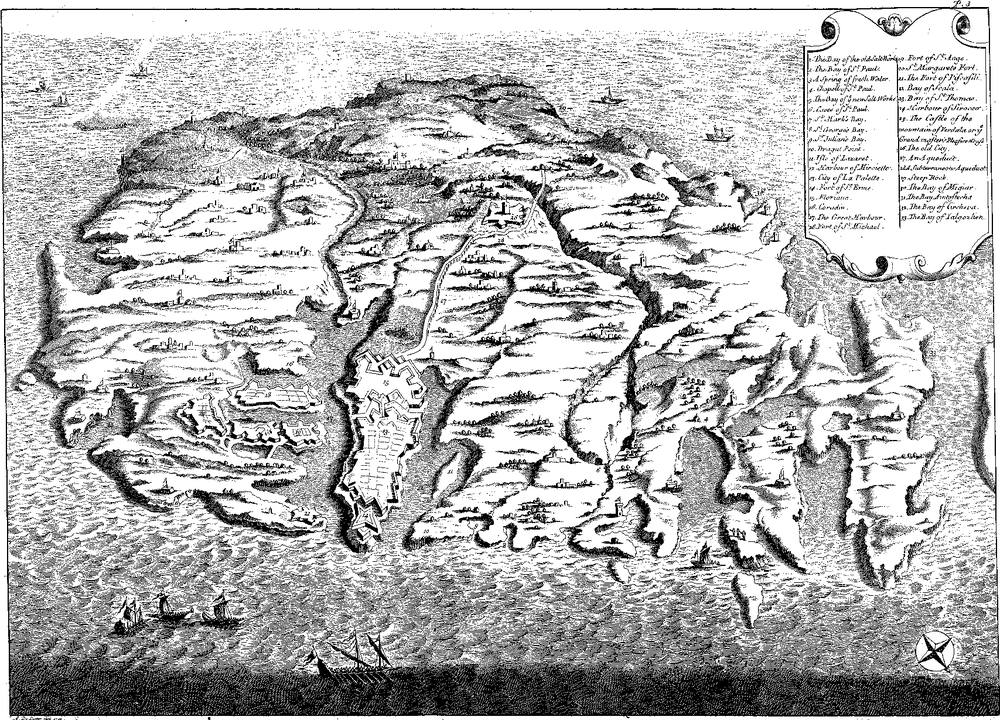
To this he adds, that Multitudes of petrified Vipers, and other Serpents, are found daily at Malta, as also the Tongues, Eyes, and Bowels of Serpents, all of which have the Faculty of preserving such from the biting of poisonous Animals, as carry any Pieces of these about them. And as for those that have none, if they should happen to be bit by a Serpent, they may be certainly cured if they do but take a little of the Powder of one of these Petrifactions, mingled in a little Water. Or else they need but take a little of the Scrapings of the Stones of the Cave, where Saint Paul lodged. And this cannot be owing to the Climate of the Countrey, because before Saint Paul arrived at Malta, their Vipers and other venomous Creatures were of as poisonous a Nature, and as dangerous as in other Places. As to the Situation of the Island, see the Plan which we have caused to be made of it.
MALTHACE, Wife of Herod the Great, and Mother of Archelaus King of Judæa*. Malthace* died while her Son was at Rome, endeavouring to have his Fathers Will confirmed by the Emperor Augustus92.
MAMMON. This Name is properly Syriac, and signifies Riches. Our Saviour says, that we cannot at the same Time serve Matth. vi. 24. Luke xvi. 13.God and Riches; and that we ought not to make our selves Friends of Mammon, or of the Riches of Unrighteousness, that is to say, of worldly Riches, which are commonly the Instruments of Iniquity, and are acquired but too often by Ways of Unrighteousness and Iniquity. Some have asserted93, that Mammon signified the God of Riches, but there is no Proof of this Opinion. Matmon in Hebrew signifies concealed94, and Mammona Riches. Saint Austin observes95, that in the Punick or African Tongue, Mammona signifies Gain. Mammona apud Hebræos divitiæ appellari dicuntur. Congruit & Punicum nomen; nam lucrum Punicè Mammon dicitur.
MAMRE, or Mambre, an Amorite, Gen. xiv. 13.Brother of Aner and Eschol, and Friend of Abraham. ‘Twas with these three Persons, together with his own and their Domesticks, that he pursued and overcame the Kings, after their Conquest of Sodom and Gomorrah.
MAMZER. This Word is Hebrew, and signifies a Bastard. God forbids the Admittance of Mamzers, or Bastards, into the Congregation of his People, as far as the tenth Generation96. The Rabbins97 distinguish Mamzers into three Kinds. 1. Those that are born in Marriage, from Parents contracted in Cases prohibited by the Law. 2. Those that proceed from a criminal Conjunction, and punishable by the Judges with the severest Punishment; as are the Children of Adulterers. 3. Those who are born in Incest, and condemned by the Law, under the Penalty of being cut off. They also distinguish between Mamzers that are certain and uncertain. The first are those whose Birth is notoriously corrupted, and who without any Difficulty are excluded from the Congregation of the Lord. The doubtful Mamzers are those whose Birth is uncertain. These could not be excluded in Strictness, yet the Scribes would not admit them, for Fear that any certain Mamzers should slip in among them.
But the Vulgate, the Seventy, and the Authors of the Canon Law, take Mamzer
for the Child of a Prostitute. These three Verses shew the Distinction between the different Sorts of Bastards, as acknowledged by the Law.
Mamzeribus scortum, sed mœcha nothis dedit ortum.
Ut seges à spica, sic spurius est ab amica.
Dant naturales, quæ nobis sunt speciales.
Some Interpreters take Mamzer for a generical Term, which signifies any Kind of illegitimate Children, whose Birth is impure in any Manner whatsoever. Others98 believe the Hebrew Word Mamzer rather signifies a Stranger or Foreigner, than a Bastard. Jephthah, who was the Son of a publick Woman99, was Head and Judge in Israel. Pharez and Zerah, the Sons of Tamar, conceived from a Kind of Incest, are reckoned among the Ancestors of David. Among the Hebrews the Children followed the Condition of the Mother. How then could a Bastard-Son, born of a Mother that was an Israelite, be excluded the Congregation of Israel to the tenth Generation, since the Egyptians and Idumæans might be admitted after the third Generation? So that there is great Probability Mamzer means something more than barely a Bastard, perhaps expresses a Bastard that is born of a Woman that is a Stranger and an Idolater. The Seventy render the Word Mamzer in Zechary ix. 6. by a Stranger or Alien; and Deut. xxiii. 2. by the Son of a Prostitute. The Hebrew Word occurs only in these two Places, and its Signification can by no Means be certain. The Author of the Traditions concerning the Books of Samuel, Kings and Chronicles, believes that Solomon was of the Number of the Mamzers; and that when Bathsheba says to David, 1 Kings i. 21. I and my Son Soloman shall be counted Offenders, or Sinners; she means, my Son shall be treated as a Mamzer, and my self as a Prostitute. And that David, being desirous to secure them from this, declared his Son Solomon to be his Successor in the Kingdom.
As to the Words, They shall not enter into the Congregation of the Lord, even to the tenth Generation, it cannot be meant that this Sort of Children may not be converted, or be admitted into Judaism, till after ten Generations; but that they shall have no Share in the Imployments, in the Dignities and Privileges of the true Hebrews, till after a long Time, and till the Blemish of their Birth is entirely obliterated.
MAN. Concerning the Creation and Fall of the first Man, there are many Questions proposed, which may be found discussed in the Articles ADAM and EVE. Gen. i. 27.It is said in Genesis for Example, that Man was created Male and Female; that is to say, according to some, that he was created an Hermaphrodite; or that the Man and Woman were created growing together at their Sides; but the most simple and most natural Meaning, that this Text of Moses will admit of, is this, that God created Man and Woman as he created other Animals, by Pairs or Couples, the Male and Female of every Species. But whereas other Animals were created altogether, and by one fiat alone, God created Man and Woman separately, and at some Distance of Time from one another. The Woman was created in Paradise, and taken out of Adam’s Side while he was asleep, and the other Creatures, Gen. ii. 20, 21, 22, &c.both Male and Female, were made immediately from the Mass of inanimate Matter.
The Man was created after the Image and Likeness of his Creator. This Resemblance consists chiefly in the Qualities of his Soul. He was created free, intelligent, immortal, capable of Virtue, Justice, Wisdom and Happiness. By his Sin he lost a great Part of this Resemblance; at least it was much weakened, diminished, and altered. We may also say that he has some Resemblance to God, by the Dominion that God has given him over the other Creatures. He has appointed him, as it were, a Vice-God upon Earth. Lastly, this Resemblance may also have Regard to that Likeness, that was found between Jesus Christ incarnate, and Man in the State of Innocence. When Jesus Christ took our Nature upon him, he made in some Respect Man like himself, by his becoming like to Man.
When Man received from God the Breath Gen. ii. 7.of Life, he became a living Soul. Inspiravit in faciem ejus spiraculum vitæ, & factus est homo in animam viventem. He received from God Life and Respiration, and became a living, rational, and immortal Creature. Some understand this of the Life of Grace, of the holy sanctifying Spirit, which God gave to Adam.
Man is sometimes taken for Mankind in general, for all human Nature, and sometimes particularly for Adam.
Deut. xxxiii. 1. Josh. xiv. 6.A Man of God generally signifies a Prophet, a Man devoted to God and his Service. Moses is called in a peculiar Manner the Man of God. David, Shemaiah, and the other Prophets, are also called in this Manner.
Son of Man denotes Man in General. Quid est homo quod memor es ejus, aut filius hominis, Psal. vii. 5.quoniam visitas eum? The Sons of Men are taken in the same Sense. The Lord or the Angels speaking to Men, often gives them the Name of Son of Man. Thus the Ezek. ii. 1. & passim. Dan. viii. 17.Lord calls Ezekiel; Fili hominis, sta super pedes tuos. And the Angel Gabriel speaks in the same Manner to Daniel. Jesus Christ frequently calls himself Son of Man.
MANACHAS. Josephus100 gives this Name to the High-priests Breeches, which the Hebrew calls Michnesim, or Machnes101. Josephus says, they were Breeches of twisted Thread, which were put about the Legs, and joined together on the Side, being here divided as far as half their Length.
MANAEN, or Manahem, a Christian Prophet, and Foster-brother of Herod Antipas102. He was at Antioch with other Prophets, that is, Simon surnamed Niger, Lucius of Cyrene, Barnabas and Saul: when the Holy Ghost said to ‘em, Separate me Barnabas and Saul for the Work whereunto I have called them. Then after having fasted and prayed, they laid their Hands on them, and let them go. ‘Tis thought that Manaen was of the Number of the LXX Disciples. The Authors of the Latin Martyrologies103 put his Feast upon the 24th of May, and say that he died at Antioch. None of the Particulars of his Life are come to our Knowledge.
I. MANAHEN, or Manahem, the sixteenth King of Israel. He was Son of Gadi, and revenged the Death of his Master Zachariah, by that of Shallum, Son of Jabesh, who had usurped the Crown of Israel104. Manahem, General of the Army of Zachariah, was at Tirzah, when he had the News of his Master’s Death. He immediately marched against Shallum, who had shut himself up in Samaria; he killed him, and reigned in his Stead105. From thence he returned to Tirzah; but this City being not willing to acknowledge him, and shutting their Gates against him, he was so provoked at it, that he vented his Passion upon Tiphsah, a Town in the Neighbourhood of Tirzah, and probably Sharers in their Resolution. Afterwards he took Tirzah, ruined it intirely, and exercised many Barbarities in it. For he killed all the Women with Child in it, ript up their Bellies, and dashed the Children against the Ground. After this, he reigned in Samaria for ten Years106, and did Evil in the Sight of the Lord, walking in the Ways of Jeroboam the Son of Nebat, who made Israel to sin.
Pul King of Assyria, probably the Father of Sardanapalus, having invaded the Land of Israel during the Reign of Manahem; this Prince was obliged to pay him a thousand Talents, that he might be assisted by him, and fixed upon the Throne. To raise this Sum, Manahem was forced to tax all the Persons in the Countrey that were able to pay at fifty Shekels a Head; after which Pul returned into his own Countrey. Hosea confirms what we have said, when he says, V. 13. Ephraim saw his Sickness, and Judah saw his Wound, then went Ephraim to the Assyrian, and sent to King Jareb: Misit ad Regem ultorem. Vulg. But the Scripture seems to insinuate elsewhere, that the King 1 Chron. v. 26. Jos. Antiq. l. ix. c. 11.of Assyria came into the Countrey as an Enemy. And the God of Israel stirred up the Spirit of Pul King of Assyria, &c. Josephus thinks, that Pul came to act offensively against Manahem, who not finding himself in a Capacity to withstand so great a Force, bought his Peace for the thousand Talents he gave him. All this may be easily reconciled by supposing, that at first Pul invaded Israel as an Enemy, but that Manahem brought him over to his Interest by this great Sum that he gave him. Manahem slept with his Fathers, and his Son Pekahiah reigned in his Stead.
2 Kings xv. 22.II. MANAHEM, of the Sect of the Essenians. He was Vicegerent to Hillel mentioned before. Manahem was a learned Man for that Age, and of great Consideration among his Sect. He foretold Herod the Great, being then a young Scholar, that he should reign one Day107. At the same Time he recommended to him the Virtues of Justice and Moderation, and yet foretold him he should tread these under Foot, and all the Duties of Religion and Humanity; though nevertheless he would live in great Glory and Prosperity. But, added he, ” You cannot conceal your self ” from the Eyes of God, who will chastise ” you at the End of your Life, for all the ” Evils you shall have committed. Herod at first slighted these Promises, but when he saw himself raised to the Regal Dignity, he sent for Manahem, and enquired of him how long he should reign. Manahem not answering directly, the King asked him, Shall I reign ten Years?
To which Manahem replied, not ten only, but twenty, yea thirty; without explaining himself any farther. Then Herod sent him away, giving him his Hand as a Token of Friendship, and always shewed much Esteem for the Sect of the Essenians. Afterwards Herod out of a Principle of Gratitude, and as a Token of the Esteem that he had for him, took him into his own Service, from the Post he had in the Sanhedrim. Upon which Occasion the Jews gave the Office of Vicegerent to Shammai, which had been filled by Manahem. The Jews108 speak of one Manahem, who was Vicegerent of the Sanhedrim under Hillel. I believe it to be the same here mentioned by Josephus.
III. MANAHEM, or Manaim, Son of Judas the Galilean, or the Gaulonite, mentioned before. He drew to his Party some Persons of Quality; several Robbers, and other People that had nothing to lose109; and having taken by Force the Castle of Massada, he pillaged the Magazines of the late King Herod the Great, armed his People, and went strait to Jerusalem; of which making himself Master, he drove out the Romans, and caused himself to be proclaimed King110. He put to Death the High-priest Ananias, and soon became insupportable by his Cruelties and Excesses. This was the Occasion that two Men of the Party of Elcazar rose up against him, and encouraged the People to free themselves from the Yoke of his Tyranny, so that Manahem was set upon, and after some Resistance he was forsaken by his People, and forced to hide himself in a Place called Ophlas. From hence he was taken the Day following, and led away to his Punishment.
MANASSEAS, Son of Addi, was one of those Jews, who after the Return from Babylon, separated themselves from the strange Wives that they had taken, contrary to the Law of Moses, Ezr. ix. 31.
I. MANASSEH. The eldest Son of Gen. xli. 50, 51.Joseph, and Grandson of the Patriarch Jacob. Manasseh was born in the Year of the World 2290, before Jesus Christ 1710, before the Vulgar Æra 1714. The Name Manasseh signifies Forgetfulness, because Joseph said; God has made me forget all my Toil, and all my Father’s House. When Jacob was going to die111, Joseph brought his two Sons to him, that his Father might give Gen. xlviii. 1, 2, 3, &c.them his last Blessing. Jacob having seen them, tells Joseph; thy two Sons, which were born to thee in Egypt, shall be my Sons: I adopt them, and they shall be to me as Reuben and Simeon. Then he made them come to his Bed-side, kissed them, and embracing them, said to his Son: God has not only been favourable to me, in making me see thy Face, but thy Children also. At the same Time Joseph taking his two Sons away, prostrated himself to the Ground before his Father, and having placed Ephraim at Jacob’s left Hand, and Manasseh at his right, he desired him to bless them. Then Jacob put his right Hand upon Ephraim, and his left on Manasseh, and began to bless them. But Joseph observing that his Father had put his right Hand upon Ephraim; and his left on Manasseh, would have him alter this Disposition, and change his right Hand to Manasseh, and his left to Ephraim. But Jacob would not agree to this Change, and told him; “ I know what I am doing, my “ Son, the eldest shall be Father of a great “ People, but his younger Brother shall be “ greater than he.” His Posterity shall be multiplied, and grow into a great Nation. He continued to bless them, and said; in thee shall Israel be blessed, and it shall be said, God make thee as Ephraim and as Manasseh.
The Tribe of Manasseh came out of Egypt112, in Number thirty two Thousand and two hundred Men, fit for Battle; upwards of twenty Years old, under the Conduct Numb. ii. 20, 21.of Gamaliel Son of Pedahzur. This Tribe was divided at their Entrance into the Land of Promise. One half had its Portion beyond the River Jordan, and the other half on this Side the River. The half Tribe of Manasseh which settled beyond the River, possessed the Countrey of Bashan, from the River Jabbok, to Mount Libanus, Numb. xxxii. 33, 34, &c.and the half Tribe of Manasseh on this Side Jordan obtained for its Inheritance the Countrey between the Tribe of Ephraim to the South, and the Tribe of Issachar to the North, having the River Jordan to the East, and the Mediterranean Sea to the Josh. xvi. xvii.West.
II. MANASSEH. The fifteenth King of Judah, being the Son and Successor of Hezekiah113. He was twelve Years old when he began to reign, and reigned fifty five 2 Kings xx. 21. xxi. 1, 2. 2 Chron. xxxiii. 1, 2, 3, 4.Years; wherefore he lived in all sixty seven Years. His Mother’s Name was Hephzibah. He did that which was Evil in the Sight of the Lord, and worshipped the Idols of those Nations, that the Lord had destroyed when the Children of Israel took Possession of the Land of Canaan. He rebuilt the high Places that his Father Hezekiah had destroyed. He set up Altars
to Baal, and planted Groves in Honour of false Gods, as Ahab King of Israel had done. He worshipped the Host of Heaven, and sacrificed to ‘em. He also built profane Altars in the Temple of the Lord. He raised Altars to the whole Host of Heaven; in the two Courts of God’s House. He made his Son pass through the Fire in Honour to Moloch. He was addicted to Magick, Divinations, Auguries, and other Sort of Superstitions and magical Curiosities. He set up the Idol of Astarta in the House of God. Finally, he involved his People in all the Abomination of the idolatrous and strange Nations, and perverted them to that Degree, that Israel committed more Wickedness than all the Canaanites had done, which the Lord had drove out before them. To all these Crimes Manasseh added that of Cruelty also. He shed Rivers of innocent Blood in Jerusalem, to fill up the Measure of his other Iniquities.
Therefore the Lord being provoked by so many Crimes of Manasseh, sent this threatning Message to him, by the Mouth of his Prophets: ” I am going to pour out ” upon Jerusalem and Judah such Calamities, that the Ears of those shall tingle, ” that shall but hear them mentioned. I ” will stretch out upon Jerusalem the Line ” of Samaria, and of the House of Ahab; ” I will deal with it as I have dealt with ” Samaria, and I will reject Manasseh as I ” have rejected Ahab and his House. I ” will blot out Jerusalem as a Writing is ” blotted out of a Writing-table, and I shall ” often draw the Pen over and over, that ” nothing may remain of it. I shall forsake the Remains of my Inheritance, I ” shall deliver my People into the Hand ” of their Enemies, and all those that hate ” them shall ravage and pillage them.
‘Tis believed that the Prophet Isaiah was one of those, that raised his Voice loudest against all these Enormities. This Prophet had the Honour of being Father-in-Law to the King114. He had been in great Credit at Court, in the Reign of Hezekiah the King’s Father. He was a Man of high Birth, being of the Blood Royal. He thought it more incumbent upon him than any other, to endeavour to reclaim the King from his wicked Courses, and to denounce God’s Judgments against him. But this so exasperated him against Isaiah, that instead of hearkening to these Remonstrances, he caused him to be apprehended, and put him to Death, by sawing him in two with a wooden Saw115. The Calamities with which God had threatned this 2 Chron. xxxiii. 11, 12, &c.impious Prince began to appear towards the twenty second Year of his Reign116. The King of Assyria sent the Princes of his Army against him, who seizing him among the Briars and Brambles where he was hid, and taking him Prisoner, put Fetters on his Hands and Feet, and carried him to Babylon. We think it was Sargon or Esar-haddon King of Assyria, who sent Tartan into Palestine, and who taking Azoth, attacked Manasseh, and having put him in Irons, led him away, not to Nineve, but to Babylon, of which Esar-haddon had made himself Master, and had thus reunited the two Empires of the Assyrians and the Chaldæans.
Homil. i. 2 Chron. xxxiii. 15, 16. Deut. iv. 29, 30.Manasseh being in Bonds at Babylon, confessed his Sins, and humbled himself before God, who heard his Prayers and Lamentations. He brought him back to Jerusalem, and Manasseh acknowledged the powerful Hand of the Lord. He redressed as much as he could the Evils he had caused at Jerusalem and in Judah. We have a Prayer which, ‘tis pretended, he made in Prison. The Church does not receive it as Canonical, but it has a Place among the Apochryphal Pieces. However it is to be found in the Euchologium, or the Book of Prayers of the Greeks. The Rabbins117 relate, that Manasseh was cast into a great brazen Vessel full of Holes, and exposed to a great Fire. That in this Extremity he had Recourse to all his false Deities, to whom he had been used to sacrifice. But receiving no Assistance from any of them, he then soon found the Vanity of his Hopes. Then he remembered what he had heard his Father King Hezekiah say, ” When you shall invoke me in your Misfortunes, and convert your selves to me, ” I will hear you.” He therefore was converted to the Lord, and was presently delivered, and carried in a Moment into his Kingdom; after the Manner that Habbakkuk afterwards was transported from Judæa to Babylon, and then back again from Babylon to Judæa. The Author of the Homil. imperfect Comment upon Saint Matthew relates his Deliverance in another Manner. He says that Manasseh being in Bonds, had only every Day a little Barley-bread, and some Water mixed with Vinegar, and this by Measure, just enough to keep him alive. In the Midst of his Affliction he had Recourse to the Lord, when a miraculous Flame encompassed him on a sudden, and melting his Chains, set him at Liberty. But these are Fables.
Manasseh was very probably delivered
out of Prison by Saosduchin the Successor of Esar-haddon. Being returned to Jerusalem he restored the Worship of the Lord in his Temple, broke down the Altars 2 Chron. xxxiii. 13, 14, &c.of the false Gods, and abolished all the Foot-steps of that idolatrous Worship, that had been given to strange Gods. But he did not destroy the high Places, where the People went to worship the Lord; whether it was that he had not Power enough to suppress so ancient and inveterate a Custom, or that out of Weakness he made this Con-descension to the Humours of the People. ‘Tis the only Thing that the Scripture reproaches him with, after his Return from Babylon. He caused Jerusalem to be fortified, and repaired its Walls. He also inclosed with a Wall another City, which in his Time was erected to the West of Jerusalem, and which goes by the Name of the second City ever since his Reign. See 2 Chron. xxxiii. 14. He put Garrisons into all the strong Places of Judah, and gave Orders to all his People to worship and serve the Lord.
The rest of the Actions of Manasseh, the Prayer that he made to God, and the Remonstrances that had been made to him by the Prophets in the Name of God, were related at large in the publick Registers of the Kings of Judah; and also the Prayer that he made in Prison, the Manner in which God was pleased to answer his Prayer, the Crimes he had committed, the Statues he had set up, and the profane Groves he had planted; in a Word, his Sin and his Prevarication were related in Full in the Book of the Prophet Hozaï, which is the same as Isaiah according to some. The Seventy take this in a general Sense; in the Writings of the Seers. The Syriack calls him Hanan, and the Arabic Saphan. Manasseh died at Jerusalem, and was buried in the Garden of his House, in the Garden of 2 Kings xxi. 18.Uzza. His Son Amon succeeded him, in the Year of the World 3361, before Christ 639, and before the Vulgar Æra 643.
Many believe that the History of Judith and Holofernes happened under the Reign of Manasseh, and after his Return from Babylon. This Prince does not at all appear in this History, whether out of Reasons of State he did not think proper to declare himself on this Occasion, or that upon a Principle of Penitence he concerned himself little or nothing with the Affairs of Government. See the Preface to Judith.
Judith viii. 2, 3.III. MANASSEH. The Husband of Judith, who lived but a little while with her. He had been dead three Years, when Holofernes’s War began. Manasseh was of the Tribe of Simeon, and died in the Time of Barley-harvest, of a Disease caused by the too great Heat of the Sun, which had shined upon his Head. He left all his Estate to his Wife Judith, and was buried in his own Countrey in Bethulia.
IV. MANASSEH. High-priest of the Jews, Son of John, and Brother of Jaddus. He succeeded Eleazar his great Uncle, and had for his Successor Onias II. his Nephew. Manasseh came to the chief Priesthood in this Manner. He had married Nicaso, Daughter of Sanballat118 Governor of Samaria. The Jews and Priests were much displeased at this Marriage of Manasseh, she being a Woman of another Religion. They declare that he must either quit his Wife, or renounce his Priesthood. The High-priest his Brother joined himself to them, and Manasseh seeing himself become so obnoxious in his own Countrey, withdrew himself to his Father-in-Law, and told him, that though he had a great Affection for Nicaso his Wife, yet it troubled him much that on her Account he saw himself excluded from the Prerogatives of the Priesthood, to which by his Birth he had a Right. Sanballat promised him, that not only he would secure him the Priesthood, but that he would also procure him the chief Priesthood, and the first Place of the whole Province; that he would build him a Temple upon Mount Gerizim, like to that of Jerusalem, and that he should be the first High-priest in it.
Manasseh flattered by these Hopes, settled himself with his Father-in-Law Sanballat; and there being several other Israelites that were engaged in like Marriages, they betook themselves to him, and Sanballat gave them Houses and Lands to secure their Continuance with him. When Alexander the Great came into Syria, and had formed the Siege of Tyre, Sanballat went to meet him with eight Thousand Men, all good Troops, and submitted to his Obedience with the whole Province of Samaria, of which he was Governor. He obtained a Permission from this Prince, to build a Temple upon Mount Gerizim, and gave the chief Priesthood of it to his Son-in -Law Manasseh. The same God was worshipped in this Temple, as in that of Jerusalem, and a great Number of those that frequented it were Jews as well as Manasseh. But this Temple was held in great Detestation by the Priests and Jews of Jerusalem, who looked upon those as Schismaticks that worshipped here. Therefore it must needs be, that Manasseh must renounce his Schism, when after the Death of his great Uncle Eleazar, he succeeded in the high Priesthood119. Josephus does not
Manasseh (IV) continues on the next page
Footnotes
-
The Edict of Antiochus Epiphanes is in the Year 3837, before Christ 163 Years. ↩
-
Theodoret. in Dan. xi. 7. ↩
-
Philost. Hist. Ecc. initio. ↩
-
Euseb. Hist. Ecc. l. iii. c. 10. ↩
-
Hier. de Script. Ecc. & l. ii. cont. Pel. de vitâ beatâ, c. 10, 11, 12. ↩
-
Naz. orat. de Macchab. ↩
-
Ambros. l. ii. ↩
-
Chrysost. homil. ii. in sanctos Macchab. ↩
-
Sixt. Sen. Bibliot. l. i. ↩
-
Acts xvi. 9, &c. In the Year of Christ 55, of the Vulgar Æra 52. c. 27. p. 503. D. ↩
-
Joseph. Antiq. l. xiv. 39. ↩
-
In the Year of the World 3965, before Christ 35, before the Vulgar Æra 39. ↩
-
Joseph. Antiq. l. xiv. c. 10. ↩
-
Antiq. l. xiv. c. 11. ↩
-
Joseph. Ant. l. xviii. c. 7. p. 626, 627. See Matt. xiv. 1, 2, &c. Mark vi. 16, &c. ↩
-
Diodor. Sicul. l. ii. p. 80. ↩
-
Towards the Years of the World 3416, and 3419. ↩
-
Ezek. iv. 1, 2, 21, 22. ,כרCar. Græc. Κείω, Aries. ↩
-
Joseph Mede, and Salien. ↩
-
,אי מרןInsula Madai, Αια Μαδαι. xi. Tab. 9. Europ. ↩
-
Μηδοι, or Μαδοι, μαυδικη. Aristot. de mirabil. Ptolem. c. In the Year of the World 2554, before Christ 1446, ↩
-
Josh. xi. 1. xii. 19. before the Vulgar Æra 1450. ↩
-
Hieronym. in vit. Malchi. ↩
-
Bibl. Orient. p. 11. Abesta, ↩
-
Idem. p. 167. ↩
-
Idem. p. 701. Dd a Man ↩
-
Vid. Th. Hyde Hist Relig. veter. Persar. Hottinger Hist. Orient. l. iv. c. 8, &c. ↩
-
Plutarch. in Themistocle. ↩
-
In the Year of the World 2553, before J. C. 1447, before the Vulgar Æra 1451. ↩
-
Numb. xxii. 5. Vid. Euseb. in locis, Παδυρῳ. ↩
-
Vide 1 Kings iv. 30. Is. xlix. 7. Obadiah, v. 8. ↩
-
Tertull. cont. Judæos, & l. iii. contra Marcion. ↩
-
Just. Mar. Dial. cont. Tryph. ↩
-
Epiphan. Epitom. fidei Cathol. ↩
-
Tert. cont. Judæos, & lib. iii. cont. Marcion. ↩
-
Ambros. seu potius Cæsarius, serm. 139, in append. 5. Tom. S. Aug. nov. edit. ↩
-
Cyprian. seu Arnold. Abb. Bonævall. Ser. ii. de 7 cardin. operibus. ↩
-
Paschas. Radbert. in Matth. ii. ↩
-
Theophyl. in Matt. ii. ↩
-
Ignat. Epist. ad Ephes. Justin. Dialog. cum Tryphone, Origen. Homil. xiii. in Num. &. l. i. cont. Cels. Ambros. l. ii. in Luc. Tertull. de Idol. Hil. l. iv. de Trin. n. 36. Hieron. in Matt. ii, &c. ↩
-
Auth. operis imperf. in Matt. Author qu. ex vet. & Nov. Test. qu. 63. Vide & Mald. Vat. Brug. Erasm. Hammond, &c. ↩
-
Orig. l. i. contra Celsum. ↩
-
Basil de human. Christ. gen. ↩
-
Ambros. in Luc. l. ii. p. 1297. ↩
-
Tertull. de Idololat. ↩
-
Leo Serm. i. 4, 5, 6, 7, 8. de Epiph. & Ep. xvi. c. 2. ↩
-
Cæsar. Serm. 139. Append. T. v. S. Aug. nov. edit. ↩
-
Serm. olim 29. & 33. de tempore, nunc 133, & 136, App. T. v. Aug. ↩
-
Beda & Rupert. in Matt. ii. ↩
-
Vide Casaubon. in Baron. & Bolland. T. i. p. 7, 8. Maii. ↩
-
Chardin’s Voyage of Persia, T. iii. p. 131. ↩
-
Spicileg. T. vii. p. 217. An. 1249. ↩
-
Vide Serm. 111. & 132. in Append. T. v. Oper. S. Aug:. nov. ed. quidam apud Theophyl. ↩
-
Leo Magn. Serm. 1. de Epiph. Chrys. Homil. vi. in Matt. Basil. de hum. Christi nativ. Ambros. l. ii. in Luc. Fulgent. homil. de Epiphan. & Author Serm. 131. Append. T. v. Op. S. Aug. ↩
-
Chryf. & Theophylact. in Matt. Evangel. Infantiæ. Author de mirab. sacræ. Script. Cæsar. Dialog. xx. Mald. ↩
-
Epiphan. hæres. 26, and 39. ↩
-
Chalcid. in Timæum Plat. p. 19. ‘Tis not known when this Philosopher lived, but it is well known that he was a Christian. ↩
-
Author Præadamit. l. iv. c. 3. ↩
-
Basil. Homil. de hum. Christi nativ. Auth. de mirab. sac. Scrip. ↩
-
Chryf. Hom. vi. in Matth. ↩
-
Amb. l. ii. in Luc. ↩
-
Aug. 200, 201, 202, nov. Edit. ↩
-
Bern. Serm. iii. in Epiph. ↩
-
Dan. i. 20, &c. ↩
-
Diodor. Sicul. l. i. ejus Biblioth. l. ii. Strab. l. vi. ↩
-
Herodot. l. iv. c. 67. ↩
-
Ammian. l. xxxi. ↩
-
D. Herbelot. Bibliotheca Orient. Under the Word AIDAD. ↩
-
Thevenot’s Journey to the Levant ch. xxvi. ↩
-
Gonzal. & Mendoza. l. ii. c. 4. ↩
-
Dio Chrysost. ↩
-
Hosea iv. 12. Maimon. tract. de Idololat. c. 6. ↩
-
Ita Joseph. Hieronym. Theodoret. Eustath. alii plerique. ↩
-
Ambros. l. ii. ad Gratian. c. 4. ad finem. ↩
-
Herbelot. Bibl. Orient. p. 532. ↩
-
למנצח על מחלת משכיל לדודAqu. Ἐπὶ χορείαν. Theodot. ὑπὲρ τῆς χορείας for the Dance. Sym. διὰ χόρου, by the Choir. ↩
-
Sozom. Hist. l. v. c. 3. ↩
-
Malachi i. מלאכיMalachi. LXX. Ἄγγελος αὐτοῦ, as if they had read, מלאכו ↩
-
Clem. Alex. l. i. Stromat. Tertul. l. cont. Judæos, c. 5. ↩
-
Orig. T. ii. in Johan. Vide Hieron. in Hag. i. & Præfat. in Malac. & Ep. ad Evag. ↩
-
Hieron. Præfat. in Malach. & Comment. in eundem pluribus locis. ↩
-
Joseph. Ant. l. xviii. c. 8. ↩
-
Ant. l. xiv. c. 15. ↩
-
In the Year of the World 3964, before Christ 36, before the Vulgar Æra 40. ↩
-
Joseph. Antiq. l. xiv. c. 10. p. 476. ↩
-
Joseph. Antiq. l. xiv. c. 18. & de bello Jud. l. i. c. 9. ↩
-
Joseph. Antiq. l. xiv. c. 20. de bello Jud. l. i. c. 9. ↩
-
In the Year of the World 3961, before Christ 39, before the Vulgar Æra 43. In the Year of Christ 63, and of the Vulgar Æra 60. 1, 2, 3, &c. An. 58. Fromond. alii. ↩
-
Acts xxviii. ↩
-
Quintinus Æduus, Baron. An. 58. Fromond. alii. ↩
-
Vid. Chrysost. Homil. 54, in Acta, p. 471. ↩
-
Joseph. Antiq. l. xvii. c. 12. ↩
-
Vide Tertul. l. iv. contra Marcion. ↩
-
Hebr. משמוןMatmon. Syr. ממונא Mammona. Chal. ממוןMammon. ↩
-
Aug. de Serm. Dom. in monte. l. ii. c. 14. n. 47. ↩
-
Deut. xxiii. 2. Non ingredietur Mamzer ( )ממזרid est, de scorto natus, in Ecclesiam Domini, LXX. Ἐκ πόρνης. Zach. ix. 6. ממזר Ἀλλογενής. Vulg. separatos. ↩
-
Rabb. apud Selden. de jure nat. & gent. l. v. c. 16. & lib. de succes. in bona, c. 3. ↩
-
Oleaster in Deut. xxiii. 2. Alii nonnulli. Vid. LXX in Zec. ix. 6. בן אשה זונהVulg. Filius mulieris meretricis. ↩
-
Judg. xi. 1. ↩
-
Ant. l. iii. c. 8. p. 84. b. c. ↩
-
Exod. xxviii. 42. מכנסיםLXX. Περισκελῆ, Vulg. Fœmina-lia. ↩
-
Acts xiii. 1. In the Year of Christ 44. ↩
-
Usuard. Adon. Vid. Bolland. 24 Maii. ↩
-
In the Year of the World 3232, before Christ 768, before the Vulgar Æra 772. See 2 Kings xv. 13. ↩
-
2 Kings xv. 14, 15, &c. Joseph. Antiq. l. ix. c. 11. ↩
-
From the Year of the World 3233, before Christ 767 Years, before the Vulgar Æra 771; to the Year of the World 3243, before Christ 757 Years, before the Vulgar Æra 761. ↩
-
Joseph. Antiq. l. xv. c. 13. p. 542. ↩
-
Lib. in Chasim. Fol. 19. apud Lightfoot. ↩
-
Joseph. de bello, l. ii. c. 32. in Græco, p. 811. ↩
-
In the Year of Christ 69, of the Vulgar Æra 66. ᵠ In the Year of the World 2315, before J. C. 1685, before the Vulgar Æra 1689. ↩
-
In the Year of the World 2315, before J. C. 1685, before the Vulgar Æra 1689. ↩
-
Year of the World 2513, before Christ 1487 Years, before the Vulgar Æra 1491. ↩
-
Year of the World 3306, before Christ 694 Years, before the Vulgar Æra 698. ↩
-
Hieronym. in Isa. l. iii. in c. 20. & Homil. in Isa. Tert. l. de patient. c. 14. & Scorpiac. c. iii. Justin. cont. Tryph. Chrysost. ad Cyriac. Hier. in Isai. l. xv. Aug. lib. xviii. de Civit. c. 24. Christ 672 Years, before the Vulgar Æra 676. ↩
-
Origen. in cap. xxiii. in Matt. & Ep. ad Jul. Afric. ↩
-
In the Year of the World 3328, before ↩
-
Vide tradit. Hebr. in lib. Paralip. & Targum in 2 Chron. xxiii. 11. out ↩
-
Joseph. Antiq. l. xi. c. 7. p. 333. ↩
-
Joseph. Antiq. l. xii. c. iii. p. 401. ↩