Volume II, pages 258–277 of the 1732 edition, from NAK to NEH: everything printed on these pages, in order.
Continued from Nakedness
incur several Inconveniencies in the Time of their Attendance, because of the Nakedness of their Feet; to prevent which in the second Temple, there was a Room in which the Pavement was warm, that they might come there to warm their Feet. Also the frequent Ablutions appointed them in the Temple seem to insinuate, that their Feet were naked.
There are some also that maintain, that the common Israelites might not enter into this holy Place, till they had first put off their Shoes, and cleaned their Feet. To this Purpose are applied these Words of Eccles. v. 1. Levit. xix. 30. Matth. x. 9, 10.Ecclesiastes, Keep thy Foot when thou goest to the House of God. Take Care that your Feet be clean. Rabbi Solomon, upon these Words of Leviticus, Ye shall keep my Sabbaths, and reverence my Sanctuary, understands the Obligation of appearing before the Lord with naked Feet. Maimonides says expressly1, that it was never allowed to enter the House of God upon the holy Mountain with Shoes on, or with a Staff, or with their ordinary Cloaths on, or with dirty Feet. Some think our Saviour alludes to this Custom, when he says to his Disciples, Provide neither Gold nor Silver nor Brass in your Purses. Nor Scrip for your Journey, neither two Coats, neither Shoes, not yet Staves. For the Labourer is worthy of his Hire. The Turks still observe to this Day not to enter into their Mosques, till after they have washed their Feet, and their Hands, and till they have put off the outward Covering of their Legs. The Christians of Ethiopia enter not into their Churches except with their bare Feet2. The Indian Brachmans have the same Respect for their Pagods. Solinus says3, that no one can enter into the Temple of Diana of Crete, till he has made his Legs bare. Juvenal says4, that even the Jews kept their Sabbaths with naked Feet.
Exercent ubi festa mero pede Sabbatha Reges. The Nakedness of the Feet is sometimes put in Scripture for that Nakedness that Modesty forbids: With-hold thy Feet from being Jerem. ii. 25. Jerem. xiii. 26unshod, says Jeremiah. Take Care of discovering your Feet, or of falling into a shameful Action. And elsewhere, Therefore will I discover thy Skirts upon thy Face, that thy Shame may appear. The Feet express what Lam. i. 9. Levit. xx. 19.Modesty would conceal. Sordes ejus in pedibus ejus, & aqua pedum.
To uncover the Nakedness of any one, commonly is put for a shameful and unlawful Conjunction, or an incestuous Marriage. 1 Sam. xix. 24. Isai. xx. 2, 3. 1 Cor. iv. 11. 2 Cor. xi. 27. Job xxvi. 6. Hebr. iv. 13.Ignominiam carnis suæ nudavit. And Ezekiel xvi. 37. Nudabo Ignominiam tuam. And again, Eras nuda & confusione plena.
Nakedness is sometimes put for being ill clad. Saul continued naked all Day long in the Midst of the Prophets; that is, having but few Cloaths on, or, as one may say, in his Shirt. Isaiah receives Orders from the Lord, to go naked; that is to say, cloathed as a Slave, and half naked Thus it is recommended to cloath the Naked, that is, such as have very bad Cloaths on. St. Paul says, that he was in the Cold, in Nakedness; that is, in Poverty, and the Rom. viii. 35. Gen. ii. 25. iii. 7.want of Rayment.
Naked is put for discovered, known, manifest. So Job, Hell is naked before him. The Sepulchre, the Place wherein the Souls of Men are reserved, is naked and uncovered to the Eyes of God. He pierces thro’ the Depth and Darkness of it. St. Paul says in the same Sense; Neither is there any Creature that is not manifest in his Sight; but all Things are naked and opened unto the Eyes of him with whom we have to do.
The Nakedness of Adam and Eve was unknown to them before they sinned. They were not ashamed at it, because Concupiscence and irregular Desires had not yet made the Flesh rebel against the Spirit; and their Nakedness excited no Disorder in their Imaginations, nor any Thing that was irregular or contrary to Reason. They were exempt from whatever Indecency might happen among us, upon the Occasion of the Nakedness of the Body. The brute Creatures are under no Apprehension of Shame at the Nakedness of their Bodies, and it gives us no Offence, because there is nothing irregular in it, or contrary to Order.
Some Interpreters translate the Text of Moses5, Adam and Eve were wise, or crafty; for the Hebrew Word Harom has sometimes this Signification. But it is plain from the Sequel of Moses’s Discourse, that he meant it of bodily Nakedness; for he says, that to hide their Nakedness they made themselves Aprons of Fig-Leaves. ‘Twas believed by the Pagans6, that in the golden Age all Men went naked.
NAME. The Name of God. See JEHOVAH before. The Name without any other Addition, signifies the Name of the Lord, which was not pronounced out of Respect. For Example, And the Israelitish Levit. xxiv. 11.Woman’s Son blasphemed the Name. If any one blasphemed the sacred Name, he was taken out of the Camp, and all those that had heard him put their Hands upon his
Head, and the whole People stoned him. Thus was expiated the Blasphemy of the Name.
The Name of God often stands for God himself, his Power, or Majesty. Adjutorium nostrum in nomine Domini. Our Assistance, or Strength and Hope is in the Name of God, in his Goodness, Power, &c. His Name only is more effectual than a whole Army. The Hebrews believe that Moses, that Jesus Christ, and the Prophets, performed their Miracles by pronouncing the Name of God, the true Pronunciation of which being known to them, though at this Day (they say) it is intirely forgot.
To invoke the almighty Name of God, to serve in the Name of God, to bless in the Name of the Lord, to build an House in the Name of the Lord; in all these Expressions the Name is put for the Lord himself.
Exod. xx. 7.To take the Name of God in vain, is to swear falsly, or without Occasion, and to mingle the Name of God in our Discourses, or our Oaths, either falsly or rashly, or wantonly, or unnecessarily, or presumptuously. God forbids to make Mention of the Exod. xxiii. 13.Names of other Gods. He would not so much as have them named, or their Names pronounced. ‘Tis doing them too much Honour to swear by their Names, and to take them as Witnesses to what we say or affirm, as if they were really something. The Gods of the Heathen are nothing at all, therefore the Israelites were to shew nothing but Contempt for them. The Hebrews hardly ever pronounced the Name Baal; they disfigured it for Example, by saying Mephibosheth or Meribosheth, instead of Mephibaal or Meribaal; where Bosheth signifies something shameful or contemptible. Instead of saying Elohim, they said Elilim, Gods of Filthiness.
To give a Name is a Token of Command and Authority. The Father gives Names to his Children, to his Slaves, to his Gen. ii. 20.brute Creatures. It is said in Genesis, that Adam gave a Name to his Wife, and to all the Animals, and that the Name he gave them became their true Name. God changed the Name of Abram, Jacob, and Sarai. All which expresses his absolute Dominion over all Men, and his particular Benevolence towards those, whom he receives more especially into the Number of his own. Hence it was that he gave a Name, even before their Birth, to some Persons whom he appointed, and who belonged to him in a particular Manner. So he gave a Name to Jedediah, or Solomon Son of David, to the Messiah, to John the Baptist, &c.
God speaking to Moses, promises he will send his Angel before him, to introduce him into the Land of Promise; and says, that he has put his Name in this Angel: For Exod. xxiii. 21.my Name is in him. He shall act, he shall speak, he shall punish in my Name; he shall bear my Name, he shall be my Ambassador, he shall receive the same Honours as belong to me. And in Effect, the Angel that spoke to Moses, that appeared to him in the Bush, that gave him the Law upon Mount Sinai, speaks and acts always as God himself; and Moses always gives him the Name of God. Thus says the Lord, and the Lord spake to Moses, saying.
Exod. xxxiii. 12.To know any one by his Name, I know thee by Name, expresses a Distinction, a Friendship, a particular Familiarity. The Kings of the East had very little Communication with their Subjects; they saw them but seldom, and hardly ever appeared in publick. So that when they knew any one of their Servants by Name, that they vouchsafed to speak to them, to call them, and to admit them into their Presence, it was esteem’d as a very great mark of Favour. None but such Officers as saw the King Face to Face, had this great Privilege conferr’d upon them.
Numb. xvi. 2.Those that in the Assemblies were call’d by their Names, per Nomina vocabantur, were the principal of the People, the Heads of Tribes, or of the great Families; or or who had some great Imployment or particular Dignity.
Isai. xlii. 1. xlv. 4.On these Occasions they called thus; for Example, Aaron and his Posterity, Hus and his Family, Caleb and those under him, and so of others. They call’d by their Name only the first and chief of the People. I have called thee by thy Name, may also signify, I have appointed thee by Name to this Office; I have changed your Name, to shew that I took you into my Service; as Nebuchadnezzar gave new Names to Daniel and his Companions, when he took them into his Service. God speaking of the fixed Place where his Tabernacle should be set up, or of the Place where his Temple was to be built, calls it The Place which the Lord shall choose to place his Name there. That Deut. xiv. 23. xvi. 2.there his Name should be called upon, and that that Place should be called the House or Temple of the Lord. That this place should have the Honour of bearing the Name of the Lord, of being consecrated to his Service, and dedicated to his Worship. All these Expressions shew the utmost Veneration which the Hebrews had for whatever in any wise belong’d to God.
Josh. vi. 27.Name is often put for Renown or Reputation. The Name of Joshua became famous over all the Country. And God said 2 Sam. vii. 9.to David, when he reproached him with the Crime he had committed with Bathsheba, I have made thee a great Name, like unto the Name of the great Men that are in the Earth. I have given you Ho
nour and Reputation, equal to that of the greatest of Monarchs.
Psal. ix. 5. Ruth iv. 5, 10, &c.To raise up the Name of the Dead, is said of the Brother of a Man departed this Life without Children, when this Brother marries the Widow of the deceased, and revives his Name in Israel, by the Means of the Children which he may beget. These are deemed to be the Children of the Deceased, and make his memory alive again. In a contrary Sense to this, to blot out the Name of any one, is to exterminate his Memory; to extirpate his Race, his Children, Works or Houses, and in general whatever may cause his Name to live up on the Earth. Thou hast destroy’d the wicked, thou hast put out their Name for ever and ever. That their Names may be blotted out of the Book of Life, that they may be no more mentioned, no more than those that are dead and buried. The Name of the Wicked shall rot. It shall stink, Prov. x. 7.and if it be at all remembered, it shall be only with Abhorrence and Detestation.
Jerem. xiv. 14, 15. xxvii. 15, &c. Isai. iv. 1. Ezek. xvi. 15. Matth. vii. 22.When Isaiah describes a Time of Calamity and Disgrace in Israel, wherein men should become very scarce, he says; In that Day seven Women shall take hold of one Man, saying, we will eat our own Bread, and wear our own Apparel; only let us be called by thy Name, to take away our Reproach. Be pleased to take us for Wives, and let us be called your Spouses. Invocetur nomen tuum super nos. The Lord complains in Ezekiel, that his Spouses (Judah and Israel) are become Prostitutes, tho’ they bore his Name; that they have defil’d his holy Name, which they bore as his Spouses, by those Abominations, and by that Idolatry, to which they had abandon’d themselves. Fornicata est in nomine meo.
God often complains that the false Prophets prophesy’d in his Name. Jesus Christ says in the Gospel, that in the Day of Judgment many shall come and say, Lord, Lord, have we not prophesy’d in thy Name, and in thy Name have cast out Devils, and in thy Name done many wonderful Works? Mark ix. 40.Elsewhere he says, whosoever shall give a Cup of cold Water in his Name, shall not lose his Reward; and he that receives a Prophet or a just Man, in the Name of a Prophet or just Man, shall receive a Recompence in Proportion to his good Intention. In Matth. x. 41.all these Instances the Word Name is put for the Person, for his Service, his Sake, his Authority.
So many Names of Men is sometimes put Rev. iii. 4. Rev. xi. 13. Vulg.for so many Heads or Persons. For Example Thou hast a few Names even in Sardis, which have not defiled their Garments. And elsewhere, Occisi sunt in terræ motu nomina hominum septem millia. Seven thousand Men perished in the Earthquake.
1 Macc. vi. 1, 2, 3, &c.NANÆA. When Antiochus Epiphanes went into Persia,7 with a Design to enrich himself at the Expence of the People, or rather to plunder the Temples of that Country, of what Gold and Silver he could find; he came to Elymais, where there was a famous Temple dedicated to Anais or Nanæa, the Goddess of the Country. He pretended that he would marry the Goddess, that he might have the better Title to the Riches in the Temple, by Way of Dowry. The Priests shew’d him all the Treasures of the Temple; but when afterwards he would enter in to take Possession of them, they opened a secret Door of the Temple, or a Hole that was in the Ceiling, and shower’d down upon him and his Attendants, such a shower of Stones, that they were overwhelmed with them. After which the Priests hew’d them in Pieces, cut off their Heads, and threw them out. Thus it is related in the second Book of the Maccabees.
But the first Book of the same History tells us, that Antiochus having heard there was a very rich Temple at Elymais, marched to this City with a Design to take and plunder it; and that the Citizens being informed of this Design, rose in a Body against him, and obliged him to retire to Babylon. To reconcile these two different Accounts, it may be supposed, that Antiochus came to Elymais, and went into the Temple of Nanæa with a Design to pillage it. But the Priests and Inhabitants rising in its Defence, this Prince was obliged to retreat as well as he could, after having lost some of his People, who had ventured too far into the inner Parts of the Temple. This happened in the Year of the World 3840, before Christ 160, and before the vulgar Æra 164.
Authors that mention this Temple of Elymais, are not agreed about the Goddess that was worship’d there. Polybius and Diodorus Siculus think it was the Goddess Diana, or the Moon. Appian maintains that it was Venus. Polybius calls her Venus of Elymais. Others believe it was Cybele, or the Mother of the Gods. But the most common Opinion is, that it was Diana, the same that Strabo calls Anais, or Anaitis. It was a Virgin Goddess, because Antiochus pretended to espouse her; and Plutarch relates, that King Artaxerxes being desirous to take away the beautiful Aspasia from his Son, being in love with her himself, devoted her to a perpetual Virginity in honour of Anais of Ecbatana. z 2 Macc. i. 13 14. Vide & 1 Macc. vi. 1, 2, &c.
NAOMI, or Noemi, Wife of Elimelech. They were obliged to retire into the Land of the Moabites, upon Occasion of a Famine in Judea; where Elimelech dying, Naomi settled and disposed of her two Sons in marriage, Mahlon to Ruth, and Chilion to Orpah. These two young Men dying also, and leaving no Children, Naomi took a Resolution of returning into Judea. Her two Daughters-in-Law were desirous of returning along with her, but she dissuaded them from it, telling them she should have no Opportunity of settling them in her own Country. Orpah was prevailed with to stay behind, but Ruth would needs go along with Ruth i. 1, 2, 3, &c.her to Bethlehem. When they came thither, the report was soon spread in the Neighbourhood, and the People came to bid her welcome. She told them, that they must no longer call her Naomi, that is Fair, but Mara, which is Bitterness. For the Lord, says she, has heap’d trouble upon me. I went away full, but the Lord has brought me back empty and desolate.
One day as Ruth went out to glean in the Fields, she happened to come in the Fields of Boaz, who encouraged her to follow his Reapers, and made her eat among his Harvesters. At her return Home, Naomi informed her, that Boaz was her near Kinsman; and she brought it about at last, that Boaz married Ruth, as mention’d before under the article of Boaz, and will be taken notice of under Ruth. By this Marriage Ruth had a Son call’d Obed; upon which the Women of Bethlehem again congratulated Naomi, saying, Blessed be the Lord, who has not permitted that your Family should remain without a Successor, and who has given you a Person to be the Comfort of your Life, and the Support of your old Age. Ruth iv.The exact Time is not known, in which this History of Ruth and Naomi happen’d; but we know that between the time of the Marriage of Salmon with Rahab of Jericho, and the Birth of David, are three hundred and sixty six Years, which are filled up only with these three Persons, Boaz, Obed and Jesse. So that each of these must have lived very long to fill up this Space.
NANNETIS. This Name is given by some to the wicked rich man, mentioned in the Gospel of St. Luke xvi. 19. But neither the Scripture, nor any good Author make Mention of him by this Name.
NAPHISH, or Naphis, Son of Ishmael. Gen. xxv. 15. and 1 Chron. i. 31.
Dan. iii. 46. Vulg.NAPHTHA, a Sort of Bitumen found about Babylon. Daniel says, that they heated the Furnace, in which Shadrach, Meshach and Abednego were to be cast, with Naphtha, Pitch and other combustible Matter. ‘Tis thought that Noah made use of Naphtha or Bitumen, to secure the outside of the Ark, and that the Walls of the Tower of Babel were cemented together with a Sort of Mortar, in which Naphtha was a chief Ingredient. We are assured that Naphtha is so subtle and inflammable a Substance, that it even attracts the Fire to it, when it comes to a certain distance. Strabo8 says, that it cannot be quenched by common Water. Pliny relates,9 that Medea burnt a Woman, against whom she had conceived a Jealousy, by giving her a Crown dipt in Naphtha, which took Fire as soon as she approached the Altar, in order to sacrifice.
Naphtha is a kind of Petrol or Rock-Fruit, which is to be found in several Parts of the World, sometimes of one Colour, and sometimes of another, according to the Nature of the Rock, or of the Soil that produces it; sometimes more Liquid, sometimes less, always very inflammable, sulphurous, clammy. The Word Naphtha is derived from the Chaldee or Hebrew Noph or Naph, to drop or distil, because it runs or drops as Bitumen, says Pliny10. It is got in great Quantities from certain Springs, which are near the City Hit in Chaldæa.11 It is also found in the Mountains of Farganah, in the Province of Trantoxane. To distinguish Naphtha from Pitch, the Turks call it Black -Mastick. There is a Kind which is called rocky, Naphtha Petræa, because it distils from the Rocks. ‘Tis found in the Duchy of Modena, running from a Rock in a certain Mountain. There is some also about Ragusa; and even in several Provinces of France, as Auvergne, &c. The Naphtha of France is soft as Pitch, liquid, black, of an ungrateful scent. That of Italy is a Kind of Petrol, or a clear Oil, sometimes White, sometimes Red, sometimes Yellow, sometimes Green, and sometimes Black. Isaac Vossius has wrote a Dissertation upon the antient and modern Naphtha.
NAPHTALI, or Nephtali, the sixth Son of Jacob by Bilhah, Rachel’s Hand-Maid. The Word Naphtali comes from the Hebrew Phatal, which signifies to struggle, to strive, to wrestle, to supplant. When Rachel gave him this Name, she said,12 With great Wrestlings have I wrestled with my Sister, and I have prevailed. ” I have ” strove with her after the Manner of ” wrestlers, who endeavour to throw one ” another down; I have made great Ef-
” forts and at last have obtained the Victory.” We know but few of the Particulars of the Life of Naphtali. His Sons were Jahzeel, Guni, Gen. xlvi. 24.Jezer and Shillem. The Patriarch Jacob, when he gave his Blessing to his Son Naphtali, Gen. xlix. 21.said to him; Naphtali is a Hind let loose; he giveth goodly Words. Most of the Rabbins and Commentators apply this to Barak, who was of the Tribe of Naphtali, and who having at first shew’d the Fear of a Hind, by refusing to march against the Canaanites, unless the Prophetess Deborah would go along with him; afterwards shewed that he imitated the Judg. iv. 5.Swiftness of a Hind in pursuit of the Enemy. He signalized his Eloquence also in that sublime Canticle he composed with Deborah, to give Thanks to God for their Victory.
The Septuagint give another Explication to this Text of Genesis,e Naphthali is as a Tree that puts forth young Branches, the Shoots of which are fine. This Sense seems to me as good at least as that which is commonly follow’d. Jacob commends the great Fertility of Naphtali, and the Beauty of his Race. Naphtali had but four Sons, and yet at the coming out of Egypt his Tribe made up fifty three thousand four hundred Men able to bear Arms. Moses in the Blessing he gave to the Deut. xxxii. 23.same Tribe, says, O Naphthali, satisfied with Favour, and full with the Blessing of the Lord, possess thou the West and the South. [The Vulgate reads it, The Sea and the South, and the Hebrew will admit of either Interpretation.] That is, the Sea of Gennesaret, which was to the South of the Inheritance of this Tribe. His Soil was very fruitful in Corn and Oil. His Limits were extended into upper and lower Galilee, having Jordan to the East; the Tribes of Asher and Zebulun to the West, Libanus to the North, and the Tribe of Issachar to the South.
The Tribe of Naphtali encamped in the Wilderness on the North-side of the Tabernacle, between the Tribes of Dan and Manasseh.Numb. ii. 25, 26, 27, &c. After the Division that Joshua made of the Land of Promise, the Children of Naphtali did not destroy all the Canaanites that they found in the Country, but contented Judg. i. 33.themselves with making them tributary. The Naphtalites being on the Frontiers to the North, were first invaded, and first made Captives by the Kings of Assyria.13 Isaiah foretold to them, that they should see the Light of the Isai. ix. 1.Messiah, and should be first illuminated by the Light of the Gospel. And indeed our Saviour preached oftener and longer in Galilee, and particularly in the Matth. iv. 13, 15.Tribe of Naphtali, than in any other Part of Judea. In the Testament of the twelve Patriarchs may be read several Circumstances of the Life of Naphtali, and some Prophecies ascribed to him: But this Book is accounted apocryphal, and is of no Authority among the Learned.
NAPHTUHIM, or Nephsuim, the fourth Gen. x. 13.Son of Mizraim. He dwelt in Egypt, and we think it probable that he may have peopled that Part of Ethiopia, which is situated between Siene and Meroe, and of which Napata or Napatea was the capital City. See the Commentary upon Genesis x. 13.
John iv. 20.NAPLOUSE, in Greek Neapolis. ‘Tis the same as Sechem, a famous City in the Province of Samaria; or at least Naplouse was very near the Place of Sechem. When the Emperor Vespatian rebuilt Shechem, he gave it the Name of Flavia, which was the Name of his own Family. It had also the Name of Neapolis, or the new City, from whence is formed the Name Naplouse, which it bears to this Day. It was heretofore an episcopal Seat; now it is the Head of a little Government bearing its Name. The Persian Geographer says, that Naplouse was one of Adams Oratories. We know that the Inhabitants of Shechem boasted, that the ancient Patriarchs had worshiped upon their Mountain. In Monte Hor adoraverunt Patres nostri. In the 583 Year of the Hegira, or 1205 of Jesus Christ, the famous Saladin, after taking of Tiberias, made himself Master of Shechem and Samaria. The Samaritans made themselves a King in the City of Naplouse, under the Empire of Zeno; but this Prince punished them severely, and put their King to death.
NARBATHA, the capital City of the Province called from thence Narbathena, situated about sixty furlongs from Cæsarea of Palestine.14 Rufinus reads Nabata in Samaria.
NARCISSUS. St. Paul in his Epistle to Rom. xvi. 11. Phil. iv. 22.the Romans, says, Greet them that be of the Houshold of Narcissus, which are in the Lord. This Passage cannot prove that Narcissus was a Christian, any more than that in the Epistle to the Philippians, in which he salutes those that are of Cæsar’s Houshold, that is probably those of Nero’s Family. Origen15 pretends, that this Expression, the Houshold of Narcissus, proves that this Family was not all Christian. Grotius thinks that Narcissus was
a Pagan, but others will have him to have been a Christian. But as these maintain him to have been Narcissus, the famous Freed-man of Claudius the Emperor, they must certainly be mistaken, since this Narcissus was never a Christian, and besides he was dead some Years before St. Paul wrote his Epistle to the Romans. The Pseudo-Ambrosius says,16 that some Copies make Narcissus to have been a Priest, and that if St. Paul does not salute him, ‘tis because perhaps he then happened to be absent. The Greeks say he was Bishop of Athens, and a Martyr, give him the Title of an Apostle, and place him in the Number of the seventy Disciples.17 Baronius has accordingly inserted him in the Roman Martyrology, on 31 of October.
NASBAS, or Nabath, a Kinsman of Tobit. Tob. ix. 18.
NASI, or Nashi, that is, Prince.18 The Hebrews give this name to the Heads of the Tribes of the great Families, and even to the Princes of the People. At this Day it is in a Manner appropriated to signify the Chief, the President, the first Judge of the Sanhedrim. Simon Maccabeus was honoured with the same Title, after he had rescued himself out of his dependance upon the Greeks. He has the Name of Nasi upon his Medals. The Prince or the Nasi of the Sanhedrim, was the Depository of the Oral Law or Tradition, which Moses, according to the Rabbins, had entrusted with the seventy Elders, who made up this Assembly. Those that are of Opinion, that the Sanhedrim has always subsisted since its first Institution by Moses, must also make the Dignity of the Nasi as antient as this; but those that maintain the Sanhedrim to be much more modern, hold also that the Office of Nasi is of no longer Date. Some will have Esdras to have first introduced this Office, and that he annexed it to the Family of David. When Hillel came from Babylon, under the Reign of Herod, about thirty Years before Jesus Christ, he exercised this Function with great splendour. After the Destruction of Jerusalem, this Name of Prince was changed into that of Patriarch, or Head of the Captivity. ‘Tis necessary to know their Titles, in order to understand the Language of the Rabbins, and of such Authors who have treated of the Republick or other Affairs of the Jews.
I. NATHAN, Son of David and 2 Sam. v. 14.Bathsheba. He was Father of Mattatha. Luke iii. 31.
II. NATHAN, a famous Prophet of the Lord, who appeared in Israel in the Time of King David, and had a great share in the Confidence of this Prince. His Country is unknown, as also the Time in which he began to Prophecy. The first Time the Scripture speaks of him, is on Occasion of the Design David had, to build a Temple to the Lord.19 This Prince discovered his Intention to Nathan, who not questioning but so pious a Resolution must proceed from God, told him he might go on to execute what his Heart had prompted him to do. But the Night following the Lord spoke to Nathan, and ordered him to acquaint David, that hitherto he had had no fixt Temple in Israel, nor had he required any; that the Honour of building him one, did not belong to David, but was reserved for his Son and Successor; but however, that David and his House might be assured of his gracious Favour and Protection.
Several Years after,20 when David 2 Sam. xi. 3.transgress’d with Bathsheba, and was the Occasion of the Death of Uriah, by the Sword of the Children of Ammon; the Lord sent Nathan to this Prince, to reprove him for his Sin. Nathan acquitted himself of this duty in a very wise and prudent Manner, by telling him a fictitious Story of a rich Man, who having many Flocks and Heards of his own, yet would take by force a Lamb belonging to a poor Man, which was the only one he had; and this he did to entertain a Friend, who then happened to come to see him. David had no sooner heard Nathan’s Story, but he cry’d out with great Vehemence, The Man that has been Guilty of this unjust Action is worthy of Death; he shall restore the Lamb fourfold. Then Nathan told him, that he was the Man, and thus says the Lord concerning you. I have anointed you King of Israel, and have delivered you out of the Hands of Saul; and if these may seem but small Matters, I was going to add many other Things to them. Why therefore have you despised my Words? You have taken by force the Wife of Uriah the Hittite, and him have you slain by the Sword of the Ammonites. Therefore the Sword shall not depart from your House. I shall create you Troubles and Calamities, even from your own Family. I shall take your
Wives from before your Face, and give them to another, who shall defile them before the face of the Sun: For tho’ you have done this Thing in secret, yet I shall take Vengeance for it before the Eyes of all Israel, and before the Face of the Sun.
David then acknowledged his Sin to the Prophet, crying out, I have sinned against the Lord. Nathan to comfort him, assured him, that the Lord had mitigated his Punishment, and that he himself should not die. But because he had given Occasion to the enemies of the Lord to blaspheme, his Son that was born of Bathsheba, that should surely die. The Thing presently happened, as Nathan had foretold, which shews that David did not receive this Reproof till about a Year after his Sin. David’s Repentance however was so sincere and compleat after this Fall, that the Lord did not omit to comfort him by fresh Assurances of his Favour. Bathsheba had a second Son, who was called Solomon, and the Lord sent Nathan again to David21 ordering him to call the Name of the Child Jedidiah,22 that is, beloved of the Lord. ‘Twas probably on this Occasion, that God declared to David, that Solomon should be his Successor; that it should be he that should build him a Temple, and should be the Heir of those Promises which had been before made to him. See 2 Sam. vii. 12, &c.
David being now arrived at a great great Age,23 Adonijah his Son began to take upon him the State and Equipage of a King, and to form a Party that might acknowledge him for King, in Opposition to the Interest of his Brother Solomon. At the Head of this Party were Joab the General of the King’s Troops, and Abiathar the High-Priest: But neither the High-Priest Zadok, nor the Prophet Nathan, nor the Body of the Army were in this Interest. It happened one Day that Adonijah gave a splendid Entertainment to those of his own Faction, at which Nathan conceiving some Jealousy, immediately repaired to Bathsheba the Mother of Solomon, and bid her, at the Peril of her own Life, and that of her Son, to follow the counsel that he should give her. ” Go presently to ” King David, and say to him; O my ” Lord the King, have you not sworn to ” me, that Solomon my Son should succeed to the Crown? Why then does Adonijah reign? While you are saying this ” to him, I will come in, and confirm ” what you say.” Bathsheba put this Advice in Execution, and while she was yet speaking to the King, Nathan comes, and being admitted into the King’s Presence, he thus accosts him. ” O my Lord the King, ” have you appointed Adonijah to be your ” Successor, and is he to sit upon your ” Throne after you? Have you not often ” declared to me, that Solomon should be ” your Successor?” Then David caused Zadok the High-Priest, and Benaiah the Son of Jehoiada to be sent for, and commanded them, with the Prophet Nathan, to anoint Solomon King of Israel. They then made Solomon to ride upon the King’s Mule, and having conducted him to the Fountain of Gibon, they consecrated him King of Israel there, with the universal Acclamations of all the Populace.
The Time and Manner of Nathan’s 1 Chron. xxix. 29.Death are not known. The Chronicles give us to understand, that Gad and Nathan had writ the History of David. The same Prophets had also regulated with David the Order and Disposition of the Ministers of the Temple. Lastly that Nathan and Abijah of Shilo had writ the History of 2 Chron. ix. 29. 1 Kings iv. 5.Solomon. Under the Reign of Solomon we find Mention made of Azariah and Zabud Sons of Nathan, who had considerable Employments at Court; but whether this was Nathan the Prophet is not said.
St. Epiphanius in his Lives of the Prophets, relates a Story taken from some apocryphal Book, in which it is said, that Nathan knowing by Inspiration that David was upon the Point of committing Adultery, he set out immediately for Jerusalem, hoping to prevent it. But the Devil found Means to delay him by the way, having placed before him a dead Man quite naked. Nathan out of a Sense of Humanity, thought himself obliged to stay and bury him, when in the mean Time David committed this Crime. Eupolemus in Eusebius24 makes Nathan an Angle of the Lord, when he says, that the Angel called Dianathan told David, that God did not think fit he should build a Temple to him.
III. NATHAN, Father of Igal. 2 Sam. xxiii. 36. He is called Nathan Brother of Joel, 1 Chron. xi. 38.
IV. NATHAN, Father of Zabud, a Priest. 1 Kings iv. 5.
V. NATHAN, Father of Azariah, 1 Kings iv. 5.
VI. NATHAN, Brother of Joel, 1 Chron. xi. 38. One of the Champions in
David’s Army. This is the same as Nathan Father of Igal. 2 Sam. xxiii. 36.
VII. NATHAN, one of the chief of the Jews that returned from Babylon with Ezra, and was sent by him to Iddo, that he might give them Nethinims for the service of the Temple. Ezra viii. 16.
I. NATHANAEL, or Nethaneel, Son of Zuar, Head or Prince of the Tribe of Issachar at the Time of their coming out of Egypt. He made his Oblations to the Tabernacle, as chief of his Tribe, the second Year from the coming out of Egypt. Numb. i. 8. vii. 18, 19. In the Year of the World 2514, before Christ 1486, and before the vulgar Era 1490.
II. NATHANAEL, the fourth Son of Jesse of Bethlehem, and Brother of David. 1 Chron. ii. 14.
III. NATHANAEL, Son of Obededom, of the Race of the Priests. He founded a Trumpet at the Solemnity of bringing the Ark to Jerusalem. 1 Chron. xv. 24, and xxvi. 4.
IV. NATHANAEL, a Doctor of the Law, who was sent by Jehoshaphat to several Cities of his Kingdom, to instruct the People. 2 Chron. xvii. 7.
V. NATHANAEL, Father of Shemaiah, a Levite. 1 Chron. xxiv. 6.
VI. NATHANAEL, a Levite in the Time of King Josiah. 2 Chron. xxxv. 9.
VII. NATHANAEL, one of the Jews who returned from the Captivity of Babylon. Ezra x. 22.
VIII. NATHANAEL, a Disciple of our Lord and Saviour Jesus Christ.25 Philip meeting with Nathanael, told him; we have found the Messiah promised by Moses and the Prophets, who is Jesus of Nazareth, Son of Joseph. Nathanael ask’d him, Can any thing good come out of Nazareth? Philip bid him come and see. Jesus seeing Nathanael coming towards him, says, There’s an Israelite indeed, without Artifice or Disguise. Nathanael asked him, How can you know me? Jesus answered him, Before Philip called you, I saw you under the Fig-Tree. (‘Tis believed that Jesus saw him in Spirit, as he was praying in secret under this Fig-Tree, and begging of God the Manifestation of the Messiah.) Nathanael then said to him, Master, thou art the Son of God, and the King of Israel. Jesus answered him, dost thou believe, because I saw thee under the Fig-Tree? Thou shalt see much greater Things than these. John xxi. 2.
Many have thought that Nathanael was the same as St. Bartholomew, as we have taken notice under the Article of Bartholomew; and if it be so, as it is very likely, we should not distinguish one from the other. The Evangelists, who mention St. Bartholomew, say nothing of Nathanael; and St. John, who mentions Nathanael, takes no Notice of St. Bartholomew. We read at the End of St. John’s Gospel, that our Saviour after his Resurrection manifested himself to St. Peter, St. Thomas, to Nathanael and the Sons of Zebedee, as they were busy fishing in the Lake of Gennesareth. We know no others Circumstances either of the Life or Death of this Holy Man. There are some26 that believe he was the Bridegroom at the Marriage of Cana in Galilee.
NATHAN-MELECH, an Eunuch or Officer of Manasseh King of Judah. He had the care of those Chariots that this impious 2 Kings xxiii. 2.Prince had consecrated to the Sun.
NATURE. In Scripture Stile the Word Nature is used for the natural Course of Things established in the World. For Example, Judg. xix. 24. Rom. i. 26.a Crime is said to be against Nature, because it is contrary to the Method establish’d by the Creator, for the Propagation of Mankind. Obsecro ne scelus hoc contra Naturam operemini in virum. And St. Paul Rom. xi. 24.says, to ingraft a good Olive-Tree into a wild Olive, is contrary to Nature, or the settled Order of Nature is thereby in some Gal. ii. 15. Eph. ii. 3.measure violated and inverted.
Nature is also put for birth. We who are Jews by Nature; that is, Jews by birth, and not Gentiles. And to the Ephesians; We were by Nature the Children of Wrath.
Nature also denotes common Sense, natural Instinct, the Light which God imparts to all at their Creation. Doth not even Nature 1 Cor. xi. 14.it self teach you, that if a Man have long Hair, it is a Shame to him?
The Nature of Animals is whereby they are distinguished from other Creatures, and from one another. Every Nature of Beasts, Birds, Serpents and other Animals, has been James iii. 7.tamed and subdued by human Nature.
St. Peter informs us, that Jesus Christ 2 Pet. i. 4.has made us Partakers of the divine Nature; he has merited for us the Character of Children of God, by the Assistance of his Grace, he has made us capable of eternal Happiness.
NAZARATUS. Some have thought him to have been Ezekiel, others Zoroaster. Pythagoras had for his Master an Assyrian Philosopher called Nazarath. See Ezekiel and Zoroaster.
NAZAREANS. At the first Appearance of Mahomet, there were many Jews
in Arabia, where they were so powerful, that they were in Possession of several Castles, wherein they commanded as Princes. Benschonah observes in the Life of Mahomet, that in the third Year of the Hegira, or 625 of Jesus Christ, Mahomet made War against several Princes of Arabia, and having subdued them, he made Slaves of them and their Subjects. The Year following he gave Battle to the Nazareans or Nadareans, who were Jews; he defeated a great Number of them, and forced the rest to abandon their Country, and to retire into that of Caibar. After which Time he had frequent Dealings with them, but at last he gave them Quarter, and granted them Letters of Safe-Guard and Protection. These Nazareans may well enough be of those Nazareans, or Judaizing Christians, who appeared in the first Ages of Christianity. We know that before Mahomet’s Time there was a great Number of Jews and Christians in Arabia.
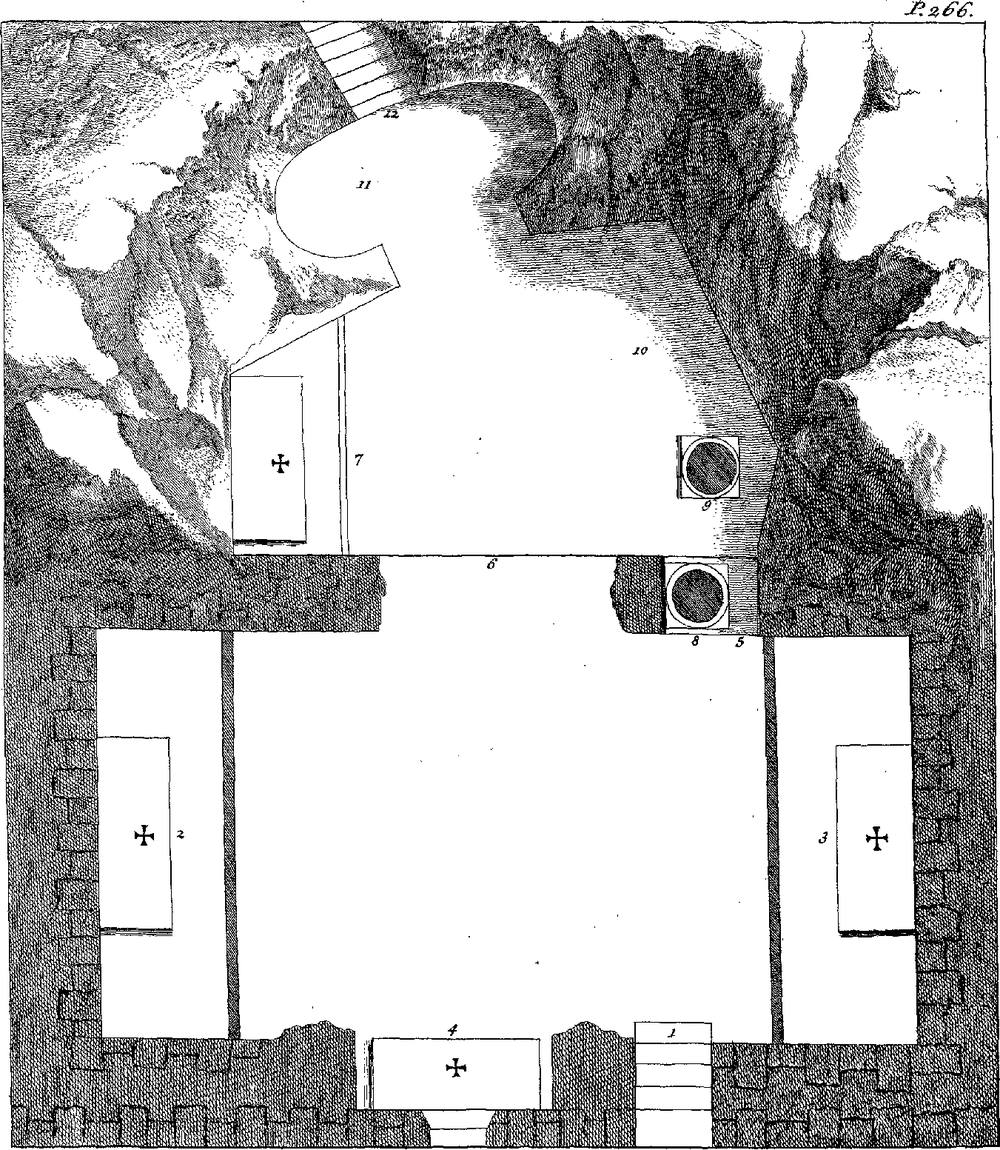
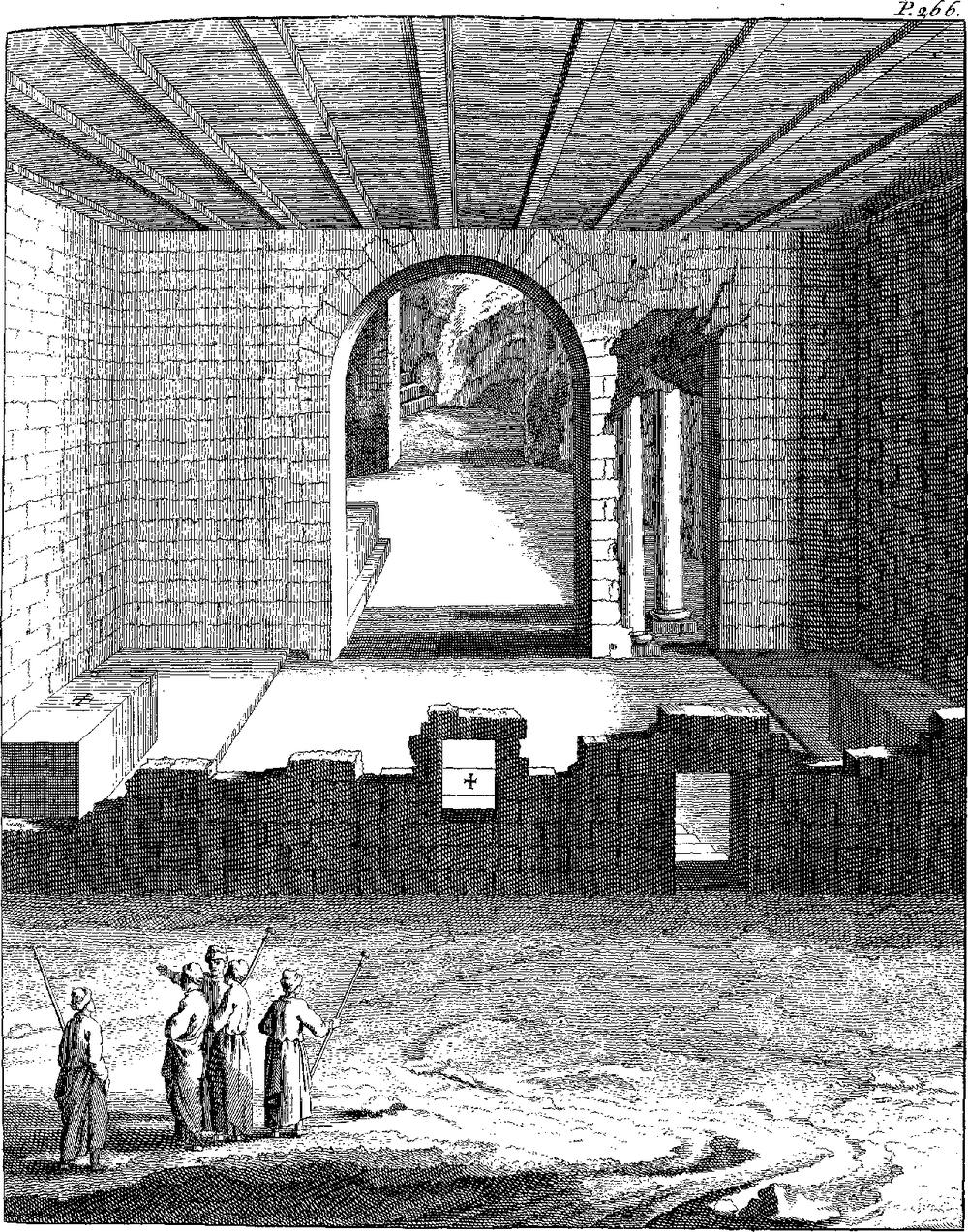
NAZARETH, a little City in the Tribe of Zebulun, in lower Galilee, to the West of Tabor, and to the East of Ptolemais. Eusebius says it is fifteen Miles from Legion towards the East. This City is much celebrated in the Scriptures, for having been the usual Place of the Residence of Jesus Christ, for the first thirty three Luke ii. 51.Years of his Life. ‘Twas there our Saviour became incarnate, where he lived in Obedience to Joseph and Mary, and from whence he took the Name of a Nazarean. After he had begun to execute his Mission, he preached there sometimes in the Synagogue. Luke iv. 16.But because his Countrymen had no Faith in him, and were offended at the Meanness of his Original, he did not many Matth. xiii. 54, 58.Miracles there, nor would he dwell therein. So he fixed his Habitation at Capernaum for the latter Part of his Life. The City of Nazareth was situate upon an Matth. iv. 13.Eminence, and on one Side there was a Precipice, from whence the Nazareans one Day had a Design of throwing down our Saviour, because he upbraided them Luke iv. 29.with their Incredulity.
St. Epiphanius says,27 that in his Time Nazareth was only a Village, and that to the Reign of Constantine it was inhabited by Jews alone, exclusive of all Christians. Adamnanus, a Writer of the seventh Age,28 says, that in his Time there were two great Churches to be seen at Nazareth, one in the midst of the City, built upon two Arches, in the Place where our Saviours House had stood. Under the two Arches now mentioned, was a very fine Fountain, which furnish’d Water to the whole City, and from whence Water was drawn also by the Help of a Pully, for the Use of the Church above. The second Church of Nazareth was built in the Place where the House stood, wherein the Angel Gabriel revealed to the Virgin Mary the Mystery of our Lord’s Incarnation. This is what Adamnanus says upon this Matter. Villibrode, in the eighth age,29 speaking of the same Church of Nazareth, says, that the Christians were often obliged to redeem it with Money from the Pagans, who otherwise threatened to demolish it. Phocas who wrote in the twelfth age says, that as soon as one enters into Nazareth, one finds the Church of St. Gabriel, under which is a little Vault, wherein is the Fountain near which the Angel first spoke to Mary. It may be here observed, that the orientals30 thought the Angel first spoke to Mary near a Fountain, and afterwards in her own House. Phocas adds, that in the same City there is a very handsome Church, which was heretofore the House of St. Joseph. We are assured that the Church of Nazareth, or of the Incarnation, which we have mentioned before, and which is supported by two Arches, is still in being to this Day.
Now all that is hitherto related in this Matter, will by no Means agree with the famous Translation of the House of the Virgin Mary; which in 1291, is pretended to have been removed by the Assistance of Angels,31 from the City of Nazareth into Dalmatia; from whence it was carried four Years after, beyond the Gulph of Venice, into the Diocese of Recanati, in the Borders of Ancona, and set upon the Land of a Lady named Lauretta; from whence the Church that was found there, obtained the Name of our Lady of Lauretto. But the Situation of this holy House being in a Wood, to which it was dangerous to resort, because of Robbers, it was a third Time transported at the Distance of half a League from thence upon a Hill; and once more it was carried from thence to the Place where it stands at present. It is very probable, that all these different Translations were no other than so many different Buildings, made upon the model of the Church of Nazareth; just as in several Places Sepulchres have been built, upon the Model of that at Jerusalem.
NAZARITE, or Nazarean. This Term may signify, 1st, One that is of Nazareth, or any Native of this City. 2d, This Name was given to Jesus Christ and his Disciples; and commonly it is taken in a Sense of Derision and Contempt, in such
Authors as have written against Christianity. 3d. It has been taken for a Sect of Hereticks call’d Nazareans. 4th, For a Nazarite, a Man that has laid himself under the Obligation of a Vow, to observe the Rules of Nazaritesbip; whether it be for his whole Life, as Sampson and John the Baptist; or only for a Time, as those mentioned in Numbers vi. 18, 19, 20. Amos ii. 11, 12. Lastly, Gen. xlix. 26. Deut. xxxiii. 16.the Name Nazarite in some Passages of Scripture denotes a Man of particular Distinction and great Dignity in the Court of some Prince. But we must speak of these several Sorts of Nazarites something more distinctly.
The Name of Nazarene belongs to Jesus Christ, not only because of his having lived the greatest part of his Life at Nazareth, and because this City has always been consider’d as his Country, but also because the Prophets had foretold, that he should be call’d a Matth. ii. 23.Nazarene. And he came and dwelt in a City call’d Nazareth, that it might be fulfill’d which was spoken by the Prophets, he shall be call’d a Nazarene. We find no particular Place in the Prophets, in which it is said that the Messiah should be called a Nazarene; and St. Matthew only quotes the Prophets in general. Perhaps he would insinuate, that the Consecration of the Nazarites, and the great Purity of which they made Profession, was a Type and a sort of Prophecy of those of our Numb. vi. 18, 19.Saviour; or else that the Name of Nazir or Nazarite, given to the Patriarch Joseph, was a Prophecy which was to be fulfill’d in the Gen. xlix. 26. Deut. xxxiii. 16.Person of Jesus Christ, of whom Joseph was a Figure. Lastly, St. Jerom1 was of Opinion, that St. Matthew here alludes to that Passage of Isaiah xi. 1. and lx. 21. And there shall come forth a Rod out of the Stem of Jesse, and a Branch (in Hebrew, Nezer,) shall grow out of his Roots. This Branch or Nezer, and this Rod, are certainly intended to denote Jesus Christ, by the general Consent of all the Fathers and Interpreters.
Nazarean, when it is put for the Hereticks known by this Name, denotes Christians converted from Judaism, whose chief Error consisted in defending the Necessity or Expediency of the Works of the Law, and who obstinately adhered to the Practice of the Jewish Ceremonies. The Name of Nazarenes at first had nothing odious in it, and it was often given to the first Christians. The Fathers frequently mention the Gospel of the Nazarenes, which differs nothing from that of St. Matthew, which was either in Hebrew or Syriack, for the Use of the first Converts, but was afterwards corrupted by the Ebionites. These Nazarenes preserved this first Gospel in its primitive Purity. Some of them were still in being in the Time of St. Jerom32, who does not reproach them with any Error. They were very zealous Observers of the Law of Moses, but had the Traditions of the Pharisees in very great Contempt. Nazarite, when put to signifie those under the antient Law, who made a Vow of observing a more than ordinary Degree of Purity33, denotes a Man or Woman, who engage themselves by a Vow to abstain from Wine and all intoxicating Liquors, to let their Hair grow without cutting or shaving, not to enter into any House that was polluted by having a dead Corps in it, nor to be present at any Funeral. And if by Chance any one should have died in their Presence, they began again the whole Ceremony of their Consecration and Nazaritesbip. This Ceremony generally lasted eight Days, sometimes a Month, and sometimes their whole Lives. When the Time of their Nazaritesbip was accomplish’d, the Priest brought the Person to the Door of the Temple, who there offer’d to the Lord a He-Lamb for a Burnt-Offering, a She-Lamb for an expiatory Sacrifice, and a Ram for a Peace-Offering. They offer’d likewise Loaves and Cakes, with Wine necessary for the Libations. After all this was sacrificed and offer’d to the Lord, the Priest or some other shaved the Head of the Nazarite at the Door of the Tabernacle, and burnt his Hair, throwing it upon the Fire of the Altar. Then the Priest put into the Hands of the Nazarite the Shoulder of the Ram roasted, with a Loaf and a Cake, which the Nazarite returning into the Hands of the Priest, he offer’d them to the Lord, lifting them up in the Presence of the Nazarite. And from this Time he might again drink Wine, his Nazaritesbip being now accomplished.
As to those that were perpetual Nazarites, as were Sampson and John the Baptist, it appears that they were consecrated to their Nazaritesbip by their Parents, and continued all their Lives in this State, without drinking Wine, or cutting their Hair.
Those that made a Vow of Nazaritesbip out of Palestine, and could not come to the Temple when their Vow was expired, contented themselves with observing the Abstinence required by the Law, and after that cutting their Hair in the Place where they were; as to the Offerings and Sacrifices prescribed by Moses, which were to be offered at the Temple, by themselves, or by others for them, they deferred this till they could have a convenient Opportunity. Hence it was, that St. Paul being at Corinth, and having
made the Vow of a Nazarite, he had his Hair cut off at Cenchrea, a Port of Corinth, and put off the satisfying the rest of his Vow, till he should arrive at Jerusalem. See Acts xviii. 18.
When a Person found he was not in a Condition to make a Vow of Nazariteship, or had not Leisure to perform the Ceremonies belonging to it; he contented himself by contributing to the Expence of the Sacrifices and Offerings of those, that had made and fulfill’d this Vow: And by this Means he became a Partaker in the Merits of such Nazariteship. Josephus34 in order to magnifie the Zeal and Devotion of Herod Agrippa King of the Jews, says that he caus’d several Nazarites to be shaven. Maimonides35 says, that he that would thus partake in the Nazariteship of another, went to the Temple, and said to the Priest, “ In such a Time such an “ one will finish his Nazariteship; I intend to defray the Charge of his Tonsure, either in Part, or in the Whole”. When St. Paul came to Jerusalem, in the Acts xxi. 23, 24.Year of Christ 58, the Apostle St. James the lesser, with the other Brethren, said to him, That to quiet the Minds of the converted Jews, who had been inform’d that he every where preach’d up the entire abolishing of the Law of Moses; he ought to join himself to four of the faithful, who had a Vow of Nazariteship upon them, and contribute to the Charge of the Ceremony at the shaving of their Heads; by which the new Converts would perceive, that he continued to keep the Law, and that what they had heard of him was not true.
Nazarite, when made use of to express a Man exalted to great Dignity, as it is said of the Patriarch Joseph, that he was a Nazarite among his Brethren; I say, Nazarite in this Sense is variously understood. Gen. xlix. 26. Deut. xxxiii. 16. Vulgat.Some think it signifies one who is crown’d, chosen, separated, distinguish’d. Nezer in Hebrew signifies a Crown. The Seventy translate this Word by, a Cheif, or by, him that is honour’d. We think that Nazir was a Name of Dignity, in the Courts of the Eastern Princes. Even at this Day in the Court of Persia36, the Nezir is the Superintendant General of the King’s House-hold, the chief Officer of the Crown, and the High Steward of his Family, Treasures, and Revenues. In this Sense Joseph was the Nezir of the House of Pharaoh.
Gen. xlix. 26.NAZIR37, or Nezir. The Patriarch Jacob, in his last Blessing that he gave to his well-beloved Son Joseph, says thus to him, The Blessings of thy Father have prevailed above the Blessings of my Progenitors, unto the utmost Bound of the everlasting Hills. They shall be on the Head of Joseph, and on the Crown of the Head of him that was separate from his Brethren: Or, as the Nazir of his Brethren. The same Word Nazir signifies a Crown, or he that is crown’d, distinguish’d, honour’d, separated, chosen. In the Eastern Countries38 Nezir is a Name of Dignity. It signifies the Superintendant General of the Court of the King of Persia, the first Officer of the Crown, the great Steward of his Houshold, Revenues, and Treasures. He has the Inspection of the other Officers of the King’s House, of his Table, Guards, and Pensions. ‘Tis very like what the antient Persians call’d the King’s Eyes.39 Moses also gives to Joseph the Name of Nazir, speaking of the Tribes of his two Deut. xxxiii. 16.Sons Ephraim and Manasseh.
NEAH, Nea, or Noa, a City of the Tribe of Zebulun. Josh. xix. 13.40. I suspect it to be the same as Neve, mention’d in the Itinerary of Antoninus, six and thirty Miles from Capitolias: But I must own, the Manner of writing Noa or Neah is not very favourable to this Conjecture. 1 Sam. ii. 35. iii. 20. Heb. 1 Sam xxii. 14. Job. xii. 20. Heb.See Reland, Tom. II. p. 909.
NEAMAN, or Neeman, the same as Naaman. This Word signifies in general, a great Officer of a Prince’s Houshold. Literally it signifies the faithful, in which Sense it is sometimes taken in Scripture. It is said, for Example41, that Moses is the faithful Servant, the Neaman in the House of God. In the first Book of Samuel the Lord says he will raise a Neeman in his House; and quickly after all Israel knew, that Samuel was this faithful Servant, this Neeman. David was Neaman and Son-into Law King Saul. Job says, that the Lord when he pleases takes from the Neemans their Eloquence, and from old Men their Wisdom.
I. NEAPOLIS, or Naplouse. This is the City of Shechem, or at least a City very near it. Its true Name, as found upon Medals, is Flavia Neapolis Syriæ Palæstinæ, or Samariæ. The Article Shechem may be consulted.
II. NEAPOLIS, now call’d Napoli, of which mention is made, Acts vi. 11. ‘Tis a City of Macedonia, whither St. Paul came after he had left the Isle of Samothracia. From Neapolis he came to Philippi. Napoli is very near the Borders of Thrace.
NEARIAH, or Naariah, the fifth Son of Shechaniah. He was one of those who,
at the Head of five hundred Men of the Tribe of Simeon, went to attack the Remnant of the Amalekites in Mount Seir, where they defeated them, and dwelt in their Country when they had conquer’d it. 1 Chron. iii. 22. iv. 41.The Time of this Expedition is not known.
NEBACHAS, a God of the Hivites. 2 Kings xvii. 31. ‘Tis not known who this God was. Literally it may stand for Nebo the Seer, the Oracle of Nebo. The Rabbins, followed by several Commentators, think, that Nebachas had the Shape of a Dog, something like Anubis of the Egyptians.
Omnigenúmque Deúm monstra & latrator Anubis.
Virg. Æneid. 6.
Nabac in Hebrew signifies to bark. To support the Opinion of those, who will have Nebachas to signifie a Dog, it may be observed, that the Orientals had a great Veneration for a Dog. I shall not repeat what I have already said concerning the Egyptians, among whom there were whole Cities that worship’d this Animal. Oppida tota canem venerantur. The Magians, at the Report of Herodotus42, differ in this from the Egyptian Priests, that the Egyptians kill no Animal, except what they sacrifice to their Gods: Whereas the Magians slay all kind of Animals, excepting only Men and Dogs. They even think it a meritorious Act to kill great Numbers of Reptiles, Serpents, and other such Creatures. They sacrificed a Dog to Hecate, who is the Moon, and this Animal was consecrated to her. There was also a Dog in the Mysteries of Mitras, or the Sun; and in a Sacrifice to this Deity, represented in an ancient Bas-releif, there is seen a Dog licking up the Blood of a Bull. ‘Tis said, that Zoroaster inserted among his Rules of Charity, that Dogs were to be protected and loved. The Persians exposed dead Bodies to Dogs, before they buried them, thinking it to be a Token of Happiness, to be drawn about by Dogs. This Animal is the Symbol of Fidelity and Vigilance; yet I do not know that any one has advanced, that Dogs were worship’d any where else but in Egypt.
NEBAJOTH, or Nabajoth, the first Son of Ishmael, and Grandson of Abraham and Hagar. He was Father of the Nabathean Arabians. See NABATHEANS.
NEBALLAT, a City of Benjamin. Nehem. xi. 34.
NEBAT, or Nabath, of the Tribe of Ephraim, of the Race of Joshua, and Father of Jeroboam, the first King of the Ten Tribes, and the Author of their Revolt against the House of David. 1 Kings xi. 26. The Author of the Hebrew Questions upon the Books of Kings, says, that Nebat was the same as Shimei, who cursed David, 2 Sam. xvi. 5, &c. that Shimei was of the Family of Saul, and consequently of the Tribe of Benjamin, and therefore could not be of the Tribe of Ephraim.
I. NEBO, or Nabo, a City in the Tribe of Reuben. Numb, xxxii. 38. This City being in the Neighbourhood of the Country of Moab, the Moabites became Masters of it, and in the Time of Jeremiah it was in their Possession. Jerem. xlviii. 1.
II. NEBO, a City of Judah. See Ezra ii. 29. x. 43. and Neb. vii. 33. ‘Tis probably the Village of Nabau, eight Miles from Hebron, towards the South, which was forsaken in the Time of Eusebius and St. Jerom.
III. NEBO, a Mountain beyond Jordan, where Moses died. Deut. xxxii. 49.
IV. NEBO, an Idol of the Babylonians. Bel boweth down, Nebo stoopeth, says Isaiah xlvi. 1. The Word Nebo comes from a Root that signifies to prophesy, and therefore may stand for an Oracle. There is some Probability, that Bel and Nebo are but one and the same Deity, and that Isaiah has made use of these as synonymous Terms. The God Bel was the Oracle of the Babylonians. The Name Nebo or Nabo is found in the Composition of the Names of several Princes of Babylon; as Nabonassar, Nabopolassar, Nebuchadnezzar, Nabuzardan, Nabusesban, &c. The Seventy instead of Nebo read Dagon43. The Chaldeans worship’d a God that they call’d Odacon.
I. NEBUCHADNEZZAR, Nebuchadrezzar, Nabuchodonosor, &c. King of Assyria, otherwise called Saosduchin, began to reign at Nineveh in the Year of the World 3335, before Christ 665, before the vulgar Æra 669. In the twelfth Year of his Reign, and in the Year of the World 3347, this Prince in a set Battle overcame Arphaxad King of the Medes in the Plains of Ragau. Then Nebuchadnezzar sent to all the Inhabitants of Cilicia, Damascus, Mount Libanus, Phœnicia, Judea, and all the other Nations adjoining to them, as far as Ethiopia, to require of them to acknowledge him as King, and to submit to his Empire. But all these People sent back his Ambassadors with Disdain, and slighted his Menaces. Nebuchadnezzar enraged at this, swore by his Throne that he would
Judith ii. 1, 2, &c.be revenged for this Affront44; and in the thirteenth Year of his Reign he assembled the chief Officers of his Army, and acquainted them with the Resolution he had taken, of bringing the whole Earth into Subjection to his Government. He appointed Holofernes his Generalissimo, gave him his Instructions, put large Sums of Money into his Hands, and sent him away at the Head of a powerful Army, to reduce all those Nations that would not acknowledge his Empire. The Success of this War has already been mentioned under the Title Holofernes. Nebuchadnezzar, otherwise Saosduchin, had Saracus or Chynaladan for his Successor, in the Year of the World 3356, before Christ 644, before the vulgar Æra 648.
II. NEBUCHADNEZZAR, otherwise Nabopolassar45, Father of Nebuchadnezzar the Great, whose Name is so much celebrated in Scripture. Nabopolassar was a Babylonian, and Saracus King of Assyria gave him the Command of his Army. He made a League with Astyages, otherwise called Abasuerus, who thereupon gave his Daughter Amyitis in Marriage to Nebuchadnezzar Son of Nabopolassar. Therefore Abasuerus and Nabopolassar having joined their Forces, made an Insurrection against Saracus King of Nineveh, besieg’d him in his capital City, took him Prisoner, and upon the Destruction of the Assyrian Monarchy raised up two Kingdoms; that of the Medes possessed by Astyages, or Abasuerus, and that of the Chaldeans, or of Babylon, founded by Nabopolassar, in the Year of the World 3378, before Christ 622, and before the vulgar Æra 626. Nabopolassar died in the Year of the World 3399, before Christ 601, before the vulgar Æra 605; and left the Kingdom of Babylon to his Son Nebuchadnezzar the Great, whom we are going now to mention.
III. NEBUCHADNEZZAR, Son and Successor of Nabopolassar, succeeded to the Kingdom of Chaldea in the Year of the Word 3399, before Christ 601, before the vulgar Æra 605. Some time before this, Nabopolassar had taken him as a Partner in the Kingdom, and sent him to recover Carchemish, which had been conquered from him four Years before, by Necho King of Egypt. Nebuchadnezzar having been succesful in this Expedition, marched against the Governor of Phœnicia, and 2 Chron. xxxvi. 6.against Jehoiachim King of Judah, who was a Tributary to Necho King of Egypt. He took Jehoiachim, and put him in Chains, in order to carry him Captive to Babylon; but on farther Thoughts he left him in Judea, under the Condition of paying him a large Tribute. He took away several Persons of the first Quality from Jerusalem; among others, Daniel, Hananiah, Mishael, and Azariah, all of the Royal Family, whom the King of Babylon caused to be brought up in Dan. i. 1, 2, 3, &c.his Court, in the Language and in the Learning of the Chaldeans, that they might be employed at Court.
Nabopolassar dying about the End of the Year of the World 3399, before Christ 601, before the vulgar Æra 605: Nebuchadnezzar, who was then either in Egypt or Judea, made haste to Babylon, and left to his Generals the Care of bringing to Chaldea the Captives he had taken in Syria, Judea, Phenicia, and Egypt46; for according to Berosus, he had subdued all these Countries. He distributed these Captives into several Colonies, and in the Temple of his God Belus he deposited the Sacred Vessels of the Temple of Jerusalem; and the other rich Spoils he had taken from his Enemies.
Jehoiachim King of Judah continued three Years in Fealty to King Nebuchadnezzar, but then being weary of paying Tribute to the Chaldeans, he threw off their Yoke, and would not acknowledge them any longer47. The King of Chaldea did not think fit to march in Person against him, but sent Troops of Chaldeans, Syrians, Moabites, and Ammonites, who harras’d all Judea. This War continued three or four Years48; in which at last Jehoiachim was besieged and taken in Jerusalem, put to Death, and his Body thrown to the Birds of the Air, according to the Predictions of the Prophet Jeremiah.Jer. xxii. 18, 19. xxxvi. 30. See JEHOIACHIM.
In the mean Time Nebuchadnezzar being then at Babylon, in the second Year of his Reign, had a very mysterious Dream49, in which he saw a Statue made up of several Metals, having a Head of Gold, a Breast of Silver, the Belly and Thighs of Brass, the Legs of Iron, and the Feet half of Iron, and half of Clay: A little Stone coming of its own Accord from the Mountain, struck against
the Statue, and broke it to Pieces. The King having had this Dream, which gave him a great deal of Uneasiness, afterwards had so far forgot it, that he could not recover the least Notion of it. He ordered all his Diviners and Interpreters of Dreams to be sent for, but none of ‘em could tell him either the Dream or the Interpretation. Nebuchadnezzar being then in Wrath, pronounced a Sentence of Death against them all, which was going to be put in Execution, when Daniel was informed of it. He went immediately to the King, and desired him to respite the Sentence a little while, and he would endeavour to satisfie the King’s Desire. Daniel address’d himself to God, who in the Night revealed to him the King’s Dream, and also the Interpretation.
The Day following Daniel went to Arioch, who had Orders to put to Death all the Diviners of Babylon, and told him that he was then ready to satisfie the King’s Desire concerning the Dream in Question. The Prophet was admitted to Nebuchadnezzar’s Presence, and told him, that it was from the God of Heaven, and not from the Wise-men of Babylon, that he was to expect the Interpretation of his Dream. He then informed him what his Dream was, as is above related; to which he added this Explication. You are the King of Kings, and the most puissant Monarch in the whole World. ‘Tis you that are represented by the Golden Head of the Statue. After you there will arise a Kingdom inferior to yours, represented by the Breast of Silver; and after this another inferior to the former, which is denoted by the Belly and Thighs of Brass. After these three Empires, which are those of the Chaldæans, Persians, and the Greeks, there will arise a fourth, denoted by the Legs of Iron, and which represents the Empire of the Romans. Under this last Empire God will raise a new one, which shall be of greater Strength, Power, and Extent than all the others. This is that of the Messiah, represented by the little Stone coming from the Mountain, and overthrowing the Statue.
When Nebuchadnezzar had heard this Explication, he prostrated himself to the Ground, and worshipped Daniel; and commanded that Sacrifices and Incense should be offered to him. He acknowledged that the God of Daniel was the God of Gods, and the Lord of Kings, who only knew the most hidden Things, and reveals them when he pleases. Then the King raised Daniel to great Honour, made him noble Presents, set him over all the Wise -men of Babylon, and gave him the Government of that Province: At his Request he granted to Shadrach, Meshach, and Abednego the Oversight of the Works of the same Province of Babylon.
Jehoiakin, or Jechoniah, King of Judah having revolted against Nebuchadnezzar50, this Prince marched against him with an Army, and besieged him in Jerusalem. Jehoiakin was forced to surrender himself, and submit to the King of Babylon’s Mercy. But this Prince took him with his chief Officers, and led him Captive to Babylon, with his Mother, his Wives, and the best Workmen of Jerusalem, to the Number of ten Thousand Men. From the rest of the Country he took away also seven Thousand Men bearing Arms, with a Thousand Smiths and Carpenters. Among the Captives were Mordecai the Uncle of Esther, and Ezekiel the Prophet. Lastly, he took away all the Vessels of Gold which Solomon had made for the Use of the Temple, and whatever valuable Things were to be found in the King’s Treasury. Instead of Jeconiah, Nebuchadnezzar set up Mattaniah his Uncle by the Father’s Side, to whom he gave the Name of Zedekiah.
When Zedekiah had continued faithful to Nebuchadnezzar for nine Years51, being then weary of Subjection, he revolted against him, and entered into a Confederacy with the neighbouring Princes, that he might oppose him with the greater Security. The King of Babylon came into Judæa with a powerful Army, and having reduced the chief Places of the Country, he laid Siege to Jerusalem. But Pharaoh Hophra, or Vaphres, coming out of Egypt to the Assistance of Zedekiah, Nebuchadnezzar raised the Siege for some Time, went to meet the King of Egypt, overcame him in Battle, and forced him to retire into his own Country. After which he returned to the Siege of Jerusalem52, and was three Hundred and ninety Days before the Place, before he could take it. But at last, in the eleventh Year of Zedekiah, and in the Year of the World 3416, before Christ 584, and before the Vulgar Æra 588, the City was taken. Zedekiah attempted to make his Escape, 2 Kings xxv. Jerem. xxxiv. lii.but he was taken and brought to Nebuchadnezzar, who was then at Riblah in Syria. The King of Babylon condemned him to dye, caused his Children to be put to Death in his Presence, and then bored out his Eyes, loaded him
with Chains, and sent him to Babylon. Nebuzar-adan, the General of the Chaldæan Troops, took Care of Jeremiah, according to the Orders he had received from the King, and left him at full Liberty to go where he pleased. Then setting Fire to the City and Temple, he brought to Babylon all the Captives he had got during the War. He left Gedaliah in the Country, as Governor to the small Remains of the People, 2 Kings xxv. 11, 12, &c. Jerem. xxxix. 10, 11. xl. 5, 7, &c.whom the Sword, and other Miseries of War had yet spared.
Three Years after the Jewish War, Nebuchadnezzar came to besiege the City of Tyre53, which Siege held for thirteen Years. But during this Interval of Time, he made War also with the People bordering upon the Jews, as the Sidonians, the Moabites, the Ammonites, and Idumæans; and these he treated much as he had done the Jews Jerem. xlviii. xlix Ezek. xxv.before. Josephus says54, that these Wars happened five Years after the Destruction of Jerusalem, and consequently in the Year of the World 3421, before Christ 579, before the Vulgar Æra 583. The City of Tyre was taken in the Year of the World 3432, before Christ 568, before the Vulgar Æra 572. Ithobaal, who was then King of it, was put to Death, and Baal succeeded him. The Lord as a Reward to the Army of NebuchadnezzarEzek. xxix. 17,, which had lain down so long before this Place, gave up Egypt also to them, and all its Spoils. Nebuchadnezzar came into this Country, and made an easy Conquest of it, because then they were divided by civil Wars among themselves; he enriched himself with the Booty he had taken, and returned with all his Army in Triumph to Babylon, bringing along with him a vast Number of Captives55.
Nebuchadnezzar being now at Peace in Babylon, applied himself to the adorning, aggrandizing, and enriching the City with magnificent Buildings. ‘Twas then he undertook those famous Gardens, which were supported by Arches, and which have been esteemed as one of the Wonders of the World. Several also have ascribed to him the Walls of Babylon, though many Authors have given the Honour of this Work to Semiramis. Berosus and Abidenus may be consulted, as they are cited in Josephus56. About this Time57 Nebuchadnezzar had a Dream of a great Tree, very tall, and loaden with Fruit. On a sudden an Angel descending from Heaven, commanded that the Tree should be cut down, that the Branches, Leaves, and Fruit should be beat down, but that the Trunk and the Root should be preserved in the Earth, that it should be tied with Chains of Iron and Brass, that it should dwell among the Beasts of the Field, and that for seven Years it should be in the Condition of the Brutes, feeding upon the Herbs of the Field, and exposed to the Dew of Heaven. The King sent for all the Diviners in the Country, none of which could explain his Dream to him. Then Daniel coming to him, informed him, that this Dream let him know what was to happen to himself. ‘Tis you, says Daniel to him, that are represented by the great Tree: You are to be brought low, to be reduced to the Condition of a Brute, and to be driven from the Society of Men. But when you have been for seven Years in this State, and when you shall have acknowledged that all Power is derived from Heaven, you shall be restored to your first Condition. Wherefore break off thy Sins by Righteousness, and thine Iniquities by shewing Mercy to the Poor, if it may be a lengthening of thy Tranquility.
A Year after58, as Nebuchadnezzar was walking in his Palace at Babylon, he began to say within himself, “ Is not this Babylon the Great, which I have built in the “ Greatness of my Power, and in the “ Brightness of my Glory?” But hardly had he pronounced these Words, but a Voice was heard from Heaven, telling him, that he should be deprived of his Kingdom, driven from the Company of Men, and be reduced like a brute Beast to eat the Herbs of the Field. This Threatning was immediately executed upon him; for he fell into a Distemper or Distraction, which so altered his Imagination, that he thought himself to be metamorphosed into an Ox. He took up the Inclinations and Manners of this Creature; and after having been seven Years in this State, God opened his Eyes, he acknowledged his Dependance; and his Understanding was restored to him59. He again recovered his Royal Dignity, and continued to reign with the same Splendor as formerly60. This is what he acknowledges himself, in a Decree which he published sometime after, upon the Occasion we shall now relate.
Nebuchadnezzar’s Repentance was neither solid nor sincere. For the same Year of his Restoration, he caused a golden Statue to be set up, whose Height was sixty
Cubits, and Breadth six Cubits; and this he erected in the Plains of Dura, in the Province of Babylon. And having appointed a Day for the Dedication of this Statue, he assembled all the principal Officers of his Kingdom; and published by an Herald, that all his Subjects should adore this Image, when they heard the Sound of the Instruments of Musick, on Penalty of being cast into a burning fiery Furnace, to all those that should disobey these Orders. As soon as the Solemnity was begun it was observed, that the Jews, and especially the three Companions of Daniel, would not bend the Knee, nor worship the King’s Image; of which Piece of Contumacy he was quickly informed. Nebuchadnezzar therefore commanded Shadrach, Meshach, and Abednego to be called to him. Daniel probably was absent. He asked them why they presumed to disobey his Orders; to which they replied, that they neither feared the Flames, nor any other Penalty; that the God, whom only they would worship, knew how to preserve them; but if the Lord should not think fit to deliver them out of his Hands, yet however they would obey him rather than Men.
At these Words the King caused them to be bound, and to be thrown into the Furnace, with all their Cloaths; and the Furnace being vehemently heated, the Flame consumed the Men that cast them in; but it spared Shadrach, Meshach, and Abednego. The Angel of the Lord came down from Heaven, and divided the Flames, making a fresh Breeze in the Middle of the Furnace, and a pleasant Dew: So that the Fire did not so much as touch them, or gave them the least Uneasiness. Then these three Men glorified God, and called upon all his Creatures to join with them in his Praise. Nebuchadnezzar seeing this Miracle, was much astonished at it. He got up on a sudden, and said to his Nobles; ” Did we not cast three Men ” into the Fire, and from whence is it ” that I see four Men walking in the midst ” of the Flames? And the fourth is like ” the Son of God.” Then Nebuchadnezzar approaching towards the Mouth of the Furnace, called the three Hebrews by their Names, who presently came out of the Furnace in perfect Health, to the great Astonishment of the whole Court. Nor could they find that their Cloaths were so much as singed, nor had the Smell of Fire passed on them.
Then Nebuchadnezzar gave Glory to the God of Shadrach, Meshach, and Abednego. He acknowledged his Power and Majesty, and ordained, that whoever should utter any blasphemous or injurious Words against the Lord, the God of the Hebrews, should be put to Death, and his House converted into a Dunghil. He exalted the three Hebrews to great Dignity in the Province of Babylon, and made a Decree, in which he declared the Greatness of the God of the Hebrews, and related what Dan. iv. 1, 2, 3, &c.had happened to him after his Dream, in which he had seen the great Tree, which was cut into Pieces by the Command of God, as above related.
Nebuchadnezzar died this same Year, being the Year of the World 3442, before Christ 558, before the Vulgar Æra 562, after having reigned three and forty Years61. Megasthenes quoted by Eusebius62 says, that this Prince having ascended to the Top of his Palace, was there seized with a Fit of divine Enthusiasm, and cried out, ” O Babylonians, I declare to you a Misfortune, ” that neither our Father Belus, nor Queen ” Baltis, have been able to prevent. A ” Persian Mule shall one Day come into ” this Country, who, supported by the ” Assistance of your Gods, shall bring you ” into Slavery. He shall be assisted by ” the Mede, the Glory of the Assyrians. (This Persian Mule is Cyrus, who was born of a Mother that was a Mede, and a Persian Father. The Mede who assisted Cyrus was Cyaxares, or Darius the Mede.) Nebuchadnezzar added, ” Would to God ” this Conqueror might perish in the ” Depths of the Sea, or in some dismal ” Wilderness where no Human Creature ” sets his Foot, that we may not see the ” Evils with which we are threatened. ” And would to God that I my self had had ” a happier Fate before this had come into ” my Mind.” At saying which he disappeared. ‘Tis doubted whether these Words, He disappeared, are to denote his Death, or only his Flight and Retreat, which followed his Metamorphosis into an Ox. The Name Neb-
Nebuchadnezzar or uchadonosor63 in the Chaldæan Tongue may signifie, a Treasure defended by the God Nebo.
Persian Authors relate,64 that Laborasb, the fourth King of Persia, of the Dynasty of the Caianides, who succeeded Kaikhostrot, made great Conquests in the East, and afterwards carry’d his victorious arms to the western Parts of his Empire. For he sent into Palestine one of his Generals call’d Raham, and surnamed Bakhtalnassar, that is to say, The Happiness of Victory, from which the Hebrews have formed the Name Nebuchadnezzar, and the Greeks
that of Nebuchadonosar, under the Conduct of whom all Syria was reduced to his Obedience. The King of Judah, of the Race of Solomon, who then reigned at Jerusalem, refusing to submit himself, was attacked by Raham, who beat the Jews, took the City of Jerusalem, sack’d and intirely destroy’d it, after which he returned into Persia, loaded with rich Spoils, and accompanied by an almost infinite Number of Prisoners.
Other Historians give to Nebuchadnezzar the Name of Gudarz, and say he was Lieutenant-General to King Loborash; who having spent the greatest Part of his Life in the most western Parts of the Empire, was almost unknown to the Hebrews and the Arabians; while Gudarz, called also Raham, or Nebuchadnezzar, acquired a very great Reputation, tho’ he was but the Subaltern or Lieutenant-General of Loborash’s Army. But all are agreed about his great Valour and martial Exploits, and maintain, that King Loborash was cotemporary with the Prophets Jeremiah, Daniel, and Esdras. It would be undoubted very difficult to reconcile all this with what the Scripture informs us of, concerning Nebuchadnezzar, whom it always represents as one of the greatest Kings of the World.
It may not be amiss to add a Word here, concerning the Metamorphosis of this Prince into an Ox. There are many Opinions about this Matter. Origen65 believed the Thing to be impossible, and has turned it into an Allegory. Bodin66 thought that Nebuchadnezzar was really changed into a Bull, and did not only lose the Shape and Sentiments, but even the Soul of a Man. But others maintain67, that this Change was only in his Body and outward Form, but not in his Soul; the King preserving his Reason in the midst of his Misfortune, as Apuleius during his Change into an Ass, and like those Italians mentioned by St. Austin68, who after they had tasted some Cheese that was given them by some Magicians of the Country, were immediately changed into Beasts of Burden, and then after a certain Time recovered their own Shape again, and returned to their first Condition. Some Rabbins have pretended, that the Soul of Nebuchadnezzar quitted the Body of that Prince, and gave Place for a Time, to that of an Ox, which communicated its Sentiments to him, and imparted to his Body the same Motions, the same Taste, the same Inclinations as may be observed in Oxen. Others have acknowledged in Nebuchadnezzar69 only a vitiated imagination, and in his Subjects a Kind of Fascination of the Eyes, which made both believe that Nebuchadnezzar was changed into an Ox, and had the Figure of one, tho’ really there was no such Thing. Pretty like the Story of the young Woman that was brought to St. Macair70, whom her Parents took to be changed into an Heifer, when there was nothing in it; and St. Macair undeceived them by removing the Delusion that had affected their Eyes.
The most received Opinion is71, that by the Effect of the Power of God, Nebuchadnezzar fell into a black Melancholy, and in his Frenzy he imagined that he was become an Ox. As in the Disease called a Lycanthropy, a Man is persuaded that he is changed into a Wolf, a Dog, a Cat; a Change which only takes Place in his distempered Brain, and in his own heated Imagination, since those that are about him perceive no such Change in his outward Figure; but only in his Inclinations, his Motions, his Behaviour. So that he howls and bites like a Wolf, eats raw Meat, runs into the Fields, and avoids the Society of Men.
Thus Nebuchadnezzar imagining that he was become an Ox, grazed upon Herbs like a Brute, butted with his Horns, let his Hair and Nails grow, low’d, went naked, and imitated all the external Actions of an Ox. His People being astonished at such a Change, bound him as Mad-men or Ideots are used to be bound72; but at last he escaping out of their Hands, fled into the Fields, living there naked like an Ox, exposed to the Dew of Heaven, and to the other Inclemencies of the Weather, so that his Hair grew like the Feathers of an Eagle, and his Nails like the Claws of a Lion. Nothing more than this is required, to account for all that the Scripture says of Nebuchadnezzar. There was nothing miraculous in this, except the foretelling of this Distemper, its Approach and its Conclusion, which happened just at the Time that the Prophet had foretold.
A Question is moved concerning the Duration of this Disease. Some, as Theodoret maintain73, that the Persians distinguishing their Years into two Seasons, Winter and Summer, the seven Years of Nebuchadnezzar must be reckoned in this Manner, which will therefore reduce it to the Space of three Years and an half. Dorotheus
74, and the spurious Epiphanius75, affirm, that in Truth God had condemned Nebuchadnezzar to a seven Years Habitation with the Brutes, but that at the Instances of Daniel, the seven Years were reduced to seven Months. The false Epiphanius adds, that as Daniel did not cease to foretel to the great Men of Chaldæa, that Nebuchadnezzar should again ascend the Throne, and as the Courtiers disbelieved and derided these Predictions, in Order to convince them he obtained of God by his Prayers, that this Time might be shortened. Others maintain, that the Prince we are speaking of, was changed into an Ox for the Space only of twenty one Months. They explain these Words of Daniel, Donec septem tempora mutentur super eum, of seven Times the Space of three Months. For Tempus according to them is a quarter of a Year, or three Months. Peter Comestor makes it but seven Months, which he thus divides. For the first forty Days Nebuchadnezzar continued in his Phrenzy as a Mad-man; in the forty Days following he bewailed his Offences, and for the last forty Days he recovered by Degrees from his Infirmity. Yet according to the Counsel he had received from Daniel, he did not omit to remain for seven Years in the Exercise of Repentance; eating nothing but Herbs and Pulse, as an Atonement for his Pride and Folly.
But we need seek no other Interpreter for Daniel, but Daniel himself. It is certain that this Prophet by Tempus, means nothing else than an Year. For Example, to denote the Space of three Years and an half, he says, Tempus & tempora & dimidium temporisDan. vii. 25. Rev. xii. 14.; we find the same Way of speaking in the Revelations, and in the same Sense.
NEBUSHASBAN, or Nabusesban, one of the Generals of Nebuchadnezzar’s Army. He went with Nebuzar-adan to take Jeremiah out of Prison; and to recommend him to Gedaliah. Jer. xxxix. 13.
NEBUZAR-ADAN, or Nabuzardan, General of Nebuchadnezzar’s Armies, and the chief Officer of his Houshold. He managed the Siege of Jerusalem, and made himself Master of the City, while Nebuchadnezzar was at Riblah in Syria76. Nebuzar-adan sent Zedekiah to him thither, with the chief of the Captives; and having plunder’d the City and the Temple, he set them on fire, and reduced them to Ashes. He took away all the consecrated Vessels of the Temple, and broke in pieces the brazen Sea, the two great Pillars, and all the other Vessels that could not be carried Jer. xxxix. 11.—14. xl. 1.—6.away whole. Afterwards he gathered together all the Captives at Ramah, and there finding Jeremiah and Baruch, he suffer’d them to go where they pleased, according to the King’s Order. The other Captives he carried to Babylon, leaving Gedaliah in the Country, there to govern the miserable Remains of Judah. Some have thought that Nebuzar-adan gave Jeremiah the Ark of the Covenant, the golden Candlestick, the Tables of Incense, and of the Shew-bread, and that this Prophet hid them in a Cave of Mount Nebo, in the Land of Moab. But in this Opinion there is nothing but what is very uncertain. See our Dissertation at the Beginning of the first Book of the Maccabees, wherein we enquire whether or no the Ark of the Covenant was in the second Temple.
Four Years after Jerusalem was taken77, while Nebuchadnezzar was engaged at the Siege of Tyre, Nebuzar-adan brought to Babylon seven hundred and forty five Captives more, so that the Country was left in a manner desolate. He afterwards marched against the Ammonites, took their capital City, laid waste their Country, and brought their King and Princes Captives to Babylon. From this Time the Scripture makes no farther mention of Nebuzar-adan.
NECESSITY. This Word is taken, not only for that Need of several Things in which we may be found, but also for the Perplexity, Trouble, or Disquiet we may be in, whether we be afflicted inwardly, or assaulted by our Enemies outwardly, or in Irresolution, Difficulty, &c. It sometimes answers to the Hebrew Word Zarah, AngustiaJudg. xi. 7., and to Mezucah, coarctatio. St. Jerome has often put into the Vulgate the Word necessitas, to express a Thing that must be done immediately. But especially in the Psalms necessitates is put for angustiæ. In Wisd. xviii. 21.the Book of Wisdom it is said of Aaron, restitit iræ, & finem imposuit necessitati; he caused the dreadful Plague to cease, with which God had visited his People, upon the Occasion of the Rebellion of Korah. And Wisd. xix. 4.elsewhere, ducebat illos digna necessitas; the Egyptians were urged, as it were, into their Calamity, by a kind of fatal Necessity, of which, by their Hardness of Heart they had render’d themselves worthy.
St. Paul often speaks of the Necessities of the Saints, or of the new Converts, who were in a true and real Poverty.
The Word necessary does not always denote an absolute Necessity, but a Necessity of Decency, or of Duty, or meerly
something useful and advantageous. For Example, necesse est ut veniant scandala; It must needs be that Offences come; God suffers them to come, and makes them subservient Tob. xii. 3.to his Glory. And in Tobit, Quia acceptus eras Deo, necesse fuit ut tentatio probaret te. It was necessary, it was expedient that you should be proved by Temptation. And in St. Luke, I have bought a Luke xiv. 18.piece of Ground, and I must needs go and see it: It is convenient that I go to see it.
NECHO, or Nechao, King of Egypt. This Prince carried his Arms as far as the Euphrates, and conquer’d the City of Carchemish. He is known not only in Scripture, but by Herodotus. This Historian says78, that Necho was Son of Psammeticus King of Egypt, and having succeeded him in the Kingdom, he raised great Armies by Land, and set out great Fleets as well upon the Mediterranean Sea as the Red Sea; that he gave Battle to the Syrians near the City of Migdol, obtained the Victory, and made himself Master of the City of Cadytis. But Cadytis, says he, is a great City that belongs to the Syrians of Palestine. The Learned are not agreed about this City Cadytis. Some will have it to be Cades in Arabia Petrea; others Jerusalem, which they say is call’d Cadyta or Cadytis, the Holy City, because of its Temple. Others say it is the City Cedes in Galilee, in the Tribe of Naphtali. There is the same Difficulty about Magdalum or Migdol. See its Article.
The Scripture acquaints us with the whole Expedition of Necho in all its particulars. This Prince having drawn out his Army into the Field79, to make War with the Assyrians or Babylonians, and to take the City of Carchemish, otherwise call’d Cercusium, upon the Euphrates; Josiah King of Judah, who was a Tributary to the King of Babylon, march’d to oppose his Passage. Necho, who had no Designs against him, sent to tell him, “ What “ have I to do with you King of Judah? “ ‘Tis not against you that I am come “ forth, but against another People, against “ whom the Lord has commanded me to “ make war. Leave off therefore to set “ yourself against me, for fear the Lord “ should punish you for your Resistance. ‘Tis thought that80 Necho had received an Admonition from Jeremiah, to march against Carchemish. But Josiah would not hear the Remonstrances of Necho, but gave him Battle at Megiddo, where he re-
Matt. xviii. 7. ceived the Wound of which he died. The People of Jerusalem set up Jehoahaz or Joachaz for King of Judah, and Necho soon pass’d forwards, without making any longer Stay in Judea.
But at his Return from his Expedition, which was very successful, he halted at Riblah in Syria; and sending for Jehoahaz King of the Jews, he deposed him, loaded him with Chains, and sent him into Egypt. Then coming to Jerusalem, he set up Eliakim or Jehoiakim in his Place, and exacted the payment of one hundred Talents of Silver, and one Talent of Gold Jerem. xlvi. 2.from the Country. Jeremiah acquaints us, that the City of Carchemish was taken from Necho by Nabopolassar King of Babylon, in the fourth Year of Jehoiachim King of Judah; so that Necho did not enjoy his Conquest above four Years. Josephus adds81, that the King of Babylon pursuing his Victory, brought under his Dominion all the whole Country, which is between Euphrates and Egypt, excepting Judea. Thus Necho was again reduced within the Limits of his own Country.
NECROMANCY82, Magick, or the Black Art, which consists in raising the Ghosts of those that are deceased. The Scripture speaks at length of the Appearance of Samuel to Saul, when this Prophet was raised by the Witch of En-dor. See 1 Sam. xxviii. 7. The Word Necromancy is not to be met with in Scripture, but Moses forbids the Israelites to have Recourse to Diviners, or those that consult the Dead83. Non inveniatur in te, qui quærat à mortuis veritatem. The Enchantress that raised up Samuel is call’d Baalath-ob i, the Mistress of Ob. The Word Ob is known in Scripture, to express a Diviner, a Magician, a Necromancer, and those People that speak in their Bellies, and thereby deceive the Simple, making them believe that the Dead speak to them out of the Earth. Your Voice shall be as that of an Isai. xxix. 4. Heb.Ob, which speaks out of the Bottom of the Earth, says Isaiah speaking to Jerusalem. You shall groan, you shall not dare to speak out, but with an obscure and hollow Voice, as if it came out of the Ground. This sort of Necromancers were condemn’d Levit. xx. 6. Deut. xviii. 11.to Death by the Law of Moses; and Saul in pursuance of this Law had drove them out of the Country. But it may be seen by the Books of the Kings and 2 Kings xxi. 6. xxiii. 24. 1 Chron. x. 13. 2 Chron. xxxiii. 6.Chronicles, that they were but too frequent afterwards, and that the Law was but very ill observed in this Article, as in many others.84
The Rabbins think that the Necromancers make use of the Bones of the Dead, in making their Invocations, and chiefly of the Skull. They offered Incense to it, and did not leave off calling upon the Ghost, till the Dead appeared to them, or till some Demon taking the Shape of the Dead, presented himself to them, and spoke to them. In the History of the Pythoness of En-dor, we do not find that she used any thing else but Words. Several have been of Opinion, that in the Art of the Necromancers there was nothing on their Part but Trick and Jugling, or at most but an Illusion of the Devil; and that the Spirits of the Dead were never really raised. Some even believe, that Samuel appeared neither to Saul nor the Witch; but that this Sorceress abused the Credulity of this Prince, and the Perplexity wherein he was, to persuade him that Samuel had really appeared, and had spoken to him. On this Head may be read our Dissertation concerning the Appearance of Samuel to Saul, at the Beginning of the Commentary upon the Books of Samuel and Kings, and the Authors we have there quoted.
NEDABIAH, or Nadabiah, Son of Jeconiah. 1 Chron. iii. 18.
NEERDA, a City in Babylonia, or Mesopotamia, wherein the Jews had a famous School or University. The two Brothers Asineus and Anileus, whose Names are known in the History of Josephus85, were Natives of Neerda; and the Jews of Mesopotamia, being persecuted upon their Account, were obliged to withdraw to Nisibe and Neerda, about the Year of our Lord 40, of the Vulgar Æra.
NEGINOTH. This Term is read before some of the Psalms86. It signifies String-Instruments of Musick, to be play’d on by the Fingers, or Women-Musicians; and the Titles of those Psalms, where this Word is found, may be thus translated; A Psalm of David to the Master of Musick, who presides over the String-Instruments.
NEHEL, or Nehelam, or rather Nahal. Shemaiah, a false Prophet of Judah, was of Nehelam. Jer. xxix. 24. The Word Nehelamith may signify a Dream. Thus Shemaiah the Nehelamite may signify Shemaiah the Dreamer. We know a City call’d Nahallal or Nahalol in the Tribe of Zebulun. Joshua xix. 15. See also Judges i. 30. Perhaps Shemaiah may have been of this City.
NEHEL-ESHCOL, the Brook of Grapes87, or the Valley of the Grapes. This Name was given to the Valley of the Land of Promise, wherein the Spies of the Children of Israel gather’d the Bunch of Grapes, which they brought to the Camp at Kadesh, upon a Pole between two Men. See Numb xiii. 23. The Hebrew Word Nebel or Nachal signifies either a Valley or a Brook. Nehel-eschol was to the South of the promised Land.
NEHEMIAH, or Neemias, Son of Hachaliah, was born at Babylon during the Captivity. He was, according to some88, of the Race of the Priests, but according to others89 of the Tribe of Judah and the Royal Family. Those who maintain the first Opinion, support it by a Passage in the 2 Macc. i. 18. 21.Maccabees, where it is said, that Nehemiah the Priest offered Sacrifices. Jussit Sacerdos Nehemias aspergi sacrificia aquâ. And in Esdras x. 10. he is reckon’d in the Number of the Priests. Signatores fuerunt Nehemias, Sedecias, Saraias, &c. Hi Sacerdotes. But those who believe that he was of the Race of the Kings of Judah, say, 1st, That Nehemiah having govern’d the Republick of the Jews for a considerable time, there is great Probability he was of that Tribe of which the Kings always were. 2dly, Nehemiah mentions his Brethren Hanani, and some other Jews, who coming to Babylon during the Captivity, acquainted him with the sad Condition of their Country. 3dly, The Office of Cup-bearer to the King of Persia, to which Nehemiah was promoted, is a further Proof that he was of an illustrious Family. 4thly, He excuses himself from entering into the inner Part of the Temple, probably because Neh. vi. 11.he was only a Laick. Should such a Man as I flee? And who is there that being as I am, would go into the Temple to save his Life?
As to what is said in the Maccabees, where he is mentioned as a Priest, it may be answer’d, that the Greek Text does not affirm him to be a Priest90, but only that Nehemiah gave Orders to the Priests to perform their Functions. As to what is said of his signing among the Priests, this he might do in Quality of Governor of the Jews, which gave him at least an equal Rank with the Priests. Lastly, the Name of Nehemiah is found in no Catalogue, nor in any Genealogy of the Hebrew Priests.
The Scripture often gives him the Name of Tirshatha91, that is to say Cup-bearer; for he had this Employment at the Court of Artaxerxes Longimanus. He had an exceeding great Tenderness for the Country of his Fathers, tho’ he had never seen it; and one Day, as some Jews newly come from
Nehemiah continues on the next page
Footnotes
-
Maimon. in Mishna, l. ii. de benediction. p. 34. ↩
-
Zaga-zabo, an Abyssine Bishop; Description of the Customs of his Country. ↩
-
Solin. c. 19. ↩
-
Juven. Satyr. 6. ↩
-
Jonathan. Jun. Tremel. ↩
-
Plato in Politic. p. 272. ↩
-
2 Macc. i. 13, 14. Vide & 1 Macc. vi. 1, 2, &c. ↩
-
Strab. l. 15. ↩
-
Plin. l. 2. c. 105. ↩
-
Plin. Hist. Nat. l. 25. c. 15. ↩
-
Herbelot. Diction. Orient. p. 452, 656, 740. ↩
-
Gen. xxx. 3. ” forts ↩
-
2 Kings xv. 29. In the Year of the World 3345, before Christ 655, before the vulgar Era 659. ↩
-
Joseph. de Bello, l. 2. c. 14. ↩
-
Orig. in Rom. xvi. ↩
-
Ambrosiaster in Rom. xvi. 11. ↩
-
Men. 31. Octob. ↩
-
נשיNashi, Princeps. ↩
-
2 Sam. vii. 3, 4, &c. In the Year of the World 2960, before Christ 1040, before the vulgar Æra 1044. ↩
-
In the Year of the World 2970, before Christ 1030, before the vulgar Æra 1034. 2 Sam. xii, 1, &c. ↩
-
In the Year of the World 2971, before Christ 1029, before the vulgar Era 1033. 2 Sam. xii. 24, 25. ↩
-
יְדִידְיָהJedidiah, Amabilis Domino. ↩
-
In the Year of the World 2989, before Christ 1011, before the vulgar Era 1015. See 1 Kings i. 8, 9, &c. ↩
-
Euseb. præpar. l. 9. c. 30. David’s ↩
-
John i. 45, 46, &c. In the Year 30 of the vulgar Era, a little Time after the Baptism of Christ, and a little before the first Passover. ↩
-
Rupert. in Joan. Osor. ser. de Johan. Lightfoot. Jans. &c. ↩
-
Epiphan. Hæres. 30. c. ii. p. 136. ↩
-
Adam. l. ii. de locis Sacræ Scripturæ. ↩
-
Vide in Actis SS. ord. S. Bened. t. iv. p. 374. ↩
-
Vid. Protevang. St. Jac. n. 12. ↩
-
See the History of Lauretto by P. Tursellin. 1 Hieronym. in Matt. ii. 23. and in Isai. xi. i. xxxi. 6. ↩
-
Hieronym. in Isai. viii. 9. ix. 1. xxix. 20. ↩
-
Numb. vi. 1, 2, 3, &c. נזירNezir. ↩
-
Joseph. Antiq. l. 14. c. 5. ↩
-
Maimon. in Numb. vi. ↩
-
Chardin, Government of the Persians, ch. 5. p. 236. ↩
-
Nazir. 70. ↩
-
Chardin, Government of the Persians, c. 5. p. 236. ↩
-
Xenophon. Cyropæd. l. 8. Apul. l. De Mundo. Chrysost. Orat. 3. De Regno. ↩
-
נזירEuseb. Αιθα. ↩
-
Numb. xii. 7. בכל ביתי נאמן הואIn omni domo meâ fidelissimus. ↩
-
Herodot. l. 1. ↩
-
Hebr. 70 .קרם נבוΣυνετελέσθη Δάγων. ↩
-
The Vulgate says, Quod defenderet se de omnibus regionibus bis. But the Verb defendere is used for revenge, not only in Scripture, but also in very good Latin Authors. See Isai. i. 17. Deut. xxxii. 35. Apud Tertull. l. 2. cont. Marcion. Judith v. 25. Rom. xi. 19. Virgil. Bucolic. Solstitium pecori defendite, id est, depellite. Ennius, Achille: serva cives, defende hostes, cum potes defendere. Non. Marcell: Defendere, vindicare, depellere. ↩
-
He is called Nabuchodonosor in the Greek of Tobit, the last Chapter to the End; and Nabopolassar in Alexander Polyhistor quoted in Syncellus. ↩
-
Berof. Rer. Chaldiac. l. 3. apud Joseph. Antiq. l. x. c. 11. p. 349. ↩
-
2 Kings xxiv. 1. In the Year of the World 3401, before Christ 599, before the vulgar Æra 605. ↩
-
In the Year of the World 3405, before Christ 595, before the vulgar Æra 599. ↩
-
Dan. ii. 1.---44. In the Year of the World 3401, before Christ 599, before the vulgar Æra 605. ↩
-
In the Year of the World 3405, before Christ 595, before the vulgar Æra 599. See 2 Kings xxiv. 8, 9, &c. And 2 Chron. xxxvi. 8, 9, &c. ↩
-
In the Year of the World 3414, before Christ 586, before the vulgar Æra 590. See 2 Kings xxv. 1, 2. Jerem. xxxiv. &c. Joseph. Antiq. l. x. c. 10. ↩
-
In the Year of the World 3415, before Christ 585, before the vulgar Æra 589. About the fifteenth Day of the third Month. ↩
-
In the Year of the World 3419, before Christ 581, before the vulgar Æra 585. Vide Joseph. Antiq. l. x. c. 11. & l. i. contra Appion. ↩
-
Joseph. Antiq. l. x. c. 11. p. 345. c. d. ↩
-
In the Year of the World 3433, before Christ 567, before the vulgar Æra 571. ↩
-
Joseph. l. i. cont. Appion. ↩
-
Dan. iv. 1, 2, 3, &c. In the Year of the World 3434, before Christ 566, before the vulgar Æra 570. ↩
-
Dan. iv. 26, &c. In the Year of the World 3435, before Christ 565, before the vulgar Æra 569. ↩
-
Our Dissertation upon the Metamorphosis of Nebuchadnezzar may be consulted, before the Commentary upon Daniel. ↩
-
In the Year of the World 3442, before Christ 558, before the Vulgar Æra 562. ↩
-
Ita Berof. Joseph. Ptolem. ↩
-
Euseb. præpar. l. ix. c. 41. ↩
-
Nebuchadrezer. Nebo Deus Chaldæorum. Cader, or Cidor, acies bellica. Ezer, Thesaurus. ↩
-
Herbelot. Bibl. Orient. p. 518. col. 2. 519. col. 1. that ↩
-
Origen. apud Hieronym. in Daniel iv. ↩
-
Bodin. Dæmonolog, l. ii. c. 6. ↩
-
Vid. Maldonat. in Dan. & Tertull. de pœnitent. c. 12, 13. ↩
-
Aug. de Civit. l. xviii. c. 18. ↩
-
Medina de recta in Deum fide, c. 7. Vier. de præstig. Dæmonum, l. i. c. 24. ↩
-
Hist. Laufiaca. ↩
-
Hieronym, Theodoret. Maldonat. Perer. Cornel. Sanct. in Daniel. Valef. de Sacr. Philos. c. 80. Bartholin. de Morb. Bibl. &c. eund. loc. ↩
-
Vid. Dan. iv. 12, & Hieronym. in Dorotheus, ↩
-
Theodoret in Dan. iv. ↩
-
Doroth. in Synop. ↩
-
Pseudo-Epiphan. de Vita & Morte Prophet. ↩
-
2 Kings xxv. Jer. xxxix. and lii. In the Year of the World 3416, before Christ 584, before the Vulgar Æra 588. ↩
-
In the Year of the World 3420, before Christ 580, before the Vulgar Æra 584. See Jer. lii. 30. ↩
-
Herodot. l. 2. c. 158. ↩
-
Vide 3 Esdr. i. 28. Tradit. Hebr. in Paralip. Grot. in Paral. xxxv. ↩
-
Joseph. Antiq. l. x. c. 7. ↩
-
Νεκρομαντεία. Divination by Means of the Dead. ↩
-
Deut. xviii 11. ריש אל המתים ↩
-
1 Sam. xxviii. 7, 8, 9. בעלת אוב ↩
-
In the Year of the World 3394, before Christ 606, before the Vulgar Æra 610. See 2 Chron. xxxv. 20. 2 Kings xxiii. 29, 30, &c. Isai. viii. 19. xix. 3. ↩
-
Vid. Joseph. Antiq. l. 18. c. 12. ↩
-
Psal. lxvii. למנצח בנגינות ↩
-
נחל אשכלVallis Botri. ↩
-
Est. Malv. Tir. Menoch. ↩
-
Euseb. Isidor. Geneb. in Chronic. Scalig. ad Euseb. Chronic. Rab. Abraham in Cabal. ↩
-
2 Macc. i. 18. Ἐξέλευτε τὰς ἱερεῖς Νεεμίας ἐπιρράναι τῷ ὕδατι τάτε ξύλα, κὶ τὰ ἐπικείμενα. ↩
-
Ezra ii. 63. Nehem vii. 65. תרשתאTirshatha. Neh. v. 1, 2, 3. ↩