PUNISHMENTS of the Hebrews. There were several Sorts of Punishments in use among the Jews, which are mention’d in the Scripture. They may be reduced to these following. 1. The Punishment of the Cross. 2. Suspension, or the Punishment of the Rope. 3. Stoning. 4. Fire. 5. The Tympanum, or Whipping. 6. Imprisonment. 7. The Sword, or Beheading. 8. The Precipice, or throwing down a Rock. 9. To be torn apieces by Thorns, or under the Feet of Animals. 10. The Saw, to be cut through the Middle. 11. To be thrown down into a Place full of Ashes, and to be there stifled. 12. Cutting off the Hair of the guilty Person. 13. To put out his Eyes. 14. To stretch them out upon the Wooden Horse. There are still a good many others, either mention’d in the Books of the Maccabees, or in that of the Government of Reason; as that of the Burning Pan; to tear off the Skin by the Hairs of the Head; to burn the Sides and Bowels with lighted Torches; to tear with Combs of Iron; to stretch upon the Wheel; to cut off the Extremities of the Hands and Feet.
We have already spoke of most of these Punishments, under their particular Articles: For Example; of the Cross, Lapidation, the Tympanum, the Saw, the Whip, Precipitation into a Tower fill’d with Ashes. We shall only speak briefly of those, of which nothing has been said elsewhere.
The Rabbins tell us of many Formalities which accompany’d and follow’d the Decision of the Judges in Criminal Cases. When the Matter concerned Life and Death, they proceeded with great Deliberation. After the Witnesses had been heard, the Affair was put off to the next Day; the Judges went Home, eat but little, and drank no Wine. The Day following they assembled again, two by two, to examine the Circumstances of the Proceeding over again, at more Leisure. After this Examination, the Judgment might be rectify’d; insomuch, that he that before was for the Condemnation of the Criminal, may now be for Absolving him; or he that had Acquitted him, may now be for his Condemnation.
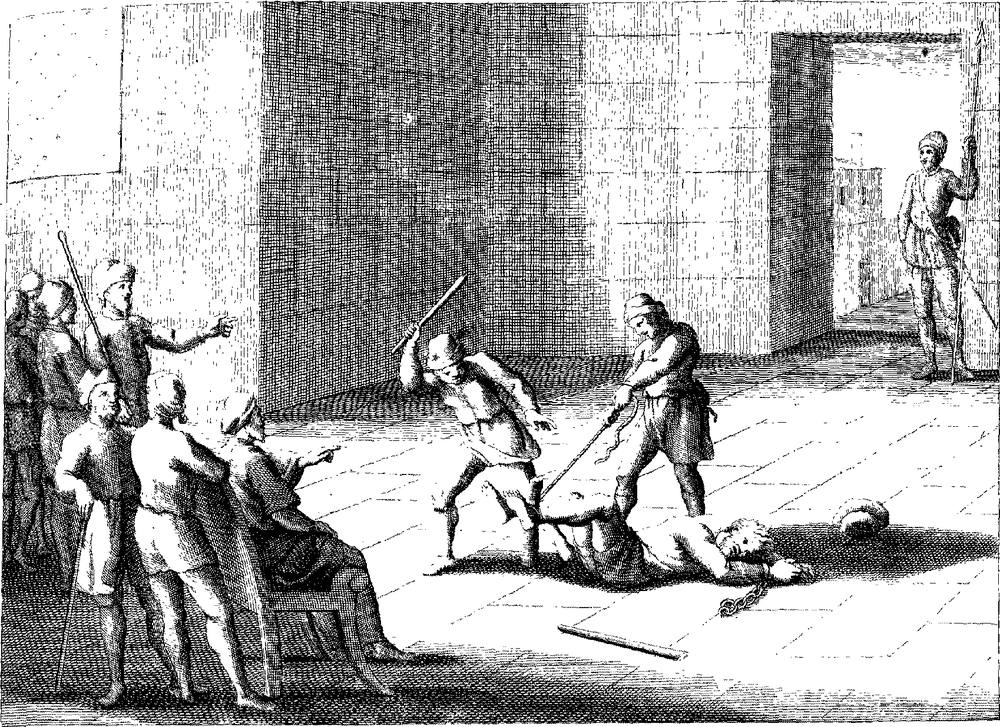
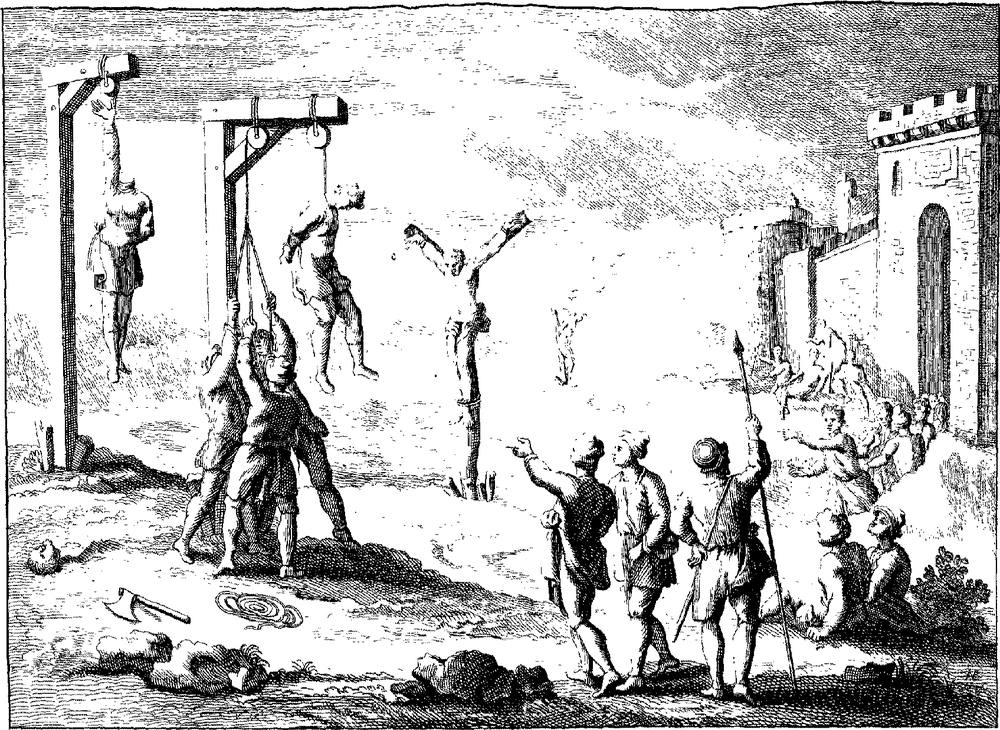
The Sentence being then confirm’d and pronounced, the Criminal was led away to Execution. A Man placed at the Door of the Court, held an Handkerchief in his Hand; a little farther was an Horseman, or a Cryer on Horseback. If any one offer’d himself to say any thing in Favour of the condemned Person, the first Centinel made a signal with his Handkerchief, and the Horseman gallop’d away, to have the Prisoner brought back again. Two of the Judges went on each Side of him, to hear if he had any thing farther to offer in his own Justification. The Criminal might be brought back as often as five times, to hear those that could say any thing in his Defence. If there was nothing further to retard the Execution of the Sentence, it was publish’d with a loud Voice; Such an one is abandon’d, for such a Crime; Such and such have depos’d against him: If any one have any Proofs of his Innocence, they may now produce them.
The Jews were of Opinion, That the Death of Offenders, might be of great Merit to procure their Salvation, if they suffer’d to satisfy the Justice of God, and to make Atonement for their Sins. They were exhorted to confess their Faults, and to say, Let my Death be for an Expiation of all my Sins. Their Maxim was, That he that confesses his Faults, has a Share in the Life to come.
They gave to Criminals, at their Execution, Wine mingled with Incense, Myrrh, and other strong Drugs, that were proper to stupify the Senses, and to make them lose Prov. xxxi. 6.the Sensation of Pain. Solomon advises to give Wine to such as are overwhelm’d with Pain. And we see an Instance of this Piece of Humanity, in what was offer’d to Jesus Christ at his Passion; they would have given him Wine mix’d with Myrrh before his Crucifixion, and Vinegar when he was upon the Cross. These Observations are general, Mat. xxvii. 34, 48.and belong to all that are executed.
Suspension, or the Punishment of the Rope. I do not observe any Crime in the Law, for which the guilty Person was condemned to be Hang’d. They often hung up Men after their Death; but I cannot see that any were hung alive. The Jews maintain, That none but Idolaters and Blasphemers underwent this Punishment. Achitophel hung himself; and also Mat. xxvii. 5. Acts i. 18. Deut. xxi. 23. Esth. xvi. 18. Gen. xli. 13. Numbers xxv. 4. Josh. viii. 29.Judas. Moses pronounces him to be accursed, that is hung upon a Tree, and he would have him cut down before the Setting of the Sun. Haman and all his Sons were hung upon an high Gallows. Pharaoh’s chief Baker was first beheaded, and afterwards hung upon a Gibbet. Moses order’d those Princes of Israel to be hang’d upon Gibbets, who had any Share in their Crimes who worshipped Baal-peor. Joshua hang’d up the King of Ai, and he continued upon the Gallows ‘till the Evening. Another Josh. x. 26. 2 Sam. xvii. 23. 2 Sam. xxi. 12. Lam. v. 12.time he hung up five Kings of the Canaanites. The Philistines hung up the Bodies of Saul and Jonathan on the Walls of Beth-shan. Jeremiah says, that the Princes of Israel were hung up by the Hand, after their Death, by the Chaldeans. The Soldiers of Antiochus Epiphanes hung 1 Macc. i. 62.up dead Children on the Necks of their Mothers, who had circumcised them.
From all these Examples, may be inferr’d, that sometimes they hung up Men alive, and sometimes hung up their Carcases after they were dead.
The Punishment of the Fire, was very common among the Hebrews. When JudahGenesis xxxviii. 24. was inform’d that his Daughter-in- Law Tamar was with Child, he would have had her burnt as an Adulteress. The Law of Moses inflicts the Punishment of the Fire upon the Daughters of the Priests, who Lev. xxi. 9.were guilty of Fornication: Sacerdotis filia, si deprehensa fuerit in stupro, & violaverit nomen patris sui, flamis exuretur. The People beyond the Euphrates inflicted the same Punishment upon those who fell into Crimes, that were contrary to that Respect, which, according to them, was due to the Gods. Abraham was cast into the Fire, because Gen. xi. 31. Nehem. ix. 7. Dan. iii. 6. Lev. xx. 4. Jer. xxix. 22.he would not worship the Gods of the Chaldeans. Nebuchadnezzar caus’d Daniel and his Companions to be thrown into the burning Fiery Furnace, upon the same Occasion. Moses order’d him to be burnt alive, who should marry the Mother and her Daughter.
Jeremiah informs us, that Nebuchadnezzar order’d Zedekiah and Ahab to be roasted in a Pan, for committing Iniquity in Israel, and abusing their Neighbours Wives. Antiochus Epiphanes exercised the same Punishment against the Brethren Maccabees: He put some to Death in Pots and burning Pans; others were roasted upon 2 Macc. vii. 35. Joseph. de Imperio Rationis, c. 9. Ecclus vii. 22.Spits, which were apply’d to their Backs, and forc’d into their Bowels. The Author of Ecclesiasticus says, That the Flesh of the Wicked shall be punished by Worms, and by the Fire; probably, because they were expos’d in the Fields, and burnt in the Valley of Hinnom: We are assured, that they burnt there the Carcases of Men, and other Creatures, to prevent the Stench from infecting the City; and to this Jesus Christ seems to make Allusion, when he Mark ix. 43,45,47.says, That the Worm of the Damned dies not, and their Fire is not quenched.
Some Jewish Authors pretend, that he that was condemned to the Fire, was not burnt in the Flames: He was set up to the Knees in a Dunghil, his Throat ty’d about with a large Piece of Cloth, which was strain’d by the two Ends, ‘till the Patient was forced to open his Mouth. If he would not open it, it was forced open by an Instrument. Then they poured melted Lead down his Throat, ‘till his Bowels were consumed. They found this sort of Punishment, upon what is said,1 That the Fire did not consume the Bodies of the Children of Aaron. So that they thought it not lawful for them to consume the Bodies of their Brethren. Besides, they thought this a more merciful kind of Death. The Rabbi Eleazar objecting against this Determination, and affirming that he had seen the Body of a Priest’s Daughter burnt, who had committed a Crime; it was answer’d to him, That then the Sanhedrim must have been compos’d of ignorant People, or of Cushites and profane Persons, who did not understand the Law.
Imprisonment was not consider’d as a Punishment, but was to keep and secure a Person accused or suspected. Joseph detain’d his Brother Simeon in Prison, to be assured of the Truth of what his Brethren Gen. xliii. 19.had told him, concerning his Father and his Brother Benjamin. The Blasphemer that Lev. xxiv. 12.was brought to Moses, and the Man that was found gathering Sticks on the Sabbath-dayNumb.xv. 34., were put in Ward ‘till the Lord declared the Kind of Punishment they were to Jer. xxxii. 2, 8. Matthew xiv. 3.undergo. Jeremiah and John the Baptist were shut up in Prison, that they might not have the Power of Speaking with so much Freedom to the People.
But, often, Imprisonment was made a Punishment, when it was attended with Shame and Severities. When Joseph was unjustly accused by Potiphar’s Wife, he Genesis xxxix. 20.was put into Prison, and loaded with Fetters. Samson was taken by the Philistines, Judg. xvi. 21.cast into a Dungeon, had his Eyes put out, and forced to grind at the Mill. Hoshea King of Israel, Jehoahaz, and Manasseh King of Judah, were shut up in Prison by their Conquerors the Kings of Assyria and Chaldea. Zedekiah underwent the same Hardships, to which was added the Punishment of having his Eyes put out. Ahab King of Israel gave Orders, that the 1 Kings xxii. 27.Prophet Micaiah should be shut up in Prison; that he should be fed with the Bread of Affliction, and drink of the Water of Distress, ‘till his Return from his Expedition against Ramothgilead.
Jer. xxvii. 2.Bonds, Fetters, Shackles, Manacles, and Chains, which usually attended Imprisonment, must be look’d upon as Punishments, which were a great Aggravation to that of being kept in Prison. Bonds, Hand-cuffs, and Chains are still known, and in use; but the ancient Hebrews had a kind of Yoke, framed of two Pieces of Wood, long, and pretty broad, in which they made a Notch for the Criminal to put his Neck in. Jeremiah received an Order from the Lord, to make Bonds and Yokes, and to put them upon his Neck, and to send some to the Kings of Edom, Moab, Ammon, and Tyre, to declare their approaching Captivity by the King of Chaldea. They also made use of Stocks, wherein were Holes at several Distances, through which they made the Prisoners put their Legs, at a greater or lesser Distance, according as they had a mind to torment them more or less. See Job xiii. 27. & xxxiii. 11. Prov. viii. 22. Prudentius has described this Punishment, in these two short Verses;
Prudent. hymn. 4.Lignoque plantas inserit,
Divaricatis cruribus.
To throw headlong into the Sea from a Precipice, with a Stone ty’d about the Neck, was not a common Punishment: If it has been sometimes us’d among the Hebrews, it was in singular Cases. Amaziah 2 Chron. xxv. 12.King of Judah forced ten thousand Idumeans, whom he had taken Prisoners of War, to leap from the Top of a high Rock. There are some of Opinion also, that they precipitated from the Rock of Horeb, or Oreb, the King of the Midianites of the same Name, when they were defeated by Judg. vii. 25. Luke iv. 29.Gideon; Interfecit Oreb in petrâ Oreb. The Jews intended to precipitate Jesus Christ from the Top of their Mountain. St. James the Just was thrown down from the highest Part of the Temple, into the Valley below. Zachariah Son of Baruch was put Joseph. de Bello, l. 5. c. 1.to Death in the midst of the Temple, and his Body thrown into a deep Place that was beneath the Walls of that holy Place. Jesus Christ mentions the Punishment of casting Mat. xviii. 6. Grot. & le Clerc, in Mat. xviii. Gen. xl. 19.a Man into the Sea, with a Stone about his Neck: Expedit ei ut suspendatur mola asinaria in collo ejus, & demergatur in profundum maris. We are told, this was a common Punishment among the Syrians.
The Punishment of the Sword. In Scripture we meet with several Instances of Decapitations. Pharaoh’s chief Baker had his Head cut off; after which, his Body was hung upon a Gibbet. Abimelech Son of Gideon cut off the Heads of seventy Sons of Gideon, his Brethren, upon one Stone. The Judg. ix. 11.People of Samaria cut off the Heads of seventy of the Sons of Ahab, and sent them in 2 Kings x. 7. Mat. xiv. 8, 11.Baskets to King Jehu. John the Baptist was beheaded in Prison, by the Order of Herod. ‘Tis needless to enlarge any farther upon this Subject, as it will not supply us with any particular Observation, either upon the Matter or Instrument of this Sort of Execution.
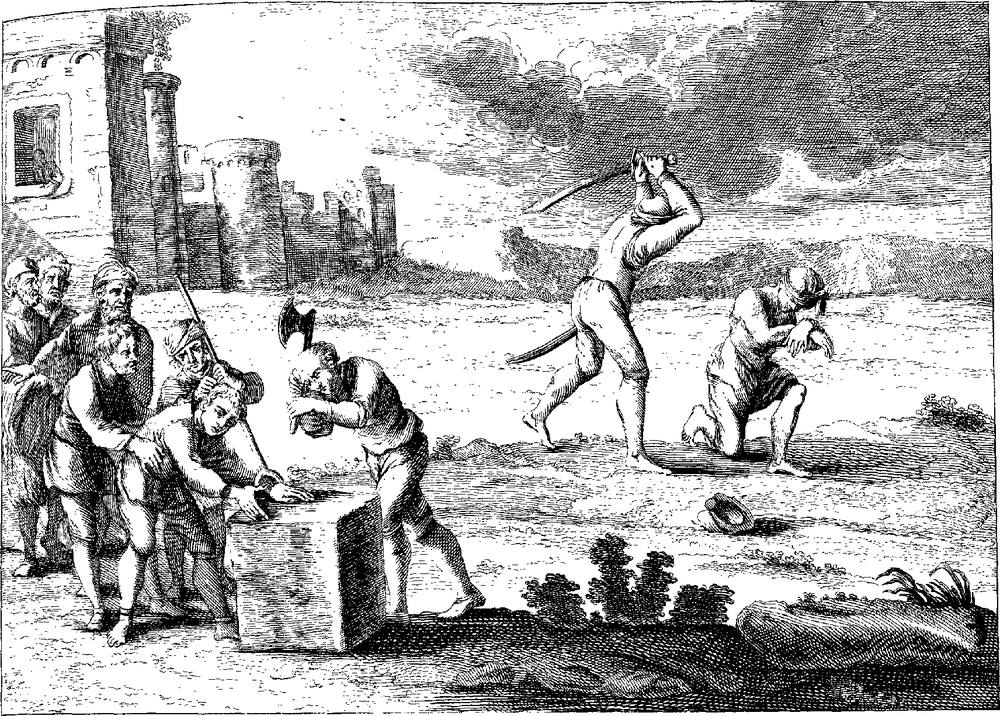
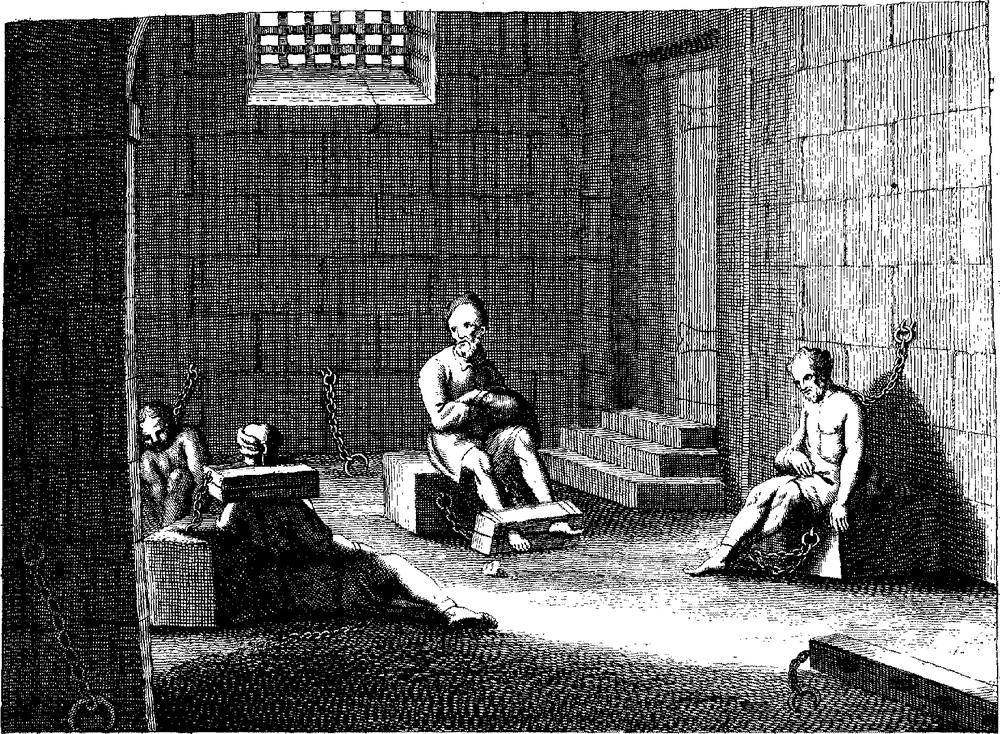
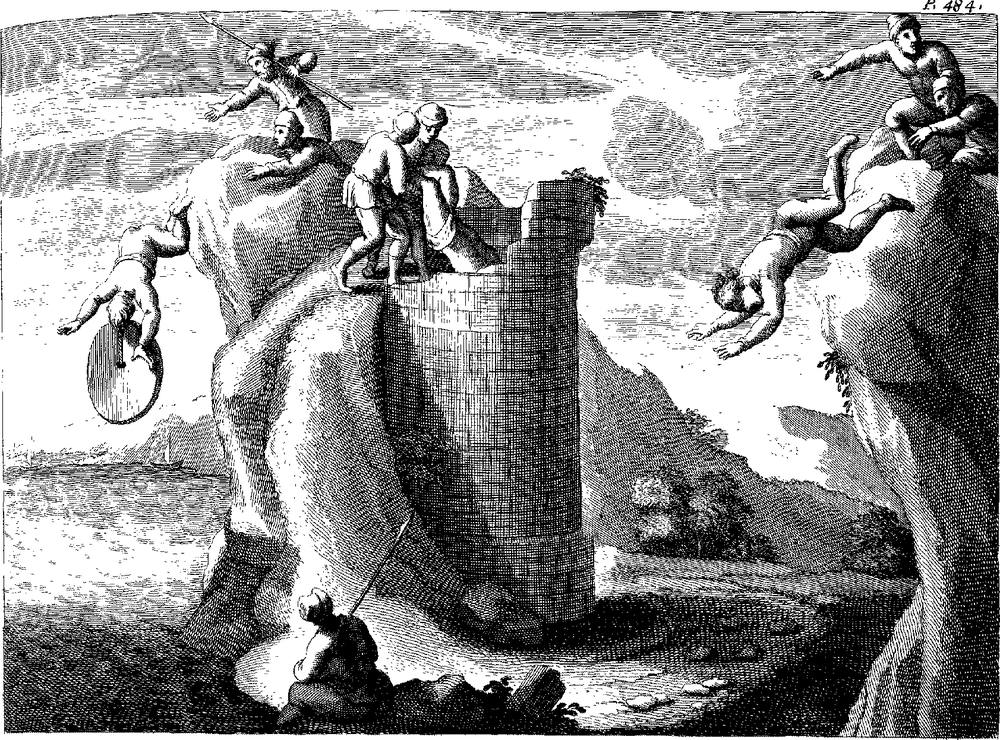
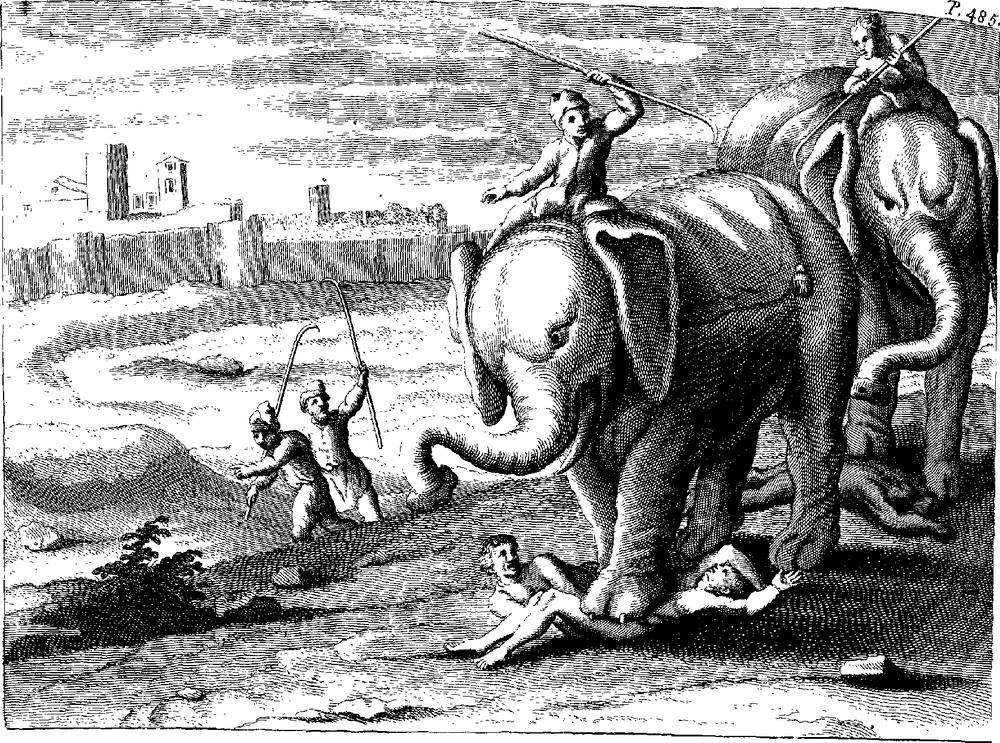
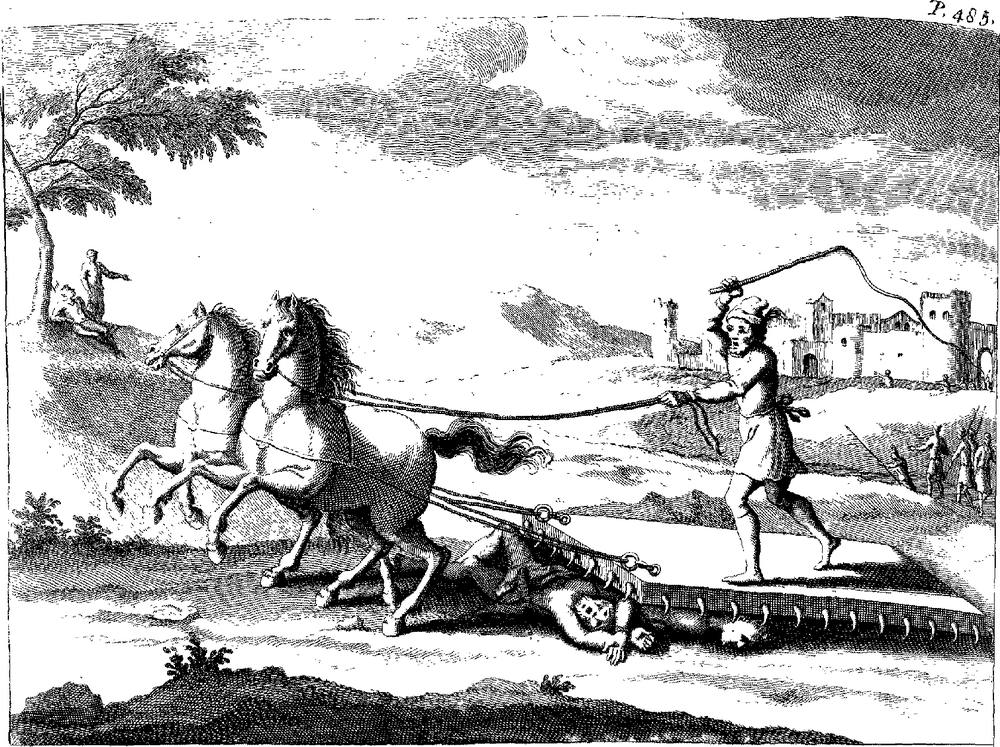
To tear to death under Thorns, under Harrows, under the Feet of Elephants, are things not to be heard of among the Western People; but we find some Examples of them in Scripture. When Gideon returned from pursuing the Midianites, he tore with Thorns and Brambles of the Desart, the chief Men of the City of Succoth, who had insulted him. ‘Tis thought that David did something Judg. viii. 16. 2 Sam. viii. 2.like this to the Moabites. And he smote Moab, and measured them with a Line, casting them down to the Ground; even with two Lines measured he, to put to death, and with one full Line to keep alive. What is said in the Text of casting them down to the Ground, is favourable to this Explication.
He made the Ammonites undergo a Punishment2 Sam. xii. 31. that was still more cruel. Populum (Regis Ammon) adducens serravit, & circumegit super eos ferrata carpenta, divisitque cultris, & traduxit in typo laterum. That is, he put them under Saws, and under Harrows of Iron, and under Axes of Iron, and made them pass thro’ the Brick-kiln.
We shall particularly speak of the Punishment of the Saw, under the Article SAW. The Harrows or Sledges of Iron here mentioned, were Machines proper for thrashing of Corn, in order to get the Grain out of the Straw; of which there were several Kinds. But they were all loaded with Iron or Stones for bruising the Straw. See HARROWS. Lastly, he made them pass under Axes of Iron, and through the Places for making of Bricks. Whether by these last Words we are to understand the Furnace in which the Bricks are burnt, or the Place where the Earth is beat and macerated, in which these miserable Wretches were executed; these Punishments were very horrible, but were tolerated among those People, who allowed themselves the Liberty of putting all to death that they took in War.
Senec. Tragic. Troad.Lex nulla capto parcit, aut poenam impedit.
Ptolemy Philopator, King of Egypt,2 thinking to enter by Force into the Sanctuary of the Temple of Jerusalem, and being prevented by the Priests, resolved to exterminate all the Jews in his Dominions, who would not embrace the Pagan Religion. He had a List taken of them, and gave Orders to the Keeper of his Elephants, to give those Creatures a Quantity of Wine mingled with Incense, to increase their Fury by this intoxicating Liquor. After this the Jews were to be exposed to them, to be trod under Foot and killed by them. But God prevented the Execution of this barbarous Design: For the Elephants turn’d themselves against the Soldiers that were to manage them, and trod them to Pieces. The Prophet Micah alludes to this kind of Punishment, when he says, He Mic. iv. 12, 13.shall gather them as the Sheaves into the Floor. Arise and thresh, O Daughter of Zion, for I will make thine Horn Iron, and I will make thy Hoofs Brass, and thou shalt beat in Pieces many People. Amilcar the Carthaginian General, caused some Carthaginians and Prophyr. de abstin. l. 2. p. 227.some Strangers, who had betray’d the Interests of the Republick, to be trod under Foot by his Elephants.
To cut off the Hair of guilty Persons, seems to be a Punishment rather shameful than painful; and yet it is thought, that Pain likewise was added to the Disgrace; and that they were not contented to shave or cut the Hair, but tore it off with Violence, as if they were plucking a Bird alive. This is the genuine Signification of the Hebrew Word,3 and of the Greek as it is read in Nehemiah. I contended with them, and smote certain of them, and plucked off their Hair. Sometimes they put hot Ashes on the Skin, after they had torn off the Hair, to make the Pain the more exquisite. ‘Twas thus they served Adulterers at Athens; as is observed by the Scholiast on Aristoph. nubibus.Aristophanes.
This kind of Punishment was common in Plutarch. apothegm.Persia. King Artaxerxes made some Alterations in it. Instead of plucking off the Hair of such of his Generals, who had been guilty of a Fault, they were obliged to lay aside the Tiara. The Emperor Domitian caused the Hair and Beard of the Philosopher ApolloniusPhilostrat. l. 3. c. 24. to be shaved. In France they cut off the Hair of Sorcerers and Magicians. This Torture has often been inflicted upon the Martyrs of the Christian Religion. In the impious Book that the Jews composed of the Life of Jesus Christ, under the Name of Toledos Jesu, they say their Ancestors caused his Hair to be cut off, and afterwards his Head to be rubb’d with a Liquor, which prevented the Hair from growing again, and made him bald all his Life after. It is observed in the Book, call’d The Government of Reason, and which is quoted under the Name of the fourth Book of the Mac cabees, that Antiochus Epiphanes caus’d the Hair and Skin and all, to be tore from the 4 Macc. c. 7. 2. Macc. vii. 4.Heads of some of the Seven Brethren the Maccabees.
To pluck out the Eyes, and to make blind, are Punishments not common; and though Moses had appointed, that an Eye should be given for an Eye, and a Tooth for a Tooth, a yet it is the Opinion of Commentators, Ita Rabb. & Interp. passim.that this was very seldom put in Practice according to the Letter; and that the Offender was generally punished by a pecuniary Penalty, which was converted to the Use of the injur’d Party. When the Philistines laid hold on Samson, and intended to prevent his doing them any more Harm, they put him in Prison, and bored out his Eyes. Eruerunt oculos ejus. When Nahash King of the Ammonites made War with the City of Jabesh-gilead, he threatned them to admit of no other Composition with them, but that of their submitting to have every one his right Eye put out. Nebuchadnezzar took King Zedekiah, and had his Children put to death in his Presence, then caused his 2 Kings xxv. 7.Eyes to be put out, and afterwards had him carried to Jerusalem in Chains.
To cut off the Extremities of the Feet and Hands, was a Piece of Cruelty formerly exercised by Adonibezek, King of Bezek, Judg. i. 6, 7.upon seventy Kings who had the Misfortune to be conquer’d by him, and who eat like Dogs under his Table. But God thought fit to have him tortured after the same manner that he had tortured others. The Israelites conquer’d him, took him, and cut off the Extremities of his Hands and Feet. David treated the Murderers of Ishbosheth in the same manner, and had their Bodies hung up over the Pool of Hebron. Antiochus Epiphanes also cut off the Extremities of the Hands and Feet from the seven Brothers Maccabees. When Alexander the Great came 1 Macc. 1. 4. & 2 Macc. vii. 4.near to Persepolis, a Company of Eight hundred Greeks came to present themselves before him, and to entreat his Protection and their own Liberty. They had been taken Diodor. Sicul. Just. Quint. Curt.Captives by the Kings of Persia, and been maimed by them, some having their Feet or Hands cut off, and others their Noses. They had also the Marks of Slavery imprinted upon them, which were a sort of rough Characters in their Skins, that could not be got out.
The Punishment of the Wheel is not known in the Canonical Books either of the Old or New Testament. But it is found in the fourth Book of the Maccabees, otherwise called The Government of Reason, which is commonly ascribed to the Historian Josephus. He says, that the fifth and sixth of the 4 Macc. seu de imperioBrethren Maccabees were
9. In Græc.rationi c. 20. put upon the Wheel. The first of them was dragged upon a Machine, which the Author calls Catapulta, upon which they ty’d his Knees with strong Chains, and violently bent his Back upon a Wheel, so that he was rolled like a Scorpion about the Wheel. The second was also brought and fastened with Violence upon the Wheel, so that all his Bones were dislocated; then they burned his Sides and Bowels with red hot Spits, which the Soldiers had heated for that Purpose.
I doubt not but what is here called a Wheel, is nearly the same thing as the wooden Horse or Tressel, concerning which so much has been said. The Reader may compare what is here said of the Punishment of the Wheel, with what has been said of the wooden Horse, and he will find almost the same Characters observable in both. They violently stretch’d out the Criminals upon the Machine, drawing their Limbs with Ropes or Pullies; then they whipt them, dislocated their Joints, burnt their Sides, tore off their Skin with Iron Pincers, kept them lying sometimes upon their Backs, sometimes upon their Bellies, sometimes with their Heads uppermost, sometimes bending double, and sometimes with their Heads hanging downwards. The Form of the Wheel gave them Opportunity of putting the miserable Patients into all manner of painful Postures. The Wheel to which Ixion was fastened according to the Fable, was always turning round. Suidas says, that they used to fasten Slaves to the Wheel, and there whip them. The Acts of the Martyrs often tell us, that they stretch’d the Bodies of these Saints upon the Engine, and there made them suffer several Kinds of Torture.
To be exposed to wild Beasts, and to fight with the Beasts, was a Punishment very frequent among the Romans. It has some relation to that which we have mentioned before, of being squeezed to death under the Feet of Elephants. St. Paul says, that he fought with Beasts when he was at Ephesus. Ad bestias pugnavi Ephes. See what has been said in the Article of St.
Read this article in its place on the printed pages
Footnotes
-
Translators’ note. Levit. xx. 1, 2, 3. This is not said expressly in Scripture, where it only takes notice, that they were carry’d out of the Camp in their Habits. This shews, that they were not consumed by the Fire. ↩
-
Joseph. l. 2. cont. Appion. in Latino, & lib. 3. Macc. c. 5. ↩
-
Nehem. xiii. 25. Decalvavi, depilavi. אמרטםLXX. Ἐμαδάρωσα αὐτῶς. ↩