LEVIR, LEVIRATE. We make Use of this Term, as other Authors have done before us, who have written on the Law and Customs of the Jews, to denote particularly the Law of Moses, which obliges one Brother to marry the Widow of another, who died without Children, and to raise up Seed to him. From Levir, which signifies in Latin the Husband’s Brother, the Brother-in-Law; the Word Levirate has been formed by some, to express the Law whereof we have been speaking. Moses says as follows on this Subject: If Ruth iv. 1, 2, 3.Brethren dwell together, and one of them die and have no Child, the Wife of the dead shall not marry without unto a Stranger: Her Husband’s Brother shall go in unto her, and take her to him to Wife, and perform the Duty of an Husband’s Brother unto her; and it shall be, that the First-born which she beareth, shall succeed in the Name of his Brother which is dead, that his Name be not put out of Israel. And if the Man like not to take his Brother’s Wife, then let his Brother’s Wife go up to the Gate unto the Elders, and say, My Husband’s Brother refuseth to raise up unto his Brother a Name in Israel, he will not perform the Duty of my Husband’s Brother. Then the Elders of his City shall call him and speak unto him, and if he stand to it, and say, I like not to take her, then shall his Brother’s Wife come unto him in the Presence of the Elders, and loose his Shoe from off his Foot, and spit in his Face, and shall answer and say, So shall it be done unto that Man that will not build up his Brother’s House; and his Name shall be called in Israel the House of him that hath his Shoe loosed.
This Law is an Exception to that which condemns Marriages between Brothers and Sisters, and between Brother’s-in-Law and Sister’s-in-Law. This Law seems to have been in Use among the Hebrews and Canaanites, before the Time of Moses, since Judah gives his first born Er, and Onan his second Son, successively to Tamar, and obliges himself to give her likewise Selah his third Son.
The Terms made Use of by Moses, If two Brothers dwell together, &c. intimate, that the first Intention of the Law respects only Brethren who live together in their Father’s House, or perhaps in the same Place; but Custom extended it even to more remote Relations, who dwelt in Judæa, and in the Division of their Brother’s Tribe, so that their Estates and Inheritances lay in the same Place; for the Law had two Objects, first to preserve the Name of the deceased in Israel, by the Means of such Children as should be born of his Wife, and go by his Name; and secondly, to continue Inheritances in the same Tribe, and Family.
The Example of Ruth, who married Boaz her Husband’s Relation, is an Evidence of the Practice of the Israelites in the Times of the Judges. Boaz was neither the Father nor nearest Relation to Elimelech, Father-into Law Ruth, the Wife of Mahlon, and yet he married her upon his Refusal, who was the nearest Relation. The Rabbins1 of their own Accord have produced many Exceptions and Limitations to this Law. They believe, that the Obligation on the Brother of marrying his Sister-in-Law, regards only Brothers born of the same Father and Mother. Besides, it has a Respect only to the eldest Brother of the deceased, and farther supposes that he was not married: For if he were married, he might at his own Choice, either take or leave his Brother’s Widow. If the deceased Brother had left a natural or adoptive Son or Daughter, a Grandson or Grand-daughter, the Brother was under no Obligation to marry his Widow. If the dead Person left many Wives2, the Brother could marry but one of them: If the deceased had many Brothers, the eldest alone had a Right to all his Estate, and enjoyed the Dowry which his Wife had brought him.
They add, that the Marriage of the Widow with her Brother-in-Law was performed without Solemnity; because the Widow of the Brother who died without Children, passed for the Brother-in-Law’s Wife, by Virtue of the Law, without there being any Occasion for more Ceremony. Notwithstanding Custom required that this should be done in the Presence of two Witnesses, and that the Brother should give a Piece of Money to the Widow. The Nuptial Blessing was farther added, and a Writing given to secure the Wive’s Dower. There are some who believe, that this Law was not observed Fagius in Deut. xxv.after the Babylonish Captivity, because since that Time there has been3 no more any Distinction of the Inheritances of the Tribes. The present Jews4 do not practice this Law, or at least very rarely, particularly among the Germans and Italians, they chuse rather to set their Women at Liberty, that they may marry again where they please.
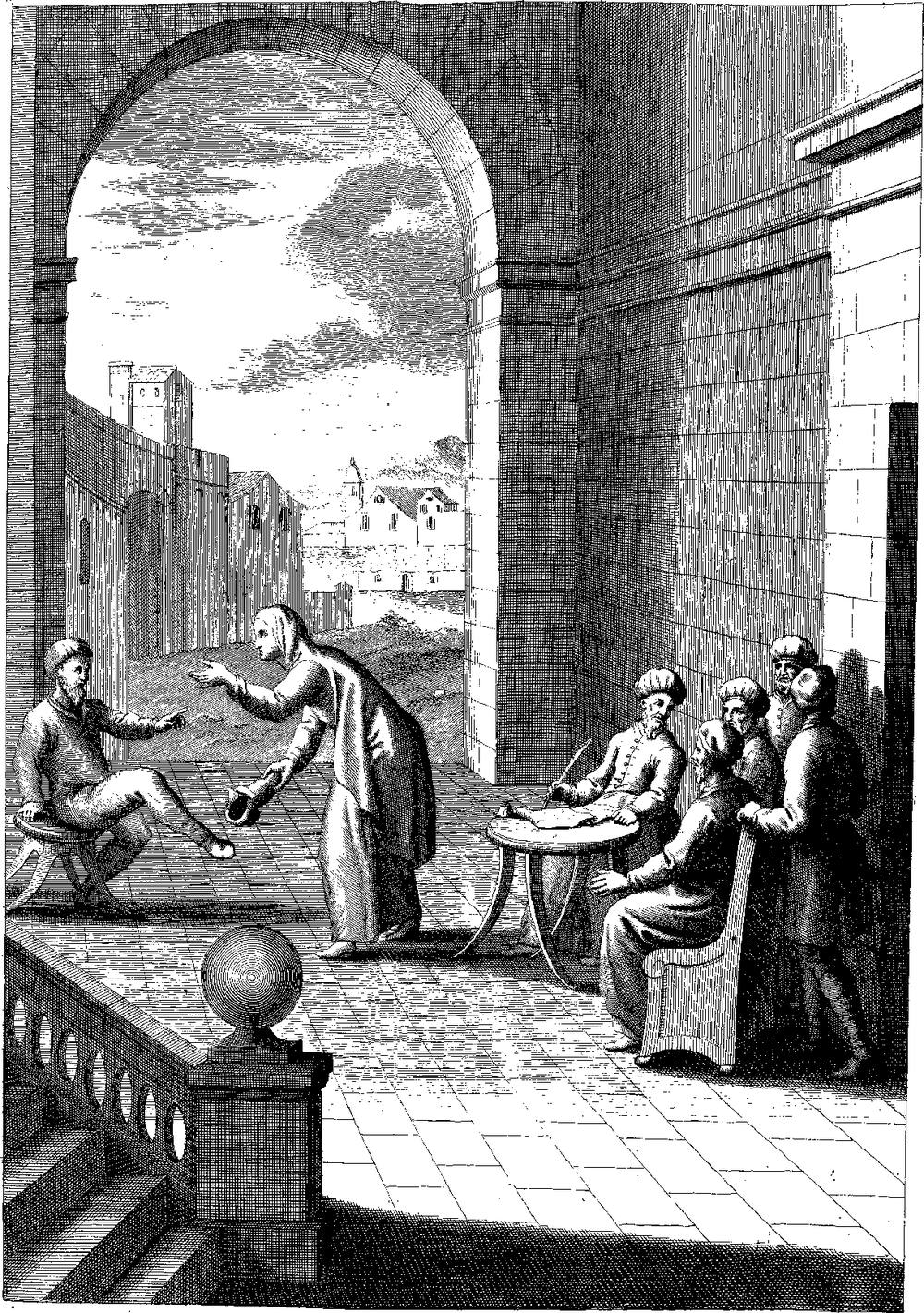
But in Leo of Modena’s Account of the Matter, it is done after the following Manner. “Three Rabbins and two other Witnesses go the Evening before, and choose a Place where the Ceremony may be performed. The next Day when they come from Morning Prayers, they all follow the Rabbins and Witnesses, who as soon as they come to the appointed Place, sit down, and order the Widow and her Brother-in-Law to appear before them, who declare that they there present themselves, in Order to be free. The principal Rabbin proposes several Questions to the Man, and exhorts him to marry the Widow, then seeing him persist in his Refusal, after some other Interrogatories, the Man puts on one of the Rabbin’s Shoes, which is fit for any Foot; and the Woman in the mean Time draws near to him, and assisted by the Rabbin, says to him in Hebrew, My Husband’s Brother will not continue the Posterity of his Brother in Israel, and refuses to marry me, as being my Brother-in- Law. The Brother-in-Law answers, I have no Mind to take her. Hereupon the Woman stoops down, loosens and pulls off the Shoe, throws it upon the Ground, spits before him, and says in Hebrew to him, with the Help of the Rabbin. So shall it be done unto that Man who will not build up his Brother’s House; and his Name shall be called in Israel the House of him that hath his Shoe loosed. These Words she repeats three Times, and they who are present answer as often, He that hath his Shoe loosed. Hereupon the Rabbin immediately tells her, that she may marry again; and if she requires any Certificate of what is done, the Rabbins deliver one to her.
You have here a Form of the Certificate taken out of the Gemara of Jerusalem, where it is shorter than that which we meet with among the Rabbins. Before us whose Names are so and so, such an one, the Widow of such an one, pulled off such an one’s Shoe, the Son of such an one. She brought it before us, and has pulled off the Shoe of his right Foot, and hath spit in our Presence, so that we have seen her Spittle on the Ground, and she hath said unto him, Thus shall the Man be treated who buildeth not up his Brother’s House.
From what has been said it appears, that the Rabbins do not understand Moses’s Words literally, when he says, that the Woman shall spit in his Face who will not marry his Brother’s Widow; and that they explain it thus, She shall spit in his Presence, she shall spit upon the Ground before him; but the Text of the Law is expressly for the former Meaning, and Josephus took it literally in the History of Ruth5. To spit in any one’s Face is a Numb. xii. 14. If. i. 6, &c.Mark of the highest Contempt.
What is said in the Text, of his giving his Brother’s Name to the eldest Son which he shall have by her, may be understood two Ways. 1. He shall bear the Name of the deceased; if that was Abraham, the Son shall be called, Abraham. 2. He shall bear the Name of the deceased; he shall go for his Son, he shall support his Name and Family. The Hebrew literally says6, He shall be raised upon his Brother’s Name, he shall be like a young Sucker shooting out of his Father’s Name. The Example of Ruth, who called the Son she had by Boaz, Obed, and not Mahlon, the Name of her first Husband7, proves, that it was not necessary the Child should go by the Name of his Mother’s first Husband.
Leo of Modena8 observes, that the Jews sometimes out of a Principle of Avarice, keep their Sisters-in-Law a long Time in Suspence, without declaring whether they will marry them or no, that so they may tire their Patience, and draw some Money out of them: Wherefore there are some Fathers, who if they marry their Daughters to Men that have several Brothers, stipulate, that in this Case they shall set the Widow at Liberty for nothing. Others oblige the Husband, in Case he falls sick, and is thought by his Physicians to be in Danger, to divorce his Wife upon the Spot, that so she may not come into the Power of her Brother-in-Law. The marrying a Sister-in-Law the Jews call Ibum, and the pulling off the Shoe and setting a Woman at Liberty, Chaliza.
Read this article in its place on the printed pages
Footnotes
-
Rabb. apud Selden. de successione in bona c. ↩
-
Leon. de Modene, ceremonies des Juifs, p. 4. c. 7. ↩
-
If. xxvii. 1. Visitabit Dominus super Leviathan, Serpentem vectem. & super Leviathan Serpentem tortuosum. 14. & uxor Hebraica, l. i. c. 4. ↩
-
Buxtorf. de Syn. Judæor. c. 30. Cuneus de Rep. Hebr. l. i. c. 7. Leon. de Modene ceremonies des Juifs. p. 4. c. 7. ↩
-
Joseph. Antiq. l. v. c. 11. πτύειν εἰς τὸ πρόσωπον, instead of τύπτειν. ↩
-
Deut. xxv. 6. .יקרם עלשם אחיו ↩
-
Ruth iv. 17. Vide Aug. Retract. l. ii. c. 12. ↩
-
Leon de Modene ceremonies des Juifs. p. 4. c. 7. 1 Plin. l. v. c. 20. Euseb. & Hieronym. in locis Hebr. in Antilibano. ↩