Ezek. i. 10. compared with Ezek. x. 14, כרוב Cherub.II. CHERUB, Cherubim. The term Cherub in Hebrew is sometimes taken for a Calf or an Ox. Ezekiel sets down the Face of a Cherub as synonymous to the Face of an Ox. The word Cherub in Syriac and in Chaldee, signifies to till or plough, which is the proper work of Oxen. Cherub also signifies strong and powerful. The strength of an Ox, is what every one is well acquainted with. Grotius says, that the Cherubins were Figures much like that of a Calf. Bochart thinks likewise, that the Cherubins were more like the figure of an Ox, than of any thing besides; and Spencer is of the same opinion. Lastly, S. John in the Revelations calls Cherubins Beasts. And round about the throne were four beasts. Josephus1 says, the Cherubins were extraordinary creatures, and of a figure unknown to Mankind. Clemens of Alexandria2 believes, that the Egyptians imitated the Cherubins of the Hebrews, in the Representation of their Sphinx’s, and their hieroglyphical animals.
All the several descriptions which the Scripture gives us of Cherubins differ from one another; but all agree in representing a figure composed of various creatures, as a Ezek. i. 5, & seq. x. 20, 21. Isai. vi. 2.Man, an Ox, an Eagle and a Lion. Such were the Cherubins described by Ezekiel. Those which Isaiah saw, and are called Seraphins by him, had the figure of a Man with six wings, with two whereof they covered their Faces, with two more they covered their Feet, and with the two others they flew. Those which Solomon placed in the Temple of Jerusalem must have been pretty nearly in the same form, Rev. iv. 6, 7. Rev. iv. 6, 7.1 Kings vi. 23. Those which S. John describes in the Revelations, were all Eyes before and behind, having each six Wings. The first was in the form of a Lion, the second of a Calf, the third of a Man, and the fourth of an Eagle. They cried continually day and night, Holy, Holy, Holy. Exod. xxv. 18, 19, 20.&c. Those which Moses placed upon the Ark of the Covenant, are not well described to us in the Scripture, no more than those which God posted at the entrance of that delightful Garden, out of which he Gen. iii. 24.had driven Adam
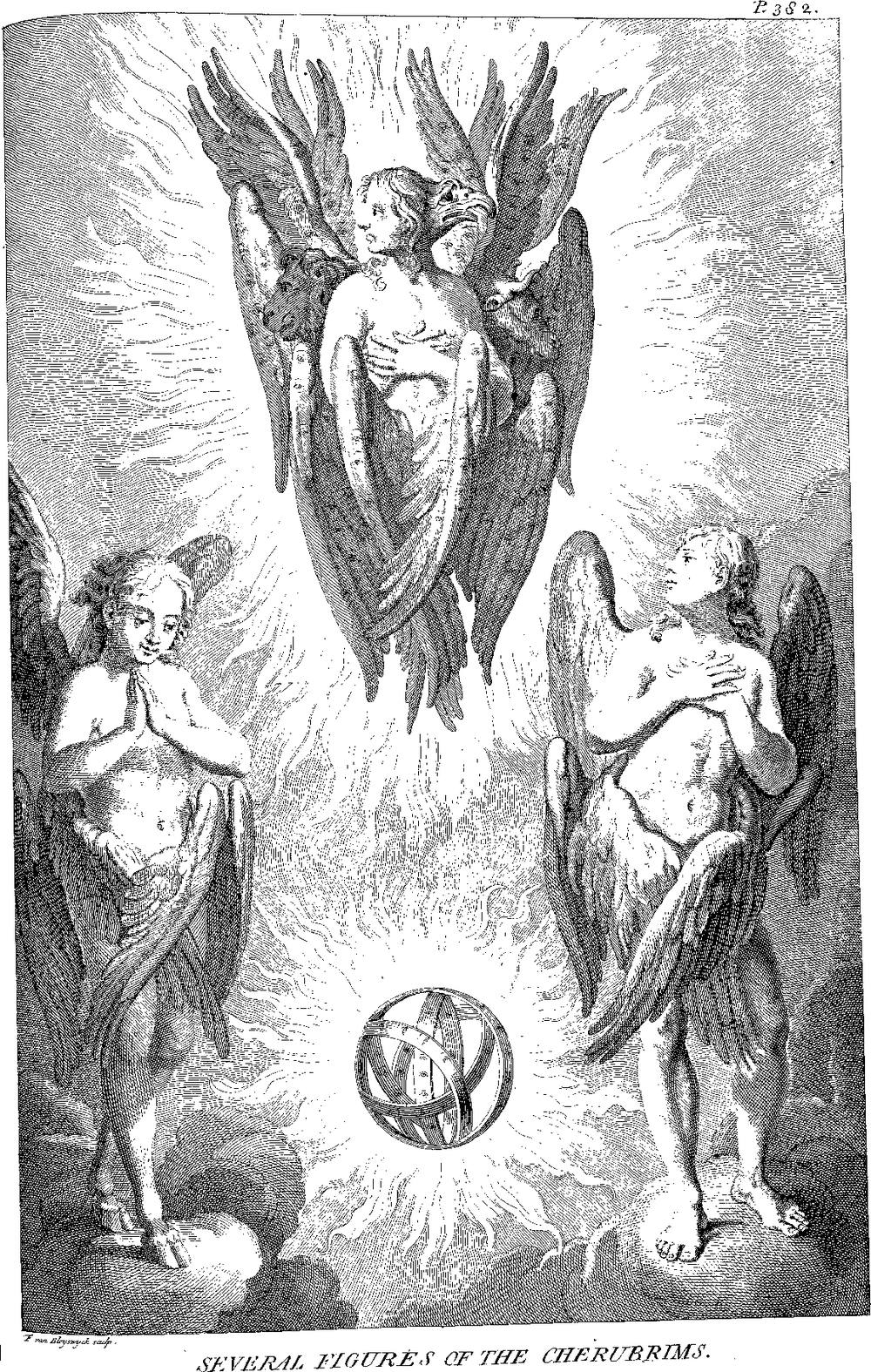
and Eve. But it is very probable, that both one and the other had a human figure, since it is said of those which were placed at the entrance of Paradise, that they had their Station there assigned them to guard Gen. iii. 24. Ezek. xxviii. 14.the entrance to it, and held a flaming Sword in their hands. And Ezekiel compares the King of Tyre to the Cherubin that covered the Ark of the Covenant, upon the holy mountain; that is to say, that he was like this Cherub glittering all over with Gold and Glory. Moreover, Moses says, that two Cherubins covered the Mercy-seat with their Wings extended on both sides, and looked one upon another, having their Faces turned towards the Mercy-seat, which covered the Ark.
The result of all that I have said is this, that the figure of the Cherubins was not always uniform, since they are differently described in the shapes of Men, Eagles, Oxen, Lions, and in a composition of all these figures Exod. xxvi. 1.put together. Moses likewise calls those symbolical or hieroglyphical Representations which were represented in Imbroideries upon the Veils of the Tabernacle, Cherubins of costly work3. Such were the symbolical Figures which the Egyptians placed at the gates of their Temples, and the Images of the generality of their Gods, which were nothing commonly but Statues composed of Men and Animals4.
Omnigenumque Deûm monstra, & latrator Anubis.
Read this article in its place on the printed pages