II. ARCHELAUS, Son of Herod the Great and Maltace his fifth Wife. Herod having put to death his Sons Alexander, Aristobulus, and Antipater, and expunged Herod Antipas out of his will, whom at first he had declared King, substituted in his room Archelaus, and gave Antipas the title of Tetrarch only. After the death of Herod1, Archelaus ordered his will to be read, wherein he was declared King, upon condition nevertheless that Augustus was consenting. Hereupon the whole Assembly cried out, Long live King Archelaus; and the Soldiers promised to be as faithful to him, as they had been to his Father. After that Archelaus had buried his Father in a magnificent manner, he came to Jerusalem, and there mourned seven days, according to the custom; then gave a splendid entertainment to all the people. He went to the Temple, harangued the multitude, promised them all manner of good treatment, and declared that he would not take upon himself the title of King, till the Emperor had confirmed it to In the Year of the World 4001. 3 years before the vulg. Æra, and in the first year of J. C.him.
The people notwithstanding in a tumultuous manner demanded to have those put to death, who had advised Herod to execute certain Zealots that had pulled down a golden Eagle which was fixed upon one of the Temple Gates. Moreover, they required Archelaus to divest Joazas of the High Priesthood, and loaded the memory of the late King with reproaches and ill language. Archelaus sent troops to suppress the Mutineers, and his forces killed near three thousand of them about the Temple. After this he imbarked at Cæsarea, in order to go to Rome, and desire of Augustus the confirmation of Herod’s will, whereby he was declared King of Judæa. Antipas his Brother went to Rome likewise, with an intention to dispute the Kingdom with him, pretending that Herod’s first will, by which he was appointed King, should be preferr’d to the last, which was made by him when his understanding was not so entire as it had been.
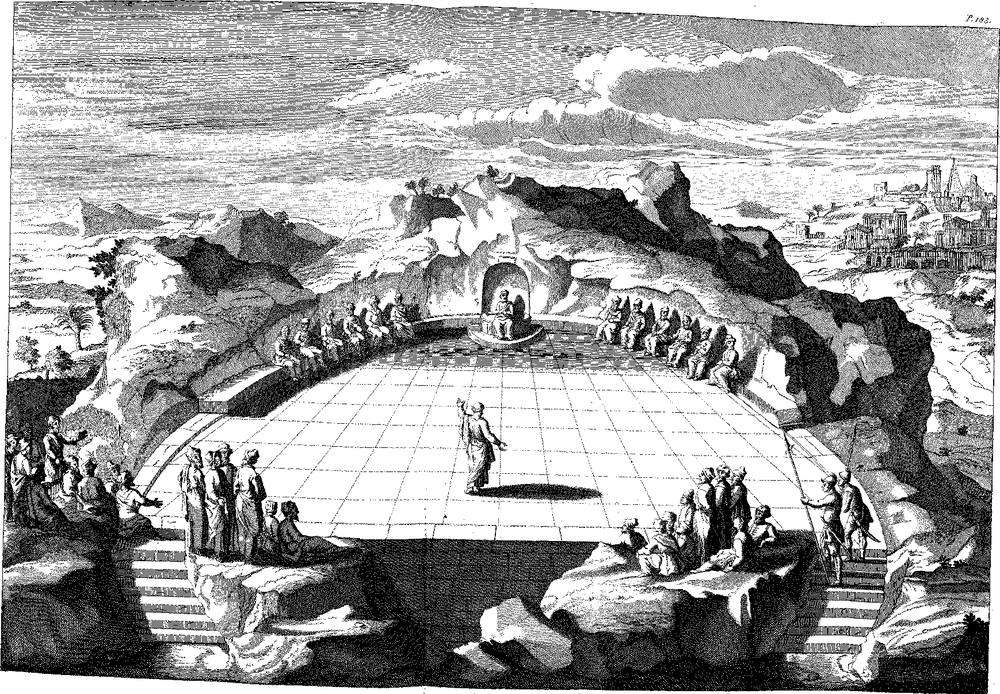
The two Brothers Archelaus and Antipas procured able Orators to set forth their pretensions before the Emperor; and when they had done speaking, Archelaus threw himself at Augustus’s feet; Augustus gently raised him, and told him that he would do nothing contrary to Herod’s intention, or his interests. He refused nevertheless to decide any thing concerning this affair at that time. Some time after the Jews sent a solemn Embassy to Rome, to desire of Augustus that he would permit them to live according to their own laws, and continue upon the footing of a Roman Province, without being subject to the Kings of Herod’s family, but to the Governours of Syria only. Augustus gave them audience, and heard likewise what Archelaus had to say against this; then broke up the Assembly without declaring himself.
In the Year of the World 4002. of J.C. 2. before the vulgar Æra 2.At length, after some days, he sent for Archelaus, gave him the title, not of King, but of Ethnarch, with one moiety of the Territories which his Father Herod had enjoyed. He promised him the Crown likewise, if it appeared by his good conduct that he deserved it. Archelaus, upon his return to Judæa, deprived Joazas of the High Priesthood, under pretence that he had countenanced the seditious against him, and gave this dignity to his Brother Eleazar. He governed Judæa with so much violence, that seven years after his return from Rome v, the chief Men of the Samaritans and Jews accused him before Augustus. The Emperor immediately sent for the Agent employed by Archelaus at Rome, and without condescending so much as to write to Archelaus, he commanded the Agent to set out instantly for Judæa, and enjoin Archelaus, from him, to come speedily to Rome, and there give an account of his conduct.
Upon this Prince’s arrival at Rome, the In the Year of the World 4010. of J. C. 10. of the vulgar Æra 7.Emperor call’d for his Accusers, and permitted him to defend himself. He did this so ill, that Augustus banished him to Vienne in Gaul w, where he continued in exile to the end of his life; the year whereof is not very well known.
ARCHI2
Read this article in its place on the printed pages