Works › The Mariale: Questions on “Missus est”
Volume 37 · pp. 297–298
Question 208. Whether this conception was immediately from a created power, or an uncreated power?
A marker with ≈ is an approximate page boundary, placed by measure of the text; the page photographs remain the authority. In the paired views, clicking a page marker brings that page into view.
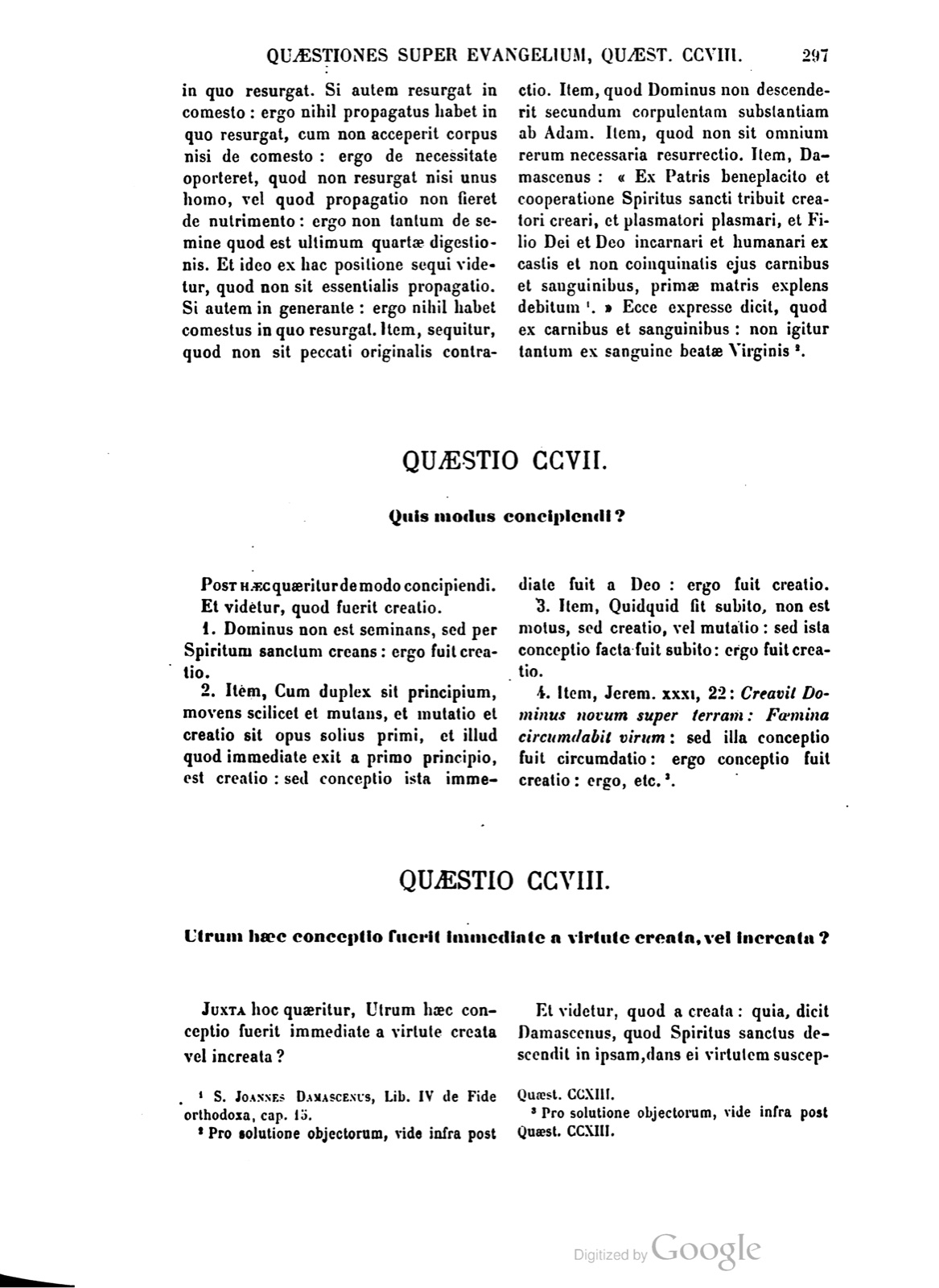
QUAESTIO CCVIII. Utrum haec conceptio fuerit immediate a virtute creata, vel increata?
Juxta hoc quaeritur, Utrum haec conceptio fuerit immediate a virtute creata vel increata?
Et videtur, quod a creata: quia dicit Damascenus, quod Spiritus sanctus descendit in ipsam, dans ei virtutem susceptivam simul et generativam 1: sed generativa est quae active generat: ergo videtur, quod immediate sit generatus a virtute beatissimae Virginis.
Praeterea quaeritur, Quid sit dare virtutem generativam ad actum in ipsa? Aut enim hoc est quia ipsa sola habuerit ad hoc virtutem generativam: et sic sequitur, quod prius sit genitus a virtute creata simpliciter. Aut hoc ex virtute Spiritus sancti et virtute generativa beatae Virginis simul conceptum efficere: et sic videtur esse commixtio virtutum, quod est haeresis: ergo non dedit ei virtutem generativam. Item, si data fuerit ei virtus generativa: ergo actus non est miraculosus: si enim caeco dantur oculi, non est miraculum si postea videat.
QUESTION 208. Whether this conception was immediately from a created power, or an uncreated power?
Next to this it is asked whether this conception was immediately from a created power or from an uncreated one.
And it seems that it was from a created power, because Damascene says that the Holy Spirit descended into her, giving her a receptive and at the same time generative power 1. But the generative power is that which actively generates. Therefore it seems that he was immediately generated by the power of the most blessed Virgin.
Besides, it is asked what it is to give generative power for act in her. For either this is because she alone had generative power for this, and thus it follows that first he was begotten by a created power simply. Or this is for the Holy Spirit's power and the generative power of the blessed Virgin together to effect the conceived one, and thus there seems to be a mingling of powers, which is heresy; therefore he did not give her generative power. Likewise, if generative power was given to her, then the act is not miraculous; for if eyes are given to a blind man, it is not a miracle if afterward he sees.
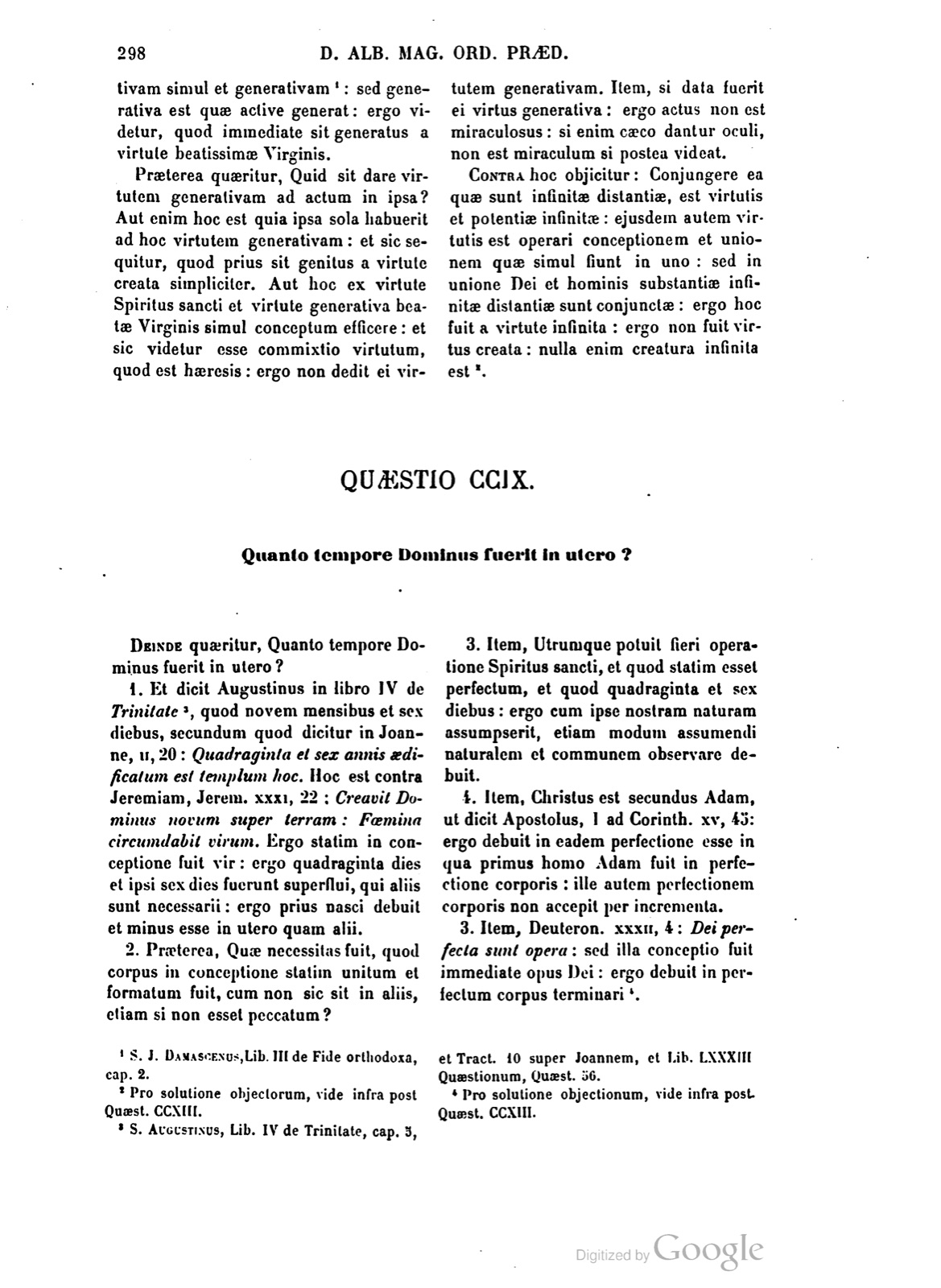
Contra hoc objicitur: Conjungere ea quae sunt infinitae distantiae, est virtutis et potentiae infinitae: ejusdem autem virtutis est operari conceptionem et unionem quae simul fiunt in uno: sed in unione Dei et hominis substantiae infinitae distantiae sunt conjunctae: ergo hoc fuit a virtute infinita: ergo non fuit virtus creata: nulla enim creatura infinita est 2.
Against this it is objected: to join those things which are of infinite distance belongs to infinite virtue and power; but it belongs to the same power to work the conception and the union, which are made together in one. But in the union of God and humanity substances of infinite distance are joined. Therefore this was from infinite power; therefore it was not created power, for no creature is infinite 2.
Notes
- St. John Damascene, Book 3 On the Orthodox Faith, chapter 2. (S. J. Damascenus, Lib. III de Fide orthodoxa, cap. 2.) ↩
- For the solution of the objections, see below after Question 213. (Pro solutione objectorum, vide infra post Quaest. CCXIII.) ↩
If a page does not appear, its photograph has not been uploaded yet.