Works › The Mariale: Questions on “Missus est”
Volume 37 · pp. 290–291
Question 201. Whether the Blessed Virgin had shamefastness?
A marker with ≈ is an approximate page boundary, placed by measure of the text; the page photographs remain the authority. In the paired views, clicking a page marker brings that page into view.
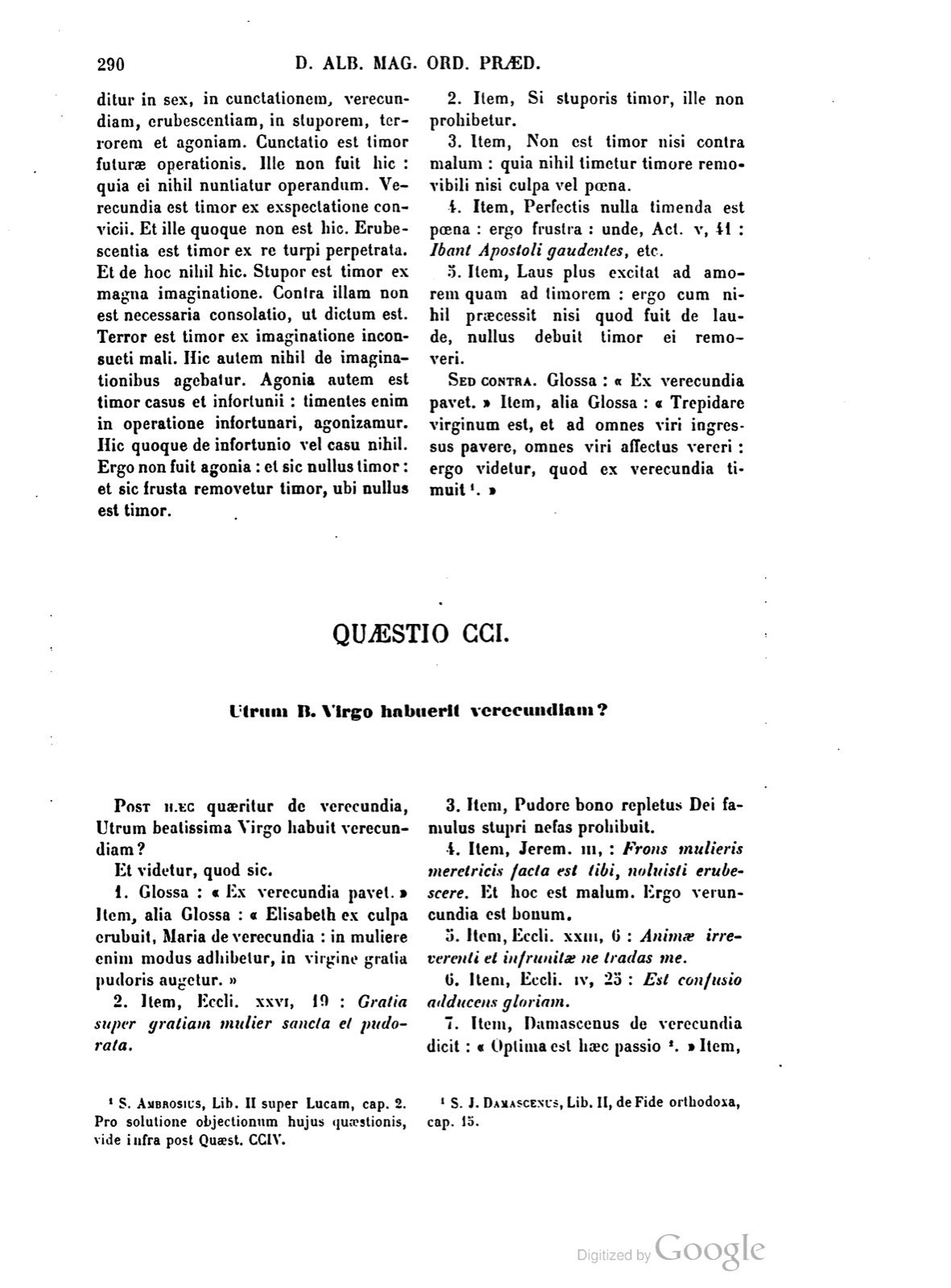
QUAESTIO CCI. Utrum B. Virgo habuerit verecundiam?
Post haec quaeritur de verecundia, Utrum beatissima Virgo habuit verecundiam?
Et videtur, quod sic.
1. Glossa: "Ex verecundia pavet." Item, alia Glossa: "Elisabeth ex culpa erubuit, Maria de verecundia: in muliere enim modus adhibetur, in virgine gratia pudoris augetur."
2. Item, Eccli. XXVI, 19: Gratia super gratiam mulier sancta et pudorata.
3. Item, Pudore bono repletus Dei famulus stupri nefas prohibuit.
4. Item, Jerem. III: Frons mulieris meretricis facta est tibi, noluisti erubescere. Et hoc est malum. Ergo verecundia est bonum.
5. Item, Eccli. XXIII, 6: Animae irreverenti et infrunitae ne tradas me.
6. Item, Eccli. IV, 25: Est confusio adducens gloriam.
7. Item, Damascenus de verecundia dicit: "Optima est haec passio 1." Item, de erubescentia dicit, quia non est sine spe salutis. Item, Erubescentia res salutifera est. Ex his omnibus patet, quod erubescentia est bonum et verecundia. Ergo ipsam habuit beata Virgo, cui nullum defuit bonum cujus pura creatura capax fuit.
QUESTION 201. Whether the Blessed Virgin had shamefastness?
After these things inquiry is made concerning shamefastness, whether the most blessed Virgin had shamefastness.
And it seems that she did.
1. The Gloss says: "She is afraid from shamefastness." Likewise, another Gloss says: "Elizabeth blushed from fault, Mary from shamefastness; for in a woman a measure is applied, in a virgin the grace of modesty is increased."
2. Likewise, Ecclesiasticus 26:19: Grace upon grace is a holy and modest woman.
3. Likewise, filled with good modesty, the servant of God forbade the crime of illicit sex.
4. Likewise, Jeremiah 3: The forehead of a prostitute woman has been made yours; you refused to blush. And this is evil. Therefore shamefastness is good.
5. Likewise, Ecclesiasticus 23:6: Do not hand me over to an irreverent and unbridled soul.
6. Likewise, Ecclesiasticus 4:25: There is a shame that brings glory.
7. Likewise, Damascene says concerning shamefastness: "This passion is best 1." Likewise, concerning blushing he says that it is not without hope of salvation. Likewise, blushing is a salutary thing. From all these it is clear that blushing is good, and so is shamefastness. Therefore the blessed Virgin had it, to whom no good was lacking of which a pure creature was capable.
Sed contra:
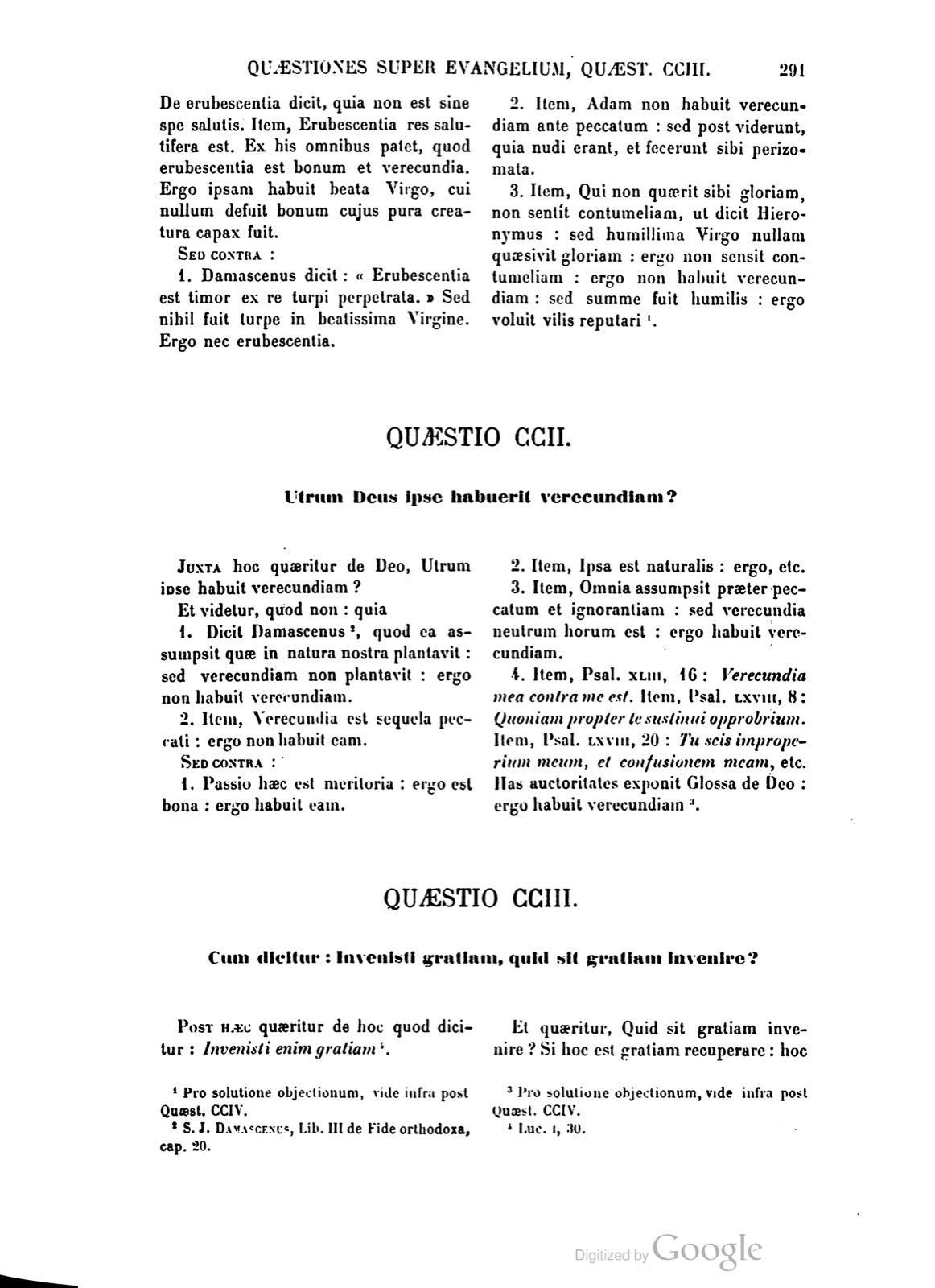
1. Damascenus dicit: "Erubescentia est timor ex re turpi perpetrata." Sed nihil fuit turpe in beatissima Virgine. Ergo nec erubescentia.
2. Item, Adam non habuit verecundiam ante peccatum: sed post viderunt, quia nudi erant, et fecerunt sibi perizomata.
3. Item, Qui non quaerit sibi gloriam, non sentit contumeliam, ut dicit Hieronymus: sed humillima Virgo nullam quaesivit gloriam: ergo non sensit contumeliam: ergo non habuit verecundiam: sed summe fuit humilis: ergo voluit vilis reputari 2.
But to the contrary:
1. Damascene says: "Blushing is fear from a shameful thing perpetrated." But nothing was shameful in the most blessed Virgin. Therefore neither was there blushing.
2. Likewise, Adam did not have shamefastness before sin; but afterward they saw that they were naked and made coverings for themselves.
3. Likewise, one who does not seek glory for himself does not feel insult, as Jerome says. But the most humble Virgin sought no glory; therefore she did not feel insult; therefore she did not have shamefastness. But she was supremely humble; therefore she wished to be reckoned vile 2.
Notes
- St. John Damascene, Book 2 On the Orthodox Faith, chapter 15. (S. J. Damascenus, Lib. II de Fide orthodoxa, cap. 15.) ↩
- For the solution of the objections, see below after Question 204. (Pro solutione objectionum, vide infra post Quaest. CCIV.) ↩
If a page does not appear, its photograph has not been uploaded yet.