Works › The Mariale: Questions on “Missus est”
Volume 37 · p. 151
Fuller solution of the preceding questions concerning graces making one pleasing, section 1
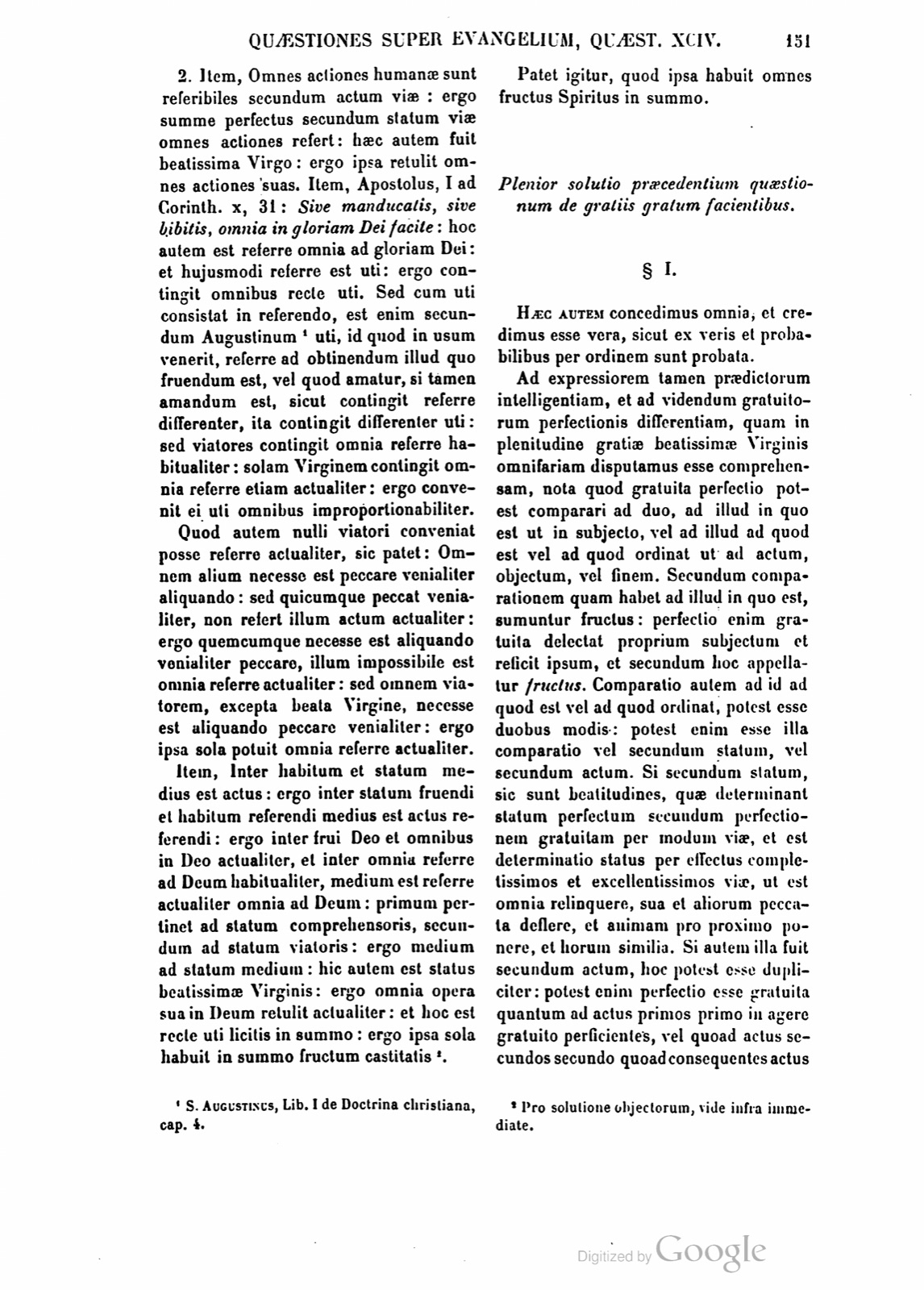
Plenior solutio praecedentium quaestionum de gratiis gratum facientibus.
§ I.
Haec autem concedimus omnia, et credimus esse vera, sicut ex veris et probabilibus per ordinem sunt probata.
Ad expressiorem tamen praedictorum intelligentiam, et ad videndum gratuitorum perfectionis differentiam, quam in plenitudine gratiae beatissimae Virginis omnifariam disputamus esse comprehensam, nota quod gratuita perfectio potest comparari ad duo, ad illud in quo est ut in subjecto, vel ad illud ad quod est vel ad quod ordinat ut ad actum, objectum, vel finem. Secundum comparationem quam habet ad illud in quo est, sumuntur fructus: perfectio enim gratuita delectat proprium subjectum et reficit ipsum, et secundum hoc appellatur fructus. Comparatio autem ad id ad quod est vel ad quod ordinat, potest esse duobus modis: potest enim esse illa comparatio vel secundum statum, vel secundum actum. Si secundum statum, sic sunt beatitudines, quae determinant statum perfectum secundum perfectionem gratuitam per modum viae, et est determinatio status per effectus completissimos et excellentissimos viae, ut est omnia relinquere, sua et aliorum peccata deflere, et animam pro proximo ponere, et horum similia. Si autem illa fuit secundum actum, hoc potest esse dupliciter: potest enim perfectio esse gratuita quantum ad actus primos primo in agere gratuito perficientes, vel quoad actus secundos secundo quoad consequentes actus et excellentes perficientes. Si secundo modo, sic sunt dona. Si primo modo, hoc potest esse dupliciter: quia primo ista perfectio in esse gratuito potest esse liberando a malo et sanando, vel ad bonum ordinando. Primo modo sunt gratiae sacramentales, secundo modo virtutes.
A Fuller Solution of the Preceding Questions concerning Graces Making One Pleasing.
Section 1.
Now we concede all these things and believe them to be true, just as they have been proved in order from true and probable things.
Nevertheless, for a more explicit understanding of the aforesaid things, and for seeing the difference of the perfection of gratuitous things, which we dispute to be comprehended in every way in the fullness of grace of the most blessed Virgin, note that gratuitous perfection can be compared to two things: to that in which it is as in a subject, or to that for which it is or to which it orders, as to an act, object, or end. According to the comparison that it has to that in which it is, the fruits are taken; for gratuitous perfection delights its proper subject and refreshes it, and according to this it is called a fruit. But comparison to that for which it is or to which it orders can be in two ways: for that comparison can be either according to state or according to act. If according to state, in this way there are the beatitudes, which determine the perfect state according to gratuitous perfection by mode of the way, and it is a determination of state through the most complete and most excellent effects of the way, as to leave all things, to weep over one's own sins and those of others, and to lay down one's soul for one's neighbor, and things similar to these. But if that comparison was according to act, this can be in two ways: for the perfection can be gratuitous with regard to first acts, perfecting first in gratuitous acting, or with regard to second acts, perfecting second with regard to consequent and excellent acts. If in the second way, then there are gifts. If in the first way, this can be in two ways: because first that perfection in gratuitous being can exist by liberating from evil and healing, or by ordering to good. In the first way there are sacramental graces; in the second way, virtues.
If a page does not appear, its photograph has not been uploaded yet.