Works › The Mariale: Questions on “Missus est”
Volume 37 · pp. 117–118
Response to Questions LX and LXI concerning modesty
A marker with ≈ is an approximate page boundary, placed by measure of the text; the page photographs remain the authority. In the paired views, clicking a page marker brings that page into view.
§ IV.
Responsio ad Quaestiones LX et LXI, de modestia.
Ad hoc quod ultimo objectum est de modestia animi et vestium cultu, distinguentes respondendo dicimus, quod habitus secundum qualitatem tripliciter distinguitur. Est enim habitus triplex, habitus vanitatis, habitus mediocritatis, et habitus humilitatis. De primo loquuntur primae auctoritates. Secundus habitus pertinet ad modestiam temperantiae secundum communem statum, ad quam tenentur omnes boni et imperfecti: omnes enim tenentur habere habitum mediocrem. Tertius est humilitatis habitus et est perfectorum, qui dicitur humilitatis habitus, et habet similiter sua extrema et suum medium: potest enim esse parum humilis, vel nimis humilis, vel mediocriter humilis. Dicimus autem, quod habitus beatissimae Virginis fuit habitus humilitatis, sed in medietate, id est, mediocriter humilis: et in sensu illo loquitur beatus Hieronymus cum dicit, quod "ornatus vestium, etc." Idem etiam credimus de vestitu Domini et aliorum sanctorum.
§ IV.
Response to Questions LX and LXI, concerning modesty.
In response to what was objected last concerning modesty of soul and the cultivation of garments, distinguishing, we say that habit according to quality is distinguished in three ways. For habit is threefold: the habit of vanity, the habit of moderation, and the habit of humility. The first authorities speak concerning the first. The second habit pertains to the modesty of temperance according to the common state, to which all the good and imperfect are bound; for all are bound to have moderate clothing. The third is the habit of humility and belongs to the perfect; it is called the habit of humility, and similarly has its extremes and its mean. For it can be little humble, or too humble, or moderately humble. But we say that the clothing of the most blessed Virgin was the habit of humility, but in the mean, that is, moderately humble; and blessed Jerome speaks in that sense when he says "the adornment of garments, etc." We also believe the same concerning the garment of the Lord and of the other saints.
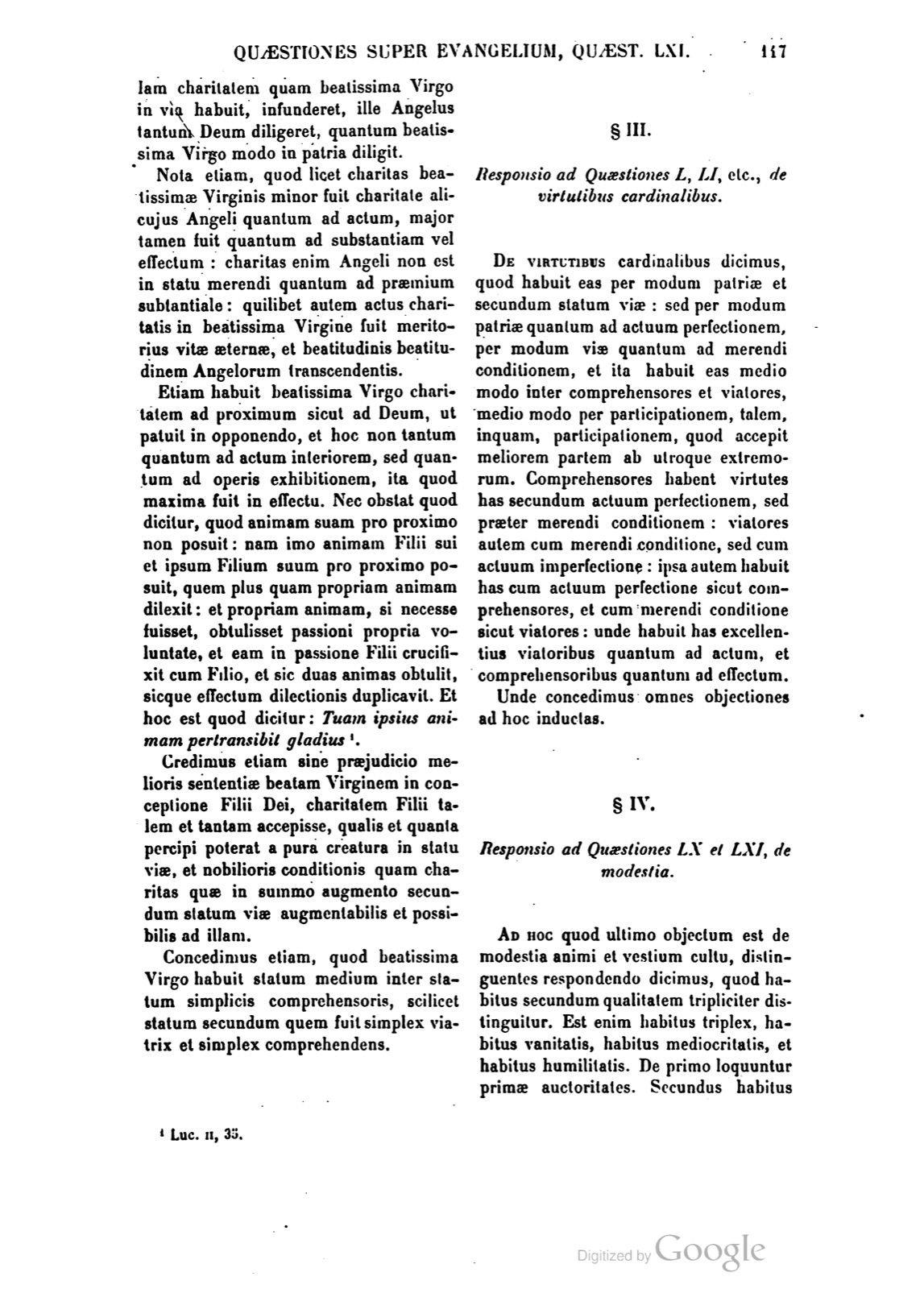
Sed quaeritur, qualiter beatissima Virgo alios viatores ista mediocritate excellere potuerit, cum de quocumque panno vestes habuerit, alii de eodem vestiri potuerunt?
Ad hoc dicendum secundum Philosophum, quod circa particularia in hujusmodi ars medium determinare nescit. Descendentem enim ad individua jubet Plato quiescere: singularia enim sunt infinita, nec eorum oportet posse fieri disciplinam: in hujusmodi enim gratia potentior est arte. Dicimus igitur, quod beatissima Virgo alios in hoc excellit in cultu, quod super artem per unctionem Spiritus sancti scivit praecise mediocritatem in habitu humilitatis observare.
But it is asked how the most blessed Virgin could surpass other wayfarers in that moderation, since from whatever cloth she had garments, others could have been clothed from the same.
To this one must say according to the Philosopher that art does not know how to determine the mean concerning particulars in matters of this kind. For Plato bids one descending to individuals to rest; for singulars are infinite, nor is it fitting that there can be a discipline of them. For in matters of this kind grace is more powerful than art. Therefore we say that the most blessed Virgin surpasses others in this in cultivation: that above art, through the anointing of the Holy Spirit, she knew precisely how to observe moderation in the habit of humility.
If a page does not appear, its photograph has not been uploaded yet.