Works › The Mariale: Questions on “Missus est”
Volume 37 · pp. 99–100
Question LIV. Whether prudence was in the blessed Virgin according as it is also in other wayfarers?
A marker with ≈ is an approximate page boundary, placed by measure of the text; the page photographs remain the authority. In the paired views, clicking a page marker brings that page into view.
QUAESTIO LIV. Utrum prudentia fuerit in B. Virgine secundum quod et in aliis viatoribus?
Consequenter quaeritur de prudentia. Et primo, utrum fuit in beatissima Virgine secundum quod in aliis viatoribus?
Et videtur, quod non.
1. Dicit Augustinus: "Prudentia est amor, ea quibus adjuvatur, ab aliis quibus impeditur, sagaciter eligens." Item, Augustinus: "Prudentia est in praecavendis insidiis": sed beatissima Virgo non impediebatur ab aliquo, nec indigebat aliqua cautela contra insidias, quia decipi non poterat: ergo non habuit actum prudentiae, hocque modo sicut eum habent communiter viatores: ergo ipsa non habuit actum prudentiae per modum viae: ergo per modum patriae.
QUESTION LIV. Whether prudence was in the blessed Virgin according as it is also in other wayfarers?
Consequently it is asked concerning prudence; and first, whether it was in the most blessed Virgin according as it is in other wayfarers.
And it seems that it was not.
1. Augustine says: "Prudence is love sagaciously choosing the things by which it is helped away from those by which it is hindered." Likewise Augustine says: "Prudence is in guarding against snares." But the most blessed Virgin was not hindered by anything, nor did she need any caution against snares, because she could not be deceived. Therefore she did not have the act of prudence in this way, as wayfarers commonly have it. Therefore she did not have the act of prudence through the mode of the way; therefore she had it through the mode of the homeland.
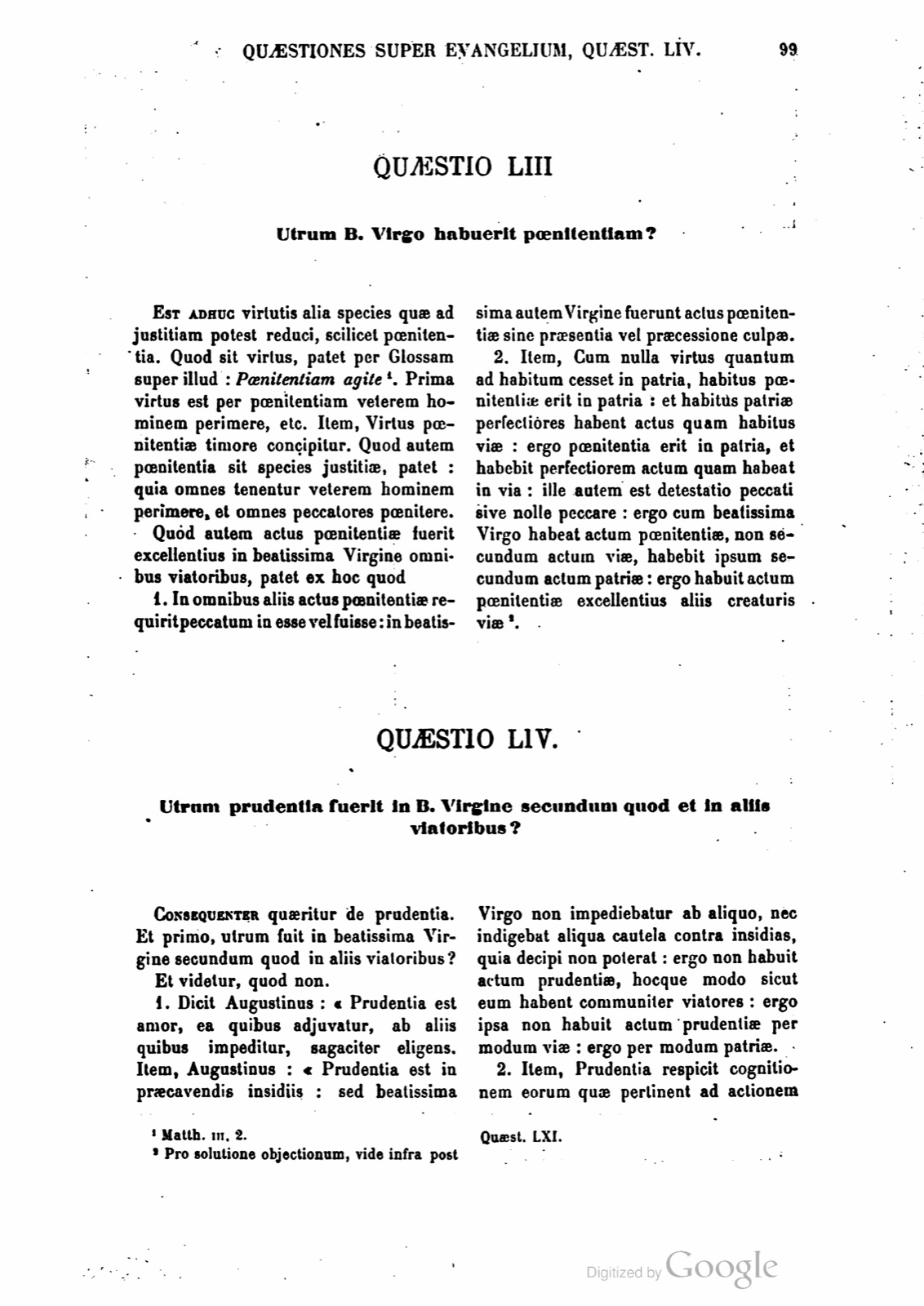
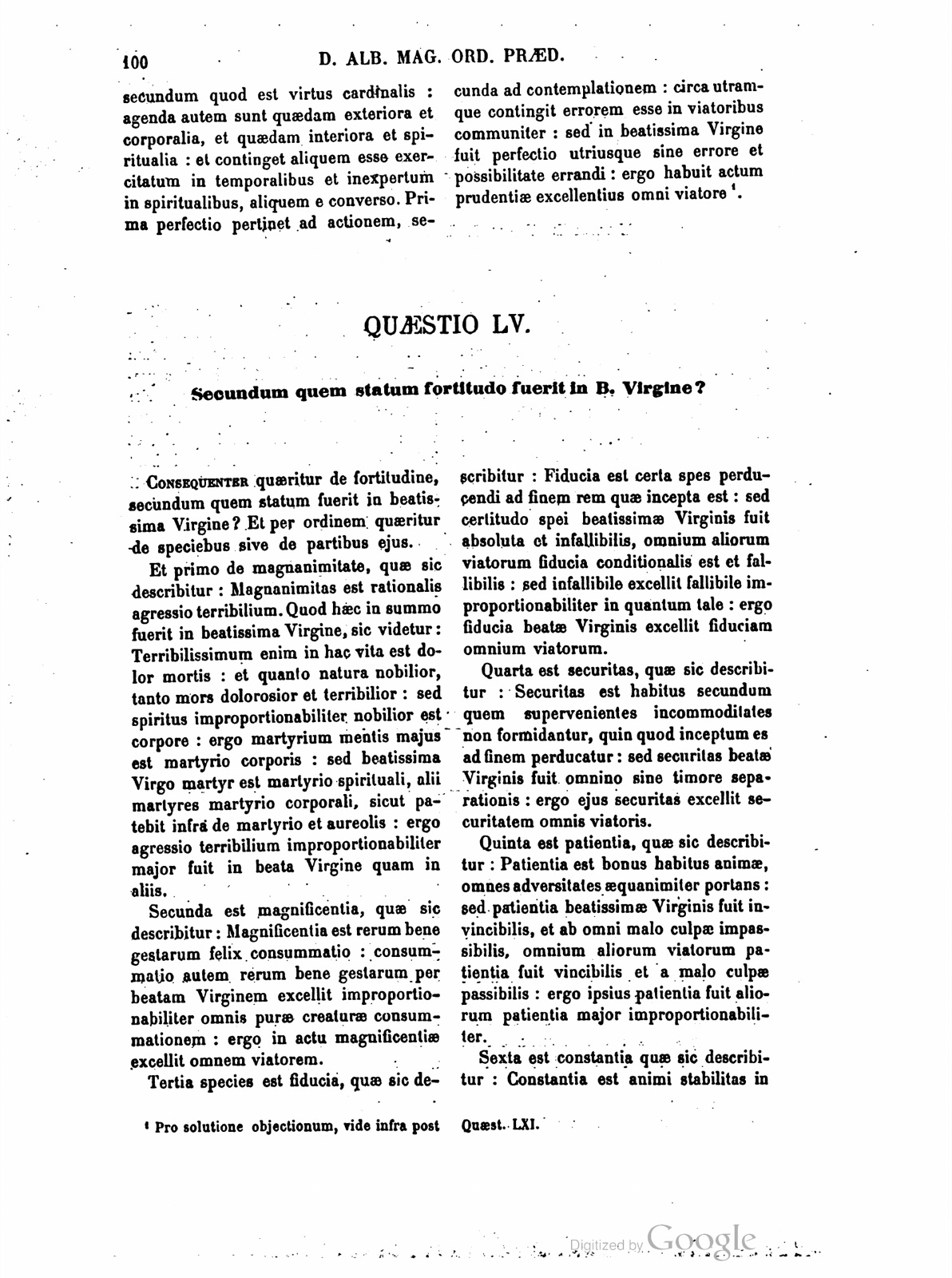
2. Item, Prudentia respicit cognitionem eorum quae pertinent ad actionem secundum quod est virtus cardinalis: agenda autem sunt quaedam exteriora et corporalia, et quaedam interiora et spiritualia: et contingit aliquem esse exercitatum in temporalibus et inexpertum in spiritualibus, aliquem e converso. Prima perfectio pertinet ad actionem, secunda ad contemplationem: circa utramque contingit errorem esse in viatoribus communiter: sed in beatissima Virgine fuit perfectio utriusque sine errore et possibilitate errandi: ergo habuit actum prudentiae excellentius omni viatore 1.
2. Likewise, prudence regards knowledge of those things that pertain to action, insofar as it is a cardinal virtue. Now some things to be done are exterior and bodily, and some are interior and spiritual; and it happens that someone is exercised in temporal matters and inexperienced in spiritual matters, and someone conversely. The first perfection pertains to action, the second to contemplation. Commonly among wayfarers error can exist concerning either; but in the most blessed Virgin there was the perfection of both without error and without the possibility of erring. Therefore she had the act of prudence more excellently than every wayfarer 1.
Notes
- For the solution of the objections, see below after Question LXI. (Pro solutione objectionum, vide infra post Quaest. LXI.) ↩
If a page does not appear, its photograph has not been uploaded yet.