Works › Sermons on the Most Holy Sacrament of the Eucharist
Volume 13 · pp. 739–743
Sermon XVIII. On the Third Kind of Those Communicating Unworthily, Namely, on the Presumptuous
A marker with ≈ is an approximate page boundary, placed by measure of the text; the page photographs remain the authority. In the paired views, clicking a page marker brings that page into view.
### Sermo XVIII
### De tertio genere indigne communicantium, scilicet, de praesumptuosis
Venite, comedite panem meum, etc. Prov. ix, 5. Ut supra. Item, Quicumque manducaverit panem hunc, etc. I ad Corinth. xi, 27.
III.
De tertio genere malorum indigne communicantium est hic dicendum, id est, de praesumptuosis, qui scilicet non timent communicare vel celebrare in magnis criminibus, et manifestis. De his, I ad Corinth. xi, 29: Qui manducat et bibit indigne, judicium sibi manducat, et bibit, id est, valde malum est illi. Unde sciendum, quod duplex est effectus corporis Domini, scilicet bonitatis quoad bonos, et severitatis quoad malos: et tamen ipsum semper immutabile et bonum in se manet, sed justo judicio effectus ejus mutatur in his qui eo male utuntur. Augustinus: "Sancti malis possunt obesse: quia qui manducat corpus Christi indigne, judicium sibi manducat et bibit, non quod res illa mala sit: sed quia malus, quod bonum est, male accipit."
Hujus rei exemplum evidens est in sole, et in vino. Nam eamdem solis lucem, quam sanus oculus ad delectationem, aeger suscipit ad perturbationem: et vinum quod sanus homo ad jucunditatem et confortationem, febricitans accipit ad majorem infirmitatem, vel forte ad mortem. Hinc est quod indigne communicantes tria mala sequuntur, scilicet:
I. Magna culpa.
II. Dei offensa.
III. Et multiplex plaga.
I. Primum malum praesumptuose communicantium est magna culpa. Jerem. xi, 15: Numquid carnes sanctae auferent a te malitias tuas, in quibus gloriata es? Isidorus: "Qui scelerate vivunt in Ecclesia, et communicare non desinunt, putantes tali communione mundari: discant nihil ad emundationem proficere sibi, dicente Propheta1: Quid est quod dilectus meus in domo mea facit scelera multa? numquid carnes sanctae auferent a te malitias tuas? Quasi diceret: Non auferunt, sed augmentant."
Hujus culpae triplex est ratio, scilicet, 1. Perversa intentio, 2. Divini praecepti transgressio, 3. Maxima ingratitudo.
1. Prima ratio culpae praesumptuose communicantium est perversa intentio. Actionis enim voluntariae triplex est radix sive principium, vel natura, vel virtus, vel libido mala est: sed ejus qui est in peccato mortali scienter, et sumit corpus Christi, non potest esse radix, natura, vel virtus: quia neque natura, neque virtus aliquo modo dictaret, quod aliquis rem tam pretiosam, tam venerandam in loco vel vase immundo poneret. Unde peccator qui corpus Christi sumens ponit in ore suo polluto et corpore, radix non est, nec natura, vel virtus: sed libido, id est, prava intentio vel lucri temporalis, vel vanae laudis, vel alicujus deceptionis.
### Sermon XVIII
### On the Third Kind of Those Communicating Unworthily, Namely, on the Presumptuous
Come, eat my bread, etc. Proverbs 9:5. As above. Likewise, Whoever will have eaten this bread, etc. 1 Corinthians 11:27.
III.
Here one must speak about the third kind of evil persons communicating unworthily, that is, about the presumptuous, namely those who do not fear to communicate or celebrate while in great and manifest crimes. Concerning these, 1 Corinthians 11:29: He who eats and drinks unworthily eats and drinks judgment to himself, that is, it is very evil for him. Hence one must know that the effect of the Lord's body is twofold, namely of goodness with respect to the good and of severity with respect to the evil; and yet it itself always remains immutable and good in itself, but by a just judgment its effect is changed in those who use it badly. Augustine says: "Holy things can harm evil persons, because he who eats the body of Christ unworthily eats and drinks judgment to himself, not because that thing is evil, but because, being evil, he receives badly what is good."
An evident example of this thing is in the sun and in wine. For the same light of the sun which a healthy eye receives for delight, a sick eye receives for disturbance; and the wine which a healthy man receives for pleasure and strengthening, a feverish man receives for greater infirmity, or perhaps for death. Hence it is that three evils follow those communicating unworthily, namely:
I. Great fault.
II. Offense of God.
III. And manifold plague.
I. The first evil of those communicating presumptuously is great fault. Jeremiah 11:15: Will holy flesh take away from you your evils, in which you have boasted? Isidore says: "Those who live wickedly in the Church and do not cease to communicate, thinking that they are cleansed by such communion, should learn that nothing profits them for cleansing, when the Prophet says1: What is it that my beloved does in my house committing many crimes? Will holy flesh take away from you your evils? As if he were saying: They do not take them away, but increase them."
There is a threefold reason of this fault, namely 1. perverse intention, 2. transgression of the divine precept, 3. greatest ingratitude.
1. The first reason of the fault of those communicating presumptuously is perverse intention. For of a voluntary action the root or principle is threefold: either nature, or virtue, or evil desire. But of one who knowingly is in mortal sin and receives the body of Christ, the root cannot be nature or virtue, because neither nature nor virtue would in any way dictate that someone should place so precious and so venerable a thing in an unclean place or vessel. Hence the sinner who, receiving the body of Christ, places it in his polluted mouth and body, does not have nature or virtue as the root, but desire, that is, a depraved intention either of temporal gain, or of vain praise, or of some deception.
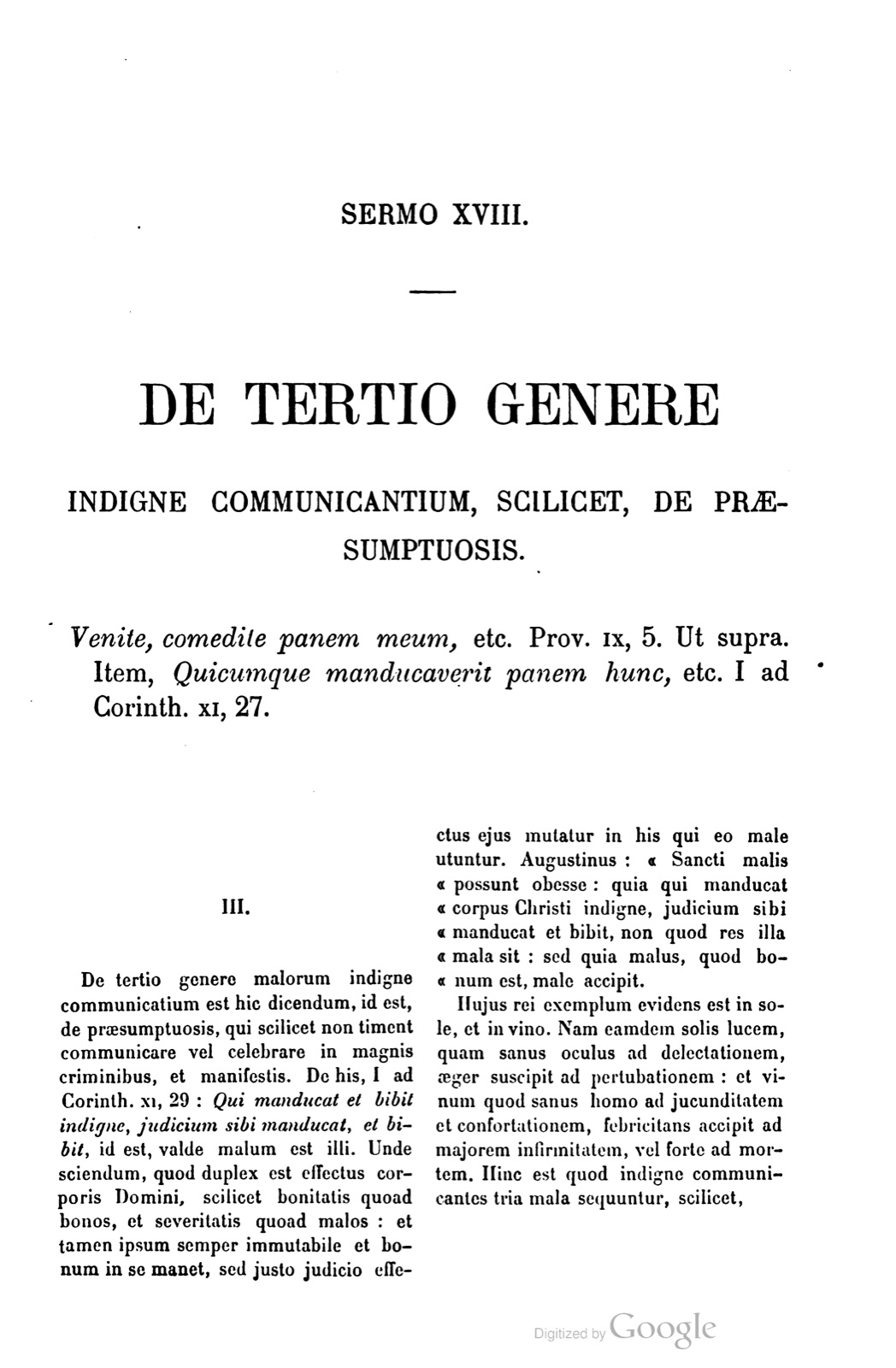
2. Secunda ratio culpae istorum est divini praecepti transgressio. Sicut enim Dominus in statu innocentiae lignum vitae ad edendum concessit, et in statu culpae prohibuit: sic nobis in statu bono corpus Christi conceditur, et in malo prohibetur. Matth. vii, 6: Nolite dare sanctum canibus, id est, immundis peccatoribus. Lev. xxi, 17 et 18: Homo qui habuerit maculam, scilicet peccati, non offerat panes Deo suo, nec accedat ad ministerium ejus.
3. Tertia ratio culpae istorum est maxima ingratitudo. Quae enim potest esse major, quam si quis habens Dominum a quo accepisset quidquid boni haberet, et ipsum insuper morte sua de suspendio aeterno liberasset: eumdem Dominum in stabulum immundissimum inimici sui traditorie duceret, et ibi conculcaret, et rursum occideret? Tanta ingratitudine peccant, qui corpus Domini sumunt in peccato mortali. Psal. xxxiv, 12 et cviii, 3 et lv, 3: Retribuebant mihi mala pro bonis, ... et odium pro dilectione mea, ... et conculcaverunt me inimici mei tota die. Ad Heb. x, 29: Quanto magis putatis deteriora mereri supplicia qui Filium Dei conculcaverit, et sanguinem testamenti pollutum duxerit, in quo sanctificatus est? scilicet in morte Christi. Ambrosius: "Christum ille conculcat, qui libere peccat absque timore et poenitentia, et qui ei indigne participat." Idem: "Qui indigne Christum sumit, idem est, ac si interficiat." Augustinus: "Quam temerarium, quamque nefarium est cruentis manibus intemeratae Virginis tractare Filium! quis auditus sustineret aurium? quis oculus non confunderetur ad intuitum? quae mens non raperetur in excessum, ubi mundi pretium mittitur in sterquilinium? non enim minus est detestabile in os pullutum, quam in lutum mittere Dei Filium."
II. Secundum malum istorum, est magna offensa Dei. Zach. i, 15: Ira magna ego irascor super gentes opulentas: quia ego iratus sum parum, ipsi vero adjuverunt in malum. Quasi diceret Dominus: Quasi parum irascor hominibus propter peccata quae committunt in proximum, sed maxime pro eo quod peccant in Dominum. I Reg. ii, 25: Si peccaverit vir in virum, placari ei potest Deus: si autem in Dominum peccaverit vir, quis orabit pro eo? Glossa: "Quanto major gloria tua, tanto gravior offensa." Mal. i, 6 et 7: Ad vos, o Sacerdotes, qui despicitis nomen meum, et offertis super altare meum panem pollutum. Glossa: "Corripit sermo divinus Episcopos et ministros Ecclesiae negligentes, et omnes qui Christi nomine censentur, cur nomen ejus despiciant." Quibus aperit causas offensae, quod panem pollutum offerunt. Polluit enim panem, id est, corpus Christi, qui indignus accedit ad altare, et mensam Domini, si non scelerata voce, scelerato opere despicit: et dum sacramentum violatur, ipse cujus est sacramentum, violatur.
2. The second reason of their fault is transgression of the divine precept. For just as the Lord in the state of innocence granted the tree of life for eating and in the state of fault prohibited it, so the body of Christ is granted to us in a good state and prohibited in an evil one. Matthew 7:6: Do not give what is holy to dogs, that is, to unclean sinners. Leviticus 21:17 and 18: The man who has a blemish, namely of sin, shall not offer loaves to his God, nor approach his ministry.
3. The third reason of their fault is greatest ingratitude. For what can be greater than if someone, having a Lord from whom he had received whatever good he had, and who moreover had freed him by his death from eternal hanging, should treacherously lead the same Lord into the most unclean stable of his enemy, and there trample him and kill him again? They sin with such ingratitude who receive the body of the Lord in mortal sin. Psalm 34:12 and 108:3 and 55:3: They repaid me evil things for good, ... and hatred for my love, ... and my enemies trampled me all day. Hebrews 10:29: How much worse punishments do you think he deserves who has trampled the Son of God and regarded the blood of the testament as polluted, in which he was sanctified? namely in the death of Christ. Ambrose says: "He tramples Christ who sins freely without fear and penance, and who participates in him unworthily." The same says: "He who receives Christ unworthily is the same as if he were killing him." Augustine says: "How rash and how wicked it is to handle with bloody hands the Son of the untouched Virgin! What hearing of ears would endure it? What eye would not be confounded at the sight? What mind would not be carried into excess, where the price of the world is sent into a dungheap? For it is no less detestable to send the Son of God into a polluted mouth than into mud."
II. The second evil of these persons is a great offense of God. Zechariah 1:15: With great anger I am angry over the wealthy nations, because I was angry a little, but they helped toward evil. As if the Lord were saying: I am, as it were, a little angry at men on account of the sins which they commit against neighbor, but most of all because they sin against the Lord. 1 Kings 2:25: If a man sins against a man, God can be appeased toward him; but if a man sins against the Lord, who will pray for him? The Gloss says: "The greater your glory, the heavier the offense." Malachi 1:6 and 7: To you, O Priests, who despise my name and offer polluted bread upon my altar. The Gloss says: "The divine discourse rebukes negligent Bishops and ministers of the Church, and all who are reckoned by the name of Christ, as to why they despise his name." To them he opens the causes of the offense, because they offer polluted bread. For he pollutes the bread, that is, the body of Christ, who approaches the altar unworthily and despises the table of the Lord, if not by a wicked voice, by wicked deed; and while the sacrament is violated, he himself whose sacrament it is, is violated.
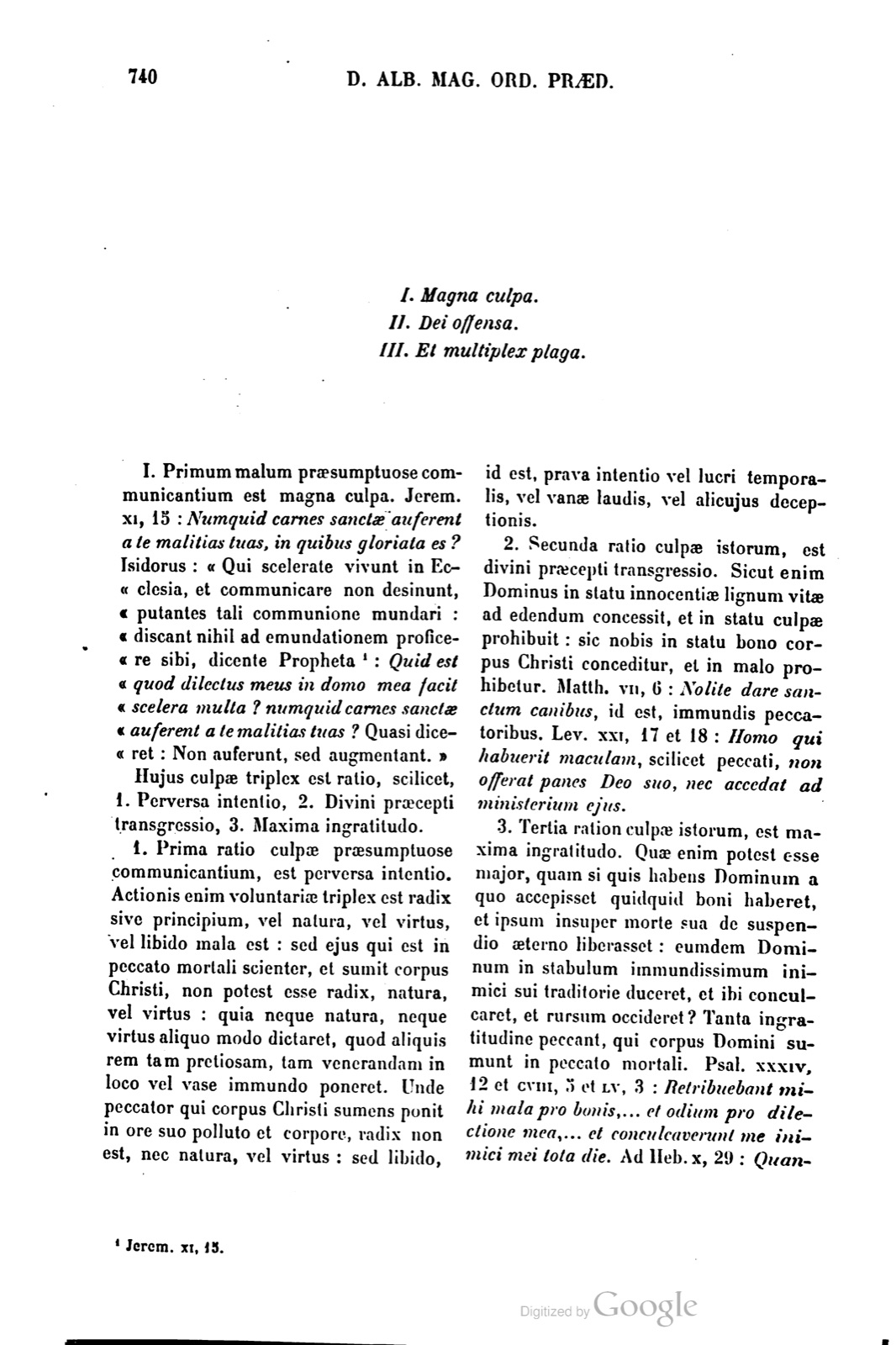
III. Tertium malum istorum est multiplex plaga et gravis ex justa Dei vindicta. Sicut enim ab antiquo filiis Israel maximum erat peccatum, et pessimarum causa maledictionum, quod per idololatriam Deum projecerunt: et postea Judaeis impiis, quod Christum non susceperunt: sic modo Christianis maximum est peccatum, et causa plagarum, quod corpus Salvatoris indigne suscipiunt. Gregorius super Deut. xxviii, 15 et seq.: "Creator omnium per Incarnationis suae mysterium Judaeam visitare dignatus est, sed quia non cognovit tempus visitationis suae, ideo Gentibus frequenter in praedam data novissime Romanis tradita est: et venerunt super eam omnia genera maledictionum, quae in libro legis scripta sunt. Similiter his qui gratiam Dei ingrati accipiunt, certa est damnatio. Si enim irritam quis faciens legem Moysi, sine ulla miseratione moritur: quanto deteriora meretur supplicia, qui Filium Dei conculcaverit, et sanguinem testamenti pollutum duxerit?"
Haec supplicia dici possunt triplices plagae. Prima, multa damna bonorum spiritualium. Secunda, sterilitas terrae seu caristia temporalium. Tertia, pestes corporum et strages hominum.
1. De prima plaga, Thren. i, 10: Manum suam misit hostis ad omnia desiderabilia ejus: quia vidit gentes ingressas sanctuarium suum, de quibus praeceperas, ne intrarent in ecclesiam tuam. Glossa: "Hostis antiquus ad desiderabilia Ecclesiae manum mittit, et spiritualem ornatum aufert, in membris suis fidem contaminans, baptisma rescindens, id est, gratiam in baptismo datam, doctrinam corrumpens, corpus et sanguinem Domini indigne contrectans, et vasa pretiosa, id est, oves Christi quasi lupus devastans." Et causa tanti mali redditur: quia Gentes, id est, carnem amantes, et Christi circumcisionem non habentes, ministri altaris efficiuntur.
2. De secunda plaga, Deut. xxviii, 15, 18 et 20: Si audire nolueris vocem Domini Dei tui, ut custodias, et facias omnia mandata ejus, venient super te omnes maledictiones istae... Maledictus fructus terrae tuae, armenta boum tuorum, et greges ovium tuarum... Mittet Dominus super te famem et esuriem, et increpationem in omnia opera tua. Hae plagae venient si audire nolueris mandata Dei, scilicet praecipue de corpore Domini non indigne tractando, secundum illud Lev. xxi, 17 et 18: Homo qui habuerit maculam peccati, non offerat panem Deo suo, nec accedat ad ministerium ejus. Gen. iii, 17 et 18: Quia comedisti de ligno, ex quo praeceperam tibi ne comederes, maledicta terra in opere tuo. Spinas et tribulos germinabit tibi.
III. The third evil of these persons is a manifold and grave plague from the just vengeance of God. For just as of old it was the greatest sin and the cause of the worst curses for the children of Israel that they cast God away through idolatry, and afterward for the impious Jews that they did not receive Christ, so now for Christians it is the greatest sin and the cause of plagues that they receive the body of the Savior unworthily. Gregory on Deuteronomy 28:15 and following says: "The Creator of all deigned to visit Judea through the mystery of his Incarnation, but because it did not know the time of its visitation, therefore, often given as prey to the Gentiles, at last it was handed over to the Romans; and all kinds of curses came upon it, which are written in the book of the law. Similarly for those who receive the grace of God ungratefully, damnation is certain. For if someone making void the law of Moses dies without any mercy, how much worse punishments does he deserve who has trampled the Son of God and regarded the blood of the testament as polluted?"
These punishments can be called threefold plagues. The first is many losses of spiritual goods. The second is sterility of the earth or scarcity of temporal things. The third is diseases of bodies and slaughter of men.
1. Concerning the first plague, Lamentations 1:10: The enemy has sent his hand to all its desirable things, because it saw the nations enter its sanctuary, concerning whom you had commanded that they should not enter into your church. The Gloss says: "The ancient enemy sends his hand to the desirable things of the Church and takes away spiritual adornment: contaminating faith in its members, cutting off baptism, that is, the grace given in baptism, corrupting doctrine, handling unworthily the body and blood of the Lord, and devastating the precious vessels, that is, the sheep of Christ, like a wolf." And the cause of so great an evil is given: because Gentiles, that is, those loving the flesh and not having the circumcision of Christ, are made ministers of the altar.
2. Concerning the second plague, Deuteronomy 28:15, 18 and 20: If you refuse to hear the voice of the Lord your God so as to keep and do all his commandments, all these curses will come upon you... Cursed will be the fruit of your earth, the herds of your oxen, and the flocks of your sheep... The Lord will send upon you hunger and famine and rebuke in all your works. These plagues will come if you refuse to hear the commandments of God, namely especially concerning not handling the body of the Lord unworthily, according to that text Leviticus 21:17 and 18: The man who has a blemish of sin shall not offer bread to his God, nor approach his ministry. Genesis 3:17 and 18: Because you ate from the tree from which I had commanded you not to eat, cursed is the earth in your work. It will bring forth thorns and thistles for you.
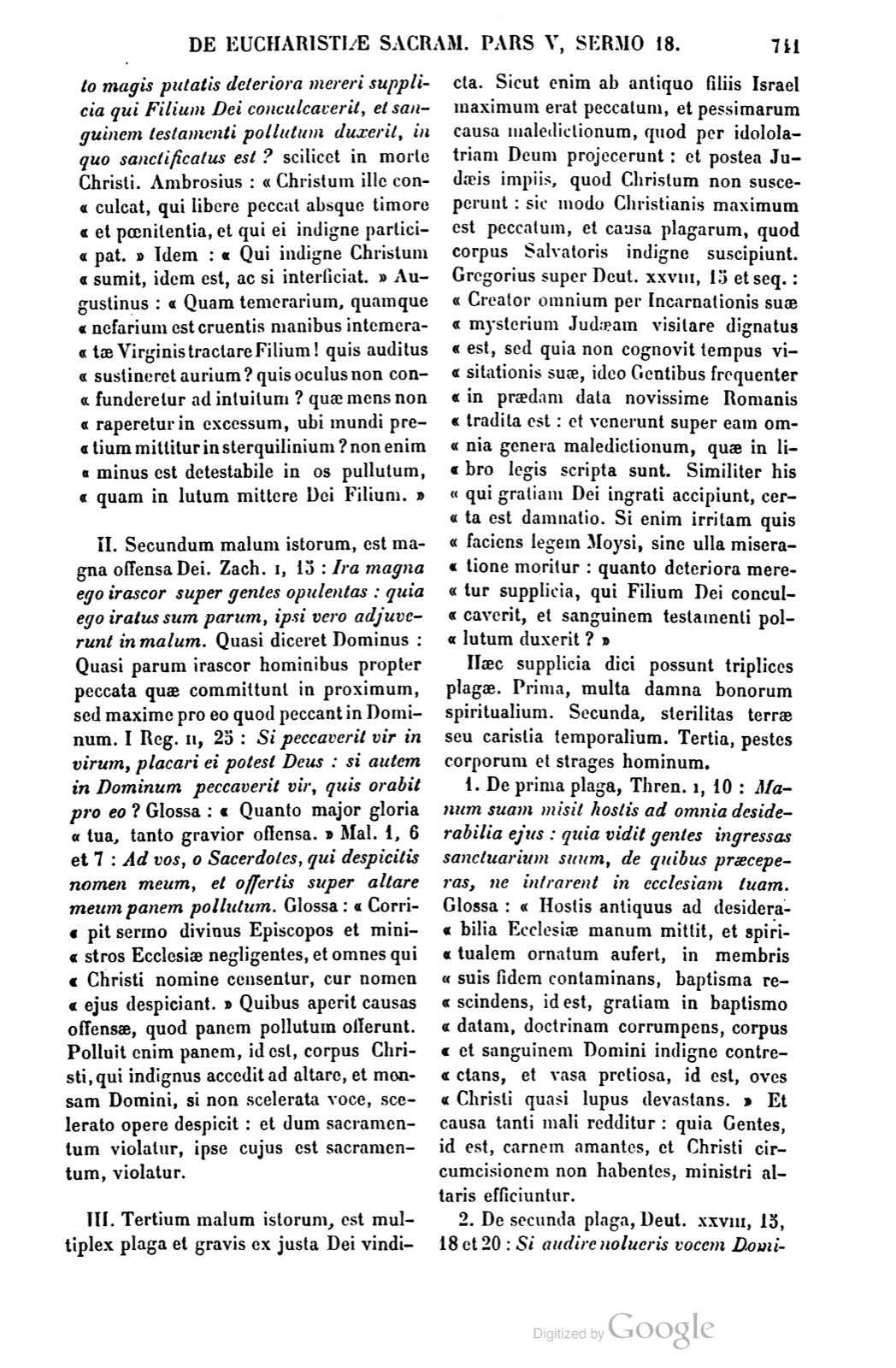
3. De tertia plaga, I ad Corinth. xi, 28 et 29: Probet seipsum homo: et sic de pane illo edat... Qui enim manducat indigne, judicium sibi manducat, et bibit, id est, ad judicium mortis se obligat, et multi alii propter scelera unius saepe feriuntur, unde sequitur: Ideo inter vos multi infirmi, et imbecilles, et dormiunt multi, scilicet somno mortis, vel Dei verbere, vel praeliorum adversitate. Num. xi, 33: Adhuc carnes in dentibus eorum: et ecce furor Domini concitatus in populum, percussit eum plaga magna nimis.
Sed ecce, contra has plagas et omnia jam dicta mala, triplex remedium ostendit Scriptura. Primum est emendatio vitae per poenitentiam voluntariam. Secundum, correctio malitiae per superiorum disciplinam. Tertium, mutatio incorrigibilis personae per justitiae districtionem.
1. De primo, Joel. i, 10, 11 et 13: Depopulata est regio, luxit humus, id est, habitatores humi: quia periit messis agri, id est, bona temporalia et spiritualia. Accingite vos, et plangite Sacerdotes, ululate ministri altaris: ingredimini: cubate in sacco. Glossa: "Sancti Sacerdotes, qui comedunt digne Pascha, accinguntur balteo castitatis: peccatores quos remordet conscientia doloris, ut plangant sua, et populi peccata." Accingite ergo vos sacerdotes et ministri altaris cingulo poenitentiae, et plangite puro corde: ululate in confessione et oratione, ingredimini Ecclesiam per poenitentiam, unde existis per culpam: cubate in sacco, id est, delicias quibus offendistis, per vitae austeritatem compensate, ut iram Dei possitis mitigare.
2. De secundo, Mal. iii, 2 et 3: Ecce venit Dominus quasi ignis constans, scilicet per justos Praelatos, et purgabit filios Levi, id est, ministros altaris: et erunt Domino offerentes sacrificia in justitia. Et sic utique placatus mitigabitur ira ejus. Ezech. vii, 3 et 4: Judicabo te juxta vias tuas: et ponam contra te omnes abominationes tuas. Et non parcet oculus meus super te, et non miserebor. Sicut medicus incidit et urit: non parcit, ut parcat: ita Dominus. Unde: Ego percutiam, et ego sanabo2. Et, Flagellat omnem filium quem recipit3. Luc. xiv, 23: Compelle intrare. Et sic Dominus per justos Praelatos non parcit vitia corrigendo, ut parcat iram suam mitigando.
3. Concerning the third plague, 1 Corinthians 11:28 and 29: Let a man prove himself, and so let him eat of that bread... For he who eats unworthily eats and drinks judgment to himself, that is, he obligates himself to the judgment of death, and many others are often struck because of the crimes of one person; hence it follows: Therefore among you many are sick and weak, and many sleep, namely with the sleep of death, either by the blow of God or by the adversity of battles. Numbers 11:33: The flesh was still in their teeth, and behold the fury of the Lord was stirred up against the people; he struck them with an exceedingly great plague.
But behold, against these plagues and all the evils already named, Scripture shows a threefold remedy. The first is amendment of life through voluntary penance. The second is correction of malice through the discipline of superiors. The third is the changing of an incorrigible person through the strictness of justice.
1. Concerning the first, Joel 1:10, 11 and 13: The region has been laid waste, the ground has mourned, that is, the inhabitants of the ground, because the harvest of the field has perished, that is, temporal and spiritual goods. Gird yourselves and lament, Priests; howl, ministers of the altar; enter; lie in sackcloth. The Gloss says: "The holy Priests, who eat the Passover worthily, are girded with the belt of chastity; sinners whom the conscience of grief bites are girded so that they may lament their own sins and the sins of the people." Therefore gird yourselves, priests and ministers of the altar, with the belt of penance, and lament with a pure heart; howl in confession and prayer; enter the Church through penance, from which you went out through fault; lie in sackcloth, that is, compensate by austerity of life for the delights by which you offended, so that you may be able to mitigate the anger of God.
2. Concerning the second, Malachi 3:2 and 3: Behold, the Lord comes like a constant fire, namely through just Prelates, and he will purge the sons of Levi, that is, the ministers of the altar, and they will be offering sacrifices to the Lord in justice. And thus, certainly, having been appeased, his anger will be mitigated. Ezekiel 7:3 and 4: I will judge you according to your ways, and I will set all your abominations against you. And my eye will not spare you, and I will not have mercy. As a physician cuts and burns, he does not spare in order that he may spare; so does the Lord. Hence: I will strike, and I will heal2. And, He scourges every son whom he receives3. Luke 14:23: Compel them to enter. And thus the Lord through just Prelates does not spare by correcting vices, so that he may spare by mitigating his anger.
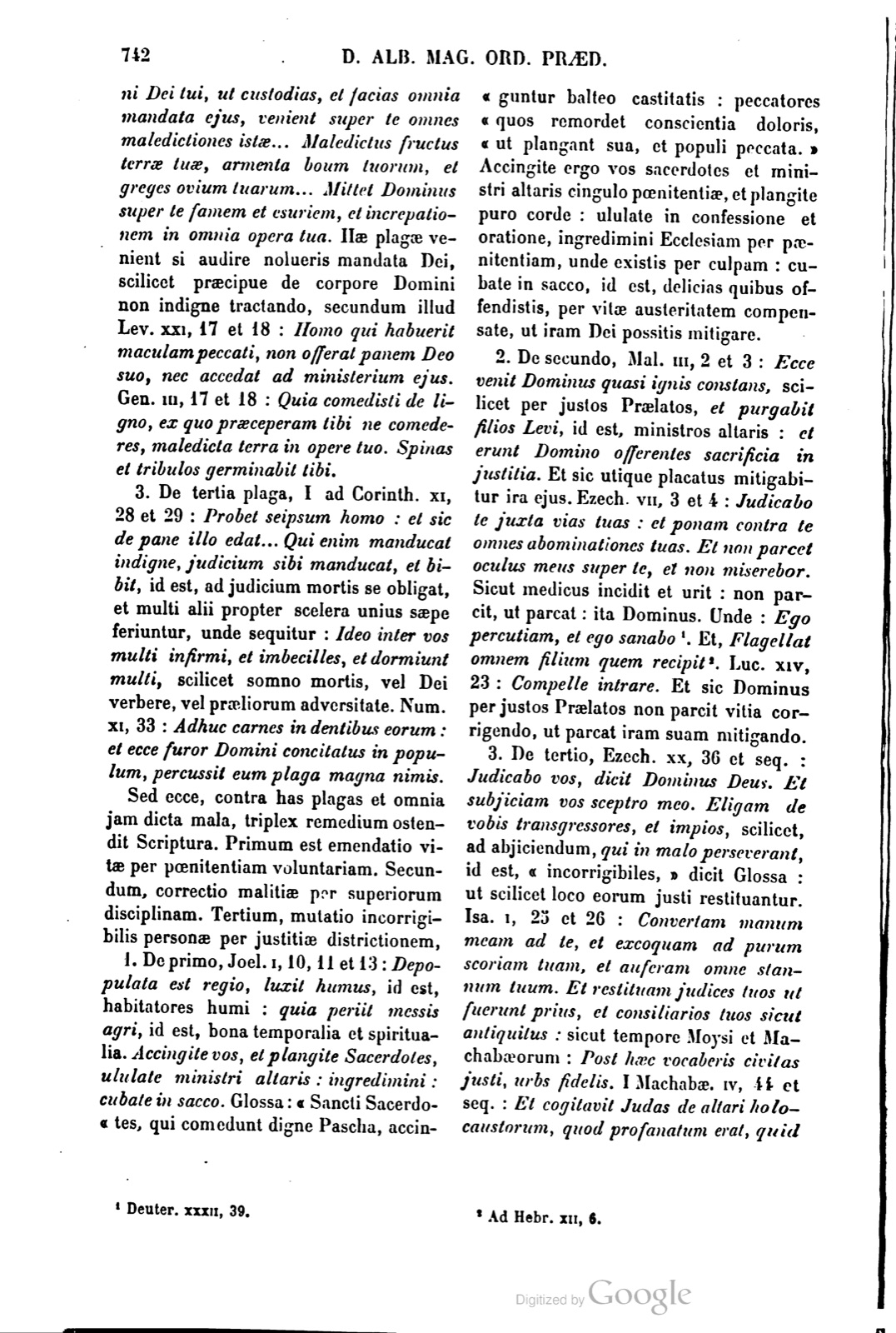
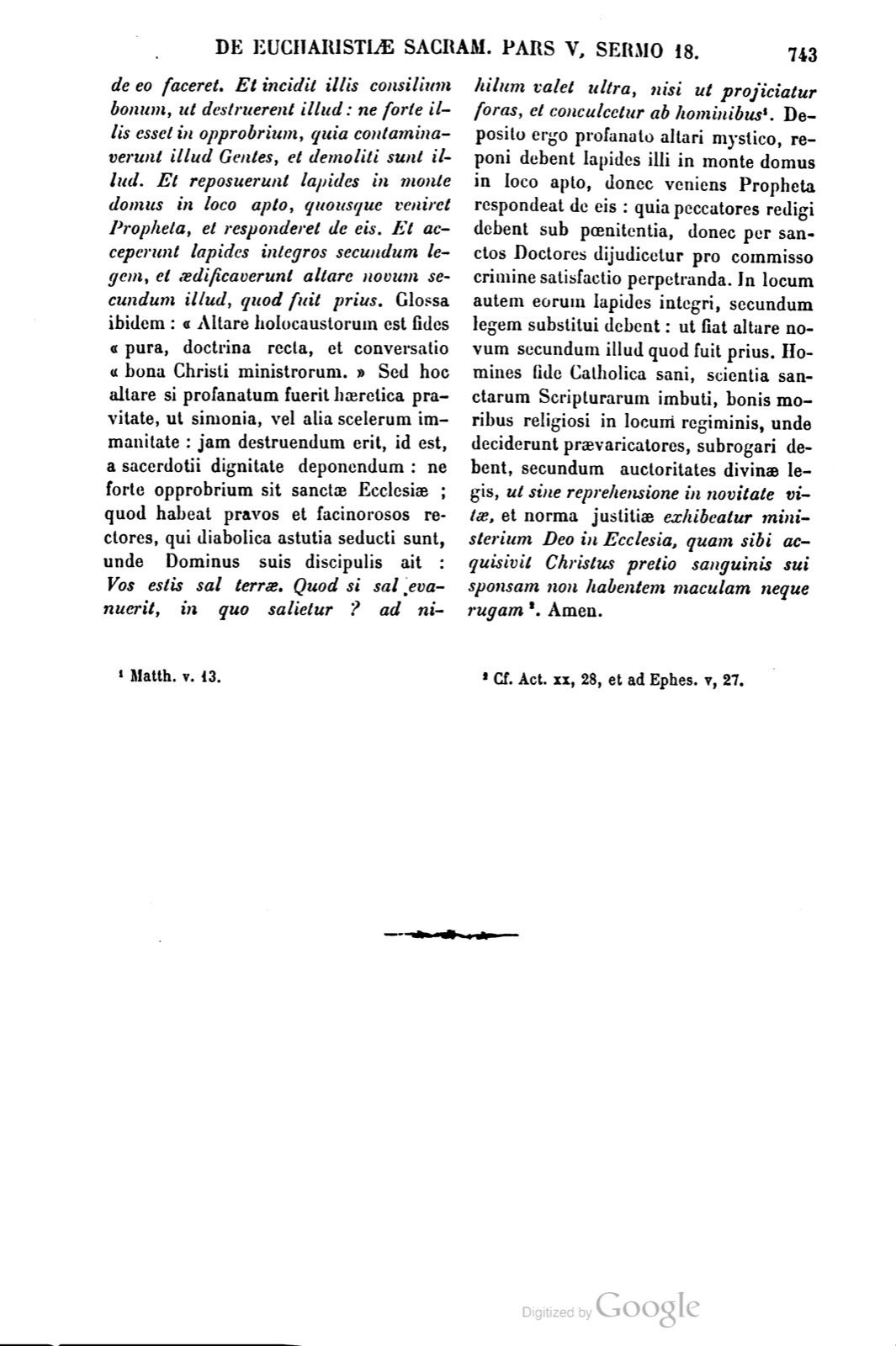
3. De tertio, Ezech. xx, 36 et seq.: Judicabo vos, dicit Dominus Deus. Et subjiciam vos sceptro meo. Eligam de vobis transgressores, et impios, scilicet, ad abjiciendum, qui in malo perseverant, id est, "incorrigibiles," dicit Glossa: ut scilicet loco eorum justi restituantur. Isa. i, 25 et 26: Convertam manum meam ad te, et excoquam ad purum scoriam tuam, et auferam omne stannum tuum. Et restituam judices tuos ut fuerunt prius, et consiliarios tuos sicut antiquitus: sicut tempore Moysi et Machabaeorum: Post haec vocaberis civitas justi, urbs fidelis. I Machabae. iv, 44 et seq.: Et cogitavit Judas de altari holocaustorum, quod profanatum erat, quid de eo faceret. Et incidit illis consilium bonum, ut destruerent illud: ne forte illis esset in opprobrium, quia contaminaverunt illud Gentes, et demoliti sunt illud. Et reposuerunt lapides in monte domus in loco apto, quousque veniret Propheta, et responderet de eis. Et acceperunt lapides integros secundum legem, et aedificaverunt altare novum secundum illud, quod fuit prius. Glossa ibidem: "Altare holocaustorum est fides pura, doctrina recta, et conversatio bona Christi ministrorum." Sed hoc altare si profanatum fuerit haeretica pravitate, ut simonia, vel alia scelerum immanitate: jam destruendum erit, id est, a sacerdotii dignitate deponendum: ne forte opprobrium sit sanctae Ecclesiae; quod habeat pravos et facinorosos rectores, qui diabolica astutia seducti sunt, unde Dominus suis discipulis ait: Vos estis sal terrae. Quod si sal evanuerit, in quo salietur? ad nihilum valet ultra, nisi ut projiciatur foras, et conculcetur ab hominibus4. Deposito ergo profanato altari mystico, reponi debent lapides illi in monte domus in loco apto, donec veniens Propheta respondeat de eis: quia peccatores redigi debent sub poenitentia, donec per sanctos Doctores dijudicetur pro commisso crimine satisfactio perpetranda. In locum autem eorum lapides integri, secundum legem substitui debent: ut fiat altare novum secundum illud quod fuit prius. Homines fide Catholica sani, scientia sanctarum Scripturarum imbuti, bonis moribus religiosi in locum regiminis, unde deciderunt praevaricatores, subrogari debent, secundum auctoritates divinae legis, ut sine reprehensione in novitate vitae, et norma justitiae exhibeatur ministerium Deo in Ecclesia, quam sibi acquisivit Christus pretio sanguinis sui sponsam non habentem maculam neque rugam5. Amen.
3. Concerning the third, Ezekiel 20:36 and following: I will judge you, says the Lord God. And I will subject you to my scepter. I will choose from you transgressors and the impious, namely to be cast away, who persevere in evil, that is, "the incorrigible," says the Gloss, so that just men may be restored in their place. Isaiah 1:25 and 26: I will turn my hand to you and refine your dross to purity, and I will take away all your tin. And I will restore your judges as they were before, and your counselors as of old, as in the time of Moses and the Maccabees. After these things you will be called the city of the just, a faithful city. 1 Maccabees 4:44 and following: And Judas thought about the altar of holocausts, which had been profaned, what he should do with it. And good counsel came to them, that they should destroy it, lest perhaps it be a reproach to them because the Gentiles had contaminated it; and they demolished it. And they placed the stones on the mountain of the house in a suitable place, until a Prophet should come and answer concerning them. And they received whole stones according to the law and built a new altar according to that which was before. The Gloss in the same place says: "The altar of holocausts is pure faith, right doctrine, and the good conduct of Christ's ministers." But if this altar has been profaned by heretical depravity, as by simony or another enormity of crimes, now it must be destroyed, that is, deposed from the dignity of the priesthood, lest perhaps it be a reproach to holy Church that it have depraved and criminal rulers, who have been seduced by diabolical craft; hence the Lord says to his disciples: You are the salt of the earth. But if the salt loses its savor, with what shall it be salted? It is worth nothing further except to be cast outside and trampled by men4. Therefore, after the profaned mystical altar has been put down, those stones ought to be placed again on the mountain of the house in a suitable place, until a Prophet comes and answers concerning them, because sinners ought to be brought under penance until through holy Doctors the satisfaction to be performed for the committed crime is judged. In their place, whole stones according to the law ought to be substituted, so that a new altar may be made according to that which was before. Men sound in Catholic faith, imbued with knowledge of the holy Scriptures, religious in good morals, ought to be substituted in the place of governance from which the prevaricators fell, according to the authorities of the divine law, so that ministry may be exhibited to God without reproach in the Church, in newness of life and the rule of justice, which Christ acquired for himself with the price of his blood as a bride not having stain or wrinkle5. Amen.
If a page does not appear, its photograph has not been uploaded yet.