Works › Sophistical Refutations, Books I–II
Volume 2 · pp. 657–661
Book II. Tractate I. Chapters I-II
A marker with ≈ is an approximate page boundary, placed by measure of the text; the page photographs remain the authority. In the paired views, clicking a page marker brings that page into view.
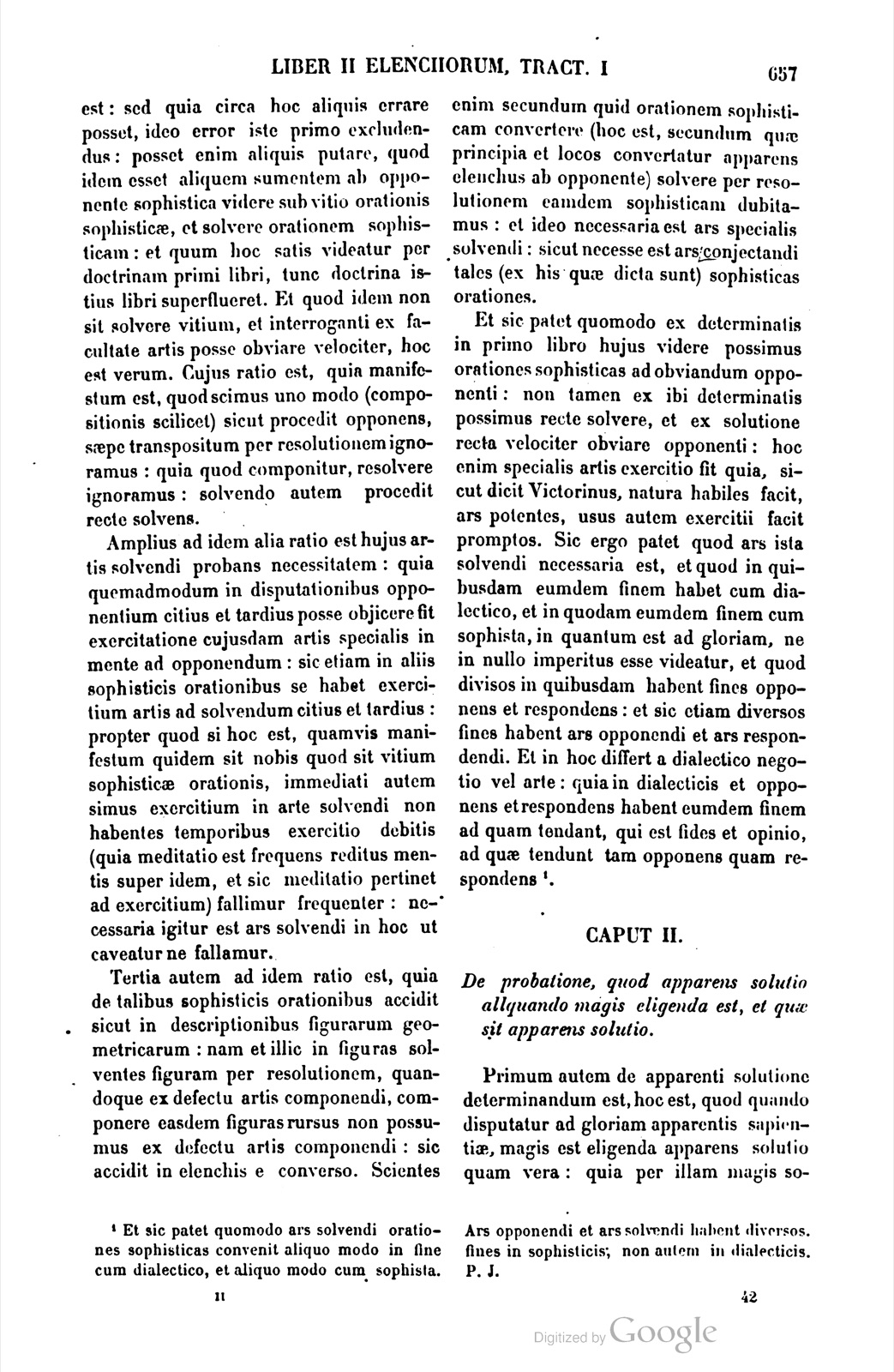
est: sed quia circa hoc aliquis errare posset, ideo error iste primo excludendus: posset enim aliquis putare, quod idem esset aliquem sumentem ab opponente sophistica videre sub vitio orationis sophisticae, et solvere orationem sophisticam: et quum hoc satis videatur per doctrinam primi libri, tunc doctrina istius libri superflueret. Et quod idem non sit solvere vitium, et interroganti ex facultate artis posse obviare velociter, hoc est verum. Cujus ratio est, quia manifestum est, quod scimus uno modo (compositionis scilicet) sicut procedit opponens, saepe transpositum per resolutionem ignoramus: quia quod componitur, resolvere ignoramus: solvendo autem procedit recte solvens.
Amplius ad idem alia ratio est hujus artis solvendi probans necessitatem: quia quemadmodum in disputationibus opponentium citius et tardius posse objicere fit exercitatione cujusdam artis specialis in mente ad opponendum: sic etiam in aliis sophisticis orationibus se habet exercitium artis ad solvendum citius et tardius: propter quod si hoc est, quamvis manifestum quidem sit nobis quod sit vitium sophisticae orationis, immediati autem simus exercitium in arte solvendi non habentes temporibus exercitio debitis (quia meditatio est frequens reditus mentis super idem, et sic meditatio pertinet ad exercitium) fallimur frequenter: necessaria igitur est ars solvendi in hoc ut caveatur ne fallamur.
Tertia autem ad idem ratio est, quia de talibus sophisticis orationibus accidit sicut in descriptionibus figurarum geometricarum: nam et illic in figuras solventes figuram per resolutionem, quandoque ex defectu artis componendi, componere easdem figuras rursus non possumus ex defectu artis componendi: sic accidit in elenchis e converso. Scientes enim secundum quid orationem sophisticam convertere (hoc est, secundum quae principia et locos convertatur apparens elenchus ab opponente) solvere per resolutionem eamdem sophisticam dubitamus: et ideo necessaria est ars specialis solvendi: sicut necesse est ars conjectandi tales (ex his quae dicta sunt) sophisticas orationes.
Et sic patet quomodo ex determinatis in primo libro hujus videre possimus orationes sophisticas ad obviandum opponenti: non tamen ex ibi determinatis possimus recte solvere, et ex solutione recta velociter obviare opponenti: hoc enim specialis artis exercitio fit quia, sicut dicit Victorinus, natura habiles facit, ars potentes, usus autem exercitii facit promptos. Sic ergo patet quod ars ista solvendi necessaria est, et quod in quibusdam eumdem finem habet cum dialectico, et in quodam eumdem finem cum sophista, in quantum est ad gloriam, ne in nullo imperitus esse videatur, et quod divisos in quibusdam habent fines opponens et respondens: et sic etiam diversos fines habent ars opponendi et ars respondendi. Et in hoc differt a dialectico negotio vel arte: quia in dialecticis et opponens et respondens habent eumdem finem ad quam tendant, qui est fides et opinio, ad quae tendunt tam opponens quam respondens1.
is this: but because concerning this someone could err, therefore that error must first be excluded. For someone could think that it was the same thing for someone taking sophistical matters from the opponent to see them under the fault of sophistical speech, and to solve sophistical speech; and since this seems sufficiently attained through the teaching of the first book, then the teaching of this book would be superfluous. And that solving the fault and being able swiftly to resist one questioning from the faculty of art are not the same, this is true. The reason for this is that it is manifest that what we know in one way, namely that of composition, as the opponent proceeds, when transposed through resolution we often do not know, because what is composed we do not know how to resolve; but one solving rightly proceeds by solving.
Further, toward the same point there is another reason proving the necessity of this art of solving: because just as in disputations of opponents being able to object more quickly or more slowly comes about from the exercise of a certain special art in the mind for opposing, so also in other sophistical speeches the exercise of art is disposed toward solving more quickly or more slowly. For this reason, if this is so, although it is indeed manifest to us that there is a fault of sophistical speech, yet if we are immediate, not having exercise in the art of solving at the times due for exercise (because meditation is the frequent return of the mind upon the same thing, and thus meditation pertains to exercise), we are frequently deceived. Therefore an art of solving is necessary in this, that care may be taken lest we be deceived.
But the third reason toward the same point is that concerning such sophistical speeches it happens as in the descriptions of geometrical figures; for there too, when we solve a figure into figures through resolution, sometimes from a defect of the art of composing we are not able again to compose the same figures, from a defect of the art of composing. So it happens conversely in refutations. Knowing in a qualified way how to convert a sophistical speech, that is, according to what principles and places an apparent refutation is converted by the opponent, we are doubtful how to solve the same sophistical speech through resolution; and therefore a special art of solving is necessary, just as the art of conjecturing such sophistical speeches from the things which have been said is necessary.
And thus it is clear how from the things determined in the first book of this work we can see sophistical speeches for resisting the opponent; nevertheless from the things determined there we cannot solve rightly and from a right solution swiftly resist the opponent. For this is done by the exercise of a special art, because, as Victorinus says, nature makes men capable, art makes them powerful, but the use of exercise makes them prompt. Thus therefore it is clear that this art of solving is necessary, and that in certain things it has the same end with the dialectician, and in a certain thing the same end with the sophist, insofar as it is ordered to glory, lest he seem inexperienced in anything; and that the opponent and respondent have divided ends in certain things; and thus the art of opposing and the art of responding also have diverse ends. And in this it differs from dialectical business or art, because in dialectical matters both the opponent and the respondent have the same end toward which they tend, which is belief and opinion, toward which both opponent and respondent tend1.
CAPUT II. De probatione, quod apparens solutio aliquando magis eligenda est, et quae sit apparens solutio.
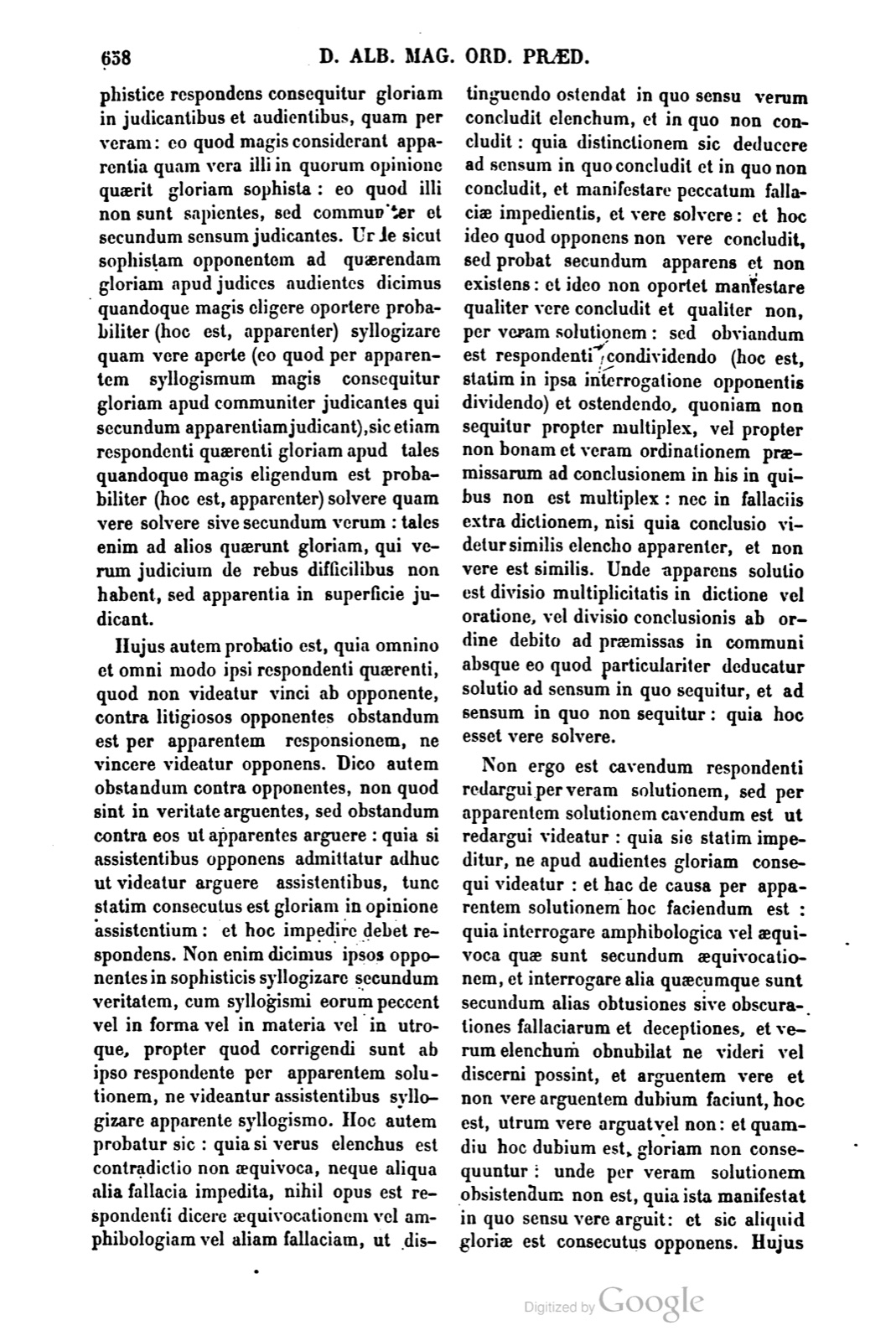
Primum autem de apparenti solutione determinandum est, hoc est, quod quando disputatur ad gloriam apparentis sapientiae, magis est eligenda apparens solutio quam vera: quia per illam magis sophistice respondens consequitur gloriam in judicantibus et audientibus, quam per veram: eo quod magis considerant apparentia quam vera illi in quorum opinione quaerit gloriam sophista: eo quod illi non sunt sapientes, sed communiter et secundum sensum judicantes. Unde sicut sophistam opponentem ad quaerendam gloriam apud judices audientes dicimus quandoque magis eligere oportere probabiliter (hoc est, apparenter) syllogizare quam vere aperte (eo quod per apparentem syllogismum magis consequitur gloriam apud communiter judicantes qui secundum apparentiam judicant), sic etiam respondenti quaerenti gloriam apud tales quandoque magis eligendum est probabiliter (hoc est, apparenter) solvere quam vere solvere sive secundum verum: tales enim ad alios quaerunt gloriam, qui verum judicium de rebus difficilibus non habent, sed apparentia in superficie judicant.
Hujus autem probatio est, quia omnino et omni modo ipsi respondenti quaerenti, quod non videatur vinci ab opponente, contra litigiosos opponentes obstandum est per apparentem responsionem, ne vincere videatur opponens. Dico autem obstandum contra opponentes, non quod sint in veritate arguentes, sed obstandum contra eos ut apparentes arguere: quia si assistentibus opponens admittatur adhuc ut videatur arguere assistentibus, tunc statim consecutus est gloriam in opinione assistentium: et hoc impedire debet respondens. Non enim dicimus ipsos opponentes in sophisticis syllogizare secundum veritatem, cum syllogismi eorum peccent vel in forma vel in materia vel in utroque, propter quod corrigendi sunt ab ipso respondente per apparentem solutionem, ne videantur assistentibus syllogizare apparente syllogismo. Hoc autem probatur sic: quia si verus elenchus est contradictio non aequivoca, neque aliqua alia fallacia impedita, nihil opus est respondenti dicere aequivocationem vel amphibologiam vel aliam fallaciam, ut distinguendo ostendat in quo sensu verum concludit elenchum, et in quo non concludit: quia distinctionem sic deducere ad sensum in quo concludit et in quo non concludit, et manifestare peccatum fallaciae impedientis, est vere solvere: et hoc ideo quod opponens non vere concludit, sed probat secundum apparens et non existens: et ideo non oportet manifestare qualiter vere concludit et qualiter non, per veram solutionem: sed obviandum est respondenti condividendo (hoc est, statim in ipsa interrogatione opponentis dividendo) et ostendendo, quoniam non sequitur propter multiplex, vel propter non bonam et veram ordinationem praemissarum ad conclusionem in his in quibus non est multiplex: nec in fallaciis extra dictionem, nisi quia conclusio videtur similis elencho apparenter, et non vere est similis. Unde apparens solutio est divisio multiplicitatis in dictione vel oratione, vel divisio conclusionis ab ordine debito ad praemissas in communi absque eo quod particulariter deducatur solutio ad sensum in quo sequitur, et ad sensum in quo non sequitur: quia hoc esset vere solvere.
CHAPTER II. Concerning the proof that apparent solution is sometimes more to be chosen, and what apparent solution is.
But first one must determine concerning apparent solution, namely that when disputation is carried on for the glory of apparent wisdom, an apparent solution is more to be chosen than a true one, because through it the one responding sophistically obtains glory more among those judging and hearing than through a true one, because those in whose opinion the sophist seeks glory consider apparent things more than true things, since they are not wise, but judge commonly and according to sense. Hence just as we say that the sophist opponent, for seeking glory among the judges who hear, must sometimes choose to syllogize probably, that is, apparently, rather than truly and openly, because through an apparent syllogism he obtains glory more among common judges who judge according to appearance, so also for the respondent seeking glory among such people it is sometimes more to be chosen to solve probably, that is, apparently, than to solve truly or according to truth. For such men seek glory before others, who do not have true judgment concerning difficult things, but judge apparent things on the surface.
But the proof of this is that entirely and in every way the respondent himself who seeks not to seem conquered by the opponent must resist contentious opponents through an apparent response, lest the opponent seem to conquer. But I say that he must resist opponents, not because they are arguing in truth, but that he must resist them as seeming to argue; because if before bystanders the opponent is still admitted so that he seems to argue before the bystanders, then at once he has obtained glory in the opinion of the bystanders; and the respondent ought to impede this. For we do not say that the opponents themselves in sophistical matters syllogize according to truth, since their syllogisms sin either in form or in matter or in both; for this reason they must be corrected by the respondent himself through apparent solution, lest they seem to the bystanders to syllogize by an apparent syllogism. But this is proved thus: because if a true refutation is a non-equivocal contradiction, and one impeded by no other fallacy, there is no need for the respondent to speak of equivocation or amphibology or another fallacy, so that by distinguishing he may show in what sense the refutation concludes the truth and in what sense it does not conclude. For to lead the distinction thus to the sense in which it concludes and to the sense in which it does not conclude, and to manifest the fault of the impeding fallacy, is to solve truly; and this is because the opponent does not truly conclude, but proves according to what is apparent and non-existent. And therefore it is not necessary to manifest, through a true solution, how he truly concludes and how not; rather the respondent must be resisted by co-dividing, that is, at once dividing in the very questioning of the opponent, and by showing that it does not follow because of multiplicity, or because of a not good and true ordering of premises to the conclusion in those things in which there is not multiplicity; nor in fallacies outside diction, except because the conclusion seems apparently similar to a refutation and is not truly similar. Hence apparent solution is a division of multiplicity in diction or speech, or a division of the conclusion from the due order to the premises in common, without the solution being brought down particularly to the sense in which it follows and to the sense in which it does not follow, because this would be to solve truly.
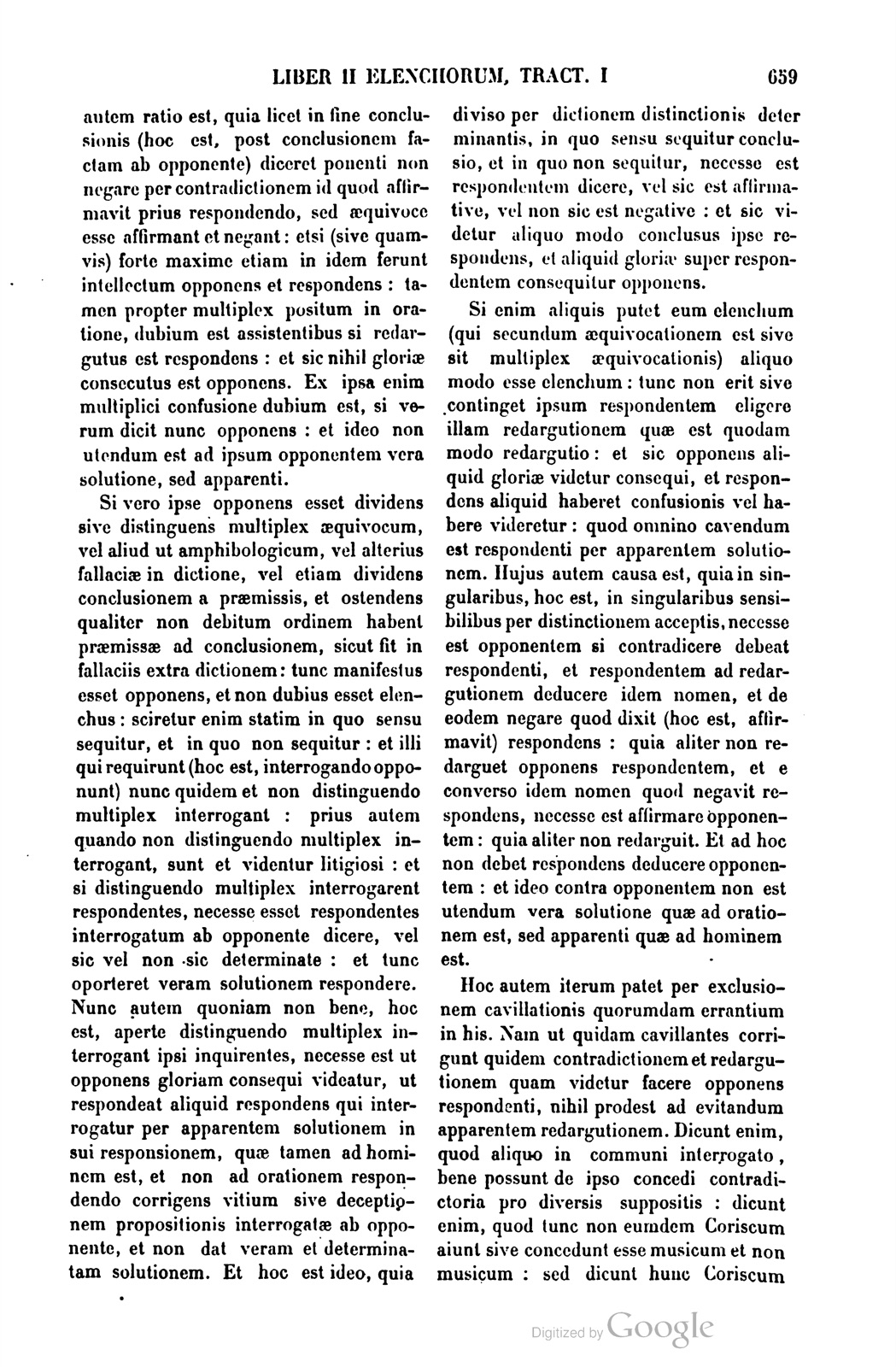
Non ergo est cavendum respondenti redargui per veram solutionem, sed per apparentem solutionem cavendum est ut redargui videatur: quia sic statim impeditur, ne apud audientes gloriam consequi videatur: et hac de causa per apparentem solutionem hoc faciendum est: quia interrogare amphibologica vel aequivoca quae sunt secundum aequivocationem, et interrogare alia quaecumque sunt secundum alias obtusiones sive obscurationes fallaciarum et deceptiones, et verum elenchum obnubilat ne videri vel discerni possint, et arguentem vere et non vere arguentem dubium faciunt, hoc est, utrum vere arguat vel non: et quamdiu hoc dubium est, gloriam non consequuntur: unde per veram solutionem obsistendum non est, quia ista manifestat in quo sensu vere arguit: et sic aliquid gloriae est consecutus opponens. Hujus autem ratio est, quia licet in fine conclusionis (hoc est, post conclusionem factam ab opponente) diceret ponenti non negare per contradictionem id quod affirmavit prius respondendo, sed aequivoce esse affirmant et negant: etsi (sive quamvis) forte maxime etiam in idem ferunt intellectum opponens et respondens: tamen propter multiplex positum in oratione, dubium est assistentibus si redargutus est respondens: et sic nihil gloriae consecutus est opponens. Ex ipsa enim multiplici confusione dubium est, si verum dicit nunc opponens: et ideo non utendum est ad ipsum opponentem vera solutione, sed apparenti.
Si vero ipse opponens esset dividens sive distinguens multiplex aequivocum, vel aliud ut amphibologicum, vel alterius fallaciae in dictione, vel etiam dividens conclusionem a praemissis, et ostendens qualiter non debitum ordinem habent praemissae ad conclusionem, sicut fit in fallaciis extra dictionem: tunc manifestus esset opponens, et non dubius esset elenchus: sciretur enim statim in quo sensu sequitur, et in quo non sequitur: et illi qui requirunt (hoc est, interrogando opponunt) nunc quidem et non distinguendo multiplex interrogant: prius autem quando non distinguendo multiplex interrogant, sunt et videntur litigiosi: et si distinguendo multiplex interrogarent respondentes, necesse esset respondentes interrogatum ab opponente dicere, vel sic vel non sic determinate: et tunc oporteret veram solutionem respondere. Nunc autem quoniam non bene, hoc est, aperte distinguendo multiplex interrogant ipsi inquirentes, necesse est ut opponens gloriam consequi videatur, ut respondeat aliquid respondens qui interrogatur per apparentem solutionem in sui responsionem, quae tamen ad hominem est, et non ad orationem respondendo corrigens vitium sive deceptionem propositionis interrogatae ab opponente, et non dat veram et determinatam solutionem. Et hoc est ideo, quia diviso per dictionem distinctionis determinantis, in quo sensu sequitur conclusio, et in quo non sequitur, necesse est respondentem dicere, vel sic est affirmative, vel non sic est negative: et sic videtur aliquo modo conclusus ipse respondens, et aliquid gloriae super respondentem consequitur opponens.
Therefore the respondent must not take care against being refuted through a true solution, but through an apparent solution he must take care that he not seem to be refuted, because thus he is at once hindered, so that he does not seem to obtain glory among the hearers. And for this cause this must be done through apparent solution, because to ask amphibological or equivocal things which are according to equivocation, and to ask any other things whatever which are according to other dullings or obscurations of fallacies and deceptions, both clouds over a true refutation so that it cannot be seen or discerned, and makes doubtful the one arguing truly and not truly, that is, whether he argues truly or not; and as long as this is doubtful, they do not obtain glory. Hence one must not resist through a true solution, because that makes manifest in what sense he argues truly, and so the opponent has obtained something of glory. But the reason for this is that although at the end of the conclusion, that is, after the conclusion has been made by the opponent, one were to say to the one who posits that he does not deny by contradiction what he previously affirmed by responding, but that they affirm and deny equivocally; and even if, or although, perhaps most of all the opponent and respondent also carry their understanding to the same thing, nevertheless because of the multiplicity posited in the speech, it is doubtful to the bystanders whether the respondent has been refuted; and thus the opponent has obtained no glory. For from the very multiple confusion it is doubtful whether the opponent now says what is true; and therefore one must not use true solution against that opponent, but apparent solution.
But if the opponent himself were dividing or distinguishing an equivocal multiple, or another one such as an amphibological multiple, or one of another fallacy in diction, or also dividing the conclusion from the premises and showing how the premises do not have due order to the conclusion, as happens in fallacies outside diction, then the opponent would be manifest, and the refutation would not be doubtful. For it would at once be known in what sense it follows and in what sense it does not follow. And those who inquire, that is, who oppose by questioning, now indeed ask and do not distinguish the multiple; but previously, when they ask without distinguishing the multiple, they are and seem contentious. And if they were to ask respondents by distinguishing the multiple, it would be necessary for respondents to say of what was asked by the opponent either that it is thus or that it is not thus determinately, and then it would be necessary to answer with a true solution. But now, since those inquiring do not ask well, that is, by openly distinguishing the multiple, it is necessary, if the opponent is to seem to obtain glory, that the respondent who is questioned respond something by an apparent solution in his response, which nevertheless is to the man and not to the speech, correcting in responding the fault or deception of the proposition asked by the opponent, and he does not give a true and determinate solution. And this is because, once the matter has been divided through a diction of distinction determining in what sense the conclusion follows and in what sense it does not follow, the respondent must say either that it is thus affirmatively or that it is not thus negatively; and so the respondent himself seems in some way to have been concluded, and the opponent obtains something of glory over the respondent.
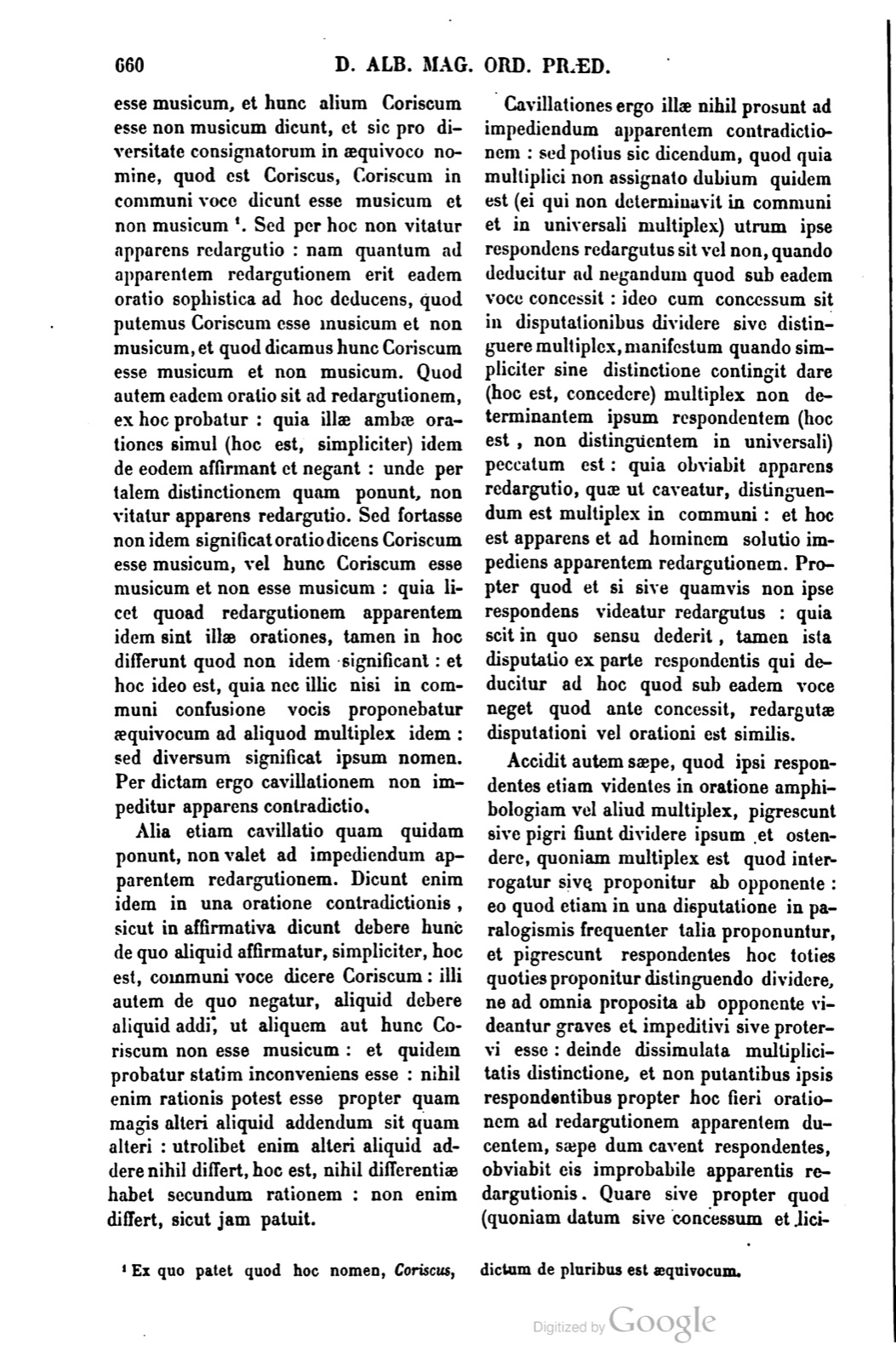
Si enim aliquis putet eum elenchum (qui secundum aequivocationem est sive sit multiplex aequivocationis) aliquo modo esse elenchum: tunc non erit sive continget ipsum respondentem eligere illam redargutionem quae est quodam modo redargutio: et sic opponens aliquid gloriae videtur consequi, et respondens aliquid haberet confusionis vel habere videretur: quod omnino cavendum est respondenti per apparentem solutionem. Hujus autem causa est, quia in singularibus, hoc est, in singularibus sensibilibus per distinctionem acceptis, necesse est opponentem si contradicere debeat respondenti, et respondentem ad redargutionem deducere idem nomen, et de eodem negare quod dixit (hoc est, affirmavit) respondens: quia aliter non redarguet opponens respondentem, et e converso idem nomen quod negavit respondens, necesse est affirmare opponentem: quia aliter non redarguit. Et ad hoc non debet respondens deducere opponentem: et ideo contra opponentem non est utendum vera solutione quae ad orationem est, sed apparenti quae ad hominem est.
Hoc autem iterum patet per exclusionem cavillationis quorumdam errantium in his. Nam ut quidam cavillantes corrigunt quidem contradictionem et redargutionem quam videtur facere opponens respondenti, nihil prodest ad evitandum apparentem redargutionem. Dicunt enim, quod aliquo in communi interrogato, bene possunt de ipso concedi contradictoria pro diversis suppositis: dicunt enim, quod tunc non eumdem Coriscum aiunt sive concedunt esse musicum et non musicum: sed dicunt hunc Coriscum esse musicum, et hunc alium Coriscum esse non musicum dicunt, et sic pro diversitate consignatorum in aequivoco nomine, quod est Coriscus, Coriscum in communi voce dicunt esse musicum et non musicum2. Sed per hoc non vitatur apparens redargutio: nam quantum ad apparentem redargutionem erit eadem oratio sophistica ad hoc deducens, quod putemus Coriscum esse musicum et non musicum, et quod dicamus hunc Coriscum esse musicum et non musicum. Quod autem eadem oratio sit ad redargutionem, ex hoc probatur: quia illae ambae orationes simul (hoc est, simpliciter) idem de eodem affirmant et negant: unde per talem distinctionem quam ponunt, non vitatur apparens redargutio. Sed fortasse non idem significat oratio dicens Coriscum esse musicum, vel hunc Coriscum esse musicum et non esse musicum: quia licet quoad redargutionem apparentem idem sint illae orationes, tamen in hoc differunt quod non idem significant: et hoc ideo est, quia nec illic nisi in communi confusione vocis proponebatur aequivocum ad aliquod multiplex idem: sed diversum significat ipsum nomen. Per dictam ergo cavillationem non impeditur apparens contradictio.
For if someone thinks that refutation, which is according to equivocation or is a multiplicity of equivocation, to be in some way a refutation, then the respondent himself will not be, or it will not happen for him, to choose that refutation which in a certain way is a refutation; and thus the opponent seems to obtain something of glory, and the respondent would have something of confusion or would seem to have it. This must entirely be avoided by the respondent through apparent solution. But the cause of this is that in singulars, that is, in sensible singulars taken through distinction, if the opponent must contradict the respondent and lead the respondent to refutation, it is necessary to use the same name and to deny of the same thing what the respondent said, that is, affirmed, because otherwise the opponent will not refute the respondent; and conversely, it is necessary for the opponent to affirm the same name which the respondent denied, because otherwise he does not refute. And the respondent ought not to lead the opponent to this; and therefore against the opponent one must not use true solution, which is to the speech, but apparent solution, which is to the man.
But this again is clear through the exclusion of the cavillation of certain persons erring in these matters. For as certain cavillers indeed correct the contradiction and refutation which the opponent seems to make against the respondent, this profits nothing for avoiding apparent refutation. For they say that, when something is asked in common, contradictories can well be granted about it for diverse supposits; for they say that then they do not declare or grant the same Coriscus to be musical and not musical, but they say that this Coriscus is musical, and they say that this other Coriscus is not musical, and thus, according to the diversity of those designated in the equivocal name which is Coriscus, in the common word they say that Coriscus is musical and not musical2. But apparent refutation is not avoided through this; for as to apparent refutation, it will be the same sophistical speech leading to this, that we should think Coriscus to be musical and not musical, and that we should say this Coriscus to be musical and not musical. But that the speech is the same for refutation is proved from this: because both those speeches together, that is, simply, affirm and deny the same thing of the same thing; hence through such a distinction as they posit, apparent refutation is not avoided. But perhaps the speech saying that Coriscus is musical, or that this Coriscus is musical and is not musical, does not signify the same thing, because although as to apparent refutation those speeches are the same, nevertheless they differ in this, that they do not signify the same thing. And this is because there too the equivocal was proposed for some same multiple only in the common confusion of the word, but the name itself signifies diverse things. Therefore through the aforesaid cavillation the apparent contradiction is not impeded.
Alia etiam cavillatio quam quidam ponunt, non valet ad impediendum apparentem redargutionem. Dicunt enim idem in una oratione contradictionis, sicut in affirmativa dicunt debere hunc de quo aliquid affirmatur, simpliciter, hoc est, communi voce dicere Coriscum: illi autem de quo negatur, aliquid debere aliquid addi, ut aliquem aut hunc Coriscum non esse musicum: et quidem probatur statim inconveniens esse: nihil enim rationis potest esse propter quam magis alteri aliquid addendum sit quam alteri: utrolibet enim alteri aliquid addere nihil differt, hoc est, nihil differentiae habet secundum rationem: non enim differt, sicut jam patuit. Cavillationes ergo illae nihil prosunt ad impediendum apparentem contradictionem: sed potius sic dicendum, quod quia multiplici non assignato dubium quidem est (ei qui non determinavit in communi et in universali multiplex) utrum ipse respondens redargutus sit vel non, quando deducitur ad negandum quod sub eadem voce concessit: ideo cum concessum sit in disputationibus dividere sive distinguere multiplex, manifestum quando simpliciter sine distinctione contingit dare (hoc est, concedere) multiplex non determinantem ipsum respondentem (hoc est, non distinguentem in universali) peccatum est: quia obviabit apparens redargutio, quae ut caveatur, distinguendum est multiplex in communi: et hoc est apparens et ad hominem solutio impediens apparentem redargutionem. Propter quod et si sive quamvis non ipse respondens videatur redargutus: quia scit in quo sensu dederit, tamen ista disputatio ex parte respondentis qui deducitur ad hoc quod sub eadem voce neget quod ante concessit, redargutae disputationi vel orationi est similis.
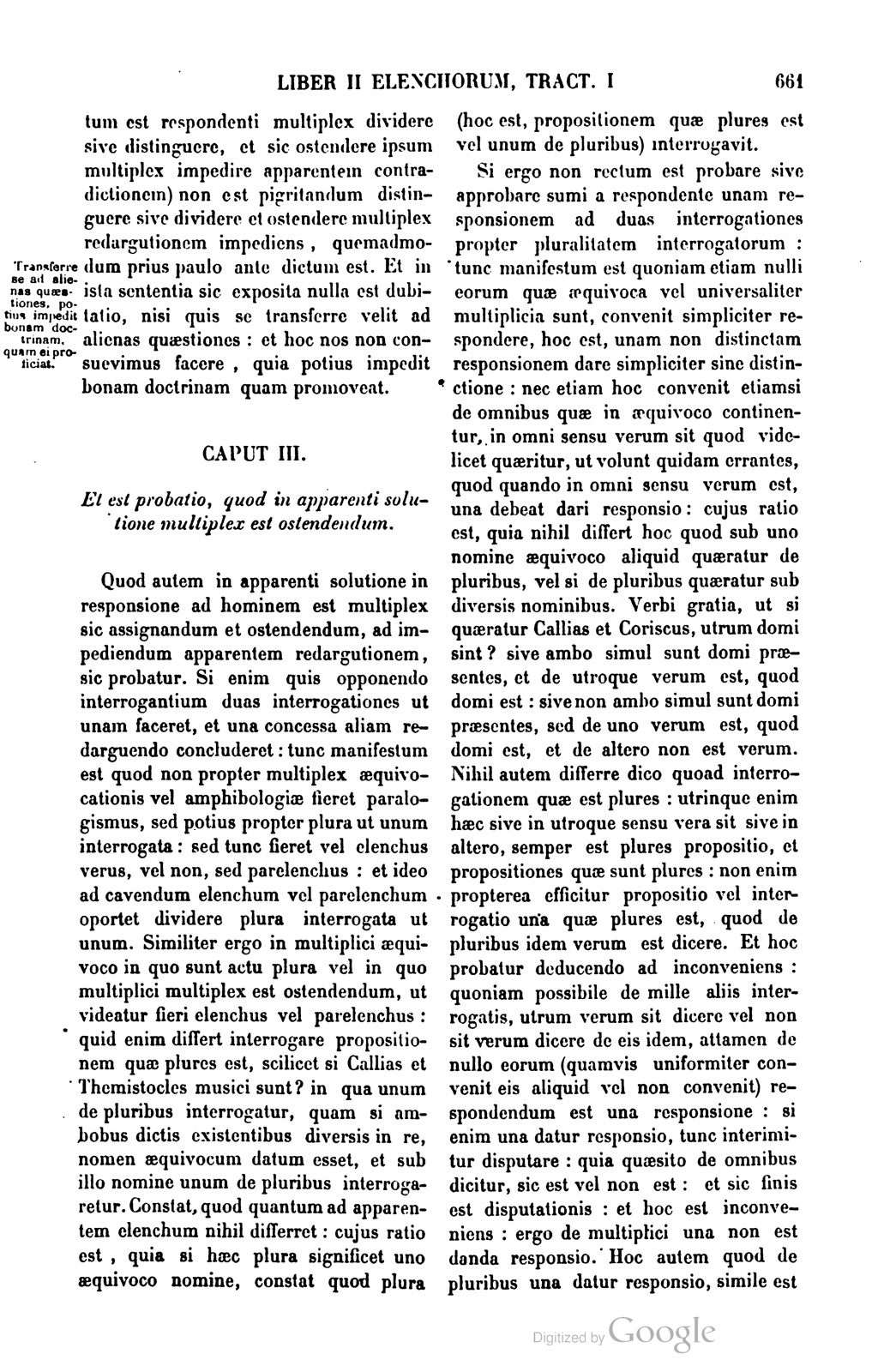
Accidit autem saepe, quod ipsi respondentes etiam videntes in oratione amphibologiam vel aliud multiplex, pigrescunt sive pigri fiunt dividere ipsum et ostendere, quoniam multiplex est quod interrogatur sive proponitur ab opponente: eo quod etiam in una disputatione in paralogismis frequenter talia proponuntur, et pigrescunt respondentes hoc toties quoties proponitur distinguendo dividere, ne ad omnia proposita ab opponente videantur graves et impeditivi sive protervi esse: deinde dissimulata multiplicitatis distinctione, et non putantibus ipsis respondentibus propter hoc fieri orationem ad redargutionem apparentem ducentem, saepe dum cavent respondentes, obviabit eis improbabile apparentis redargutionis. Quare sive propter quod (quoniam datum sive concessum et licitum est respondenti multiplex dividere sive distinguere, et sic ostendere ipsum multiplex impedire apparentem contradictionem) non est pigritandum distinguere sive dividere et ostendere multiplex redargutionem impediens, quemadmodum prius paulo ante dictum est. Et in ista sententia sic exposita nulla est dubitatio, nisi quis se transferre velit ad alienas quaestiones: et hoc nos non consuevimus facere: quia potius impedit bonam doctrinam quam promoveat.
Also another cavillation which certain people posit is not valid for impeding apparent refutation. For they say that in one speech of contradiction the same thing must be used, as in the affirmative they say that this one of whom something is affirmed ought to be called Coriscus simply, that is, by the common word; but to the one of whom something is denied something ought to be added, as that some or this Coriscus is not musical. And indeed it is at once proved to be unfitting, for there can be no reason on account of which something must be added more to one than to the other; for to add something to either of the two makes no difference, that is, has no difference according to reason; for it does not differ, as has already appeared. Therefore those cavillations profit nothing for impeding apparent contradiction; rather this must be said, that because, when the multiple is not assigned, it is indeed doubtful to him who has not determined the multiple in common and universally whether the respondent himself has been refuted or not when he is led to denying what he granted under the same word, therefore, since it has been granted in disputations to divide or distinguish the multiple, it is manifest that, when it happens simply without distinction to give, that is, to grant, a multiple, the respondent himself not determining it, that is, not distinguishing universally, this is a fault; because an apparent refutation will meet him. In order that this may be avoided, the multiple must be distinguished in common; and this is apparent solution, and solution to the man, impeding apparent refutation. For this reason even if, or although, the respondent himself does not seem to have been refuted, because he knows in what sense he gave it, nevertheless that disputation on the part of the respondent, who is led to this, that under the same word he denies what he previously granted, is like a refuted disputation or speech.
But it often happens that the respondents themselves, even when they see in the speech an amphibology or another multiple, grow lazy or become slow to divide it and show that what is asked or proposed by the opponent is multiple, because even in one disputation such things are frequently proposed in paralogisms; and respondents are lazy to divide by distinguishing this as often as it is proposed, lest they seem burdensome and impeding or forward toward all things proposed by the opponent. Then, after the distinction of the multiplicity has been concealed, and the respondents themselves do not think that because of this a speech leading to apparent refutation is made, often, while the respondents take care, the improbability of apparent refutation will meet them. Wherefore, or on account of this, since it has been given or granted and is licit for the respondent to divide or distinguish the multiple, and thus to show that the multiple itself impedes apparent contradiction, one must not be lazy about distinguishing or dividing and showing the multiple which impedes refutation, as was said a little before. And in this sentence thus explained there is no doubt, unless someone wishes to transfer himself to foreign questions; and this we have not been accustomed to do, because it impedes good teaching rather than advances it.
Notes
- And thus it is clear how the art of solving sophistical speeches agrees in some way in end with the dialectician, and in some way with the sophist. The art of opposing and the art of solving have diverse ends in sophistical matters, but not in dialectical matters. P. J. (Et sic patet quomodo ars solvendi orationes sophisticas convenit aliquo modo in fine cum dialectico, et aliquo modo cum sophista. Ars opponendi et ars solvendi habent diversos fines in sophisticis; non autem in dialecticis. P. J.) ↩
- From this it is clear that this name, Coriscus, said of several things, is equivocal. (Ex quo patet quod hoc nomen, Coriscus, dictum de pluribus est aequivocum.) ↩
If a page does not appear, its photograph has not been uploaded yet.