Works › Sophistical Refutations, Books I–II
Volume 2 · pp. 645–649
Tractate VI. Chapter IV
A marker with ≈ is an approximate page boundary, placed by measure of the text; the page photographs remain the authority. In the paired views, clicking a page marker brings that page into view.
CAPUT IV. De facere nugari respondentem vere et apparenter.
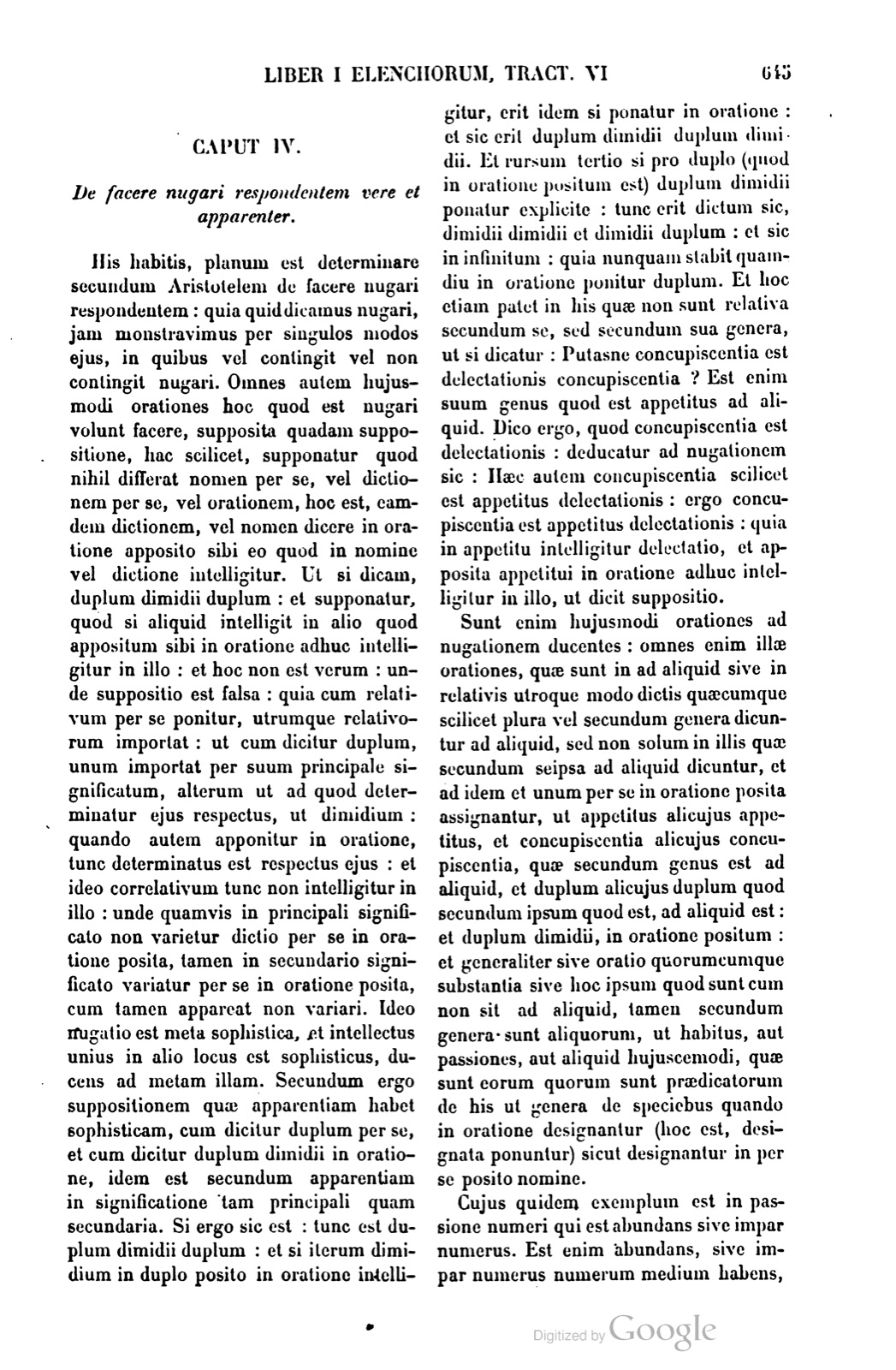
His habitis, planum est determinare secundum Aristotelem de facere nugari respondentem: quia quid dicamus nugari, jam monstravimus per singulos modos ejus, in quibus vel contingit vel non contingit nugari. Omnes autem hujusmodi orationes hoc quod est nugari volunt facere, supposita quadam suppositione, hac scilicet, supponatur quod nihil differat nomen per se, vel dictionem per se, vel orationem, hoc est, eamdem dictionem, vel nomen dicere in oratione apposito sibi eo quod in nomine vel dictione intelligitur. Ut si dicam, duplum dimidii duplum: et supponatur, quod si aliquid intelligit in alio quod appositum sibi in oratione adhuc intelligitur in illo: et hoc non est verum: unde suppositio est falsa: quia cum relativum per se ponitur, utrumque relativorum importat: ut cum dicitur duplum, unum importat per suum principale significatum, alterum ut ad quod determinatur ejus respectus, ut dimidium: quando autem apponitur in oratione, tunc determinatus est respectus ejus: et ideo correlativum tunc non intelligitur in illo: unde quamvis in principali significato non varietur dictio per se in oratione posita, tamen in secundario significato variatur per se in oratione posita, cum tamen appareat non variari. Ideo nugatio est meta sophistica, et intellectus unius in alio locus est sophisticus, ducens ad metam illam. Secundum ergo suppositionem quae apparentiam habet sophisticam, cum dicitur duplum per se, et cum dicitur duplum dimidii in oratione, idem est secundum apparentiam in significatione tam principali quam secundaria. Si ergo sic est: tunc est duplum dimidii duplum: et si iterum dimidium in duplo posito in oratione intelligitur, erit idem si ponatur in oratione: et sic erit duplum dimidii duplum dimidii. Et rursum tertio si pro duplo (quod in oratione positum est) duplum dimidii ponatur explicite: tunc erit dictum sic, dimidii dimidii et dimidii duplum: et sic in infinitum: quia nunquam stabit quamdiu in oratione ponitur duplum. Et hoc etiam patet in his quae non sunt relativa secundum se, sed secundum sua genera, ut si dicatur: Putasne concupiscentia est delectationis concupiscentia? Est enim suum genus quod est appetitus ad aliquid. Dico ergo, quod concupiscentia est delectationis: deducatur ad nugationem sic: Haec autem concupiscentia scilicet est appetitus delectationis: ergo concupiscentia est appetitus delectationis: quia in appetitu intelligitur delectatio, et apposita appetitui in oratione adhuc intelligitur in illo, ut dicit suppositio.
Sunt enim hujusmodi orationes ad nugationem ducentes: omnes enim illae orationes, quae sunt in ad aliquid sive in relativis utroque modo dictis quaecumque scilicet plura vel secundum genera dicuntur ad aliquid, sed non solum in illis quae secundum seipsa ad aliquid dicuntur, et ad idem et unum per se in oratione posita assignantur, ut appetitus alicujus appetitus, et concupiscentia alicujus concupiscentia, quae secundum genus est ad aliquid, et duplum alicujus duplum quod secundum ipsum quod est, ad aliquid est: et duplum dimidii, in oratione positum: et generaliter sive oratio quorumcumque substantia sive hoc ipsum quod sunt cum non sit ad aliquid, tamen secundum genera sunt aliquorum, ut habitus, aut passiones, aut aliquid hujuscemodi, quae sunt eorum quorum sunt praedicatorum de his ut genera de speciebus quando in oratione designantur (hoc est, designata ponuntur) sicut designantur in per se posito nomine.
CHAPTER IV. Concerning making the respondent nugate truly and apparently.
With these things held, it is plain to determine according to Aristotle concerning making the respondent nugate, because what we mean by nugating we have already shown through its individual modes, in which it either happens or does not happen to nugate. But all speeches of this kind wish to make that which is nugation, once a certain supposition has been supposed, namely this: let it be supposed that it makes no difference to say the name by itself, or the diction by itself, or the speech, that is, the same diction or name in speech, with that appended to it which is understood in the name or diction. As if I say, double of half double, and let it be supposed that if something understands something in another, what is appended to it in speech is still understood in it. But this is not true; hence the supposition is false, because when a relative is posited by itself, it imports each of the relatives, as when double is said, it imports one by its principal signification, and the other as that to which its relation is determined, as half. But when it is appended in speech, then its relation is determined; and therefore the correlative is then not understood in it. Hence although in the principal signified the diction posited by itself is not varied when posited in speech, nevertheless in the secondary signified it is varied by itself when posited in speech, although it appears not to be varied. Therefore nugation is a sophistical goal, and the understanding of one thing in another is a sophistical place leading to that goal. Therefore according to the supposition which has sophistical appearance, when double is said by itself and when double of half is said in speech, it is the same according to appearance in both principal and secondary signification. Therefore if it is so, then there is double of half double; and if again half is understood in double posited in speech, it will be the same if it is posited in speech, and thus it will be double of half double of half. And again, third, if for double, which is posited in speech, double of half is explicitly posited, then it will be said thus, of half of half and double of half, and thus into infinity, because it will never stop as long as double is posited in speech. And this is also clear in those things which are not relatives according to themselves, but according to their genera, as if it is said: do you think that concupiscence is concupiscence of delight? For its genus is appetite toward something. Therefore I say that concupiscence is of delight; let it be led to nugation thus: but this concupiscence, namely, is appetite of delight; therefore concupiscence is appetite of delight, because in appetite delight is understood, and when appended to appetite in speech it is still understood in it, as the supposition says.
For speeches of this kind are those leading to nugation: all those speeches which are in relation or in relatives said in each of two ways, namely whatever things are said to be toward something as several things or according to genera, but not only in those which according to themselves are said toward something, and are assigned as the same and one per se when posited in speech, as appetite of some appetite, and concupiscence of some concupiscence, which according to genus is toward something, and double of something double, which according to that very thing which it is is toward something; and double of half, posited in speech; and generally, whether the speech of whatever things whose substance, or this very thing which they are, is not toward something, nevertheless according to genera they are of some things, as habits or passions or something of this sort, which are of those predicates of which they are predicated concerning these as genera concerning species when they are designated in speech, that is, are placed as designated, just as they are designated in the name posited by itself.
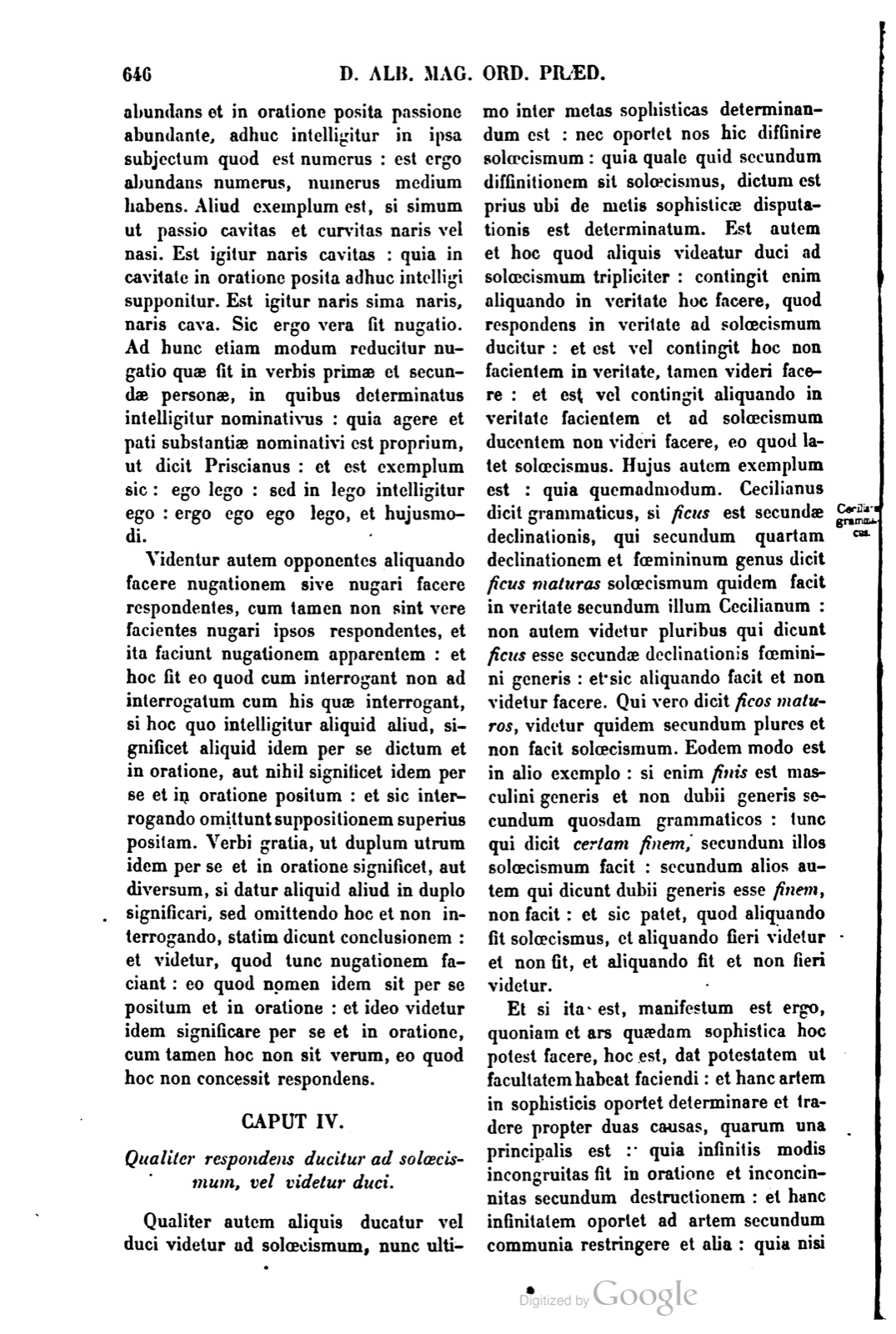
Cujus quidem exemplum est in passione numeri qui est abundans sive impar numerus. Est enim abundans, sive impar numerus numerum medium habens, abundans et in oratione posita passione abundante, adhuc intelligitur in ipsa subjectum quod est numerus: est ergo abundans numerus, numerus medium habens. Aliud exemplum est, si simum ut passio cavitas et curvitas naris vel nasi. Est igitur naris cavitas: quia in cavitate in oratione posita adhuc intelligi supponitur. Est igitur naris sima naris, naris cava. Sic ergo vera fit nugatio. Ad hunc etiam modum reducitur nugatio quae fit in verbis primae et secundae personae, in quibus determinatus intelligitur nominativus: quia agere et pati substantiae nominativi est proprium, ut dicit Priscianus: et est exemplum sic: ego lego: sed in lego intelligitur ego: ergo ego ego lego, et hujusmodi.
Videntur autem opponentes aliquando facere nugationem sive nugari facere respondentes, cum tamen non sint vere facientes nugari ipsos respondentes, et ita faciunt nugationem apparentem: et hoc fit eo quod cum interrogant non ad interrogatum cum his quae interrogant, si hoc quo intelligitur aliquid aliud, significet aliquid idem per se dictum et in oratione, aut nihil significet idem per se et in oratione positum: et sic interrogando omittunt suppositionem superius positam. Verbi gratia, ut duplum utrum idem per se et in oratione significet, aut diversum, si datur aliquid aliud in duplo significari, sed omittendo hoc et non interrogando, statim dicunt conclusionem: et videtur, quod tunc nugationem faciant: eo quod nomen idem sit per se positum et in oratione: et ideo videtur idem significare per se et in oratione, cum tamen hoc non sit verum, eo quod hoc non concessit respondens.
CAPUT IV. Qualiter respondens ducitur ad solaecismum, vel videtur duci.
Qualiter autem aliquis ducatur vel duci videtur ad solaecismum, nunc ultimo inter metas sophisticas determinandum est: nec oportet nos hic diffinire solaecismum: quia quale quid secundum diffinitionem sit solecismus, dictum est prius ubi de metis sophisticae disputationis est determinatum. Est autem et hoc quod aliquis videatur duci ad solaecismum tripliciter: contingit enim aliquando in veritate hoc facere, quod respondens in veritate ad solaecismum ducitur: et est vel contingit hoc non facientem in veritate, tamen videri facere: et est vel contingit aliquando in veritate facientem et ad solaecismum ducentem non videri facere, eo quod latet solaecismus. Hujus autem exemplum est: quia quemadmodum Cecilianus dicit grammaticus, si ficus est secundae declinationis, qui secundum quartam declinationem et femininum genus dicit ficus maturas solaecismum quidem facit in veritate secundum illum Cecilianum: non autem videtur pluribus qui dicunt ficus esse secundae declinationis feminini generis: et sic aliquando facit et non videtur facere. Qui vero dicit ficos maturos, videtur quidem secundum plures et non facit solaecismum. Eodem modo est in alio exemplo: si enim finis est masculini generis et non dubii generis secundum quosdam grammaticos: tunc qui dicit certam finem, secundum illos solaecismum facit: secundum alios autem qui dicunt dubii generis esse finem, non facit: et sic patet, quod aliquando fit solaecismus, et aliquando fieri videtur et non fit, et aliquando fit et non fieri videtur.
An example of this indeed is in the passion of number which is abundant or odd number. For abundant, or odd number, is a number having a middle number; and when the passion abundant is posited in speech, the subject, which is number, is still understood in it. Therefore abundant number is a number having a middle number. Another example is if snub, as a passion, is the cavity and curvature of the nostril or nose. Therefore there is cavity of a nostril, because in cavity posited in speech it is still supposed to be understood. Therefore there is a snub nose, a hollow nose. Thus therefore true nugation is made. To this mode also is reduced the nugation which is made in verbs of the first and second person, in which a determinate nominative is understood, because to act and be acted upon is proper to the substance of the nominative, as Priscian says; and the example is thus: I read; but in I-read, I is understood; therefore I I read, and things of this sort.
But opponents sometimes seem to make nugation or to make respondents nugate, although nevertheless they are not truly making the respondents themselves nugate, and thus they make apparent nugation. And this happens because when they question, they do not question, with those things which they ask, about the thing asked, whether that by which something else is understood signifies something the same when said by itself and in speech, or signifies nothing the same when posited by itself and in speech; and thus by questioning they omit the supposition posited above. For example, whether double signifies the same thing by itself and in speech, or a diverse thing, if something else is given to be signified in double, but by omitting this and not asking it, they at once say the conclusion; and it seems that then they make nugation, because the same name is posited by itself and in speech; and therefore it seems to signify the same thing by itself and in speech, although nevertheless this is not true, because the respondent did not grant this.
CHAPTER IV. How the respondent is led to solecism, or seems to be led.
But how someone is led or seems to be led to solecism must now be determined last among the sophistical goals; nor need we here define solecism, because what sort of thing solecism is according to definition was said before where the goals of sophistical disputation were determined. But this also, that someone seems to be led to solecism, is threefold: for sometimes it happens to do this in truth, because the respondent is led in truth to solecism; and it is, or happens, that one not doing this in truth nevertheless seems to do it; and it is, or happens, that sometimes one doing it in truth and leading to solecism does not seem to do it, because the solecism is hidden. But the example of this is that, as the grammarian Cecilianus says, if fig-tree is of the second declension, he who according to the fourth declension and feminine gender says ripe fig-trees indeed makes a solecism in truth according to that Cecilianus; but it does not seem so to the many who say that fig-tree is of the second declension and feminine gender. And thus sometimes he makes it and does not seem to make it. But he who says ripe figs indeed seems to make it according to the many and does not make a solecism. It is the same way in another example: for if end is of masculine gender and not of doubtful gender according to certain grammarians, then he who says a certain end in the feminine makes a solecism according to them; but according to others who say that end is of doubtful gender, he does not make one. And thus it is clear that sometimes solecism is made, and sometimes it seems to be made and is not made, and sometimes it is made and does not seem to be made.
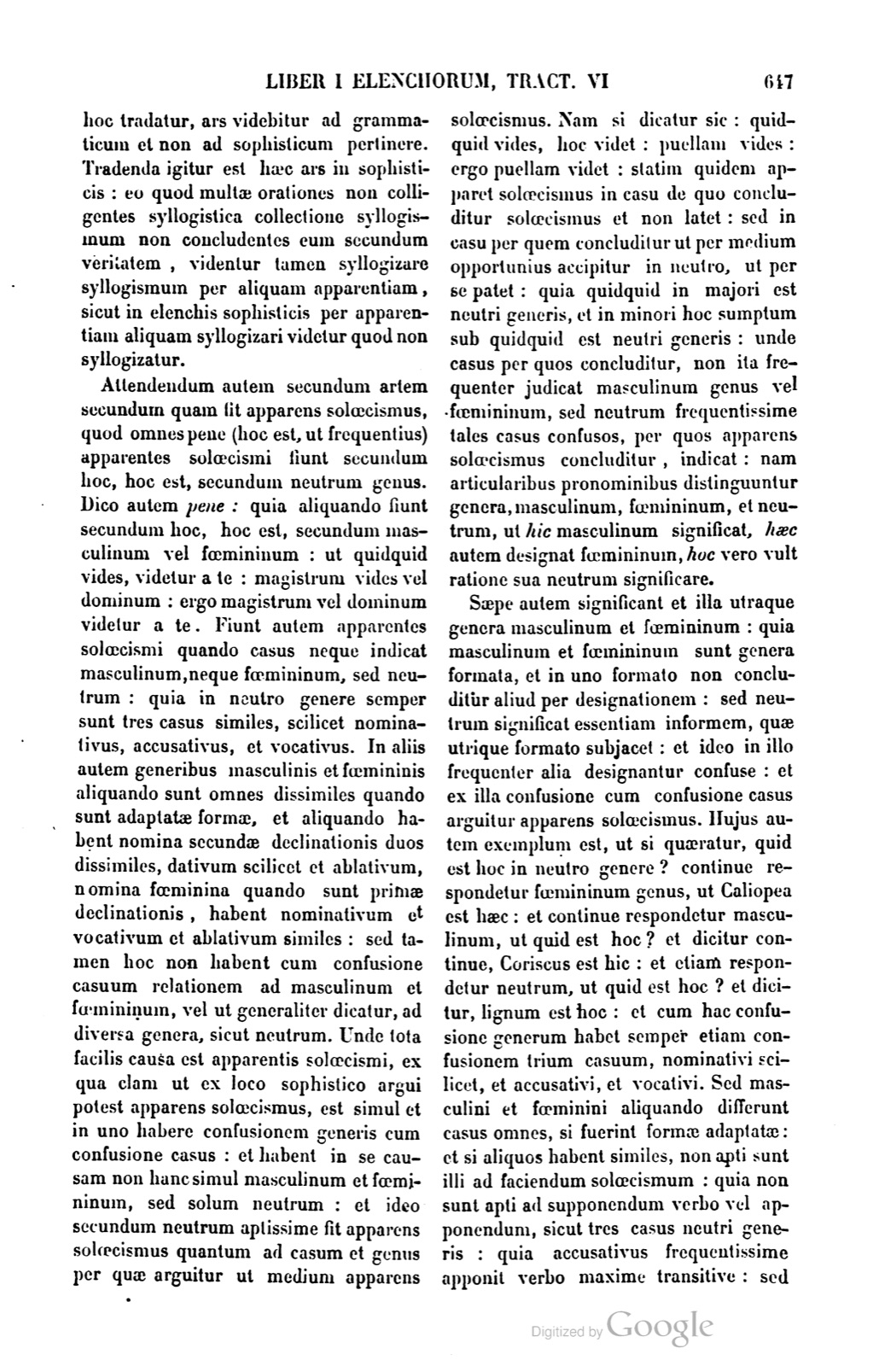
Et si ita est, manifestum est ergo, quoniam et ars quaedam sophistica hoc potest facere, hoc est, dat potestatem ut facultatem habeat faciendi: et hanc artem in sophisticis oportet determinare et tradere propter duas causas, quarum una principalis est: quia infinitis modis incongruitas fit in oratione et inconcinnitas secundum destructionem: et hanc infinitatem oportet ad artem secundum communia restringere et alia: quia nisi hoc tradatur, ars videbitur ad grammaticum et non ad sophisticum pertinere. Tradenda igitur est haec ars in sophisticis: eo quod multae orationes non colligentes syllogistica collectione syllogismum non concludentes eum secundum veritatem, videntur tamen syllogizare syllogismum per aliquam apparentiam, sicut in elenchis sophisticis per apparentiam aliquam syllogizari videtur quod non syllogizatur.
Attendendum autem secundum artem secundum quam fit apparens solaecismus, quod omnes pene (hoc est, ut frequentius) apparentes solaecismi fiunt secundum hoc, hoc est, secundum neutrum genus. Dico autem pene: quia aliquando fiunt secundum hoc, hoc est, secundum masculinum vel femininum: ut quidquid vides, videtur a te: magistrum vides vel dominum: ergo magistrum vel dominum videtur a te. Fiunt autem apparentes solaecismi quando casus neque indicat masculinum, neque femininum, sed neutrum: quia in neutro genere semper sunt tres casus similes, scilicet nominativus, accusativus, et vocativus. In aliis autem generibus masculinis et femininis aliquando sunt omnes dissimiles quando sunt adaptatae formae, et aliquando habent nomina secundae declinationis duos dissimiles, dativum scilicet et ablativum, nomina feminina quando sunt primae declinationis, habent nominativum et vocativum et ablativum similes: sed tamen hoc non habent cum confusione casuum relationem ad masculinum et femininum, vel ut generaliter dicatur, ad diversa genera, sicut neutrum. Unde tota facilis causa est apparentis solaecismi, ex qua clam ut ex loco sophistico argui potest apparens solaecismus, est simul et in uno habere confusionem generis cum confusione casus: et habent in se causam non hanc simul masculinum et femininum, sed solum neutrum: et ideo secundum neutrum aptissime fit apparens solaecismus quantum ad casum et genus per quae arguitur ut medium apparens solaecismus. Nam si dicatur sic: quidquid vides, hoc videt: puellam vides: ergo puellam videt: statim quidem apparet solaecismus in casu de quo concluditur solaecismus et non latet: sed in casu per quem concluditur ut per medium opportunius accipitur in neutro, ut per se patet: quia quidquid in majori est neutri generis, et in minori hoc sumptum sub quidquid est neutri generis: unde casus per quos concluditur, non ita frequenter judicat masculinum genus vel femininum, sed neutrum frequentissime tales casus confusos, per quos apparens solaecismus concluditur, indicat: nam articularibus pronominibus distinguuntur genera, masculinum, femininum, et neutrum, ut hic masculinum significat, haec autem designat femininum, hoc vero vult ratione sua neutrum significare.
And if it is so, it is therefore manifest that a certain sophistical art also can do this, that is, gives power so that it has the faculty of doing it; and this art must be determined and handed down in sophistical matters for two causes, of which one is principal: because incongruity and dissonance according to destruction occur in infinitely many modes in speech, and this infinity must be restricted to art according to common things and other things; because unless this is handed down, the art will seem to pertain to the grammarian and not to the sophist. Therefore this art must be handed down in sophistical matters, because many speeches not collecting a syllogism by syllogistic collection, not concluding it according to truth, nevertheless seem to syllogize a syllogism through some appearance, just as in sophistical refutations that which is not syllogized seems to be syllogized through some appearance.
But according to the art according to which apparent solecism is made, it must be attended that nearly all, that is, more frequently, apparent solecisms are made according to this, that is, according to the neuter gender. But I say nearly, because sometimes they are made according to this, that is, according to masculine or feminine, as: whatever you see is seen by you; you see a master or lord; therefore a master or lord is seen by you. But apparent solecisms are made when the case indicates neither masculine nor feminine but neuter, because in the neuter gender there are always three similar cases, namely nominative, accusative, and vocative. But in other masculine and feminine genders sometimes all are dissimilar when the forms are adapted; and sometimes names of the second declension have two dissimilar cases, namely dative and ablative; feminine names, when they are of the first declension, have nominative and vocative and ablative similar. Yet nevertheless they do not have this, with confusion of cases, a relation to masculine and feminine, or, to speak generally, to diverse genders, as the neuter does. Hence the whole easy cause of apparent solecism, from which an apparent solecism can be argued secretly as from a sophistical place, is to have at once and in one thing confusion of gender with confusion of case; and they have in themselves as cause not this at once, masculine and feminine, but only neuter. And therefore according to the neuter an apparent solecism is made most suitably with respect to case and gender through which it is argued as the apparent middle of solecism. For if it is said thus: whatever you see, this sees; you see a girl; therefore a girl sees, at once indeed a solecism appears in the case concerning which the solecism is concluded and is not hidden. But in the case through which it is concluded, as through a middle, it is more suitably taken in the neuter, as is clear by itself, because whatever in the major is of neuter gender, and in the minor this, taken under whatever, is of neuter gender. Hence the case through which it is concluded does not so frequently indicate masculine or feminine gender, but the neuter most frequently indicates such confused cases through which apparent solecism is concluded; for by article-like pronouns the genders are distinguished, masculine, feminine, and neuter, as this one signifies masculine, but this one designates feminine, while this one by its account wills to signify neuter.
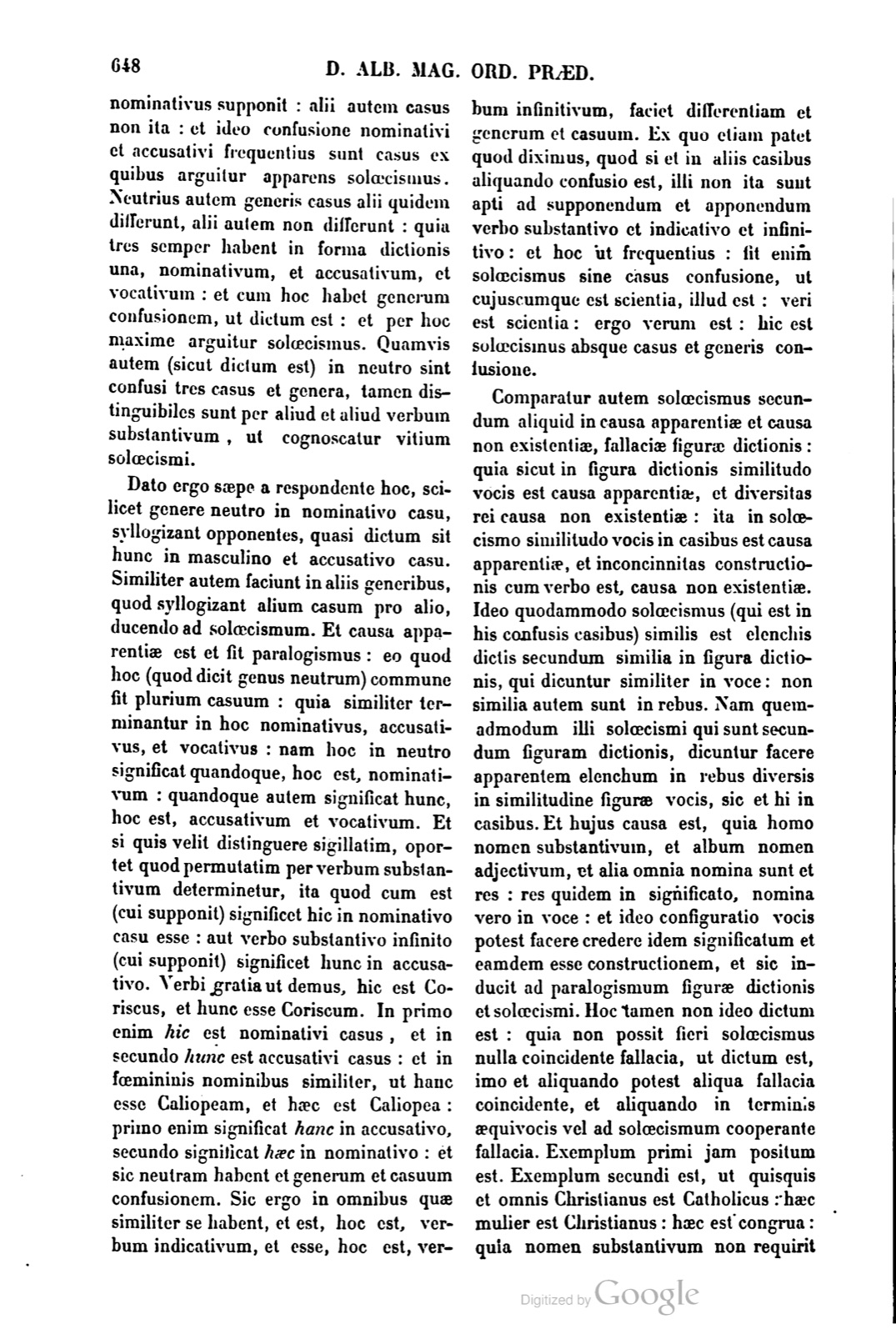
Saepe autem significant et illa utraque genera masculinum et femininum: quia masculinum et femininum sunt genera formata, et in uno formato non concluditur aliud per designationem: sed neutrum significat essentiam informem, quae utrique formato subjacet: et ideo in illo frequenter alia designantur confuse: et ex illa confusione cum confusione casus arguitur apparens solaecismus. Hujus autem exemplum est, ut si quaeratur, quid est hoc in neutro genere? continue respondetur femininum genus, ut Caliopea est haec: et continue respondetur masculinum, ut quid est hoc? et dicitur continue, Coriscus est hic: et etiam respondetur neutrum, ut quid est hoc? et dicitur, lignum est hoc: et cum hac confusione generum habet semper etiam confusionem trium casuum, nominativi scilicet, et accusativi, et vocativi. Sed masculini et feminini aliquando differunt casus omnes, si fuerint formae adaptatae: et si aliquos habent similes, non apti sunt illi ad faciendum solaecismum: quia non sunt apti ad supponendum verbo vel apponendum, sicut tres casus neutri generis: quia accusativus frequentissime apponit verbo maxime transitive: sed nominativus supponit: alii autem casus non ita: et ideo confusione nominativi et accusativi frequentius sunt casus ex quibus arguitur apparens solaecismus. Neutrius autem generis casus alii quidem differunt, alii autem non differunt: quia tres semper habent in forma dictionis una, nominativum, et accusativum, et vocativum: et cum hoc habet generum confusionem, ut dictum est: et per hoc maxime arguitur solaecismus. Quamvis autem (sicut dictum est) in neutro sint confusi tres casus et genera, tamen distinguibiles sunt per aliud et aliud verbum substantivum, ut cognoscatur vitium solaecismi.
Dato ergo saepe a respondente hoc, scilicet genere neutro in nominativo casu, syllogizant opponentes, quasi dictum sit hunc in masculino et accusativo casu. Similiter autem faciunt in aliis generibus, quod syllogizant alium casum pro alio, ducendo ad solaecismum. Et causa apparentiae est et fit paralogismus: eo quod hoc (quod dicit genus neutrum) commune fit plurium casuum: quia similiter terminantur in hoc nominativus, accusativus, et vocativus: nam hoc in neutro significat quandoque, hoc est, nominativum: quandoque autem significat hunc, hoc est, accusativum et vocativum. Et si quis velit distinguere sigillatim, oportet quod permutatim per verbum substantivum determinetur, ita quod cum est (cui supponit) significet hic in nominativo casu esse: aut verbo substantivo infinito (cui supponit) significet hunc in accusativo. Verbi gratia ut demus, hic est Coriscus, et hunc esse Coriscum. In primo enim hic est nominativi casus, et in secundo hunc est accusativi casus: et in femininis nominibus similiter, ut hanc esse Caliopeam, et haec est Caliopea: primo enim significat hanc in accusativo, secundo significat haec in nominativo: et sic neutram habent et generum et casuum confusionem. Sic ergo in omnibus quae similiter se habent, et est, hoc est, verbum indicativum, et esse, hoc est, verbum infinitivum, faciet differentiam et generum et casuum. Ex quo etiam patet quod diximus, quod si et in aliis casibus aliquando confusio est, illi non ita sunt apti ad supponendum et apponendum verbo substantivo et indicativo et infinitivo: et hoc ut frequentius: fit enim solaecismus sine casus confusione, ut cujuscumque est scientia, illud est: veri est scientia: ergo verum est: hic est solaecismus absque casus et generis confusione.
But often they also signify those two genders, masculine and feminine, because masculine and feminine are formed genders, and in one formed gender another is not concluded by designation; but the neuter signifies an unformed essence, which lies under each formed gender; and therefore in that frequently other things are designated confusedly, and from that confusion with confusion of case apparent solecism is argued. An example of this is as follows: if it is asked, what is this in the neuter gender? immediately a feminine gender is answered, as Calliope is this; and immediately a masculine is answered, as what is this? and it is immediately said, Coriscus is this one; and also a neuter is answered, as what is this? and it is said, wood is this. And with this confusion of genders it always also has confusion of three cases, namely nominative, accusative, and vocative. But sometimes all the cases of masculine and feminine differ, if the forms have been adapted; and if they have some similar cases, those are not apt for making solecism, because they are not apt for supposing to a verb or being apposed to it as the three cases of the neuter gender are. For the accusative most frequently is apposed to a verb, especially a transitive one; but the nominative is supposit; other cases, however, not so. And therefore through the confusion of nominative and accusative there are more frequently cases from which apparent solecism is argued. But of the neuter gender some cases differ and others do not differ, because three always have one form of diction, nominative and accusative and vocative; and with this it has confusion of genders, as was said; and through this especially solecism is argued. Although, as was said, in the neuter the three cases and genders are confused, nevertheless they are distinguishable through one and another substantive verb, so that the vice of solecism may be known.
Therefore when this has often been given by the respondent, namely the neuter gender in nominative case, opponents syllogize as if this one had been said in masculine and accusative case. Likewise they do in other genders, because they syllogize one case for another by leading to solecism. And the cause of appearance is, and the paralogism is made, because this which says the neuter gender becomes common to several cases, because nominative, accusative, and vocative are similarly terminated in this; for this in the neuter sometimes signifies this, that is, nominative; but sometimes it signifies this one, that is, accusative and vocative. And if someone wishes to distinguish one by one, it is necessary that it be determined interchangeably through the substantive verb, so that with is, to which it is supposit, it signifies this to be in the nominative case; or with the infinitive substantive verb, to which it is supposit, it signifies this one in the accusative. For example, let us give, this is Coriscus, and this one to be Coriscus. For in the first, this is of the nominative case, and in the second, this one is of the accusative case; and similarly in feminine names, as this one to be Calliope, and this is Calliope. For first it signifies this one in the accusative, second it signifies this in the nominative; and thus they have neither confusion of genders nor of cases. Thus therefore in all things which have themselves similarly, both is, that is, the indicative verb, and to be, that is, the infinitive verb, will make a difference both of genders and of cases. From this it is also clear what we said, that if sometimes there is confusion also in other cases, those are not so apt for supposing and apposing to the substantive, indicative, and infinitive verb; and this is more frequent. For a solecism is made without confusion of case, as: of whatever there is science, that is; there is science of the true; therefore the true is; here there is solecism without confusion of case and gender.
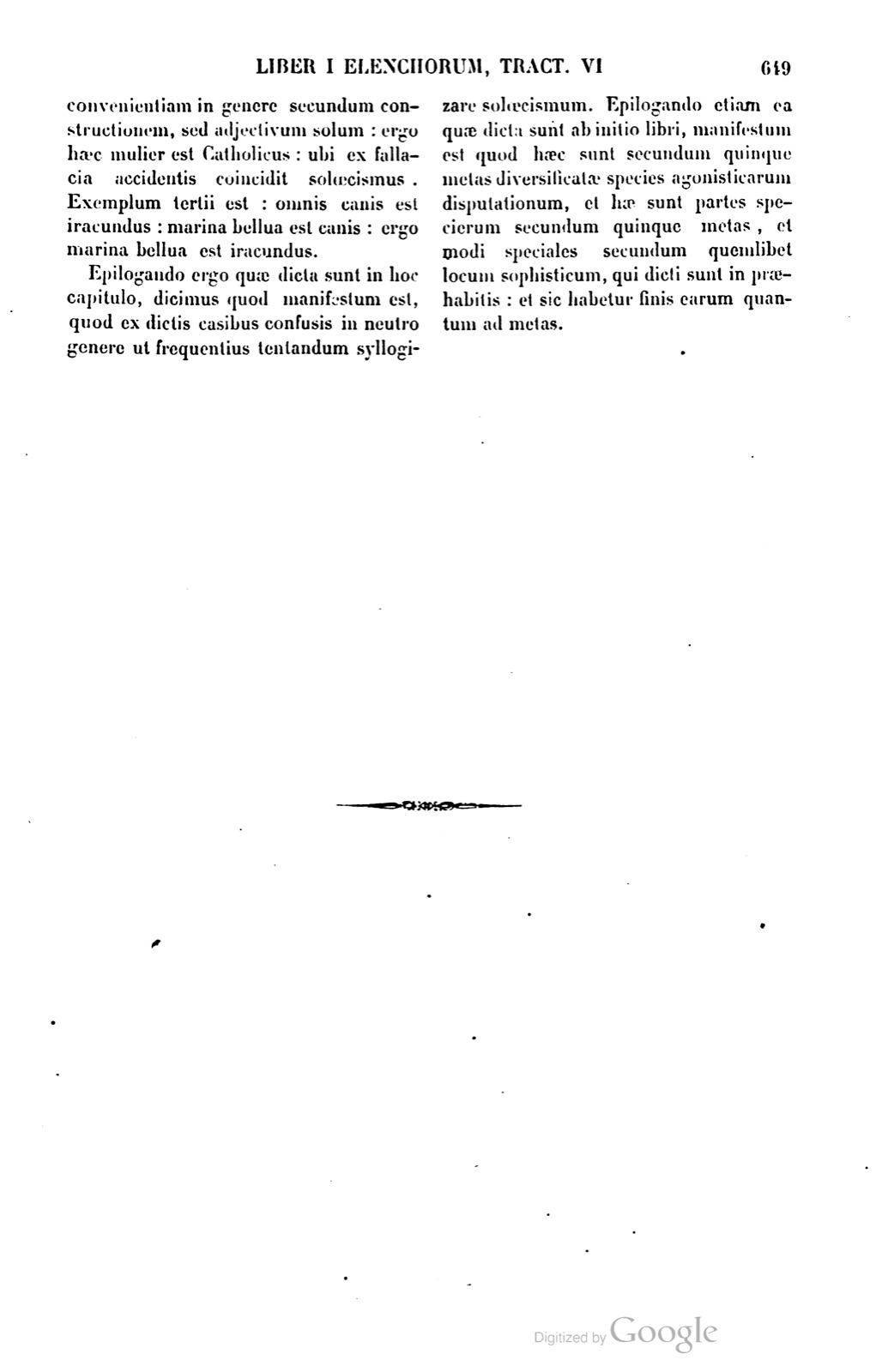
Comparatur autem solaecismus secundum aliquid in causa apparentiae et causa non existentiae, fallaciae figurae dictionis: quia sicut in figura dictionis similitudo vocis est causa apparentiae, et diversitas rei causa non existentiae: ita in solaecismo similitudo vocis in casibus est causa apparentiae, et inconcinnitas constructionis cum verbo est, causa non existentiae. Ideo quodammodo solaecismus (qui est in his confusis casibus) similis est elenchis dictis secundum similia in figura dictionis, qui dicuntur similiter in voce: non similia autem sunt in rebus. Nam quemadmodum illi solaecismi qui sunt secundum figuram dictionis, dicuntur facere apparentem elenchum in rebus diversis in similitudine figurae vocis, sic et hi in casibus. Et hujus causa est, quia homo nomen substantivum, et album nomen adjectivum, et alia omnia nomina sunt et res: res quidem in significato, nomina vero in voce: et ideo configuratio vocis potest facere credere idem significatum et eamdem esse constructionem, et sic inducit ad paralogismum figurae dictionis et solaecismi. Hoc tamen non ideo dictum est: quia non possit fieri solaecismus nulla coincidente fallacia, ut dictum est, imo et aliquando potest aliqua fallacia coincidente, et aliquando in terminis aequivocis vel ad solaecismum cooperante fallacia. Exemplum primi jam positum est. Exemplum secundi est, ut quisquis et omnis Christianus est Catholicus: haec mulier est Christianus: haec est congrua: quia nomen substantivum non requirit convenientiam in genere secundum constructionem, sed adjectivum solum: ergo haec mulier est Catholicus: ubi ex fallacia accidentis coincidit solaecismus. Exemplum tertii est: omnis canis est iracundus: marina bellua est canis: ergo marina bellua est iracundus.
Epilogando ergo quae dicta sunt in hoc capitulo, dicimus quod manifestum est, quod ex dictis casibus confusis in neutro genere ut frequentius tentandum syllogizare solaecismum. Epilogando etiam ea quae dicta sunt ab initio libri, manifestum est quod haec sunt secundum quinque metas diversificatae species agonisticarum disputationum, et hae sunt partes specierum secundum quinque metas, et modi speciales secundum quemlibet locum sophisticum, qui dicti sunt in prae habitis: et sic habetur finis earum quantum ad metas.
But solecism is compared according to something in the cause of appearance and the cause of non-existence to the fallacy of figure of diction, because just as in figure of diction likeness of word is the cause of appearance and diversity of thing the cause of non-existence, so in solecism likeness of word in cases is the cause of appearance, and the inconcinnity of construction with the verb is the cause of non-existence. Therefore in a certain way solecism, which is in these confused cases, is similar to refutations said according to likenesses in figure of diction, which are said similarly in word; but they are not similar in things. For just as those solecisms which are according to figure of diction are said to make an apparent refutation in diverse things in the likeness of the figure of word, so also these do in cases. And the cause of this is that man, a substantive noun, and white, an adjective noun, and all other names are both things and names: things indeed in the signified, but names in the word. And therefore the configuration of the word can make one believe that the signified is the same and that the construction is the same, and thus it leads to the paralogism of figure of diction and of solecism. Yet this was not said because solecism cannot be made when no fallacy coincides, as was said; rather also sometimes it can be made when some fallacy coincides, and sometimes in equivocal terms or when a fallacy cooperates toward solecism. An example of the first has already been posited. An example of the second is: whoever and every Christian is Catholic; this woman is a Christian; this is congruous, because a substantive name does not require agreement in gender according to construction, but only an adjective does; therefore this woman is Catholic in masculine form; here solecism coincides from the fallacy of accident. An example of the third is: every dog is irascible; a sea creature is a dog; therefore a sea creature is irascible in masculine form.
Therefore, by epiloguing the things that have been said in this chapter, we say that it is manifest that from the stated confused cases in the neuter gender one must more frequently test by syllogizing solecism. By also epiloguing those things which have been said from the beginning of the book, it is manifest that these are diversified species of agonistic disputations according to the five goals, and these are parts of the species according to the five goals, and special modes according to each sophistical place, which have been stated in the preceding things; and thus their end is had with respect to the goals.
If a page does not appear, its photograph has not been uploaded yet.