Works › Sophistical Refutations, Books I–II
Volume 2 · pp. 530–531
Chapter III. Whose part it is to use syllogism, and on account of these things the kinds of disputations are determined
A marker with ≈ is an approximate page boundary, placed by measure of the text; the page photographs remain the authority. In the paired views, clicking a page marker brings that page into view.
CAPUT III. Cujus est uti syllogismo, et propter haec determinantur genera disputationum.
Quoniam autem in quibusdam qui sophistae sunt, magis operae pretium esse sive utile et aestimatum pretium sui operis et sui laboris, videri esse sapientes propter gloriam, quam esse vere sapientes et non videri: eo quod gloriam appetunt et laudem si sapientes appareant coram hominibus: est enim sophistica apparens sapientia, et non existens vera sapientia. Et quia sophista copiosus est ab apparente sapientia et non existente, hic talis appetit syllogismum sophisticum, quamvis sit sophisticus plus quam verum: et ideo tractandum est de ipso, quod habeat instrumentum quo suum actum exerceat, et ad proprium veniat finem: sed quia appetit videri esse sapiens in opere proprio sapientis, oportet inducere hic de opere sapientis, ut sciatur in quo sophista similis cupit esse sapienti: cupit enim in disputatione sophista magis sapientis opus videri facere, quam vere facere et non videri.
Est autem opus sapientis multiplex in se, et ad alium. In se quidem cognoscere difficillima, et quae difficile est homini scire, sive scire quae raro sciuntur et a paucis. Adhuc autem scire altissima et prima, ex quibus ordinem et rationem ordinis accipiunt omnia alia et in subjecto et in principiis. Adhuc autem scire ea quorum simul sciendi modus est et sciendi gratia. Ex his accipitur quintum opus sapientis, quod est ordinare unumquodque et non ordinari ab aliquo: quod habet ex hoc, quod scit prima quae capita sunt et radices et principia in omnibus. Et quia haec sunt opera sapientis in seipso vel in his quae suae subjacent sapientiae et non ad alium, ideo in talibus non est appetitus sophistae: quia non est gloria nisi in his quae ad alium sunt: quia per gloriam fit, ut dicitur in Topicis, quod nullo consciente non festinaret in esse: et ideo in talibus non potest sophista similis esse sapienti.
Ad alterum autem conferendo et disputando opus sapientis: in quo vera gloria est, ut ad unum universaliter sit comprehendere, in unoquoque opus scientis et sapientis est, cum respondet, non mentiri quidem eum de quibus novit: et cum opponit, proprium opus sapientis est ipsum respondentem sibi mentientem manifestare posse per ea de quibus novit. Causa enim qua non mentitur, nec mentiri videtur, est quia ipse solus per prima quae causa sunt et non habent priora ante se novit: omnes autem alii scientes sciunt ex secundis, et ideo aliquando mentiuntur. Secundum enim habet fidem facere ex primo, et non e converso. Et ex hoc quod prima novit quae potissima sunt et super omnia alia influunt, suum est omnia alia quae dicuntur, examinare ad prima, et videre si vera sunt vel non, et sic suum est manifestare mentientem. Et hoc habet ad alterum, primum docendo, secundum autem opponendo: et ideo haec appetit sophista. Haec autem opera sunt sapientis, hoc quidem in eo quod ex facultate propria potest dare verissimam propositionem orationi, id autem opus habet in eo quod potest judicando eam sumere, et concedendo vel negando approbare vel improbare.
CHAPTER III. Whose part it is to use syllogism, and on account of these things the kinds of disputations are determined.
But since in some who are sophists, it is more the reward of effort, or the useful and esteemed price of their work and labor, to seem to be wise because of glory than truly to be wise and not to seem so, because they desire glory and praise if they appear wise before men; for sophistry is apparent wisdom and not truly existing wisdom. And because the sophist is furnished from apparent and non-existing wisdom, such a person desires the sophistical syllogism, although it is sophistical rather than true. Therefore it must be treated, so that he may have the instrument by which he exercises his act and comes to his proper end. But because he desires to seem wise in the proper work of the wise man, one must introduce here the work of the wise man, so that it may be known in what the sophist desires to be like the wise man; for in disputation the sophist desires more to seem to do the work of the wise man than truly to do it and not seem to do it.
But the work of the wise man is manifold in himself and toward another. In himself, indeed, it is to know the most difficult things, and the things which are difficult for man to know, or to know the things which are rarely known and by few. Moreover it is to know the highest and first things, from which all other things receive order and the reason of order both in the subject and in the principles. Moreover it is to know those things of which the mode of knowing and the grace of knowing are simultaneous. From these is taken the fifth work of the wise man, which is to order each thing and not to be ordered by anyone; and he has this from the fact that he knows the first things which are heads and roots and principles in all things. And because these are works of the wise man in himself or in those things which are subject to his wisdom and not toward another, therefore in such things there is no appetite of the sophist, because glory exists only in those things which are toward another; because through glory it happens, as is said in the Topics, that with no one aware he would not hasten into being. And therefore in such things the sophist cannot be similar to the wise man.
But toward another, by comparing and disputing, there is a work of the wise man; in this there is true glory, so that, to understand it universally as one thing, in each thing the work of the knower and wise man, when he responds, is indeed not to lie about those things which he knows; and when he objects, the proper work of the wise man is to be able to manifest the respondent as lying to himself through the things which he knows. For the cause by which he does not lie, nor seems to lie, is that he alone knows through the first things which are causes and do not have prior things before themselves; but all other knowers know from secondary things, and therefore they sometimes lie. For the secondary has to make belief from the first, and not conversely. And from the fact that he knows the first things, which are most powerful and flow into all other things, it is his task to examine all other things that are said in relation to the first things, and to see whether they are true or not, and thus it is his task to manifest the one who lies. And he has this toward another, first by teaching and second by objecting; and therefore the sophist desires these things. But these works belong to the wise man: this one in that by his own faculty he can give the truest proposition to speech, and that work he has in that by judging he can take it, and by conceding or denying approve or disapprove it.
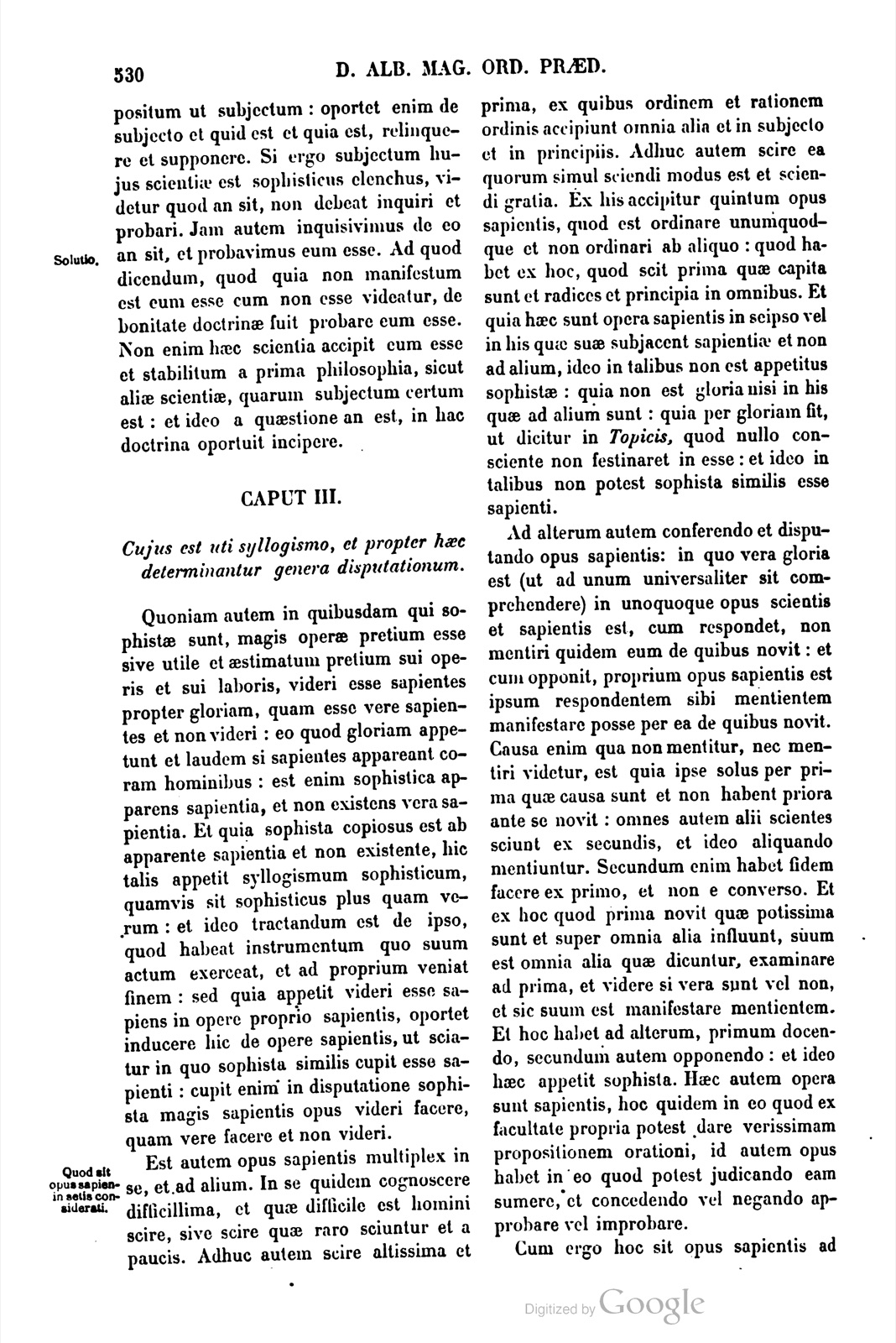
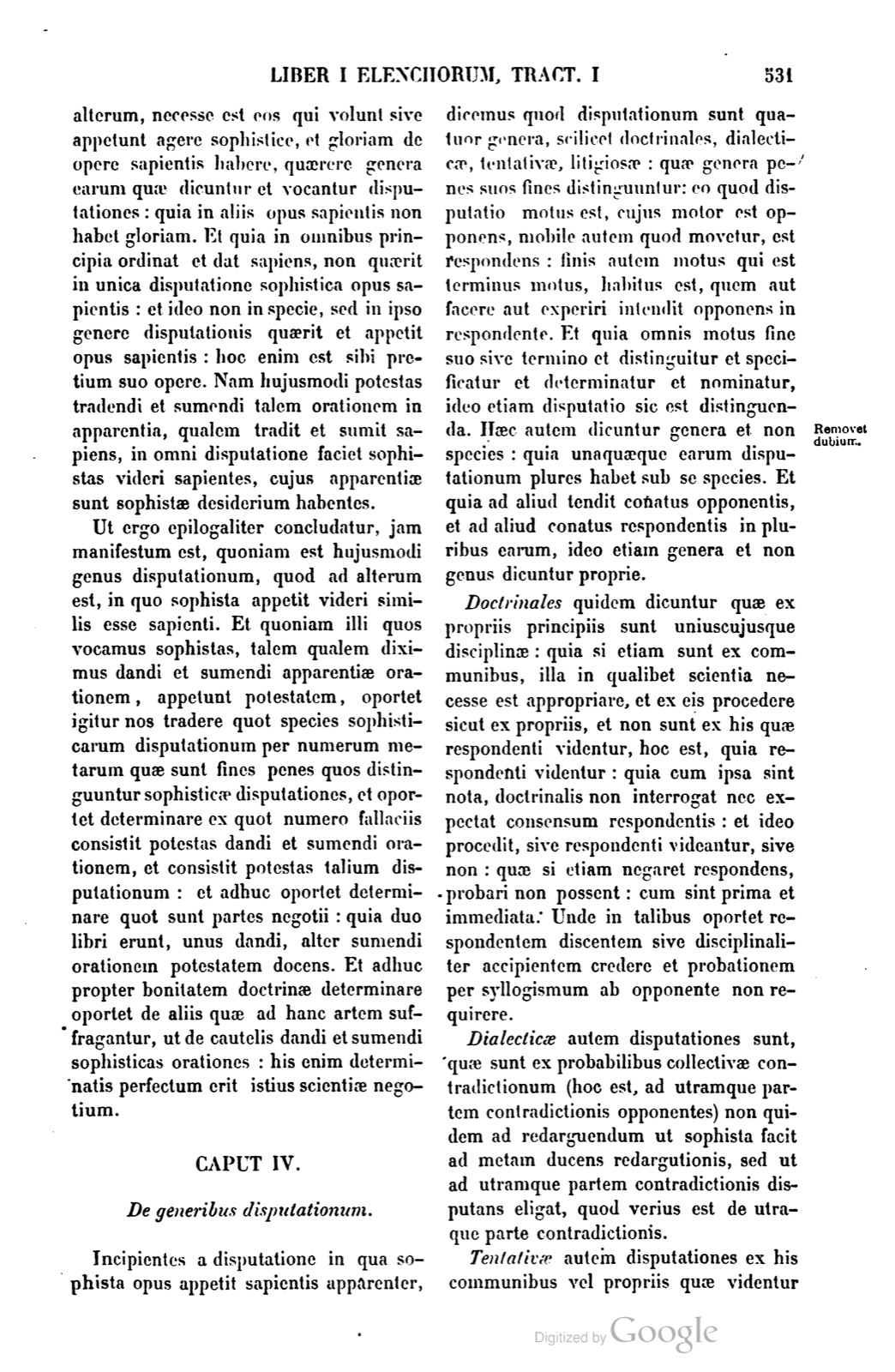
Cum ergo hoc sit opus sapientis ad alterum, necesse est eos qui volunt sive appetunt agere sophistice, et gloriam de opere sapientis habere, quaerere genera earum quae dicuntur et vocantur disputationes: quia in aliis opus sapientis non habet gloriam. Et quia in omnibus principia ordinat et dat sapiens, non quaerit in unica disputatione sophistica opus sapientis: et ideo non in specie, sed in ipso genere disputationis quaerit et appetit opus sapientis: hoc enim est sibi pretium suo opere. Nam hujusmodi potestas tradendi et sumendi talem orationem in apparentia, qualem tradit et sumit sapiens, in omni disputatione faciet sophistas videri sapientes, cujus apparentiae sunt sophistae desiderium habentes.
Ut ergo epilogaliter concludatur, jam manifestum est, quoniam est hujusmodi genus disputationum, quod ad alterum est, in quo sophista appetit videri similis esse sapienti. Et quoniam illi quos vocamus sophistas, talem qualem diximus dandi et sumendi apparentiae orationem, appetunt potestatem, oportet igitur nos tradere quot species sophisticarum disputationum per numerum metarum quae sunt fines penes quos distinguuntur sophisticae disputationes, et oportet determinare ex quot numero fallaciis consistit potestas dandi et sumendi orationem, et consistit potestas talium disputationum: et adhuc oportet determinare quot sunt partes negotii: quia duo libri erunt, unus dandi, alter sumendi orationem potestatem docens. Et adhuc propter bonitatem doctrinae determinare oportet de aliis quae ad hanc artem suffragantur, ut de cautelis dandi et sumendi sophisticas orationes: his enim determinatis perfectum erit istius scientiae negotium.
Therefore since this is the work of the wise man toward another, it is necessary for those who wish or desire to act sophistically and to have glory from the work of the wise man to seek the kinds of those things which are said and called disputations, because in other things the work of the wise man does not have glory. And because in all things the wise man orders and gives principles, he does not seek the work of the wise man in one single sophistical disputation; and therefore he seeks and desires the work of the wise man not in a species, but in the very genus of disputation, for this is the price for him by his work. For power of this kind, of handing down and taking up such speech in appearance as the wise man hands down and takes up, will in every disputation make sophists seem wise, of which appearance sophists have desire.
Therefore, to conclude by way of epilogue, it is now manifest that there is a genus of disputations of this kind, which is toward another, in which the sophist desires to seem similar to the wise man. And because those whom we call sophists desire, as we have said, power of giving and taking up speech of appearance, therefore we must hand down how many species of sophistical disputations there are, by the number of the goals which are the ends by which sophistical disputations are distinguished, and we must determine from how many fallacies the power of giving and taking up speech consists, and the power of such disputations consists; and further we must determine how many parts there are of the business, because there will be two books, one teaching the power of giving speech, the other of taking it up. And still, because of the goodness of teaching, one must determine the other things which assist this art, as concerning the precautions of giving and taking up sophistical speeches; for when these have been determined the business of this science will be perfect.
If a page does not appear, its photograph has not been uploaded yet.