Works › Prior Analytics, Books I–II
Volume 1 · pp. 750–752
Treatise IV, Chapter V
A marker with ≈ is an approximate page boundary, placed by measure of the text; the page photographs remain the authority. In the paired views, clicking a page marker brings that page into view.
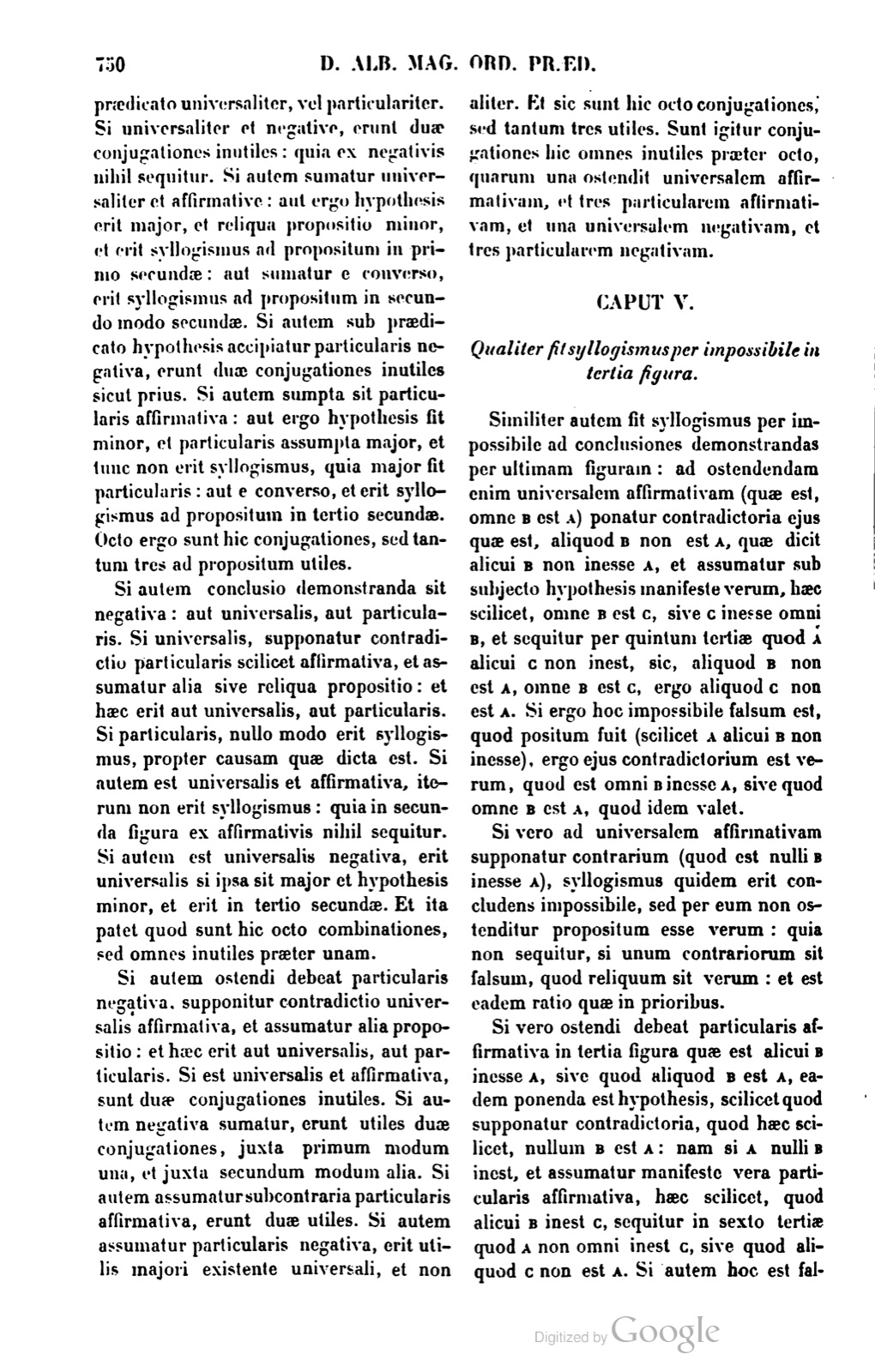
CAPUT V.
Qualiter fit syllogismus per impossibile in tertia figura.
Similiter autem fit syllogismus per impossibile ad conclusiones demonstrandas per ultimam figuram: ad ostendendam enim universalem affirmativam (quae est, omne B est A) ponatur contradictoria ejus quae est, aliquod B non est A, quae dicit alicui B non inesse A, et assumatur sub subjecto hypothesis manifeste verum, haec scilicet, omne B est C, sive C inesse omni B, et sequitur per quintum tertiae quod A alicui C non inest, sic, aliquod B non est A, omne B est C, ergo aliquod C non est A. Si ergo hoc impossibile falsum est, quod positum fuit (scilicet A alicui B non inesse), ergo ejus contradictorium est verum, quod est omni B inesse A, sive quod omne B est A, quod idem valet.
Si vero ad universalem affirmativam supponatur contrarium (quod est nulli B inesse A), syllogismus quidem erit concludens impossibile, sed per eum non ostenditur propositum esse verum: quia non sequitur, si unum contrariorum sit falsum, quod reliquum sit verum: et est eadem ratio quae in prioribus.
Si vero ostendi debeat particularis affirmativa in tertia figura quae est alicui B inesse A, sive quod aliquod B est A, eadem ponenda est hypothesis, scilicet quod supponatur contradictoria, quod haec scilicet, nullum B est A: nam si A nulli B inest, et assumatur manifeste vera particularis affirmativa, haec scilicet, quod alicui B inest C, sequitur in sexto tertiae quod A non omni inest C, sive quod aliquod C non est A. Si autem hoc est falsum, ejus contradictorium est verum, scilicet quod A inest alicui B, sive quod aliquod B est A: hoc enim contradicit ad id quod est omne B non esse A. Si autem supponatur ejus subcontraria, non erit syllogismus, sicut in ante habitis saepe dictum est.
Conclusiones etiam negativae ostenduntur in tertia figura: universalis enim negativa sic ostenditur: sicut si debeamus ostendere hanc conclusionem, quoniam nulli B inest A, supponatur contradictorium ejus quod est alicui B inesse A, sumptum autem sit pro vero extrinsecus quod omni B inest C, syllogizatur in tertio tertiae quod necesse est A alicui C inesse. Si autem hoc impossibile, contradictorium est verum, scilicet quod datum fuerat, hoc scilicet, nulli B inesse A, et illius contradictorium est falsum, quod est alicui B inesse A. Si autem in tali ostensione universalis negativae supponatur contrarium et non contradictorium, hoc scilicet, omni B inesse A, non ostendetur propositum, sicut saepius habitum est.
CHAPTER V.
In What Way A Syllogism Through The Impossible Is Made In The Third Figure.
Likewise a syllogism through the impossible is made for demonstrating conclusions through the last figure. For to show the universal affirmative, which is, every B is A, let its contradictory be posited, which is, some B is not A, which says that A is not present in some B; and let something manifestly true be assumed under the subject of the hypothesis, namely this, every B is C, or C is present in every B; and through the fifth of the third it follows that A is not present in some C, thus: some B is not A, every B is C, therefore some C is not A. Therefore if this impossible thing is false, namely what was posited, that A is not present in some B, then its contradictory is true, which is that A is present in every B, or that every B is A, which has the same force.
But if, for the universal affirmative, the contrary is supposed, which is that A is present in no B, there will indeed be a syllogism concluding an impossible thing, but through it the proposed thing is not shown to be true, because it does not follow, if one of the contraries is false, that the remaining one is true. And the same reason holds as in the preceding matters.
But if a particular affirmative ought to be shown in the third figure, namely that A is present in some B, or that some B is A, the same hypothesis must be posited, namely that the contradictory is supposed, that is, namely, no B is A. For if A is present in no B, and a manifestly true particular affirmative is assumed, namely this, that C is present in some B, it follows in the sixth of the third that A is not present in every C, or that some C is not A. But if this is false, its contradictory is true, namely that A is present in some B, or that some B is A; for this contradicts that which is every B's not being A. But if its subcontrary is supposed, there will not be a syllogism, as has often been said in the matters already had.
Negative conclusions also are shown in the third figure. For the universal negative is shown thus: as, if we ought to show this conclusion, that A is present in no B, let its contradictory be supposed, which is that A is present in some B; but let it be taken as true from outside that C is present in every B. It is syllogized in the third of the third that A must be present in some C. But if this is impossible, the contradictory is true, namely what had been given, that is, that A is present in no B, and the contradictory of that is false, which is that A is present in some B. But if in such a showing of the universal negative the contrary and not the contradictory is supposed, namely this, that A is present in every B, the proposed thing will not be shown, as has often been held.
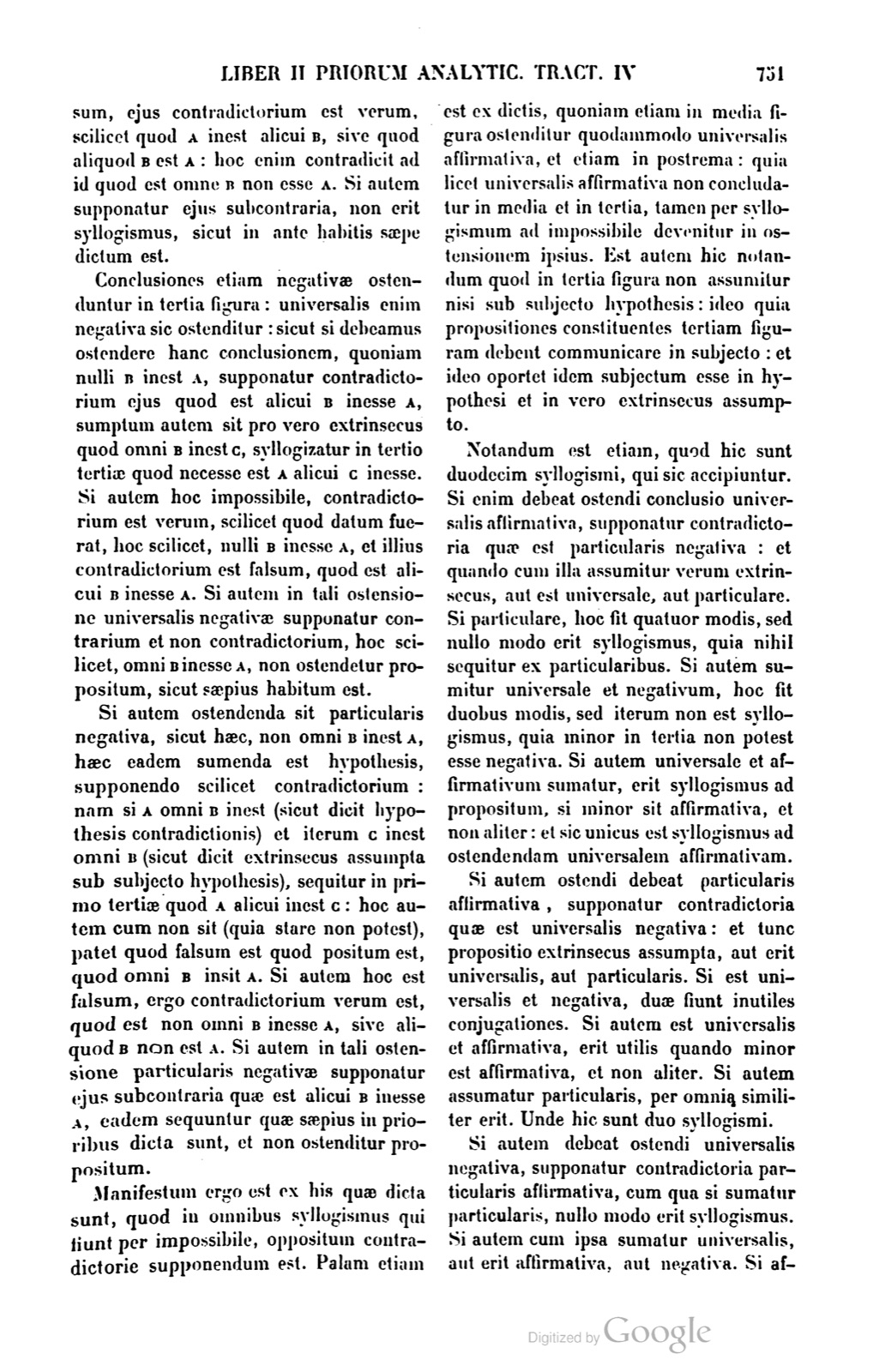
Si autem ostendenda sit particularis negativa, sicut haec, non omni B inest A, haec eadem sumenda est hypothesis, supponendo scilicet contradictorium: nam si A omni B inest (sicut dicit hypothesis contradictionis) et iterum C inest omni B (sicut dicit extrinsecus assumpta sub subjecto hypothesis), sequitur in primo tertiae quod A alicui inest C: hoc autem cum non sit (quia stare non potest), patet quod falsum est quod positum est, quod omni B insit A. Si autem hoc est falsum, ergo contradictorium verum est, quod est non omni B inesse A, sive aliquod B non est A. Si autem in tali ostensione particularis negativae supponatur ejus subcontraria quae est alicui B inesse A, eadem sequuntur quae saepius in prioribus dicta sunt, et non ostenditur propositum.
Manifestum ergo est ex his quae dicta sunt, quod in omnibus syllogismis qui fiunt per impossibile, oppositum contradictorie supponendum est. Palam etiam est ex dictis, quoniam etiam in media figura ostenditur quodammodo universalis affirmativa, et etiam in postrema: quia licet universalis affirmativa non concludatur in media et in tertia, tamen per syllogismum ad impossibile devenitur in ostensionem ipsius. Est autem hic notandum quod in tertia figura non assumitur nisi sub subjecto hypothesis: ideo quia propositiones constituentes tertiam figuram debent communicare in subjecto: et ideo oportet idem subjectum esse in hypothesi et in vero extrinsecus assumpto.
Notandum est etiam, quod hic sunt duodecim syllogismi, qui sic accipiuntur. Si enim debeat ostendi conclusio universalis affirmativa, supponatur contradictoria quae est particularis negativa: et quando cum illa assumitur verum extrinsecus, aut est universale, aut particulare. Si particulare, hoc fit quatuor modis, sed nullo modo erit syllogismus, quia nihil sequitur ex particularibus. Si autem sumitur universale et negativum, hoc fit duobus modis, sed iterum non est syllogismus, quia minor in tertia non potest esse negativa. Si autem universale et affirmativum sumatur, erit syllogismus ad propositum, si minor sit affirmativa, et non aliter: et sic unicus est syllogismus ad ostendendam universalem affirmativam.
But if a particular negative is to be shown, as this, A is not present in every B, this same hypothesis must be taken, namely by supposing the contradictory. For if A is present in every B, as the hypothesis of contradiction says, and again C is present in every B, as the proposition assumed from outside under the subject of the hypothesis says, it follows in the first of the third that A is present in some C. But since this is not so, because it cannot stand, it is clear that what has been posited is false, namely that A is present in every B. But if this is false, therefore the contradictory is true, which is that A is not present in every B, or some B is not A. But if in such a showing of the particular negative its subcontrary is supposed, which is that A is present in some B, the same things follow which have often been stated before, and the proposed thing is not shown.
Therefore it is manifest from these things which have been said that in all syllogisms which are made through the impossible the contradictorily opposite must be supposed. It is also plain from what has been said that in the middle figure too the universal affirmative is shown in a certain way, and also in the last, because although the universal affirmative is not concluded in the middle and in the third, nevertheless through the syllogism to the impossible one comes into the showing of it. But here it must be noted that in the third figure nothing is assumed except under the subject of the hypothesis, precisely because the propositions constituting the third figure must communicate in subject, and therefore the same subject must be in the hypothesis and in the true proposition assumed from outside.
It must also be noted that here there are twelve syllogisms, which are taken thus. For if a universal affirmative conclusion ought to be shown, let the contradictory be supposed, which is particular negative; and when the true from outside is assumed with that, it is either universal or particular. If particular, this is made in four ways, but in no way will there be a syllogism, because nothing follows from particulars. But if a universal and negative is taken, this is made in two ways, but again there is no syllogism, because the minor in the third cannot be negative. But if a universal and affirmative is taken, there will be a syllogism to the proposed thing, if the minor is affirmative, and not otherwise; and thus there is one syllogism for showing the universal affirmative.
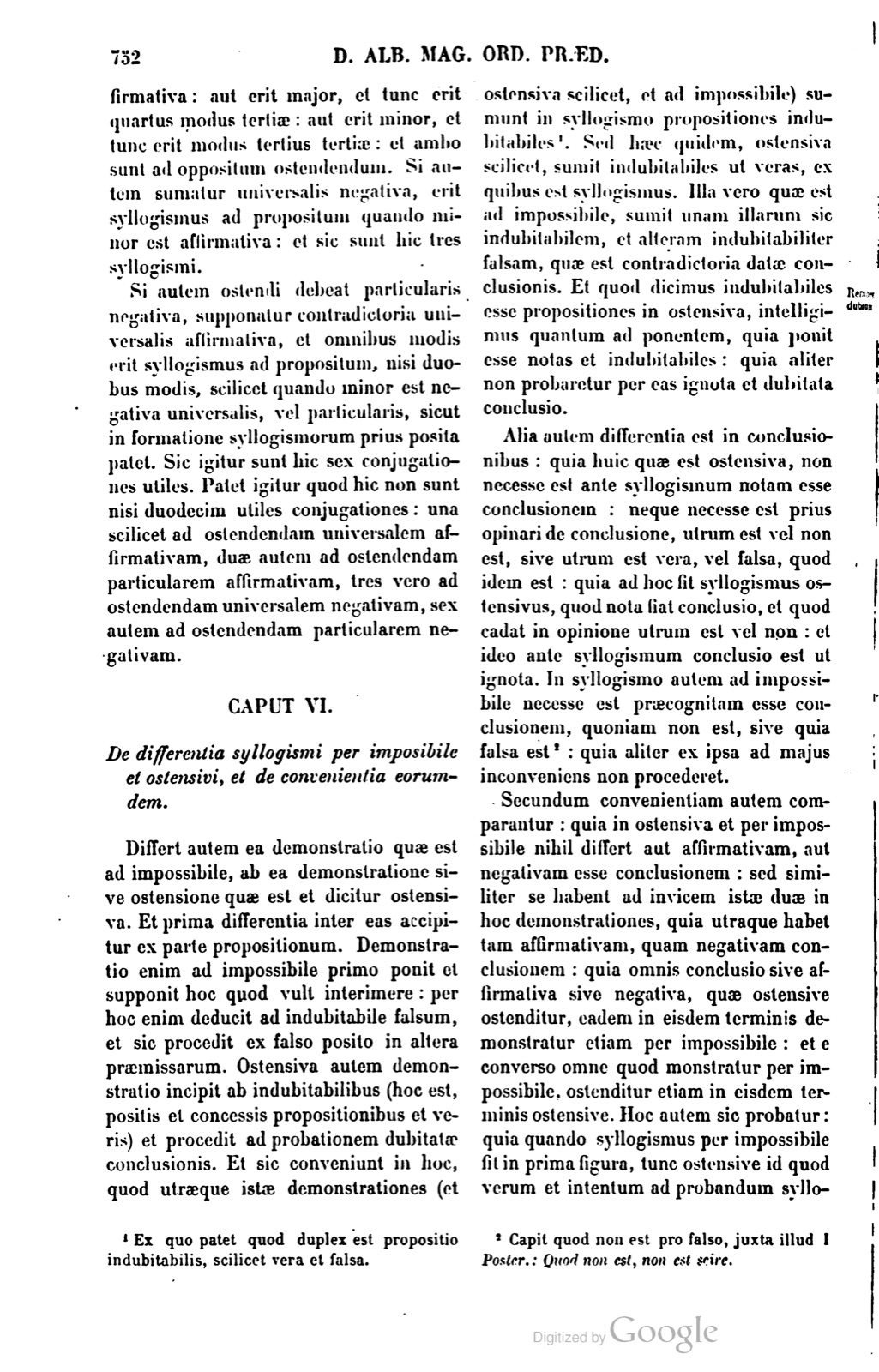
Si autem ostendi debeat particularis affirmativa, supponatur contradictoria quae est universalis negativa: et tunc propositio extrinsecus assumpta, aut erit universalis, aut particularis. Si est universalis et negativa, duae fiunt inutiles conjugationes. Si autem est universalis et affirmativa, erit utilis quando minor est affirmativa, et non aliter. Si autem assumatur particularis, per omnia similiter erit. Unde hic sunt duo syllogismi.
Si autem debeat ostendi universalis negativa, supponatur contradictoria particularis affirmativa, cum qua si sumatur particularis, nullo modo erit syllogismus. Si autem cum ipsa sumatur universalis, aut erit affirmativa, aut negativa. Si affirmativa: aut erit major, et tunc erit quartus modus tertiae: aut erit minor, et tunc erit modus tertius tertiae: et ambo sunt ad oppositum ostendendum. Si autem sumatur universalis negativa, erit syllogismus ad propositum quando minor est affirmativa: et sic sunt hic tres syllogismi.
Si autem ostendi debeat particularis negativa, supponatur contradictoria universalis affirmativa, et omnibus modis erit syllogismus ad propositum, nisi duobus modis, scilicet quando minor est negativa universalis, vel particularis, sicut in formatione syllogismorum prius posita patet. Sic igitur sunt hic sex conjugationes utiles. Patet igitur quod hic non sunt nisi duodecim utiles conjugationes: una scilicet ad ostendendam universalem affirmativam, duae autem ad ostendendam particularem affirmativam, tres vero ad ostendendam universalem negativam, sex autem ad ostendendam particularem negativam.
But if a particular affirmative ought to be shown, let the contradictory be supposed, which is universal negative. And then the proposition assumed from outside will be either universal or particular. If it is universal and negative, two useless conjugations are made. But if it is universal and affirmative, it will be useful when the minor is affirmative, and not otherwise. But if a particular is assumed, it will be similar in all respects. Hence here there are two syllogisms.
But if a universal negative ought to be shown, let the particular affirmative contradictory be supposed. If a particular is taken with it, in no way will there be a syllogism. But if a universal is taken with it, it will be either affirmative or negative. If affirmative, either it will be the major, and then there will be the fourth mode of the third, or it will be the minor, and then there will be the third mode of the third; and both are for showing the opposite. But if a universal negative is taken, there will be a syllogism to the proposed thing when the minor is affirmative; and thus here there are three syllogisms.
But if a particular negative ought to be shown, let the universal affirmative contradictory be supposed, and in all ways there will be a syllogism to the proposed thing except in two ways, namely when the minor is negative, universal or particular, as is clear in the formation of syllogisms set down before. Thus, therefore, there are here six useful conjugations. Therefore it is clear that here there are only twelve useful conjugations: one namely for showing the universal affirmative, two for showing the particular affirmative, three for showing the universal negative, and six for showing the particular negative.
If a page does not appear, its photograph has not been uploaded yet.