Works › Prior Analytics, Books I–II
Volume 1 · pp. 729–731
Treatise III, Chapter II
A marker with ≈ is an approximate page boundary, placed by measure of the text; the page photographs remain the authority. In the paired views, clicking a page marker brings that page into view.
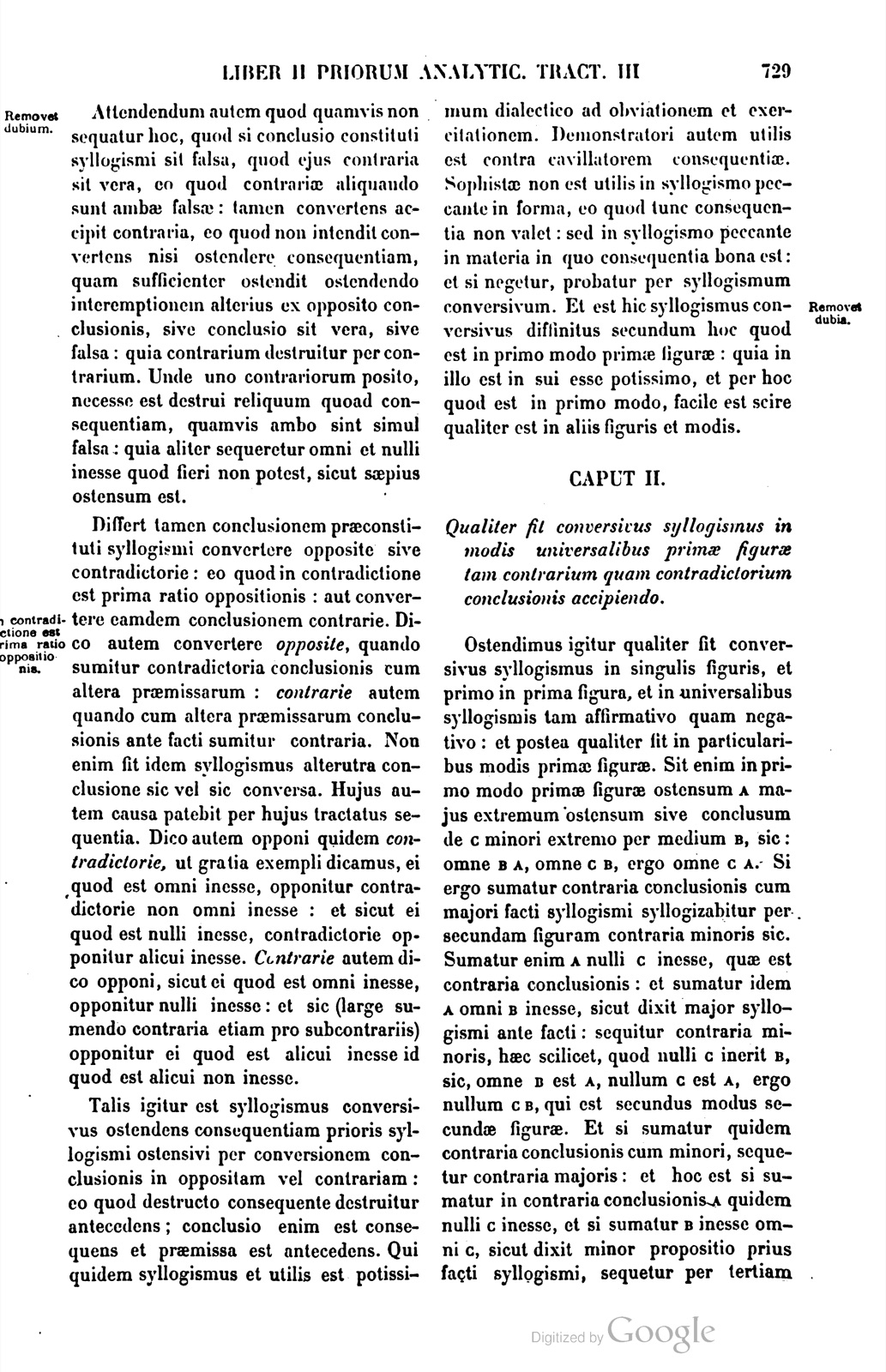
CAPUT II.
Qualiter fit conversivus syllogismus in modis universalibus primae figurae tam contrarium quam contradictorium conclusionis accipiendo.
Ostendimus igitur qualiter fit conversivus syllogismus in singulis figuris, et primo in prima figura, et in universalibus syllogismis tam affirmativo quam negativo: et postea qualiter fit in particularibus modis primae figurae. Sit enim in primo modo primae figurae ostensum A majus extremum ostensum sive conclusum de C minori extremo per medium B, sic: omne B A, omne C B, ergo omne C A. Si ergo sumatur contraria conclusionis cum majori facti syllogismi syllogizabitur per secundam figuram contraria minoris sic. Sumatur enim A nulli C inesse, quae est contraria conclusionis: et sumatur idem A omni B inesse, sicut dixit major syllogismi ante facti: sequitur contraria minoris, haec scilicet, quod nulli C inerit B, sic, omne B est A, nullum C est A, ergo nullum C B, qui est secundus modus secundae figurae. Et si sumatur quidem contraria conclusionis cum minori, sequitur contraria majoris: et hoc est si sumatur in contraria conclusionis A quidem nulli C inesse, et si sumatur B inesse omni C, sicut dixit minor propositio prius facti syllogismi, sequetur per tertiam figuram quod A non omni inest B, quae est contradictorie opposita majoris: et non sequetur omnino sive universaliter quod nulli B insit A, quae est contraria majoris: sic enim formatur conversivus syllogismus, nullum C est A, omne C est B, ergo aliquod B non est A. Et non sequitur quod nullum B est A, eo quod opposita majoris non syllogizatur nisi per tertiam figuram: figura autem tertia non concludit universalem propositionem: et ideo illam propositionem quae est in primo modo primae figurae ad majorem extremitatem (et est propositio major) non est destruere conversive omnino, hoc est, universaliter per contrariam, sed particulariter per contradictoriam: cujus causa, quia major propositio semper interimitur per tertiam figuram: et ideo in conversivo syllogismo interimente majorem necesse est utramque extremitatem accipere relatam, sicut praedicata ad postremam extremitatem prioris syllogismi, quae medium efficitur in conversivo syllogismo interimente majorem.
CHAPTER II.
In What Way The Conversive Syllogism Is Made In The Universal Modes Of The First Figure, By Taking Both The Contrary And The Contradictory Of The Conclusion.
Therefore we have shown in what way the conversive syllogism is made in the several figures, and first in the first figure, and in universal syllogisms both affirmative and negative; and afterward how it is made in the particular modes of the first figure. For let A, the greater extreme, be shown or concluded of C, the lesser extreme, through the middle B in the first mode of the first figure, thus: every B is A, every C is B, therefore every C is A. Therefore if the contrary of the conclusion is taken with the major of the made syllogism, the contrary of the minor will be syllogized through the second figure thus. For let it be taken that A is present in no C, which is the contrary of the conclusion, and let the same A be taken to be present in every B, as the major of the syllogism made before said; the contrary of the minor follows, namely this, that B will be present in no C, thus: every B is A, no C is A, therefore no C is B, which is the second mode of the second figure. And if indeed the contrary of the conclusion is taken with the minor, the contrary of the major follows; and this is if, in the contrary of the conclusion, A is taken to be present in no C, and if B is taken to be present in every C, as the minor proposition of the syllogism made before said, then through the third figure it will follow that A is not present in every B, which is contradictorily opposite to the major. And it will not follow wholly or universally that A is present in no B, which is the contrary of the major. For the conversive syllogism is formed thus: no C is A, every C is B, therefore some B is not A. And it does not follow that no B is A, because the opposite of the major is not syllogized except through the third figure; but the third figure does not conclude a universal proposition. And therefore that proposition which is in the first mode of the first figure with respect to the greater extreme, and is the major proposition, cannot be destroyed conversively wholly, that is, universally through the contrary, but particularly through the contradictory. The cause is that the major proposition is always destroyed through the third figure; and therefore in a conversive syllogism destroying the major, it is necessary to take both extremes as related, as predicates, to the last extreme of the prior syllogism, which is made the middle in the conversive syllogism destroying the major.
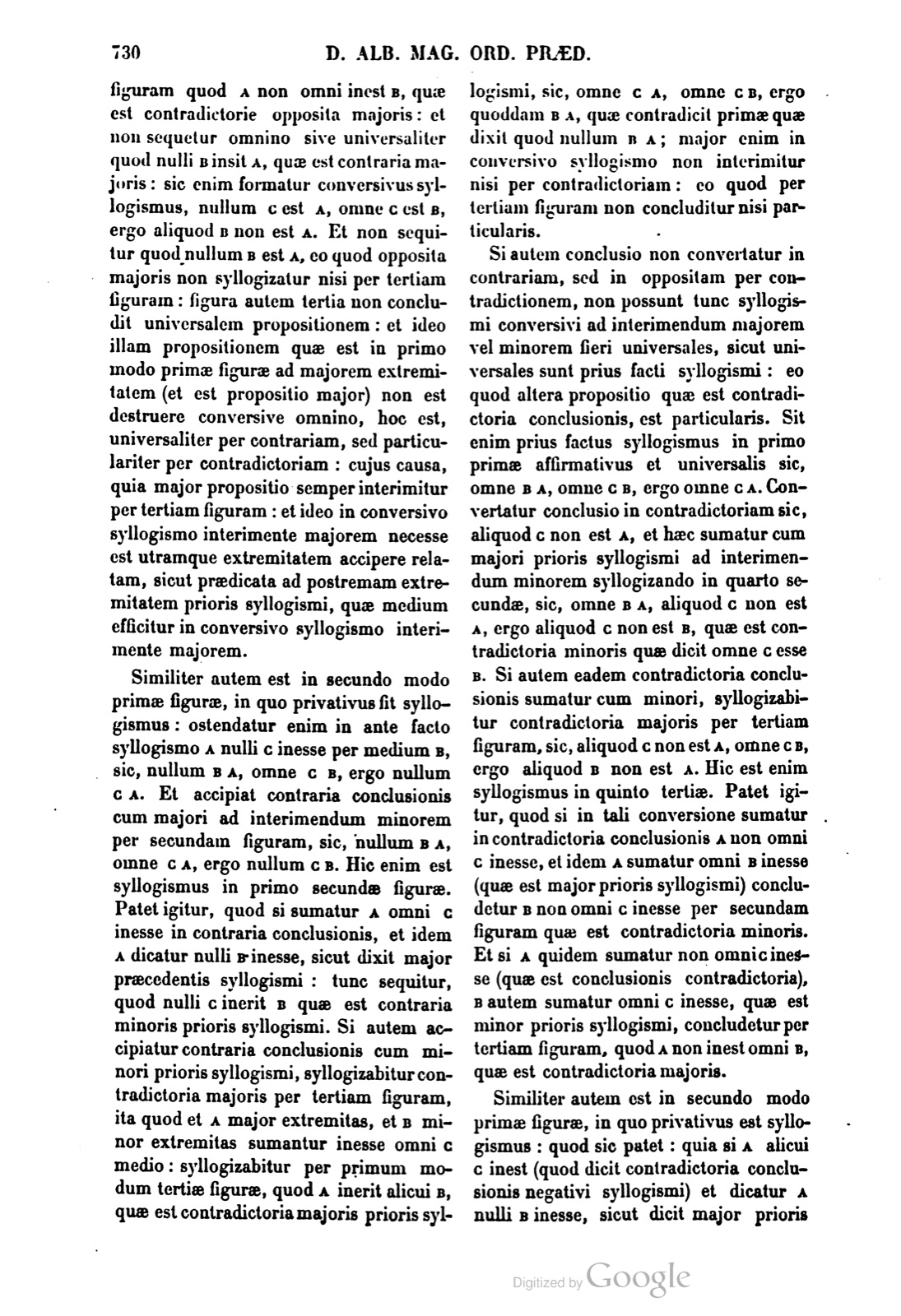
Similiter autem est in secundo modo primae figurae, in quo privativus fit syllogismus: ostendatur enim in ante facto syllogismo A nulli C inesse per medium B, sic, nullum B A, omne C B, ergo nullum C A. Et accipiat contraria conclusionis cum majori ad interimendum minorem per secundam figuram, sic, nullum B A, omne C A, ergo nullum C B. Hic enim est syllogismus in primo secundae figurae. Patet igitur, quod si sumatur A omni C inesse in contraria conclusionis, et idem A dicatur nulli B inesse, sicut dixit major praecedentis syllogismi: tunc sequitur, quod nulli C inerit B quae est contraria minoris prioris syllogismi. Si autem accipiatur contraria conclusionis cum minori prioris syllogismi, syllogizabitur contradictoria majoris per tertiam figuram, ita quod et A major extremitas, et B minor extremitas sumantur inesse omni C medio: syllogizabitur per primum modum tertiae figurae, quod A inerit alicui B, quae est contradictoria majoris prioris syllogismi, sic, omne C A, omne C B, ergo quoddam B A, quae contradicit primae quae dixit quod nullum B A; major enim in conversivo syllogismo non interimitur nisi per contradictoriam: eo quod per tertiam figuram non concluditur nisi particularis.
Si autem conclusio non convertatur in contrariam, sed in oppositam per contradictionem, non possunt tunc syllogismi conversivi ad interimendum majorem vel minorem fieri universales, sicut universales sunt prius facti syllogismi: eo quod altera propositio quae est contradictoria conclusionis, est particularis. Sit enim prius factus syllogismus in primo primae affirmativus et universalis sic, omne B A, omne C B, ergo omne C A. Convertatur conclusio in contradictoriam sic, aliquod C non est A, et haec sumatur cum majori prioris syllogismi ad interimendum minorem syllogizando in quarto secundae, sic, omne B A, aliquod C non est A, ergo aliquod C non est B, quae est contradictoria minoris quae dicit omne C esse B. Si autem eadem contradictoria conclusionis sumatur cum minori, syllogizabitur contradictoria majoris per tertiam figuram, sic, aliquod C non est A, omne C B, ergo aliquod B non est A. Hic est enim syllogismus in quinto tertiae. Patet igitur, quod si in tali conversione sumatur in contradictoria conclusionis A non omni C inesse, et idem A sumatur omni B inesse (quae est major prioris syllogismi) concludetur B non omni C inesse per secundam figuram quae est contradictoria minoris. Et si A quidem sumatur non omni C inesse (quae est conclusionis contradictoria), B autem sumatur omni C inesse, quae est minor prioris syllogismi, concludetur per tertiam figuram, quod A non inest omni B, quae est contradictoria majoris.
But it is similar in the second mode of the first figure, in which a privative syllogism is made. For let A be shown in the syllogism made before to be present in no C through the middle B, thus: no B is A, every C is B, therefore no C is A. And let it take the contrary of the conclusion with the major for destroying the minor through the second figure, thus: no B is A, every C is A, therefore no C is B. For this is a syllogism in the first of the second figure. Therefore it is clear that if A is taken to be present in every C in the contrary of the conclusion, and the same A is said to be present in no B, as the major of the preceding syllogism said, then it follows that B will be present in no C, which is the contrary of the minor of the prior syllogism. But if the contrary of the conclusion is taken with the minor of the prior syllogism, the contradictory of the major will be syllogized through the third figure, so that both A, the greater extreme, and B, the lesser extreme, are taken to be present in every C as middle. Through the first mode of the third figure it will be syllogized that A will be present in some B, which is the contradictory of the major of the prior syllogism, thus: every C is A, every C is B, therefore some B is A, which contradicts the first proposition, which said that no B is A; for the major in a conversive syllogism is not destroyed except through the contradictory, because through the third figure only a particular is concluded.
But if the conclusion is not converted into the contrary, but into the opposite through contradiction, then the conversive syllogisms for destroying the major or minor cannot be made universal, as the syllogisms made before are universal, because the other proposition, which is the contradictory of the conclusion, is particular. For let the syllogism first made in the first of the first figure be affirmative and universal thus: every B is A, every C is B, therefore every C is A. Let the conclusion be converted into the contradictory thus: some C is not A; and let this be taken with the major of the prior syllogism for destroying the minor, by syllogizing in the fourth of the second: every B is A, some C is not A, therefore some C is not B, which is the contradictory of the minor, which says that every C is B. But if the same contradictory of the conclusion is taken with the minor, the contradictory of the major will be syllogized through the third figure thus: some C is not A, every C is B, therefore some B is not A. For this is a syllogism in the fifth of the third. Therefore it is clear that if in such conversion A is taken, in the contradictory of the conclusion, not to be present in every C, and the same A is taken to be present in every B, which is the major of the prior syllogism, then B will be concluded not to be present in every C through the second figure, which is the contradictory of the minor. And if A is taken not to be present in every C, which is the contradictory of the conclusion, but B is taken to be present in every C, which is the minor of the prior syllogism, it will be concluded through the third figure that A is not present in every B, which is the contradictory of the major.
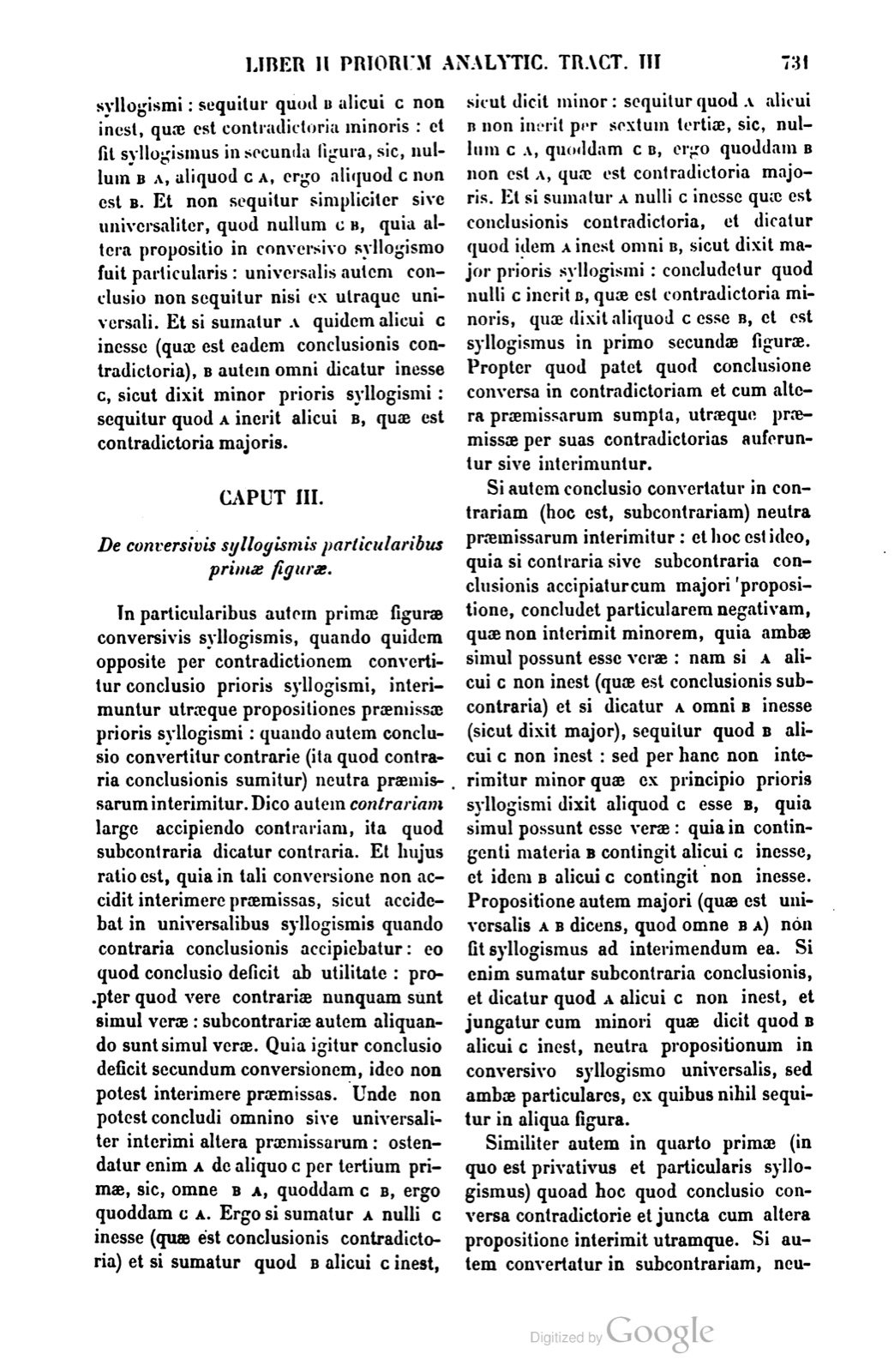
Similiter autem est in secundo modo primae figurae, in quo privativus est syllogismus: quod sic patet: quia si A alicui C inest (quod dicit contradictoria conclusionis negativi syllogismi) et dicatur A nulli B inesse, sicut dicit major prioris syllogismi: sequitur quod B alicui C non inest, quae est contradictoria minoris: et fit syllogismus in secunda figura, sic, nullum B A, aliquod C A, ergo aliquod C non est B. Et non sequitur simpliciter sive universaliter, quod nullum C B, quia altera propositio in conversivo syllogismo fuit particularis: universalis autem conclusio non sequitur nisi ex utraque universali. Et si sumatur A quidem alicui C inesse (quae est eadem conclusionis contradictoria), B autem omni dicatur inesse C, sicut dixit minor prioris syllogismi: sequitur quod A inerit alicui B, quae est contradictoria majoris.
But it is similar in the second mode of the first figure, in which there is a privative syllogism. This is clear thus: because if A is present in some C, which the contradictory of the conclusion of the negative syllogism says, and A is said to be present in no B, as the major of the prior syllogism says, it follows that B is not present in some C, which is the contradictory of the minor; and the syllogism is made in the second figure thus: no B is A, some C is A, therefore some C is not B. And it does not follow simply or universally that no C is B, because one proposition in the conversive syllogism was particular; but a universal conclusion does not follow except from two universal propositions. And if A is taken to be present in some C, which is the same contradictory of the conclusion, but B is said to be present in every C, as the minor of the prior syllogism said, it follows that A will be present in some B, which is the contradictory of the major.
If a page does not appear, its photograph has not been uploaded yet.