Works › Prior Analytics, Books I–II
Volume 1 · pp. 671–672
Chapter XII. How sometimes there is an impediment from this, that the things which are posited in one syllogism are concluded in diverse figures.
A marker with ≈ is an approximate page boundary, placed by measure of the text; the page photographs remain the authority. In the paired views, clicking a page marker brings that page into view.
CAPUT XII. Qualiter aliquando est impedimentum ex hoc quod ea quae in uno syllogismo posita sunt, in diversis figuris concluduntur.
In syllogismo autem qui non est simpliciter unus, sed unus dicitur, quia ad unam conclusionem principalem sunt ordinati (sicut prosyllogismus et syllogismus dicuntur unus syllogismus, quia ad unam conclusionem ultimam sunt ordinati) et hoc aliquando facit impedimentum in resolutione propositionum duarum in tres terminos. Et ideo non lateat nos, quoniam in eodem syllogismo non simpliciter uno, sed uno et eodem in hoc quod plures sunt ad unam conclusionem manifestandam ordinati, non omnes conclusiones, quae scilicet sunt in syllogismo sic uno ex prosyllogismis et principali syllogismo composito: quia ille multas habet conclusiones, quamvis syllogismus simpliciter unus non habeat nisi unam conclusionem: et talis syllogismi qui non simpliciter est unus, conclusiones plures non possunt omnes per unam et eamdem figuram terminari. Sed contra una quidem conclusio terminatur per hanc aliquam figuram: illa vero alia conclusio terminatur per aliam, sicut patet in secundo tertiae figurae, in quo major in prosyllogismo concluditur per primam vel secundam figuram, minor autem per primam tantum, et conclusio principalis per tertiam. Palam autem est ex arte superius inducta, quoniam et resolutiones propositionum in terminos secundum uniuscujusque conclusionis proprietatem et figuram sunt faciendae.
CHAPTER XII. How sometimes there is an impediment from this, that the things which are posited in one syllogism are concluded in diverse figures.
But in a syllogism which is not simply one, but is called one because its parts are ordered to one principal conclusion, just as a prosyllogism and a syllogism are called one syllogism because they are ordered to one final conclusion, this sometimes makes an impediment in the resolution of two propositions into three terms. And therefore let it not escape us that, in the same syllogism which is not simply one, but one and the same in this respect, that several things are ordered to manifesting one conclusion, not all conclusions, namely those which are in a syllogism thus one, composed of prosyllogisms and a principal syllogism, can be terminated through one and the same figure. For that syllogism has many conclusions, although a syllogism which is simply one has only one conclusion. And the several conclusions of such a syllogism, which is not simply one, cannot all be terminated through one and the same figure. Rather, on the contrary, one conclusion is terminated through some one figure, but another conclusion is terminated through another, as is plain in the second mode of the third figure, in which the major is concluded in a prosyllogism through the first or second figure, but the minor through the first only, and the principal conclusion through the third. But it is evident from the art introduced above that resolutions of propositions into terms must also be made according to the property and figure of each conclusion.
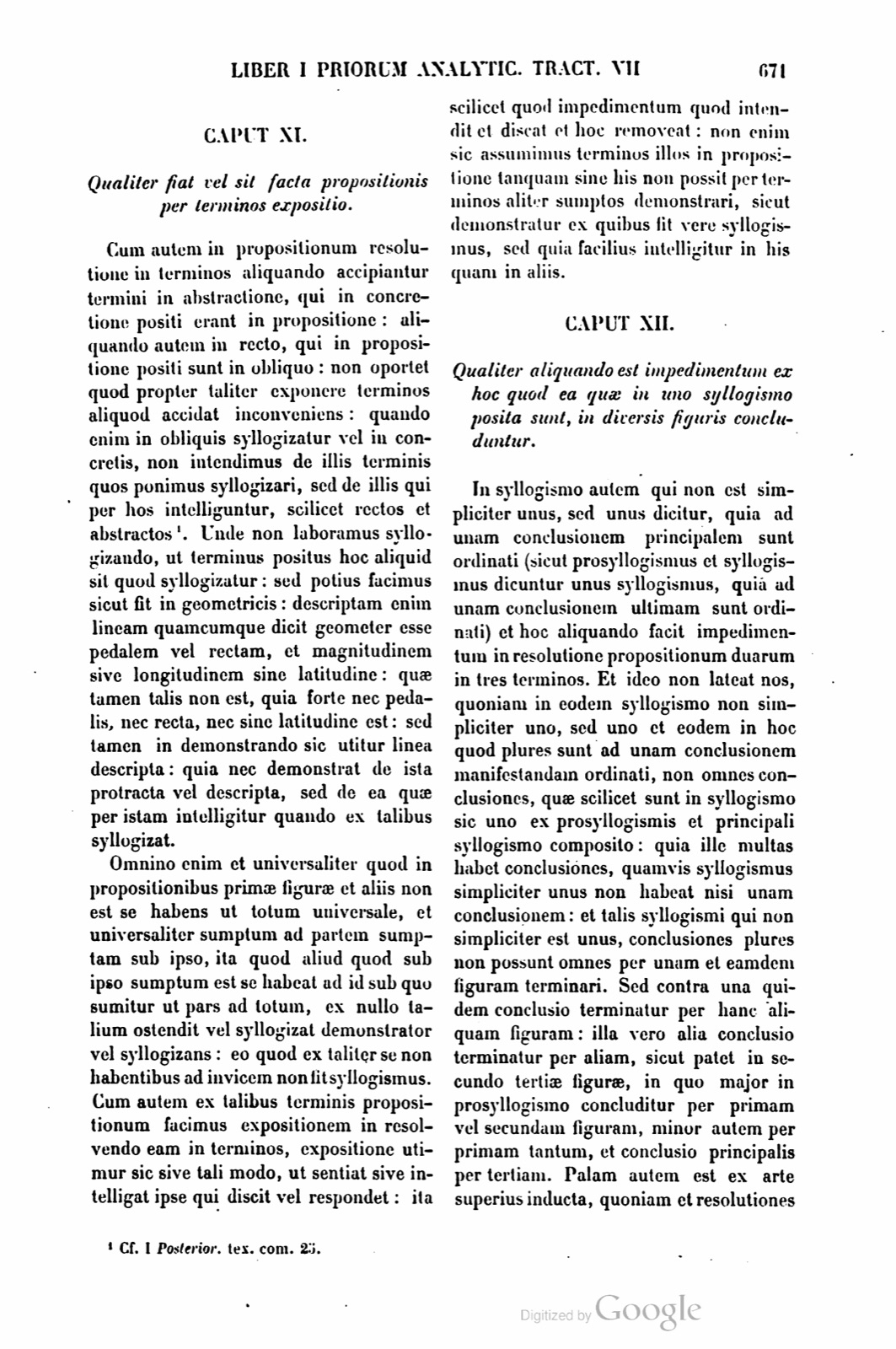
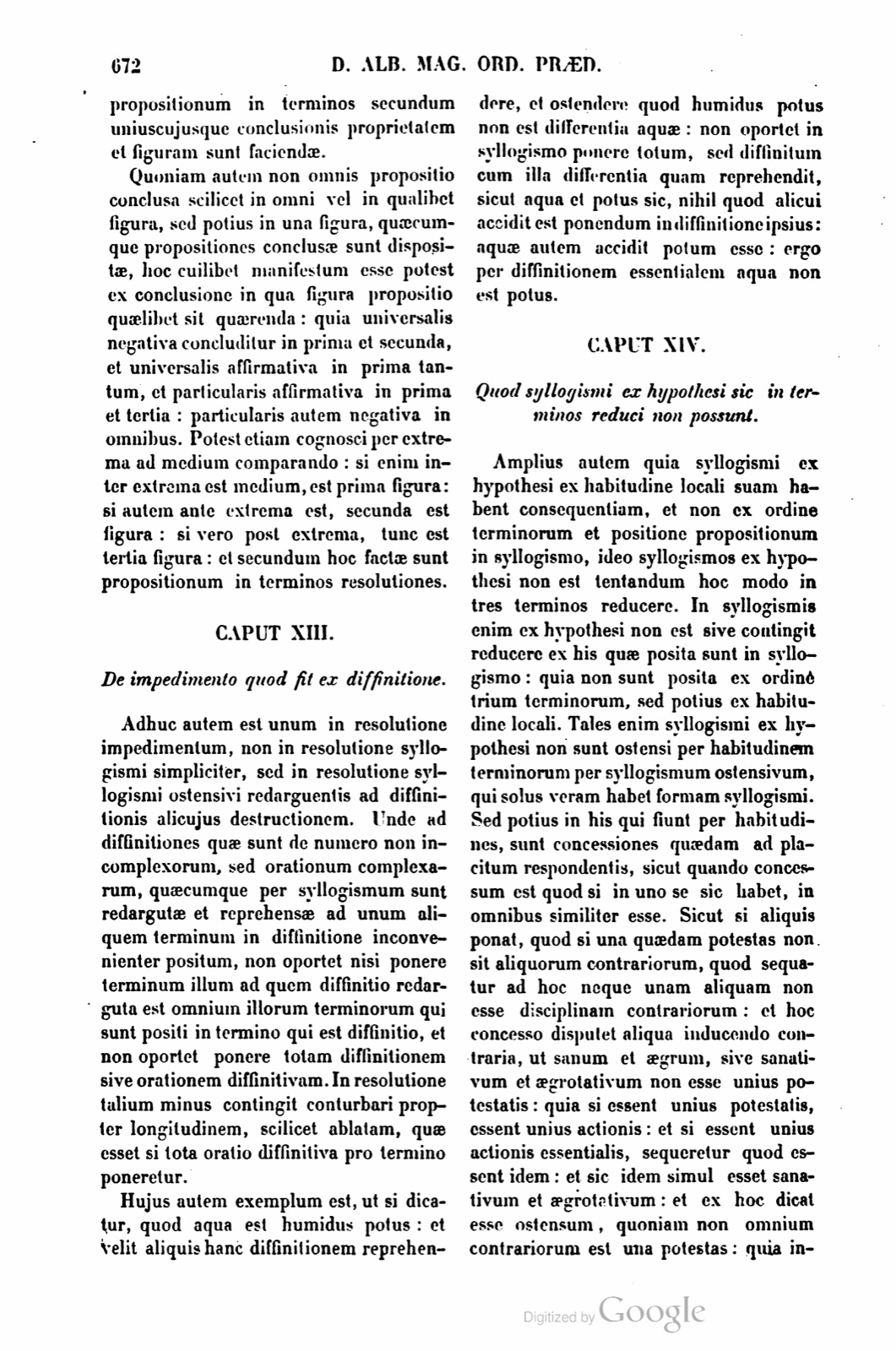
Quoniam autem non omnis propositio conclusa scilicet in omni vel in qualibet figura, sed potius in una figura, quaecumque propositiones conclusae sunt dispositae, hoc cuilibet manifestum esse potest ex conclusione in qua figura propositio quaelibet sit quaerenda: quia universalis negativa concluditur in prima et secunda, et universalis affirmativa in prima tantum, et particularis affirmativa in prima et tertia: particularis autem negativa in omnibus. Potest etiam cognosci per extrema ad medium comparando: si enim inter extrema est medium, est prima figura: si autem ante extrema est, secunda est figura: si vero post extrema, tunc est tertia figura: et secundum hoc factae sunt propositionum in terminos resolutiones.
But since not every proposition is concluded in every or in any figure, but rather in one figure, whatever concluded propositions have been disposed, this can be manifest to anyone from the conclusion, in which figure each proposition is to be sought. For the universal negative is concluded in the first and second figure, and the universal affirmative in the first only, and the particular affirmative in the first and third; but the particular negative in all. It can also be known by comparing the extremes to the middle: for if the middle is between the extremes, it is the first figure; but if it is before the extremes, it is the second figure; but if it is after the extremes, then it is the third figure. And according to this, resolutions of propositions into terms have been made.
If a page does not appear, its photograph has not been uploaded yet.