Works › Prior Analytics, Books I–II
Volume 1 · pp. 641–644
Chapter V. That the art introduced is sufficient in syllogisms from hypothesis which are to the impossible, and in the others which are from hypothesis.
A marker with ≈ is an approximate page boundary, placed by measure of the text; the page photographs remain the authority. In the paired views, clicking a page marker brings that page into view.
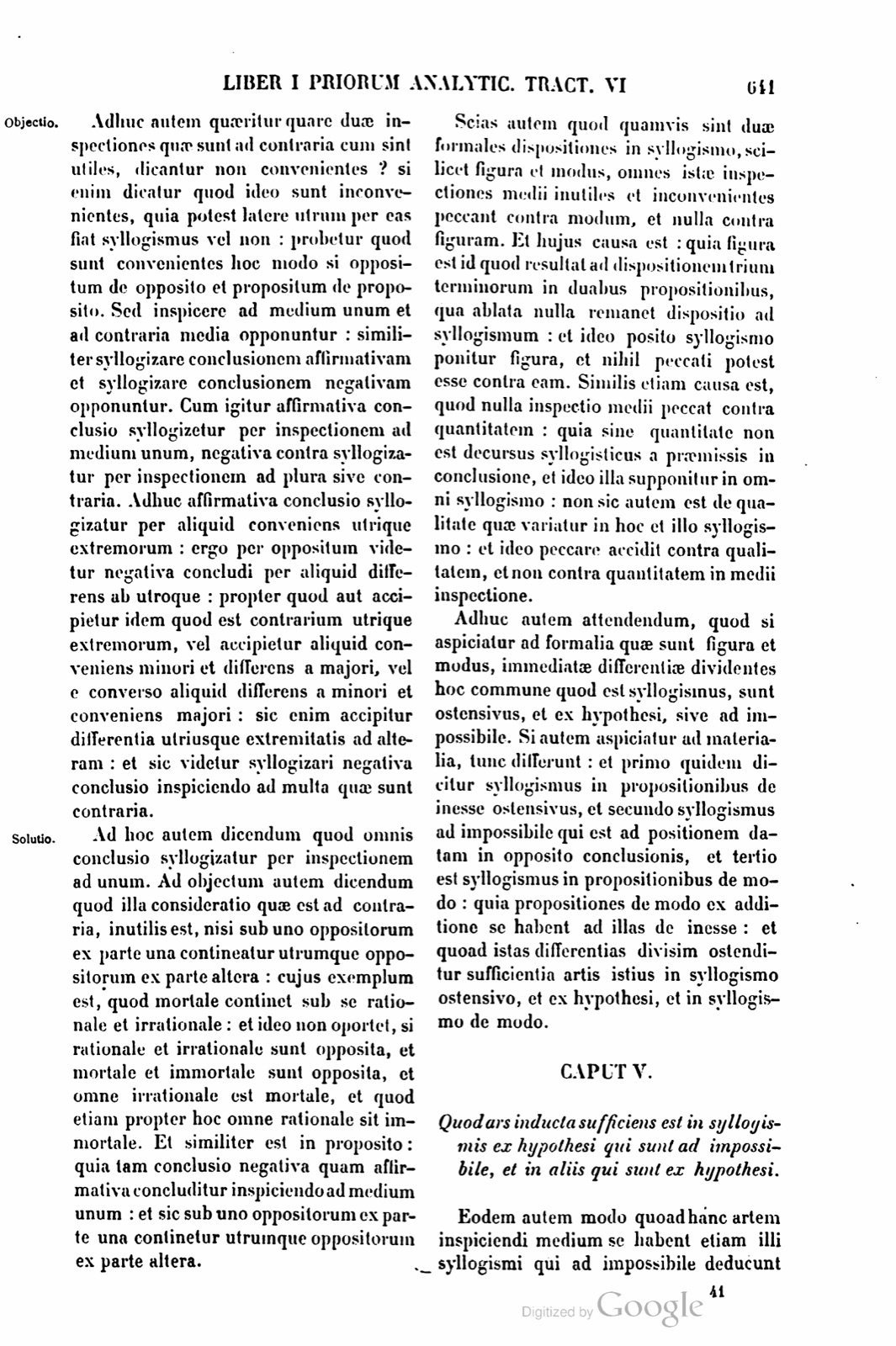
CAPUT V. Quod ars inducta sufficiens est in syllogismis ex hypothesi qui sunt ad impossibile, et in aliis qui sunt ex hypothesi.
Eodem autem modo quoad hanc artem inspiciendi medium se habent etiam illi syllogismi qui ad impossibile deducunt cum syllogismis ostensivis. Hoc autem ex hoc probatur, quod etiam syllogismi ad impossibile fiunt per inspectionem eorum quae sequuntur et quibus sequitur (hoc est, consequentium et antecedentium). Consequentia enim sunt quae sequuntur, et antecedentia sunt ea quibus (hoc est, ad quae) sequitur utrumque, scilicet praedicatum et subjectum. Fit enim inspectio tam in antecedens quam in consequens tam praedicati quam subjecti. Et propter hoc eadem est consideratio et eadem ars tam in ostensivis, quam in illis qui sunt ad impossibile. Cujus est causa, quia quidquid monstratur ostensive, monstratur etiam per impossibile sumpto opposito conclusionis cum altera praemissarum, quae est manifeste vera, et in syllogismo ostensivo concessa, et per eosdem terminos, medium scilicet et extrema: et e converso quod monstratur per impossibile, monstratur etiam ostensive1. Sicut si ostensive monstratum sit, quoniam A nulli E inest, ita quod conclusio ostensivi syllogismi sit quod nullum E est A, et sumatur oppositum hujus cum aliquo vero in ostensivo syllogismo concesso, sic, omne A est B, et hoc est manifeste verum: et assumatur oppositum conclusionis, aliquod E est A, et concludatur manifeste falsum, et ex hoc inferatur, quod hypothesis data de opposito conclusionis est falsa: et ex hoc inferatur, quod verum sit nullum E esse A: si enim manifeste verum sit quod B inest omni A, et detur ex opposito conclusionis, quod alicui E inest A, concludetur quod B alicui E inerit, quod est non stans cum minori prioris syllogismi, ex quo sequitur prima conclusio quod nullum E est A. Patet igitur quod universalis negativa concluditur et ostensive, et per impossibile, et per eamdem artem inspiciendi medium ex antecedentibus et consequentibus et extraneis. Similiter autem est et in aliis propositionibus quae sunt conclusiones ostensivorum syllogismorum.
Rursus enim sit ostensa particularis affirmativa per ostensivum syllogismum, sicut quoniam alicui E inest A, et accipiatur oppositum illius, hujus scilicet, quoniam nulli E inest A, et sumatur alia propositio prius concessa et manifeste vera, et sit haec, quod E inest omni G, sequitur conclusio falsa: haec scilicet, quod nulli G inerit A, haec enim opposita est illi quod alicui G inest A, quae concessa est in syllogismo ostensivo, in quo propositum fuit quod omne G est A. Similiter autem est et in aliis propositionibus, sicut est universalis affirmativa et particularis negativa quae ostensive concludi possunt. Semper enim et in omnibus propositionibus per impossibile ostens is ex inspectione consequentium et antecedentium quibus sequuntur consequentia et oppositorum et in unaquaque propositione ostensive conclusa et ad impossibile deducta eadem consideratio quoad medii inspectionem, sive aliquis velit syllogizare ostensive, sive velit ad impossibile deducere: quia ex eisdem terminis sunt utraeque demonstrationes, scilicet ostensivae et deducentes ad impossibile: sicut si ostensum est ostensive nulli E inesse A, ostendetur per impossibile B alicui E inesse, quod est impossibile, si detur quod in ostensivo sumptum sit E quidem nulli B inesse in majori, et in minori sumptum sit omni A inesse B; manifestum enim est quod ex hoc sequitur nulli E inesse A.
CHAPTER V. That the art introduced is sufficient in syllogisms from hypothesis which are to the impossible, and in the others which are from hypothesis.
But in the same way, with respect to this art of inspecting the middle, those syllogisms which lead to the impossible have themselves with ostensive syllogisms. This is proved from the fact that syllogisms to the impossible are also made through inspection of the things which follow and of the things to which it follows, that is, of consequents and antecedents. For consequents are the things which follow, and antecedents are those to which, that is, toward which, each follows, namely predicate and subject. For inspection is made both into the antecedent and into the consequent, both of predicate and of subject. And on account of this the consideration and the art are the same both in ostensive syllogisms and in those which are to the impossible. The cause of this is that whatever is shown ostensively is also shown through the impossible, when the opposite of the conclusion is taken with the other of the premises, which is manifestly true and conceded in the ostensive syllogism, and through the same terms, namely middle and extremes; and conversely, what is shown through the impossible is also shown ostensively1. For example, if it has been shown ostensively that A inheres in no E, so that the conclusion of the ostensive syllogism is that no E is A, and the opposite of this is taken with something true conceded in the ostensive syllogism, thus, every A is B, and this is manifestly true, and the opposite of the conclusion is assumed, some E is A, and something manifestly false is concluded, and from this it is inferred that the hypothesis given about the opposite of the conclusion is false; and from this it is inferred that it is true that no E is A. For if it is manifestly true that B inheres in every A, and it is given from the opposite of the conclusion that A inheres in some E, it will be concluded that B inheres in some E, which is not standing with the minor of the prior syllogism, from which follows the first conclusion that no E is A. Therefore it is plain that the universal negative is concluded both ostensively and through the impossible, and through the same art of inspecting the middle from antecedents and consequents and extraneous things. It is similar also in the other propositions which are conclusions of ostensive syllogisms.
For again, let a particular affirmative be shown through an ostensive syllogism, as that A inheres in some E, and let the opposite of that be accepted, namely this, that A inheres in no E, and let another proposition previously conceded and manifestly true be taken, and let it be this, that E inheres in every G. A false conclusion follows, namely this, that A will inhere in no G; for this is opposed to that which says that A inheres in some G, which was conceded in the ostensive syllogism, in which it was proposed that every G is A. But it is similar also in other propositions, such as the universal affirmative and the particular negative, which can be concluded ostensively. For always and in all propositions shown through the impossible from the inspection of consequents and antecedents to which consequents and opposites follow, and in each proposition concluded ostensively and led to the impossible, the consideration is the same with respect to inspection of the middle, whether someone wishes to syllogize ostensively or wishes to lead to the impossible, because both demonstrations are from the same terms, namely the ostensive ones and those leading to the impossible. For example, if it has been shown ostensively that A inheres in no E, it will be shown through the impossible that B inheres in some E, which is impossible, if it is granted that in the ostensive syllogism it has been taken in the major that E inheres in no B, and in the minor that B inheres in every A; for it is manifest that from this it follows that A inheres in no E.
Rursum si ostensive syllogizatum sit A nulli E inesse, si aliquis dans oppositum conclusionis, et per hypothesim supponat inesse per deductionem ad impossibile, monstrabitur id quod ostensive concluserat, hoc scilicet, quod nulli E inest A: haec est enim conclusio intenta, ad quam fit reditus ab impossibili concluso, sic, nullum B est A, omne E est B, ergo nullum E est A: accipiatur oppositum, aliquod E est A, et syllogizetur impossibile, sic, nullum B est A, aliquod E est A, ergo aliquod E non est B, quod est oppositum minoris prius concessae: sed hoc est impossibile: ergo stabit primo conclusum, hoc scilicet, nullum E est A. Similiter autem est in omnibus aliis. In omnibus enim syllogismis qui ducunt ad impossibile, necesse est communiorem terminum, hoc est, medium alium sumere ab his terminis sive mediis qui subjecti sunt in ostensivo syllogismo, sicut in praedicto exemplo, ubi in ostensivo syllogismo medium est B, in syllogismo autem ad impossibile (qui fit in tertio modo secundae figurae) medium est A, et ideo etiam mutantur extrema et figura et modus: et ad illum terminum sic sumptum alium a subjectis in ostensivo syllogismo fit mendacii syllogismus qui ducit ad impossibile, et monstrat quod mendax est hypothesis. Propter quod conversa propositione conclusa in ostensivo syllogismo in suum oppositum, et altera vel majori vel minori similiter se habente, et cum opposito datae conclusionis sumptae generatur syllogismus ostensivus et per eosdem terminos aliter tamen dispositos.
Again, if it has been syllogized ostensively that A inheres in no E, if someone, giving the opposite of the conclusion and through hypothesis supposing it to inhere by deduction to the impossible, the thing which he had concluded ostensively will be shown, namely this, that A inheres in no E. For this is the intended conclusion, to which return is made from the impossible that has been concluded, thus: no B is A; every E is B; therefore no E is A. Let the opposite be accepted, some E is A, and let the impossible be syllogized thus: no B is A; some E is A; therefore some E is not B, which is the opposite of the minor previously conceded. But this is impossible; therefore what was first concluded will stand, namely this, that no E is A. It is similar, however, in all other cases. For in all syllogisms which lead to the impossible it is necessary to take a more common term, that is, another middle, from those terms or middles which are subjected in the ostensive syllogism, as in the aforesaid example, where in the ostensive syllogism the middle is B, but in the syllogism to the impossible, which is made in the third mode of the second figure, the middle is A. And therefore the extremes and the figure and mode are also changed; and to that term thus taken, different from the subjects in the ostensive syllogism, there is made a syllogism of falsehood which leads to the impossible and shows that the hypothesis is false. Therefore, when the proposition concluded in the ostensive syllogism has been converted into its opposite, and the other, whether major or minor, has itself similarly, and when the opposite of the given conclusion has been taken, an ostensive syllogism is generated, and through the same terms, yet otherwise disposed.
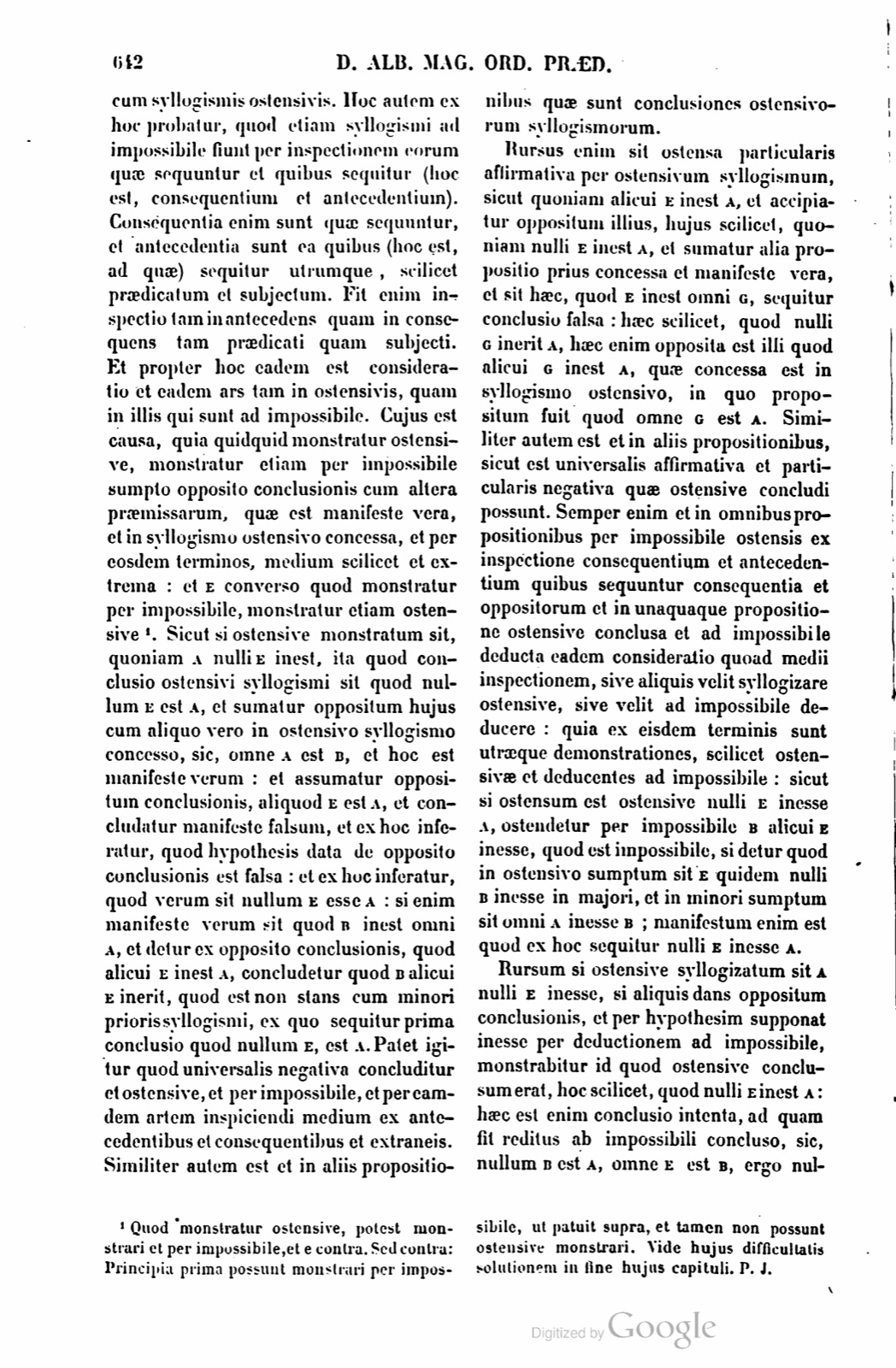
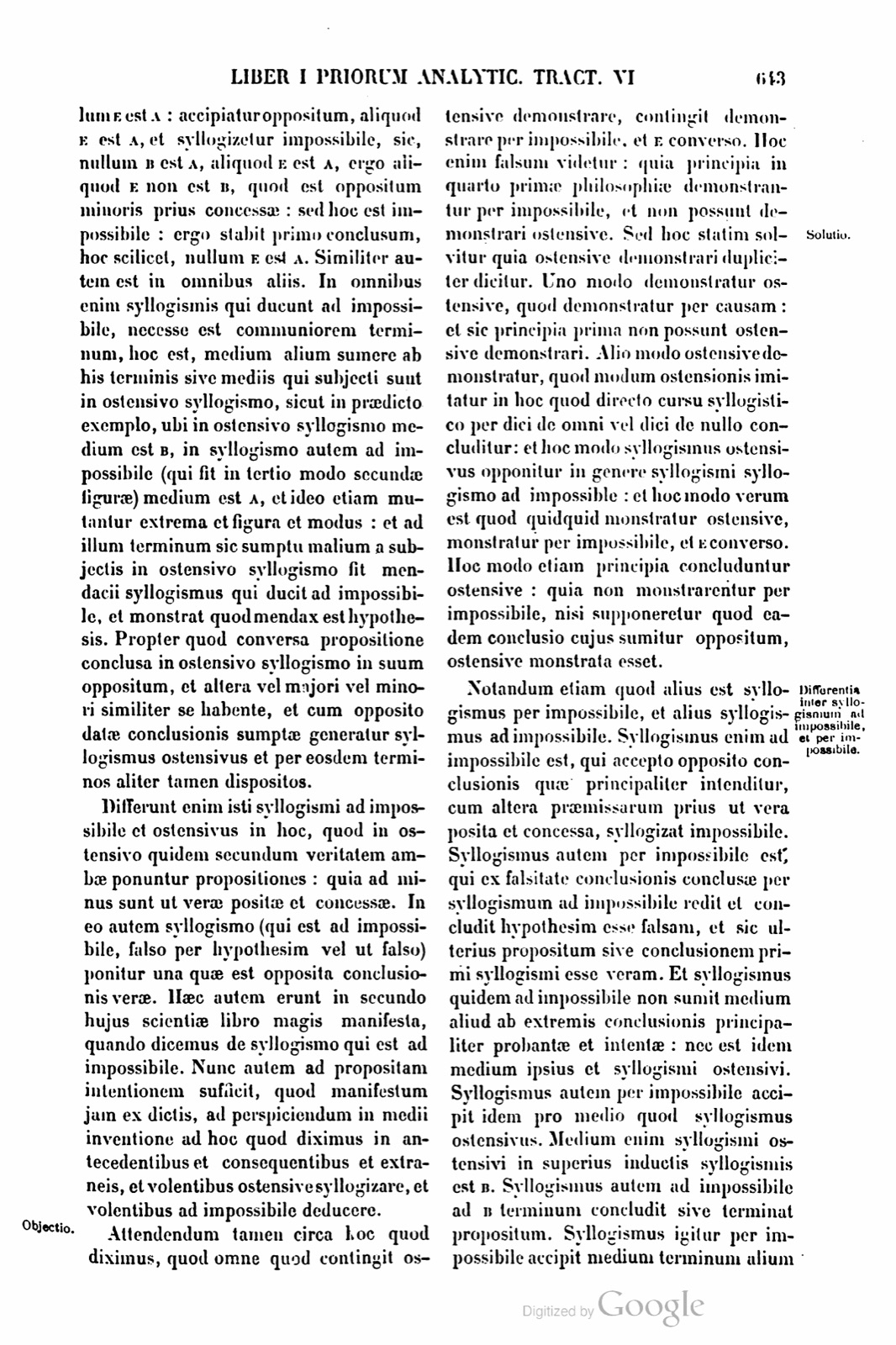
Differunt enim isti syllogismi ad impossibile et ostensivus in hoc, quod in ostensivo quidem secundum veritatem ambae ponuntur propositiones: quia ad minus sunt ut verae positae et concessae. In eo autem syllogismo (qui est ad impossibile, falso per hypothesim vel ut falso) ponitur una quae est opposita conclusionis verae. Haec autem erunt in secundo hujus scientiae libro magis manifesta, quando dicemus de syllogismo qui est ad impossibile. Nunc autem ad propositam intentionem sufficit, quod manifestum jam ex dictis, ad perspiciendum in medii inventione ad hoc quod diximus in antecedentibus et consequentibus et extraneis, et volentibus ostensive syllogizare, et volentibus ad impossibile deducere.
Attendendum tamen circa hoc quod diximus, quod omne quod contingit ostensive demonstrare, contingit demonstrare per impossibile, et e converso. Hoc enim falsum videtur: quia principia in quarto primae philosophiae demonstrantur per impossibile, et non possunt demonstrari ostensive. Sed hoc statim solvitur quia ostensive demonstrari dupliciter dicitur. Uno modo demonstratur ostensive, quod demonstratur per causam: et sic principia prima non possunt ostensive demonstrari. Alio modo ostensive demonstratur, quod modum ostensionis imitatur in hoc quod directo cursu syllogistico per dici de omni vel dici de nullo concluditur: et hoc modo syllogismus ostensivus opponitur in genere syllogismi syllogismo ad impossibile: et hoc modo verum est quod quidquid monstratur ostensive, monstratur per impossibile, et e converso. Hoc modo etiam principia concluduntur ostensive: quia non monstrarentur per impossibile, nisi supponeretur quod eadem conclusio cujus sumitur oppositum, ostensive monstrata esset.
For those syllogisms, the one to the impossible and the ostensive one, differ in this: in the ostensive syllogism indeed both propositions are posited according to truth, because at least they are posited and conceded as true. But in that syllogism which is to the impossible, falsely through hypothesis or as false, one proposition is posited which is the opposite of the true conclusion. These things, however, will be more manifest in the second book of this science, when we speak about the syllogism which is to the impossible. But now for the proposed intention it is enough that it is already manifest from what has been said that in discovering the middle one must look to what we have stated among antecedents and consequents and extraneous things, both for those wishing to syllogize ostensively and for those wishing to lead to the impossible.
Nevertheless one must attend concerning what we have said, that everything which can be demonstrated ostensively can be demonstrated through the impossible, and conversely. For this seems false, because the principles in the fourth book of first philosophy are demonstrated through the impossible and cannot be demonstrated ostensively. But this is solved at once, because to be demonstrated ostensively is said in two ways. In one way, what is demonstrated through a cause is demonstrated ostensively; and in this way first principles cannot be demonstrated ostensively. In another way, what imitates the mode of showing is demonstrated ostensively, in this, that it is concluded by a direct syllogistic course through being said of every or being said of none; and in this way the ostensive syllogism is opposed in the genus of syllogism to the syllogism to the impossible. And in this way it is true that whatever is shown ostensively is shown through the impossible, and conversely. In this way principles also are concluded ostensively, because they would not be shown through the impossible unless it were supposed that the same conclusion whose opposite is taken had been shown ostensively.
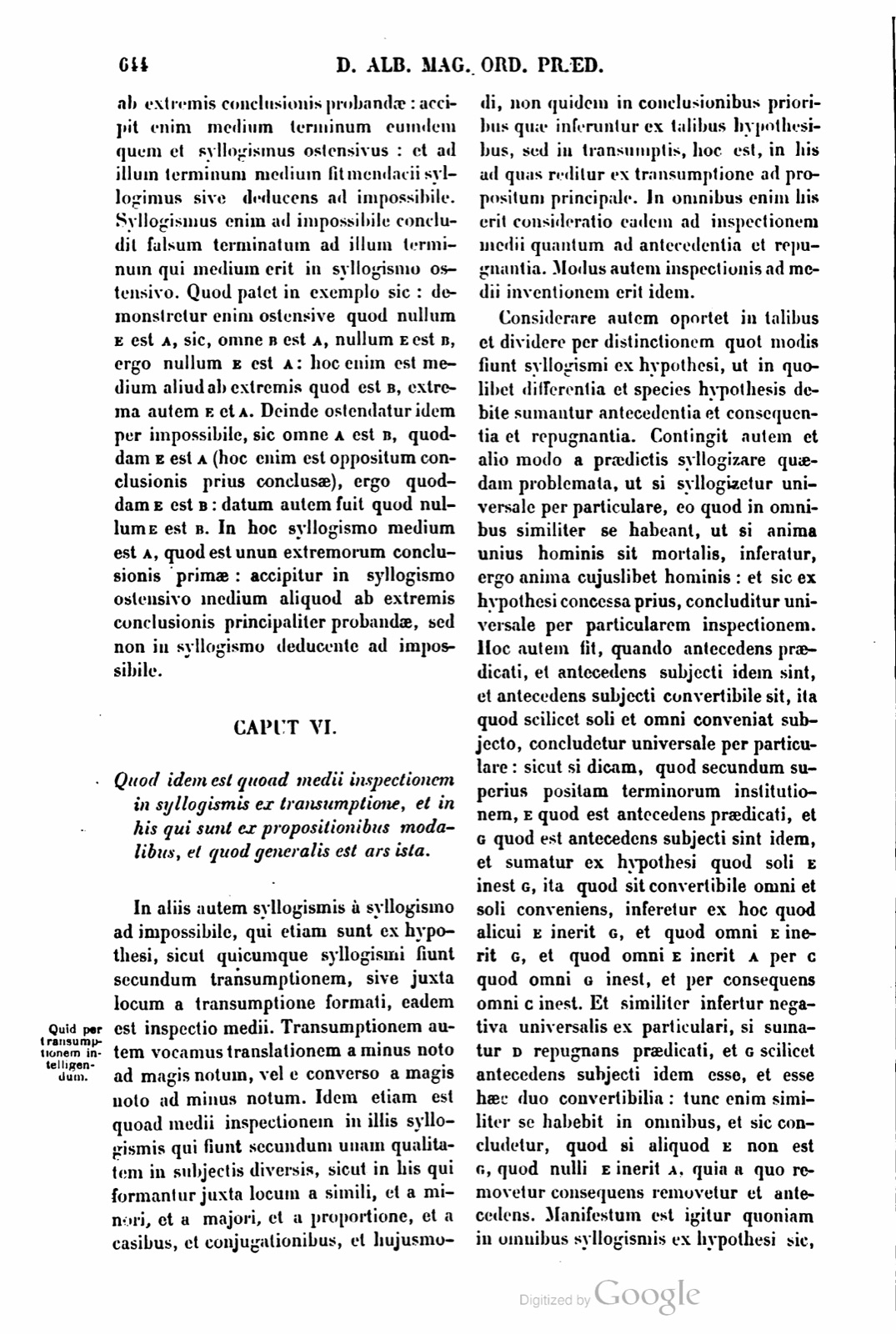
Notandum etiam quod alius est syllogismus per impossibile, et alius syllogismus ad impossibile. Syllogismus enim ad impossibile est, qui accepto opposito conclusionis quae principaliter intenditur, cum altera praemissarum prius ut vera posita et concessa, syllogizat impossibile. Syllogismus autem per impossibile est, qui ex falsitate conclusionis conclusae per syllogismum ad impossibile redit et concludit hypothesim esse falsam, et sic ulterius propositum sive conclusionem primi syllogismi esse veram. Et syllogismus quidem ad impossibile non sumit medium aliud ab extremis conclusionis principaliter probantae et intentae: nec est idem medium ipsius et syllogismi ostensivi. Syllogismus autem per impossibile accipit idem pro medio quod syllogismus ostensivus. Medium enim syllogismi ostensivi in superius inductis syllogismis est B. Syllogismus autem ad impossibile ad B terminum concludit sive terminat propositum. Syllogismus igitur per impossibile accipit medium terminum alium ab extremis conclusionis probandae: accipit enim medium terminum eumdem quem et syllogismus ostensivus: et ad illum terminum medium fit mendacii syllogismus sive deducens ad impossibile. Syllogismus enim ad impossibile concludit falsum terminatum ad illum terminum qui medium erit in syllogismo ostensivo. Quod patet in exemplo sic: demonstretur enim ostensive quod nullum E est A, sic, omne B est A, nullum E est B, ergo nullum E est A: hoc enim est medium aliud ab extremis quod est B, extrema autem E et A. Deinde ostendatur idem per impossibile, sic omne A est B, quoddam E est A (hoc enim est oppositum conclusionis prius conclusae), ergo quoddam E est B: datum autem fuit quod nullum E est B. In hoc syllogismo medium est A, quod est unum extremorum conclusionis primae: accipitur in syllogismo ostensivo medium aliquod ab extremis conclusionis principaliter probandae, sed non in syllogismo deducente ad impossibile.
It must also be noted that a syllogism through the impossible is one thing, and a syllogism to the impossible is another. For a syllogism to the impossible is one which, when the opposite of the conclusion which is principally intended has been accepted with the other of the premises previously posited and conceded as true, syllogizes the impossible. But a syllogism through the impossible is one which, from the falsity of the conclusion concluded through the syllogism to the impossible, returns and concludes that the hypothesis is false, and thus further that the proposed thing or conclusion of the first syllogism is true. And indeed the syllogism to the impossible does not take a middle different from the extremes of the conclusion principally proving and intended; nor is its middle the same as that of the ostensive syllogism. But the syllogism through the impossible accepts as middle the same thing that the ostensive syllogism accepts. For the middle of the ostensive syllogism in the syllogisms introduced above is B. But the syllogism to the impossible concludes or terminates the proposed thing to the term B. Therefore the syllogism through the impossible accepts a middle term different from the extremes of the conclusion to be proved; for it accepts the same middle term as the ostensive syllogism, and to that middle term a syllogism of falsehood, or one leading to the impossible, is made. For the syllogism to the impossible concludes the false thing terminated to that term which will be the middle in the ostensive syllogism. This is clear in an example thus: let it be demonstrated ostensively that no E is A, thus: every B is A; no E is B; therefore no E is A. For this is the middle different from the extremes, which is B; but the extremes are E and A. Then let the same be shown through the impossible, thus: every A is B; some E is A, for this is the opposite of the conclusion previously concluded; therefore some E is B. But it had been given that no E is B. In this syllogism the middle is A, which is one of the extremes of the first conclusion. Therefore in the ostensive syllogism some middle is accepted from the extremes of the conclusion principally to be proved, but not in the syllogism leading to the impossible.
Notes
- What is shown ostensively can also be shown through the impossible, and conversely. But on the contrary: first principles can be shown through the impossible, as was clear above, and nevertheless they cannot be shown ostensively. See the solution of this difficulty at the end of this chapter. P. J. (Quod monstratur ostensive, potest monstrari et per impossibile, et e contra. Sed contra: Principia prima possunt monstrari per impossibile, ut patuit supra, et tamen non possunt ostensive monstrari. Vide hujus difficultatis solutionem in fine hujus capituli. P. J.) ↩
If a page does not appear, its photograph has not been uploaded yet.