Volume I, pages 886–905 of the 1732 edition, from ISR to JUD: everything printed on these pages, in order.
Continued from Isis (17)
she had been wife to Mannus, the son of Thuiscon, from whom the Germans pretend to derive their original. Some learned men have asserted, that under the names of Mannus and Isis these ancient people meant Adam and Eve. Mannus in German signifies Man, as well as Adam in Hebrew; and Isis is the same name as Ischa, or Ischat, the name which our first Parent gave Eve, hæc vocabitur Virago; in the Gen. ii. 23. Hæc vocabitur Virago. אישהHebrew, Ipsa vocabitur Ischa. The same has been believed of Isis and Osiris, adored by the Egyptians.
The question at present is, whether the Israelites worshipped Isis, and what name they gave her. It is worth observing, in the first place, that the Hebrews have no name to signify a Goddess. 2. That since Isis was represented with the head and horns of an Ox, it is credible enough that this may be she, whom the Sacred Books call the golden Calf, or as the Septuagint read, the golden heifers. Several of the fathers speaking of the adoration of the golden calf, have said that the Israelites adored a calf’s head. 3. As the Jews worshipped the Sun and Earth under different names, such as Gad, Meni, Baal, Astaroth, the King and Queen and all the host of Heaven, it is credible, that under these different names they paid their honours to Isis and Osiris.
ISMACHIAH, was probably a Priest or Levite in the time of Hezekiah. He 2 Chr. xxxi. 13.was one of those whom this Prince trusted with the care of the first fruits and offerings which were brought to the Temple.
ISMAIAH, of the Tribe of Benjamin, and town of Gibeon, a very valiant man, who joined David at Ziklag, 1 Chr. xii. 4.
ISRAEL. This is the name which the Angel gave Jacob, after having wrestled with him all night at Mahanaim or Peniel. See Gen. xxxii. 1, 2. and 28, 29, 30. and Hosea xii. 3. See likewise the article Jacob. Israel signifies the conqueror of God, or a Prince of God, or according to many of the ancients, a man who sees God. By the name of Israel is sometimes understood the person of Jacob, sometimes the whole people of Israel, the whole race of Jacob; and sometimes the Kingdom of Israel, or of the ten Tribes, distinct from the Kingdom of Judah. Kings of Israel. See hereafter the article Kings.
ISRAELITES, the descendants of Israel, who were at first called Hebrews, by reason of Abraham, who came from the other side of the Euphrates, and afterwards Israelites, from Israel the father of the twelve Patriarchs; and lastly Jews, Judæi, particularly after their return from the captivity of Babylon; because the Vos. de Idololatria, l. i. c. 17, 2. 38. l. ii. c. 24, 27, 36, 56, & l. vii. c. 2. & 10. Gen. xxx. 14—18. Gen. xlvi. 13. Joseph. Antiq. l. x. c. 11. p. 342.Tribe of Judah was then much stronger and more numerous than the other Tribes, and foreigners had scarce any knowledge but of this Tribe.
ISSACHAR, the fifth son of Jacob and Leah. He was conceived after Rachel’s purchasing the mandrakes, which Reuben brought to his mother Leah. He was born about the year of the world 2255, before J. C. 1745, before the vulgar Æra 1749. He had four sons; Tola, Phuvah, Job, and Shimron. We know nothing particularly of his life. Jacob when he gave him his blessing, said to him, Issachar is a strong ass couching down between two burdens. And he saw that the rest was good, and the land that it was pleasant, and bowed his shoulder to bear, and became a servant unto tribute. The Chaldee translates it in a quite contrary sense, He shall subdue Provinces, and make those tributary to him, who shall remain in his land. The Tribe of Issachar had its portion in one of the best parts of the land of Cannan, along the great plain, or valley of Jezreel, with the half Tribe of Manasseh to the south, that of Zebulon to the north, the Mediteranean to the west, and Jordan with the extremity of the sea of Tiberias to the east. In the Testament of the twelve Patriarchs we have the several admonitions and instructions which Issachar gave his son before his death. But this we know is an Apocryphal work, and of no authority.
ISSUS, or Isus, High Priest of the Jews mentioned in Josephus, succeeded Joram and was himself succeeded by Axioram. There is no mention in Scripture of this High Priest, unless he is the same with Azariah in the Chronicles. See Chr. vi. 9.
ISUI, the third son of Asher. See Jesui.
כתים Cethim. הובל Thubal.ITABURIUS or Itaburium. Josephus calls mount Tabor by this name. See l. 4. c. 2. De Bello Jud.
ITALY. S. Jerom translates the Hebrew word Cethim or Citthim in Numb. xxiv. 24. and Ezek. xxvii. 6. by Italia. But we have shewn upon Genesis x. 4. that by Cethim is meant Macedonia. The same S. Jerom in Isaiah lxvi. 19. translates the Hebrew, Thubal, Italia, tho according to others the Tibarenians are rather signified by it. In the Sacred Books written originally in Greek, there is no ambiguity in the word Italia; it signifies that part of the world whereof Rome is the Capital.
ITHAMAR, Aaron’s fourth son. We know nothing particularly of his life, and there is no probability that he ever exercised the High Priesthood. He and his sons continued in the rank of sim
ple Priest, till the High Priesthood came into his family in the person of Eli High Priest and Judge of Israel1.
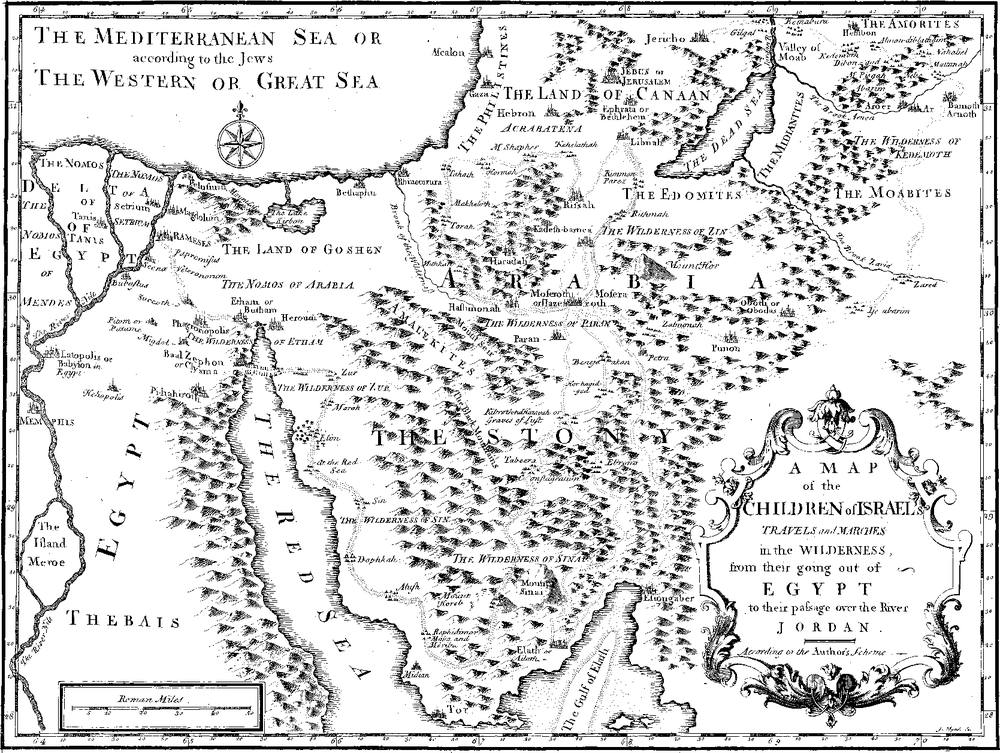
The successors of Eli, of the same family of Ithamar, are Abitub, Abiah, Abimelech, and Abiathar, whom Solomon deposed and forbad to exercise this Office2.
ITHIEL, the son of Isaiah, and father of Maaseiah of the Tribe of Benjamin. Neh. xi. 7.
ITHMAH, one of the gallant Officers belonging to David’s army, 1 Chron. xi. 46.
ITHOBAL, King of Tyre. We do not meet with this name in the Sacred Books of the Old Testament. We read of Ethbaal, who was father to Jezebel, and father -in-law to Ahab. Josephus calls him Joseph. Antiq. l. 9. c. 6. p. 311, compare 1 Kings xvi. 31. Lib. i. contra Appion. p. 1043. Philostrat. apud Joseph. Antiq. l. x c. ii. & contra Appion. l. i. p. 1046. Ezek. xxviii.Ithobal. He says in another place, that one Ithobal Priest of Astarte, having killed Phelletes King of Tyre, reigned two and thirty years in his room.
We are of opinion, that the invectives and menaces of the Prophet Ezekiel are directed to this Prince. The old Phœnician Historians call the King of Tyre Ithobal, in whose reign Nebuchadnezzar besieged that city. Ezekiel speaks to him in the following manner. “Because thine heart is lifted up, and thou hast said, I am a God, I sit in the seat of God, and in the midst of the Seas; yet thou art a man and not God, tho’ thou set thine heart as the heart of God. Behold, thou art wiser than Daniel, there is no secret that they can hide from thee. With thy wisdom and with thine understanding thou hast gotten thee riches, and hast gotten gold and silver into thy treasures. By thy great wisdom and by thy traffick hast thou increased thy riches, and thine heart is lifted up because of thy riches. Behold therefore, saith the Lord, I will bring strangers upon thee, the terrible of the nations, and they shall draw their swords against the beauty of thy wisdom, and they shall defile thy brightness. They shall bring thee down to the pit, and thou shalt die the death of them that are slain in the midst of the seas. Wilt thou yet say before him that slayeth thee, I am God? but thou shalt be a man and no God in the hand of him that slayeth thee. Thou shalt die the death of the uncircumcised by the hand of strangers, for I have spoken saith the Lord.”
The Lord said afterwards to Ezekiel: “Take up a lamentation upon the King of Tyrus, and say unto him, thus saith the Lord God, Thou seelest up the sum full of wisdom and perfect in beauty. Thou hast been in Eden the garden of God, every precious stone was thy covering, the sardius, topaz, and the diamond, the beryl, the onyx, and the jasper, the sapphire, the emerald, and the carbuncle, and gold. The most excellent instruments of musick were prepar’d for the day on which thou wast created. Thou art the anointed cherub that covereth; and I have set thee so: thou wast upon the holy mountain of God, thou hast walked up and down in the midst of the stones of fire. Thou wast perfect in thy ways from the day that thou wast created, till iniquity was found in thee. By the multitude of thy merchandize they have filled the midst of thee with violence, and thou hast sinned: therefore I will cast thee as profane out of the mountain of God; and I will destroy thee, O covering cherub, from the midst of the stones of fire. For their heart was lifted up because of thy beauty, thou hast corrupted thy wisdom by reason of thy brightness. I will cast thee to the ground.——I will bring forth a fire from the midst of thee, it shall devour thee, and I will bring thee to ashes upon the earth, in the sight of all them that behold thee. All they that know thee among the people shall be astonished at thee, thou shalt be a terror, and never shalt thou be any more.”
Habak. ii. 12, 13, 14.We believe likewise that the following words of Habakkuk have a regard to the same Prince. Woe to him who buildeth a town with blood, and establisheth a city by iniquity. The wealth which thou abusest, the city which thou buildest, does not all this come from the Lord? All the labours of the people shall be consumed with fire, and the endeavours of the nations shall be reduced to nothing, because the earth shall be filled with enemies, as the bottom of the sea is filled with its waters, that the glory and justice of the Lord may be known by all the world.
ITHREAM, the son of David and Eglab, 1 Chron. iii. 3. The Hebrews will have it, that Eglab is the same as Michal Saul’s daughter, as we have observed in the article Eglab.
ITTAH-KAZIN, a town in the tribe of Zebulun, Joshua xix. 13. In the Hebrew it is עתה קזין-Ita-Kazin.
ITTAI, the son of Ribai, sirnamed the Gittite, a native of the town of Gibeah, was 1 Chr. xi. 31.one of David’s most faithful servants. He distinguished himself in the war against 2 Sam. xv. 20, 21, &c.Absalom.
ITUREA, a province of Syria or Arabia, beyond Jordan to the east of the Batanea, and south of Trachonitis. S. Luke iii. 1. speaks of Iturea, and 1 Chron. v. 19. of the Itureans, or of Jethur according to the Hebrew. Now Jethur was one Gen. xxv. 15. and 1 Chr. i. 31.of the Sons of Ishmael. Iturea is included in Arabia Petrea.
Aristobulus, King or Prince of the Jews, and son of Hircanus, as soon as he began to Joseph. Antiq. l. xiii. c. 19.reign made war with the Itureans; and after he had subdued the greatest part of them, obliged them to embrace Judaism, as Hircanus his father had in like manner some years before obliged the Idumæans; he gave them their choice, either to be circumcised, and embrace the Jewish religion, or to leave the country, and seek elsewhere for a settlement. They chose rather to stay and do what he required of them. They therefore, tho descended from Ishmael, had not continued the practice of circumcision; or perhaps Aristobulus might compel them to receive it on the eighth day, whereas before they might not receive it till the age of twelve or thirteen. Philip one of Herod’s sons was Tetrarch or Prince of Iturea, when S. John Baptist entred upon the functions of his ministry. Luke iii. 1.
JUBAL, the son of Lamech and Adah. He invented instruments of musick before the flood. Gen. iv. 21.
יובלJubel or Jobel.JUBILEE, in Hebrew, Jobel. The Jubilee year was the fiftieth year which fell out after seven weeks of years, or seven times Lev. xxv. 10.seven years: And ye shall hallow the fiftieth year; it shall be a Jubilee unto you. Notwithstanding the clearness of the text, several Commentators maintain that the Jubilee was celebrated in the forty ninth year, and exactly on the last year of the seventh week of Years. Moses favours this opinion, where he says, Lev. xxv. 8. Thou shalt number seven Sabbaths of years unto thee, seven times seven years, and the space of the seven Sabbaths of years shall be unto thee forty and nine years. They who maintain this shew the inconveniency there would be in celebrating the Jubilee in the fiftieth year, after the Sabbatical year, which falls out in the forty ninth year. These two years rest successively following one another might be attended with dangerous consequences in any country, and produce a famine there.
The Hebrew word Jobel signifies, according to some of the Rabbins, a ram’s horn, with which the Jubilee year was proclaimed. But how could a ram’s horn which is solid and not hollow, be made use of as a trumpet! It was therefore in all probability a brazen trumpet made in the form of a ram’s horn. Others derive the etymology of Jobel, from the Hebrew, Jubal, which formerly signified, as they say, to play upon instruments. We are of opinion, that it comes from the verb Hobil, to bring or call back; because then every thing was restored to its first possessor.
The Jubilee year began on the first day of Tizri, (which is the first month in the civil year, and answered our September) and about the Autumnal Equinox. In this year no one either sowed or reaped; but all were satisfied with what the earth Lev. xxv. 11, 12, 13, &c.and the trees produced of themselves. Every one took possession again of his inheritance, whether it were sold, mortgaged, or any way alienated. Hebrew slaves, however they came to fall into a state of slavery, were set free, together with their wives and children; even they who had renounced the privilege, which the Sabbatical year gave them of recovering their liberty. Even all foreign slaves enjoyed the right which was given by the Jubilee. There are some other particulars concerning this year, which may be read in Lev. xxv.
In order to reconcile the two opinions, which divide the Interpreters, relating to the Jubilee; namely, whether it shou’d be celebrated precisely in the fiftieth year, as Moses requires in Lev. xxv. 10. and as Philo, Josephus, Eusebius, S. Jerom, S. Austin, S. Gregory the great, S. Isidore, all the Jews, both Talmudists and Caraites, and a great number of Commentators understand it; or only in the forty ninth year, as Moses mentions pretty clearly in Lev. xxv. 8. and as several good Commentators3 and Chronologists explain it. To reconcile, I say, these two opinions, it may be said, I think, that the fiftieth year is set down for the forty ninth, for the sake only of making a round number; as we say every day, that there are eight days to a week, thirty to a month, five years to an Olympiad; tho rigorously speaking there are but seven days in a week, sometimes one and thirty, sometimes eight and twenty, nine and twenty or thirty days in a month, and four years only
in an Olympiad. Besides, as the Jubilee year began after the conclusion of the forty ninth year, and at the beginning of the fiftieth, it might be called indifferently the forty ninth or fiftieth year.
The greatest difficulty consists, in knowing whether in both these years forty nine and fifty the sabbath was observed, and the earth remain’d untill’d, or only in the forty ninth year. One would think there should be too many inconveniences in observing the sabbatical rest for two years successively; the intention of the legislator was complied with, by the rest of one year only. The seventh of the sabbatical years had only more privileges annexed to it, and was more celebrated than the two preceding. By this expedient every thing is reconciled, and all difficulties disappear.
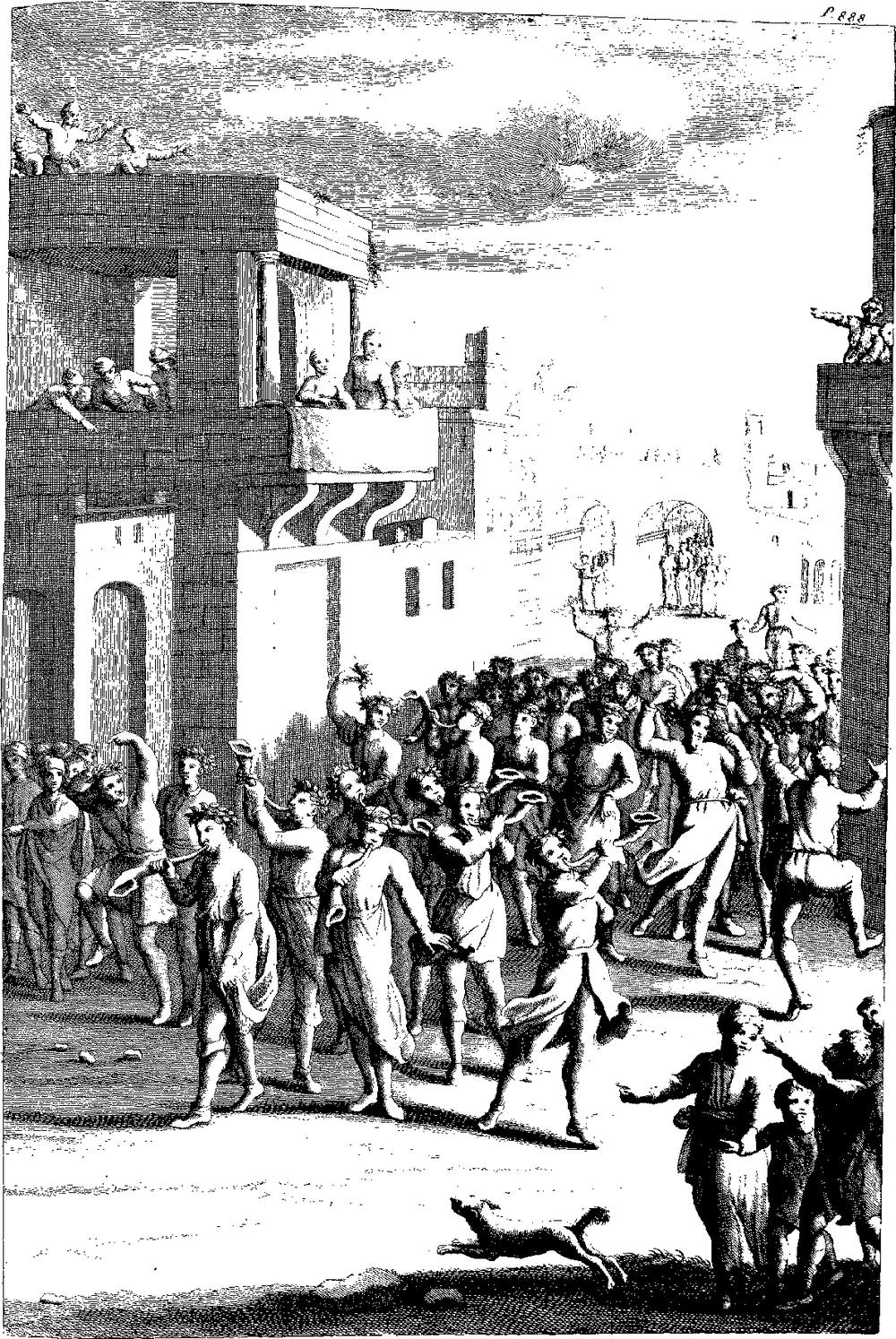
I shall here lay before you some particulars relating to the Jubilee year: it began on the first day of the month Tizri. But neither were the slaves restored to liberty, nor the lands returned to their first owners, till the tenth day of this month. The nine first days Maimonid. Halaca Schemitta Vejobel.were spent in joy and pleasures, almost like the Romans in their Saturnalia. During these nine days the slaves did not work for their masters, but they eat, drank, and were merry, and every one put a crown upon their heads. No sooner was the day of solemn expiation come, which is the tenth of Tizri, but the counsellors of the Sanhedrim ordered the trumpets to sound, and at that instant the slaves were declared free, and the lands returned to their old owners.
The motive of this Law was to hinder the rich from oppressing the poor, and reducing them to perpetual slavery, and that they should not get possession of all the lands by the ways of purchase, mortgage, or lastly, usurpation; that debts should not be multiplied too much, and consequently the poor intirely ruined: and that slaves should not continue always, they themselves, their wives and children, in servitude. Besides, Moses intended to preserve, as much as possible, the liberty of people’s persons, an equality of fortunes, and the order of families among the Hebrews. Lastly, he designed the people should be tied to their country, their lands, and inheritance; that they should have an affection for them, as estates which descended to them from their ancestors, and they were to leave to their posterity, without any fear of their going for ever out of their families.
Something like this Lycurgus establish-ed among the Lacedæmonians, in his instituting an equality of fortunes; banishing slavery, and promoting as far as he could any one’s becoming too powerful and rich. For this reason he appointed Ostracism, which consisted in banishing those citizens from the commonwealth, whose riches or too great power gave umbrage to others. Stolo was desirous of putting a check to the greediness and avarice of the old Romans, by making a law, which forbad any particular person’s having more than five hundred acres of land; but fraud soon crept in among them, and destroyed this wise constitution. Stolo himself was the first who violated his own law, and was condemn’d for possessing a thousand, jointly with his son, whom he had emancipated particularly for this purpose.
There were several privileges belonging to the Jubilee year which did not belong to the sabbatical year; and the sabbatical had likewise some small advantages above the Maimonid. loco citato. Selden. de successsion. in bona, l. iii. c. 24.Jubilee year: the sabbatical year annulled debts, which the Jubilee did not, but the Jubilee restored slaves to their liberty, and lands to their old owners; besides, it made restitution of the lands immediately upon the beginning of the Jubilee, whereas in the sabbatical year the debts were not discharged till the end of the year. The estates which had been purchased or given returned to their old masters; those which came by right of succession continued with those who enjoyed them: contracts of sale, wherein a certain number of years was expressed, subsisted during all those years, notwithstanding the Jubilee’s coming on. But absolute and unlimited contracts were voided by the Jubilee. Houses and other edifices built in walled towns did not return to the proprietor in the Jubilee year.
Maimonid. Hala. ha Schemitta Vejobel. Cunæus de Rep. Heb. l. i. c. 6. Joseph. Antiq. l. xi. c. ult.After the captivity of Babylon they continued to observe the sabbatical, but not the Jubilee year. Alexander the great granted the Jews an exemption from tribute every seventh year, by reason of the rest which they then observed. But as to the Jubilee, since it was instituted with a design only to prevent the utter destruction of the partition which had been made by Joshua, and the confusion of tribes and families, it was no longer practicable as before the dispersion of the tribes, those of them which returned from the captivity settling as they could, and where they could, and a great number of families, and perhaps whole tribes, continuing in the place of their captivity.
Usher places the first Jubilee, which was observed after the promulgation of the Law by Moses, in the year of the Julian period 3318, of the world 2609, before J. C. 1391, before the vulgar Æra 1395.
The second Jubilee in the year of the Julian period 3367, of the world 2658, before J. C. 1342, before the vulgar Æra 1346.
The third Jubilee, in the year of the Julian period 3417, of the world 2707, before J. C. 1293, before the vulgar Æra 1297, and so on. See the Chronological Tables, and reckon, as, if you please, you may, nine and forty years from Jubilee to Jubilee.
In imitation of the Jews, the Christians have likewise established Jubilees ; but they relate only to the forgiveness of sins, and the indulgence which the Church grants to sinners, by virtue of the power of binding and loosing, committed to it by Jesus Christ. These sorts of Jubilees were not established till the time of Pope Boniface VIII. in the year of J.C. 1300, nor did they begin to be called Jubilees till the reign of Sixtus IV. who was made Pope in 1471, and in his Bull dated in the year 1473, gave the name of Jubilee to that plenary and general indulgence which he granted to all the faithful. In the beginning, these Jubilees were appointed only every hundred years: but Pope Clement VI. reduced them to fifty. Gregory XI. fixed them to the space of three and thirty years; and Paul II. finding that this duration was still too long, ordained that there should be a Jubilee every five and twenty years; which from that time has been always practised. This, however, does not hinder the Popes from granting Jubilees likewise in the year of their consecration, and in the great necessities of the Church: but these are rather Indulgences in the form of Jubilees, than real Jubilees. I shall not enter farther into this matter, because it relates but indirectly to my subject; and the New Testament says nothing any where of Jubilees, unless in the way of implication, when it mentions the power of binding and loosing given to the Apostles, and that of using indulgence towards sinners who are truly penitent. See Matt. xvi. 19. and 2 Cor. ii. 10.
JUDAH, when named in opposition to Israel, or the Kingdom of the ten Tribes, or Samaria, denotes that of Judah, and David’s descendents. One of the principal prerogatives of this Tribe is, that it preserved the true Religion left in trust to it, and the publick exercise of the Priesthood together with the legal ceremonies in the Temple of Jerusalem, while the ten Tribes gave themselves up to Idolatry, and the worship of the golden calves.
Kings of Judah. See the list of the Kings of Judah under the article Kings.
I. JUDAS, or Judah, or Jehuda, the fourth son of Jacob and Leah, was born in Gen. xxix. 35.Mesopotamia, in the year of the world 2249, before J. C. 1751, before the vulgar Æra 1755. It was he who advised his brethren to sell Joseph to the Ishmaelite merchants, rather than to dip their fingers in his Gen. xxxvii. 26.blood4. He married Shuah, the daughter of a Canaanite, whose name was Hirah, and had three sons by her, Er, Onan, and Shelah. He married Er to a young woman, Gen. xxxviii. 1, 2, &c.whose name was Tamar. Er was a wicked man, and God struck him dead for his impieties. Judah required Onan his second son, to marry his brother’s widow, Er having died without children, and to raise up seed to him: but Onan in an abominable manner prevented Tamar’s becoming a mother. Wherefore the Lord punished him also with death. Judah being afraid to give Shelah his third son to his daughter in law, amused her with promises, without performing them. Wherefore Tamar disguised herself, dressed herself like an harlot, and placed herself in the way which Judah was to pass. Judah therefore went in unto her, and she conceived and brought forth two sons, one named Pharez, the other Zarah. See Tamar, Pharez, and Zarah.
Gen. xxxviii. 27, 28, 29. Gen. xxxv. 22. Gen. xlix. 8, 9, &c.Judah was always looked upon as the first and most esteemed of Jacob’s children. His Tribe was the most powerful and numerous. The privileges of the first-born seem to have been transfered to him from Reuben, after the incest committed by Reuben with Bilhah his father’s wife. The blessing given by Jacob on his death-bed to Judah is as follows, Judah, thou art he whom thy brethren shall praise, thy hand shall be in the neck of thine enemies, thy father’s children shall bow down before thee. Judah is a lion’s whelp, from the prey, my son, thou art gone up: he stooped down, he couched as a lion, and as an old lion who shall rouse him up. The scepter shall not depart from Judah, nor a lawgiver from between
his feet, until Shiloh come, and unto him shall the gathering of the people be. This place contains a promise that the regal power should not go out of his family, and that the Messiah should derive his birth from it. Jacob adds, Binding his fole unto the vine, and his asses colt unto the choice vine; he washed his garments in wine and his clothes in the blood of grapes. His eyes shall be red with wine, and his teeth white with milk: or, according to another version, His eyes are more beautiful than wine, and his teeth whiter than snow. All which described the fruitfulness of his land.
The whole southern part of Palestine fell to Judah’s lot; and the Tribes of Simeon and Dan possessed many cities, which at first were given to Judah. This Tribe was so numerous, that at the departure out of Egypt, it was composed of seventy four thousand six hundred men, capable Numb. i. 26, 27.of bearing arms. The Crown passed from the Tribe of Benjamin, out of which Saul issued, and Ishbosheth, into that of Judah, which was David’s Tribe, and that of the Kings his successors, until the Babylonish captivity. And after the return of the Jews from their captivity, although this Tribe did not reign, it possessed always the first place; it gave the scepter to those who did reign, and in some sort reunited in itself the whole nation of the Hebrews, who from that time were known only by the name of Judæi, Jews, descendants of Judah. The Testament of the twelve Patriarchs introduces Judah pronouncing a Prophecy concerning the Messiah; but it is very visible, that it was made after his time.
II. JUDAS MACCABÆUS5, the son of Mattathias, succeeded his father in the charge of Captain of the people, during the persecution of Antiochus Epiphanes6. He had before given marks of his valour, conduct, and zeal for God’s law, by opposing those who forsook the Lord, and sacrificed to Idols. This obliged Mattathias his Father to declare him his successor, and place him at the head of his brethren. One of the first expeditions of Judas Maccabæus was against Apollonius general of 1 Macc. iii. 1, 2, 3, &c. In the year 3838.the Syrian troops, which were in Palestine. Judas marched against him, killed him, cut in pieces, or put to flight his whole army; he took Apollonius’s sword, and generally made use of it in times of action during the remainder of his life. Seron, a Syrian Captain, thinking to get honour by defeating Judas; on the contrary did but increase that of Judas by his own 1 Macc. ii. 13, 14, &c.defeat.
Antiochus, surprized at the valour of Judas, sent three Generals of reputation against him, Nicanor, Gorgias, and Ptolemy the son of Dorimenes7. Judas assembled his army at Maspha, prepared for battle by prayer, marched against the Enemy, attacked Nicanor alone, and in the absence of Gorgias, beat him and routed his army. Gorgias coming afterwards, and seeing Nicanor’s camp on fire, made haste back again, without daring to engage. The year following8 Lysias, Regent of the kingdom, in the absence of Antiochus Epiphanes, who was gone beyond the Euphrates, Lysias, I say, came into Judea with an army of sixty thousand 1 Macc. iii. 38, 39, &c. 1 Macc. iv. 21, 29, 30, &c.chosen men, and five thousand horse. Judas went to meet them as far as Bethoron, and having said his prayers, attacked them, killed five thousand of them upon the spot, and put the rest to flight. Lysias was obliged to return to Antioch, in order to raise a new army.
Judas seeing himself thus master of the field, went up to Jerusalem with his forces9. They saw the holy Places quite deserted, the Altar profaned, the courts filled with briars, and the chambers joining to the Temple all destroyed. Judas divided his people, employed part of them in cleansing the holy places, and posted the rest between the Citadel and the Temple, that they might hinder the Syrian troops, which were in possession of the fortress, from incommoding those who were endeavouring to purify the holy Place, and put it once more in a condition to have Sacrifices offered in it. They laid by the stones of the old Altar, which had been profaned, built a new one of rough stones, rebuilt the Holy and the Sanctuary, made new sacred vessels, and on the 25th of the month called Casleu, in the hundred and forty eighth year of the Greeks, which answers to the year of the world 3840, before J. C. 160, before the vulgar Æra 164, they offered the morning Sacrifice upon the Altar of burnt-offerings,
and restored the publick worship in the Temple, which had been interrupted for three whole years. They made a new dedication of the Temple with all the pomp they could, according to the present state of their affairs, and celebrated this feast for eight days. The memorial of this dedication is spoken of in the Gospel, 1 Macc. iv. 53, 54, 55, &c.wherein it is said, that Jesus came to the Temple of Jerusalem at the dedication in the winter, John x. 22.
In a little time after, and probably the same year, Judas again defeated two Syrian Generals, Timotheus and Bacchides, and caused the booty which he had taken from them to be carried to Jerusalem. 2 Macc. viii. 30. and x. 24. 1 Macc. iv. 61. 1 Macc. v. 3, 4, 5, &c. and 2 Macc. x. 24, &c.Bethsura likewise was fortified by his order, that being a fort of barrier, which covered Jerusalem on the side of Idumea. Judas attacked the Idumeans, the inhabitants of the Acrabatene, the sons of Bean, the Ammonites, and Timotheus, who had entred Judea, and performed every where prodigies of valour: he beat, cut in pieces, and dispersed all his enemies. The people of Gilead10 having conspired against the Israelites, who were in their country, the Israelites fled into the fortress of Dathema. Judas being informed of it, made haste to their assistance, and at the same time sent his brother Simon to the relief of the Israelites of Galilee, who were threatned with intire ruin by the people of Tyre and Sidon, and other strangers who had invaded their country. He gave Simon three thousand men, and took eight thousand with himself.
Simon worsted the enemy, killed near three thousand men, and taking with him the Jews of Galilee, he brought them into Judea, that they might remain there more in safety. Judas passed the river Jordan, took Bosor, and set it on fire. He arrived at Dathema in the very time when the assault was made, but the enemies no sooner discerned him, than they abandoned their undertaking and fled. From thence he went to Maspha, Casphon, Meged, and Bosor, and took all these cities. Timotheus having again got together some troops, Judas marched against him, and defeated him; he afterwards took Aztaroth-Carnaim, and reduced it to ashes.
Then Judas having assembled all the Jews whom he could find in the country beyond Jordan, brought them into Judea. On the way he took and pillaged the city of Ephron, which had denied him passage. Being happily arrived at Jerusalem, they went up to the Temple, and there offered sacrifices of thanksgiving. Judas afterwards made war with the Idumeans; he took Hebron from them, entred into the country of the Philistines, took Azotus, run thro’ all Samaria, and returned loaded with a rich booty into the land of Judah.
2 Macc. xi. 1, 2, &c. 27, 28, &c.In the mean time Lysias came a second time into Judea at the head of a powerful army11. He advanced as far as Beth-sura, about six leagues from Jerusalem. Judas marched against him, and when he departed from Jerusalem, an Angel appeared at the head of his troops under the form of a man on horseback, who filled them with joy and courage. They fell upon their enemies, killed eleven thousand foot, and sixteen hundred horse, put the rest to flight, and Lysias himself was forced to save himself with dishonour, and make peace with Judas. Eupator, who succeeded Antiochus Epiphanes, permitted the Jews to live according to their own laws, and to perform all their offices with all sort of liberty in the Temple of Jerusalem.
This treaty having been concluded, Lysias returned to Antioch. But Timotheus2 Macc. xii. 1, 2, 3, &c. in the same year 3841., Apollonius, Hieronymus, Demophon, and Nicanor, who stayed in the country, would not suffer the Jews to rest, and sought all opportunities of interrupting the peace. And the inhabitants of Joppa having invited the Jews, who dwelt in their city, to come aboard their vessels, as it were to divert themselves upon the sea, drowned all of them together with their wives and children. Judas to revenge this perfidiousness marched against them, burnt their ships, and set fire to their harbour; he had done the same to their city, if he had not received news that the people of Jamnia designed likewise to extirpate the Jews out of their city. Judas prevented them, burnt their harbours and their vessels. From thence he went beyond Jordan, where he was attacked by a body of five thousand five hundred Arabians; he beat them, and compelled them to sue for peace. He attacked Caspis or Esebon, took it, sacked it, and there was so great a number slain, that the water of a neighbouring lake was dyed with their blood. He advanced as far as Characa in the land of the Tubienians, but not finding Timotheus there, whom he was in pursuit of, he met him soon after at the head of an hundred and twenty thousand foot, and two thousand five hundred horse. Altho Judas had but six thousand soldiers, he dispersed this army, and killed thirty thousand men.
From thence he went to Carnion or Carnaim, and there flew five and twenty thousand persons: he afterwards removed towards Ephron, and killed the same number there. He came to Jerusalem a little before the Pentecost.
After this festival he marched against 2 Macc. xii. 32,33.Gorgias. The Jews at first had some disadvantage; but Judas having called upon the Lord, put to flight the enemies army: and Gorgias himself escaped not without great difficulty. Judas gathered his people together at Odollam, to celebrate the sabbath; and the day after, when they came to bury the Jews, who had been killed in the battle, they found under the clothes of the dead bodies some particular things which had been consecrated to Idols in Jamnia. And all imputed their death to their stealing what was so impure and profane. Judas made a gathering of twelve thousand drachms of silver, which he sent to Jerusalem, that sacrifices might be offered for the souls of the dead , he having good and holy thoughts concerning the resurrection. For if he had not hoped, that they who had been killed, would one day be revived, he would have esteemed praying for the dead to be an useless and superfluous ceremony.
Antiochus Eupator being made acquainted with the success of Judas Maccabæus12, came himself into Judea; attended by Lysias, and at the head of an army consisting of an hundred thousand foot, twenty thousand horse, and two and thirty elephants. He laid siege to Bethsura; 1 Macc. vi. 28, 29, &c. and 2 Macc. xiii.Judas marched to the relief of his brethren; at the first onset he defeated six hundred of the Enemies, and his brother Eleazar with his own hand killed the finest elephant in the army, believing that the King rode upon it. The small number of troops which Judas had with him being unable to make head against the King’s forces, retired to Jerusalem. Eupator followed them, and besieged the city, particularly the Temple, which Judas had fortified, and retreated to. The Siege continuing a long time, and Lysias fearing least Philip, who had been declared regent of the Kingdom by Antiochus Epiphanes, might make himself master of Antioch, concluded a peace with Judas, and returned with speed into Syria. Demetrius the son of Seleucus Eupator’s Uncle, and lawful heir to the Kingdom of Syria, having put to death Eupator and Lysias, and procured himself to be acknowledged King of Syria13, gave the High Priesthood of the Jews to Alcimus, and sent Bacchides with him into Judea, with an army, to put a stop to the enterprizes of Judas. Bacchides entered Jerusalem, and fixed Alcimus in the possession of this high dignity. In the mean time, Judas having fled from thence, continued for some time without undertaking any thing. But observing the excesses and many acts of violences, which Alcimus committed, he gathered some troops, and slew those who had forsaken his party. So that Alcimus finding himself not to be the strongest in the Province, fled to Antioch, and accused Judas of several crimes.
Demetrius sent Nicanor with troops into Judea. Before he entred Jerusalem, he dispatch’d deputies to Judas with proposals of peace, which Judas laid before the people and Senators, and all were of opinion to accept them. A day therefore was appointed for the ratification of them. Judas and Nicanor had an interview in the plain; and Judas for fear of a surprize posted armed men in all the advantageous places. The conference passed as it should do. Nicanor continued afterwards at Jerusalem in the citadel, and Judas in the city. Nicanor conceived a very great esteem for Judas, and loved him with a most sincere affection; he requested him to marry, which accordingly he did, and they lived together with great familiarity.
But Alcimus observing the good understanding which was between them, went to Demetrius and told him, that Nicanor betrayed his interests. The King exasperated by these calumnies, wrote to Nicanor, and told him that he took it ill that he had made such a friendship with Judas, and commanded him to send him instantly in chains to Antioch. Nicanor having received these orders, sought an opportunity to execute them. Judas perceiving him to be grown cold, distrusted him; and gathering some troops together, stole privately from Nicanor, and kept the field with his people. Nicanor marched against him, and attacked him at Caphar-Salama: but he was repulsed with the loss of above five thousand men, and obliged to retreat to Jerusalem. He threatned to destroy the Temple, if Judas was14
not put into his hands; and being departed in order to go to Bethoron, where the Syrian army came and joined him, Judas attacked him with so much impetuosity, that he routed his troops, and Nicanor himself was one of the first who were killed. The rest of his army betaking themselves to flight, were cut in pieces by the inhabitants of the country, so that not one of them remained. Nicanor’s head and right hand were hung up over against Jerusalem, and a feast was instituted on the 13th of Adar, to celebrate the memory of this victory. Upon this occasion it was, that Judas in a vision saw the High Priest Onias, who prayed for all the people; and afterwards the Prophet Jeremiah, who presented him with a sword of gold, telling him, that with it he should conquer the enemies of Israel.
1 Macc. ix. 19, 20, &c.Demetrius being informed that Nicanor was killed in battle15, and his army defeated, sent again Bacchides and Alcimus into Judea, with the right wing 1 Macc. ix. 1, 2, 3, &c.of his troops. They came first of all to Jerusalem, from thence they went to Berea or Beroth, a city in the Tribe of Benjamin. Judas was at Laish, or Bethel, with three thousand chosen men. His people seeing so great an army were terrified, and many fled from the camp; so that not above eight hundred remained with him. Judas finding himself thus forsaken, was discouraged, and said to those who still continued with him: let us go, and, if we can, engage the enemy. As his people diverted him from it, and remonstrated to him, that he should wait for some reinforcement, he said to them; God forbid we should do so. If our hour is come, let us die courageously for our brethren, and not sully our glory with such a blemish. They marched therefore against the enemy. Judas having observed the right wing which Bacchides commanded to be the strongest, attacked it, broke and pursued it, as far as the mountain of Azotus. But they who were in the left wing, followed Judas in the rear, and hemmed him in; so that after a long and obstinate fight, wherein many on both sides were killed or wounded, Judas himself fell dead, and all the rest fled. Then Jonathan and Simon carried off their brother’s body, and laid it in their Sepulchre at Modin. All Israel made great lamentations at his death; and said, how is the invincible man fallen, he who delivered the people of Israel. The other wars which Judas was engaged in, and the instances of his courage, are too numerous Gorionid. l. 3. c. 2.to be all related. Josephus Ben-Gorion says, that Judas had children, but that they died young. The Scripture says nothing of them; and Judas dying the same year that he was married, it is very credible that he left no issue. This great man was one of the most express figures of the Messiah, the true saviour of Israel; and it is our opinion, that the encomium recorded in Isaiah is to be refer’d to him, as a figure of Jesus Christ, chap. lxiii. Who is he that cometh from Edom, with died garments from Bozrah, &c.
III. JUDAS. This is the name given to the fourth of the seven brothers, Maccabees, who suffered martyrdom at Antioch or Jerusalem, under Antiochus Epiphanes. But this name is not to be met with in any authentick writer.
IV. JUDAS ISCARIOT, or Judas the traitor, having been chosen by Jesus Christ into the number of his Apostles, and intrusted with the alms that were offered to our Saviour and his apostles for their support, he grew so wicked as to betray his God and Lord, and deliver him into the hands of his enemies, in order to be put to death. Mary, Lazarus’s sister, having poured out a precious perfume upon our Saviour’s feet, Judas was one of those Apostles who murmured most at it; and went soon after to the Priests, undertaking to deliver Jesus Christ to them. They promised him thirty shekels, which make about three pounds eight shillings and three pence farthing; or four pounds ten shillings, if, with Dr. Prideaux, we value a shekel of Silver at three shillings. Before the last supper was ended, he left the room, and went to inform the Priests, that he would that night give up Jesus to them, because he knew the place whither he retired in the night. Several questions are proposed relating to this matter. 1. It is asked, how he came by the name of Iscariot? Euse-bius and S. Jerom16 think, that he was of the Tribe of Ephraim, and a native of the town of Iscariot situated in this Tribe. Others will have it that he Hieron. de nominib. Hebr. in Matth. Josh. xv. 25.was of the Tribe of Issachar; and that from thence was formed the word Issachariothes. Others maintain, that this name is derived from the town of Carioth in the Tribe of Judah. Isch-Carioth, signifies in Hebrew, the man of Carioth.
- Another question is, whether he partook of our Lord’s body in the last supper which he eat with the Apostles? Several of the ancients, as the author of the
Apostolick constitutions, S. Hilary, Innocent III. Victor of Antioch, Abbot Rupert, Theophylact, and some others are of opinion that he was not present at the Eucharist, and that as soon as Jesus Christ had described him as the person who should betray him, he departed, and went away. But Constit. l. v. c. 13. Hilar. in Matt. Can. 31. Innocent. III. de Myster. alt. l. iv. c. 11. Victor. Antioch. in Marc. xiv. Rupert. in Matt. l. x. & in Joan. l. xii. Theophylact. in Matth. xxvi. Luke xxii. 21.the generality of both the ancients and moderns17 assert, that he was present at the institution of the Eucharist; which is confirmed by S. Luke, who having related our Saviour’s words at the institution of this divine Sacrament, says, that Jesus pronounced these; The hand of him that betrayeth me is with me on the table.18 Some have thought that a piece of bread dipp’d in sauce, and presented by Jesus unto Judas, was the Eucharist; others,19 that by so dipping the piece of bread, it was unconsecrated. Origen upon S. John relates three opinions concerning Judas’s communicating, and declares for one of them. 1. That Judas received the body of Jesus Christ. 2. That the Devil prevented him from doing so. 3. That he received the bread only and not the Body of Jesus Christ. 4. Another question is, how he came to bring back the money to the Priests, which he had received from them in order to deliver up his master. There are some who think, that this did not happen till after the death of Jesus Christ; others that it was before he was condemn’d by Pilate, and at the time when the Priests and Scribes insisted with the Governor, that he should abandon him to them to be crucified; lastly, others pretend, that he did not carry back this money to the Priests till he had heard the sentence of death pronounced against his master. Then he went to them in the Temple, and said to them, I have sinned in that I have betrayed innocent blood? But they answered him, What is that to us? Look thou to that. Hereupon he threw the money into the Temple, went away, and hang’d himself. Some of the Fathers20 seem to speak in commendation of Judas’s repentance; but others look upon it as very defective and unprofitable, since he despaired of God’s mercy. Origen and Theophylact writing on S. Matthew, say, that Judas seeing his Master was condemned, and that he could not obtain pardon from him in this life, made haste to get the Acts i. 18. πρηνὴς γενόμενος ἐλάκησε μέσος, καὶ ἐξεχύθη πάντα τὰ σπλάγχνα αὐτοῦ. Matt. xxvii. 5. Καὶ ἀπελθὼν ἀπήγξατο. Irenæ. l. i. c. 35. Epiphan. hæres. 28. n 1. Theodoret. hæretic. fab. c. 15.start of him, and wait for him in the other world, in order to beg mercy of him there.
- There are some difficulties formed concerning the manner wherein Judas died. S. Matthew says no more than that he hang’d himself; but S. Luke in the Acts says farther, that Judas falling headlong burst asunder in the midst, and all his bowels gushed out. Theophylact affirms, that having first hang’d himself, as S. Matthew relates, the weight of his body made the tree bend which he was fastned to, and that being assisted, he lived still some time after; but that falling into a dropsy he burst and died. Euthymius tells us, that just as Judas had hanged himself, some person took him down, and put him in a place where for a while he lived; but that he tumbled afterwards from some high place, burst in the fall, and his bowels dropt out. Papias, who is cited in OEcumenius upon the Acts, said, that the halter by which he was fastned to the tree breaking, he lived for some time, and at last burst in the middle. Others think that being thrown into a common sewer after his death, he burst there, as is usual with carcasses which are abandoned in this manner, and all his bowels fell out. Several of the Moderns21 are of opinion, that the Greek Text of S. Matthew may signify only, that Judas was suffocated with grief, despair, or even a quinsey, and that in the extremity of his disease he fell upon his face, burst and expired; or that being tormented with despair, he threw himself headlong and burst. This is a pretty exact account of what is related on this subject. See the article Aceldema, concerning the field purchased with the money which Judas returned to the Priests.
The ancient Fathers take notice of a spurious Gospel under the name of the Gospel of Judas, which was composed by the Cainites to countenance their extravagant opinions. They acknowledged a superior power to that of the Creator, and contrary to it; that they whom we look upon as the worst men that ever were, such as Cain, Korah, the Sodomites and Judas the traitor, were acquainted with this first principle, and were its Ministers in opposition to the power of the great Creator
of the world. Judas alone of all the Apostles, say they, knew this mystery; and in order the sooner to procure the salvation of Israel, he made haste to deliver up Jesus Christ, who had many times declared, that he should die for the salvation of the world.
V. JUDAS or Jude, sirnamed Barsabas, was sent from Jerusalem with Paul and Barnabas to the Church of Antioch, to acquaint it with the resolution which had been taken at the Council of Jerusalem, Acts xv. 22, 23. In the Year of J. C. 54. of the vulg. Æra 51. Acts i. 13. Acts xv. 32, 33.concerning the observances of the Law. Some are of opinion, that this Jude was the brother of Joseph, sirnamed also Barsabas, who was proposed together with Matthias to fill up the place of the traitor Judas. S. Luke tells us, that Jude Barsabas was a Prophet, and one of the first among the brethren. It is believed that he was one of the seventy Disciples. After he had been some time at Antioch, he returned to Jerusalem. We know nothing more either of his life, birth, or death.
VI. JUDAS or Jude, sirnamed Thaddæus or Lebbæus, and the Zealot, is likewise called sometimes the Lord’s brother, because he was, as is believed, the son of Mary, sister to the Blessed Virgin, and brother to S. James the Less, Bishop of Jerusalem. He was married and had children; for Hegesippus speaks of two Martyrs, who were his grand-sons. Nicephorus says, his wife’s name was Mary. In the last supper, he asked Jesus, why he was to manifest himself to his Apostles, and not to the world. S. Paulinus tells us, that he preached in Lybia, and seems to say, that his body remained there. S. Jerom upon S. Matthew, chap. x. ver. 4. says, that after the Ascension he was sent to Edessa, to King Abgarus. The modern Greeks affirm likewise, that he preach’d in the city of Edessa, and throughout all Mesopotamia. Some will have it, that he preached likewise in Judea, Samaria, Idumea, Syria, and principally in Armenia and Persia. But we know no particulars of his life with any great certainty. We have a canonical Epistle written by him, which is addressed to no particular Church, but to all the faithful who are beloved by the Father, and called by the Son our Lord. It appears by the 17th verse of this Epistle, wherein he cites the second Epistle of S. Peter, and throughout the whole Letter wherein he imitates the expressions of this Prince of the Apostles, as already known to those he is speaking to, that it was his design to write to the converted Jews, who were scattered throughout all the Provinces in the East, in Asia Minor, and beyond the Euphrates. He contends against false teachers, who, as is believed, were the Gnosticks, Nicolaitans, and Simonians, who corrupted the sound doctrine, and disturbed the peace of the Church.
We do not know at what time this Epistle was written, but it was certainly penn’d after the appearance of those hereticks, whom we have mentioned; and S. Jude speaks of the Apostles, as persons who had been dead some time. He quotes the second Epistle of S. Peter, and alludes to S. Paul’s second Epistle to Timothy. From whence it is determined, that it was not written till after the death of the Apostles S. Peter and S. Paul, and consequently after the 66th year of J.C. It is pretty credible, that he did not write it till after the destruction of Jerusalem. Some of the Ancients22 have questioned its being canonical and authentick. Eusebius testifies, that it was very seldom quoted by Ecclesiastical writers: but he observes at the same time, that it was publickly read in many Churches. That which has contributed most to its being rejected by many is, that the Apostle cites the book of Enoch, or at least his prophecy. He cites also a particular fact of Moses’s life, which is not to be met with in the canonical books of the Old Testamen, and is thought to have been taken out of an Apocryphal work intitled, The Assumption of Moses. The authorities which he borrows from these two books, were the reasons that for some time it was disputed, whether this Epistle should be received into the Canon of Scripture; but at length it was generally received, and has been so for many ages. S. Jude might know from some other places what he quotes of these Apocryphal writings; or, as he was inspired by the Holy Ghost, he might be able to distinguish the several truths which in these books were blended with many errors. See our Dissertations on the Book of Enoch, and upon the death of Moses.
Grotius was of opinion, that this Epistle was not S. Jude’s the Apostle, but Judas’s, the fifteenth Bishop of Jerusalem, who lived in the reign of Adrian; a little before the appearance of Barchochebas. He believes that these words, the brother of James, which we read in the beginning of this Epistle, were added by the transcribers; and that S. Jude would never have forgotten to have styled himself Apostle, which however he does not do: Lastly, that if it had been believed that this Epistle had been written by an Apos
tle, it would have been received from the beginning. But this Author produces no proof of the supposed addition of these words, the brother of James: S. Peter, S. Paul, and S. John do not always insert their quality of Apostles in the front of their Epistles. Lastly, the doubts which some Churches have entertained concerning the genuine authority of this book, ought to be no more a prejudice against it, than the same suspicions with relation to other canonical books of the Old and New Testament.
There has been a spurious Gospel ascribed to S. Jude which was condemned by Pope Gelasius. We have already observed, that S. Jude had two grandsons who were martyred in the reign of Domitian. They were accused and carried to Rome, as persons descended from Euseb.Hist. Eccl. l. iii. c. 19, 20.David, and related to Christ. They who said our S. Jude preached at Edessa, and in Mesopotamia, seem to have confounded him with Thaddæus, one of the seventy Disciples, a person very different from the Apostle S. Jude. Thaddæus was indeed sent to Abgarus by S. Thomas, as EusebiusEuseb. l. i. c. 13. and l. ii. c. 1. Hist. Eccl. testifies in several places. Abdias, Fortunatus, Bede, and the Latin martyrologists inform us, that S. Jude suffered martyrdom, and was buried in Persia. Some of the Greeks say, that he died peaceably at Berytus. Their menologies, which place his festival on June the 19th, declare, that he was shot to death with arrows at Arara, probably in Armenia, where is mount Ararat, and the city of Ariaratha. The Armenians by tradition maintain, that he suffered martyrdom in their country.
VII. JUDAS or Joiada, High Priest of the Jews after the Babylonish captivity. He was the son of Eliashib, and father of Jonathan. See Neh. xii. 10.
VIII. JUDAS, whose name we read in chap. i. 10. of the second book of Maccabees, was perhaps Judas the Essenian, or Judas the son of Hircanus, and firnamed Aristobulus, whom we shall next speak of. We have no other knowledge of him, than as we read his name in the beginning of a letter from the senate of Jerusalem to Aristobulus, King Ptolemy’s preceptor, written about the year of the world 3880, before J.C. 120, before the vulgar Æra 124.
IX. JUDAS, firnamed the Essenian, is taken notice of for the gift of Prophecy Joseph. Antiq. l. xiii. c. 19.with which he was endowed. He foretold that Antigonus the Asmonæan, brother to King Aristobulus, should be killed upon a certain day in Strato’s tower. On the very day upon which he was to be put to death according to this Prophecy, this young Prince came to Jerusalem, very much elevated with a victory which he had just then obtained. Judas seeing him, said to his Disciples, I wish I were dead, since I must this day be a witness to the falshood of my predictions. How can Antigonus be killed to day at Strato’s tower, which is at the distance of above a day’s journey from this place? But he did not know that the spirit, which spoke in him, meant not Strato’s tower upon the Mediterranean, where afterwards Cæsarea of Palestine was built, but another Strato’s tower, which was in the palace, and where Antigonus was in reality killed soon after by King Aristobulus’s orders.
X. JUDAS, otherwise called Aristobulus, eldest son to John Hircanus. See III. Aristobulus.
XI. JUDAS, the son of Sarifæus joining with Matthias the son of Margalothus, perswaded his Scholars to pull down a golden Eagle, which Herod the great had ordered to be fixed upon one of the Temple gates. Joseph. Antiq. l. xvii. c. 8: and 11.
XII. JUDAS of Gaulan, or the Gaulanite, opposed the enrolment of the Luke ii. 1. Acts v. 37.people which was made by Cyrenius23 in Judea; and raised a very great rebellion; pretending that the Jews were free, and ought to acknowledge no other dominion besides that of God24. Wherefore the followers of Judas chose rather to suffer all sorts of torments than to call any power whatsoever upon earth lord or master. The same Judas in the Acts of the Apostles is named Judas the Galileean. Gamaliel speaks of him in these terms, After Theudas rose up Judas of Galilee, in the days of the taxing, and drew away much people after him. He also perished, and all as many as obeyed him, were dispersed. Judas was a Galileean, a native of the city of Gamala in the Gaulanitis; whence he is indifferently called Judas the Galileean and Judas Gaulanites. And as this country was under the dominion of
Herod, whereas Judea was subject to the Romans, the Jews called the followers of Judas the Gaulanite, Herodians, and by this name they are mentioned in the Gospel. See above, the article Herodians.
As to what Gamaliel says, that Judas perished with all those who followed him, he must have been ill informed of the state of Judas’s party; since it is certain, that it subsisted long after Judas, and long after Gamaliel himself. The sect of the Herodians did not differ much from that of the Pharisees. It was distinguished from it only by its excessive love of liberty. It produced the two factions of the Sicarii or murderers and Zealots, who having kindled the flame of rebellion throughout all Judea, were the cause of the destruction of Jerusalem, and of the whole country. See Joseph. Antiq. l. xviii. c. 1, 2. We do not know either the time or manner of Judas the Gaulanite’s death.
XIII. JUDAS, S. Paul’s host at Damascus; Acts ix. 9, 11. We know nothing particularly of his life.
XIV. JUDAS or JUDAH sirnamed the holy, in Hebrew, Haccados, author of the Mishna, was son to Simon the just, an eminent Jewish Doctor. Judah was head or Rector of the School of Tiberias in Galilee, and was advanc’d to the dignity of president of the Sanhedrim which was held in the same city. He was acknowledged Prince of his nation, and lived under three Emperors, who were favourable to the Jews, namely Antoninus Pius, Marcus Aurelius, and Commodus. The first took possession of the Empire in 138, and the second died in the year of Jesus Christ 194. So that his age may be fixed to the Vide Ganz. Chron.middle of the second Century. It is affirm’d, that he came into the world upon the very day when Akiba died, who was, as it were, the setting sun to the Jewish Nation, but at the same time another sun as it were rose, to spread light throughout Israel. According to this account the birth of Judah may be supposed to have happened in the year of Jesus Christ 135 or 136, which is that of the taking Bether, and the death of Akiba.
The place of Judah’s death was Tzippari, situated upon a mountain of Galilee, which had formerly been considerable. Some believe that here certain authors, supported by the authority of the spurious Hegesippus, declared Anne the mother of the blessed Virgin, and Hermanna sister to Elizabeth, to have been both born. Simeon the father of Judah circumcised his son the eighth day, conformably to the Law, and contrary to the prohibition of the Emperor Adrian, who had forbidden this practice. Simeon was cited before the Emperor, but before he appeared he went to the house, where the mother of young Antoninus lived, who was then in his cradle, borrowed this young Prince, and left his own son in his room, presented him to Adrian, and proved to him, that the accusation form’d against him was false, since the child whom he saw, was not circumcised. Adrian believed this was young Judah, and dismissed the party accused. At his return Simeon went back to the Princess’s house, restored her son to her, and took his own. This is an impertinent story, and against all rules; but such as it is you have it.
Some sirname Judah, Holy by reason of the private circumcision which he then received: others maintain, that he deserved it on the score of the innocency and purity of his life. We do not know particulars enow of it, to judge in this case; and besides this is not a proper place to go to the bottom of this matter, we have nothing to say of it but what relates to the Mishna, whereof he was the Author. Till that time all traditions received from Doctors and Prophets were preserved in people’s memory. The Rabbins taught vivâ voce in the Schools, and every one making his particular glosses, additions, or defalcations after his own manner, they began to multiply infinitely, and to be changed insensibly by passing through so many mouths. The Sages resolved therefore to reduce them into writing, and Judah was chosen for this employment. Another reason which still further determin’d them was, the calamities they suffered under Adrian, the dispersion of their Doctors, the ruin of their Schools, the loss of their Books, and the disaster of their Nation. How could the unity of opinions be preserved, and the depositum of traditions, while they were at this distance, and in the midst of so many misfortunes ?
Judah therefore took upon him to prepare the Body of the Jewish civil and canon Law, and to form a kind of course, and system of them, which might be exactly followed in the Schools belonging to their Nation. He called his work Mishna, or second Law. He divided it into six parts, or into six Books, every one whereof contain’d several Treatises. There are sixty three of them in all. Under these sixty three heads, he ranged very methodically all that the tradition of their ancestors had hitherto transmitted relating to tradition and the Law. No sooner did this Book appear, but it was received with profound veneration by all the Jews. The learned men among them, made it
the subject of their studies, and the principal of them both in Judea and Babylon set about commenting it. These comments, with the text of the Mishna, compose the two Talmuds, that is to say, that of Babylon, and that of Jerusalem. See hereafter the article Mishna and that of the Talmud. Bartolocci believes, that Judah the Holy died in the year of Jesus Christ 194. M. Basnage places his death in 210 or 215. Rabbi Gamaliel was his son and successor in the dignity of Prince of his Nation.
JUDEA, a province of Asia called anciently the Land of Canaan or Palestine, and afterwards, the Land of promise, the land of Israel; and lastly Judea. It was not named thus till after the Jews returned from the Babylonish captivity; because then the Tribe of Judah was the principal, and almost only one which made any figure in the country; and the territories belonging to the Israelites of the other Tribes were almost all possessed by the Samaritans, Idumeans, Arabians and Philistines. The Jews, when they returned from the captivity, began to settle again about Jerusalem, and in the division of Judah, from whence they spread afterwards over the rest of the country. See under the article Canaan and Canaanites, what we have said of the ancient inhabitants of Judea. The Philistines were strangers in this country; they came thither from the Isle of Caphtor or Crete. See Caphtor. The Phœnicians, who afterwards kept their ground there, even after the entrance of the Hebrews, were some remains of the ancient Canaanites. These two people, the Philistines to the South, and the Phœnicians to the North, possessed almost all the coasts of the Mediterranean. The Jews were masters of the rest of the country, having Libanus and Syria to the North, Arabia Petræa and South Edom to the South, the mountains of Gilead, East Edom, Arabia Deserta, the Ammonites and Moabites to the East; the Philistines, Phœnicians, and the Mediterranean to the West. The river Jordan divided the whole country into two almost equal parts, and taking its rise at the foot of Libanus, run from North to South, as far as the dead Sea, in which it lost itself.
Judea, before the arrival of the Hebrews, was governed by Canaanitish Kings, who exercised an absolute power, each in his respective city. When Joshua had made a conquest of it, he governed it as the Lord’s vicegerent, and the executioner of his orders. The Elders succeeded Joshua for about fifteen years. After which the Israelites fell into a kind of anarchy, which lasted seven or eight years. Afterwards they were governed by Jugdes for three hundred and seventeen years; and last of all by Kings, from Saul to the Babylonish captivity, for the space of five hundred and seven years. After the return of the Jews from the captivity; Judea continued subject to the Kings of Persia, then to Alexander the Great, and after that to his successors. Sometimes to the Kings of Syria, sometimes to the Kings of Egypt; paying nevertheless a great deal of deference, in matters of private government, to the High Priest, and Princes of David’s family25. From the time of the Maccabees maintaining the Religion, and re-establishing the affairs of the Jews, they continued in possession of the sovereign authority till the reign of Herod the Great, about an hundred and thirty five years26. A List of the Governors who governed Judea for the Romans: See Governors. A List of the Judges who governed Judea: See Judges. A List of the Kings who governed Judea, see the article Kings. A List of the High Priests who governed Judea. See Priests.
Deut. viii. 7. Isai. xxxvi. 17. Exod. iii. 8. Ezek. xx. 6, &c. See Numb. xiii. 28.As to the quality of the country, nothing can be added to the description which the Scripture gives us of it. That represents it to be one of the most beautiful and fruitful countries in the world, a country flowing with milk and honey. Josephus speaks of it almost in the same manner27. Travellers relate with admiration the great fertility of certain parts of it. It is true there are some dry and stony places, and in general it is at present very barren; but this proceeds from the want of inhabitants to manure it. Judea is almost every where high land, but its mountains are not too high, and almost all of them were formerly well cultivated, and abounded with olive-gardens, vineyards, and other trees28. The pastures there are excellent, and the fruits extremely fine. There is great plenty of water; and tho the rains fall but seldom, the night dews supply the want of them, and moisten the plains and fields29.
משפט Mishpat. Κρίσις, Judicium.JUDGMENT, in Hebrew, Mischpat; in Greek, Krisis; in Latin, Judicium. These terms have different significations
in Scripture. They are taken 1. for the power of judging absolutely. Judicium Deut. i. 17.est Dei, the power of judging belongs to God; Judges are but his vicegerents: God hath given his Son authority to execute judgment, because he is the son of God. Judicium John. v. 27.datum est illis: (Apostolis) Judgment was given to the Apostles.
-
Judicium is taken for rectitude, equity, and the other good qualities of a Judge. Deus, Judicium tuum Regi da, & justitiam Ps. lxxi. 2.tuam filio Regis: Give the King thy judgments, and thy righteousness to the King’s son. Honor regis judicium diligit: The honour Ps. xcviii. 4.and glory of a King shine forth in the rectitude of his judgments, and in his love for equity. Justitia & judicium præparatio Ps. lxxxviii. 15.sedis tuæ: Justice and equity are the support of thy throne.
-
Judicium signifies very often, the vindictive justice and rigour of God’s judgments. Exod. xii. 12.For example, In cunctis Diis Egypti faciam judicia: I will exercise my vengeance, my judgments upon all the Gods of Egypt. Quando facies de persequentibus Ps. cxviii. 84.me judicium? When wilt thou avenge me of my persecutors? When wilt thou exercise thy judgments against them? Cum feceris judicia tua, in terra, justitiam Isai. xxvi. 9.dicent habitatores orbis: When thou shalt exercise thy judgments, thy severity upon the Earth, man will learn to practise righteousness.
-
Facere judicium & justitiam, denotes the exercise of all virtues; justice, equity, truth and fidelity. Scio quod Abraham præcepturus sit filiis suisut faciant judicium Gen. xviii. 19.& justitiam: I know that Abraham will charge his children to act according to equity and justice. Feci judicium & justitiam: Ps. cxviii. 121.I have practised justice and equity. Expectavi ut facerent judicium, & ecce iniquitas; Isai. v. 7.& justitiam, & ecce clamor: I expected that my vineyard, my inheritance, my people, would exercise judgment and equity, and I see none but unjust actions; that they should practise righteousness, and I hear only the cries of their iniquities.
-
Judicium is put often for the Laws of God, and particularly for judicial Laws. Exod. xxi. 1.Hæc sunt judicia, quæ proponis eis: These are the ordinances which thou shalt propose to them. Narravit Moyses populo omnia Exod. xxiv. 3.verba Domini, atq; judicia: Moses proposed to the people all that the Lord had said to him, and all his commandments. Non fecit taliter omni nationi, & judicia Ps. cxlvii. 20.sua non manifestavit eis: He has not treated all nations in this manner, nor hath he made them acquainted with his judgments, his ordinances, &c.
-
Judicium is likewise put for custom, usage. Miserere mei secundum judicium Ps. cxvii. 132.diligentium nomen tuum: Have pity upon me, and treat me, as thou art wont to treat those who love thee. This expression, secundum judicium, according to custom, is much more frequent in the Hebrew, than in the vulgate, where it is translated, ut assolet, ut decet, pro more, &c. Levit. v. 10. Hebr. Faciet holocaustum secundum judicium: He shall offer a burnt-offering according to the custom, &c.
Ps. cxi. 5.7. Judicium is put for discretion, wisdom, prudence. Disponet sermones suos in judicio: He shall regulate his discourses with wisdom. Jurabis: vivit Dominus in Jerem. iv. 2.veritate, & in justitia: Thou shalt swear: the Lord liveth in truth, in judgment, and in righteousness: that is to say, in truth, so as to say nothing false; in judgment, so as to discern when it is proper to swear; in righteousness: so as to avoid the doing wrong to thy neighbour. But in this passage, in judicio, may very well mean equity, justice, &c.
- The High Priest’s pectoral was called Pectoral judicii, and sometimes simply Judicium. Aaron gestabit judicium filiorum Israel: Aaron shall wear the judgment of the children of Israel; that is to say, the pectoral, which is the sign of his authority over the children of Israel. The High Priest was the chief person concerned in the administration of Justice among the Hebrews.
Exod. xxviii. 15, 29. Exod. xxviii. 36. Heb. ix. 27. Joel. iii. 2.9. Judicium is taken for the last judgment. Statutum est hominibus semel mori: post hoc autem judicium: It is appointed that all men should die at one time or other, and that judgment should follow. In Joel the Lord says, that he will gather together all the nations in the valley of Jehoshaphat, and that he will enter into judgment with them, in order to avenge his people, whom they have oppressed. See above, Jehoshaphat; and the following article, the Valley of Jehoshaphat. Solomon Eccl. xi. 9.says, Scito quod pro omnibus his adducet te Deus in judicium: Know that for all these things God will bring thee into judgment. Non intres in judicium cum servo tuo, quia non justificabitur in conspectu tuo omnis Ps. cxlii. 2. 4 Esdr. xiv. 35.vivens: Enter not into judgment with thy servant; for in thy sight shall no man living be justified. Judicium post mortem veniet, quando iterum revivisсemus: Judgment shall come after death, when we shall rise again. Any one may see S. Matthew xxv. 31, &c. and S. Paul’s first Epistle to the Thessalonians, and that of S. Jude upon the last judgment, and the signs that are to precede it.
JUDGMENT of Zeal. The Jews pretend, that in particular circumstances, where any one sees a Jew offending against the honour of God, violating the Law with impunity, blaspheming against God, his Temple, or Legislator; or even if any one sees an Heathen, who would ingage the people in irregularities, in Idolatry
latry, or the breach of God’s laws, they might with impunity kill such an one; and without any form of justice give a loose to their zeal and remove this scandal from amidst the people. They found this law upon the practice of Phinehas the son of Eleazer, who having seen an Israelite go into the tent of a Midianitish prostitute, Numb. xxv. 6, &c.took a javelin, followed them, and killed both the guilty persons in the very moment when they were committing the sin. They likewise cite the example of Mattathias the father of the Maccabees, who in his transport of zeal, killed an Israelite, while he was sacrificing to false Gods.
The inconveniences of this sort of judgment are very sensible to all: an inconsiderate multitude, a provoked Israelite, or a fanatick, shall believe themselves allowed to kill any man whom they shall think an enemy to the interests of God and religion. Examples of this are but too frequent in history. It was with this mistaken zeal that they stoned S. Stephen, that they laid Acts vii. 58. Acts xxi. 27, and Acts xxii. 22, 23. Acts xxiii. 12.hands on S. Paul, with a resolution to put him to death, and that more than forty men made a vow, that they would neither eat nor drink till they killed him. S. James Bishop of Jerusalem was executed in the same manner, and Jesus Christ had not escaped death in the Temple, upon a certain day when they imagined that he uttered blasphemy, if he had not concealed himself, and retired out of the crowd.
John viii. 19. Gen.xiv.7.The Fountain of Judgment, is the same as the fountain of Kadesh, to the south of the land of promise. The waters of Kadesh were called the waters of Strife, because Moses was then contradicted and provoked by the murmurs of the Israelites; and the fountain of Judgment, because God displayed his wrath against Moses, and declared to him that he should not enter into the promised Land, because he had not honoured him in the Eyes of the children of Israel. The Rabbins will have it, that the name of fountain of Judgment came from the neighbouring people’s assembling in this place, to receive justice, and terminate their differences.
JUDGES, in Hebrew Shophetim. They who govern’d the Israelites from Joshua Gr. Κρίται, Judices.to Saul were called Judges. The Carthaginians, a Colony of the Tyrians, had likewise Magistrates or Governors, T. Liv. Decad. iii. l. 7. Suffetes summus erat Poenis Magistratus.whom they called Suffetes or Sophetim, with an authority like those of the Hebrews, almost equal to that of Kings. Some are of opinion that the Archontes among the Athenians, and Dictators among the Romans, were the same almost as the Judges among the Hebrews. Grotius compares the government of the Hebrews under the Judges, to that which was in Gaul, Germany, and Britain, before the Romans changed it. The Office of Judges was not hereditary among the Israelites. These Governors were no more than God’s vicegerents, for he was their only true Monarch: he it was who created the Judges, and gave them all their authority. When the Hebrews desired a King, such as other neighbouring people had, God said to Samuel, They have not rejected thee, but they have rejected me, that I should not reign over them. When the crown was offered to Gideon, and his posterity after him, his answer was, I will not rule over Judg. viii. 23.you, neither shall my son rule over you; the Lord shall rule over you.
The dignity of Judges was for life, but their succession was not always constant and without interruption. There were Anarchies from time to time, or intervals, during which, the Commonwealth was without rulers and Judges. There were likewise pretty long intervals of servitude and oppression, under which the Hebrews groan’d, while strangers had the dominion over them, and were without either Judges or any Governors. Altho God himself in a particular manner, and by some express declaration of his will, did regularly appoint those, whom he was determined to make Judges of the Israelites: nevertheless the people upon some occasions, without waiting for a particular revelation, chose him, who appeared to them most proper to deliver them from oppression. For example, when the Israelites beyond Jordan chose Jephthah to conduct them in the war against the Ammonites. As it often happened, that the oppressions, which occasioned a recourse to the assistance of Judges, were not felt over all Israel, the power of Judges likewise, who were chosen or raised up to procure deliverance from servitudes of this kind, did not extend over all the people, but over that country only which they had delivered. For example, we do not find that Jephthah exercised his authority on this side Jordan; nor that Barak, for instance, exercised his beyond this river.
The verb to Judge, and the noun Judge, sometimes signify in Scripture to reign, to exercise sovereign authority over any people. Make us a King to judge us, said the Israelites to Samuel. Solomon begs of God such a measure of understanding, as was necessary to judge Israel. Jotham the son of Azariah King of Judah governed the Palace in his father’s room, who was a leper, and judged the people of the land. And Absalom, when he was making interest for the Crown, said, Oh that I were made judge in the land! Moreover, the authority of Judges was not inferior to that
of Kings: it extended to affairs of peace and war. They decided causes with an absolute authority; but they had no power to make new laws, nor to impose new burdens upon the people. They were protectors of the Laws, defenders of Religion, and the avengers of all crimes, particularly of Idolatry; in other respects they were without pomp or splendor, without guards, train, or equipage, unless their own wealth was such, as might enable them to appear in a figure answerable to their dignity. The revenue of their employment, consisted in presents which were made them; they had no regular profits, and levied nothing upon the people. The time of the continuance of Judges from the death of Joshua to the beginning of Saul’s reign, is three hundred thirty nine years. Here follows the chronological order of the Judges, and the several servitudes which the land lay under during this interval.
A list of the Judges in a
Chronological order.
Year of the world.
- THE death of Joshua. 2585. The government of the elders for about fifteen years. 2592. An Anarchy of about seven years to 2592.
The history of Micah, the conquest of the city of Laish, by part of the Tribe of Dan, and the war undertaken by the eleven Tribes against Benjamin, are all refered to this time.
-
The first servitude under Chushamrishathaim King of Mesopotamia. It began in 2591, and lasted eight years to 2599. 2599. Othniel delivered Israel in the forty year after peace established in the land by Joshua.
-
A peace of about sixty two years, from the deliverance procured by Othniel, in 2599, to 2662. When the second servitude under Eglon King of the Moabites happened. It lasted eighteen years.
-
Ehud delivers Israel.
After him Shamgar governed, and the land was in peace till the eightieth year after the first deliverance procured by Othniel.
-
The third servitude under the Canaanites, which lasted twenty years, from 2699, to 2719. 2719. Deborah and Barak deliver the Israelites: from the deliverance procured by Ehud to the end of Deborah and Barak’s government, were forty years.
-
Abimelech the natural son of Gideon is acknowledged King by the Shechemites. He puts to death seventy of his brethren; he reigns three years; from 2768 to 2771.
-
He died at the siege of Thebaz in Palestine. 2772. Tola after Abimelech governs for three and twenty years, from 2772 to 2795. 2795. Jair succeeds Tola, and governs two and twenty years; from 2795 to 2816. 2799. The fifth servitude under the Philistines, which lasted eighteen years from 2799 to 2817. 2817. The Death of Jair. 2817. Jephthah is chosen head of the Israelites beyond Jordan, he defeated the Ammonites, who oppressed them. Jephthah governs six years, from 2817 to 2823.
-
The death of Jephthah. 2830. Ibzan governs seven years; from 2823 to 2830. 2840. Elon succeeds Ibzan. He governs from 2830 to 2840.
Abdon judges Israel, eight years, from 2840 to 2848. 2848. The sixth servitude under the Philistines, which lasted forty years, from 2848 to 2888. 2848. Eli the High Priest of the race of Ithamar governed forty years, the whole time of the servitude under the Philistines. 2849. The birth of Samson. 2887. The death of Samson, who was judge of Israel during the judicature of Eli the High Priest.
- The death of Eli, and beginning of Samuel’s government, who succeeded him. 2909. The election and anointing of Saul, first King of the Hebrews.
THE BOOK OF JUDGES, which the Church acknowledges as authentick and canonical, is by some ascribed to Phinehas, by others to Ezra, or Hezekiah; and by others to Samuel, or all the Judges, who wrote each the history of his time and judicature. But it appears to us to be the work of one single Author, who lived after the time of the Judges. A sensible proof of this opinion is this, that in the second chapter,
Judg. i. 21.the tenth and following verses, he makes a short abridgement of the whole book, and gives a general Idea of it. There is something to be said for the opinion which attributes it to Samuel. 1. The Author lived at a time, when the Jebusites were still masters of Jerusalem, and consequently before David. 2. It appears that the Hebrew Commonwealth was then governed by Kings, since the Author observes in several places under the Judges, that then there was no King in Israel.
Notwithstanding there are some considerable difficulties urged against this opinion. For example, it is said in the Judges, chap. xviii. 30, 31. And the children of Dan made Jonathan and his Sons Priests in the Tribe of Dan, until the day of the captivity of the land. And they set them up Micah’s graven image, which he made, all the time that the house of God was in Shiloh. The Tabernacle or house of God was not at Shiloh till about the time of Samuel’s first appearance as a Prophet; for then it was brought from Shiloh and carried to the camp, where it was taken by the Philistines; and after this time it was sent back to Kirjath-jearim. As to the captivity of the Tribe of Dan, it can 1 Sam. iv. 4, 5, &c. 1 Sam. vi. 21, 22, &c.scarce, one would think, be understood of any other than that which happened under Tigleth-pileser many hundred years after Samuel. And consequently he could not write this Book; unless it be acknowledged, that this passage was since added; which is no way incredible, since there are other proofs, and other examples of the like additions made to the text of the sacred writings.
Deut. xvi. 18, and xvii. 8, 9. See likewise Ezek. xliv. 24. and Joseph. Antiq. l. x. c. ult.Ordinary JUDGES for civil and religious affairs. Moses ordained, that Judges and Magistrates should be appointed in every city, to terminate the differences of the people, and that when any affair of greater consequence should happen, they should remove to the place which the Lord should choose, in order to examine there the difficulty before the Priests of Aaron’s family, and before the Judge (or Prince of the people) at that time established by the Lord, and he requires all to acquiesce in their judgment upon pain of death. When Jehoshaphat King of Judah resolved upon reforming his dominions; he settled Judges in all the cities, to whom he recommended vigilance and Justice, as exercising the authority of God himself. He likewise set up two courts at Jerusalem, one consisting of Priests and Levites, and the other of the heads and families of Israel. The first had cognizance of the affairs which related to the Law, and the ceremonies of Religion; the second of the King’s matters; that is to say, of civil affairs, and the interests of private persons. Such was the polity of the Hebrews before the captivity, as far as we can judge from the sacred books.
But the Jewish Doctors give us a very different idea of these Judges. They maintain, that there was an assembly at Jerusalem consisting of seventy two Judges. This assembly they call the Sanhedrim, which is a word formed with some variation from the Greek Synedrion. They believe that this Council has always subsisted in their nation, ever since the establishment of it by Numb. xi. 16, 17.Moses, when he appointed seventy two elders, to whom God communicated his Spirit, in order to assist him in the government of the people. But we are of opinion, that this settlement continued no longer than the time of Joshua’s dividing the promised land, and that it was not restored till after the Maccabees. It was in being in our Saviour’s time, and lasted, probably, till the destruction of the Temple, but not always with equal authority: for after the banishment of Archelaus, the Romans, having reduced Judea into a province, assumed the right of life and death to themselves alone. See hereafter, Sanhedrim.
As to the inferior courts, we have the following account of what they were in our Saviour’s time from the Rabbins and interpreters. 1. There were three Judges in every city, who had the cognizance of lesser faults, such as theft, and the like. 2. There was another court composed of three and twenty Judges, who decided matters of importance and of a more criminal nature, and their sentences were such as generally affected the lives of persons, no causes being brought before them but such as deserved the penalty of death. 3. The great Sanhedrim was at Jerusalem, and had the cognizance of the most important affairs of state and religion, and of those which concerned the King and High Priest. Our Saviour is thought to have alluded to these two last Courts in the words following, Whosoever Matth. v. 21, 22.shall be angry with his brother without a cause shall be in danger of the Judgment; Ruth iv. 1.that is to say, of the three and twenty Judges. And whosoever shall say to his brother, Raca, shall be in danger of the Council; that is to say, of the great Sanhedrim. See our dissertation concerning the polity of the Hebrews, printed before the book of Numbers. The common place where the Judges assembled was the city gate. See above, Gate. The Sanhedrim met in one of the chambers of the Temple.
Mishna Tract. Sanhedrin. tom. 4.I shall here add some remarks taken from the Mishna, and the Commentators of it, relating to the different Judges
which were in Palestine, and their jurisdiction. The Rabbins agree, that in every city, where there were reckoned to be at least an hundred persons, there was to be a court held, consisting of three Judges, before whom causes of lesser consequence were pleaded, concerning loss, gain, and restitution. These three Judges had a right only to condemn criminals to be whipt. This tribunal was consulted about the intercalation of months. The three Judges might confer imposition of hands, and receive doctors: they might install Judges, with these words: Thou Rabbi, such an one, hast been honoured with the power of judging and instituting penalties. But for the enjoyment of this privilege it was necessary that at least one of the three Judges had received ordination, that he might have power to give it unto others. The parties named their Judges: one of the parties chose his Judge; the other named a second, and these two Judges took a third, with whom they decided causes.
Josephus gives us a different idea of the polity of the Jews30; he says that Moses ordained seven Judges of known virtue to be established in every city, or a body of senators composed of seven Judges, and to these seven Judges two ministers were added out of the tribe of Levi; so that according to this Author, there were in every city seven lay Judges, and two ministers of the order of Levites. Now Josephus certainly is more to be credited in matters of this nature than the Rabbins, because he is much more antient, and was better acquainted with things than the Jewish doctors. Josephus saw the commonwealth of the Hebrews in being, and in a flourishing condition: and the Rabbins came not till long after the destruction of the Temple, and the dispersion of the nation.
The second tribunal was composed of three and twenty Judges, who gave sentence in capital causes, and condemned men to death, and beasts that had wounded any man. I do not find this number of Judges appointed either in Moses or in the sacred Authors. Josephus speaks nothing of them: he says only, that if the seven Judges here mentioned found themselves not to be sufficiently qualified to decide any cause brought before them, they then refer’d it to the High-Priest in Joseph. loco citato.the holy city. It may not be improper to represent the manner wherein the Judges of this court were seated, because having some relation to that of the great Sanhedrim, this may be of use to give a more a Ἀρχέτωσαν δὲ καθ᾽ ἑκάστην πόλιν ἄνδρες ἑπτά——Ἑκάστῃ δὲ ἀρχῇ δύο ἄνδρες ὑπηρέται διδόσθωσαν ἐκ τῆς τῶν Λευϊτῶν φυλῆς. Jos. Antiq. l. iv. c. ult. p. 122. exact idea of it, and explain the opinions of the Jewish doctors.
The three and twenty Judges made a semi-circle, the President was seated in the midst, whom they called the Prince of the Senate; his merit and wisdom raised him to this dignity. The father of the Senate was seated at his right hand, and held the second rank; but this charge was imagined by the talmudist Doctors. Every one of the three and twenty Judges took his place at the right and left according to his rank: some say there were three secretaries, one for collecting the votes of those who absolved; the second to gather the votes of those who condemn’d; and the third received both the one and the other. The three orders of Disciples were placed on forms at the bottom of the Hall, every one according to his age and capacity. They brought thither the ablest men from all parts of Judea, removing them from other courts to this of Jerusalem composed of three and twenty Judges; they were placed at first in the lowest class, and the scholars rose afterwards by degrees to the quality of Judges. By this description it appears, that the Rabbins designed to give a high Idea of their magistracy and magistrates. Notwithstanding people seem not inclinable to prefer their authority to that of Josephus, who quite oversets all these ideas.
JUDITH, of the tribe of Reuben, daughter of Merari, and the widow of Manasseh, has made herself celebrated for the deliverance of Bethulia besieged by Holofernes. See what we have already said in the article Holofernes, and in that of Bethulia. Judith after she became a widow, Judith viii. 4, 5, 6, &c.made a private chamber for herself upon the top of her house, where she remained shut up with the young woman who attended her. She put on sackcloth upon her loins, she fasted every day of her life, except the Sabbath, and other festival days observed by her nation. She was of an uncommon beauty, and her husband left her great riches, a great number of servants, and a great estate in lands, upon which she had numerous flocks of sheep, and herds of oxen. She was very much esteemed by all the world for her piety and virtue, and no one said the least thing to her disadvantage.
Being informed that Ozias, who was the first man in the city Bethulia, had promised to deliver it up within five days to Holofernes, she sent for Chabris and Carmis, elders of the people, and said to them, has Ozias then consented to surrender
the city to the Assyrians unless we are relieved in five days! And now who are you that have tempted God this day? This is not the way to obtain his mercy, but rather to stir up his wrath, and inflame his anger. But let us now have recourse to the clemency of the Lord, let us humble ourselves before him; let us acknowledge that we are intirely his, and wait with patience the effects of his mercy. She added, I exhort you to pray, and recommend all these things to the Lord. For my part, I have resolved to depart this night out of the city with my maidservant; you shall stand at the city gate, you shall open it and let me go, without enquiring after my design, and in some days, I will come my self with an account of what I have been doing. They took their leave of her, and departed.
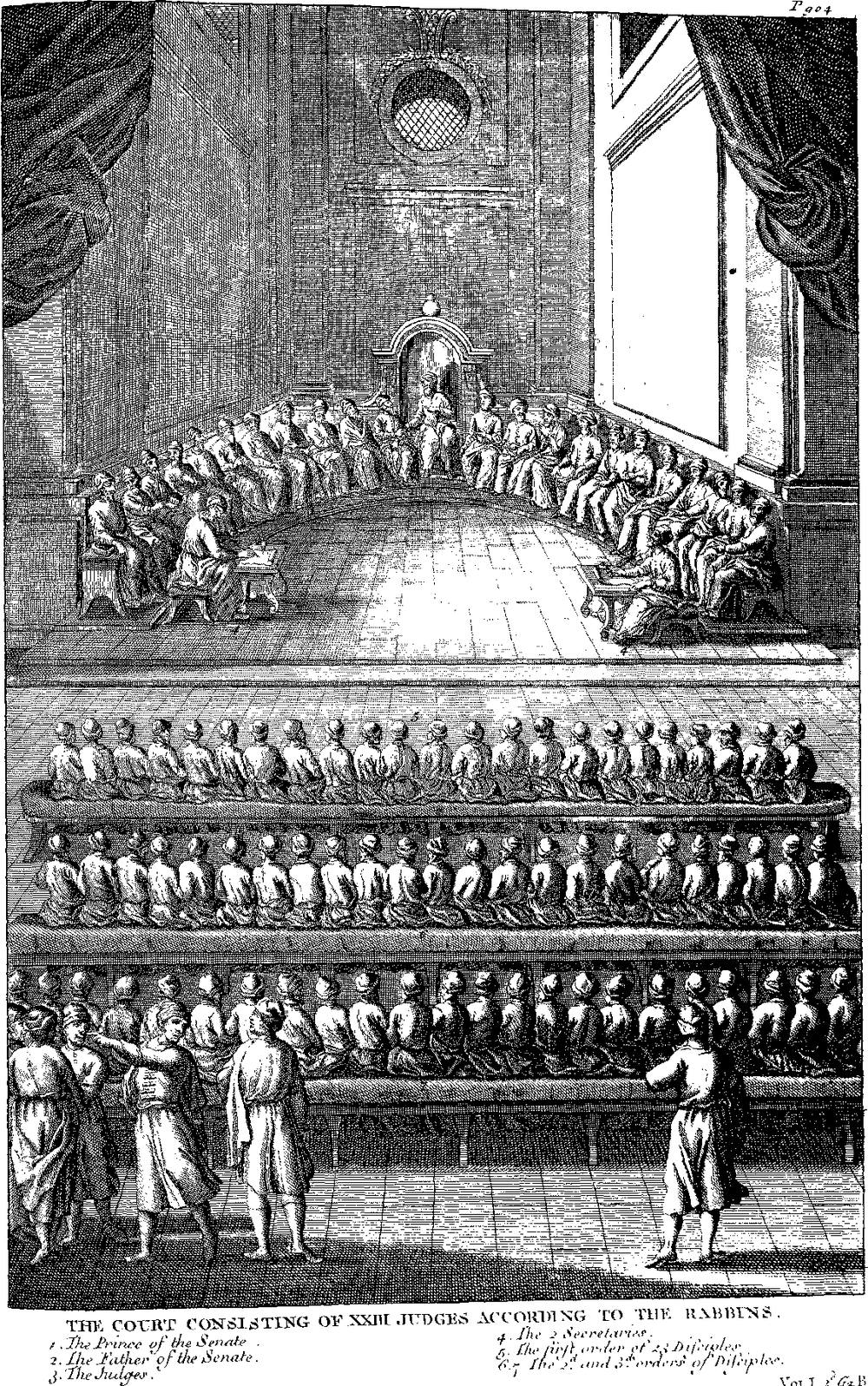
Judith ix. 1, 2, 3, &c.Judith after this, went into her closet; and being covered with sackcloth she put ashes upon her head, and prostrating herself before the Lord, she prayed, begging of God that he would please to humble Holofernes, and the other enemies of Israel, protect his people from the danger which threatned them, and give her charms sufficient to affect Holofernes, constancy enough to despise him, and fortitude enough to destroy Judith x. 1, 2, &c.him. When she had finished her prayer she got up, came down from the plat -form into her house, then she took off her sackcloth, laid aside her widows weeds, washed, perfumed, and combed herself, put on a fine suit of head clothes, dressed herself in a very rich habit, put on sandals of great value, bracelets, pendants to her ears, and rings. In short, she set herself out in all her ornaments; and God still farther encreased her beauty, that she might appear in the eyes of all with an incomparable lustre. She loaded her maid with provisions necessary for the journey, and went with her to the city gate, where Ozias and the elders waited for her. They opened the gates for her without asking any questions, being satisfied with wishing success to her journey, and good resolution.
As she came down from the mountain, the advanced guards of the Assyrians met her; and having asked her whither she was going? she said to them, I am fled from Bethulia, knowing very well that you must soon take and pillage the city, and I am now come in order to discover all the secrets of the Jews to Prince Holofernes, and to put him in a way of taking the town, without costing him so much as one man. They carried her therefore to Holofernes’s tent. As soon as this General saw her, he was captivated; and his officers said, certainly the Hebrews are not so contemptible a people, since Judith xi. 1, 2, 3, &c.they have such beautiful women. It is very well worth making war with them, if it were only to get possession of such lovely slaves. Judith fell prostrate at the feet of Holofernes, who ordering her to be raised by his people, said to her, Be of good courage, and fear not, for I never did any prejudice to any one who was willing to submit voluntarily to King Nebuchadnezzar. But tell me what at present induced you to come to me.
Judith answered him, that she had fled from the Hebrews, first, because she knew that God being provoked by their sins, was resolved to abandon them to their enemies; and secondly, because, as they were reduced to the last extremity, she thought she could not any way provide with more certainty for her own preservation, nor do him a greater service in the present conjuncture, than to inform him of the state of these things. Holofernes replied, God hath favoured us in a particular manner, by thus sending you to us. If your God should make me master of the whole nation of the Hebrews, as you encourage me to hope; he shall likewise be my God, and you shall have great honours confer’d on you in the house of Nebuchadnezzar, and will be famous over all the earth. Then he commanded her to be conducted to the place, where his treasures were, and that she should be served from his own table. But Judith entreated him, that she might eat no other provisions than such as she had brought, lest she should be polluted by eating any strange food. She desired likewise, as they went into the apartment appointed for her, that she might have the liberty of going out in the night, and before it was day, in order to perform her devotions, which was allowed her.
lived four days in this manner, without being at all distrusted when she was seen to go out of the camp, and to return again after having washed herself in a fountain, and prayed.
Judith xiii. 1, 2, 3.But on the fourth day, Holofernes sent Bagoas his eunuch to invite her to pass the night with him, with a design to spend it in eating, drinking, and diverting himself. Judith went decked with all her ornaments. She eat and drank not from Holofernes’s table, but what her maid had prepared for her; and Holofernes was so transported with joy at the sight of her, that he drank more wine than he had ever done at any entertainment in his life. The evening being come, his servants returned in haste, every man to his own house; and Bagoas shut the chamber doors and departed. Judith was left alone there with her maid, and Holofernes with excess of wine slept very soundly. Judith
Judith continues on the next page
Footnotes
-
From the year of the world 2848 to 2888, before J. C. 1112, before the vulgar Æra 1116. ↩
-
In the year of the world 2989, before J. C. 1011, before the vulgar Æra 1015. See 1 Kings ii. 27. ↩
-
Hugo Cardinal. Mercator. Jul. Scaliger. Rador, &c. Cunæus de Rep. Heb. l. 1. c. 6. 3 in ↩
-
In the year of the world 1276, before J. C. 1724, before the vulgar Æra 1728. his ↩
-
Translators’ note. Judas was called Maccabæus from the motto in his standard, which was this Hebrew sentence taken out of the xvth chapter of Exodus ver. 11. Mi Camo ka Baalim Jehovah, i. e. Who is like unto thee among the Gods O Jehovah. The initial letters of this sentence form the artificial word Maccabi. Thus Senatus populusq; Romanus was expressed in the Roman standards and ensigns by the initial letters of these words S. P. Q. R. They who fought under the standard with the word Maccabi inscribed upon it, were called Maccabees, and he who was the captain of them was more particularly in the way of eminence called by this name. See more in Dr. Prideaux’s Connect. &c. Part II. Book III. ↩
-
In the year of the world 3838, before J. C. 162, before the vulgar Æra 166. ↩
-
In the year of the world 3839, before J. C. 161, before the vulgar Æra 165. ↩
-
In the year of the world 3840, before J. C. 160, before the vulgar Æra 164. ↩
-
In the same year 3840. See 1 Macc. iv. 37, 38, &c. 10 ↩
-
1 Macc. v. 8, 9, 10, &c. In the year of the world 3841, before J. C. 159, before the vulgar Æra 163. ↩
-
In the year of the world 3841, before J. C. 159, before the vulgar Æra 163. From ↩
-
In the year of the world 3841, before J. C. 159, before the vulgar Æra 163. ↩
-
In the year of the world 3842, before J. C. 158, before the vulgar Æra 162. ↩
-
In the year of the world 3843, before J. C. 157, before the vulgar Æra 161. not ↩
-
In the year of the world 3843, before J. C. 157, before the vulgar Æra 161. ↩
-
Euseb. & Hieronym. in Isai. xxviii. 1. Hieronym. in Matth. p. 29. ↩
-
Origen. homil. 36. in Matth. Victor. Antioch. in Marc. xiv. Cyrill. Hierosolym. Catech. xiii. Cyrill. Alex. in Joan. l. 9. c. 13. Chrysost. homil. 82 & 83. in Matt. Theodoret ad 2 Cor. xi. 23. Hieronym. l. ii. contra Jovinian. Abaelard. Serm. in Pass. Domini. Magister Sentent. l. iv. dist. 11. Alens. Thom. Soto, &c. ↩
-
Concil. Bracar. 3. c. 1, 2. Jul. Papa, Ep. ad Episcopos per Ægyptum, Diss. 2. de censur. c. 7. Burchard. decret. 5. 1. Ivo parte 2. c. 11. Allat. dist. de Libris Græc. ↩
-
Dionys. Barsalibas, apud Euseb. Renaudot. t. 4. Perpetuite de la Foi, c. 5. p. 148. ↩
-
Origen. in Matth. tract. 35. & l. 2. contra Cels. Hieronym. in Matt. xxvii. Ambros. in Luc. l. x. Chrysost. in Matt. homil. 86. ↩
-
Vide Erasm. Heinsi. Grot. Ham. Gronov. Dissert. de casu Judæ. ↩
-
Euseb. l. iii. c. 25. Hist. Eccl. Hieronym. de viris illustr. c. 4. Amphiloc. carm. ad Seleuc. ↩
-
Translators’ note. On the banishment of Archelaus to Vienne in Gaul, Augustus having appointed Publius Sulpitius Quirinus (who according to the Greek way of writing that name is by S. Luke called Cyrenius) to be president of Syria, sent him into the East to reduce the country which Archelaus had hitherto reigned over, into the form of a Province; and made Coponius procurator of Judea. The regestring of every man’s possession had been made eleven years before by Sentius Saturninus, but the laying and levying of the taxes according to it, was not put in execution till that country was reduced into the form of a Province by Cyrenius then Governour of Syria. The raising of these taxes was opposed by many of the Jews, who were headed by this Judas of Galilee. Prid. Connect. &c. Part ii. Book ix. ↩
-
Joseph. Antiq. l. xviii. c. 12. In the year of J. C. 10, and 7, of the vulgar Æra. ↩
-
This State lasted about 369 years, from the return from the Captivity in 3468, to the Government of Judas Maccabæus in 3837. ↩
-
From the year of the World 3837, which is the year wherein Judas Maccabæus began to govern, to the year 3965, which is the year wherein Herod was declared King by the Senate. ↩
-
Joseph. Antiq. l. xv. c. 5. & de Bello l. iii. c. 2. 18. & 26. & Antiq. l. viii. c. 2. & Hecatæn. apud Joseph. l. i. contra Appion, p. 1049. ↩
-
Translators’ note. See Maundrell’s Journey from Aleppo to Jerusalem, p. 65, &c. ↩
-
See M. Reland’s Palestin. l. i. c. 57. p. 380, &c. ↩
-
Ἀρχέτωσαν δὲ καθ’ ἑκάστην πόλιν ἄνδρες ἑπτά —— Ἑκάστῃ δὲ ἀρχῇ δύο ἄνδρες ὑπηρέται διδόσθωσαν ἐκ τῆς τῶν Λευιτῶν φυλῆς. Jos. Antiq. l. iv. c. ult. p. 122. ↩