Volume I, pages 829–847 of the 1732 edition, from JOH to JOR: everything printed on these pages, in order.
Continued from John the Baptist (IV)
the same angel Gabriel was sent to the Virgin Mary, to declare to her, that she should be the mother of the Messiah; and to prove the truth of his promise, he told her, that Elizabeth was six months gone with child. Hereupon Mary went with all expedition to the mountains of Judea, to visit Elizabeth. As soon as she came into Zechary’s house, and saluted Elizabeth, the child, whom as yet she bore in her womb, leaped with joy; and she was filled with the Holy Ghost. She raised her voice, blessed her cousin Mary, and said, Whence comes this happiness to me, that the mother of my Lord should visit me ?
The time of Elizabeth’s delivery being come, her relations and neighbours rejoic’d at it: and upon the eighth day, when the child was circumcised, they called him by his father’s name Zecharias: but his mother told them no, his name should be John. They answered her, that there was no one of this name in her family; and they consulted the child’s father by signs, and asked him how he would have him called. He desiring a writing-table to be given him, wrote in it, his name is John. At the same time his tongue was loosed, and he began to praise God in a fine hymn, wherein, after he had blessed the Lord, he addressed himself to young John Baptist, and said, And thou, Child, shalt be called the Prophet of the Highest, for thou shalt go before the Lord to prepare his ways, to give knowledge of salvation unto his people, that they may obtain the remission of their sins. Now the child grew, and was strengthned in spirit, and dwelt in the wilderness till the day of his manifestation to Israel.
Some old apocryphal monuments import, that Herod making search after Jesus Christ and S. John, with an intention of putting them to death, Elizabeth fled with her son to the mountains, and after wandering and climbing a great while, she grew extremely fatigued, and said, O mountain of God, receive the mother with her son; hereupon the mountain immediately opened, then closed, and so secured them from the pursuits of Herod. An angel kept them company, and gave them light, while they were in this obscure corner. We read in John Moschus, that S. John dwelt in a cave, in a place called Sapsas, about a mile beyond Jordan. S. Chrysostom1 and S. Jerom2 believe, that he was brought up from his infancy in the wilderness. But S. Paulinus informs us, that Proto-Evang. Jacobi. n. 22. Vide & Petr. Alex. c.13.he spent the first years of his life in his father’s house, where he learned the law of Moses; and that as soon as his body was strengthned with age, he retired into the wilderness, where he abode without eating or drinking any thing, as is declared Matth. xi. 18.by Jesus Christ; that is to say, eating and drinking so little, and things so improper to please the appetite and taste, that in some sort it might be said, that he did not eat at all, making use only of wild honey and locusts, and being clothed only with camels hair and a leathern girdle, which he wore Matth. iii. 4. Luke i. 30.about his loins.
After S. John had passed above thirty years in the wilderness, God manifested him to the world, in the fifteenth year of Tiberius, which is the eight and twentieth year of the common Æra; and the holy Forerunner began to exercise his ministry, by publishing the coming of the Messiah. He went therefore to the country about Jordan, and beyond this river, preaching repentance, saying, that the kingdom of heaven was at hand, that the ax was already laid to the root of the tree, giving to all persons who came to see him such instructions as were necessary in their respective conditions. He obliged them to confess their sins, and at the same time plunged them in the river Jordan, telling them, that they should believe in him who came after him, who would baptize them with the Holy Ghost and with fire, and would grant to them the pardon of their sins. From this Baptism S. John derived the surname of Baptist or Baptizer. There were some persons who adhered to him, and became his disciples, exercising themselves in acts of repentance, and preaching it to others: and some of his disciples afterwards followed our Saviour.
The virtue of John Baptist was so eminent throughout all the country, that many of the Jews took him for the Messiah: but he plainly declared, that he was not so. Nevertheless, he was not as yet acquainted with the person of Jesus Christ; only the Holy Ghost had told him, that this was he whom he should see the Holy Spirit descend John i. 37, 40. Luke xi. 1, v. 3. Luke iii. 15. John i. 31, 34. Matth. iii. 13, 14, 15.and rest upon. And when Jesus Christ came to present himself, in order to receive baptism from him, as well as other Jews, John, who by the assistance of a supernatural light, discerned who he was, excused himself, saying, I stand in need rather of being baptized and purified by thee. But Jesus prevailed with him to baptize him, saying, that he would fulfil all righteousness. This fell out in the 30th year of the common Æra. John the Baptist was then about four and thirty, and Jesus Christ about three and thirty years of age. Some time after, the
Jews sent a deputation to John, desiring to be informed by him, whether he were the John i. 19—24.Messiah. But he answered, that he was not the Christ, nor Elias, nor a Prophet, and that he was only the voice of one crying in the wilderness, Prepare the way of the Lord: that besides, he whom they sought was in the midst of them, and they knew him not. The next day Jesus coming to him, John said publickly before all the world, Behold the Lamb of God, that taketh away the sins of the world.
Herod Antipas having married his brother’s wife while he was still living, had occasioned great scandal throughout all the land, John Baptist spoke of it with his usual liberty and vigour, reproved Herod for it to his face, and told him, that it was not lawful for him to have his brother’s wife (from whom he had forcibly taken her) while his brother was yet alive. Herod, incens’d Mark vi. 17,18.at this freedom, commanded him to be taken into custody, and imprisoned in Joseph. Antiq. l. 18. c. 2. p. 627.the castle of Machærus. This, in all probability, happened about the end of the thirtieth year of the vulgar Æra, and Josephus relates the motive of his imprisonment in this manner: “ John, “ surnamed the Baptist, was, says he, a “ man of piety, who exhorted the Jews “ with great zeal to embrace virtue, and “ perform all the duties of justice to one “ another.—— He was followed by a “ great multitude of people, who were “ delighted with hearing his discourses; “ and the Jews appeared disposed to enter upon any enterprize, that he should “ recommend to them. Herod grew uneasy at it, and was apprehensive that “ he would stir up some sedition; he “ thought therefore that it was necessary “ to prevent this evil, lest, if he should “ too long defer to remedy it, he might “ one day or other have reason to repent.”
Mark vi. 20, 21, &c.He remained a good while in prison, and his disciples did not forsake him in this condition. Even Herod respected and feared him, knowing that he was very much beloved by the people; he heard him upon many things, and sometimes followed his advice. Mark vi. 19, 20. Hieronym. in Rufin. l. 3. c. 11.But Herodias, who was continually afraid lest Herod should set him at liberty, sought a favourable opportunity of putting him to death. At last she met with it. Upon a certain time when Herod made a great entertainment for his friends upon his birth day, she sent her daughter Salome, whom she had by Philip her lawful husband, into the hall, where this feast was prepared, there
Matth. xiv. 12. Theodoret. Hist. Eccl. l. 3. c. 3. Chronic. Alex. p. 686. Rufin. hist. c. 27. Theophan. p. 64.to dance before the king and his guests. She acquitted herself so much to this Prince’s satisfaction, that he promised to give her any thing that she should ask of him. She immediately went out and told her mother, and desiring to know what it was that she should ask, Herodias instructed her to demand the head of John the Baptist. She returned therefore to the room wherein the company was entertained, and said to the King, Give me now, I pray thee, the head of John the Baptist in this charger. Herod was very much disturbed at her request; but not daring to be worse than his word before all this company, he gave orders for the beheading John the Baptist; which orders were immediately executed, the head given to Salome, and by her carried to her mother; who, as it is said, pierced his tongue with her bodkin. The death of John the Baptist happened, as is believed, about the end of the thirty first year of the vulgar Æra, or in the beginning of the thirty second. The entertainment mentioned by the Gospel, was made probably at Machærus, where S. John was in prison, and where his head was cut off.
The Greek and Latin Churches celebrate the festival of S. John’s beheading on the 29th of August. The disciples of John being informed of his death, gave notice of it to Jesus Christ, and came and carried away his body. The Gospel does not tell us where they buried him; but in the time of Julian the Apostate, his tomb was shewn at Samaria, where the inhabitants of the country open’d it, and burnt part of his bones; the rest were saved by some Christians, who carried them to an Abbot of Jerusalem, named Philip. This Abbot made a present of them to S. Athanasius, and S. Athanasius put them in a well, till they were lodged in a more honourable place. Lastly, some time after, Theodosius having demolished the Temple of Serapis, a Church was built in the room of it in honour of S. John Baptist, and here these holy relicks were placed, in 395 or 396. S. John’s tomb, which was at Samaria, continued to be frequented, and God wrought Hieron. Ep. 17.there many miracles. While S. Paula was in this city, she was witness to the wonders which God performed there by the merits of S. John. We shall not enlarge here on the several translations of his Relicks, and particularly of his head ; this does not belong properly to a Dictionary of the Bible, because it refers to times much later than all our sacred Books. I have spoken of the Baptism
of John the Baptist, and of the Christians of that name in the Dissertation upon Baptism prefixed to S. Mark, page 52, &c.
The eastern people have preserved many circumstances of S. John Baptist’s life, which are of no great authority among those, who in historical matters admit of nothing but what comes from some good hands, and originals which may be depended on. We read, for example, in the chapter of the Alcoran, intitled, Of Amram’s family, that Zachary being at his prayers in Mary’s oratory, whereof he had at that time the custody, the Angels, by God’s direction, promised him a son, who should be called Jabla, because he would verify and confirm the Word; and that he should become the Head and High Priest of the Messiah’s religion; that he should keep himself pure and holy, and should at last be one of the greatest Prophets that ever sprung from the stock of good men.
Bibl. Orient. p. 471.They believe farther, that S. John’s head being cut off by order of the Jewish King, the blood which issued from his body could not be stanched, till God had revenged it by bringing great desolation on the Jewish people. This expression, the blood was not stanched, is probably figurative, and may signify, that his blood cried for, and demanded vengeance, till the time of the desolation of Jerusalem by the Romans.
The Church of S. John Baptist at Damascus is celebrated, not only among Christians, but likewise among Mussulmen, and Sabians, or Mendai Jabia, commonly called Christians of S. John. This Church was at first dedicated in honour of Zachary, S. John’s father; but it had the name of S. John Baptist after that the head of this Forerunner of our Lord was found at Emesa in the time of Theodosius the younger. Some will have it, that the Sabians built it, and there kept the head of S. John Baptist hanging at the roof: and they tell us, that the Caliph Abdalmelech was desirous to purchase this Church of the Christians; and that he did not take possession of it by force, till they had refused forty thousand Dinars, or gold pistoles, which he had offered them: this Church is at present a Mosque. The Caliph, who took possession of it, for many years laid out the revenue of Syria in embellishing it.
The Mahometans cite several expressions of the Gospel as used by S. John, tho they really were Jesus Christ’s. They have likewise composed Dialogues between Jesus Christ and S. John Baptist, all which proves the veneration which this people have for him.
Baptism of S. John Baptist. We have already touched upon it in the article Baptism.
There are three questions proposed relating to the Baptism of S. John. First, whether he had power to remit Sins? Secondly, whether the repentance preached by S. John Baptist as a disposition for his Baptism, was barely sorrow for Sin, without any necessity of its being accompanied with satisfactory works? Thirdly, whether the confession of Sins practised by those who were to receive his Baptism, was a bare acknowledgment of their faults, without entring into the detail of particular Sins committed by them?
As to the first difficulty, it is indubitable, that the Baptism of S. John did not remit Sins by any virtue which was peculiar to it. It only disposed people to receive forgiveness by our Saviour’s Baptism; it promised pardon, but did not grant it. Agebatur baptismus pœnitentiæ, quasi candidatus remissionis & sanctificationis Tertull. l. de Baptismo. a Aug. l. 5. contra Donat.in Christo subsecuturæ, says Tertullian. After the Baptism of John, that of Jesus Christ was still necessary, says S. Austin, if the obtaining the remission of Sins were desired. Joannes tali Baptismo pertingebat, quo percepto esset Baptisma etiam Dominicum necessarium. They who received the Baptism of John were not spiritually born again, and procured not the forgiveness of Sins: this grace was confer’d Aug. Enchiridion de fide, spe, & charitate c. 49. Origen. in Joan. c. 8.by virtue only of our Lord’s Baptism. Non enim renascebantur qui Joannis Baptismate baptizabantur, sed quodam præcursorio illius ministerio qui dicebat, Parate viam Domini, huic uni, in quo renasci poterant, parabantur. Regeneration was performed not with John but with Jesus Christ, says Origen. Regeneratio non apud Joannem sed apud Jesum per Apostolos fiebat.
If any one received remission of his Sins in John’s Baptism, it was by virtue of his Faith in the Messiah, by the merit of his Contrition and Charity. The Baptism of S. John had no more power in this respect than the Sacrifices and Oblations of the Old Law. That which distinguished it was, its pointing out the Messiah then present and already come, whereas the Sacraments of the Mosaick Law proclaimed him at a distance, and only promised his coming.Matth. iii. 8.
The repentance which John preached to the Jews required a sincere return to God, a change of heart, and a renovation of life. Bring forth fruits meet for repentance, said he to the Pharisees, and think not to say within yourselves, we have Abraham to our Father—The ax is laid to the root of the tree; every tree which bringeth not forth good fruit is hewn down, and cast into the fire. I baptize you with water, but he who cometh after me is mightier
than I— His fan is in his hand, and he shall thoroughly purge his floor, and gather his wheat into the garner; but he shall burn up the chaff with unquenchable fire. He is not satisfied with fair appearances; he requires good fruits, and good works. Of this he shewed them an example in the whole conduct of his life, in the rigour which he practised upon himself, in his outward appearance, the austerity of his diet, and the roughness of his dress. And when the people asked him, what they were to do? he Luke iii. 10,11,12, 13.said to them, Let him who hath two coats give one to him that wanteth it. To the Publicans he said, Exact no more than that which is appointed you. To the Soldiers, do violence to no man, and be content with your wages. This is what he calls fruits meet for repentance, and sincere conversion of their manners.
The confession which preceded S. John’s Baptism was without doubt of the same nature with the common confessions made in his nation, in like manner as his Baptism was an imitation of the Purifications and Baptisms preached under the Law. Now the confessions of the Israelites in the Temple, while they put their hands upon the head of their victims, that of the High Priest upon the day of solemn expiation, and those of the Israelites on the same day, were all made particularly. They were not satisfied with declaring themselves in general culpable, and sinners, they confessed circumstantially the several faults committed by them, excepting those which might expose them to the penalty of death. This is the opinion of Maldonat, Jansenius, Estius, and in particular of Grotius, on the third chapter of S. Matthew.
The Jews have still at this day the Buxtorf. Synagog. Jud. c. 20.custom of confessing themselves much after the same manner as the Roman Catholicks.
CHRISTIANS OF S. JOHN. We have spoken of them under this title.
V. S. JOHN the Evangelist, was a native of Bethsaida in Galilee, and the son of Zebedee and Salome. He was by profession a Chrysost. in Joan. homil. 17. & Epiph. hæres. 51.fisherman. Some were of opinion that he had been a disciple of John the Baptist, before he was Jesus Christ’s: but there is no good proof of this opinion. He was brother to S. James Major, and both of them were called by our Saviour the sons of thunder, Boanerges, in all probability by reason of their vivacity, and the greatness of their faith. It is believed that S. John was the youngest of the Apostles. He might be five or six and Paulin.Ep. 386. Hieron. Ep.1. p. 4.twenty years of age, when he began to follow Jesus Christ in the year of J.C. 30. There are some who believe, that he was the bridegroom at the marriage of Cana3, and that he always kept his virginity4: but this last opinion is better supported by Antiquity, than that which asserts him to have been the Bridegroom at the marriage of Cana.
John xxiii. 25.xxi.20. Matth. xx. 22. Mark x. 38,39.Our Saviour had always a particular tenderness and friendship for him; and S. John himself commonly describes himself by the name of the Disciple whom Jesus loved. Jesus Christ gave him peculiar marks of his affection, when he took him with him that he might be present at his Transfiguration; and at his last Supper he permitted him to lye in his bosom, and discovered to him, who it was that should betray him. The mother of S. John the Evangelist, encouraged probably by the friendship which Jesus expressed for her two sons, James and John, took the liberty to desire of him, that he would seat them in his kingdom, one on his right the other at his left hand: but our Saviour addressing himself to the two brothers, said to them, Are ye able to drink of the cup which I shall drink of? They answered, We are able. Jesus said to them, Ye shall indeed drink of my cup, but to bestow the places which ye ask in my kingdom, does not belong to me but to my Father.
Matth. xxvi. 37. John xix. 26.Jesus Christ chose only S. Peter, S. James, and S. John, to be witnesses of his agony, and voluntary sadness in the Olive -garden. The last of these did not withdraw himself when the Soldiers came to seize his Master; and it is believed, that he was the Disciple who followed him to Caiaphas’s house, where he went in, and some time after introduced S. Peter5. He attended our Saviour even to the Cross; and Jesus Christ observing him at the foot of it, said to his mother Mary, Woman, behold thy son; and afterwards to this Disciple, Behold thy mother. And from that time S. John looked upon the virgin as his mother, and took care of her till her death. After the Resurrection of our Saviour, S. John being employed in fishing upon the Sea of Tiberias with other Disciples, Jesus appeared upon the shore; S. John xxi. 1—7.John first discovered him, and told Peter of it. When they came ashore, they dined with Jesus Christ, and after dinner, as S. John was following him, Peter
asked Jesus, What was to become of him? speaking of S. John; Jesus answered, If I will that he stay till I come, what is that to thee? follow thou me. Hereupon the Disciples believed, that Jesus had said he should not die; the rumour whereof spread among the Faithful; and many still believed it at the time when S. John wrote his Gospel, and long after: many also have affirmed, that he did not die. But S. John himself destroys this opinion, which indeed contradicts the most authentick monuments of the Church. The Reader may consult our Dissertation upon the death of S. John the Evangelist, the Martyrology of Florentinus, and the 17th note of M. de Tillemont upon the Evangelist S. John, t. 1. p. 640.
We know very little concerning the life of S. John, till Domitian’s persecution. Within few days after the Apostle had received the Holy Ghost, S. Peter and S. John went to the Temple, and there cured a man, who had been lame from his mother’s Acts iii. 1—10.womb. This miracle was the occasion of their being put in prison. The next day they were set at liberty, and forbidden to Acts v. 18, &c.speak of Jesus Christ; but they continued preaching as before; whereupon they were again imprisoned with the rest of the Apostles. But God miraculously delivered them out of Jail. And as they did not cease to preach Jesus Christ, the Magistrates took them into custody, obliged them to appear before them, and reproved them for persisting still to discourse of Jesus, notwithstanding their prohibition. The Apostles, without shewing any consternation, answered them, that it was necessary rather to obey God than men. They were inclined to put them to death; but a Senator, whose name was Gamaliel, desiring that the Apostles might be ordered to withdraw, he discoursed with so much prudence to the other members of the Sanhedrim, that they commanded the Apostles to be scourged only, and so dismissed them.
Acts viii. 5——12.S. Peter and S. John were afterwards sent to Samaria, in order to confer the Holy Ghost on those whom Philip the Deacon had there converted and baptized. Gal. ii. 9. Acts xv. 7, &c.S. John was likewise of the Council of Jerusalem, where he behaved himself as became one of the pillars of the Church. It is believed that he went and preached to the Parthians, and his first Epistle has been sometimes cited under the name of the Aug. qu. in Evang. l. 2. c. 39. See Estius and our Comment upon this Epistle.Epistle to the Parthians. The Indians Hieronym. de viris illust. trib. c. 9. Tertull. contra Marcion. l. 4. c. 5.maintain, that he published the Gospel in their Country: but there is no question of his preaching in Asia, and of his abiding some time at Ephesus, and the places round about. Thither he carried the Blessed Virgin, who died there. We do not know in what year particularly he came into this country; but he could scarce arrive there, in order to make it his place of constant residence, before the year of J. C. 66. S. Jerom says, that he founded and governed all the Churches of Asia; and Tertullian writes, that he first established the episcopal order in this country. Which is not to be understood in so rigorous a manner as to believe, that S. Peter and S. Paul were not the founders of several Churches there, and that Timothy did not govern the Church of Ephesus, even while S. John was in this Province.
The Emperor Domitian having declared war against the Church, in the fifteenth year of his reign, and in that of J. C. 95. S. John the Evangelist was banished from Ephesus, and carried to Rome, where he was plunged into boiling oil, without being any way incommoded by it. When he was taken out he was more vigorous and clean than when he was put in. From Tertull. præscript. c. 36. Hieronym. inthence he was sent in exile to the Isle of Patmos, in the Egean sea. There he wrote his Apocalypse or Revelations, whereof we have spoken under a particular title. He did not continue two years in banishment. Domitian having been killed in the month of September, and the year 96, his successor Nerva recalled all the exiles who had been banished by his Predecessor; and S. John returned to Ephesus in the year of J. C. 97, being then about ninety years of age. The Bishops and Christians of Asia having pressed him earnestly to write the Gospel, containing what he had heard of our Saviour, Euseb. l. 6. c. 14. Hist. Eccl. Hieronym. in Matth. &c.he complied with their request; but did not begin till after a fast and publick prayers. His principal care in this undertaking was, to relate such things as might be of use in confirming the Divinity of the Son, in opposition to certain Hereticks of that time who denied it.
We have also three Epistles written by the same Apostle. The first, as we have observed already, is sometimes cited by the name of the Epistle to the Parthians, and was never contested. The style and sentiments of S. John are to be perceived in every period. The two others have been disputed6. The first of these two last is addressed to a Lady of quality, whose
name was Electa; or otherwise Electa is a symbolical name to denote some Christian Church, to which another Church wrote. For I have some suspicion that this Epistle is only a Letter of recommendation, which was usually given to the Faithful, who went from one Church to another, and was sometimes necessarily written in an obscure manner, for fear of its falling into the hands of Unbelievers. The third Letter is directed to Caius, whom S. John praises for using hospitality towards the Faithful, and exhorts him to continue this pious practice towards such persons as are imployed in the service of the Church, and refused to receive any thing from the Gentiles.
S. John lived to a very great age, so that he could scarce go to the assembly of the Faithful without being carried by his Disciples; Hieronym. in Galat. vi.and as he was no more able to make any long discourses, his custom was to say in all assemblies, to the people, My dear children love one another. At last they grew weary of it; and when he was told so, his answer was, This is what the Lord commands you; and this, if you do it, is sufficient. Aug. Serm. 253. c. 4. Chronic. Euseb. Epiphan. hæres. 51.He died quietly at Ephesus, in the third year of Trajan, and the hundredth of Jesus Christ. He might be then, according to S. Epiphanius, ninety four years of age. He was older in the opinion of some, who say, he was ninety eight or ninety nine, or as others, an hundred and four, or an hundred and six, or an hundred and twenty. Hieronym. de Viris illust. trib. c. 9.He was buried near the city, and several of the Fathers have observed, that his Sepulchre was there7. The Council of Ephesus takes occasion to commend this city from Concil. Ephes. t. 3. Concil. p. 573. & 616.its possessing the body of this blessed Divine; and Pope Celestine exhorted the Fathers, who were there assembled, to follow the instructions of S. John, whose relicks they had the happiness to have in their keeping. S. Austin8, and after him Gregory of Tours, and Willebaldus, speak of a certain powder which was to be seen upon S. John’s tomb, and seemed to be produced afresh every day, in proportion as it was taken away. We do not repeat here what we have already remarked concerning their opinion, who maintain that S. John is not dead.
Besides the Gospel, Revelations, and the three Epistles of S. John, which the Church receives, there are some other apocryphal writings attributed to him; for example, a Book of his supposed travels, Acts xii. 12. Athanas. in Synopf. Epiphan. hæres. 47.another of Acts, which the Encratites, Manichees, and Priscillianists, made use of; a Book concerning the death and assumption of the Virgin, a Creed supposed to have been given by the Blessed Virgin and S. John to Gregory of Neocæsarca. This Creed was cited in the Aug. de Fide, c. 4. & 38.fifth Oecumenical council: but the acts and history just now mentioned, are acknowledged to be apocryphal, and not worthy of any credit. S. John is generally Nyssen. vita Thaumat. p. 545, 547. Vide Baron. an. 233. § 19. Apud Euseb. l. 5. c. 24. Hieronym. de viris illust. trib. c. 45.firnamed the Divine, by reason of the sublimity of his knowledge and Revelations, and particularly because of the begining of his Gospel. Polycrates Bishop of Ephesus affirms, that he wore a plate of gold upon his forehead, as a Priest and Apostle of Jesus Christ. He is painted with a cup and a serpent issuing out of it, because some Hereticks having given him poison in a glass, he made the sign of the cross over it, and all the venom was dispel’d under the form of a serpent. This miracle is related in the spurious Prochorus, who calls himself a Disciple of St. John.
VI. JOHN MARK, cousin to S. Barnabas and his Disciple, the son of a Christian woman whose name was Mary, who had a house in Jerusalem, where the Faithful and the Apostles generally met. There they were at prayers in the night, when S. Peter, who was delivered out of prison by an Angel, came and knocked at the door. In this house the celebrated Church of Sion was said afterwards to have been established.
Alex. apud Sur. 11. Junii. Acts xv. 36,37,&c. Acts xii. 15. xiii. 13.John Mark, whom some very improperly confound with the Evangelist S. Mark, adhered to S. Paul and S. Barnabas, and followed them in their return to Antioch; he continued in their company and service till they came to Perga in Pamphylia. But then seeing that they were undertaking a longer journey, he left them and returned to Jerusalem. This happened in the year 45 of the common Æra.
Some years after, that is to say, in the year 51, Paul and Barnabas preparing to return into Asia, in order to visit the Churches which they had founded there, Barnabas was of opinion, that John Mark should accompany them in this journey; but S. Paul would not consent to it: upon which occasion these two Apostles separated. Paul went to Asia, and Barnabas with John Mark to the isle of Cyprus. What John Mark did after this journey we do not know, till we find him at Rome
Col. iv. 10.in the year 63, performing signal services for S. Paul during his imprisonment. The Apostle speaks advantageously of him in his Epistle to the Colossians: Marcus Sister’s son to Barnabas saluteth you; if he come unto you receive him. He makes mention of him again in his Epistle to PhilemonPhilem. 24.; written in the year 62, at which time he was with S. Paul at Rome. But in the year 65, he was with Timothy in Asia; and S. Paul writing to Timothy, desires him to 2 Tim. iv. 11.bring him to Rome, adding that he was useful to him for the ministry of the Gospel.
In the Greek and Latin Churches the festival of S. John Mark is kept on the 27th of September; some say he was bishop of Biblis in Phœnicia. The Greeks give him the title of Apostle, and say, that the sick were cured by his shadow only. It is very probable, that he died at Ephesus, Euseb. l. 3. c. 39. & l. 7. c. 25. Chry-sost. orat. 67. p. 504.where his tomb was very celebrated. The year of his death, and the particular kind of it, we are strangers to. He is sometimes called simply John or Mark. We shall not collect all that is said of him in apocryphal and uncertain Authors.
VII. JOHN of Giscala, the son of one Levi, and a native of Giscala in Galilee. He first of all defended the town of Giscala against the Romans during the last war which Vespasian waged against the Joseph. de Bello. l. 4. c. 4. p. 858. Græco κεφ. n.Jews. After the taking of this city, he came to Jerusalem, where he did abundance of mischief, and committed great violences, both in the Temple and the City. He pretended at first to embrace the Party of Ananus and the people, against the zealots or seditious, who were determined to carry on the war against the Romans.De Bello. l. 4. c. 5. κεφ. ιδ’ in Græco, p. 876. But he went privately, and discovered to the zealots what resolutions Ananus and the honest men of his party had taken, for the preservation of the Commonwealth. He had the art of getting so far into their confidence, that they deputed him to the zealots, who were masters of the Temple, to mediate an accommodation between them. But instead of inclining them to peaceable measures, he advised them to send for the Idumæans to their assistance against Ananus and those in his interest. The Idumæans entered Joseph. de Bello. l. 4. c. 7.the City and the Temple, and after they had put to death Ananus, and some other principal persons of the City, they returned to their own home, loaded with Spoil which they had taken in Jerusalem.
In the mean time the zealots were divided. John of Giscala had a powerful party amongst them; Eleazar the son of Simon had another. The latter observing that he was not the strongest, sent for SimonJoseph. de Bello. l. 6. c. 1. p. 904. De Bello. l. 7. seu 45 in Græco, p. 969. the son of Gioras, who was at the head of a troop of Banditti, who kept the field. Such was the condition of Jerusalem, when Titus laid siege to it, in the year of J. C. 70. Eleazar was master of the inner Temple; John of Giscala had possession of the outer parts and porches of the Temple; and Simon the son of Gioras was master of the upper City, and part of the lower. In this manner John was placed, as it were, between two fires, having Eleazar to resist on one side, and Simon on the other. These three parties, how much soever they were enemies to one another, united when they were to engage the Romans; and when the battle was over, began again to destroy one another. At the end of the siege, when the city was taken, John of Giscala made his escape, and got into a common sewer, where he continued some days: but being De Bello. l. 4.discovered and brought to Titus, he was condemned to perpetual imprisonment. This was too light a punishment for one, who had been polluted with so many crimes, and was the principal cause, as Josephus remarks, of the ruin of his country.
JOIADA or Judas, High Priest of the Jews, successor to Eliashib or Joashib, who lived under Nehemiah, about the year of the world 3550, before J. C. 450, before the vulgar Æra 454. Joiada was succeeded by Jonathan or John. We neither know the year exactly of Joiada’s Pontificate, nor the time of his death.
JOIARIB. See Joarib.
JOKDEAM, a city in the tribe of Judah, Josh. xv. 56.
JOKMEAM, a city of Ephraim, which was afterwards yielded up to the Levites 1 Chr. vi. 68.of Kohath’s family.
I. JOKNEAM, a city of Judah, 1 Kings iv. 12.
II. JOKNEAM, a city in the tribe of Zebulun, given to the Levites of Merari’s family. Josh. xxi. 34. xix. 11. It is the same as Jokneam of Carmel, Josh. xii. 22. wherein it is sirnamed of Carmel, by reason of the neighbourhood of this Mountain.
See Bochart. Phaleg. l. 1. c. 15. Gen. xxv. 6.JOKSHAN, the second son of Abraham and Keturah, Gen. xxv. 2. We are of opinion, that he peopled part of Arabia, and that he is the person whom the Arabians call Cabtan, and acknowledge to be the head of their Nation. He dwelt in the Provinces which lye to the east of Beersheba, that is to say, in part of Arabia the happy, and part of Arabia the Desart. This Moses expressly mentions: But unto the sons of the Concubines, which Abraham had, Abraham gave gifts, and sent them away from Isaac his son, eastward, unto the east country. Jokshan’s sons were
Sheba and Dedan, who dwelt in the same Country.
JOKTAN, the eldest son of Eber, who had for his portion all the Land which lies from Mesha, as thou goest unto Sephar, a mount of Gen. x. 25, 26—30.the east. The land of Mesha is that, in our opinion, wherein Masias was situated in Mesopotamia, and Sephar in the Country of 2 Kings. xvii. 24. xviii. 34. xix. 13.Sepharvaims, or Sepharrenians, or Sapiors, or Serapares; for these all denote the same thing, that is to say, a people, who, according to Herodotus, were placed between the Colchians and the Medes. Now this was in the Provinces which Moses commonly describes by the name of Kedem or the East. We find footsteps in the same country, of the names of Joktan’s sons; which is a farther confirmation of the opinion, just now proposed by us. The names of Joktan’s thirteen sons were, Almohad, Shaleph, Hazarmaveth, Jerah, Hadoram, Uzal, Diklah, Obal, Abimeel, Sheba, Ophir, Havilah, and Jobab.
The Arabians firmly believe, that the country inhabited by them, was peopled in the beginning by Joktan the son of Eber, and brother of Peleg; who after the division of languages came and dwelt in this peninsula of Asia, which might have taken its name from Jarab the son of Joktan, or from a large plain in the Province of Tahama, which is called Arabat. These ancient Arabians lived in this country without mingling with other people, till Ishmael and his sons settled there, who mixing with the other Arabians were called Mos-arabes or Mosta-arabes, which signifies mixt Arabians, such as the Ishmaelites are, descended from Ishmael the son of Abraham and Hagar.
The same Authors suppose Joktan to have had several sons, as Joarab, the first author of the Arabic language, and from whom all the posterity of Joktan were called Arabians; Ad, the founder of the Adites, whom God in his anger extirpated; Thamond, Tasni and Giadis, all fathers of some old Tribes of Arabians; but that which embarasses us is, that the founders of these antient Tribes are called by names different from those which are described by Moses; which however did not hinder M. Bochart from placing in Arabia the sons of Joktan mentioned in the Scripture, wherein he has succeeded very well in the judgment of many learned men: in any thing so obscure, and at such distance of time from us, we should be satisfied with probabilities, and think ourselves obliged to those who take pains to clear the darkness of such remote Antiquity. The reader may consult M. Bochart on this matter, and if he has a mind to see some conjectures formed from another system, he may have recourse to our Comment upon Genesis.
ביקבצאל Bikabzeel.JOKTHEEL, a city of Judah, Josh. xv. 33. It is perhaps the same as Jekabseel of the same Tribe, Neh. xi. 25. But this last is rather Kabzeel, Josh. xv. 21. & 2 Sam. xxiii. 20, &c.
JOKTHEEL, a rock which Amaziah King of Judah took from the Edomites, from the top whereof he threw down ten thousand Edomites, whom he had taken in battle. Eusebius is of opinion, that this rock 2 Kings xiv. 7. & 2 Chr. xxv. 5, 6, &c. Plin. l. 5. c. 24.is the city of Petra, the Capital of Arabia Petræa. The battle, wherein the Edomites were defeated, was fought in the valley of Salt, which we place between Palmyra and Bozra9. Pliny says, that the solitudes of Palmyra, reach as far as the city of Petra. It is very probable therefore, that Amaziah pushed his conquest as far as this city, and gave it the name of Joktheel, that is to say, Obedience to the Lord; thereby signifying, that he understood the victory which he had obtained over the Edomites, to proceed from the obedience which he had paid to God.
JONA. This word signifies a dove; and Matth. xvi. 17.Barjona the son of a dove. But the best reading seems to be Bar-joanna or Jochanna, the son of John. The name of S. Peter’s father was Joanna, or by abbreviation Jona.
I. JONADAB, was the son of Shimeah, David’s Nephew, and cousin German to 2 Sam. xiii. 3, 4, 5.Amnon. Jonadab was esteemed to be a very prudent Man, and was a great friend to Amnon the son of David. This young Prince falling ill of a languishing disease,10 Jonadab asked the cause of it: Amnon declared to him in confidence, that he had a very violent passion for his sister Tamar, born of David, but by another mother. Jonadab said to him, keep your bed and feign yourself sick, and when the King your father comes to visit you, desire him to send your sister Tamar to prepare something for you, which you may receive from her hands. Amnon followed this wicked advice, and ravished Tamar, for which reason Absalom Tamar’s brother, killed Amnon11, and brought great affliction upon the whole royal family.
II. JONADAB, the son of Rechab, head of the Rechabites. See Rechabites, and our Dissertation upon the Rechabites prefixed
to Jeremiah. Jonadab the son of Rechab, lived in the time of Jehu King of Israel. He is thought to have added to the antient austerity of the Rechabites, that of abstinence from wine, to have introduced the neglect of cultivating their lands, and the custom of being satisfied with what their flocks and fields produced for their subsistence. We do not know where was Jonadab’s usual habitation; but we read in the second book of Kings, that Jehu being 2 Kings x 15, 16.raised up by God with a design of punishing the sins of Ahab’s house, and coming to Samaria, to destroy all the false Prophets and Priests of Baal, he met Jonadab the son of Rechab, and having saluted him, said, is thine heart right, as my heart is with thy heart? Jonadab answered, it is. Then Jehu gave him his hand, took him up into his chariot, and said, Come with me, and see my zeal for the Lord. He carried him to Samaria, and executed before him all that remained of Ahab’s family, and all the Ministers of Baal’s Temple . This is all that we know of Jonadab’s life. We shall speak of his Disciples in the article Rechabites.
JONAH, the son of Amittai, the fifth of the small Prophets, was a Galilean, a native 2 Kings xiv. 25.of Gath-hepher, which is believed to be the same as Jotapata, celebrated for the siege which Josephus the historian there maintained against the Roman army, a little before the destruction of Jerusalem. Gath-hepher was situated in the land of Zebulon, where was the canton of Opher or Hepher. S. Jerom places it two miles from Sephoris, in the way towards Tiberias. Some Rabbins are of opinion, that Jonah was the widow’s son of Sarepta, restored to life by 1 Kings xvii. 17.Elijah; and this, because the widow receiving her son thus raised to life, said to the Prophet, Now I know that the Lord in thy mouth, is truth. This young man was called the son of Amittai, because Amath in Hebrew signifies truth, and by his resurrection, Jonah was in some sort the son of Elijah: which reason is certainly a very weak one. Nevertheless the opinion of Jonah’s being the widow’s son is very common. It is certain that Jonah lived in the reigns of Joash and Jeroboam12, kings of Israel. He could not therefore be the widow’s son of Sarepta, since the former of these two princes did not begin to reign till sixty years after the translation of Elijah. Others maintain, that Jonah was son to the Shunammite woman, whose child was raised from the dead by 2 Kings iv. 16, 17. 36, 37.Elisha. But ShunamJer. xxxv. 6, 7. and Gath-hepher are places too remote from one another; and we know certainly from Scripture, that Jonah was of Gath-hepher. Some are of opinion, that Jonah was the Prophet whom Elisha sent to Jehu, to anoint him king of Israel; but 2 Kings ix. 1, 2, 3, &c. Numb. xxxii. 12. Josh. xiv. 6, & 14.this fact is not at all certain.
The Author of the Lives and Deaths of the Prophets, cited under the name of S. Epiphanius, and Dorothæus, and the Paschal Chronicle, say, that Jonah was a native of Cariathaim near Azotus upon the Mediterranean. In the same place this Prophecy is attributed to him, When innumerable people shall be seen coming from the west, then must we expect to see this city utterly destroyed; and that this city shall be destroyed when the stone shall be seen to weep with compassion. The nations coming from the west are the Romans, and the stone which weeps over Jerusalem is Jesus Christ, who is called in Scripture the corner stone, and wept over Jerusalem some few days before his passion. The same Epiphanius relates, that Jonah returning from Niniveh, and ashamed to see that his prediction was not followed with the execution he had foretold, retreated with his mother to the city of Sur or rather Tyre, where he dwelt till his death in the plain of Sear, and was buried in the cave of Cenezæus Judge of Israel. This Judge in all probability is Caleb, or Othniel. Caleb in several places is surnamed the Kenezite; but we do not read that he had been Judge of Israel. Othniel was the son of Kenaz, Josh. xv. 17. Judg. i. 13.
What we know with certainty of Jonah is as follows. God having commanded him Jonah. i. 1, 2, &c.to go to Niniveh, and there proclaim, that the cry of the inhabitants Sins was come up to Heaven, and they were threatned with approaching ruin, instead of obeying these orders, he resolved to fly away, and go to Tarsus in Cilicia. To this purpose he imbarked at Joppa; but the Lord having sent a violent tempest while he was upon the sea, the mariners with great fear cried each of them to his God, and threw what was in the vessel overboard, in order to lighten it. In the mean time Jonah slept in the hold; whereupon the Pilot went and waked him, and they who were in the ship cast lots to know how this tempest was occasioned; for it had surprized them at a time, when there was no appearance of any such thing. Having therefore cast lots, it fell on Jonah. They asked him who he was, and what he13
might have done, to bring upon them such a storm. He answered them, that he was an Hebrew, that he worshipped the God of Heaven, that he was one of his Prophets, and fled from his presence to avoid going to Niniveh, whither he was sent. They asked him what was to be done, in order to secure themselves from shipwreck. He replied, Take me and throw me into the sea, and the tempest will cease.
God at the same time prepared a great Jonah ii. 1, 2,—7, &c.fish, to swallow up Jonah. This fish was according to some a Whale, or as others say, the lamia, canis carcharias, or Sea-dog. See our Dissertation on the fish which swallowed up Jonah, printed before the twelve small Prophets, and above the article, Fish, which swallowed up Jonah. The Prophet was received into the belly of the fish, and there continued three days and three nights. He cried unto the Lord, and the Lord heard him, and commanded the fish to return him, and cast him upon the shore. It is believed, that he was cast up again at the foot of a mountain, which projects a great way into the sea, between Berytus and Tripoli14. Others think it was upon the coasts of Cilicia, two leagues north from Alexandretta; which is much more probable than what some assert, that Tavernier’s journey to Persia, l. 2. c. 1. Joseph. Antiq. l. 9. c. 1.the Fish carried him as far as to the Euxine sea; others into the Red sea; others again into the Persian Gulf; and others to the shore near Niniveh; wherein there is no appearance at all of truth.
After this the word of the Lord came a Jonah iii. 1, 2, &c.second time to Jonah, and directed him to go to Niniveh. Thither he went, and when he came into the city, which was three days journey in extent, that is to say, as Diodorus of Sicily remarks, about five and twenty Diodor. Sicul. l. 2. Biblioth.leagues in circumference, Jonah walked up and down the city a whole day, crying, in forty days Niniveh shall be destroyed. The Ninivites believed his word, and were converted: they appointed a publick fast to be observed, and from the meanest of the people to the greatest covered themselves with sackcloth. The king of Niniveh himself, who we take to be the father of Sardanapalus, known in profane Authors by the name of Anacyndaraxa or Anabaxarus, and in Scripture by the name of Phul, descended from his throne, and covered himself with sackcloth, and sat down upon ashes. He issued out orders, forbidding his people to take any nourishment, and to give either meat or drink to their cattle: He commanded both men and beasts to be clad in sackcloth, and that the inhabitants of the city should cry with all their might unto the Lord. God suffered himself to be moved with their repentance, and did not execute the sentence, which he had pronounced against them. Jonah was afflicted at this, and complained to God, saying, that he had always questioned, whether as being a God of Jonah iv. 1, 2, 3, &c.clemency and mercy he would not be flexible to their prayers. He desired of the Lord, that he would take him out of the world; and retiring out of the city, he made a little cover for himself shaded with leaves, till he saw what would happen to the city. The Lord caused a plant to grow over his cabbin, called in Hebrew, Kikajon15; and which some render gourd, others, a laurel, others, Palma Christi or Ricinus. See hereafter Kikajon. The next morning at break of day, the Lord sent a worm which bit the root of this plant, and made it wither; so that the Sun beginning to shine on Jonah’s head, he found himself so faint, that he desired of God to take him out of the world. Hereupon the Lord said unto him, Doest thou think that thou hast reason to be thus concerned at the death of a plant, which cost thee nothing, which rises one night, and dies the next? And wouldst thou not have me pardon a city such as Niniveh, wherein there are an hundred and twenty thousand persons, who are not able to distinguish their right hand from their left, that is to say, where there are an hundred and twenty thousand children, who have not the use of reason, and besides have not offended God by any actual sins? As children make generally but the fifth part of the persons which cities are filled with we presume that there were in Niniveh above six hundred thousand persons.
After this Jonah returned in all probability from Niniveh into Judea. We have seen before what S. Epiphanius has said of his retreat to Tyre, and of his death in the plain of Saraa. The eastern people, who shew his tomb at Mosul16, which they believe to be the same as Niniveh, are persuaded, that he died and was buried there. In S. Jerom’s time his tomb was seen at Gath in Palestine; and the Turks still at this day shew his Mausolæum Hieronym. Prolog. in Jonam.at Gath-hepher, in a subterraneus Chapel, enclosed within a mosque. They believe Adrichom. Quarum. Eugen. Roger. &c.at Venice,
that they have the body of Jonah in the Church of S. Apollinarius. His relicks likewise are to be seen at Nocera in the Kingdom of Naples, and in the Abby of Mount Cassin, where one of his ribs is shewn. The Greeks have for a long time expressed their veneration for the person of Jonah. There was a Church and Monastery dedicated to this Prophet in the sixth Age. The Greeks keep his festival upon the 21st of September, and the Russians on the 22d. His name is not in the old Martyrologies of the Latins. About the fourteenth Age it was inserted on the 27th of January: but Baronius places it again upon the 21st of September. See Bollandus and Baillet.
We do not know when it was that 2 Kings xiv. 25. Hist. Relig. c. 4. p. 456. καὶ μὴ βουλόμενον δεσμώτην παρέπεμψε.Jonah foretold how Jeroboam II. King of Israel should restore the Kingdom of Samaria to its former extent, from the entrance of Hamath as far as the Dead Sea. Whether this was before, or after his journey to Niniveh, we cannot tell. Our Saviour makes frequent mention of Jonah in the Gospel. He says, that the Ninivites Matth. xii. 41. Luke xi, 32.shall one day rise in Judgment against the Jews, and condemn them; because they repented at the first preaching of Jonah, and the Jews would not hearken to him, who was greater than Jonah. And when the Pharisees required a Sign of him to Matth. xii. 39. 40. xvi. 4. Luke xi. 29, 30, 31.prove his mission; his answer to them was, that he would give them no other, than that of the Prophet Jonah, that is to say, that of his resurrection, which would complete all his miracles, and render the Jews inexcusable in their hardness.
Jonah i. 3.The Scripture says that Jonah fled out of Judea from the presence of the Lord, and imbarked at Joppa in order to secure himself at Tarshish. Ut fugeret in Tharsis à facie Domini. He himself wrote these words, which seems to intimate his belief, that if he could get to Tarshish he should be out of the reach of God’s power, and that God would not or could not send him from thence to Niniveh. If the Prophet thought so, his thoughts certainly were not according to knowledge. But we had better construe these words, Ut fugeret à facie Domini, as if their meaning was, that if the Prophet could get at a distance from Judea, he imagined God would think no more of sending him to Niniveh, but would appoint some other to go thither; because it is not usual with God, to pour forth the spirit of Prophecy out of the holy land; but in what manner soever it is interpreted, it is true that it implies some incongruity, and is not at all exact.
The Mahometans are acquainted with the history of Jonah, but their knowledge of it is imperfect. They say he was sent by God to the city of Mosul or Mossul upon Bibl. Orient. p. 495. Jonæ Ben. Mathæi.the Tigais. Mosul is built, they say, on the very place, or near it, where old Niniveh stood. The Prophet told them, that unless they were converted, their city would infallibly perish on a particular day mentioned by him. The day came, the city was not destroyed, and nothing was seen to happen which the Prophet had threatned them with, because the inhabitants had diverted the effects of God’s power by their Repentance. Jonah to avoid the reproaches of the Nivivites resolved to fly. He embarked, and the vessel wherein he was, being under full sail, stop’d on a sudden, without any one’s being able to move it forwards or backwards.
The mariners in this extremity resolv’d to throw one of the men belonging to the Ship overboard, imagining by this means to appease God, and so make the cause to cease which stop’d them; they drew lots, and the lot fell three times upon Jonah. He was cast into the Sea, and immediately a fish swallowed him up, and carryed him to the very bottom of the deep. Hereupon he repeated the prayer mention’d in the Alcoran, which the Mahometans think to be the most decent and efficacious one that is. O Lord there is no other God besides thee. Be praised for ever, I am a sinner but thou art merciful beyond all that I am able to say. The Mahometans called this Prophet the fishes companion, because he continued forty days in the belly of that which swallowed him up. As the true history reports it, he was only three days there. Theodoret says that Jonah having no inclination to go to Niniveh God sent him thither in chains.
I. JONATHAN, a Levite, the son of Gershom, and grandson of Moses, dwelt some time at Laish in the house of Micah, and there exercised his ministry as a Levite with an Ephod, and some superstitious images, which Micah had made for his own use, and placed in a chapel belonging to his Judg. xvii. 7, 8, &c. xviii. 1, 2, & 30, 31.house. But some years after, six hundred men of the Tribe of Dan, who were looking out for a new place of settlement in the territories of the Sidonians,17 passing by that way, ingaged Jonathan to follow them. He therefore went with them and settled at Dan, where they of this Tribe placed the images which they had taken out of Micah’s house, and appointed Jonathan their Priest, and his son to succeed him in his Office. Now their Idols remained at Dan, otherwise Laish, all the time that the Ark of
the Lord was at Shiloh, and till the Captivity of Dan. The Ark was at Shiloh till the last Year of Eli the High Priest, which was that, wherein it was taken by the Philistines, in the year of the world 2888, before J. C. 1112, before the vulgar Æra 1116. The captivity of Dan may denote either the oppression of this Tribe by the Philistines, after the Ark was taken; or the more remarkable captivity of the ten Tribes, which were carried away captives beyond the Euphrates, by the Assyrian Kings. See our Comment upon Judges xviii. 31.
II. JONATHAN, the son of Saul, a Prince of an excellent temper, and in all varieties of fortune a most faithful friend to David. Jonathan gave proof of his courage and conduct upon all occasions that offered, during the wars between Saul and the Philistines. One day18, when the Philistines were incamped at Michmash with a very powerful army, and Saul’s army, which consisted of not above six 1 Sam. xiii. 15, 16, &c. 1 Sam xiv. 1, 2, &c.hundred men, lay at Gibeah of Benjamin, Jonathan said to his armour-bearer, Let us go to the camp of the Philistines. But he took no notice to his father of his design; nor were the people informed where he was gone. There was a narrow pass between two rocks, which led to the camp of the Philistines. Now Jonathan, while he was upon the way towards the Philistines, said to his armour-bearer, If these people, when they perceive us, bid us tarry, let us stay and go no farther; but if they desire us to come up to them, let us go; for this will be a sign to us, that the Lord hath delivered them into our hands.
As soon therefore as the Philistines, who were upon the guard, perceived them, they said, Behold the Hebrews come like rats out of the holes where they had hid themselves; and they who were advanced farthest from the Philistine Camp cried out to them, Come up to us, and we will shew you something. Whereupon Jonathan said to his armour-bearer, Let us go up, follow me, for the Lord hath delivered them into the hands of Israel. They went up and began to kill all that fell into their hands. The whole Camp of the Philistines was in disorder, and Saul’s Sentinels perceiving the motion which was thereabouts, gave notice of it to this Prince. Upon search there was neither Jonathan nor his armour -bearer to be found in all the Camp. And the noise and tumult increasing among the Philistines, the Hebrews made haste, and advancing nearer to them discovered that they had killed one another. Saul therefore pursued the runaways, and pronounced these words before his whole army, Cursed be the man that eateth any food this day.
Jonathan, who was not then present, and knew nothing of this, being in a wood where there was much honey, dip’d the end of his staff in it, and tasted a little of it. Some person told him, that the King his father had forbidden any one with an execration to eat any thing whatsoever. Jonathan upon hearing of it, said, that his father had created a general disturbance by this prohibition. How had the people been strengthned if they had eaten what they met with in the pursuit of their enemies? The victory which Israel obtained this day over the Philistines was entire, and Saul was of opinion to attack them again in the night, that so he might prevent their escaping from him. To this end he gave directions for consulting the Lord, but the Lord returned no answer. Hereupon Saul appointed lots to be cast, in order to discover who had violated the oath and protestation which he had made in God’s name, to eat no Food; and the lot fell upon Jonathan. Whereupon Saul said, May God treat me with the utmost severity, if thou Jonathan doest not die this day. But all the people opposed the King’s resolution, and hindred him from executing what he had declared.
Some Years after,19 David having overcome Goliah in the manner which is generally known, Jonathan conceived so perfect a friendship for him, that he loved him as himself; as a proof of it, he stript himself of the robe which he had on, and gave it to David. He made him likewise a present of his sword, his bow, and his belt. And when David inçur’d Saul’s displeasure, Jonathan continued always zealous in his friend’s interests. He gave 1 Sam. xviii. 1 Sam. xix. 1, 2, 3, &c.him intelligence of the resolution which his father had taken to kill him, advised him to retire, and so wrought upon Saul, that this Prince promised him with an oath, not to kill him. Saul having again resolved upon the death of David,20 Jonathan took the liberty of speaking to the King, in order to dissuade him from this design: but perceiving that the destruction 1 Sam. xx.of his friend was a point determined, he went and gave notice of it to David, who lay in the mean while concealed in a field; when on a signal agreed upon between them, they met, conversed, and confirmed their friendship and covenant with an
Oath. Jonathan engaged to acquaint David with what discoveries he could make of his father’s ill intentions towards him; and David on his part, obliged himself by oath to treat Jonathan as his best friend, and to use his family with Mercy, if Jonathan should die before him. After this they separated, and Jonathan returned to the city of Gibeah, without any one’s being a witness of their interview.
The year following,21 while David was in the Wilderness of Ziph, and lay concealed there in a forest, Saul was in pursuit of him with his troops, in order if he could 1 Sam. xxiii. 16, 17.to take him: but Jonathan went secretly to his friend, and said to him, Be not afraid; for let Saul my father do what he will, he will not find you; You will be King of Israel, and I shall be next to you, and this my father himself very well knows. They renewed the covenant which had passed between them, and so separated. At last the war breaking out between the Hebrews and Philistines,22 Saul and Jonathan incamped on mount Gilboa with the army of Israel: but their camp was forced, their troops routed, and they themselves 1 Sam. xxxi. 1, 2.killed. The news whereof being brought to David, he mourned for a year in a very sensible manner, and consecrated a funeral song to their honour, wherein he evidenced all the tenderness of his heart towards his friend Jonathan. Jonathan had 2 Sam. i. 18, 19, 20, &c.a son, whose name was Mephibosheth, on whom David heaped great riches. See Mephibosheth.
III. JONATHAN BEN-UZZIEL, or the son of Uzziel. We have a Targum or Chaldee Paraphrase of the five books of Moses, and another of the Prophets, that is to say, of Joshua, Judges, and the two books of Samuel, the two books of Kings, Isaiah, Jeremiah, Ezekiel, and the twelve small Prophets; that is to say, all the books of the Old Testament, excepting the Hagiographa, namely Job, the Psalms, Proverbs, Ecclesiastes, Solomon’s Song, Daniel, Chronicles, Ezra and Nehemiah, and last of all Esther. The Jews say great things in commendation of Jonathan; they believe he lived in the time of Haggai, Zachary, and Malachi; that is to say, soon after their return from the captivity; and that he received from them the oral law or tradition. They add, that he was likewise the first and most excellent Disciple of Hillel, the famous Rabbi who lived, as is said, a little before the coming of our Saviour, or about that time, in the reign of Herod the Great. But if Jonathan had seen Haggai, Zachary and Malachi, and besides had been Hillel’s Disciple, he must have been about five hundred years old, which is incredible. However this may be, the Jews are never weary of exalting the merit of Jonathan the son of Uzziel. They equal him to Moses, and relate, that while he was about his Paraphase, God in a visible manner protected him; that to prevent any thing diverting him from his application, if a fly came and sat upon his paper, or a bird flew over his head, they were immediately consumed with fire from Heaven, without his being at all hurt by it, or any thing about him: that intending to compose a Targum on the Hagiographa, as he had done upon the Law and the Prophets, he was diverted from this design by a voice from Heaven, which told him, that the end of the Messiah was therein determined. This story whether true or false, but rather false than true, has been the occasion of some Christians taking the advantage of this confession, to maintain against the Jews, that the death of the Messiah was clearly foretold in the Prophet Daniel, whom the Hebrews place among the Hagiographa. And since these disputes the modern Jews have taken the liberty of changing this passage, lest such an acknowledgment should be a prejudice to them.
Of the two Targums, whereof Jonathan the son of Uzziel is said to be the Author, it appears that he composed that only which is upon the first and last Prophets. The Jews call Joshua, Judges; Samuel and the Kings, the first Prophets; and Isaiah, Jeremiah, Ezekiel, and the twelve small Prophets, the last Prophets.
The Targum or Paraphrase on all these books comes pretty near the style of Onkelos’s, which is esteemed the best of all: there is almost the same purity of style discernible in it; but whereas the Targum of Onkelos is an exact and literal version, Jonathan takes the liberty of paraphrasing, of enlarging and adding, sometimes a gloss, sometimes a story, which do no great honour to his work. What he has done upon the last Prophets is still more uncorrect, more imperfect, and less literal than the rest. Thus much concerning the two Targums of this Paraphrast.
That on the Law, which is attributed to him, is very different from the first, both as to the style, (as we may be easily convinced by reading them with attention, and comparing them together) and method: for this last Paraphrase is still more stuffed with fables, glosses, long explanations, and vain additions, than the Targum on the Prophets, which without
contest is Jonathan’s. Besides, he speaks there of several things which were not as yet existing in his time, or at least did not go under the names he gives them; for example, Targum in Exod. xxvi. 9.he mentions the six orders or books of the Mishna, which were not written till long after his time; there are the names of Constantinople and Lombardy in it, which are still more modern than the Mishna.
We cannot tell who is the real Author of this last Targum; it continued a long time unknown even to the Jews: they had no notice of there being such a book, till it was published at Venice, about an hundred and fifty years ago; the name of Jonathan was in all probability put to it only to give credit to the Work, and promote the sale of it. See the article Targum. In the edition of the Polyglott Bible at Antwerp a good deal of the impertinences in Jonathan’s Targum has been suppressed. See F. Morinus’s Exercitat. Bibl. l. 2. Exercitat. 8. c. 1, 2, 3.
IV. JONATHAN, the son of Abiathar the High Priest, gave notice to Adonijah, and those of his party, who were met together near the fountain of Rogel, that David had declared Solomon his successor, and had procured him to be acknowledged King of all Israel; in the year of the world 2989, before J.C. 1011, before the vulgar Æra 1015.
V. JONATHAN, the son of Shage the Hararite, one of those distinguished for their bravery in David’s army. In the 1 Chr. xi. 34.second book of Samuel chap. xxiii. 32, 33. We read Jonathan and Shammah the Hararite.
VI. JONATHAN, the son of Shimeah, David’s nephew, killed a Giant; who had six fingers upon each hand, and six toes upon each foot, 1 Chr. xx. 7.
VII. JONATHAN, or Jehonathan, the son of Uzziah, David’s high Treasurer, 1 Chr. xxvii. 25.
VIII. JONATHAN, the son of Asael, was named among others in the time of Ezra, to make enquiry after those, who had married strange women, Ezra x. 15.
IX. JONATHAN, or Johanan, or John, High Priest of the Jews, the son of Jehoiada and father of Jeddoa or Jaddus, celebrated in the time of Alexander the Great. See Neb. xii. 10, 11, 22. He lived under Ezra and Nehemiah. Josephus, Antiq. l. xi, c. 7.and after him Eusebius and S. Jerom, call him John instead of Jonathan, and say that he lived in the reign of Artaxerxes. Josephus relates a particular which casts a great blemish upon the memory of Jonathan. Joshua or Jesus his brother was so much in the favour of Bagoses, Governor of Syria and Phænicia under the king of Persia, that he obtained from him the office of High Priest, to the exclusion of his brother Jonathan, who was then possessed of it, and had injoyed it many years. Jesus came to Jerusalem, to take possession of his new dignity, and divest his brother of it. But he refusing to submit to the order of Bagoses, great contests arose, and they came to blows on both sides: the matter proceeded so far, that Jonathan killed his brother in the inner court of the Temple.
This action, in itself very criminal, was still more so on the score of the profanation of the holy place where it was committed. Bagoses being informed of it, came with great indignation to Jerusalem, designing to take cognizance of the murder. He attempted to go into the Temple, in order to observe there the spot where this fact was committed; but he was denied admission, as being a Gentile, and profane person. How! said he, am I then more polluted than the dead body which you have massacred there? And at the same time, being transported with anger, he went into the Temple notwithstanding the opposition of the Priests, examined into the fact, and fined the Temple; the fine he ordered to be paid by the Priests out of the money belonging to the treasury. It was fifty drachmas for every lamb of the continual Sacrifice which was offered every morning and evening; that is to say, two lambs a day. This fine was paid till the death of Artaxerxes; then revolutions happening in the state, and a new Governor being appointed, it was no longer exacted.
The High Priest Jonathan or John died after having exercised the High Priesthood thirty two years. Jeddoa his son succeeded him.
X. JONATHAN, a Scribe, and keeper Jer. xxxvii. 14, 15, 19.of the prisons in Jerusalem under king Zedekiah. He was very severe to the Prophet Jeremiah, who was put into the prison whereof he was keeper; this Prophet therefore earnestly desired king Zedekiah, by whose orders he was brought before him, that he would not suffer him to be sent back again into that dungeon, where his life was in such apparent danger.
XI. JONATHAN, firnamed Apphus, 1 Macc. ii. 5.the son of Matathias, and brother to Judas the Maccabee. After the death of Judas, he was appointed to be head of the people, and General of the troops of Israel. 1 Macc. ix. 28, 29.Bacchides was soon informed of it23. Jonathan fled immediately into the country bordering upon the lake As-
1 Macc. ix. 43, &c. phaltites; and at last passed the river Jordan, and observing that Bacchides, commander of the troops belonging to Demetrius Soter, was advancing towards 1 Macc. ix. 44,45,46.him with a powerful army, in order to give him battle on the sabbath day; and being withal posted in such a manner, that he had the enemy before him, Jordan at his back, and woods and marshes at his right and left; he exhorted his people to implore the assistance of Heaven, and represented to them the necessity they were in, of either conquering or dying, since there was no way left for their escape. He therefore immediately gave battle, and being within the reach of Bacchides, he stretched out his arm in order to have run him thro’; but Bacchides had the dexterity to avoid the blow by retiring backwards. At length Jonathan and his people having laid a thousand of their enemies dead upon the spot, and being apprehensive that they should be overwhelmed with numbers; threw themselves into the river Jordan, and swam over it in the presence of their enemies without their daring to persue them; and this being done they retreated to Jerusalem.
Observations on the battle between Bacchides and Jonathan, 1 Macc. ix, 44, &c.The Author of the first book of Maccabees is so succinct in his account of this action between Jonathan and Bacchides, that it is difficult to comprehend him; but for the better illustration of what he says, we must resume the affair a little higher. Jonathan having received the command upon the death of his brother Judas, Bacchides sought all opportunities to kill him. but Jonathan and his brother Simon, and all who accompanied them, knowing his intentions, retired into the desart of Tekoah. Bacchides had intelligence of this, and marched with his whole army on the sabbath day beyond Jordan: so that it appears at first sight by these circumstances, that Jonathan was on one side of the river, and Bacchides on the other. Hereupon Jonathan sent his brother John to the Nabathæans their friends, entreating them to secure their baggage, whereof there was a great quantity which imbarassed them very much. But the sons of Jambri coming out of Medaba, took John, in all probability killed him, and went away with all he had. Jonathan and his brother Simon understanding what had happened, and that the sons of Jambri were conducting a new bride in great pomp from Medaba, who was daughter to one of the most considerable Princes in Canaan, and withal having much at heart the blood of their brother, which had been shed by these people, went and posted themselves behind a mountain, which was a good cover to them, with a design doubtless of revenging the death of their brother, and making themselves reparation for the robbery which had been committed on them. Now the wilderness of Tekoah, whither they at first retired, lay to the east of Jordan, and Medaba to the west, and on the other side of the river, consequently Jonathan and his people passed the Jordan to get into the road to Medaba, where they revenged themselves on the sons of Jambri: and it was without doubt upon their return from this expedition, that Jonathan found he was surprized between Bacchides and the Jordan. All the difficulty consisted only in the sacred author’s omitting the circumstance of the foregoing passage over Jordan, and this way it is intirely removed.
Jonathan’s harangue is very beautiful and pathetical Let us go up now, says he to his troops, and fight for our lives, for it standeth not with us to day as in times past. For behold the battle is before us and behind us, and the water of Jordan on this side and that side, the marsh likewise and wood, neither is there place for us to turn aside. Wherefore cry ye now unto Heaven, that ye may be delivered from the hand of your enemies. Every one who reads this discourse, must feel the effect which it must produce upon the hearts of soldiers in such a situation. Nothing can be more magnificent and affecting; in a word, it may be said, this is a master piece in the kind. With that they joined battle, and Jonathan stretched forth his hand to smite Bacchides, but he turned back from him. This passage shews us, that the two Generals were each at the head of their armies, and near enough personally to engage with one another. A thousand men of Bacchides’s army were killed that day upon the spot: at last Jonathan and they that were were with him, leapt into Jordan, and swam over unto the further land. Jonathan observing, that with all his efforts he was not able to break his enemies, and could no longer resist their number, took a resolution to run the hazard of passing the river in their presence, that so he might preserve, if possible, his little army. This expedient succeeded, and Bacchides surprized at the boldness of his enemy, did not venture to persue him.
This action of the Jewish General’s is much to be admired; he behaved with unparallel’d prudence, he was the weakest, yet had the art to disengage himself with glory, and even with advantage, out of so dangerous a circumstance. The conduct of Bacchides was not much for his honour; he was much superior to his enemy, he might have hem’d him in with the great number of his troops, if he had attacked him in any other place than be
tween two marshes, and two woods, where he could draw up his forces in a front no larger than Jonathan’s: for to range in many lines is but bad management; one alone when of a good depth, well ordered, and well conducted, with the boldness of a few resolute soldiers, reduced to the necessity of overcoming or dying, one only, I say, every way so disposed, is sufficient to obtain a victory, since there is nothing more to do than to break the enemy’s first line, whose retreat is rendered impossible by their defeat: for besides that the crowd of runaways produces disorder and confusion in the second line, besides this, the people of Asia as well as the Greeks, fought in Phalanx’s without intervals between the several bodies, or so small, that it would be very difficult for those who were just before routed, to escape without breaking the second line. We do not observe that the Asiaticks drew up in two Phalanx’s when they engaged; and the Greeks when the ground would not permit them to extend themselves in a large front, doubled or tripled their phalanx’s, and formed but one body with sometimes a hundred in file. Polyb. Hist. l. 15.Hannibal drew up in three Phalanx’s, at Zama, which had never been practised: and altho he was at the head of an army consisting of fifty thousand men, he was beaten by Scipio, who had not above two and twenty thousand, and who drew up in a line of columns; for he knew very well, that the victory depended only on the defeat of the first line; thus he routed the great Hannibal in Africk, whom no one could conquer in Italy.
In a word, to return to the order of battle between the Jews and Bacchides; the Jews I suppose to be ranged in two bodies, which filled the space between the marshes and the woods. As to Bacchides, he could do no otherwise than range his infantry in two lines, with his cavalry upon the wings. This is all I am able to conjecture about the matter, according to the situation of places, and the common method of the Jews, and other people of Asia.
After this affair Bacchides returned into Syria. But they who were averse to peace having prevailed with him once more to come back from thence, with the hopes of destroying Jonathan, at a time when he least thought of it, Jonathan prevented them, took an hundred and fifty of the most wicked authors of this design, killed them, and then retired with his brother Simon into the fortress of Bethbasi in the wilderness24. This is Beth-agla, in the wilderness of Jericho. Here Bacchides besieged him: but Jonathan after a vigorous Defense made a sally out of the place, defeated Odonarkes and Phasiron, and killed a great number of the enemy. On the other side his brother Simon having made a sally, burnt the enemies machines, attacked the army of Bacchides, and routed it. So that Bacchides directed his indignation against those who advised him to this undertaking, put them to death, and made preparations to return with the broken remains of his army.
Jonathan then sent to him and made proposals of peace, which Bacchides accepted, went back to Syria, and came no more into Judea. Jonathan dwelt at Machmas, where he governed the people, and extirpated the ungodly out of Israel, he did not fix his residence at Jerusalem, because the troops of Demetrius Nicator King of Syria were in possession of the Citadel. Some years after25 Alexander Balas and Demetrius Soter, who contended for the kingdom of Syria, wrote to Jonathan, desiring his friendship, and endeavouring by their promises and the marks of their esteem and confidence, which they shewed him, to ingage him in 1 Macc. x. 1,2,3,&c.their party. Jonathan accepted the offers of Alexander Balas, and declared for him against Demetrius. The first time of his putting on the High Priest’s ornaments was upon the Feast of Tabernacles, in the year 160 of the Greeks, which is much about the year of the world 3852, before J. C. 148, before the vulgar Æra 152. It was after his receit of Alexander Balas’s letter, who gave him his dignity, that the people importuned him to accept it, and he solemnly performed the functions belonging to it.
Two years after26, Alexander Balas having celebrated his marriage with the king of Egypt’s daughter at Ptolemais, Jonathan was invited thither, and appeared there with royal magnificence. Some of his enemies having shewed an inclination to accuse him to the king, he would not hear them, but clothed him in purple, obliged him to sit near him, and strictly forbad any the least complaint to be brought against him. Jonathan returned to Jerusalem, and there abode for some time in peace. But at the end of two years27 Demetrius Nicator, the son of Demetrius Soter king of Syria, of whom we have made mention, coming into Syria,
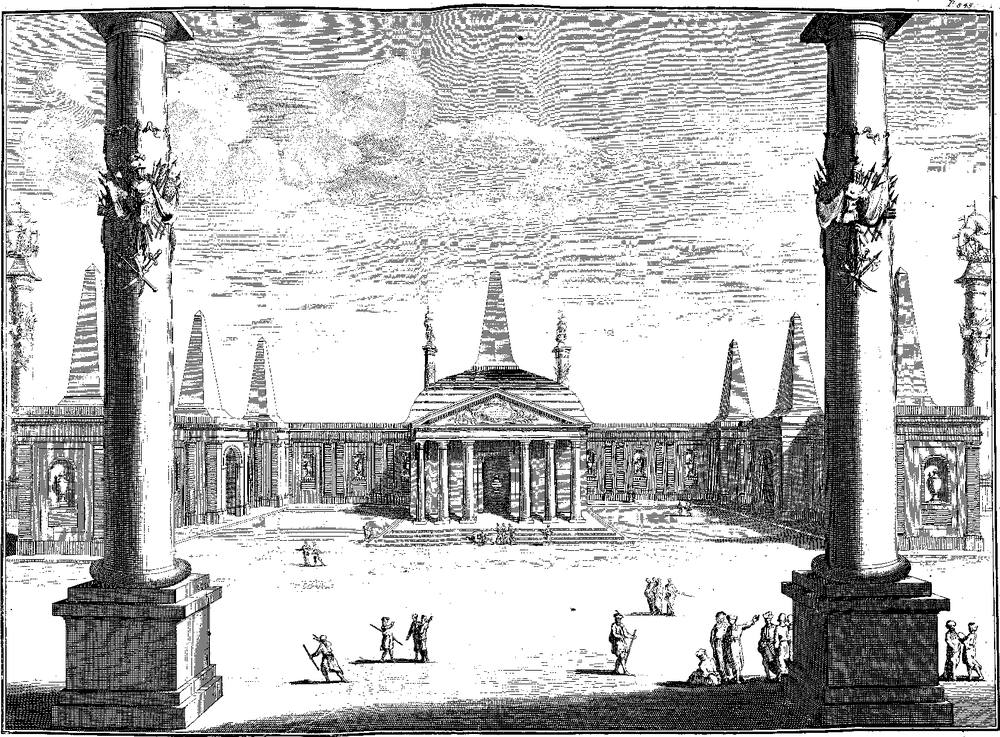
1 Macc. x. 67, &c. sent Apollonius General of his troops to Jamnia in Palestine, to defy Jonathan to give him battle, telling him, that he trusted only to his rocks and mountains, where he kept close without daring to descend into the plain. Jonathan stung with these reproaches, got together ten thousand chosen men, laid Siege to Joppa, and carried it with ease. From thence he marched against Apollonius, defeated him, killed eight thousand of his men, and returned loaded with booty to Jerusalem. Alexander Balas hearing of this good success, heaped new honours on him, and gave him fresh marks of his esteem.
Alexander Balas was killed some years after28, whereupon Demetrius Nicator was 1 Macc. xi.advanced to the throne of Syria. Jonathan taking his advantage of the troubles in Syria, besieged the citadel of Jerusalem. But some ill designing persons having informed Demetrius of it, he sent for Jonathan to Ptolemais, to answer such accusations as were prefer’d against him. He went thither, and by his rich presents procured the King’s friendship, and the confusion of his accusers. Demetrius confirmed him in the enjoyment of what he had already in possession, and besides, added new favours. Sometime after29, Jonathan having desired Demetrius to recal his troops which he had lodged in the citadel of Jerusalem; this prince answered him, that he would not only perform what he requested, but wou’d besides do more for the advancement of his, and of his people’s reputation, provided he would send him succours to reduce the inhabitants of Antioch, who had rebelled against him. 1 Macc. xi. 41, 42, &c. 1 Macc. xi. 53, 54, &c.Jonathan sent him three thousand chosen men; who rescued him from the danger he was exposed to; for his people had besieged him in his palace. Those of Antioch were obliged to have recourse to his clemency, and desire peace of him.
Demetrius was not so grateful as he might have been, for such an eminent piece of service. He in a very short time quarrelled with Jonathan, and did him all the mischief he could. His ingratitude was the cause of Jonathan’s declaring for young Antiochus, whom Tryphon had set upon the throne of Syria30. Jonathan fought several battles with Demetrius’s generals, wherein he always had the advantage. About the same time he renewed his alliance with the 1 Macc. xii. 1, 2, &c.Romans, and Lacedemonians. Afterwards upon intelligence, that Demetrius’s Generals were upon their march against him, he went as far as Syria to meet them: but they not daring to engage him, he retreated. Jonathan marched with his army against the Zabadean Arabians, or Nabatheans; he defeated them, and returned to Jerusalem loaded with a good booty. He undertook to rebuild the walls of Jerusalem, and to raise a wall between the fortress, which was in the hands of the Syrians, and the city.
1 Macc. xiii. 1, 2, 3, 4, &c.In the mean time Tryphon having conceived the design of dispatching young Antiochus, and stepping into his throne, thought it in the first place necessary to secure the person of Jonathan. He persuaded him to come to Ptolemais, and having not above a thousand men with him, the inhabitants, as soon as he was entred into the city, shut the gates, killed the Jews who attended Jonathan, seized on him himself, and put him in chains. Tryphon afterwards marched against Simon, Jonathan’s brother, who was appointed governor of the people in his place. Simon put himself in a condition to make a good defense. But Tryphon not daring to run the hazard of a battle, sent word to Simon, that he had seized on Jonathan for certain sums of money only, which he owed the king; that if he would send him an hundred talents in silver, and Jonathan’s two sons for hostages he would give him his liberty. Simon easily understood, that these proposals were not sincere: nevertheless that he might be liable to no reproaches from the people, he sent to Tryphon what he had demanded. But Tryphon did not keep his word: he killed Jonathan and his sons some time after31 at Bascama, perhaps Besek, not far from Bethsan. Simon sent and enquired after the bones of Jonathan his brother, and buried them at Modin in a magnificent mausoleum, which he there erected, in memory of his father 1 Macc. xiii. 27.and his brothers. This was a lofty edifice built both within and without of polished stones. He set up seven pyramids there, one for his father, one for his mother, and four for his four brothers. He adorned the edifice with large columns, and upon them placed arms and ships in carved work, which were seen at a distance by those who sailed near this coast. This sepulchre was still to be seen in the time of Eusebius and S. Jerom. There was a general and great mourning over all Israel for Jonathan, and the people lamented him for many days.
XII. JONATHAN, the son of Absalom was sent by Simon the Maccabee, to make
himself master of Joppa. Jonathan entred the city by force, drove those out that were there, and settled himself in their room, 1 Macc. xiii. 11. In the year of the world 3861, before J. C. 139, before the vulgar Æra 143.
XIII. JONATHAN, the son of Ananus, and High Priest of the Jews. He succeeded Joseph firnamed Caiaphas, in the year of the world 4038, and of J. C. 38. he was himself succeeded by his son Theophilus, who was confirmed in this Office in 4040 and deposed in 4040. VitelliusJoseph. Governor of Syria, created Jonathan High Priest, and some time after deprived him of the Pontificate, in order to invest Joseph. Antiq. lxviii. c. 7. Antiq. l. 19. c. 5.Theophilus with it. Agrippa took it from Theophilus, and gave it to Simon firnamed Cantharas, the son of Boethus. Some time Antiq. l. 19. c. 6.after he deprived Simon of it, and offered it again to Jonathan. But he excused himself from accepting it, and told the King, that he was very sensible of the honour he intended him; but did not think himself worthy of it: that he was satisfied with having once worn the sacred ornaments, that he knew a man, who for the purity of his manners, and innocency of his life, better merited this dignity; and this was his brother Matthias, on whom the king accordingly confer’d the High Priesthood, in the year of J. C. 45, of the vulgar Æra 43.
Jonathan had been principally concerned in sending Felix to be governor of Judea, and therefore thought, that he had more authority than another person to represent the great mischief, which he did the Country. Felix weary of these remonstrances from such a censor, resolved to dispatch Antiq. l. 20. c. 6.him. And as the blameless life of Jonathan did not furnish him with any pretence for doing so, he prevailed with one Dora, a native of Jerusalem, and Jonathan’s particular friend, to assassinate him. Dora therefore prepared ruffians, who coming to Jerusalem with daggers concealed under their cloaks, got among Jonathan’s people, and falling upon the old man, murdered him. I do not know in what year exactly this happened. Felix was Governor of Judea till the year 60 of the vulgar Æra.
IONIA, part of Asia Minor, which reaches along the Egean sea, to the westward of it. Caria lies to the south of it, and Æolis to the north. There were computed to be twelve cities antiently in Ionia, Miletus, Myus, Lebedus, Colophon, Priene, Theos, Clazomenæ, Ephesus, Phocea, and Smyrna in the continent, together with Chios and Samos in the islands of the same name. No one doubts but that the name Ionians came from Javan the son of Japhet: but some suppose that of old, it included the people of Attica, and other inhabitants of Greece. See above, Javan.
JONICUS, or Jonithus, whom fabulous history reports to be the fourth son of Noah, is not mentioned in Scripture, Josephus, or in any authentick writer. The first who takes notice of him is the spurious Methodius, from whom Peter Comestor copied what he says of him in his Scholastick history, and after him all who at any time have spoken of him.
What we read concerning him in the counterfeit Methodius, Bishop of Patara, and a Martyr, is contained in his book intitled, Revelations of what has happened from the beginning of the world, and must still hereafter happen, t. 3. Biblioth. PP. and seq. c. 6. Here it is said, that in the year of the world 3109 Noah had a fourth son, whose name was Jonithus, and in the year 3300, he made him great presents, and sent him into the land of Etham. Now after the death of Noah, in the year of the world 3690, the sons of Noah came from the east, and from the land of Etham, and built a Tower in the land of Shinar, where the dispersion of mankind began and the confusion of languages. This Jonithus had his portion from the entrance of Etham to the sea, viz. all the land from the sun or east, and therein fixed his habitation. He received from God the gift of wisdom, and a capacity for arts and letters, and was the first Inventor of Astronomy. Nimrod making him a visit, Jonithus informed him, that according to the influence of the Stars, he was to reign over the land.
Nimrod and Jonithus lived in good understanding, while the other sons of Noah were at war with Nimrod. Jonithus built a city which bore his own name, and in a letter to Nimrod informed him, that the sons of Japhet would destroy the kingdom of Ham. Every one knows, that this pretended Methodius is an impostor, who deserves no credit.
JOPPA, a sea-port town in Palestine upon the Mediterranean. It is called Jaffa or Japha in the writers of the middle age, and in modern authors. It was the only port which the Hebrews were masters of, upon the Mediterranean. Profane Stephan. in Jope.authors think, that it derives its name from Jopa the daughter of Æolus, and wife of Cepheus, who was the founder of it. In S. Jerom’s time there were still some marks visible of the chain which Andromeda was fastned to, when she was exposed to be devoured by the sea monster32. It is probable,
that the fable of Andromeda was forged from Jonah’s adventure, who having imbarked at Joppa, was cast into the sea, and swallowed up by a sea monster. See Jonah. Joppa was situated in a fine plain between Jamnia to the south, and Cesarea of Palestine to the north, and Ramа or Ramula to the east. The port of Joppa is by no means good, by reason of the rocks which project into the sea. There is frequent mention Joseph. l. 3. de Bello, c. 25. Acts ix. 36, 37, &c. Acts. x. 5, &c.of Joppa as well in the books of the Old Testament, written in Hebrew, as in the New Testament. Tabitha, whom S. Peter raised from the dead, dwelt at Joppa. The same Apostle was at Joppa when God shewed him a linen cloth full of creeping things, to signify to him, that he was no longer to make any distinction between Jew and Gentile, when he found people dispos’d to receive the word of truth.
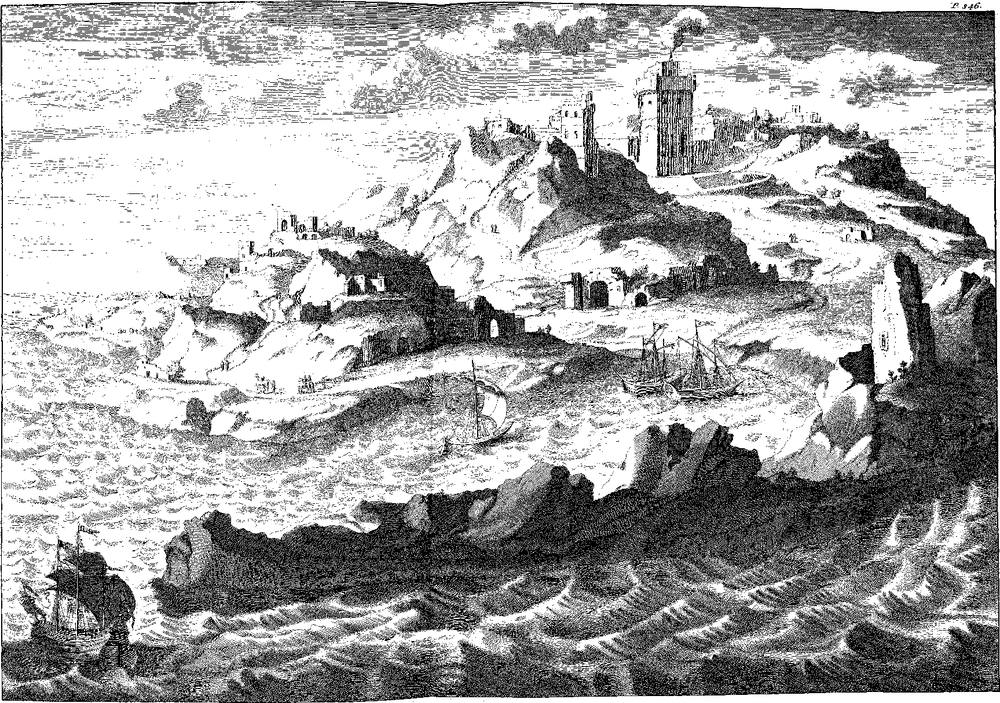
I. JORAM, the son of Toi, King of Hamath in Syria, was sent to David by his father, to compliment him upon the victory which he had obtained over Hadadezer king of Syria his enemy, 2 Sam. viii. 10. In the year of the World 2960, before J. C. 1040, before the vulgar Æra 1044.
II. JORAM, the son and Successor of Ahab King of Israel. He did not immediately succeed his father Ahab, but his eldest brother Ahaziah, who dying without children 2 Kings viii.16,&c.left him the kingdom33. He did evil in the sight of the Lord, but not so much as Ahab his father and Jezebel his mother; for he removed the statues of Baal which his father had caused to be erected; but he followed the ways of Jeroboam the son of Nebat, that is to say, he continued to pay an impious worship to the Golden calves. Mesha King of Moab, who owed the king of Israel an hundred thousand lambs, and an hundred thousand rams with their fleeces, having revolted, and refused to pay this tribute, Joram prepared to make war against him, and invited Jehoshaphat King of Judah to accompany him. He came and brought besides the king of Edom who was tributary to him. These three Princes advanced with their army thro’ the wilderness of Edom, but soon discovered, that they were in danger of perishing for want of water. Elisha procured it for them, and delivered them from this apprehension, but not out of any consideration for Joram. The prophet reproached him to his face with his impieties, and told him, that if he had not had more regard for Jehoshaphat than for him, he would not have condescended so much as to look upon him. Elisha notwithstanding did very important services for Joram during his wars with the King of Syria34. This prophet discovered to him all the designs and resolutions which were concerted in Benhadad’s council, and thereby rendered all the efforts of this Prince ineffectual. Benhadad having laid siege to Samaria35, the famine was so terrible there, that a woman was known to eat her own son.
Joram being informed of it, rent his clothes, and all the people saw he wore sackcloth upon his flesh. At the same time he ordered one of his servants to go and cut off Elisha’s head, as if he had been the cause of these calamities, or that it had been in his power to put a stop to them. Elisha, who was then in his house, desired his friends, who were with him, to shut the door, and hinder the persons whom the King had sent from 2 Kings vii. 1, 2, 3, &c.entring; telling them, that Joram was coming himself, to revoke the order which he had too rashly given.
Accordingly the King came almost at the same time, and said to Elisha, You see the extreme misery we are reduced to, and what more can we expect from the Lord? Elisha answered him, Tomorrow at this same hour, a measure of fine flour, and two measures of barley, shall be sold at the gate of Samaria for a shekel. (A shekel was worth about two shillings and three pence.) One of the Officers of the army, on whose hand the King leant, answered the man of God, If the Lord were to open the cataracts of Heaven, would it be possible, think you, that what you are speaking of should come to pass? Elisha replied, you shall see it with your eyes, but shall not partake of this plenty. Four lepers who were without the city, going by night to the Syrian camp, discovered that the enemy were all retired, that they had been seized with a pannick terror, and were fled, leaving their camp full of provisions. The lepers gave intelligence of this to the sentinels of the city, who sent notice of it to the King. Joram at first thought it was a feint, and that the enemy made a shew of retreating, with a design of drawing the besieged out of the city, and putting all of them to the sword. He sent a Body of horse therefore to make farther discoveries, and they reported, that they had found the ways full of arms and clothes, which the Syrians had thrown away, that they might be swifter in their flight.
Hereupon all the people went out of Samaria, pillaged the enemy’s camp, and Elisha’s prophecy was accomplished, concerning the price of wheat and barley at
Joram (II) continues on the next page
Footnotes
-
Chrysost. homil. x. in Matt. p. 117. & xxi. p. 437. ↩
-
Hieronym. contra Lucifer. c. 3. ↩
-
Beda in Joan. Smaragd. Abb. S. Mich. in fest. S. Joan. Præfationes vulgo præfixæ Evangel. & Apoc. Soto. Lyr. Carthus. D. Thom. &c. ↩
-
Ita PP. passim. Epiph. hæres. 58. Ambros. de Symbol. c. 30. de Instit. virg. c. 72. Chrysost. de virg. c. 82. Paulin. Ep. 43. Hieronym. August. alii. ↩
-
John xviii. 15, 16. Vide Chrysost. homil. 82. in Matt. Hieron. Ep. 16. Aug. homil. 113. in Joan. ter ↩
-
Translators’ note. But these, with the other Catholick Epistles, Clemens Alexandrinus, in his Ὑποτυπώσεων, ranks among the sacred writings. Tertullian has citations from the second Epistle, and appeals to it as canonical. And Origen, tho he says it was by some disputed, whether the second and third Epistles of S. John S. John were genuine, that is, whether they were written by S. John the Apostle (for some would have it, that one John a Presbyter, a Disciple of Christ, and contemporary with S. John, was the Author of them) yet himself gives the point up, and acknowledges them to be the Apostle’s. See Euseb. Hist. l. 6. c. 14. Tertull. de carne Christi, c. 24. ↩
-
Dionys. Alex. apud Euseb. lib. 7. c. 25. Aug. homil. 124. in Joan. Chrysost. Hieronym. alii. b ↩
-
Aug. in Joan. homil. 124. Greg. Turon: de glor. Mart. c. 30. ↩
-
See the relation of Palmyra inserted in M. le Brun’s voyage, p. 343. ↩
-
In the year of the world 2972, before J. C. 1028, before the vulgar Æra 1032. ↩
-
In the year of the world 2974, before J. C. 1026, before the vulgar Æra 1030. ↩
-
Vide Hieronym. Præfat. in Jonam. Pseudo-Epiph. & Doroth. de morte & vita Prophet. Quæst. ad Antioch. q. 65. inter Opera S. Athanas. 2 ↩
-
In the year of the World 3120, before J. C. 880, before the vulgar Æra 884. ↩
-
This is the tradition of the country, says F. Eugenius Roger. l. 1. c. 12. ↩
-
קיקיוןKikajon. 70. Κολοκύνθη Cucurbita, Alii Interpp. Græci Κισσός Hedera. ↩
-
Translators’ note. It is situated on the west side of the river Tigris, where was anciently only a suburb of old Niniveh, for the city itself stood on the east side of the river, where are to be seen some of its ruins of great extent even to this day. Mosul is only famous for being the seat of the Patriarch of the Nestorians, of which sect are most of the Christians in these parts, Prid. Connect. &c. Part 1. Book 1. ↩
-
The year is uncertain. This fell out under the Judges, and in a time, when there was no King nor Ruler in Israel. ↩
-
In the year of the world 2911, or 2912, before J. C. 1088, before the vulgar Æra 1092. ↩
-
In the year of the world 2942, before J. C. 1058, before the vulgar Æra 1062. ↩
-
In the year of the world 2944, before J. C. 1056, before the vulgar Æra 1060. Oath. ↩
-
In the year of the world 2945, before J. C. 1055, before the vulgar Æra 1059. ↩
-
In the year of the world 2949, before J. C. 1051, before the vulgar Æra 1055. contest ↩
-
In the year of the world 3843, before J.C. 157, before the vulgar Æra 161. ↩
-
1 Macc. ix. 59, 60, 61, &c. In the year of the world 3846, before J.C. 154, before the vulgar Æra 158. ↩
-
In the years of the world 3851, and 3852. ↩
-
In the year of the world 3854, before J.C. 146, before the vulgar Æra 150. ↩
-
In the year of the world 3856, before J.C. 144, before the vulgar Æra 148. sent ↩
-
In the year of the world 3858, before J. C. 142, before the vulgar Æra 146. ↩
-
In the year of the world 3860, before J. C. 140, before the vulgar Æra 144. ↩
-
In the year of the world 3860, before J. C. 140, before the vulgar Æra 144. ↩
-
In the year of the world 3861, before J. C. 139, before the vulgar Æra 143. 2 ↩
-
Hieronym. in cap. 4. Jonæ. & in epitaphio Paulæ. Vide & Joseph. de Bello Jud. l. 3. c. 15. bable ↩
-
In the year of the world 3180, before J. C. 892, before the vulgar Æra 898. ↩
-
2 Kings vi. In the year of the world 3115, before J. C. 885, before the vulgar Æra 889. ↩
-
2 Kings vi. vii. In the year of the world 3119, before J. C. 881, before the vulgar Æra 885. ↩