Works › The Paradise of the Soul
Volume 37 · ≈ pp. 509–511
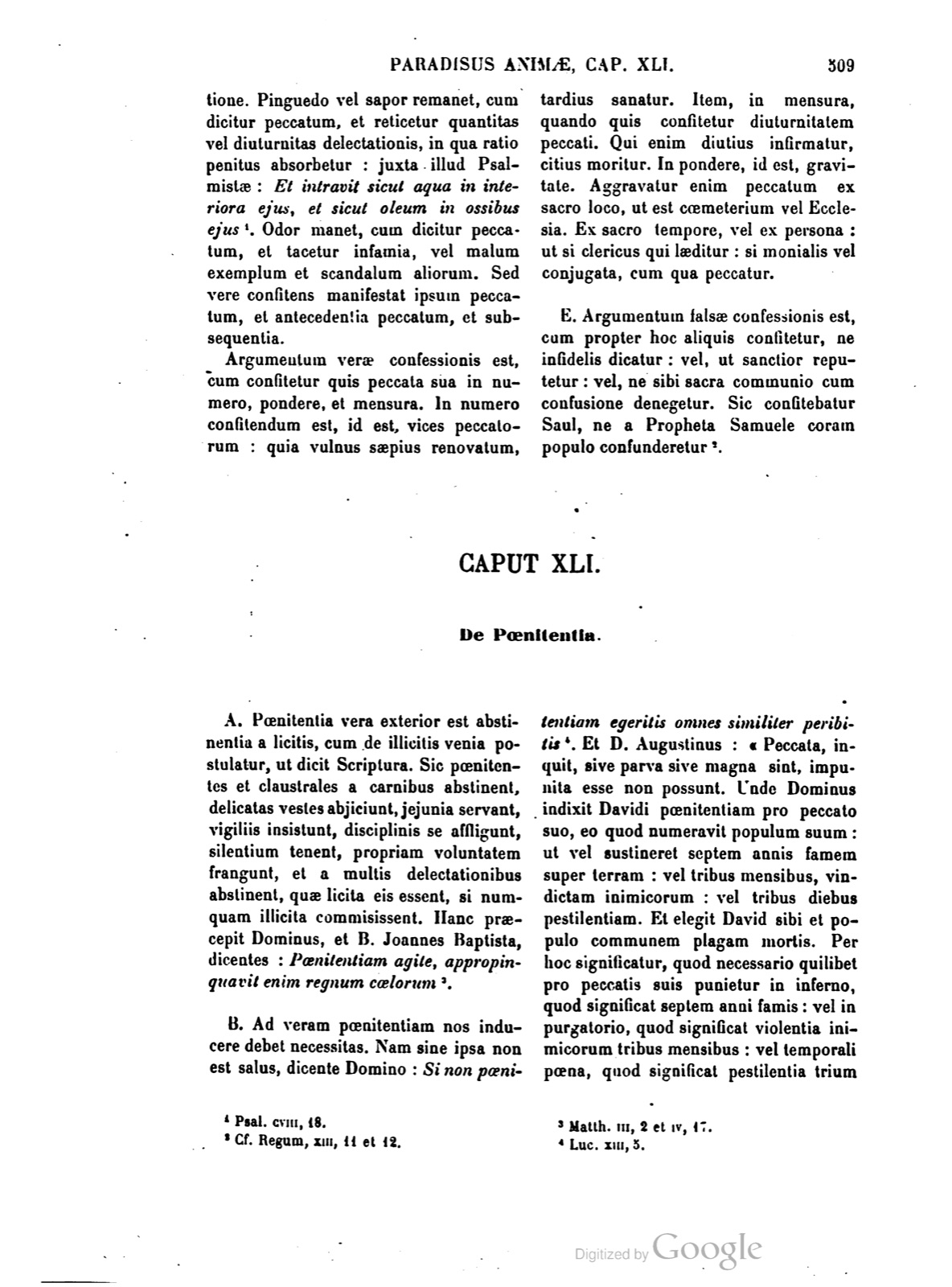
Chapter XLI. On Penance.
A marker with ≈ is an approximate page boundary, placed by measure of the text; the page photographs remain the authority. In the paired views, clicking a page marker brings that page into view.
Caput XLI.
De Poenitentia.
A. Poenitentia vera exterior est abstinentia a licitis, cum de illicitis venia postulatur, ut dicit Scriptura. Sic poenitentes et claustrales a carnibus abstinent, delicatas vestes abjiciunt, jejunia servant, vigiliis insistunt, disciplinis se affligunt, silentium tenent, propriam voluntatem frangunt, et a multis delectationibus abstinent, quae licita eis essent, si numquam illicita commisissent. Hanc praecepit Dominus, et B. Joannes Baptista, dicentes: Poenitentiam agite, appropinquavit enim regnum coelorum 1.
B. Ad veram poenitentiam nos inducere debet necessitas. Nam sine ipsa non est salus, dicente Domino: Si non poenitentiam egeritis omnes similiter peribitis 2. Et D. Augustinus: "Peccata, inquit, sive parva sive magna sint, impunita esse non possunt. Unde Dominus indixit Davidi poenitentiam pro peccato suo, eo quod numeravit populum suum: ut vel sustineret septem annis famem super terram: vel tribus mensibus, vindictam inimicorum: vel tribus diebus pestilentiam. Et elegit David sibi et populo communem plagam mortis. Per hoc significatur, quod necessario quilibet pro peccatis suis punietur in inferno, quod significat septem anni famis: vel in purgatorio, quod significat violentia inimicorum tribus mensibus: vel temporali poena, quod significat pestilentia trium dierum. Sic utile est nobis eligere poenitentiam levissimam, et subito transeuntem 3."
Chapter XLI.
On Penance.
A. True exterior penance is abstinence from lawful things, when pardon is sought for unlawful things, as Scripture says. Thus penitents and cloistered persons abstain from meats, cast off delicate garments, keep fasts, persist in vigils, afflict themselves with disciplines, keep silence, break their own will, and abstain from many delights that would be lawful for them if they had never committed unlawful things. The Lord and blessed John the Baptist commanded this, saying: Do penance, for the kingdom of heaven has drawn near 1.
B. Necessity ought to induce us to true penance. For without it there is no salvation, as the Lord says: Unless you do penance, you will all perish in the same way 2. And St. Augustine says: "Sins, whether small or great, cannot be unpunished. Hence the Lord imposed penance on David for his sin, because he numbered his people: either that he should endure famine over the earth for seven years, or vengeance of enemies for three months, or pestilence for three days. And David chose for himself and the people the common plague of death. Through this it is signified that necessarily each person will be punished for his sins in hell, which the seven years of famine signify, or in purgatory, which the violence of enemies for three months signifies, or by temporal punishment, which the pestilence of three days signifies. Thus it is useful for us to choose penance that is very light and quickly passing 3."
C. Argumentum verae poenitentiae est, debita commensuratio poenae contra culpam: ut secundum quantitatem culpae, sit quantitas et gravitas poenae: secundum delectationem culpae, sit amaritudo poenae: secundum diuturnitatem culpae, sit diuturnitas poenae: et secundum multiplicitatem culpae, sit multiplicitas poenae: juxta illud Joannis: Facite fructum dignum poenitentiae 4. Sicut enim singulae infirmitates corporis habent necessario singulas medicinas, et nulla tam efficax est ut sanet omnes aegritudines: ita et singula peccatorum genera specialem habent poenitentiam. Non enim directe emendatur superbia per eleemosynam, rancor et invidia per orationem, avaritia per jejunium, impudicitia per vigilias, etc. Sed de superbia directe satis fit per humilitatem, de avaritia per eleemosynarum largitionem, de impudicitia per carnis castigationem in cilicio et disciplina, de gula per jejunium, de loquacitate per orationem, de invidia per charitatem et remissionem injuriae, de rapina et injustis possessionibus per restitutionem, etc. Quod si quis, ut dicit D. Chrysostomus, non potest explere omnem satisfaciendi ordinem, tunc benignus Dominus qualemcumque suscipit emendam. Tunc pro injustis rebus valet jejunium, si non potest restituere: si non potest jejunare, valet oratio: si non potest orare prae infirmitate, sufficit Deo bona voluntas.
C. The proof of true penance is due measuring of punishment against fault: so that according to the quantity of fault there may be the quantity and gravity of punishment; according to the delight of fault, the bitterness of punishment; according to the length of fault, the length of punishment; and according to the multiplicity of fault, the multiplicity of punishment, according to that saying of John: Make fruit worthy of penance 4. For just as individual infirmities of the body necessarily have individual medicines, and none is so effective that it heals all sicknesses, so also individual kinds of sins have special penance. For pride is not directly amended through almsgiving, rancor and envy through prayer, avarice through fasting, immodesty through vigils, and so on. But satisfaction is made directly for pride through humility; for avarice through generous giving of alms; for immodesty through chastisement of the flesh in hair-shirt and discipline; for gluttony through fasting; for loquacity through prayer; for envy through charity and forgiveness of injury; for robbery and unjust possessions through restitution, and so on. But if someone, as St. Chrysostom says, cannot fulfill the whole order of making satisfaction, then the benign Lord receives whatever amendment there is. Then for unjust things fasting avails, if he cannot restore; if he cannot fast, prayer avails; if he cannot pray because of infirmity, a good will suffices for God.
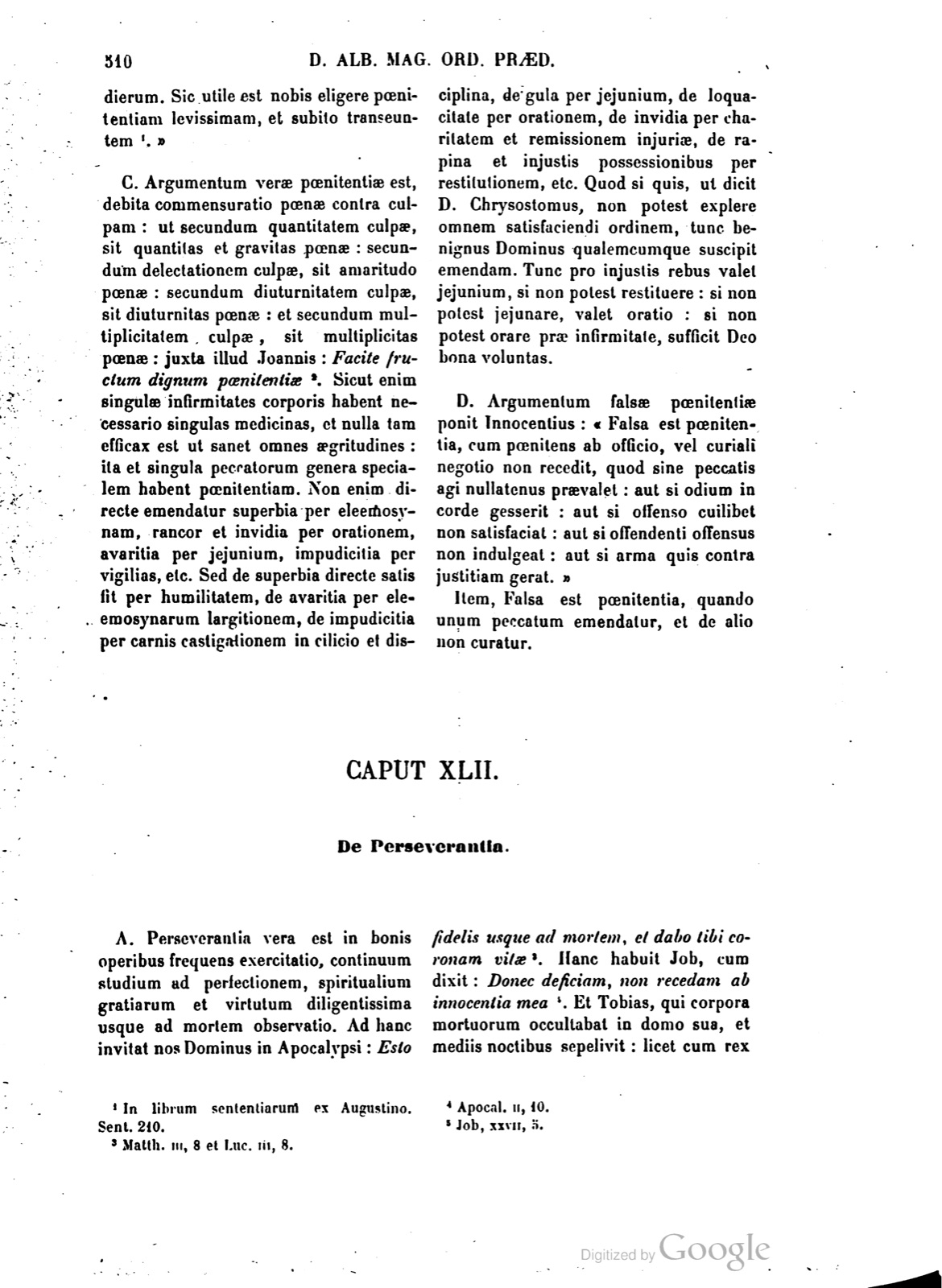
D. Argumentum falsae poenitentiae ponit Innocentius: "Falsa est poenitentia, cum poenitens ab officio, vel curiali negotio non recedit, quod sine peccatis agi nullatenus praevalet: aut si odium in corde gesserit: aut si offenso cuilibet non satisfaciat: aut si offendenti offensus non indulgeat: aut si arma quis contra justitiam gerat."
Item, Falsa est poenitentia, quando unum peccatum emendatur, et de alio non curatur.
D. Innocent sets down the proof of false penance: "Penance is false when the penitent does not withdraw from an office or courtly business which in no way can be conducted without sins; or if he has carried hatred in the heart; or if he does not satisfy anyone offended; or if, when offended, he does not forgive the one offending; or if someone bears arms against justice."
Likewise, penance is false when one sin is amended and another is not cared for.
If a page does not appear, its photograph has not been uploaded yet.