Works › The Paradise of the Soul
Volume 37 · ≈ pp. 496–498
Chapter XXXIII. On Contemplation.
A marker with ≈ is an approximate page boundary, placed by measure of the text; the page photographs remain the authority. In the paired views, clicking a page marker brings that page into view.
Caput XXXIII.
De Contemplatione.
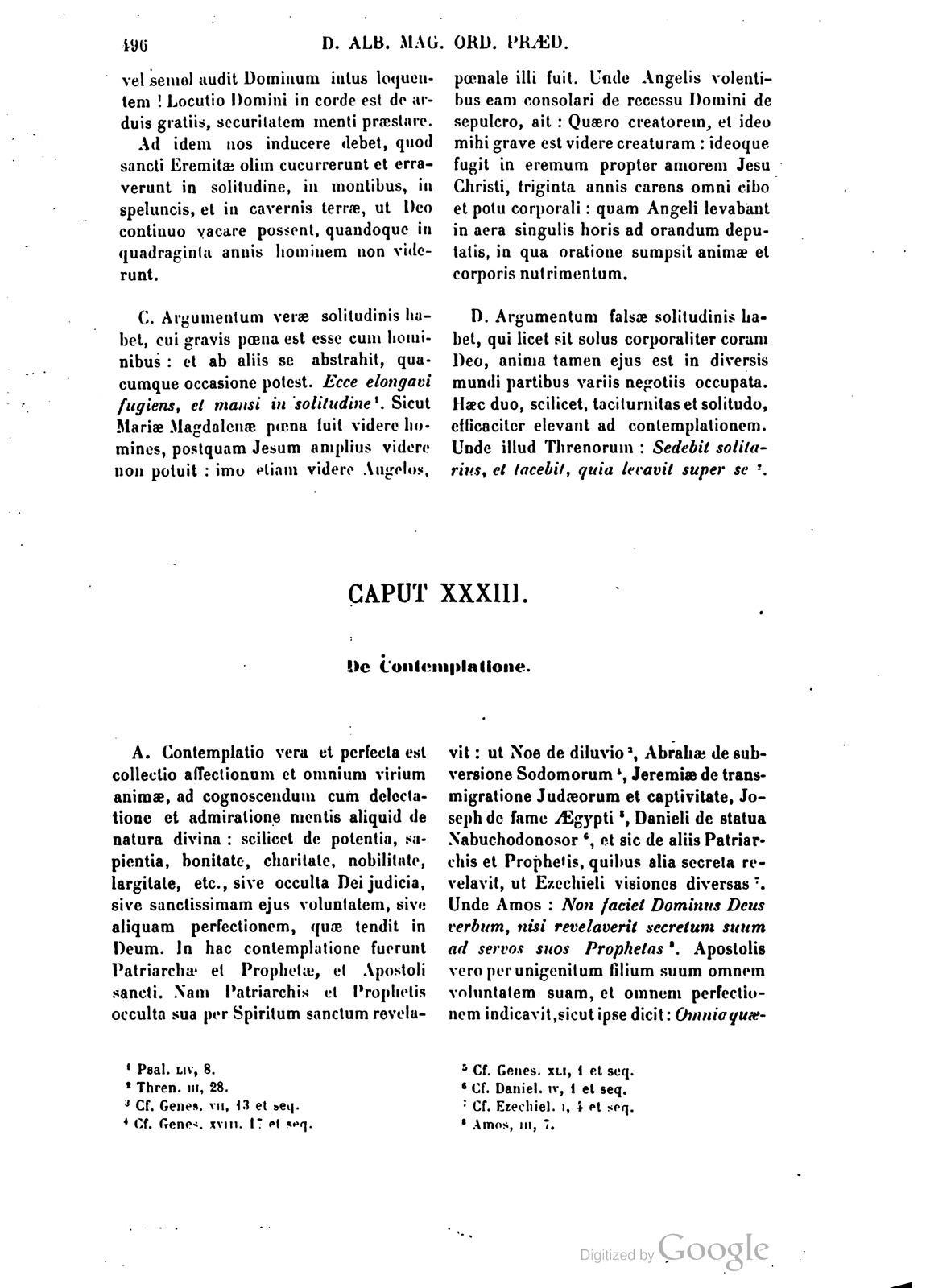
A. Contemplatio vera et perfecta est collectio affectionum et omnium virium animae, ad cognoscendum cum delectatione et admiratione mentis aliquid de natura divina: scilicet de potentia, sapientia, bonitate, charitate, nobilitate, largitate, etc., sive occulta Dei judicia, sive sanctissimam ejus voluntatem, sive aliquam perfectionem, quae tendit in Deum. In hac contemplatione fuerunt Patriarchae et Prophetae, et Apostoli sancti. Nam Patriarchis et Prophetis occulta sua per Spiritum sanctum revelavit: ut Noe de diluvio 1, Abrahae de subversione Sodomorum 2, Jeremiae de transmigratione Judaeorum et captivitate, Joseph de fame Aegypti 3, Danieli de statua Nabuchodonosor 4, et sic de aliis Patriarchis et Prophetis, quibus alia secreta revelavit, ut Ezechieli visiones diversas 5. Unde Amos: Non faciet Dominus Deus verbum, nisi revelaverit secretum suum ad servos suos Prophetas 6. Apostolis vero per unigenitum filium suum omnem voluntatem suam, et omnem perfectionem indicavit, sicut ipse dicit: Omnia quaecumque audivi a Patre meo, nota feci vobis 7, ut et ipsi posteris suis eadem revelarent, quod et fideliter fecerunt. Nam in omnem terram exivit sonus eorum, et in fines orbis terrae verba eorum 8. Sed inter alios Apostolos B. Joanni Evangelistae et B. Paulo occultissima revelavit et indicavit. Inter alia patefecit eis octo beatitudines, dicens: Beati pauperes spiritu, quoniam, etc. Beati mites, quoniam, etc. 9. Quae beatitudines in se magnam continent perfectionem, perfectamque Dei voluntatem indicant.
B. Differunt autem contemplatio, meditatio, et cogitatio. Nam in cogitatione, mentis est evagatio: in meditatione, investigatio: in contemplatione, mentis admiratio. Cogitatio est sine labore et sine fructu: meditatio est cum labore et fructu: contemplatio est sine labore et cum fructu.
C. Ad contemplationem Dei inducere nos debent tres gradus, de quibus D. Gregorius: "Primus est, ut se, scilicet anima, ad se colligat. Secundus, ut videat, qualis sit collecta. Tertius, ut super semetipsam, ac se contemplationi auctoris invisibilis intendendo subjiciat. Sed se ad se nullatenus colligit, nisi prius didicerit terrenarum atque coelestium imaginum phantasmata ab oculo mentis compescere: quidquid de visu, quidquid de auditu, quidquid de odoratu, quidquid de tactu et gustu corporeo cogitationi ejus occurrerit, respuere atque calcare: quatenus talem se quaerat intus, qualis sine istis est. Nam haec quando cogitat, quasi quasdam umbras corporum introrsus versat. Abigenda ergo sunt omnia manu discretionis ab oculis mentis, quatenus talem se anima consideret, qualis sub Deo supra corpus creata est: ut a superiore vivificata, vivificet inferius quod administrat 10."
Chapter XXXIII.
On Contemplation.
A. True and perfect contemplation is a gathering of the affections and of all the powers of the soul toward knowing with delight and admiration of mind something about the divine nature: namely about power, wisdom, goodness, charity, nobility, largesse, and so on, or the hidden judgments of God, or his most holy will, or some perfection which tends into God. In this contemplation were the Patriarchs and Prophets and the holy Apostles. For he revealed his hidden things to the Patriarchs and Prophets through the Holy Spirit: to Noah concerning the flood 1, to Abraham concerning the overthrow of Sodom 2, to Jeremiah concerning the migration and captivity of the Jews, to Joseph concerning the famine of Egypt 3, to Daniel concerning the statue of Nebuchadnezzar 4, and so concerning the other Patriarchs and Prophets to whom he revealed other secrets, as diverse visions to Ezekiel 5. Hence Amos says: The Lord God will not do a word unless he has revealed his secret to his servants the Prophets 6. But to the Apostles through his only-begotten Son he indicated all his will and all perfection, as he himself says: All things whatsoever I have heard from my Father, I have made known to you 7, so that they too might reveal the same things to their descendants, which they also faithfully did. For their sound has gone out into every land, and their words to the ends of the world 8. But among the other Apostles he revealed and indicated the most hidden things to blessed John the Evangelist and blessed Paul. Among other things he opened to them the eight beatitudes, saying: Blessed are the poor in spirit, because, etc.; Blessed are the meek, because, etc. 9. These beatitudes contain great perfection in themselves and indicate the perfect will of God.
B. Contemplation, meditation, and thought differ. For in thought there is wandering of the mind; in meditation, investigation; in contemplation, admiration of mind. Thought is without labor and without fruit; meditation is with labor and fruit; contemplation is without labor and with fruit.
C. Three degrees ought to induce us to the contemplation of God, concerning which St. Gregory says: "The first is that it, namely the soul, gather itself to itself. The second, that it see what sort it is when gathered. The third, that it submit itself above itself, by applying itself to the contemplation of the invisible author. But it in no way gathers itself to itself unless it has first learned to restrain from the eye of the mind the phantasms of earthly and heavenly images: whatever from sight, whatever from hearing, whatever from smell, whatever from bodily touch and taste has occurred to its thought, to reject and trample down, so that it may seek itself inwardly as it is without those things. For when it thinks of these things, it turns within itself, as it were, certain shadows of bodies. Therefore all things must be driven away by the hand of discretion from the eyes of the mind, so that the soul may consider itself as it was created under God above the body: so that, being given life by the superior, it may give life to the inferior which it administers 10."
Ad idem inducere nos debet ineffabilis suavitas, quae ibi percipitur: admirabilis perfectio quae ibi addiscitur: principium omnis beatitudinis quod ibi reperitur. Nam fons omnis beatitudinis summus Deus, ibi cognoscitur: et quod cognoscitur, hoc amatur: et quod vere amatur, hoc desideratur: et pro quo studiose laboratur, hoc tandem acquiritur: cumque tandem acquisitum fuerit, cum delectatione interminabili possidetur. De hac D. Bernardus: "Quae enim anima semel a Domino didicit et accepit intrare ad seipsam, et in intimis suis Dei praesentiam suspirare et quaerere faciem ejus semper: Spiritus est enim Deus: et qui quaerunt eum, oportet eos in spiritu ambulare, et non in carne, ut secundum carnem vivant. Talis, inquam, anima, nescio an vel ipsam gehennam ad tempus experiri horribilius poenaliusve ducat, quam post spiritualis studii hujus gustatam semel suavitatem, exire denuo ad illecebras, vel potius ad molestias carnis, sensuumque inexplebilem repetere curiositatem: dicente Ecclesiaste: Oculus non impletur visu, nec auris auditu 11. Audi enim hominem expertum, quae loquitur: Bonus es, inquit, Domine, sperantibus in te, animae quaerenti te 12. Ab hoc bono si quis avertere sanctam illam animam conaretur, puto haud secus accepisset, quam si se de paradiso, et ab ipso introitu gloriae, conspiceret deturbari. Audi adhuc et alium similem huic: Tibi dixit cor meum, ait, exquisivit te facies mea: faciem tuam, Domine, requiram 13. Unde dicebat: Mihi autem adhaerere Deo bonum est 14. Et item loquens ad animam suam, dicit: Convertere, anima mea, in requiem tuam, quia Dominus benefecit tibi 15. Dico ergo vobis, nihil est quod in tantum formidet quisquis hoc beneficium semel accepit, quam ne a gratia derelictus, necesse habeat denuo egredi ad carnis consolationes, imo desolationes, rursumque carnalium sensuum sustinere tumultus 16." In hac contemplatione fuit D. Augustinus, cum dixit: "Mihi autem displicebat quod agebam in saeculo: et oneri mihi erat valde, non jam inflammantibus cupiditatibus, ut solebant, spe honoris et pecuniae. Jam enim me illa non delectabant, prae dulcedine tua, et decore domus tuae, quam dilexi 17."
Ineffable sweetness, which is perceived there, ought to induce us to the same; the admirable perfection which is learned there; the beginning of all blessedness which is found there. For the highest God, the fountain of all blessedness, is known there; and what is known is loved; and what is truly loved is desired; and that for which one labors zealously is at last acquired; and when at last it has been acquired, it is possessed with unending delight. Concerning this St. Bernard says: "For the soul which has once learned and received from the Lord to enter into itself, and always in its inmost parts to sigh after the presence of God and to seek his face: for God is spirit, and those who seek him must walk in spirit and not in flesh, so that they live according to the flesh. Such a soul, I say, I do not know whether it would think it more horrible or more penal to experience even hell itself for a time, than after once tasting the sweetness of this spiritual pursuit, to go out again to the enticements, or rather the troubles, of the flesh, and to seek again the insatiable curiosity of the senses; Ecclesiastes says: The eye is not filled with sight, nor the ear with hearing 11. Hear, indeed, an experienced man speaking what he says: You are good, Lord, to those hoping in you, to the soul seeking you 12. If anyone tried to turn that holy soul away from this good, I think it would receive it no otherwise than if it saw itself thrown down from paradise and from the very entrance of glory. Hear still another like him: My heart said to you, he says, my face has sought you; your face, Lord, I will seek 13. Hence he used to say: But for me it is good to cling to God 14. And likewise, speaking to his soul, he says: Return, my soul, into your rest, because the Lord has done good to you 15. Therefore I say to you, there is nothing which anyone who has once received this benefit fears so much as lest, being abandoned by grace, he must go out again to the consolations of the flesh, indeed to desolations, and again endure the tumults of the carnal senses 16." St. Augustine was in this contemplation when he said: "But what I was doing in the world was displeasing to me, and it was very burdensome to me, with desires no longer inflaming me, as they had been accustomed, by hope of honor and money. For those things no longer delighted me, before your sweetness and the beauty of your house, which I loved 17."
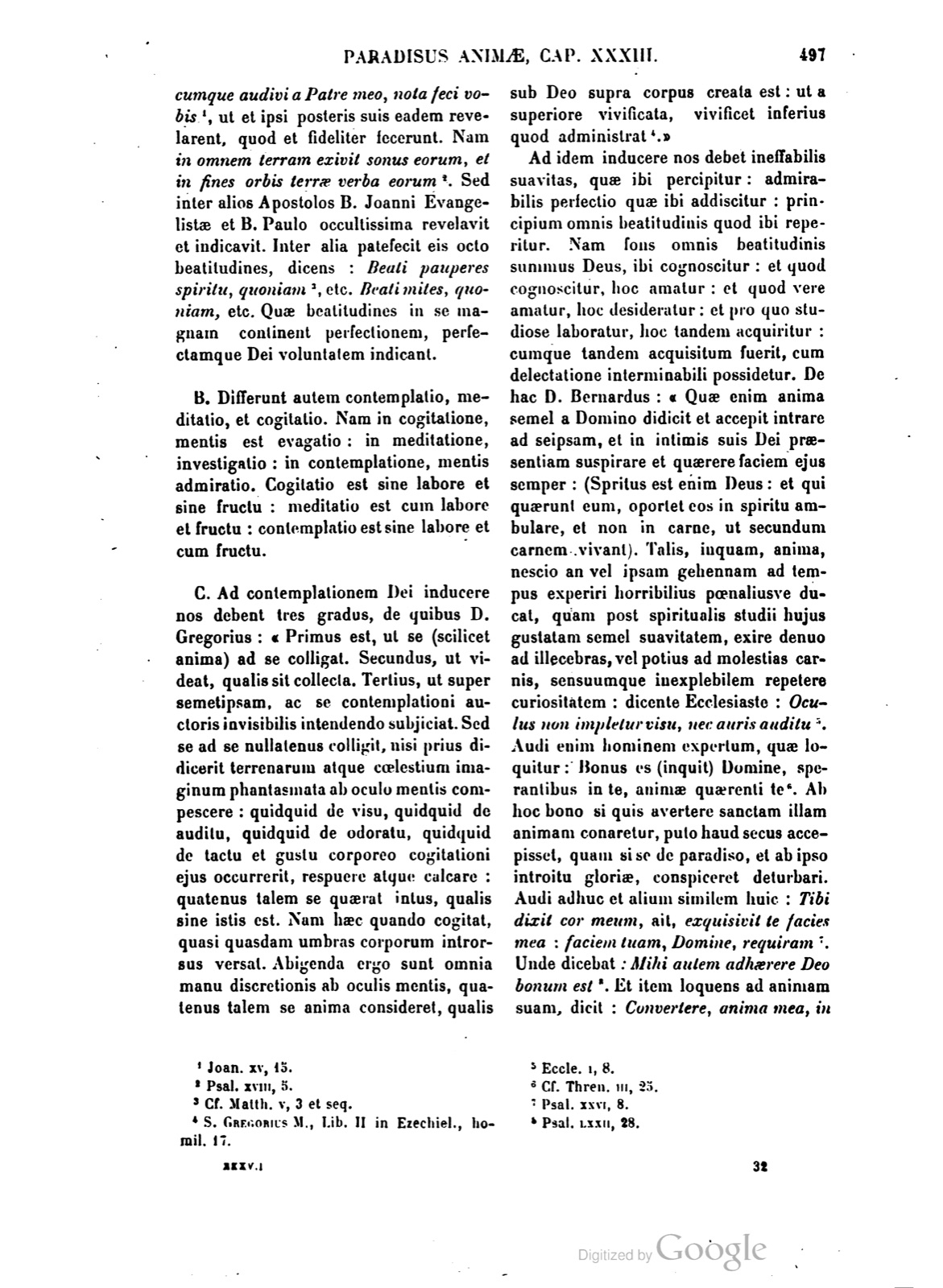
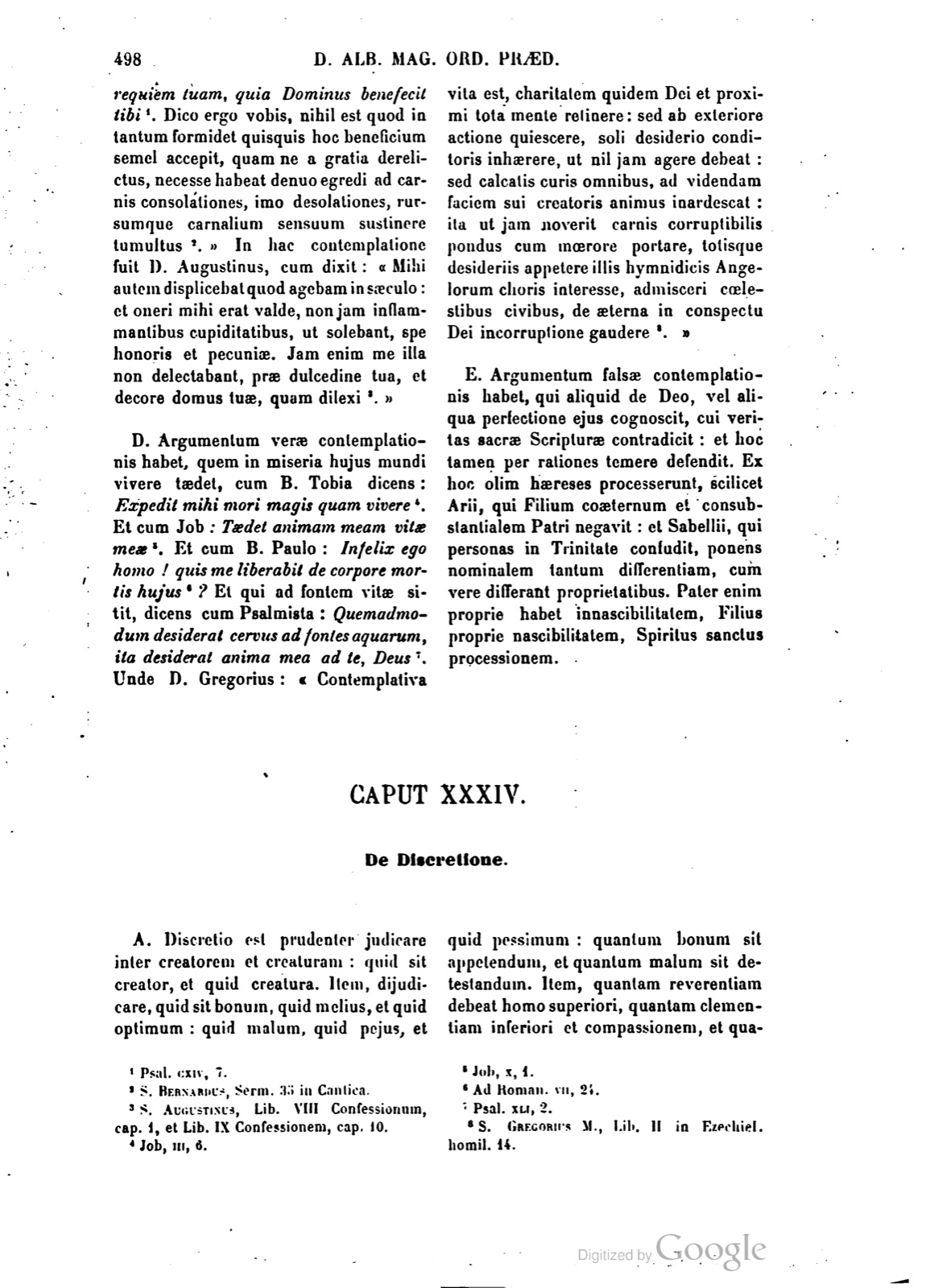
D. Argumentum verae contemplationis habet, quem in miseria hujus mundi vivere taedet, cum B. Tobia dicens: Expedit mihi mori magis quam vivere 18. Et cum Job: Taedet animam meam vitae meae 19. Et cum B. Paulo: Infelix ego homo! quis me liberabit de corpore mortis hujus 20? Et qui ad fontem vitae sitit, dicens cum Psalmista: Quemadmodum desiderat cervus ad fontes aquarum, ita desiderat anima mea ad te, Deus 21. Unde D. Gregorius: "Contemplativa vita est, charitatem quidem Dei et proximi tota mente retinere: sed ab exteriore actione quiescere, soli desiderio conditoris inhaerere, ut nil jam agere debeat: sed calcatis curis omnibus, ad videndam faciem sui creatoris animus inardescat: ita ut jam noverit carnis corruptibilis pondus cum maerore portare, totisque desideriis appetere illis hymnidicis Angelorum choris interesse, admisceri coelestibus civibus, de aeterna in conspectu Dei incorruptione gaudere 22."
E. Argumentum falsae contemplationis habet, qui aliquid de Deo, vel aliqua perfectione ejus cognoscit, cui veritas sacrae Scripturae contradicit: et hoc tamen per rationes temere defendit. Ex hoc olim haereses processerunt, scilicet Arii, qui Filium coaeternum et consubstantialem Patri negavit: et Sabellii, qui personas in Trinitate confudit, ponens nominalem tantum differentiam, cum vere differant proprietatibus. Pater enim proprie habet innascibilitatem, Filius proprie nascibilitatem, Spiritus sanctus processionem.
D. He has the proof of true contemplation whom it wearies to live in the misery of this world, saying with blessed Tobias: It is expedient for me to die rather than to live 18. And with Job: My soul is weary of my life 19. And with blessed Paul: Unhappy man that I am! who will free me from the body of this death 20? And who thirsts for the fountain of life, saying with the Psalmist: As the deer longs for the fountains of waters, so my soul longs for you, O God 21. Hence St. Gregory says: "The contemplative life is indeed to retain charity of God and neighbor with the whole mind, but to rest from exterior action, to cleave to the desire of the creator alone, so that it now ought to do nothing; but with all cares trampled down, the soul burns to see the face of its creator, so that it now knows how to bear with sorrow the weight of corruptible flesh, and with all desires to desire to be present among those hymn-singing choirs of angels, to be mingled with heavenly citizens, and to rejoice over eternal incorruption in the sight of God 22."
E. He has the proof of false contemplation who knows something about God, or about some perfection of his, to which the truth of sacred Scripture is opposed, and nevertheless rashly defends this by reasons. From this heresies once proceeded, namely that of Arius, who denied the Son to be coeternal and consubstantial with the Father, and that of Sabellius, who confused the persons in the Trinity, positing only a nominal difference, although they truly differ in properties. For the Father properly has unbegottenness, the Son properly birth, and the Holy Spirit procession.
Notes
- Compare Genesis 7:13 and following. (Cf. Genes. VII, 13 et seq.) ↩
- Compare Genesis 18:1 and following. (Cf. Genes. XVIII, 1 et seq.) ↩
- Compare Genesis 41:1 and following. (Cf. Genes. XLI, 1 et seq.) ↩
- Compare Daniel 4:1 and following. (Cf. Daniel. IV, 1 et seq.) ↩
- Compare Ezekiel 1:4 and following. (Cf. Ezechiel. I, 4 et seq.) ↩
- Amos 3:7. (Amos III, 7.) ↩
- John 15:15. (Joan. XV, 15.) ↩
- Psalm 18:5. (Psal. XVIII, 5.) ↩
- Compare Matthew 5:3 and following. (Cf. Matth. V, 3 et seq.) ↩
- St. Gregory the Great, Book 2 on Ezekiel, homily 17. (S. Gregorius M., Lib. II in Ezechiel., homil. 17.) ↩
- Ecclesiastes 1:8. (Eccle. I, 8.) ↩
- Compare Lamentations 3:25. (Cf. Thren. III, 25.) ↩
- Psalm 26:8. (Psal. XXVI, 8.) ↩
- Psalm 72:28. (Psal. LXXII, 28.) ↩
- Psalm 114:7. (Psal. CXIV, 7.) ↩
- St. Bernard, Sermon 33 on the Song of Songs. (S. Bernardus, Serm. 33 in Cantica.) ↩
- St. Augustine, Confessions, Book 8, chapter 1, and Book 9, chapter 10. (S. Augustinus, Lib. VIII Confessionum, cap. 1, et Lib. IX Confessionum, cap. 10.) ↩
- Job 3:6. (Job, III, 6.) ↩
- Job 10:1. (Job X, 1.) ↩
- Romans 7:24. (Ad Roman. VII, 24.) ↩
- Psalm 41:2. (Psal. XLI, 2.) ↩
- St. Gregory the Great, Book 2 on Ezekiel, homily 14. (S. Gregorius M., Lib. II in Ezechiel., homil. 14.) ↩
If a page does not appear, its photograph has not been uploaded yet.