Works › The Paradise of the Soul
Volume 37 · ≈ pp. 491–492
Chapter XXIX. On Maturity.
A marker with ≈ is an approximate page boundary, placed by measure of the text; the page photographs remain the authority. In the paired views, clicking a page marker brings that page into view.
Caput XXIX.
De Maturitate.
A. Maturitas vera est, cum omnes affectiones et vires animae unanimiter colliguntur in Deum. Ex hoc vero mens restringitur a vanitate, et quinque sensus ab illecebris compescuntur. Sed quando anima a beata illa unione recedit, mox diversis vanitatibus irretitur. Nam omnia quae sub coelo sunt, vana sunt, ut dicit Ecclesiastes 1.
B. Ad veram maturitatem inducere nos debet exemplum sanctissimum Jesu Christi, de cujus seriositate, sic scribit D. Augustinus: "Legimus Dominum Jesum doluisse, flevisse, ex itinere fatigatum fuisse, opprobria et injurias sustinuisse, sputa, flagella, crucem suscepisse: numquam tamen legimus eum risisse, nec in terra prosperatum fuisse. Hinc plane, hinc in se gaudent omnes electi, cum coeperint adversitatibus mundi fatigari, et nullis ejus prosperitatibus fallaciter decipi, scientes aliam viam superesse 2."
Item, Quia Scriptura multum vituperat dissolutionem et risum, juxta illud: Risum reputavi errorem, et gaudio dixi: Quid frustra deciperis 3? Et alibi: Risus dolore miscebitur, et extrema gaudii luctus occupat 4. Et Psalmista sic loquitur ad Dominum: Odisti observantes vanitates supervacue 5. Et praecipue comminatio Jesu Christi, dicentis: Vae vobis qui ridetis nunc, quia lugebitis et flebitis 6.
Item, Quia multum abstrahit unumquemque a familiaritate Dei, et obstruit mentem a perceptione gratiarum.
Chapter XXIX.
On Maturity.
A. True maturity exists when all the affections and powers of the soul are unanimously gathered into God. From this the mind is restrained from vanity, and the five senses are kept back from enticements. But when the soul withdraws from that blessed union, it is soon entangled by diverse vanities. For all things that are under heaven are vain, as Ecclesiastes says 1.
B. The most holy example of Jesus Christ ought to induce us to true maturity. Concerning his seriousness St. Augustine writes thus: "We read that the Lord Jesus sorrowed, wept, was wearied from a journey, endured reproaches and injuries, received spits, scourges, and the cross; yet we never read that he laughed, nor that he prospered on earth. Plainly from this, from this all the elect rejoice in themselves, when they have begun to be wearied by the adversities of the world and not to be fallaciously deceived by any of its prosperities, knowing that another way remains 2."
Likewise, because Scripture greatly censures dissolution and laughter, according to that saying: I reckoned laughter an error, and to joy I said: Why are you deceived in vain 3? And elsewhere: Laughter will be mixed with sorrow, and mourning occupies the ends of joy 4. And the Psalmist speaks thus to the Lord: You have hated those observing vanities uselessly 5. And especially the threat of Jesus Christ, saying: Woe to you who laugh now, because you will mourn and weep 6.
Likewise, because it draws each person much away from familiarity with God and obstructs the mind from receiving graces.
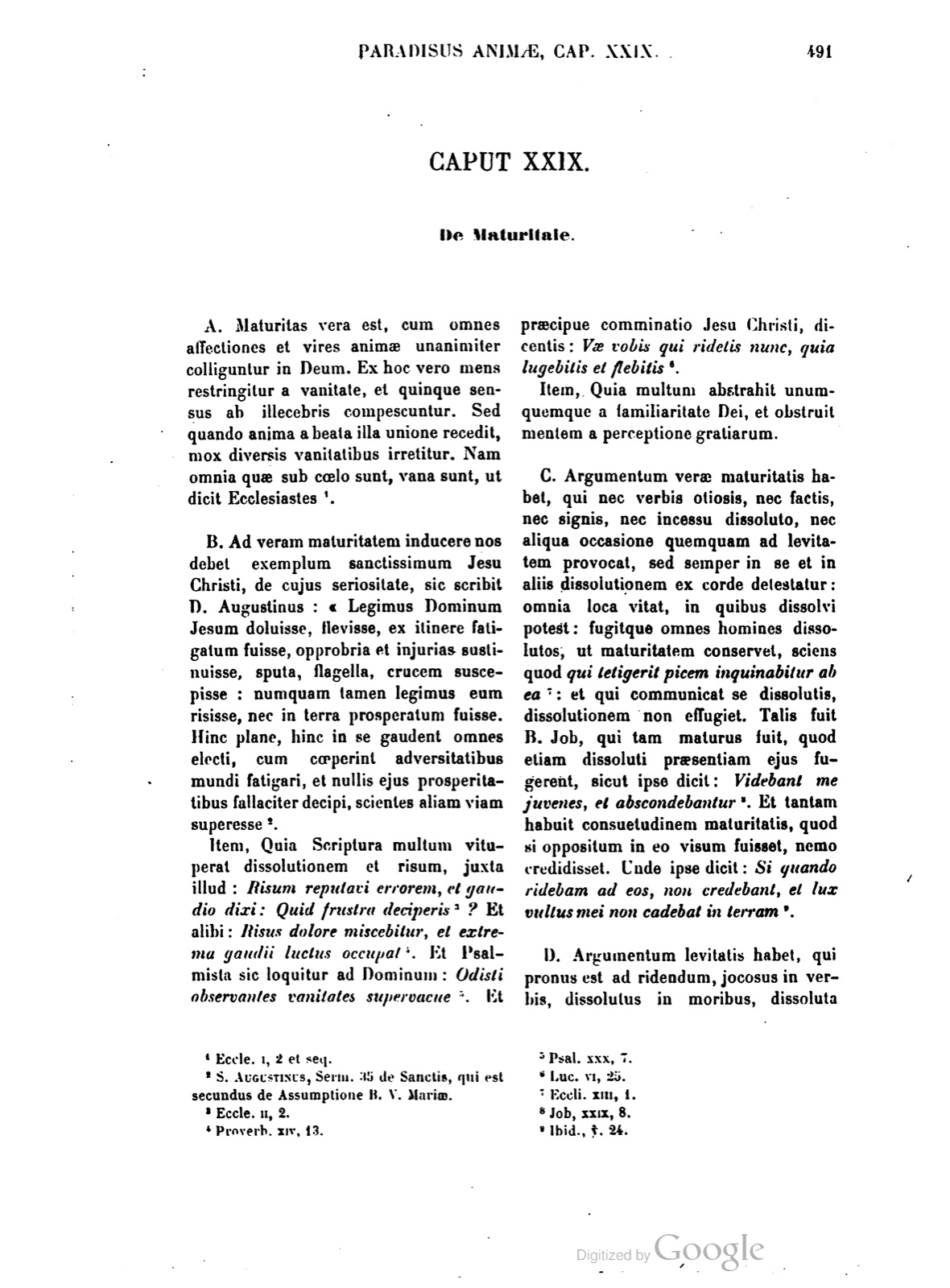
C. Argumentum verae maturitatis habet, qui nec verbis otiosis, nec factis, nec signis, nec incessu dissoluto, nec aliqua occasione quemquam ad levitatem provocat, sed semper in se et in aliis dissolutionem ex corde detestatur: omnia loca vitat, in quibus dissolvi potest: fugitque omnes homines dissolutos, ut maturitatem conservet, sciens quod qui tetigerit picem inquinabitur ab ea 7: et qui communicat se dissolutis, dissolutionem non effugiet. Talis fuit B. Job, qui tam maturus fuit, quod etiam dissoluti praesentiam ejus fugerent, sicut ipse dicit: Videbant me juvenes, et abscondebantur 8. Et tantam habuit consuetudinem maturitatis, quod si oppositum in eo visum fuisset, nemo credidisset. Unde ipse dicit: Si quando ridebam ad eos, non credebant, et lux vultus mei non cadebat in terram 9.
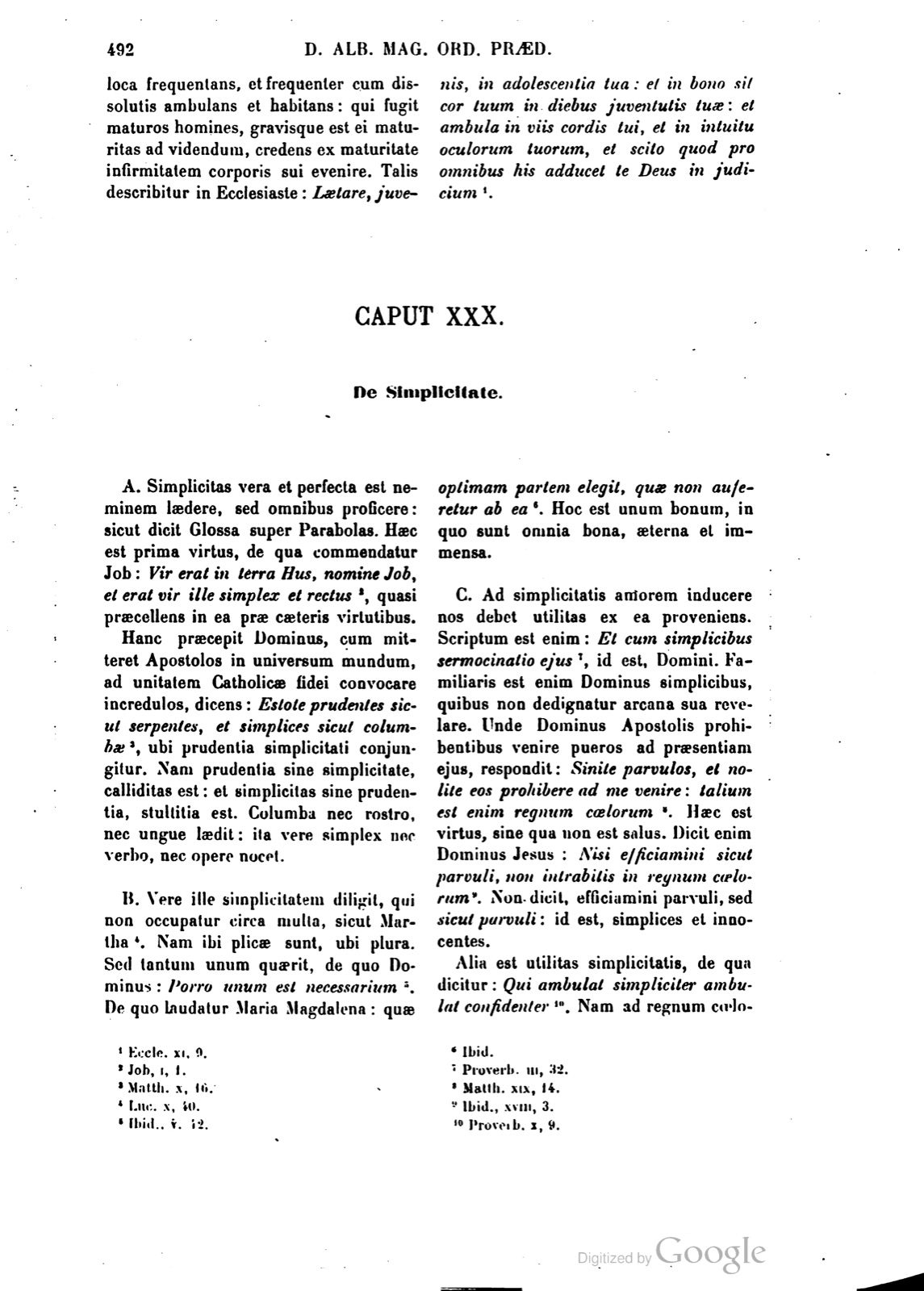
D. Argumentum levitatis habet, qui pronus est ad ridendum, jocosus in verbis, dissolutus in moribus, dissoluta loca frequentans, et frequenter cum dissolutis ambulans et habitans: qui fugit maturos homines, gravisque est ei maturitas ad videndum, credens ex maturitate infirmitatem corporis sui evenire. Talis describitur in Ecclesiaste: Laetare, juvenis, in adolescentia tua: et in bono sit cor tuum in diebus juventutis tuae: et ambula in viis cordis tui, et in intuitu oculorum tuorum, et scito quod pro omnibus his adducet te Deus in judicium 10.
C. He has the proof of true maturity who by neither idle words, nor deeds, nor signs, nor dissolute gait, nor any occasion provokes anyone to levity, but always from the heart detests dissolution in himself and in others; who avoids all places in which he can be dissolved; and flees all dissolute persons so that he may preserve maturity, knowing that he who touches pitch will be defiled by it 7, and he who associates himself with the dissolute will not escape dissolution. Such was blessed Job, who was so mature that even the dissolute fled his presence, as he himself says: Young men saw me and hid themselves 8. And he had so great a habit of maturity that if the opposite had been seen in him, no one would have believed it. Hence he himself says: If at any time I laughed at them, they did not believe it, and the light of my face did not fall to the earth 9.
D. He has the proof of levity who is prone to laughing, playful in words, dissolute in manners, frequenting dissolute places, and often walking and living with the dissolute; who flees mature persons, and to whom maturity is burdensome to see, believing that from maturity the infirmity of his body comes. Such a person is described in Ecclesiastes: Rejoice, young man, in your adolescence, and let your heart be in good in the days of your youth, and walk in the ways of your heart and in the sight of your eyes, and know that for all these things God will bring you into judgment 10.
Notes
- Ecclesiastes 1:2 and following. (Eccle. I, 2 et seq.) ↩
- St. Augustine, Sermon 35 on the Saints, which is the second on the Assumption of the Blessed Virgin Mary. (S. Augustinus, Serm. 35 de Sanctis, qui est secundus de Assumptione B. V. Mariae.) ↩
- Ecclesiastes 1:2. (Eccle. I, 2.) ↩
- Proverbs 14:13. (Proverb. XIV, 13.) ↩
- Psalm 30:7. (Psal. XXX, 7.) ↩
- Luke 6:25. (Luc. VI, 25.) ↩
- Ecclesiasticus 13:1. (Eccli. XIII, 1.) ↩
- Job 30:8. (Job XXX, 8.) ↩
- The same, verse 24. (Ibid., v. 24.) ↩
- Ecclesiastes 11:9. (Eccle. XI, 9.) ↩
If a page does not appear, its photograph has not been uploaded yet.