Works › The Paradise of the Soul
Volume 37 · ≈ pp. 484–485
Chapter XXV. On Gratitude.
A marker with ≈ is an approximate page boundary, placed by measure of the text; the page photographs remain the authority. In the paired views, clicking a page marker brings that page into view.
Caput XXV.
De Gratitudine.
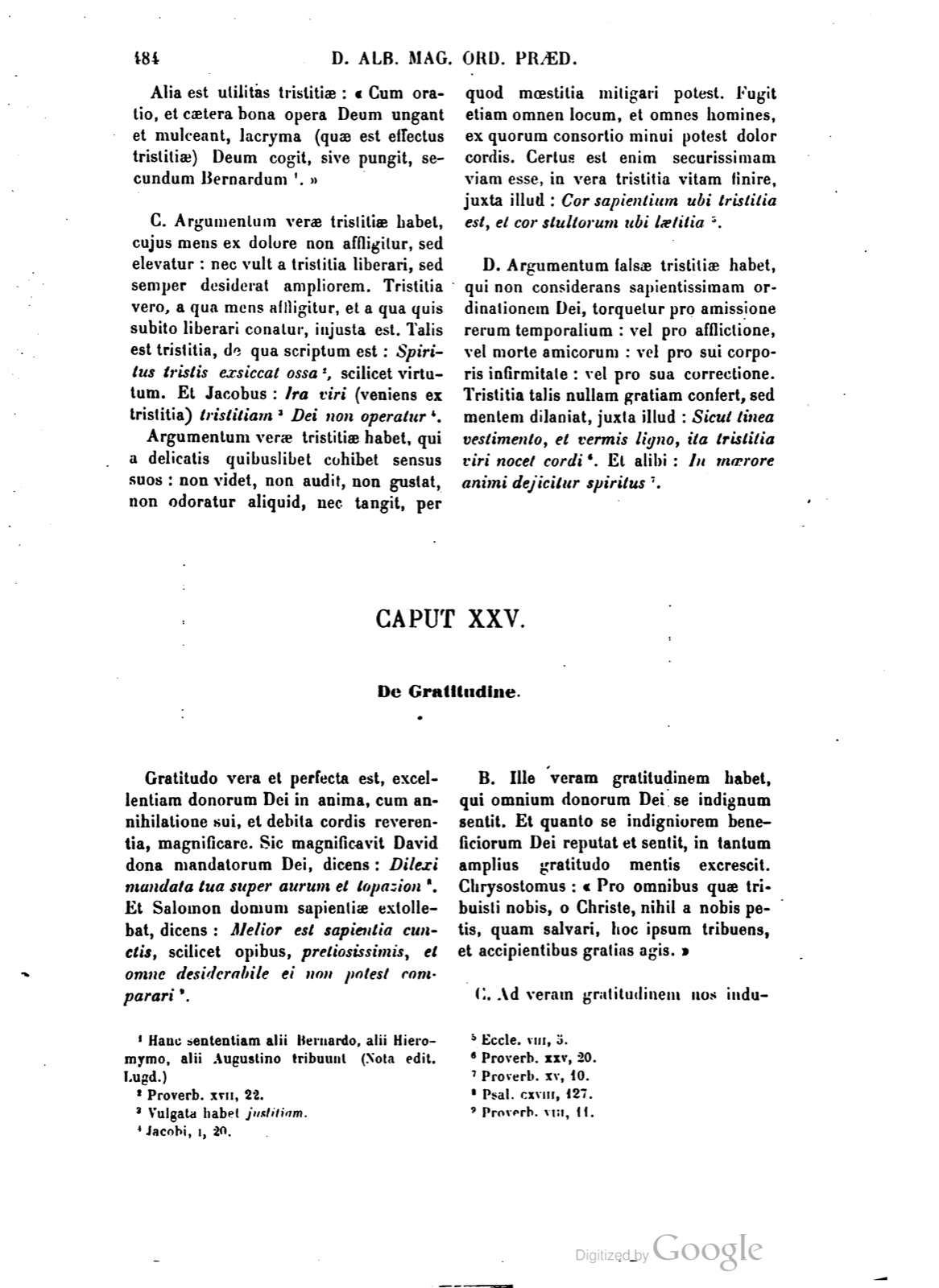
A. Gratitudo vera et perfecta est, excellentiam donorum Dei in anima, cum annihilatione sui, et debita cordis reverentia, magnificare. Sic magnificavit David dona mandatorum Dei, dicens: Dilexi mandata tua super aurum et topazion 1. Et Salomon domum sapientiae extollebat, dicens: Melior est sapientia cunctis, scilicet opibus, pretiosissimis, et omne desiderabile ei non potest comparari 2.
B. Ille veram gratitudinem habet, qui omnium donorum Dei se indignum sentit. Et quanto se indigniorem beneficiorum Dei reputat et sentit, in tantum amplius gratitudo mentis excrescit. Chrysostomus: "Pro omnibus quae tribuisti nobis, o Christe, nihil a nobis petis, quam salvari, hoc ipsum tribuens, et accipientibus gratias agis."
C. Ad veram gratitudinem nos inducere debet consideratio dantis, qui est omnipotens, nobilissimus, amantissimus, fidelissimus, optimus, beatissimus, et perfectissimus.
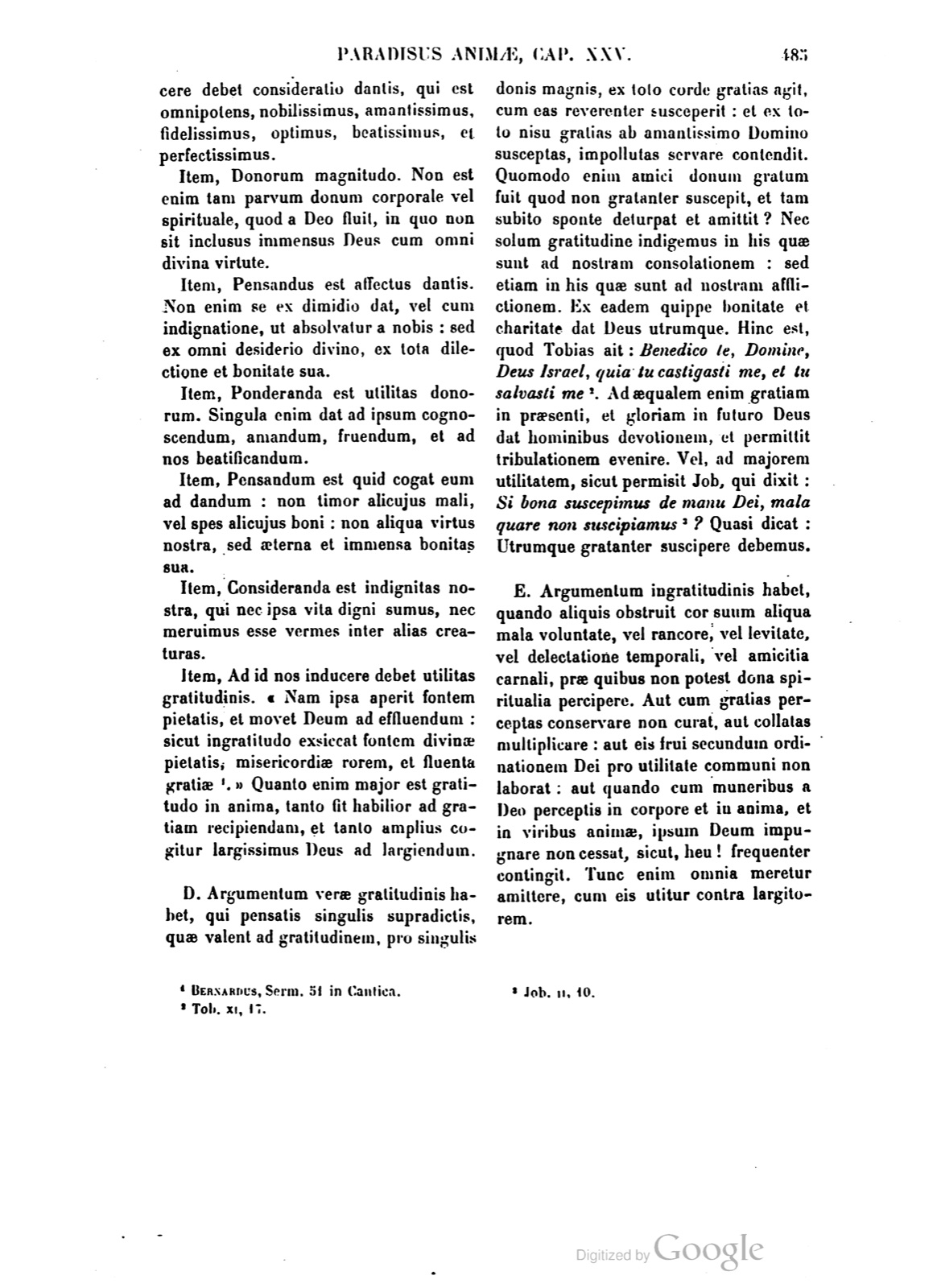
Item, Donorum magnitudo. Non est enim tam parvum donum corporale vel spirituale, quod a Deo fluit, in quo non sit inclusus immensus Deus cum omni divina virtute.
Item, Pensandus est affectus dantis. Non enim se ex dimidio dat, vel cum indignatione, ut absolvatur a nobis: sed ex omni desiderio divino, ex tota dilectione et bonitate sua.
Item, Ponderanda est utilitas donorum. Singula enim dat ad ipsum cognoscendum, amandum, fruendum, et ad nos beatificandum.
Item, Pensandum est quid cogat eum ad dandum: non timor alicujus mali, vel spes alicujus boni: non aliqua virtus nostra, sed aeterna et immensa bonitas sua.
Item, Consideranda est indignitas nostra, qui nec ipsa vita digni sumus, nec meruimus esse vermes inter alias creaturas.
Item, Ad id nos inducere debet utilitas gratitudinis. "Nam ipsa aperit fontem pietatis, et movet Deum ad effluendum: sicut ingratitudo exsiccat fontem divinae pietatis, misericordiae rorem, et fluenta gratiae 3." Quanto enim major est gratitudo in anima, tanto fit habilior ad gratiam recipiendam, et tanto amplius cogitur largissimus Deus ad largiendum.
Chapter XXV.
On Gratitude.
A. True and perfect gratitude is to magnify the excellence of God's gifts in the soul, with annihilation of self and due reverence of heart. Thus David magnified the gifts of God's commandments, saying: I have loved your commandments above gold and topaz 1. And Solomon extolled the house of wisdom, saying: Wisdom is better than all, namely than most precious riches, and every desirable thing cannot be compared to it 2.
B. He has true gratitude who feels himself unworthy of all the gifts of God. And the more unworthy of God's benefits he reckons and feels himself to be, by so much the more does gratitude of mind grow. Chrysostom says: "For all things which you have bestowed on us, O Christ, you ask nothing from us except to be saved, bestowing this very thing, and you give thanks to those receiving it."
C. Consideration of the giver ought to induce us to true gratitude: he is almighty, most noble, most loving, most faithful, best, most blessed, and most perfect.
Likewise, the greatness of the gifts. For there is no bodily or spiritual gift so small, flowing from God, in which the immeasurable God with every divine power is not included.
Likewise, the affection of the giver must be weighed. For he does not give himself by halves, or with indignation, so that he may be discharged by us, but from every divine desire, from all his love and goodness.
Likewise, the usefulness of the gifts must be weighed. For he gives each one toward knowing him, loving him, enjoying him, and toward making us blessed.
Likewise, one must weigh what compels him to give: not fear of any evil, or hope of any good; not any virtue of ours, but his eternal and immeasurable goodness.
Likewise, our unworthiness must be considered, for we are not worthy even of life itself, nor have we deserved to be worms among the other creatures.
Likewise, the usefulness of gratitude ought to induce us to this. "For it opens the fountain of piety and moves God to flow out, just as ingratitude dries up the fountain of divine piety, the dew of mercy, and the streams of grace 3." For the greater the gratitude in the soul is, the more fit it becomes for receiving grace, and the more abundantly the most generous God is compelled to give.
D. Argumentum verae gratitudinis habet, qui pensatis singulis supradictis, quae valent ad gratitudinem, pro singulis donis magnis, ex toto corde gratias agit, cum eas reverenter susceperit: et ex toto nisu gratias ab amantissimo Domino susceptas, impollutas servare contendit. Quomodo enim amici donum gratum fuit quod non gratanter suscepit, et tam subito sponte deturpat et amittit? Nec solum gratitudine indigemus in his quae sunt ad nostram consolationem: sed etiam in his quae sunt ad nostram afflictionem. Ex eadem quippe bonitate et charitate dat Deus utrumque. Hinc est, quod Tobias ait: Benedico te, Domine, Deus Israel, quia tu castigasti me, et tu salvasti me 4. Adaequalem enim gratiam in praesenti, et gloriam in futuro Deus dat hominibus devotionem, et permittit tribulationem evenire. Vel, ad majorem utilitatem, sicut permisit Job, qui dixit: Si bona suscepimus de manu Dei, mala quare non suscipiamus 5? Quasi dicat: Utrumque gratanter suscipere debemus.
E. Argumentum ingratitudinis habet, quando aliquis obstruit cor suum aliqua mala voluntate, vel rancore, vel levitate, vel delectatione temporali, vel amicitia carnali, prae quibus non potest dona spiritualia percipere. Aut cum gratias perceptas conservare non curat, aut collatas multiplicare: aut eis frui secundum ordinationem Dei pro utilitate communi non laborat: aut quando cum muneribus a Deo perceptis in corpore et in anima, et in viribus animae, ipsum Deum impugnare non cessat, sicut, heu! frequenter contingit. Tunc enim omnia meretur amittere, cum eis utitur contra largitorem.
D. He has the proof of true gratitude who, with each of the aforesaid things having been weighed, which are able to move one toward gratitude, gives thanks with his whole heart for each great gift, when he has received them reverently; and with his whole effort strives to keep the graces received from the most loving Lord unstained. For how was the gift of a friend grateful which he did not receive gratefully, and which he so suddenly defiles and loses by his own will? Nor do we need gratitude only in those things which are for our consolation, but also in those things which are for our affliction. For from the same goodness and charity God gives both. Hence Tobias says: I bless you, Lord God of Israel, because you have chastised me and you have saved me 4. For God gives devotion and permits tribulation to happen to human beings for equal grace in the present and glory in the future. Or, for greater usefulness, as he permitted Job, who said: If we have received good things from the hand of God, why should we not receive evil things 5? As if he were saying: We ought to receive both gratefully.
E. He has the proof of ingratitude when someone obstructs his heart with some evil will, or rancor, or levity, or temporal delight, or carnal friendship, because of which he cannot perceive spiritual gifts. Or when he does not care to preserve graces perceived, or to multiply those conferred; or he does not labor to enjoy them according to God's ordering for the common usefulness; or when, with gifts received from God in body and in soul and in the powers of the soul, he does not cease to attack God himself, as, alas, frequently happens. For then he deserves to lose all things, when he uses them against the giver.
If a page does not appear, its photograph has not been uploaded yet.