Works › The Paradise of the Soul
Volume 37 · ≈ pp. 464–465
Chapter X. On Justice.
A marker with ≈ is an approximate page boundary, placed by measure of the text; the page photographs remain the authority. In the paired views, clicking a page marker brings that page into view.
Caput X.
De Justitia.
A. Justitia vera et perfecta ad Deum, est redditio debitae laudis in omnibus divinae naturae: debitae gratiarum actionis pro omnibus bonis et donis collatis, et malis perpessis: debitae satisfactionis pro omnibus commissis et omissis: debiti fervidi doloris pro omnibus gratiis neglectis.
B. Ille veram habet justitiam ad Deum, qui Deo fidelis est, semper et ubique, in omnibus praeceptis et votis servandis. Qui tantam diligentiam singulis operibus suis et temporibus apponit, quasi tota salus sua in unoquoque dependeat. Et qui pure propter Deum omnia opera sua bona facit, non propter aliquem favorem vel utilitatem praesentis vitae vel futurae. Et qui cum debita gratitudine singula dona percipit, et eis secundum ordinationem Dei fruitur semper et ubique.
C. Vera justitia ad proximum est in duobus. Numquam facere proximo quod sibi juste non vult fieri: hoc est, numquam laedere vel offendere proximum verbo, vel facto, vel signo, vel consilio: in rebus, in corpore, et honore: numquam de ipso malum suspicari: numquam ipsi detrahere: numquam bonum ipsius pervertere vel diminuere: numquam eum in bono impedire. Haec enim nemo secundum justitiam sibi vult fieri.
Item, Proximo suo facere quod sibi juste vellet fieri: hoc est, proximum honorare: bonum de ipso sentire: omnia facta illius, etiam mala, in bonum convertere: semper in bono ejus congaudere, et in malo condolere: innocentiam ipsius semper excusare, et ipsum absentem propugnare. Haec enim secundum justitiam quisque sibi vult fieri. Et dicitur, secundum justitiam, quia judex pro fure nolet suspendi, et tamen furem debet suspendere: quia illud nolle est secundum justitiam. Et praedo libenter vellet spoliari, ut sibi liceret spoliare, quod tamen facere non debet: quia illud velle non est secundum justitiam.
Chapter X.
On Justice.
A. True and perfect justice toward God is the rendering of due praise in all things to the divine nature, of due thanksgiving for all goods and gifts conferred and evils endured, of due satisfaction for all things committed and omitted, and of due fervent sorrow for all graces neglected.
B. He has true justice toward God who is faithful to God always and everywhere in keeping all precepts and vows; who applies such diligence to his several works and times as though his whole salvation depended on each one; who purely for God's sake does all his good works, not for any favor or usefulness of present or future life; and who receives each gift with due gratitude and enjoys it according to God's ordinance always and everywhere.
C. True justice toward neighbor consists in two things. Never to do to a neighbor what one justly does not wish to be done to oneself: that is, never to harm or offend the neighbor by word, deed, sign, or counsel, in possessions, body, or honor; never to suspect evil concerning him; never to detract from him; never to pervert or diminish his good; never to impede him in good. For no one wishes these things to be done to himself according to justice.
Likewise, to do to one's neighbor what one would justly wish to be done to oneself: that is, to honor the neighbor, think good concerning him, turn all his deeds, even bad ones, to good, always rejoice together in his good and suffer together in his evil, always excuse his innocence and defend him when absent. For each person wishes these things to be done to himself according to justice. And it is said, according to justice, because a judge would not wish to be hanged in place of a thief, and nevertheless he ought to hang the thief, because that unwillingness is according to justice. And a robber would gladly wish to be despoiled, so that it might be lawful for him to despoil, which nevertheless he ought not to do, because that willing is not according to justice.
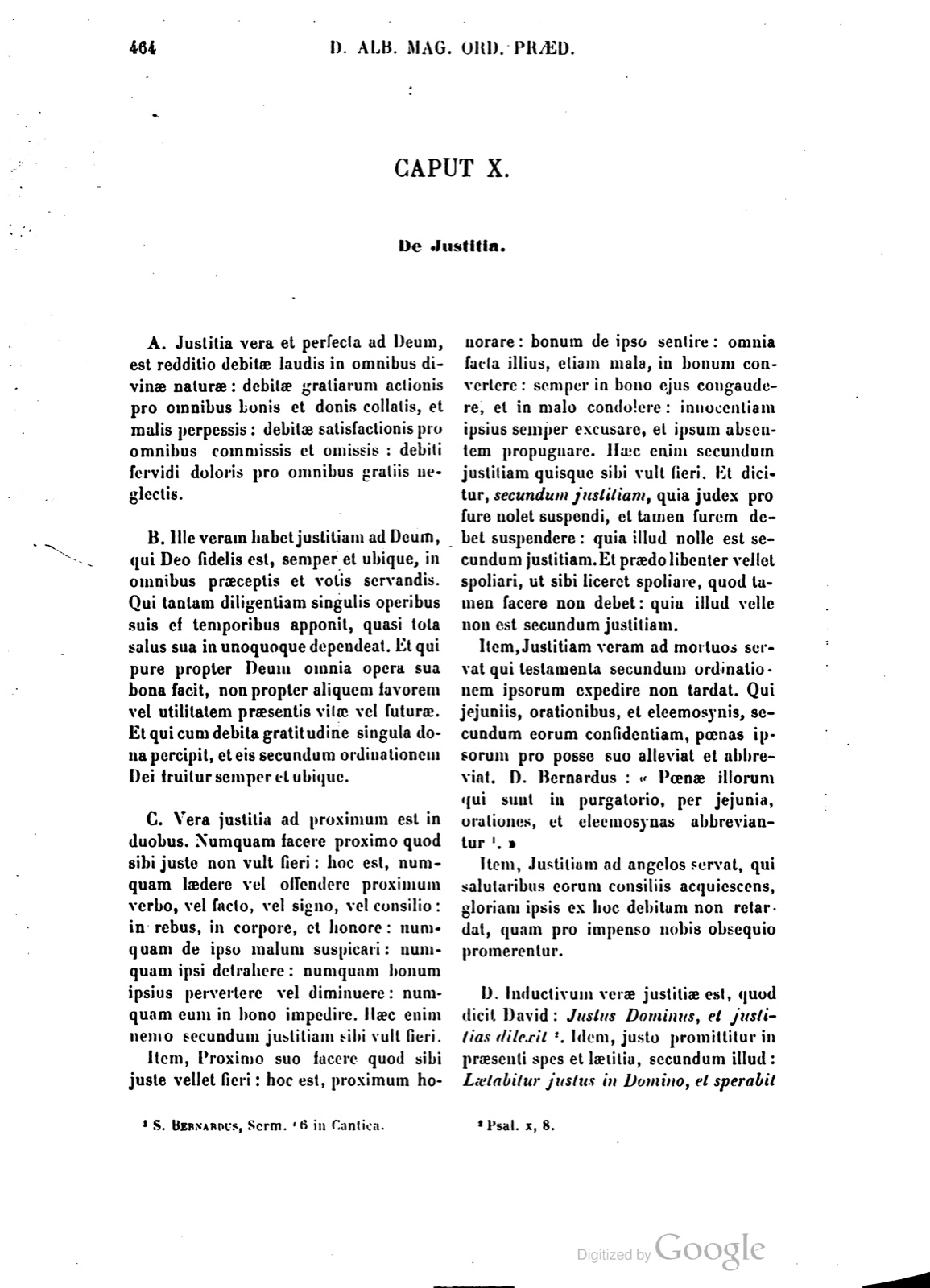
Item, Justitiam veram ad mortuos servat qui testamenta secundum ordinationem ipsorum expedire non tardat. Qui jejuniis, orationibus, et eleemosynis, secundum eorum confidentiam, poenas ipsorum pro posse suo alleviat et abbreviat. D. Bernardus: « Poenae illorum qui sunt in purgatorio, per jejunia, orationes, et eleemosynas abbreviantur 1. » Item, Justitiam ad angelos servat, qui salutaribus eorum consiliis acquiescens, gloriam ipsis ex hoc debitam non retardat, quam pro impenso nobis obsequio promerentur.
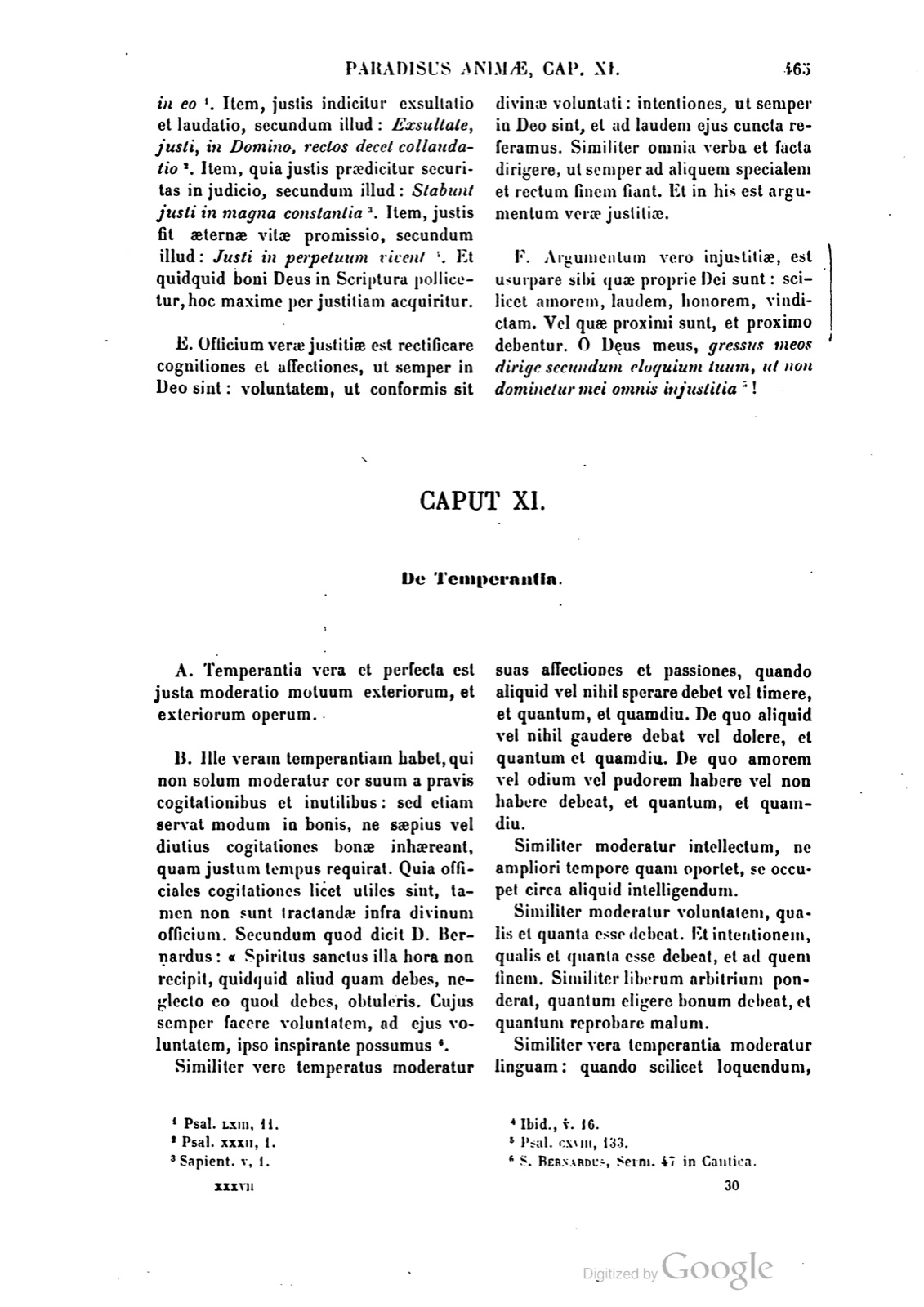
D. Inductivum verae justitiae est, quod dicit David: Justus Dominus, et justitias dilexit 2. Idem, justo promittitur in praesenti spes et laetitia, secundum illud: Laetabitur justus in Domino, et sperabit in eo 3. Item, justis indicitur exsultatio et laudatio, secundum illud: Exsultate, justi, in Domino, rectos decet collaudatio 4. Item, quia justis praedicitur securitas in judicio, secundum illud: Stabunt justi in magna constantia 5. Item, justis fit aeternae vitae promissio, secundum illud: Justi in perpetuum vivent 6. Et quidquid boni Deus in Scriptura pollicetur, hoc maxime per justitiam acquiritur.
E. Officium verae justitiae est rectificare cognitiones et affectiones, ut semper in Deo sint: voluntatem, ut conformis sit divinae voluntati: intentiones, ut semper in Deo sint, et ad laudem ejus cuncta referamus. Similiter omnia verba et facta dirigere, ut semper ad aliquem specialem et rectum finem fiant. Et in his est argumentum verae justitiae.
F. Argumentum vero injustitiae, est usurpare sibi quae proprie Dei sunt: scilicet amorem, laudem, honorem, vindictam. Vel quae proximi sunt, et proximo debentur. O Deus meus, gressus meos dirige secundum eloquium tuum, ut non dominetur mei omnis injustitia 7!
Likewise, he keeps true justice toward the dead who does not delay to carry out testaments according to their ordinance; who by fasts, prayers, and alms, according to their trust, alleviates and shortens their punishments as far as he can. D. Bernard says: "The punishments of those who are in purgatory are shortened through fasts, prayers, and alms 1." Likewise, he keeps justice toward angels who, acquiescing in their saving counsels, does not delay the glory due to them from this, which they merit for the service bestowed on us.
D. The inducement of true justice is what David says: The Lord is just, and he has loved justices 2. Likewise, hope and joy are promised to the just in the present, according to that: The just one will rejoice in the Lord and will hope in him 3. Likewise, exultation and praise are enjoined upon the just, according to that: Exult, you just, in the Lord; praise befits the upright 4. Likewise, security in judgment is foretold for the just, according to that: The just will stand in great constancy 5. Likewise, the promise of eternal life is made to the just, according to that: The just will live forever 6. And whatever good God promises in Scripture is acquired especially through justice.
E. The office of true justice is to rectify knowledges and affections so that they are always in God; the will, so that it is conformed to the divine will; intentions, so that they are always in God and we refer all things to his praise. Likewise, to direct all words and deeds so that they are always done for some special and right end. And in these is the proof of true justice.
F. But the proof of injustice is to usurp for oneself what properly belongs to God, namely love, praise, honor, vengeance; or what belongs to one's neighbor and is owed to the neighbor. O my God, direct my steps according to your word, so that no injustice may dominate me 7!
If a page does not appear, its photograph has not been uploaded yet.