Works › The Mariale: Questions on “Missus est”
Volume 37 · pp. 299–300
Question 211. Whether the Blessed Virgin had pain or some delight in conception?
A marker with ≈ is an approximate page boundary, placed by measure of the text; the page photographs remain the authority. In the paired views, clicking a page marker brings that page into view.
QUAESTIO CCXI. Utrum B. Virgo in conceptione habuerit dolorem, vel aliquam delectationem?
Juxta hoc quaeritur, Utrum beatissima Virgo in conceptione habuit dolorem, vel aliquam delectationem?
Quod dolorem habuit, videtur: quia ibi fuit divisio et dissolutio continui: ergo dolor.
Contra:
1. Quod ibi fuerit delectatio, videtur: quia producere de se simile est naturale: ergo est delectabile.
3. Item, In statu innocentiae in conceptione fuisset delectatio.
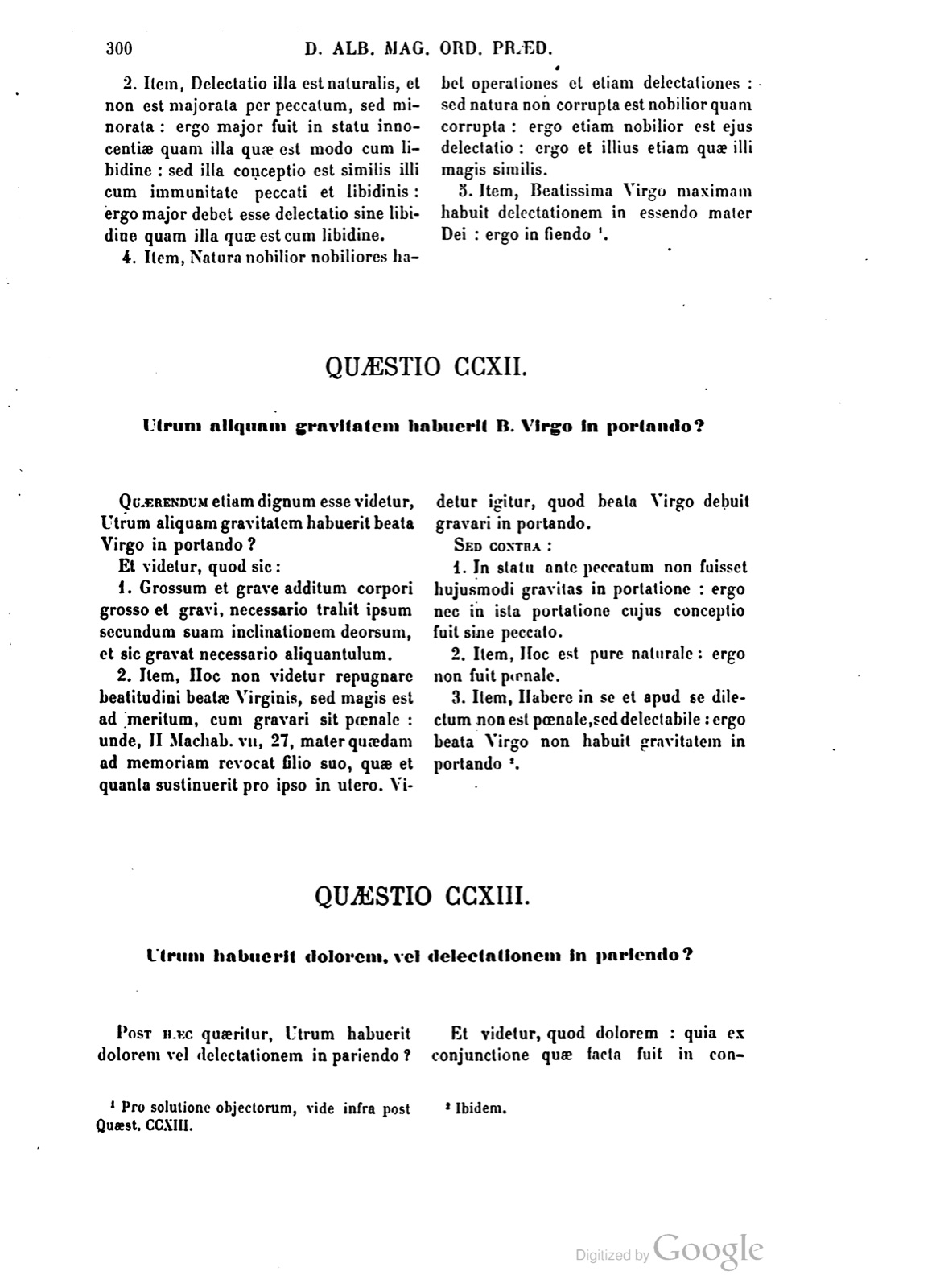
2. Item, Delectatio illa est naturalis, et non est majorata per peccatum, sed minorata: ergo major fuit in statu innocentiae quam illa quae est modo cum libidine: sed illa conceptio est similis illi cum immunitate peccati et libidinis: ergo major debet esse delectatio sine libidine quam illa quae est cum libidine.
QUESTION 211. Whether the Blessed Virgin had pain or some delight in conception?
Next to this it is asked whether the most blessed Virgin in conception had pain or some delight.
That she had pain seems so, because there was division and dissolution of the continuous there; therefore pain.
To the contrary:
1. That there was delight there seems so, because to produce from oneself a likeness is natural; therefore it is delightful.
3. Likewise, in the state of innocence there would have been delight in conception.
2. Likewise, that delight is natural and is not increased by sin but lessened; therefore it was greater in the state of innocence than that which is now with lust. But that conception is like that with immunity from sin and lust. Therefore delight without lust ought to be greater than that which is with lust.
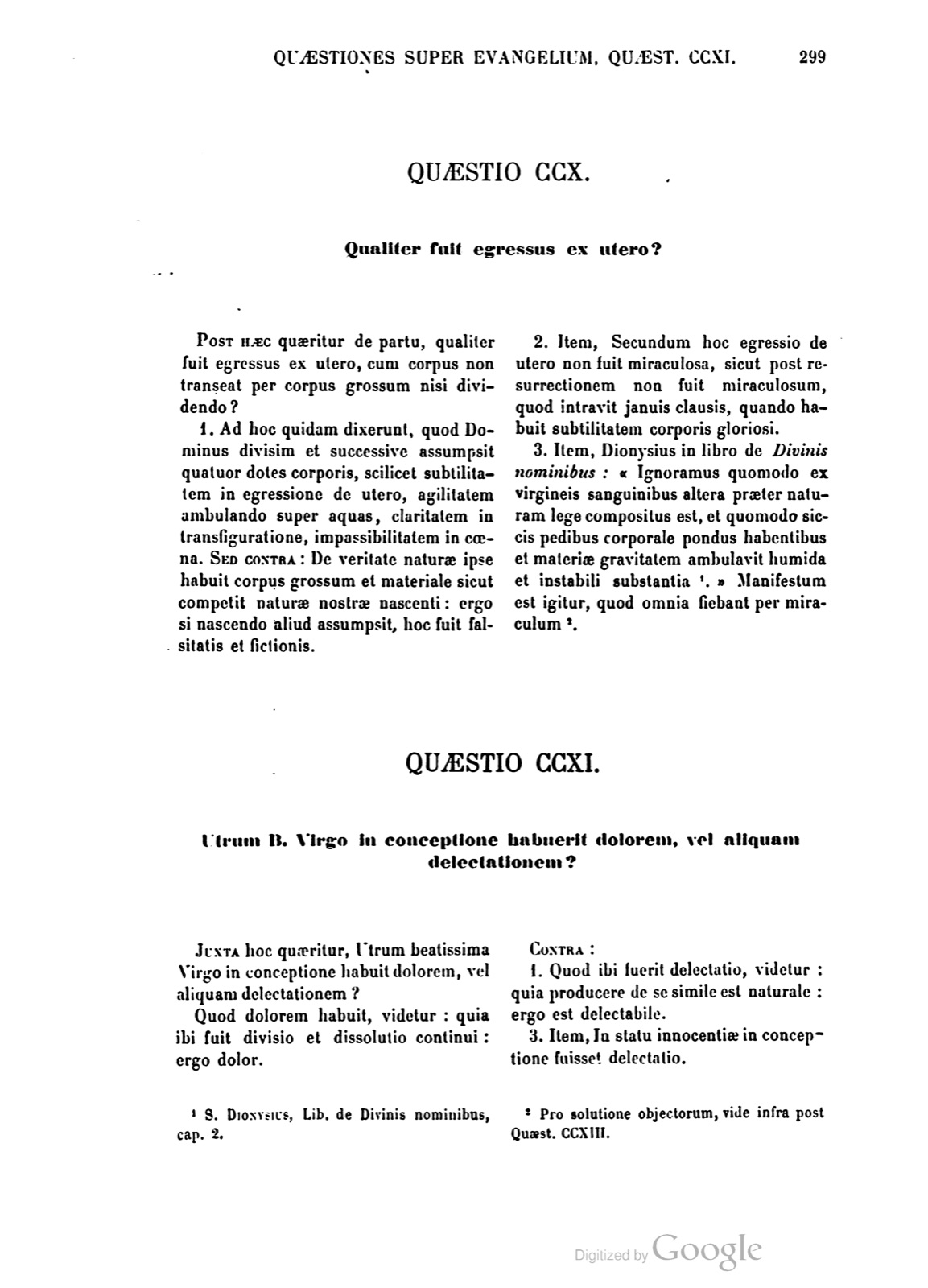
4. Item, Natura nobilior nobiliores habet operationes et etiam delectationes: sed natura non corrupta est nobilior quam corrupta: ergo etiam nobilior est ejus delectatio: ergo et illius etiam quae illi magis similis.
5. Item, Beatissima Virgo maximam habuit delectationem in essendo mater Dei: ergo in fiendo 1.
4. Likewise, a nobler nature has nobler operations and also delights; but a non-corrupt nature is nobler than a corrupt one; therefore its delight is also nobler; therefore also the delight of that one which is more similar to it.
5. Likewise, the most blessed Virgin had the greatest delight in being Mother of God; therefore also in becoming so 1.
Notes
- For the solution of the objections, see below after Question 213. (Pro solutione objectorum, vide infra post Quaest. CCXIII.) ↩
If a page does not appear, its photograph has not been uploaded yet.