Volume 37 · pp. 539–540
Chapter XV. Contempt of oneself, how it is caused in man, and how useful it is?
A marker with ≈ is an approximate page boundary, placed by measure of the text; the page photographs remain the authority. In the paired views, clicking a page marker brings that page into view.
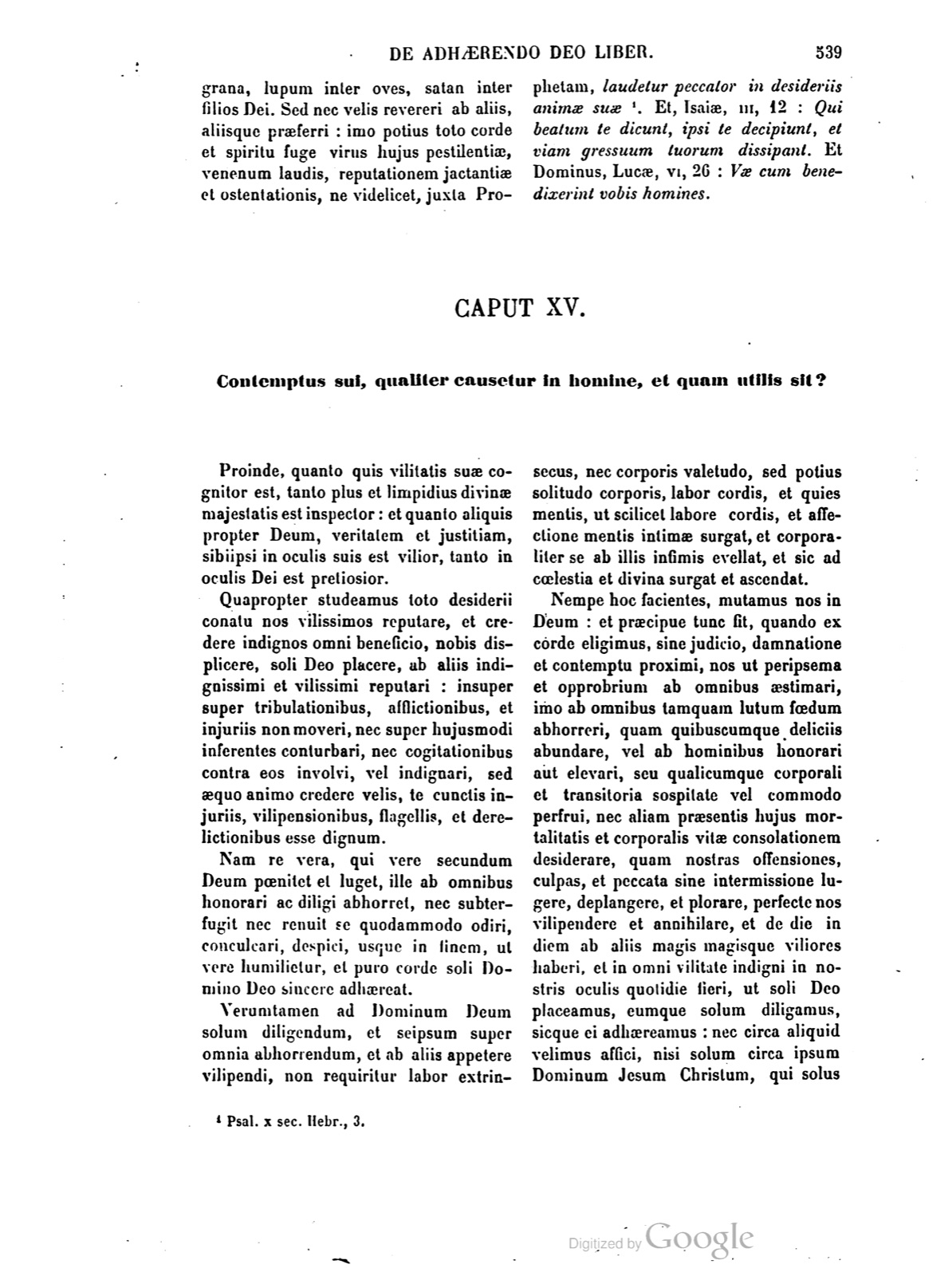
Caput XV. Contemptus sui, qualiter causetur in homine, et quam utilis sit?
Proinde, quanto quis vilitatis suae cognitor est, tanto plus et limpidius divinae majestatis est inspector: et quanto aliquis propter Deum, veritatem et justitiam, sibiipsi in oculis suis est vilior, tanto in oculis Dei est pretiosior.
Quapropter studeamus toto desiderii conatu nos vilissimos reputare, et credere indignos omni beneficio, nobis displicere, soli Deo placere, ab aliis indignissimi et vilissimi reputari: insuper super tribulationibus, afflictionibus, et injuriis non moveri, nec super hujusmodi inferentes conturbari, nec cogitationibus contra eos involvi, vel indignari, sed aequo animo credere velis, te cunctis injuriis, vilipensionibus, flagellis, et derelictionibus esse dignum.
Nam re vera, qui vere secundum Deum poenitet et luget, ille ab omnibus honorari ac diligi abhorret, nec subterfugit nec renuit se quodammodo odiri, conculcari, despici, usque in finem, ut vere humilietur, et puro corde soli Domino Deo sincere adhaereat.
Verumtamen ad Dominum Deum solum diligendum, et seipsum super omnia abhorrendum, et ab aliis appetere vilipendi, non requiritur labor extrinsecus, nec corporis valetudo, sed potius solitudo corporis, labor cordis, et quies mentis, ut scilicet labore cordis, et affectione mentis intimae surgat, et corporaliter se ab illis infimis evellat, et sic ad coelestia et divina surgat et ascendat.
Nempe hoc facientes, mutamus nos in Deum: et praecipue tunc fit, quando ex corde eligimus, sine judicio, damnatione et contemptu proximi, nos ut peripsema et opprobrium ab omnibus aestimari, imo ab omnibus tamquam lutum foedum abhorreri, quam quibuscumque deliciis abundare, vel ab hominibus honorari aut elevari, seu qualicumque corporali et transitoria sospitate vel commodo perfrui, nec aliam praesentis hujus mortalitatis et corporalis vitae consolationem desiderare, quam nostras offensiones, culpas, et peccata sine intermissione lugere, deplangere, et plorare, perfecte nos vilipendere et annihilare, et de die in diem ab aliis magis magisque viliores haberi, et in omni vilitate indigni in nostris oculis quotidie fieri, ut soli Deo placeamus, eumque solum diligamus, sicque ei adhaereamus: nec circa aliquid velimus affici, nisi solum circa ipsum Dominum Jesum Christum, qui solus jaceat in nostro affectu: nec de ullo sollicitari et curare, nisi de ipso in cujus ditione et providentia universa et singula currunt et subsistunt.
Chapter XV. Contempt of oneself, how it is caused in man, and how useful it is?
Accordingly, the more someone knows his own vileness, the more and the more clearly he is a beholder of the divine majesty; and the more someone, on account of God, truth, and justice, is viler to himself in his own eyes, the more precious he is in the eyes of God.
Wherefore let us strive with the whole effort of desire to reckon ourselves most vile, and to believe ourselves unworthy of every benefit, to displease ourselves, to please God alone, to be reckoned by others most unworthy and most vile; moreover not to be moved over tribulations, afflictions, and injuries, nor to be disturbed over those inflicting such things, nor to be entangled in thoughts against them or to be indignant, but with an even soul you should wish to believe that you are worthy of all injuries, acts of contempt, scourges, and abandonments.
For in truth, he who truly repents and mourns according to God abhors being honored and loved by all, nor does he avoid or refuse in a certain manner to be hated, trampled, and despised unto the end, so that he may truly be humbled and with a pure heart sincerely adhere to the Lord God alone.
Nevertheless, for loving the Lord God alone, abhorring oneself above all things, and desiring to be despised by others, exterior labor is not required, nor bodily health, but rather solitude of body, labor of heart, and quiet of mind, namely so that by labor of heart and affection of the inward mind, it may rise, and bodily tear itself away from those lowest things, and thus rise and ascend to heavenly and divine things.
Indeed, by doing this we change ourselves into God; and this happens especially then, when from the heart we choose, without judgment, condemnation, and contempt of neighbor, to be esteemed by all as offscouring and reproach, indeed to be abhorred by all as foul mud, rather than to abound in whatever delights, or to be honored or elevated by men, or to enjoy any bodily and transitory safety or advantage; and to desire no other consolation of this present mortality and bodily life than without ceasing to mourn, lament, and weep over our offenses, faults, and sins, perfectly to despise and annihilate ourselves, and from day to day to be held by others as more and more vile, and daily to become unworthy in every vileness in our own eyes, so that we may please God alone and love him alone and thus adhere to him. Nor should we wish to be affected around anything except only around the Lord Jesus Christ himself, who alone should lie in our affection; nor to be solicitous and care concerning anyone, except concerning him in whose dominion and providence the universe and each thing run and subsist.
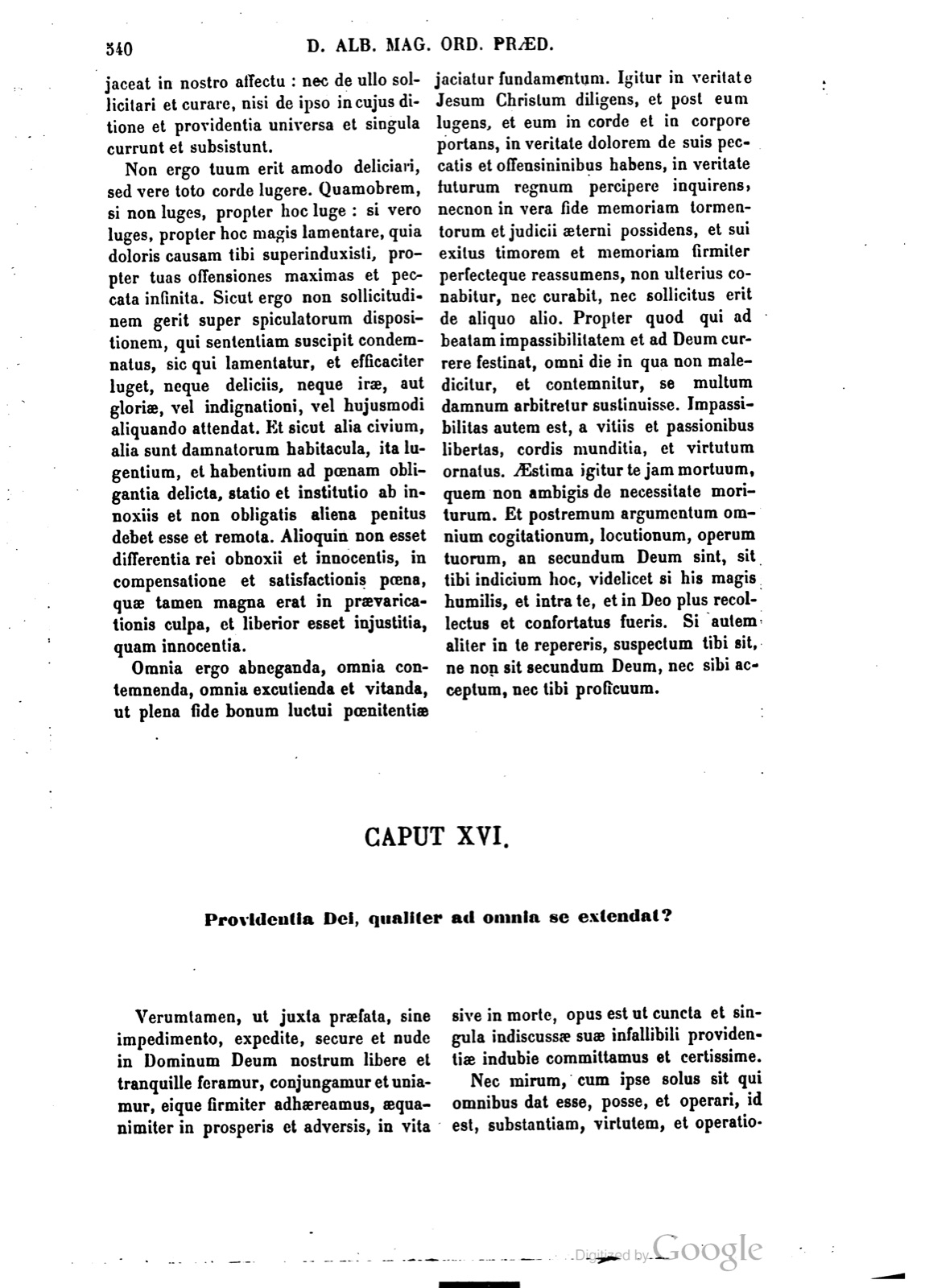
Non ergo tuum erit amodo deliciari, sed vere toto corde lugere. Quamobrem, si non luges, propter hoc luge: si vero luges, propter hoc magis lamentare, quia doloris causam tibi superinduxisti, propter tuas offensiones maximas et peccata infinita. Sicut ergo non sollicitudinem gerit super spiculatorum dispositionem, qui sententiam suscipit condemnatus, sic qui lamentatur, et efficaciter luget, neque deliciis, neque irae, aut gloriae, vel indignationi, vel hujusmodi aliquando attendat. Et sicut alia civium, alia sunt damnatorum habitacula, ita lugentium, et habentium ad poenam obligantia delicta, statio et institutio ab innoxiis et non obligatis aliena penitus debet esse et remota. Alioquin non esset differentia rei obnoxii et innocentis, in compensatione et satisfactionis poena, quae tamen magna erat in praevaricationis culpa, et liberior esset injustitia, quam innocentia.
Omnia ergo abneganda, omnia contemnenda, omnia excutienda et vitanda, ut plena fide bonum luctui poenitentiae jaciatur fundamentum. Igitur in veritate Jesum Christum diligens, et post eum lugens, et eum in corde et in corpore portans, in veritate dolorem de suis peccatis et offensionibus habens, in veritate futurum regnum percipere inquirens, necnon in vera fide memoriam tormentorum et judicii aeterni possidens, et sui exitus timorem et memoriam firmiter perfecteque reassumens, non ulterius conabitur, nec curabit, nec sollicitus erit de aliquo alio. Propter quod qui ad beatam impassibilitatem et ad Deum currere festinat, omni die in qua non maledicitur, et contemnitur, se multum damnum arbitretur sustinuisse. Impassibilitas autem est, a vitiis et passionibus libertas, cordis munditia, et virtutum ornatus. Aestima igitur te jam mortuum, quem non ambigis de necessitate moriturum. Et postremum argumentum omnium cogitationum, locutionum, operum tuorum, an secundum Deum sint, sit tibi indicium hoc, videlicet si his magis humilis, et intra te, et in Deo plus recollectus et confortatus fueris. Si autem aliter in te repereris, suspectum tibi sit, ne non sit secundum Deum, nec sibi acceptum, nec tibi proficuum.
Therefore from now on it will not be yours to delight, but truly to mourn with the whole heart. Wherefore, if you do not mourn, mourn because of this; but if you do mourn, lament more because of this, that you have brought upon yourself the cause of grief, because of your greatest offenses and infinite sins. Therefore, just as one who receives sentence as condemned does not bear solicitude over the arrangement of the executioners, so he who laments and mourns efficaciously should never attend either to delights, or to anger, or to glory, or to indignation, or to anything of this kind. And just as the dwellings of citizens and those of the condemned are different, so the station and institution of those mourning and having crimes binding them to punishment ought to be utterly alien and remote from the harmless and those not bound. Otherwise there would be no difference between the guilty accused person and the innocent one in the punishment of compensation and satisfaction, which nevertheless was great in the guilt of transgression, and injustice would be freer than innocence.
Therefore all things are to be denied, all things despised, all things shaken off and avoided, so that with full faith a good foundation may be laid for the mourning of penitence. Therefore one who in truth loves Jesus Christ, and mourns after him, and bears him in heart and body; who in truth has grief over his sins and offenses; who in truth seeks to receive the future kingdom; and also who in true faith possesses memory of torments and of eternal judgment, and firmly and perfectly takes back fear and memory of his own departure, will not further strive, nor care, nor be solicitous about anything else. Because of this, he who hastens to blessed impassibility and to God should judge that he has sustained much loss on every day on which he is not cursed and despised. But impassibility is freedom from vices and passions, cleanness of heart, and adornment of virtues. Therefore esteem yourself already dead, whom you do not doubt must necessarily die. And let this be for you the final test of all your thoughts, speeches, and works, whether they are according to God, namely if by them you have become more humble, and more recollected and strengthened within yourself and in God. But if you find otherwise in yourself, let it be suspect to you, lest it be not according to God, nor acceptable to him, nor profitable to you.
If a page does not appear, its photograph has not been uploaded yet.