Volume 37 · pp. 538–539
Chapter XIV. The attestation of conscience is to be required in every judgment.
A marker with ≈ is an approximate page boundary, placed by measure of the text; the page photographs remain the authority. In the paired views, clicking a page marker brings that page into view.
Caput XIV. Conscientiae attestatio in omni judicio requirenda est.
Demum ad spiritualem mentis perfectionem, puritatem, et tranquillitatem in Deo consequendam, non mediocriter ad hoc proficere videtur, ut in omni quod de nobis dicitur, sentitur, et agitur, semper tacite ad interiora mentis arcana recurramus, et inibi ab omnibus alio abstracti, et intra nos totaliter recollecti, statuamus nos in cognitionem veritatis ante nos, et utique inveniemus atque videbimus penitus nihil proficere nobis, sed plurimum obesse, si laudati vel honorati ab extra fuerimus, et ab intra in veritatis cogitatione de nobis culpabiles et rei existimus. Et sicut tunc nihil prodest, si quempiam ab extra homines laudant, et conscientia ab intra accusat: ita e regione nihil obest, si ab extra quis contemptus, vituperatus, et persecutus fuerit, ab intra tantum innocens, irreprehensibilis, et innoxius existat: imo quam plurimum super haec cum patientia, et silentio, et quiete, non immerito in Domino gratulari habet: siquidem nulla nocebit adversitas, ubi non dominatur iniquitas. Et sicut nullum malum impunitum, ita nullum bonum irremuneratum. Neque cum hypocritis velimus mercedem et praemium exspectare, vel recipere ab hominibus: sed solum a Domino Deo, non in praesenti, sed in futuro, non transitorio in tempore, sed in aeternitate.
Liquet ergo, quod nec majus aliquid, nec melius, quam semper in omni tribulatione et eventu ire ad interiora mentis secreta, et ibi invocare ipsum Dominum Jesum Christum, adjutorem in tentationibus et tribulationibus, ac inibi humiliari in confessione peccati, laudare ipsum Deum et Patrem, corripientem et consolantem: insuper et omnia et singula, in se vel in aliis, prospera sive adversa, aequanimiter accipere, expedite et secure, de manu suae infallibilis providentiae aut dispositionis ordinatae.
Chapter XIV. The attestation of conscience is to be required in every judgment.
Finally, for obtaining spiritual perfection, purity, and tranquility of mind in God, it seems to profit not a little for this: that in everything that is said, felt, and done concerning us, we always silently run back to the inward secrets of the mind, and there, withdrawn from all other things and totally recollected within ourselves, set ourselves before ourselves in the knowledge of truth. And certainly we shall find and see that it profits us utterly nothing, but harms us very greatly, if we have been praised or honored from outside, and from within, in the thought of truth concerning ourselves, we exist culpable and guilty. And just as then it profits nothing if men praise someone from outside and conscience accuses from within, so on the other side it harms nothing if someone has been despised, blamed, and persecuted from outside, provided that within he exists innocent, irreprehensible, and harmless. Indeed, very greatly over these things, with patience and silence and quiet, he has reason not undeservedly to rejoice in the Lord, since no adversity will harm where iniquity does not rule. And just as no evil goes unpunished, so no good goes unrewarded. Nor should we wish with hypocrites to expect or receive wages and reward from men, but only from the Lord God, not in the present but in the future, not in transitory time but in eternity.
Therefore it is clear that nothing is greater or better than always, in every tribulation and event, to go to the inward secrets of the mind, and there to invoke the Lord Jesus Christ himself, helper in temptations and tribulations, and there to be humbled in confession of sin, to praise God himself and the Father, correcting and consoling; and moreover to receive all things, each and all, in oneself or in others, prosperous or adverse, with equanimity, readily and securely, from the hand of his infallible providence or ordered disposition.
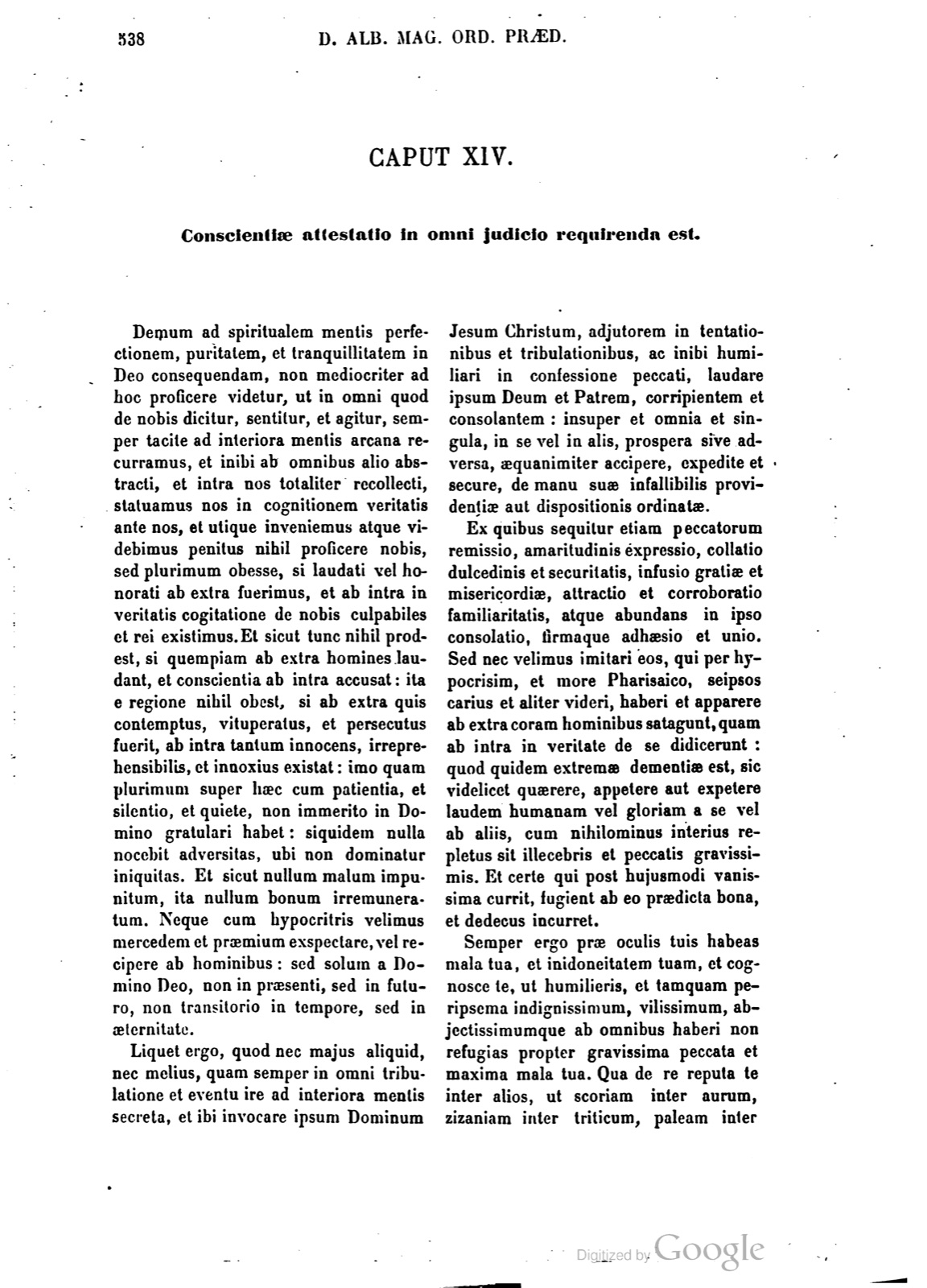
Ex quibus sequitur etiam peccatorum remissio, amaritudinis expressio, collatio dulcedinis et securitatis, infusio gratiae et misericordiae, attractio et corroboratio familiaritatis, atque abundans in ipso consolatio, firmaque adhaesio et unio. Sed nec velimus imitari eos, qui per hypocrisim, et more Pharisaico, seipsos carius et aliter videri, haberi et apparere ab extra coram hominibus satagunt, quam ab intra in veritate de se didicerunt: quod quidem extremae dementiae est, sic videlicet quaerere, appetere aut expetere laudem humanam vel gloriam a se vel ab aliis, cum nihilominus interius repletus sit illecebris et peccatis gravissimis. Et certe qui post hujusmodi vanissima currit, fugient ab eo praedicta bona, et dedecus incurret.
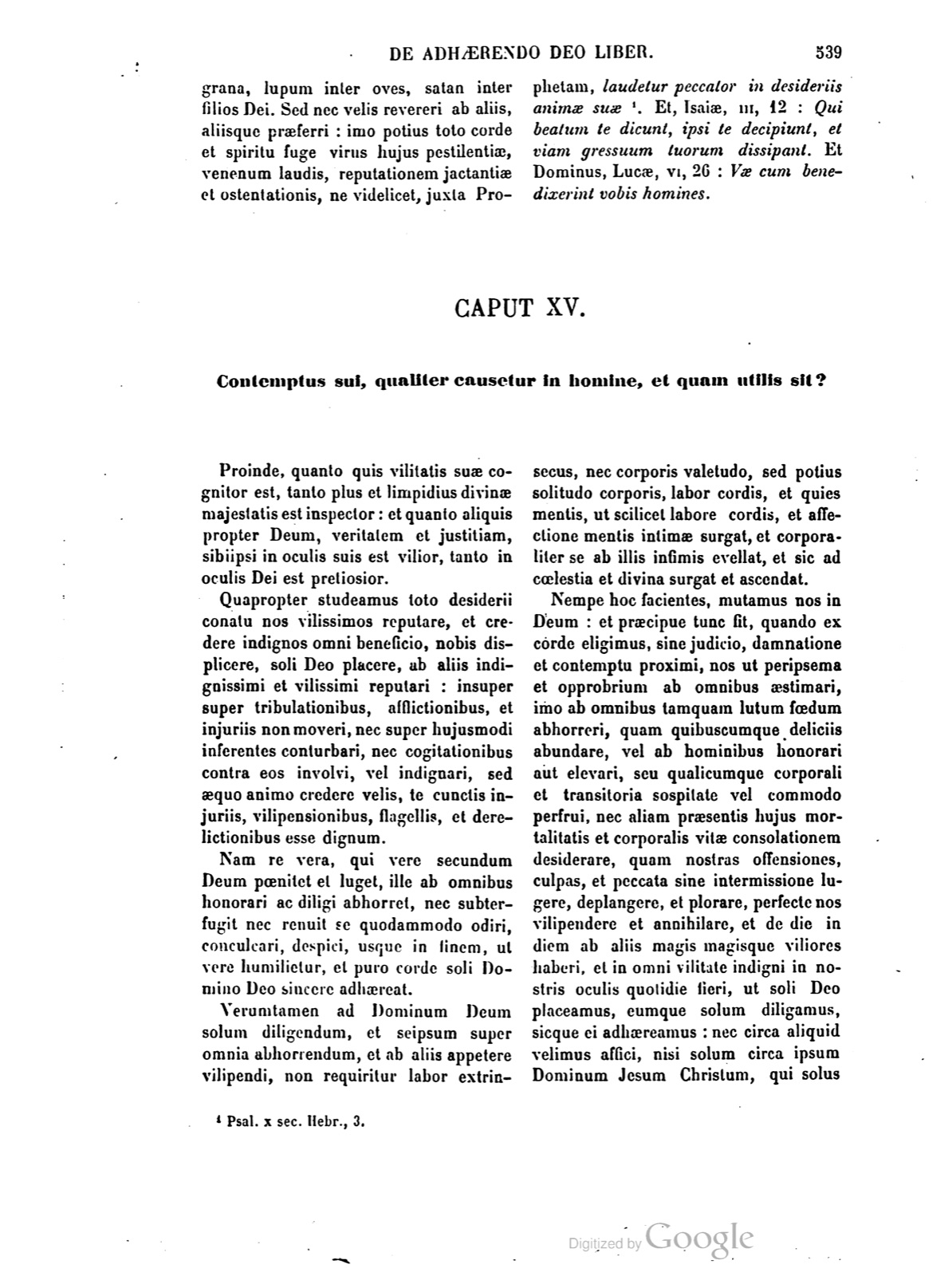
Semper ergo prae oculis tuis habeas mala tua, et inidoneitatem tuam, et cognosce te, ut humilieris, et tamquam peripsema indignissimum, vilissimum, abjectissimumque ab omnibus haberi non refugias propter gravissima peccata et maxima mala tua. Qua de re reputa te inter alios, ut scoriam inter aurum, zizaniam inter triticum, paleam inter grana, lupum inter oves, satan inter filios Dei. Sed nec velis revereri ab aliis, aliisque praeferri: imo potius toto corde et spiritu fuge virus hujus pestilentiae, venenum laudis, reputationem jactantiae et ostentationis, ne videlicet, juxta Prophetam, laudetur peccator in desideriis animae suae 1. Et, Isaiae, III, 12: Qui beatum te dicunt, ipsi te decipiunt, et viam gressuum tuorum dissipant. Et Dominus, Lucae, VI, 26: Vae cum benedixerint vobis homines.
From these things there also follows remission of sins, expression of bitterness, bestowal of sweetness and security, infusion of grace and mercy, attraction and strengthening of familiarity, and abundant consolation in him, and firm adherence and union. But let us not wish to imitate those who through hypocrisy and in pharisaic manner strive to have themselves seen, held, and appear more dearly and otherwise from outside before men than they have learned themselves to be from within in truth. This indeed belongs to extreme madness, namely thus to seek, desire, or seek after human praise or glory from oneself or from others, when nevertheless inwardly one is filled with enticements and very grave sins. And certainly he who runs after vainest things of this kind will have the aforesaid goods flee from him, and will incur disgrace.
Therefore always have before your eyes your evils and your unsuitability, and know yourself, so that you may be humbled, and so that, as a most unworthy, most vile, and most abject offscouring, you do not shrink from being held by all on account of your very grave sins and greatest evils. For this reason reckon yourself among others as dross among gold, darnel among wheat, chaff among grains, a wolf among sheep, Satan among the sons of God. But do not wish to be revered by others or preferred to others; rather, with your whole heart and spirit flee the virus of this pestilence, the poison of praise, the reputation of boasting and display, lest, namely, according to the Prophet, the sinner be praised in the desires of his soul 1. And Isaiah 3:12: Those who call you blessed, they deceive you and scatter the way of your steps. And the Lord, Luke 6:26: Woe when men have blessed you.
Notes
- Psalm 10 according to the Hebrew, verse 3. (Psal. X sec. Hebr., 3.) ↩
If a page does not appear, its photograph has not been uploaded yet.