Volume 2 · pp. 505–508
Book VIII of the Topics, Treatise II, Chapters I-II.
A marker with ≈ is an approximate page boundary, placed by measure of the text; the page photographs remain the authority. In the paired views, clicking a page marker brings that page into view.
TRACTATUS II DE INSTRUCTIONE RESPONDENTIS ET DE MODO RESPONDENDI.
CAPUT I.
Quid est opus proprium bene respondentis.
De instructione autem respondentis et de responsione sive de modo responsionis tractaturis nobis, primo quidem hoc determinandum est, quod ad omnia alia sicut principium praemittendum: eo quod ex proprio opere respondentis proprius modus respondendi ad singula determinetur et inveniatur. Primo ergo determinetur quid est opus proprium bene respondentis, sicut et opus proprium determinatum est in ante habitis opponentis sive interrogantis.
Est autem opus proprium interrogantis et optimum in dialecticis, prout dialectica est ad obviationem, sic inducere orationem interrogativam, ut faciat respondentem concedere improbabilissima, et aliter non esset obviativa ad improbabiliora quam illa quae propter positionem improbabilem sunt necessaria, hoc est, quam ea quae ex probabili pene sequuntur: quia sicut opponentis est obviare respondenti, ita respondentis est obviare opponenti: verum respondenti quidem est e contrario obviandum, quod semper ita respondeat, quod non videatur propter eum (hoc est, propter suam responsionem) accidere impossibile, aut aliud accidere impossibile sive improbabile: sed si quid talium accidit, videatur accidere propter positionem improbabilem quam sustinet: utroque enim istorum modorum peccare posset respondens. Si autem non sustinet positionem aut si concedat improbabilia secundum rem: quia diversum est peccatum. Aut etiam si ponat primum in ipsa positione quod non oportet: et aliud peccatum si ponat quod oportet, et non servet illud secundum illum modum servandi quem debet vel potest. Modus autem iste est, ut consequentia ad positionem concedat, et repugnantia neget: quod ex hoc oritur scientia, falsae positionis. Sic igitur patet in communi quid est opus bene respondentis: hoc autem diversum est in diversis disputationibus ejus, et artificialiter nihil determinatum est adhuc de modis bene respondentis secundum suum proprium opus: oportet autem determinare hoc per disputationis diversitatem, et positionis distinctionem.
Quoniam igitur infinita sunt quae observanda sunt respondenti, his (hoc est, ad hoc disputantes vel opponentes) qui propter gymnasium (hoc est, luctam et certamen) ad obviationem disputationem faciunt, et similiter intimatum est quid respondenti observandum est ad eos qui faciunt rationes sive ratiocinationes et disputationes propter experimentum accipiendum de veritate problematis assignati vel conclusionis, sicut facit dialecticus inquisitivus, oportet de isto facere mentionem. Non enim eaedem considerationes observandae in disputando, docentibus sive doctrinaliter disputantibus, et discentibus (hoc est, inquisitivis) ad experimentum veritatis conclusionis, et colluctantibus, hoc est, ad obviationem disputantibus vel sophistice: quia dialecticus obvians aliquando induit formam et habitum sophistici, quamvis hoc non faciat ad finem deceptionis per locum sophisticum qui est fallacia.
TREATISE II ON THE INSTRUCTION OF THE RESPONDENT AND ON THE MODE OF RESPONDING.
CHAPTER I.
What the proper work of one responding well is.
But since we are going to treat of the instruction of the respondent and of response or of the mode of response, first this must be determined, as a principle to be set before all the other things: because from the proper work of the respondent the proper mode of responding to individual things is determined and found. Therefore first let it be determined what is the proper work of one responding well, just as the proper work of the opponent or questioner has also been determined in what has been had before.
Now the proper and best work of the questioner in dialectical matters, insofar as dialectic is for obviation, is so to introduce an interrogative speech that he makes the respondent concede the most improbable things; and otherwise it would not be obviative toward more improbable things than those which are necessary on account of an improbable position, that is, than those things which almost follow from a probable thing. For just as it belongs to the opponent to obviate the respondent, so it belongs to the respondent to obviate the opponent. But the respondent must obviate on the contrary side, so that he always responds in such a way that the impossible, or another impossible or improbable thing, does not seem to happen because of him, that is, because of his response; but if something of such things happens, it may seem to happen because of the improbable position which he sustains. For in either of these two ways the respondent could err. But if he does not sustain the position, or if he concedes improbable things according to the matter, because the fault is different. Or also if he posits first in the position itself what he ought not; and it is another fault if he posits what he ought, and does not preserve it according to that mode of preserving by which he ought or can. But that mode is that he concede things consequent upon the position and deny things repugnant to it; from this arises knowledge of the false position. Thus therefore it is clear in common what the work of one responding well is; but this is diverse in his diverse disputations, and as yet nothing has been artificially determined about the modes of one responding well according to his proper work. But this must be determined through the diversity of disputation and the distinction of position.
Therefore, since infinite things must be observed by the respondent, and since to those, that is, to those disputing or opposing for this purpose, who make disputation for obviation on account of training, that is, wrestling and contest, and similarly it has been intimated what must be observed by the respondent toward those who make reasons or ratiocinations and disputations for receiving an experiment concerning the truth of an assigned problem or conclusion, as the inquisitive dialectician does, mention of this must be made. For the same considerations are not to be observed in disputing by teachers or by those disputing doctrinally, and by learners, that is, inquisitive persons, for an experiment of the truth of the conclusion, and by those wrestling together, that is, disputing for obviation or sophistically, because the obviating dialectician sometimes puts on the form and habit of the sophist, although he does not do this for the end of deception through a sophistical place, which is fallacy.
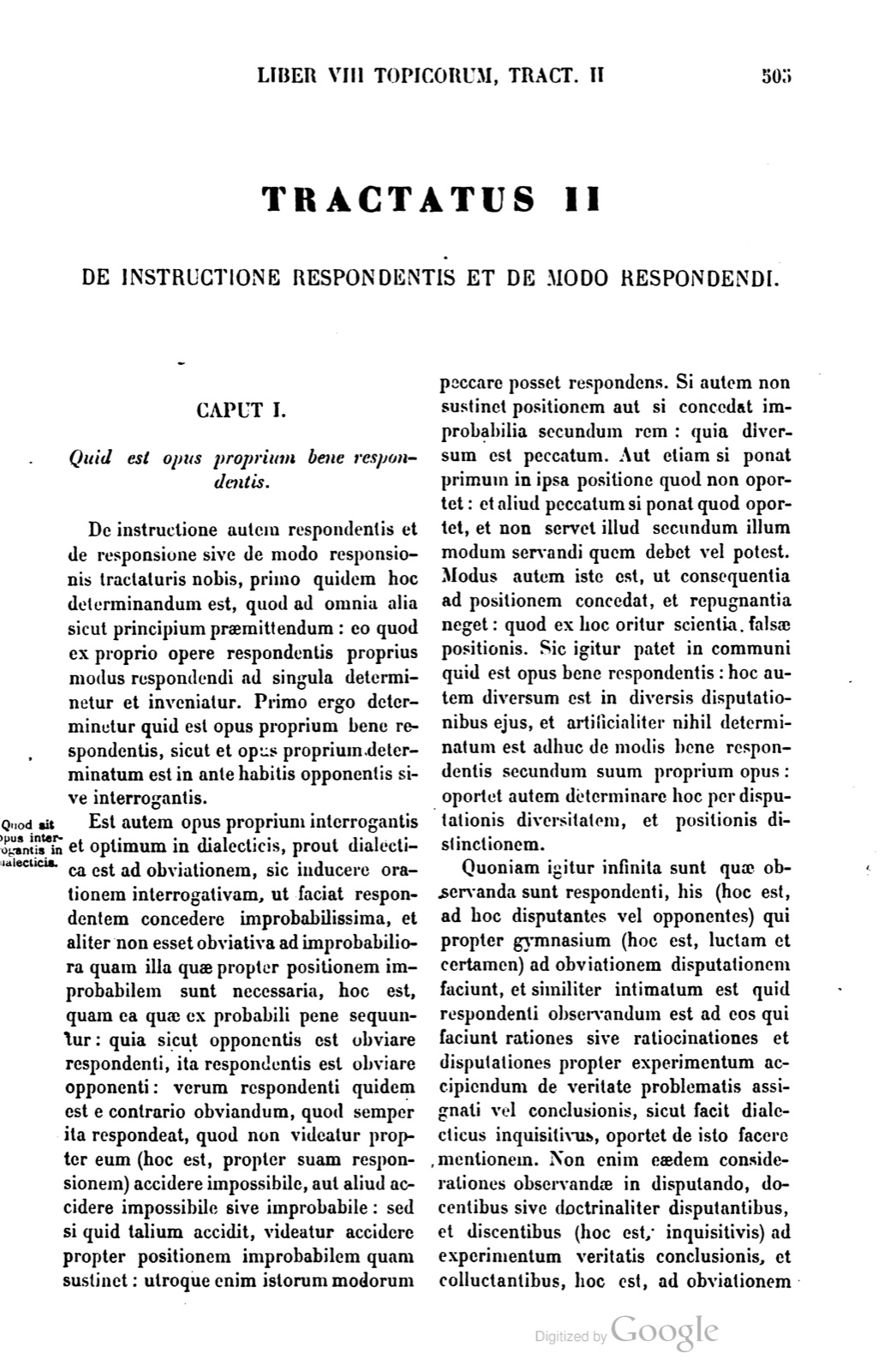
Neque est eadem consideratio in respondendo his qui ad exercitium disputant, exercentes se invicem perspectionis causa, hoc est, ut perspicaciores fiant. In omnibus enim his diversas considerationes oportet habere respondentes observando suum proprium opus, quod est opus nihil videri pati propter opponentem: et si patiatur aliquid, hoc est propter positionem: quia secundum modum positioni proprium habet defendere, hoc est, ut concedat hoc quod est ex positione sequens, nihil positioni repugnans, sicut parum ante dictum est. Ars enim artifici tradita virtutem confert ad opus proprium. Quod autem considerationes diversae observandae sunt ad diversimode disputantes, patet ex hoc quod discenti (hoc est, inquisitive disputanti) semper ponenda et concedenda sunt a respondente ea quae videntur esse vera: quia aliter non adjuvatur ad suum opus et ad suum finem a socio sive disputante. Nullus enim discentium conatur aliquod falsum dicere vel persuadere finaliter, ut stet in isto: et si concludat falsum ad impossibile syllogismo, ab illo redit statim ad oppositum verum, et stat in illo: et sic respondens etiam concedens ea quae videntur esse vera; nihil patitur propter opponentem, sed quod patitur, est propter positionem.
Aliae autem considerationes habendae sunt respondendo colluctative disputanti ad obviationem: oportet enim aliud facere videri contra respondentem eum qui colluctative disputat, qui non tantum intendit ad positionem disputare, sed plus intendit disputare obviando respondenti: respondentem enim ad illum oportet se habere ad eum, ut nihil ab eo pati videatur: et ideo ad eum indiget cautelis et considerationibus cautelarum. In conventionibus autem dialecticis, quando opponens convenit respondentem, in his quidem qui non colluctationis causa, sed causa experimenti (hoc est, expediendae per syllogizationem et ratiocinationem veritatis) et causa perspectionis, id est, ut perspicaces fiant, faciunt disputationes, nondum ab aliquo artifice enodatum est quid considerando oporteat conjecturari respondentem, et qualia oporteat eum non dare sive negare ad positionem observandam, quam secundum proprium modum et opus oportet observare respondentem, ut dictum est. Et quia de hoc nihil habuimus traditum ab aliis, quod conveniens sit, oportet quod nos ipsi tentemus aliquid de hoc artem tradendo dicere.
CAPUT II.
Quae et qualia conjectanda sunt respondenti, sive propositum, seu positio sit probabilis simpliciter, sive alicui vel respondenti vel alii.
Quia igitur positionem modo proprio positam sequitur custodire, respondentis autem positio variatur, oportet quod modus respondendi secundum diversitatem positionis sit diversus. Necesse est autem respondentem qui ponit orationem quae positio vocatur, aut probabilem proponere positionem, aut improbabilem aut neutram, quae alicui probabilis est, et alicui improbabilis: vel quod nec videtur, nec non videtur. Et adhuc subdividendo hoc oportet eum ponere, aut simpliciter probabilem, aut simpliciter improbabilem, aut indiffinite et indeterminate medio modo se habentem, vel huic quidem alicui probabilem, vel alii cuicumque, aut ipsi respondenti improbabilem.
Nor is the same consideration present in responding to those who dispute for exercise, exercising one another for the sake of perspicacity, that is, so that they may become more perspicacious. For in all these the respondents must have diverse considerations, observing their proper work, which is the work of seeming to suffer nothing because of the opponent; and if he should suffer something, this is because of the position, because he has to defend it according to the mode proper to the position, that is, so that he concedes what follows from the position, and nothing repugnant to the position, as was said a little before. For art handed down to the artisan confers power for the proper work. But that diverse considerations must be observed toward those disputing in diverse ways is clear from this, that to the learner, that is, to one disputing inquisitively, those things which seem to be true must always be posited and conceded by the respondent, because otherwise he is not helped toward his work and his end by his companion or disputant. For none of the learners tries to say or persuade something false finally, so that he may stand in that; and if he concludes the false by a syllogism to the impossible, from that he immediately returns to the opposite true thing and stands in that. And thus the respondent also, conceding those things which seem to be true, suffers nothing because of the opponent, but what he suffers is because of the position.
But other considerations must be had in responding to one disputing by wrestling for obviation: for the one who disputes by wrestling, who does not only intend to dispute toward the position but more intends to dispute by obviating the respondent, must make something else seem against the respondent. For the respondent must bear himself toward him so that he seems to suffer nothing from him; and therefore toward him he needs precautions and considerations of precautions. But in dialectical agreements, when the opponent meets the respondent, in the case of those who make disputations not for the sake of wrestling but for the sake of experiment, that is, for expediting truth by syllogizing and ratiocination, and for the sake of perspicacity, that is, so that they may become perspicacious, it has not yet been unfolded by any craftsman what the respondent ought to conjecture by considering, and what things he ought not give or ought to deny for observing the position, which the respondent must observe according to the proper mode and work, as has been said. And because concerning this we have had nothing suitable handed down by others, we ourselves must attempt to say something about this by handing down the art.
CHAPTER II.
What and what sort of things must be conjectured by the respondent, whether the proposed thing, or position, is probable simply, or probable to someone, either to the respondent or to another.
Therefore, since to guard a position follows upon a position posited in its proper mode, and the position of the respondent is varied, the mode of responding must be diverse according to the diversity of the position. But it is necessary that the respondent who posits the speech which is called a position propose either a probable position, or an improbable one, or a neutral one, which is probable to someone and improbable to someone: or one which neither seems so nor does not seem so. And still, by subdividing this, he must posit either one simply probable, or simply improbable, or one standing indefinitely and indeterminately in a middle mode, or one probable to this particular person, or improbable to any other or to the respondent himself.
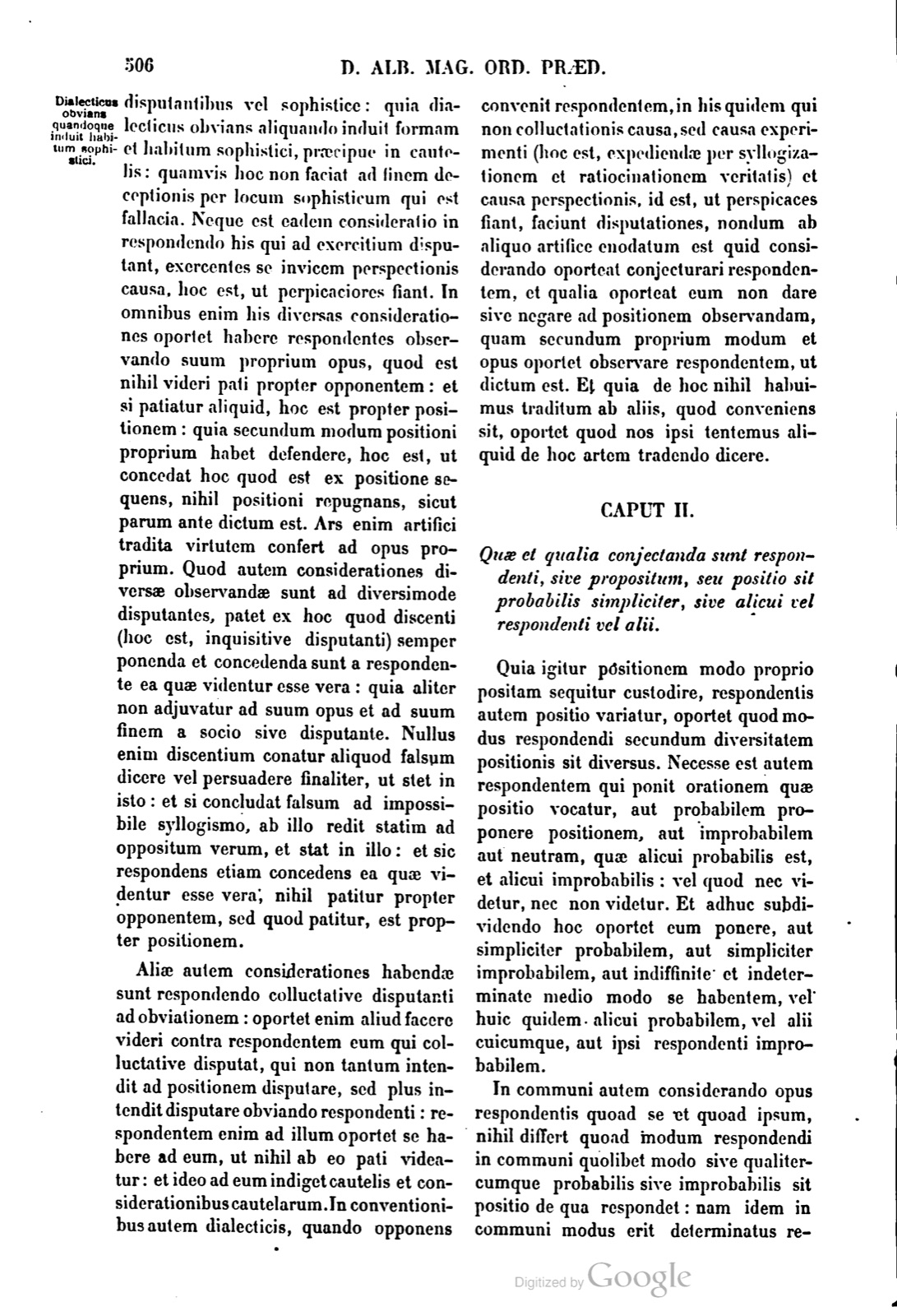
In communi autem considerando opus respondentis quoad se et quoad ipsum, nihil differt quoad modum respondendi in communi quolibet modo sive qualitercumque probabilis sive improbabilis sit positio de qua respondet: nam idem in communi modus erit determinatus respondendi bene, et idem modus dandi (hoc est, concedendi) vel non dandi sive negandi quod interrogatum est ab opponente, quoad hoc, ut caveat ut nihil videatur pati ab opponente maxime obviante: et tamen nihil dicat repugnans positioni. Et hoc probatur ex hoc, quod cum improbabilis sit positio, tunc necesse est fieri vel sequi ex oppositis ab opponente obviante probabilem conclusionem: cum vero probabilis est positio, tunc e contra necesse est fieri conclusionem improbabilem: eo quod interrogans obvians semper conatur concludere oppositum positioni. Si autem id quod positum est, sive positio, nec est probabile quid simpliciter, neque improbabile simpliciter, necesse quod conclusio quam opponens concludere conatur, sit talis qualis positio, hoc est, neque simpliciter probabilis, neque simpliciter improbabilis.
Et una doctrina generalis est, quod respondens caveat, quod ad conclusionem quam intendit opponens, non deveniat, quando obviando disputat: quia aliud ab eo pati videbitur. Hoc autem hoc modo fiet: quoniam enim qui bene syllogizant, illi ex probabilibus vel notioribus demonstrant, hoc est, ostendunt propositum sive conclusionem, manifestum est quod quando simpliciter improbabile est ad quod disputat obvians, tunc respondenti e contrario obvianti nihil dandum est vel concedendum de his quae simpliciter non videntur: quia ista concedi non possunt. Neque etiam aliud dandum de his quae videntur quidem, sed minus videntur sive minus probabilia sunt in conclusione: et hoc ideo est, quia cum improbabilis sit positio, probabilis fit conclusio: et ipse per probabilia deveniet ad conclusionem probabilem: et hoc obviando cavere debet respondens. Si enim ad conclusionem probabilem devenire debeat opponens, oportet quod omnia quae sumuntur ab ipso ad probandum probabilem conclusionem, aut probabilia esse, aut etiam magis probabilia conclusione si debet (sicut dictum est) per notiora id quod minus notum est, concludi. Propter quod si quid eorum quae interrogantur, non tale est, hoc non est ponendum sive concedendum respondenti. Si autem simpliciter positio probabilis: tunc palam ex dictis est, quoniam conclusio quam obviando intendit concludere opponens, erit improbabilis.
But considering in common the work of the respondent with respect to himself and to the thing itself, it makes no difference, with respect to the mode of responding in common, in whatever way or however the position about which he responds is probable or improbable. For the same common mode of responding well will be determined, and the same mode of giving, that is, conceding, or of not giving or denying what has been interrogated by the opponent, with respect to this, that he beware lest he seem to suffer anything from the opponent, especially the obviating opponent, and yet say nothing repugnant to the position. And this is proved from this: when the position is improbable, then it is necessary that a probable conclusion be made or follow from the opposites by the obviating opponent; but when the position is probable, then on the contrary it is necessary that an improbable conclusion be made, because the obviating questioner always tries to conclude the opposite of the position. But if that which is posited, or the position, is neither something probable simply nor improbable simply, it is necessary that the conclusion which the opponent tries to conclude be such as the position is, that is, neither simply probable nor simply improbable.
And one general teaching is that the respondent should beware lest he come to the conclusion which the opponent intends when he disputes by obviating, because he will seem to suffer something else from him. But this will happen in this way: since those who syllogize well demonstrate, that is, show the proposed thing or conclusion, from probable or better known things, it is manifest that when that to which the obviating disputant disputes is simply improbable, then to the respondent obviating on the contrary side nothing must be given or conceded from those things which simply do not seem so, because those things cannot be conceded. Nor again must anything else be given from those things which indeed seem so, but which seem less so or are less probable in the conclusion; and this is so because, when the position is improbable, the conclusion becomes probable, and he will come through probable things to a probable conclusion; and the respondent must beware of this by obviating. For if the opponent ought to come to a probable conclusion, all things which are taken by him for proving a probable conclusion must be either probable or even more probable than the conclusion, if, as was said, what is less known ought to be concluded through more known things. On account of which, if something of those things which are interrogated is not such, this must not be posited or conceded by the respondent. But if the position is simply probable, then from what has been said it is plain that the conclusion which the opponent intends to conclude by obviating will be improbable.
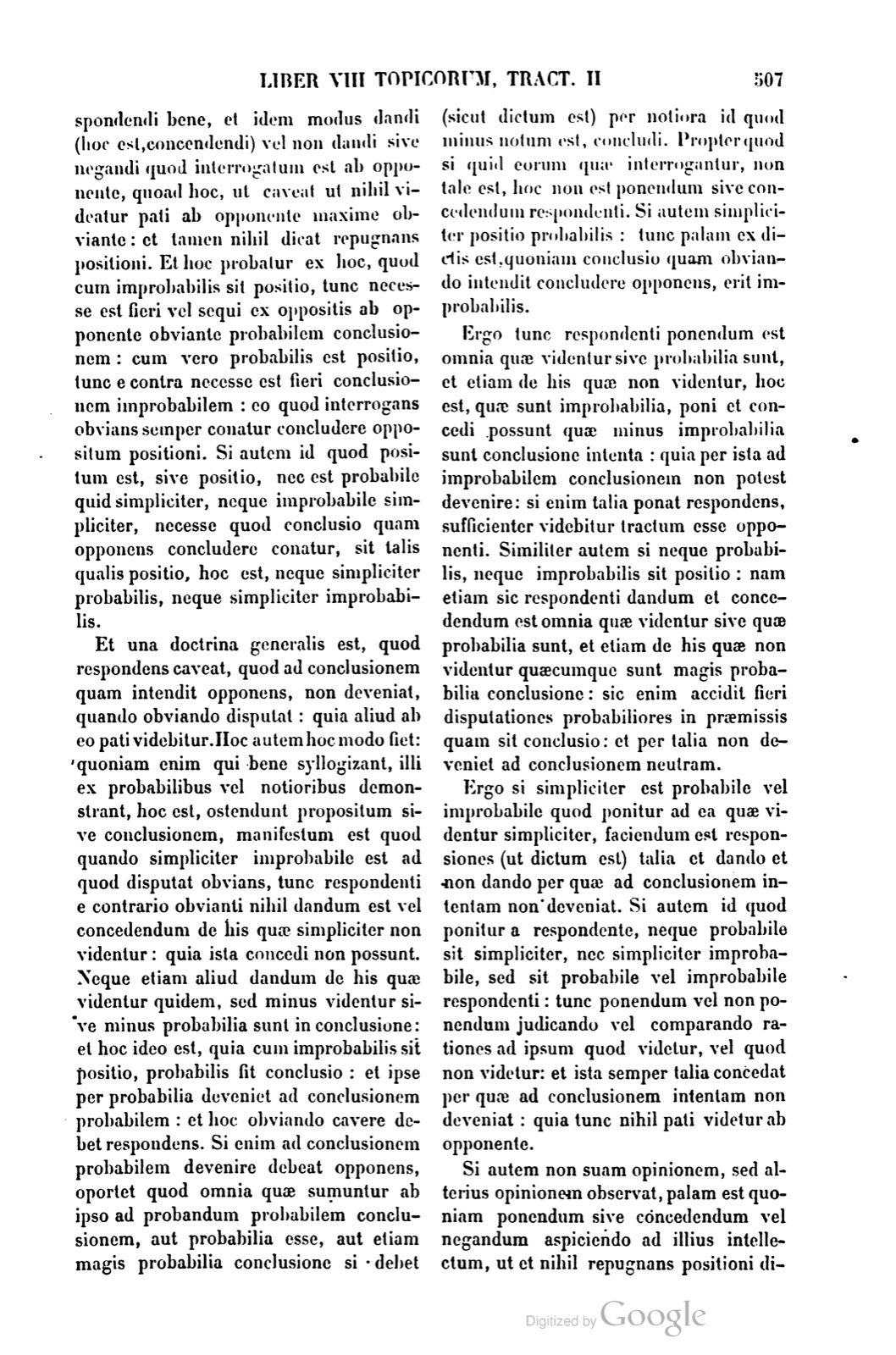
Ergo tunc respondenti ponendum est omnia quae videntur sive probabilia sunt, et etiam de his quae non videntur, hoc est, quae sunt improbabilia, poni et concedi possunt quae minus improbabilia sunt conclusione intenta: quia per ista ad improbabilem conclusionem non potest devenire: si enim talia ponat respondens, sufficienter videbitur tractum esse opponenti. Similiter autem si neque probabilis, neque improbabilis sit positio: nam etiam sic respondenti dandum et concedendum est omnia quae videntur sive quae probabilia sunt, et etiam de his quae non videntur quaecumque sunt magis probabilia conclusione: sic enim accidit fieri disputationes probabiliores in praemissis quam sit conclusio: et per talia non deveniet ad conclusionem neutram.
Ergo si simpliciter est probabile vel improbabile quod ponitur ad ea quae videntur simpliciter, faciendum est responsiones (ut dictum est) talia et dando et non dando per quae ad conclusionem intentam non deveniat. Si autem id quod ponitur a respondente, neque probabile sit simpliciter, nec simpliciter improbabile, sed sit probabile vel improbabile respondenti: tunc ponendum vel non ponendum judicando vel comparando rationes ad ipsum quod videtur, vel quod non videtur: et ista semper talia concedat per quae ad conclusionem intentam non deveniat: quia tunc nihil pati videtur ab opponente.
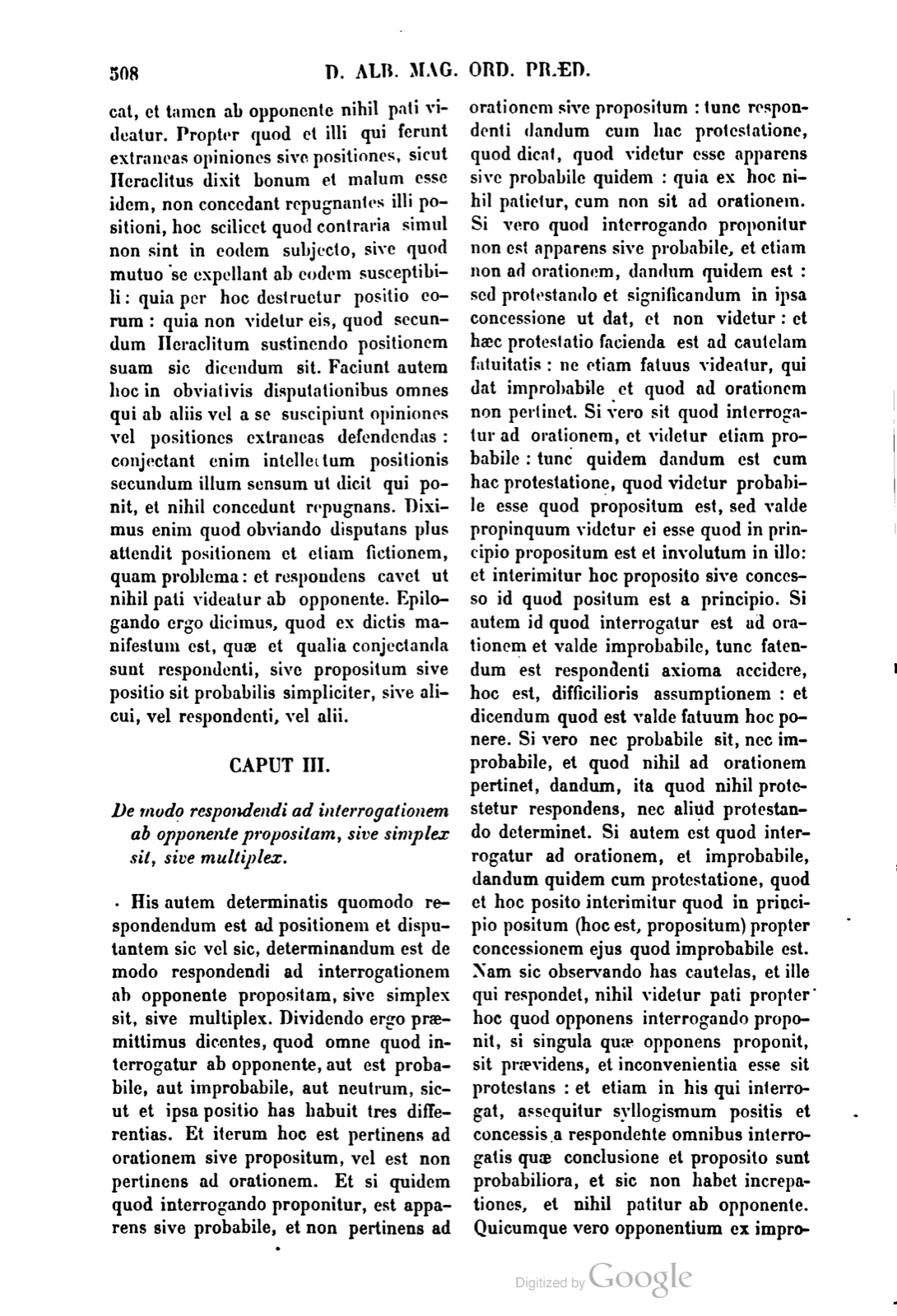
Si autem non suam opinionem, sed alterius opinionem observat, palam est quoniam ponendum sive concedendum vel negandum aspiciendo ad illius intellectum, ut et nihil repugnans positioni dicat, et tamen ab opponente nihil pati videatur. Propter quod et illi qui ferunt extraneas opiniones sive positiones, sicut Heraclitus dixit bonum et malum esse idem, non concedant repugnantes illi positioni, hoc scilicet quod contraria simul non sint in eodem subjecto, sive quod mutuo se expellant ab eodem susceptibili: quia per hoc destruitur positio eorum: quia non videtur eis, quod secundum Heraclitum sustinendo positionem suam sic dicendum sit. Faciunt autem hoc in obviativis disputationibus omnes qui ab aliis vel a se suscipiunt opiniones vel positiones extraneas defendendas: conjectant enim intellectum positionis secundum illum sensum ut dicit qui ponit, et nihil concedunt repugnans. Diximus enim quod obviando disputans plus attendit positionem et etiam fictionem, quam problema: et respondens cavet ut nihil pati videatur ab opponente. Epilogando ergo dicimus, quod ex dictis manifestum est, quae et qualia conjectanda sunt respondenti, sive propositum sive positio sit probabilis simpliciter, sive alicui, vel respondenti, vel alii.
Therefore then the respondent must posit all things which seem so or are probable; and even among those things which do not seem so, that is, which are improbable, those can be posited and conceded which are less improbable than the intended conclusion, because through these he cannot come to an improbable conclusion. For if the respondent posits such things, it will sufficiently seem that the opponent has been drawn. Likewise if the position is neither probable nor improbable; for even thus the respondent must give and concede all things which seem so or are probable, and also among those things which do not seem so whatever are more probable than the conclusion. For thus it happens that disputations are made more probable in the premises than the conclusion is, and through such things he will not come to a neutral conclusion.
Therefore if what is posited is simply probable or improbable in relation to those things which seem so simply, responses must be made, as has been said, both by giving and by not giving such things through which he may not come to the intended conclusion. But if that which is posited by the respondent is neither probable simply nor improbable simply, but is probable or improbable to the respondent, then it must be posited or not posited by judging or comparing reasons to that very thing which seems so or does not seem so; and he should always concede such things through which he may not come to the intended conclusion, because then he seems to suffer nothing from the opponent.
But if he observes not his own opinion but the opinion of another, it is plain that one must posit or concede or deny by looking to that person's understanding, so that he may both say nothing repugnant to the position, and yet seem to suffer nothing from the opponent. On account of which also those who bring strange opinions or positions, as Heraclitus said that good and evil are the same, should not concede things repugnant to that position, namely that contraries are not simultaneously in the same subject, or that they mutually expel themselves from the same susceptible thing, because through this their position is destroyed, since it does not seem to them that, in sustaining their position according to Heraclitus, it must be said in this way. But in obviative disputations all do this who receive from others or from themselves strange opinions or positions to be defended: for they conjecture the understanding of the position according to that sense in which the one positing says it, and concede nothing repugnant. For we have said that one disputing by obviating attends more to the position and even to the fiction than to the problem, and the respondent takes care that he seems to suffer nothing from the opponent. Therefore, recapitulating, we say that from what has been said it is manifest what and what sort of things must be conjectured by the respondent, whether the proposed thing or position is probable simply, or to someone, either to the respondent or to another.
If a page does not appear, its photograph has not been uploaded yet.