Volume 2 · pp. 380–382
Chapter I continued
A marker with ≈ is an approximate page boundary, placed by measure of the text; the page photographs remain the authority. In the paired views, clicking a page marker brings that page into view.
Considerandum autem in rebus moralibus comparando eas ad illa secundum quae natae sunt inesse animae: si enim species sit animae secundum aliquam potentiam: et genus non insit secundum eamdem potentiam, interimitur genus: et non bene assignatum est genus. Videndum etiam praeter inducta si super aliquo uno nata fieri sint species et genus; in quo enim ut in subjecto est species, et genus est in eodem, ut patet: quia in quo ut in subjecto est album, in eodem et secundum idem est color: et in quo grammatica ut in subjecto, in eodem et secundum idem est disciplina sive scientia. Si vero alius verecundiam ut speciem dicat esse timoris, ita quod verecundia species sit, et genus ejus de eo essentialiter praedicatum sit timor: si quis hoc modo iram ut speciem dicit esse, tristitiam ut genus, accidit quae non in eodem et neque secundum idem in quo est genus et species: et sic constat quod male genus assignavit, nam verecundia quidem non est in anima nisi in rationali potentia: propter quod dicit Avicenna quod primum signum rationis est verecundia: propter quod etiam nullum de brutis animalibus verecundatur. Timor autem qui est figura cordis secundum systolem, cum sit in anima secundum animositatem, hoc est, secundum irascibilem, quae animositate movetur: quia in illa est audacia quae est timori contraria. Similiter est de tristitia et ira: quia tristitia quae est constrictio cordis ex absentia delectabilis et praesentia contrarii, est in concupiscibili, in qua est etiam voluptas sive delectatio sive gaudium. Ira autem fit in anima secundum animositatem: propter quod non sunt timor et tristitia verecundiae et irae quae sunt assignata pro generibus: eo quod non in eisdem et secundum eamdem potentiam sunt nata fieri in anima cum speciebus assignatis. Similiter autem est quis peccans si amicitiam posuit in concupiscibili: tunc amicitia non erit voluntas quaedam: quia amicitia voluntas est quaedam secundum praedicationem generis de specie: omnis enim voluntas rationalis inest animae, et sic species et genus non insunt secundum idem.
Utilis autem hic locus est non tantum ad genus, sed etiam ad accidens comparatum ad subjectum cui accidit: quia sequitur, si non inest secundum idem, quod similiter non inest, et similiter inesse vel non inesse determinatur in accidente.
[Marginal label, printed page 380: Objectio.]
Est autem hic notandum, quod pro certo ab Auctoribus timor ponitur esse genus verecundiae: dicit enim Damascenus quod verecundia est timor in turpi perpetrato.
[Marginal label, printed page 380: Solutio.]
Sed timor dicitur aequivoce secundum quod est fuga turpis, et secundum quod est fuga periculi. Hoc autem modo quo est fuga cordis in periculo, non potest esse genus verecundiae: et sic intelligitur quod dicitur hic.
But in moral things one must consider by comparing them to those things according to which they are naturally apt to inhere in the soul: for if the species belongs to the soul according to some potency, and the genus does not inhere according to the same potency, the genus is destroyed and has not been well assigned. One must also see, besides the considerations introduced, whether species and genus are naturally apt to come to be upon one thing; for in that in which the species is as in a subject, the genus is in the same, as is clear, because in that in which white is as in a subject, color is in the same and according to the same, and in that in which grammar is as in a subject, discipline or science is in the same and according to the same. But if another says that shame, as a species, is of fear, so that shame is a species and its genus essentially predicated of it is fear, or if someone says in this way that anger is a species and sadness a genus, things occur not in the same and not according to the same in which genus and species are. And thus it is certain that he has badly assigned the genus. For shame is not in the soul except in the rational potency; on account of this Avicenna says that the first sign of reason is shame, and therefore no brute animal is ashamed. But fear, which is a figure of the heart according to systole, since it is in the soul according to spiritedness, that is, according to the irascible, is moved by spiritedness, because in that potency is courage, which is contrary to fear. It is similar with sadness and anger, because sadness, which is constriction of the heart from absence of the delightful and presence of the contrary, is in the concupiscible power, in which there is also pleasure or delight or joy. But anger occurs in the soul according to spiritedness; and therefore fear and sadness are not the genera of shame and anger assigned as genera, because they are not naturally apt to come to be in the soul in the same powers and according to the same power with the assigned species. Similarly also one sins if he has placed friendship in the concupiscible power; then friendship will not be a certain will, because friendship is a certain will according to the predication of genus concerning species. For every rational will inheres in the soul, and thus species and genus do not inhere according to the same.
But this locus is useful not only for genus, but also for accident compared to the subject to which it happens, because it follows that, if it does not inhere according to the same, it similarly does not inhere, and similarly inhering or not inhering is determined in accident.
[Marginal label, printed page 380: Objection.]
But here it must be noted that fear is certainly posited by the Authorities as the genus of shame; for Damascene says that shame is fear in a base deed committed.
[Marginal label, printed page 380: Solution.]
But fear is said equivocally according as it is flight from the base and according as it is flight from danger. But in this mode, in which it is flight of the heart in danger, it cannot be the genus of shame; and thus what is said here is understood.
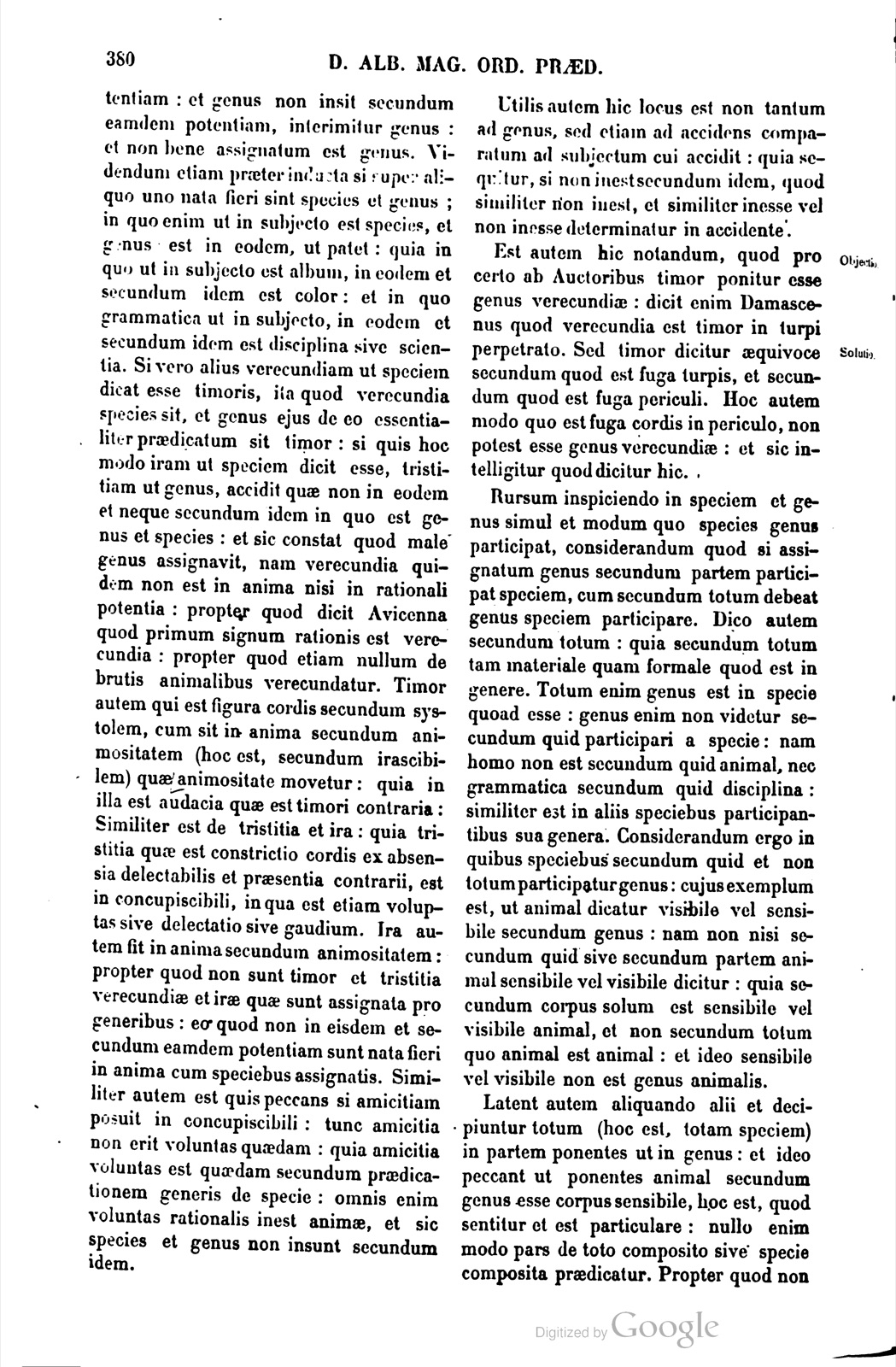
Rursum inspiciendo in speciem et genus simul et modum quo species genus participat, considerandum quod si assignatum genus secundum partem participat speciem, cum secundum totum debeat genus speciem participare. Dico autem secundum totum: quia secundum totum tam materiale quam formale quod est in genere. Totum enim genus est in specie quoad esse: genus enim non videtur secundum quid participari a specie: nam homo non est secundum quid animal, nec grammatica secundum quid disciplina: similiter est in aliis speciebus participantibus sua genera. Considerandum ergo in quibus speciebus secundum quid et non totum participatur genus: cujus exemplum est, ut animal dicatur visibile vel sensibile secundum genus: nam non nisi secundum quid sive secundum partem animal sensibile vel visibile dicitur: quia secundum corpus solum est sensibile vel visibile animal, et non secundum totum quo animal est animal: et ideo sensibile vel visibile non est genus animalis.
Latent autem aliquando alii et decipiuntur totum, hoc est, totam speciem, in partem ponentes ut in genus: et ideo peccant ut ponentes animal secundum genus esse corpus sensibile, hoc est, quod sentitur et est particulare: nullo enim modo pars de toto composito sive specie composita praedicatur. Propter quod non est corpus genus animalis. Et ideo quia est pars materialis ejus. Sciendum tamen quod Porphyrius corpus ponit genus animalis: sed hoc non est corpus hoc particulare, sed corpus universale abstractum ab hoc vel ab illo.
Adhuc autem coacervando naturalia cum moralibus videndum, si aliquid de numero vituperabilium sive fugiendorum ut species ponunt in potentiam aut possibile, sicut in genus, hoc est, potestatem: quia quis potens ad agendum sive faciendum aliquid efficitur vituperabilium sive fugiendorum, ut actus genus ponunt: quia tunc actum vituperabilis ponentes in potentiam agendi ut in genus peccant: quia potentia agendi vituperabile non est vituperabilis, nec de vituperabili essentialiter praedicatur ut genus, ut sophisticum vel detractorem vel latronem dicens secundum genus eum qui valet, hoc est, potest vel facultatem habet, latenter extranea furari: sophista quidem qui scientias, detractor autem famam, et latro lucra: non necesse enim de numero praedictorum, quod aliquis existat in hoc talis, videlicet quod sit sophista vel detractor vel latro, in eo quod habeat potentiam aliquid talium faciendi, sed potius ab actu: quia a potentia quae ante actum est 1 et non conjuncta actui, non necessario dicitur aliquis vel malus vel bonus in aliquo operabili, sed potius ab actu, ut dicit Aristoteles nono primae philosophiae 2: quia sic omnis homo diceretur et bonus et malus, et laudabilis et vituperabilis: potest enim et secundum hanc potentiam et deus et studiosus, hoc est, virtuosus homo, prava agere: sed non sunt denominati quod sint pravi vel sophistae, vel detractores, vel latrones, vel deus studiosus. Nam omnes qui dicuntur pravi, et nomen accipiunt secundum appetitum actualem pravitatis, et non secundum potentiam pravitatem faciendi: quia anima est natura ipsa rationalis. Et dico sophistam decipientem in verbis, detractorem susurratorem ad alicujus infamiam, latronem autem actualiter volentem tractare in furno, hoc est, in nigro, censum hominum. Deum dico secundum diffinitionem deorum, qui nihil pravum velle potest: quia pravum velle non est potentia, sed impotentia et defectus. Studiosum autem dico, qui mobilitate suae honestatis nihil pravum vult secundum actum: potest tamen prava agere: eo quod, sicut dicit Damascenus, omne creatum vertibile est secundum electionem et voluntatem ad minus: increatum autem nullo modo est vertibile.
Again, by inspecting species and genus together and the mode by which species participates genus, one must consider that, if the assigned genus participates the species according to part, although genus ought to participate the species according to the whole. But I say according to the whole because according to the whole, both material and formal, which is in the genus. For the whole genus is in the species with respect to being; genus does not seem to be participated by species according to something, for a human being is not animal according to something, nor is grammar discipline according to something; it is similar in other species participating their genera. Therefore one must consider in which species genus is participated according to something and not as a whole. An example is if animal is called visible or sensible according to genus; for animal is called sensible or visible only according to something or according to part, because animal is sensible or visible according to the body alone and not according to the whole by which animal is animal; and therefore sensible or visible is not the genus of animal.
But sometimes others lie hidden and are deceived by placing the whole, that is, the whole species, in a part as in a genus; and therefore they sin as those who posit that animal according to genus is a sensible body, that is, what is sensed and is particular. For in no way is a part predicated of the composite whole or composite species. Therefore body is not the genus of animal, because it is its material part. Yet one must know that Porphyry posits body as the genus of animal; but this is not this particular body, but universal body abstracted from this or from that.
Furthermore, by gathering natural things with moral things, one must see whether they place something from the number of blameworthy or avoidable things as a species in potency or the possible as in a genus, that is, in a power. For the one able to act or do something is made one of the blameworthy or avoidable, as they posit act as genus. For then, by placing the act of something blameworthy in the potency of acting as in a genus, they sin, because the potency of acting blameworthily is not blameworthy, nor is it essentially predicated of the blameworthy as genus. Thus one says that a sophist, a detractor, or a thief according to genus is one who has power, that is, can or has faculty, secretly to steal foreign things: the sophist steals sciences, the detractor reputation, and the thief gains. For it is not necessary from the number of the foregoing that someone exist in this as such, namely that he is sophist or detractor or thief, because he has the potency of doing some such things, but rather from the act. For from potency which is before act 1 and not joined to act, someone is not necessarily called evil or good in some operable thing, but rather from act, as Aristotle says in the ninth book of the First Philosophy 2. Otherwise every human being would be called both good and evil, both laudable and blameworthy; for according to this potency both God and the studious, that is, virtuous, human being can do base things, yet they are not denominated as base, sophists, detractors, thieves, or God as studious. For all who are called base take the name according to the actual appetite of baseness and not according to the potency of doing baseness, because the soul itself is rational nature. And I call a sophist one deceiving in words, a detractor a whisperer toward someone's infamy, and a thief one actually willing to handle human wealth in the furnace, that is, in blackness. I speak of God according to the definition of gods, who cannot will anything base, because willing the base is not potency but impotence and defect. But I call studious the one who, by the mobility of his honesty, wills nothing base according to act, yet can do base things, because, as Damascene says, every created thing is turnable at least according to choice and will; but the uncreated is in no way turnable.
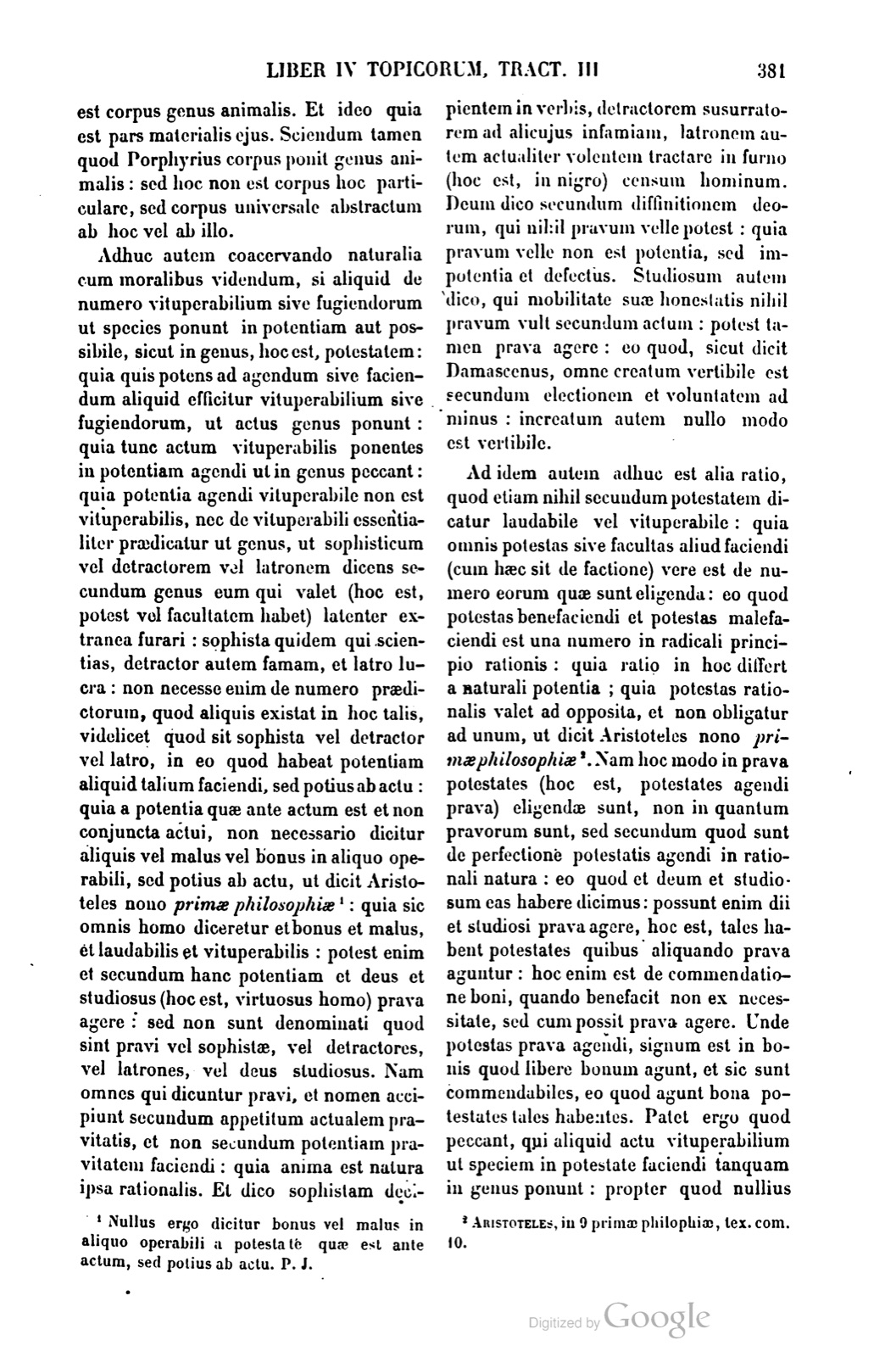
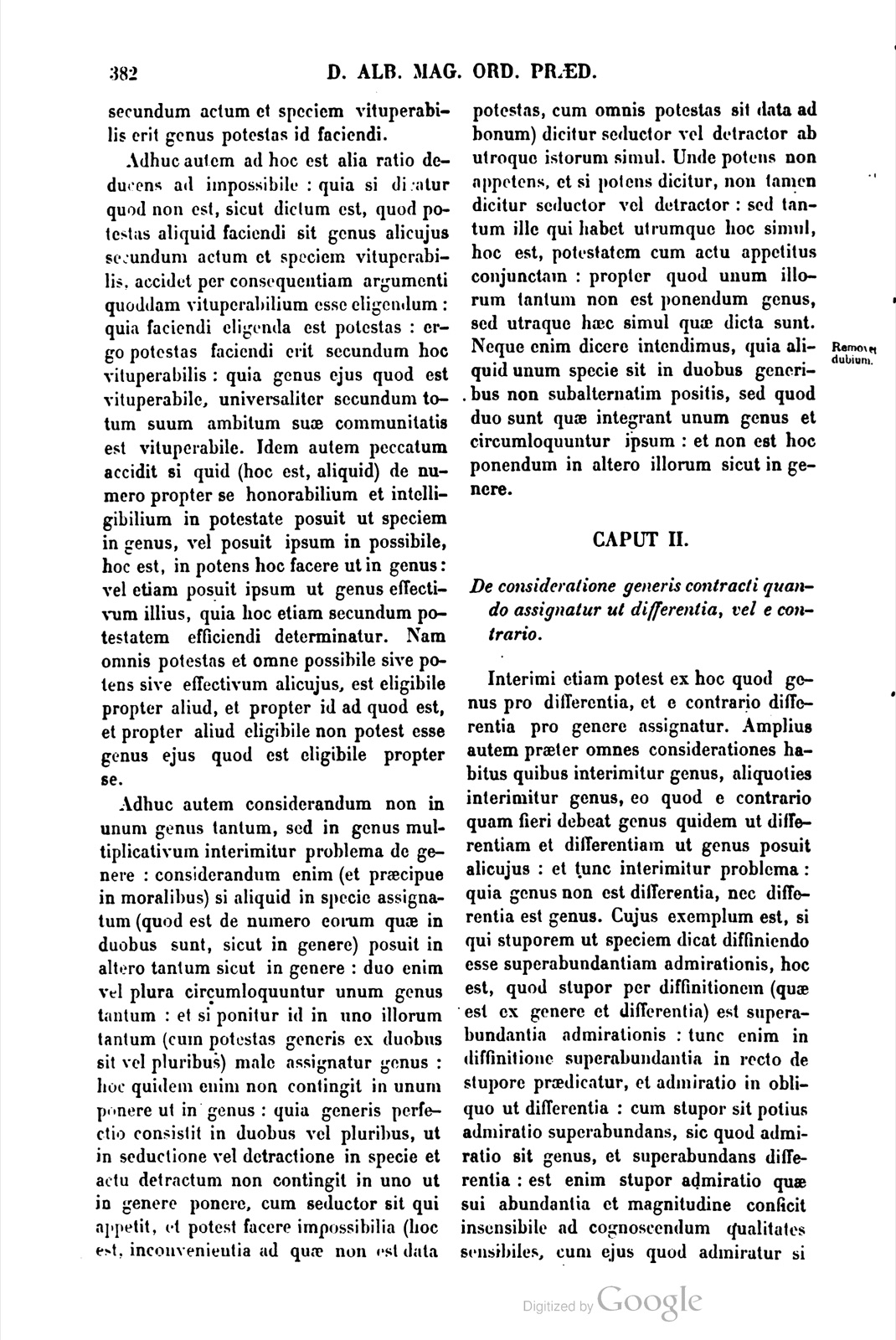
Ad idem autem adhuc est alia ratio, quod etiam nihil secundum potestatem dicatur laudabile vel vituperabile: quia omnis potestas sive facultas aliud faciendi, cum haec sit de factione, vere est de numero eorum quae sunt eligenda: eo quod potestas benefaciendi et potestas malefaciendi est una numero in radicali principio rationis: quia ratio in hoc differt a naturali potentia; quia potestas rationalis valet ad opposita, et non obligatur ad unum, ut dicit Aristoteles nono primae philosophiae. Nam hoc modo in prava potestates, hoc est, potestates agendi prava, eligendae sunt, non in quantum pravorum sunt, sed secundum quod sunt de perfectione potestatis agendi in rationali natura: eo quod et deum et studiosum eas habere dicimus: possunt enim dii et studiosi prava agere, hoc est, tales habent potestates quibus aliquando prava aguntur: hoc enim est de commendatione boni, quando benefacit non ex necessitate, sed cum possit prava agere. Unde potestas prava agendi, signum est in bonis quod libere bonum agunt, et sic sunt commendabiles, eo quod agunt bona potestates tales habentes. Patet ergo quod peccant, qui aliquid actu vituperabilium ut speciem in potestate faciendi tanquam in genus ponunt: propter quod nullius secundum actum et speciem vituperabilis erit genus potestas id faciendi.
Toward the same point there is still another reason, that nothing is called laudable or blameworthy according to power, because every power or faculty of doing something else, since this belongs to making, is truly from the number of things to be chosen. For the power of doing well and the power of doing badly are numerically one in the radical principle of reason, because reason differs from natural potency in this, that rational power is valid for opposites and is not bound to one thing, as Aristotle says in the ninth book of the First Philosophy. For in this way powers for base things, that is, powers of doing base things, are to be chosen, not insofar as they are powers of base things, but according as they belong to the perfection of the power of acting in rational nature, because we say that both God and the studious have them. For gods and studious persons can do base things, that is, they have such powers by which base things are sometimes done. For this belongs to the commendation of the good, when he does good not from necessity but although he can do base things. Hence the power of doing base things is a sign in the good that they freely do good, and thus they are commendable, because they do good while having such powers. Therefore it is clear that those sin who place something blameworthy in act as a species in the power of doing as in a genus; therefore the power of doing it will be the genus of no blameworthy thing according to act and species.
Notes
- Therefore no one is called good or evil in some operable matter from the power which is before act, but rather from act. P. J. (Nullus ergo dicitur bonus vel malus in aliquo operabili a potestate quae est ante actum, sed potius ab actu. P. J.) ↩
- Aristotle, in book 9 of the First Philosophy, text comment 10. (ARISTOTELES, in 9 primae philosophiae, tex. com. 10.) ↩
If a page does not appear, its photograph has not been uploaded yet.