Volume 2 · pp. 378–379
Treatise III. Chapter I. On considerations taken from habit, potency, and act
A marker with ≈ is an approximate page boundary, placed by measure of the text; the page photographs remain the authority. In the paired views, clicking a page marker brings that page into view.
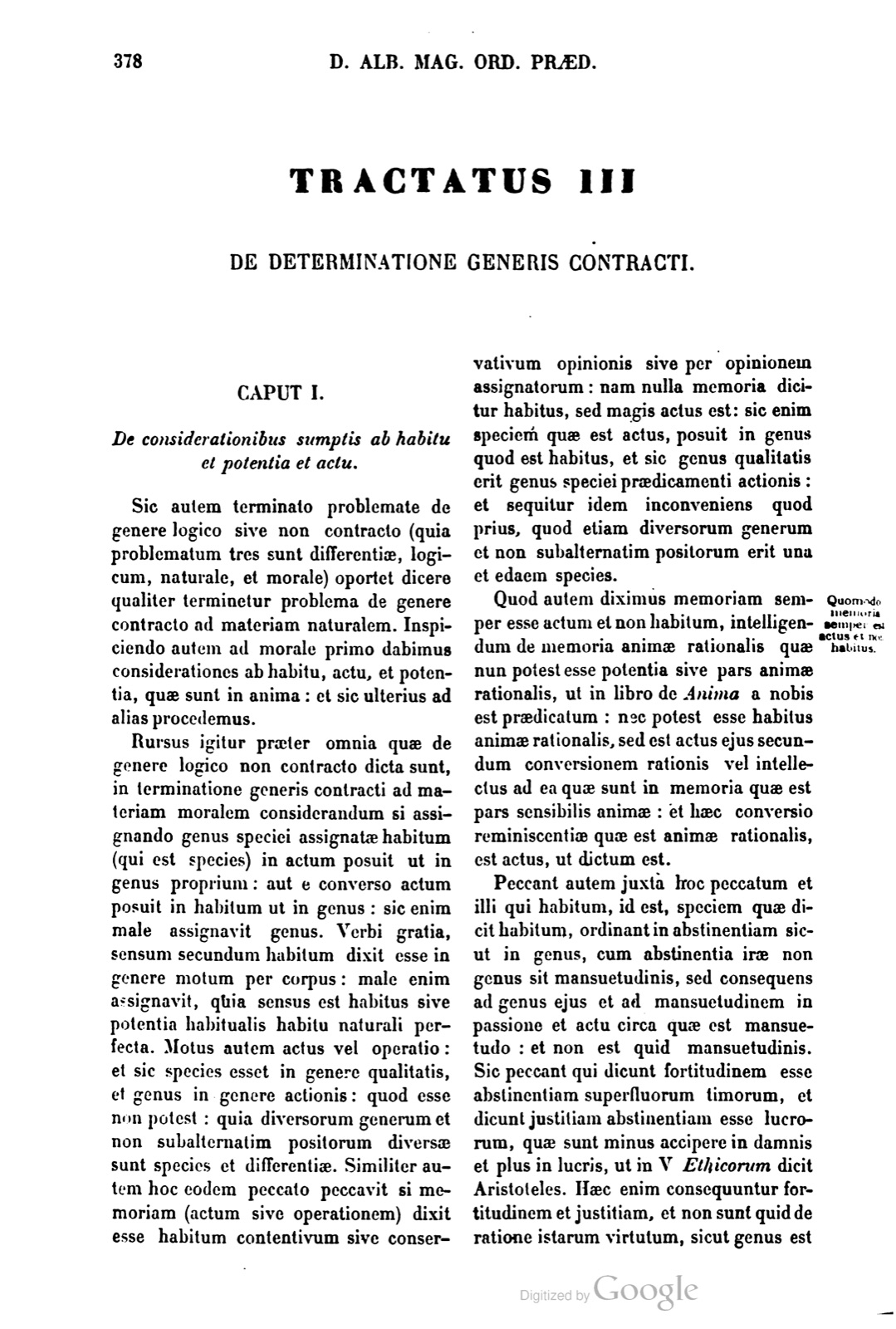
TRACTATUS III
DE DETERMINATIONE GENERIS CONTRACTI.
CAPUT I.
De considerationibus sumptis ab habitu et potentia et actu.
Sic autem terminato problemate de genere logico sive non contracto, quia problematum tres sunt differentiae, logicum, naturale, et morale, oportet dicere qualiter terminetur problema de genere contracto ad materiam naturalem. Inspiciendo autem ad morale primo dabimus considerationes ab habitu, actu, et potentia, quae sunt in anima: et sic ulterius ad alias procedemus.
Rursus igitur praeter omnia quae de genere logico non contracto dicta sunt, in terminatione generis contracti ad materiam moralem considerandum si assignando genus speciei assignatae habitum, qui est species, in actum posuit ut in genus proprium: aut e converso actum posuit in habitum ut in genus: sic enim male assignavit genus. Verbi gratia, sensum secundum habitum dixit esse in genere motum per corpus: male enim assignavit, quia sensus est habitus sive potentia habitualis habitu naturali perfecta. Motus autem actus vel operatio: et sic species esset in genere qualitatis, et genus in genere actionis: quod esse non potest: quia diversorum generum et non subalternatim positorum diversae sunt species et differentiae. Similiter autem hoc eodem peccato peccavit si memoriam, actum sive operationem, dixit esse habitum contentivum sive conservativum opinionis sive per opinionem assignatorum: nam nulla memoria dicitur habitus, sed magis actus est: sic enim speciem quae est actus, posuit in genus quod est habitus, et sic genus qualitatis erit genus speciei praedicamenti actionis: et sequitur idem inconveniens quod prius, quod etiam diversorum generum et non subalternatim positorum erit una et eadem species.
[Marginal label, printed page 378: Quomodo memoria semper est actus et habitus.]
Quod autem diximus memoriam semper esse actum et non habitum, intelligendum de memoria animae rationalis quae non potest esse potentia sive pars animae rationalis, ut in libro de Anima a nobis est praedicatum: nec potest esse habitus animae rationalis, sed est actus ejus secundum conversionem rationis vel intellectus ad ea quae sunt in memoria quae est pars sensibilis animae: et haec conversio reminiscentiae quae est animae rationalis, est actus, ut dictum est.
Peccant autem juxta hoc peccatum et illi qui habitum, id est, speciem quae dicit habitum, ordinant in abstinentiam sicut in genus, cum abstinentia irae non genus sit mansuetudinis, sed consequens ad genus ejus et ad mansuetudinem in passione et actu circa quae est mansuetudo: et non est quid mansuetudinis. Sic peccant qui dicunt fortitudinem esse abstinentiam superfluorum timorum, et dicunt justitiam abstinentiam esse lucrorum, quae sunt minus accipere in damnis et plus in lucris, ut in V Ethicorum dicit Aristoteles. Haec enim consequuntur fortitudinem et justitiam, et non sunt quid de ratione istarum virtutum, sicut genus est quid de ratione speciei. Et ideo Aristoteles in libro de Bonis laudabilibus consequentia distinguit a virtutibus et operibus virtutum.
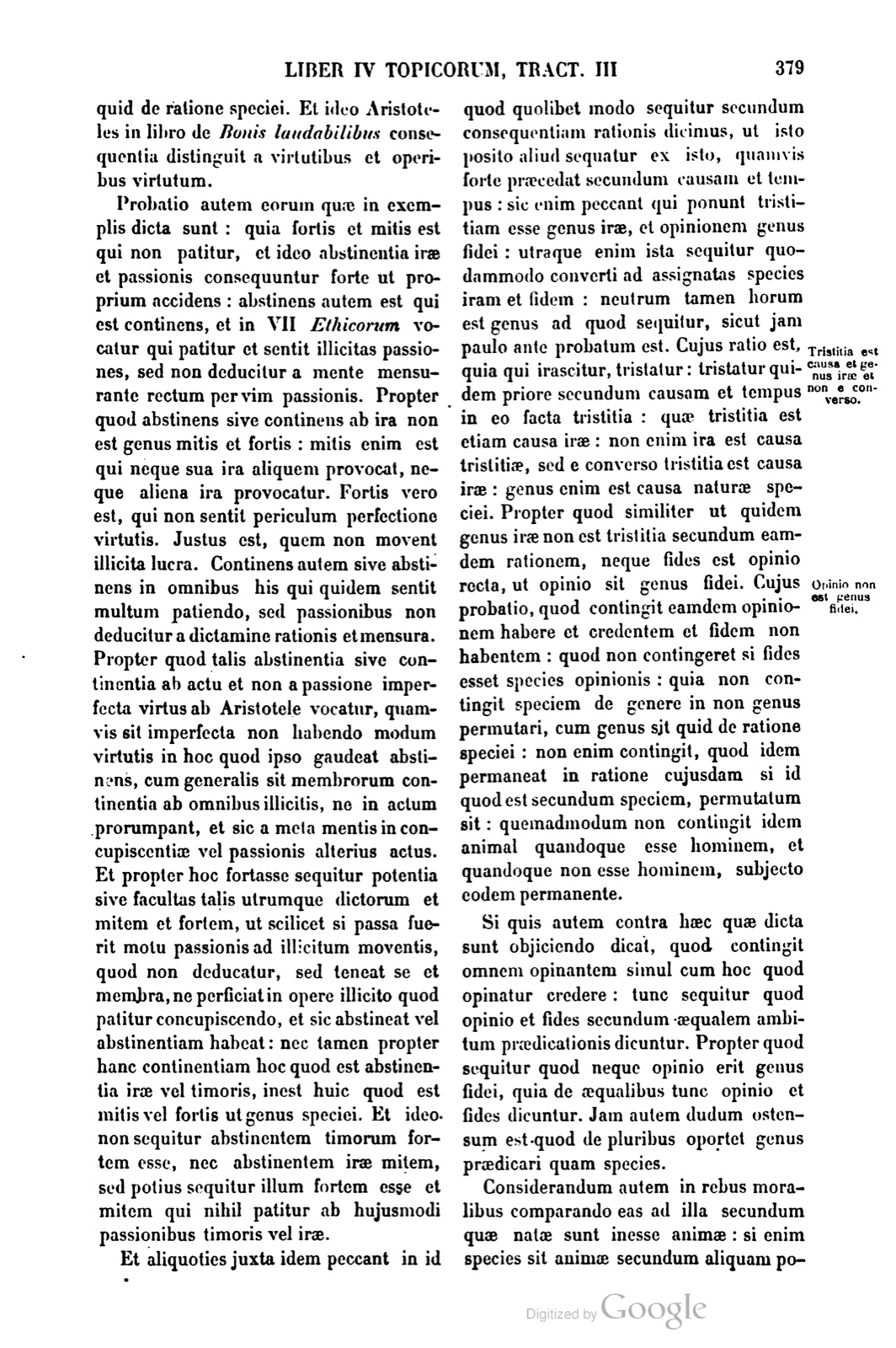
Probatio autem eorum quae in exemplis dicta sunt: quia fortis et mitis est qui non patitur, et ideo abstinentia irae et passionis consequuntur forte ut proprium accidens: abstinens autem est qui est continens, et in VII Ethicorum vocatur qui patitur et sentit illicitas passiones, sed non deducitur a mente mensurante rectum per vim passionis. Propter quod abstinens sive continens ab ira non est genus mitis et fortis: mitis enim est qui neque sua ira aliquem provocat, neque aliena ira provocatur. Fortis vero est, qui non sentit periculum perfectione virtutis. Justus est, quem non movent illicita lucra. Continens autem sive abstinens in omnibus his qui quidem sentit multum patiendo, sed passionibus non deducitur a dictamine rationis et mensura. Propter quod talis abstinentia sive continentia ab actu et non a passione imperfecta virtus ab Aristotele vocatur, quamvis sit imperfecta non habendo modum virtutis in hoc quod ipso gaudeat abstinens, cum generalis sit membrorum continentia ab omnibus illicitis, ne in actum prorumpant, et sic a meta mentis in concupiscentiae vel passionis alterius actus. Et propter hoc fortasse sequitur potentia sive facultas talis utrumque dictorum et mitem et fortem, ut scilicet si passa fuerit motu passionis ad illicitum moventis, quod non deducatur, sed teneat se et membra, ne perficiat in opere illicito quod patitur concupiscendo, et sic abstineat vel abstinentiam habeat: nec tamen propter hanc continentiam hoc quod est abstinentia irae vel timoris, inest huic quod est mitis vel fortis ut genus speciei. Et ideo non sequitur abstinentem timorum fortem esse, nec abstinentem irae mitem, sed potius sequitur illum fortem esse et mitem qui nihil patitur ab hujusmodi passionibus timoris vel irae.
TREATISE III
ON THE DETERMINATION OF CONTRACTED GENUS.
CHAPTER I.
On considerations taken from habit, potency, and act.
With the problem concerning logical or non-contracted genus thus terminated, because there are three differences of problems, logical, natural, and moral, one must say how the problem concerning genus contracted to natural matter is terminated. But by inspecting moral matter, we shall first give considerations from habit, act, and potency, which are in the soul; and thus afterward we shall proceed to the others.
Again, therefore, besides all the things that have been said concerning logical non-contracted genus, in terminating genus contracted to moral matter, one must consider whether, by assigning the genus of the assigned species, someone has placed habit, which is a species, in act as in its proper genus, or conversely has placed act in habit as in genus. For in that way he has badly assigned the genus. For example, he said that sense according to habit is in the genus moved through body; but he assigned badly, because sense is a habit or habitual potency perfected by a natural habit. Motion, however, is an act or operation; and thus the species would be in the genus of quality and the genus in the genus of action, which cannot be, because of diverse genera not placed subalternately there are diverse species and differences. Similarly, by this same sin he sinned if he said that memory, an act or operation, is a habit containing or conserving opinion, or things assigned through opinion; for no memory is called a habit, but is rather an act. For thus he placed the species which is act in the genus which is habit, and thus the genus of quality will be the genus of a species of the predicament of action; and the same unfitting thing as before follows, that there will be one and the same species of diverse genera not placed subalternately.
[Marginal label, printed page 378: How memory is always act and habit.]
But what we said, that memory is always act and not habit, must be understood of the memory of the rational soul, which cannot be a potency or part of the rational soul, as has been predicated by us in the book On the Soul; nor can it be a habit of the rational soul, but it is its act according to the turning of reason or intellect toward those things which are in memory, which is a part of the sensitive soul. And this turning of reminiscence, which belongs to the rational soul, is an act, as has been said.
But next to this sin there also sin those who order habit, that is, a species that states habit, into abstinence as into a genus, although abstinence from anger is not the genus of meekness, but a consequent upon its genus and upon meekness in the passion and act concerning which meekness exists; and it is not the what of meekness. Thus those sin who say that fortitude is abstinence from excessive fears, and say that justice is abstinence from gains, which are to accept less in losses and more in gains, as Aristotle says in book V of the Ethics. For these things follow fortitude and justice and are not the what in the account of those virtues, as genus is the what in the account of species. And therefore Aristotle, in the book On Laudable Goods, distinguishes consequents from virtues and from the works of virtues.
But the proof of the things said in the examples is that the brave and meek person is one who does not suffer passion, and therefore abstinence from anger and passion follow the brave person as a proper accident. But the abstinent person is one who is continent, and in book VII of the Ethics he is called one who suffers and feels illicit passions but is not led away from the mind measuring the right by the force of passion. Therefore the abstinent or continent person with respect to anger is not the genus of the meek and brave person. For the meek person is one who neither provokes someone by his own anger nor is provoked by another's anger. But the brave person is one who does not feel danger by the perfection of virtue. The just person is one whom illicit gains do not move. But the continent or abstinent person in all these is one who indeed feels by suffering much, but is not led by passions away from the dictate and measure of reason. Therefore such abstinence or continence from act and not from passion is called an imperfect virtue by Aristotle, although it is imperfect by not having the mode of virtue in this, that the abstinent person rejoices in it, since it is a general continence of the members from all illicit things, lest they break forth into act, and thus from the boundary of the mind into acts of concupiscence or another passion. And on account of this perhaps such a potency or faculty follows both of the things mentioned, the meek and the brave, namely that if it has suffered by the motion of passion moving toward something illicit, it is not led away, but holds itself and its members so that it does not complete in illicit work what it suffers by desiring, and thus abstains or has abstinence. Nevertheless, because of this continence, that which is abstinence from anger or fear does not inhere in the meek or brave person as the genus of a species. And therefore it does not follow that one abstaining from fears is brave, nor that one abstaining from anger is meek; rather, it follows that he is brave and meek who suffers nothing from passions of fear or anger of this kind.
Et aliquoties juxta idem peccant in id quod quolibet modo sequitur secundum consequentiam rationis dicimus, ut isto posito aliud sequatur ex isto, quamvis forte praecedat secundum causam et tempus: sic enim peccant qui ponunt tristitiam esse genus irae, et opinionem genus fidei: utraque enim ista sequitur quodammodo converti ad assignatas species iram et fidem: neutrum tamen horum est genus ad quod sequitur, sicut jam paulo ante probatum est.
[Marginal label, printed page 379: Tristitia est causa et non converso irae genus.]
Cujus ratio est, quia qui irascitur, tristatur: tristatur quidem priore secundum causam et tempus in eo facta tristitia: quae tristitia est etiam causa irae: non enim ira est causa tristitiae, sed e converso tristitia est causa irae: genus enim est causa naturae speciei. Propter quod similiter ut quidem genus irae non est tristitia secundum eamdem rationem, neque fides est opinio recta, ut opinio sit genus fidei.
[Marginal label, printed page 379: Opinio non est genus fidei.]
Cujus probatio, quod contingit eamdem opinionem habere et credentem et fidem non habentem: quod non contingeret si fides esset species opinionis: quia non contingit speciem de genere in non genus permutari, cum genus sit quid de ratione speciei: non enim contingit, quod idem permaneat in ratione cujusdam si id quod est secundum speciem, permutatum sit: quemadmodum non contingit idem animal quandoque esse hominem, et quandoque non esse hominem, subjecto eodem permanente.
Si quis autem contra haec quae dicta sunt objiciendo dicat, quod contingit omnem opinantem simul cum hoc quod opinatur credere: tunc sequitur quod opinio et fides secundum aequalem ambitum praedicationis dicuntur. Propter quod sequitur quod neque opinio erit genus fidei, quia de aequalibus tunc opinio et fides dicuntur. Jam autem dudum ostensum est quod de pluribus oportet genus praedicari quam species.
And sometimes they sin next to the same point in that which we say follows in any way according to consequence of reason, so that when this is posited, another follows from it, although perhaps it precedes according to cause and time. Thus those sin who posit sadness as the genus of anger and opinion as the genus of faith; for each of these in some way follows and is converted to the assigned species, anger and faith, yet neither of them is the genus to which it follows, as has already been proved a little before.
[Marginal label, printed page 379: Sadness is the cause, and conversely not the genus, of anger.]
The reason for this is that one who is angry is saddened; he is saddened by a sadness made in him prior according to cause and time. And that sadness is also the cause of anger; for anger is not the cause of sadness, but conversely sadness is the cause of anger. For genus is the cause of the nature of the species. Therefore, similarly, sadness is not the genus of anger according to the same account, nor is faith right opinion in such a way that opinion is the genus of faith.
[Marginal label, printed page 379: Opinion is not the genus of faith.]
The proof of this is that the same opinion can be held both by one believing and by one not having faith; this would not happen if faith were a species of opinion, because a species cannot be changed from a genus into a non-genus, since genus is the what in the account of species. For it cannot happen that the same thing remain in the account of a certain thing if that which is according to the species has been changed; just as it cannot happen that the same animal sometimes be a human being and sometimes not be a human being, the same subject remaining.
But if someone, objecting against these things that have been said, says that every one opining can at the same time believe along with the fact that he opines, then it follows that opinion and faith are said according to an equal range of predication. Therefore it follows that opinion will not be the genus of faith, because then opinion and faith are said of equal things. But it has already long since been shown that genus must be predicated of more things than species.
If a page does not appear, its photograph has not been uploaded yet.