Volume 2 · pp. 329–330
Conclusion of Chapter VIII concerning the Trivau
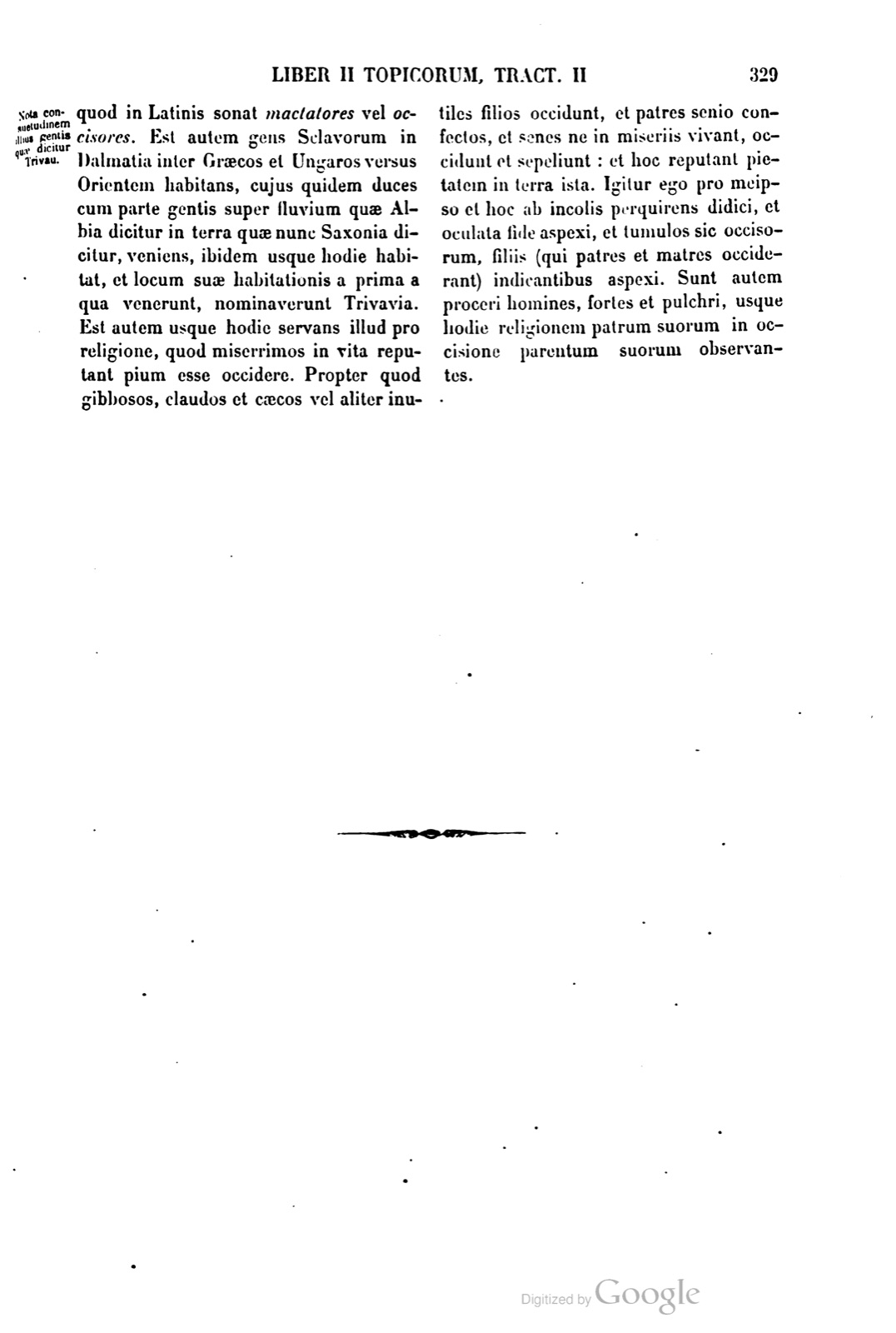
[Marginal label, printed page 329: Nota consuetudinem illius gentis quae dicitur Trivau.]
quod in Latinis sonat mactatores vel occisores. Est autem gens Sclavorum in Dalmatia inter Graecos et Ungaros versus Orientem habitans, cujus quidem duces cum parte gentis super fluvium quae Albia dicitur in terra quae nunc Saxonia dicitur, veniens, ibidem usque hodie habitat, et locum suae habitationis a prima a qua venerunt, nominaverunt Trivavia. Est autem usque hodie servans illud pro religione, quod miserrimos in vita reputant pium esse occidere. Propter quod gibbosos, claudos et caecos vel aliter inutiles filios occidunt, et patres senio confectos, et senes ne in miseriis vivant, occidunt et sepeliunt: et hoc reputant pietatem in terra ista. Igitur ego pro meipso et hoc ab incolis perquirens didici, et oculata fide aspexi, et tumulos sic occisorum, filiis qui patres et matres occiderant indicantibus aspexi. Sunt autem proceri homines, fortes et pulchri, usque hodie religionem patrum suorum in occisione parentum suorum observantes.
[Marginal label, printed page 329: Note the custom of that nation which is called Trivau.]
which in Latin sounds like slaughterers or killers. It is a nation of Slavs dwelling in Dalmatia between the Greeks and the Hungarians toward the East. Certain leaders of this nation, with part of the people, came upon the river which is called the Elbe, in the land which is now called Saxony, and dwell there down to the present day; and they named the place of their habitation Trivavia from the first place from which they came. And down to the present day it preserves this as religion, that they deem it pious to kill those who are most miserable in life. On account of this they kill hunchbacked, lame, and blind sons, or sons otherwise useless, and fathers worn out by old age, and old persons, lest they live in miseries, they kill and bury; and they reckon this piety in that land. Therefore I learned this also by asking the inhabitants for myself, and I saw it with eyewitness assurance, and I saw the mounds of those killed in this way, with the sons who had killed their fathers and mothers pointing them out. But they are tall people, strong and beautiful, observing down to the present day the religion of their fathers in the killing of their parents.

If a page does not appear, its photograph has not been uploaded yet.