Volume 1 · pp. 185–187
Chapter XI. On the property of substance which is that substance, remaining the same in number according to its change, is susceptible of contraries
A marker with ≈ is an approximate page boundary, placed by measure of the text; the page photographs remain the authority. In the paired views, clicking a page marker brings that page into view.
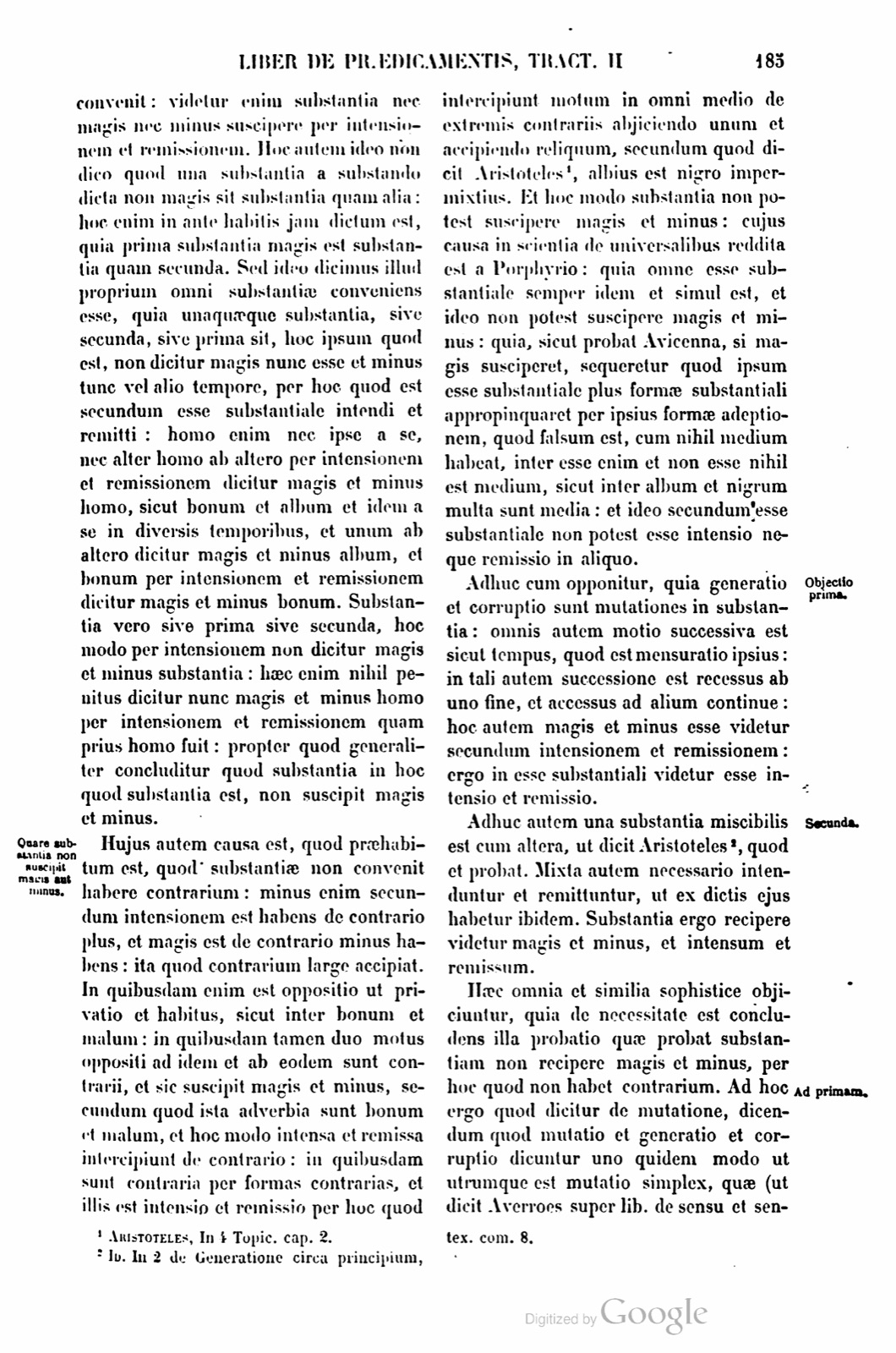
sensato, est finis motus et non motus. Finis autem motus est, in quo motus est in motum esse et non in moveri: et hæc mutatio est simplex inter esse et non esse, inter quæ nihil potest esse medium, et ideo in hoc non est intensio et remissio. Et ideo dicit Aristoteles 1, quod generatio et corruptio non sunt motus sed mutationes. Est autem mutatio modo dicta sive generatio et corruptio immixta motui, qui est alteratio, sicut quando de semine alterato paulatim fit animal vel homo: et tunc intensio et remissio non refertur ad esse et non esse substantiæ, sed potius ad qualitates activas vel passivas quibus perficitur talis generatio. Et hoc est quando qualitates activæ et passivæ materiam alterant et movent prout sunt instrumenta substantialis formæ, quæ ut formans et artifex est in semine. Et tunc forma substantialis dicitur etiam in successione non gratia sui, sed gratia instrumentorum suorum quæ sunt qualitates activæ vel passivæ agentes vel patientes in materia seminis. Et hoc modo dicit Aristoteles 2, quod non est vivum et animal simul, et quod non est animal et homo simul: non quod aliquid sit medium inter vivum et non vivum, vel inter esse animal et non esse animal, et inter esse hominem et non esse hominem: sed quia actione primarum qualitatum prout instrumenta cæli sunt, vel formativæ virtutis quæ est in semine, materia prius accedit ad potentiam et ad actum unius quod est vivum, et postea ad potentiam et ad actum alterius quod est animal: et hoc non est intendi et remitti, sed potius in eadem forma secundum potentiam et actum plus et minus accedere ad veram nominis impositionem.
Quod autem objicitur de mixtione substantiarum animalis, nihil penitus facit ad propositum, quia in mixto non sit intensio et remissio secundum substantias mixtorum, sed secundum qualitates illarum substantiarum. Et ideo intensio refertur ad qualitates et non ad substantias. Patet igitur quod substantiæ convenit nec magis nec minus recipere.
the Sensible, is the end of motion and not motion. But the end of motion is that in which motion is in having been moved and not in being moved; and this change is simple between being and non-being, between which there can be no middle, and therefore in this there is no intension and remission. And therefore Aristotle says 1 that generation and corruption are not motions but changes. But change said in this mode, or generation and corruption, is mingled with motion, which is alteration, as when from altered seed little by little there comes to be an animal or a man; and then intension and remission is not referred to the being and non-being of substance, but rather to the active or passive qualities by which such generation is perfected. And this is when active and passive qualities alter and move matter insofar as they are instruments of substantial form, which as forming and artisan is in the seed. And then substantial form is also said to be in succession, not for the sake of itself, but for the sake of its instruments, which are active or passive qualities acting or undergoing in the matter of the seed. And in this mode Aristotle says 2 that there is not living and animal at once, and that there is not animal and man at once: not because there is some middle between living and not living, or between being animal and not being animal, and between being man and not being man, but because by the action of the first qualities, insofar as they are instruments of heaven, or of the formative power which is in the seed, matter first approaches to the potency and act of one thing, which is living, and afterward to the potency and act of another, which is animal; and this is not to be intensified and remitted, but rather in the same form according to potency and act to approach more and less to the true imposition of the name.
But what is objected concerning the mixture of animal substances does absolutely nothing to the proposal, because in the mixed thing there is not intension and remission according to the substances of the things mixed, but according to the qualities of those substances. And therefore intension is referred to qualities and not to substances. Therefore it is clear that it belongs to substance to receive neither more nor less.
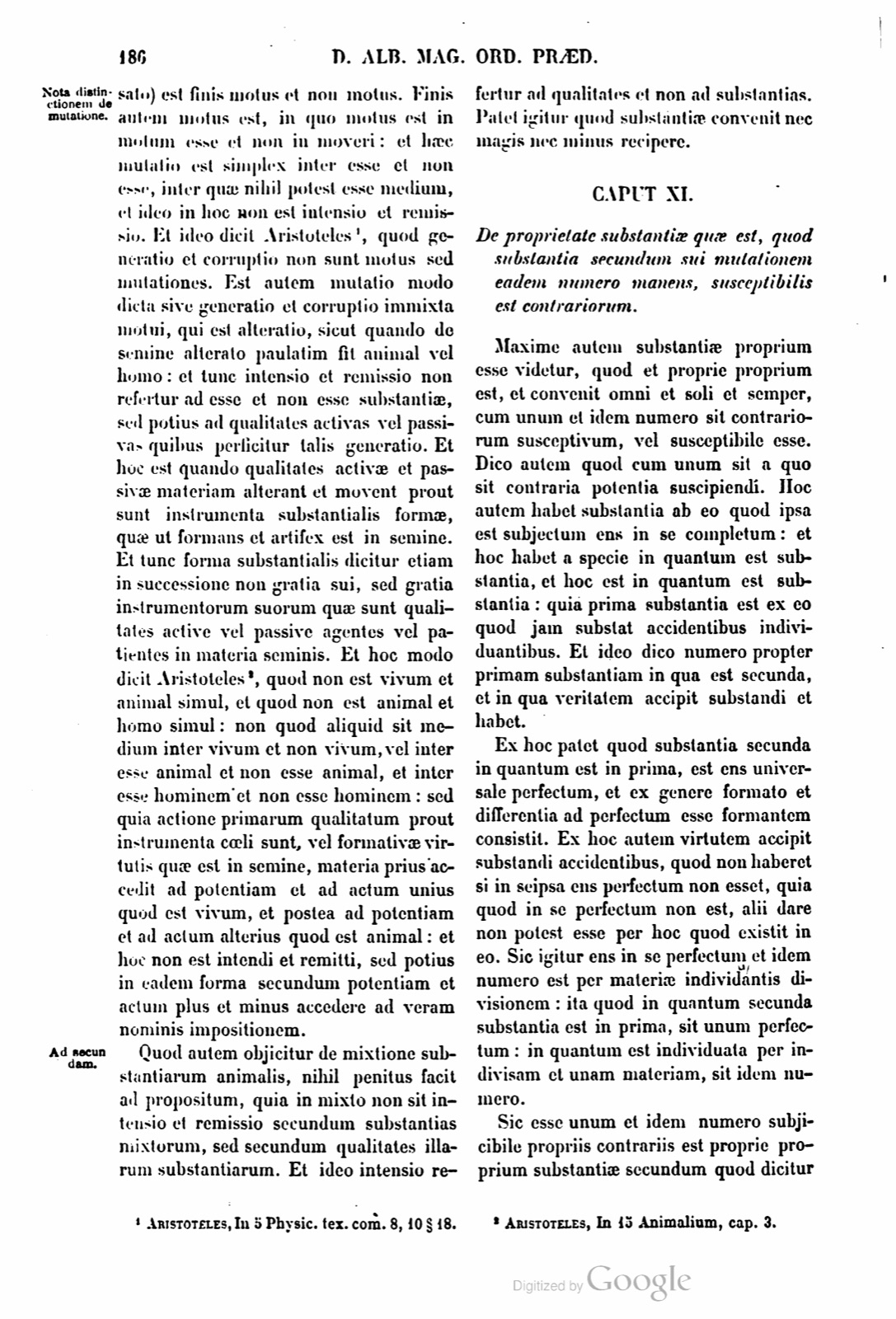
CAPUT XI. De proprietate substantiæ quæ est, quod substantia secundum sui mutationem eadem numero manens, susceptibilis est contrariorum.
Maxime autem substantiæ proprium esse videtur, quod et proprie proprium est, et convenit omni et soli et semper, cum unum et idem numero sit contrariorum susceptivum, vel susceptibile esse. Dico autem quod cum unum sit a quo sit contraria potentia suscipiendi. Hoc autem habet substantia ab eo quod ipsa est subjectum ens in se completum: et hoc habet a specie in quantum est substantia, et hoc est in quantum est substantia: quia prima substantia est ex eo quod jam substat accidentibus individuantibus. Et ideo dico numero propter primam substantiam in qua est secunda, et in qua veritatem accipit substandi et habet.
Ex hoc patet quod substantia secunda in quantum est in prima, est ens universale perfectum, et ex genere formato et differentia ad perfectum esse formantem consistit. Ex hoc autem virtutem accipit substanti accidentibus, quod non haberet si in seipsa ens perfectum non esset, quia quod in se perfectum non est, alii dare non potest esse per hoc quod existit in eo. Sic igitur ens in se perfectum et idem numero est per materiæ individuantis divisionem: ita quod in quantum secunda substantia est in prima, sit unum perfectum: in quantum est individuata per indivisam et unam materiam, sit idem numero.
Sic esse unum et idem numero subjicibile propriis contrariis est proprie proprium substantiæ secundum quod dicitur
CHAPTER XI. On the property of substance which is that substance, remaining the same in number according to its change, is susceptible of contraries.
But it seems most of all to be proper to substance, which is also properly proper and belongs to every substance and to substance alone and always, that, while it is one and the same in number, it is receptive of contraries, or is able to be susceptible of contraries. But I say this when there is one thing from which there is a contrary potency of receiving. But substance has this from the fact that it itself is a subject, a being complete in itself; and it has this from the species insofar as it is substance, and this is insofar as it is substance, because first substance is from the fact that it already underlies individuating accidents. And therefore I say in number on account of first substance, in which second substance is, and in which it receives and has the truth of underlying.
From this it is clear that second substance, insofar as it is in first substance, is a perfected universal being, and consists of formed genus and of difference forming toward perfect being. But from this it receives the power of underlying accidents, which it would not have if in itself it were not a perfected being, because what is not perfected in itself cannot give being to another through the fact that it exists in it. Thus therefore a being perfected in itself and the same in number is through the division of individuating matter: so that insofar as second substance is in first substance, it is one perfected thing; insofar as it is individuated through undivided and one matter, it is the same in number.
Thus to be one and the same in number, subjectible to its proper contraries, is properly proper to substance according as it is called
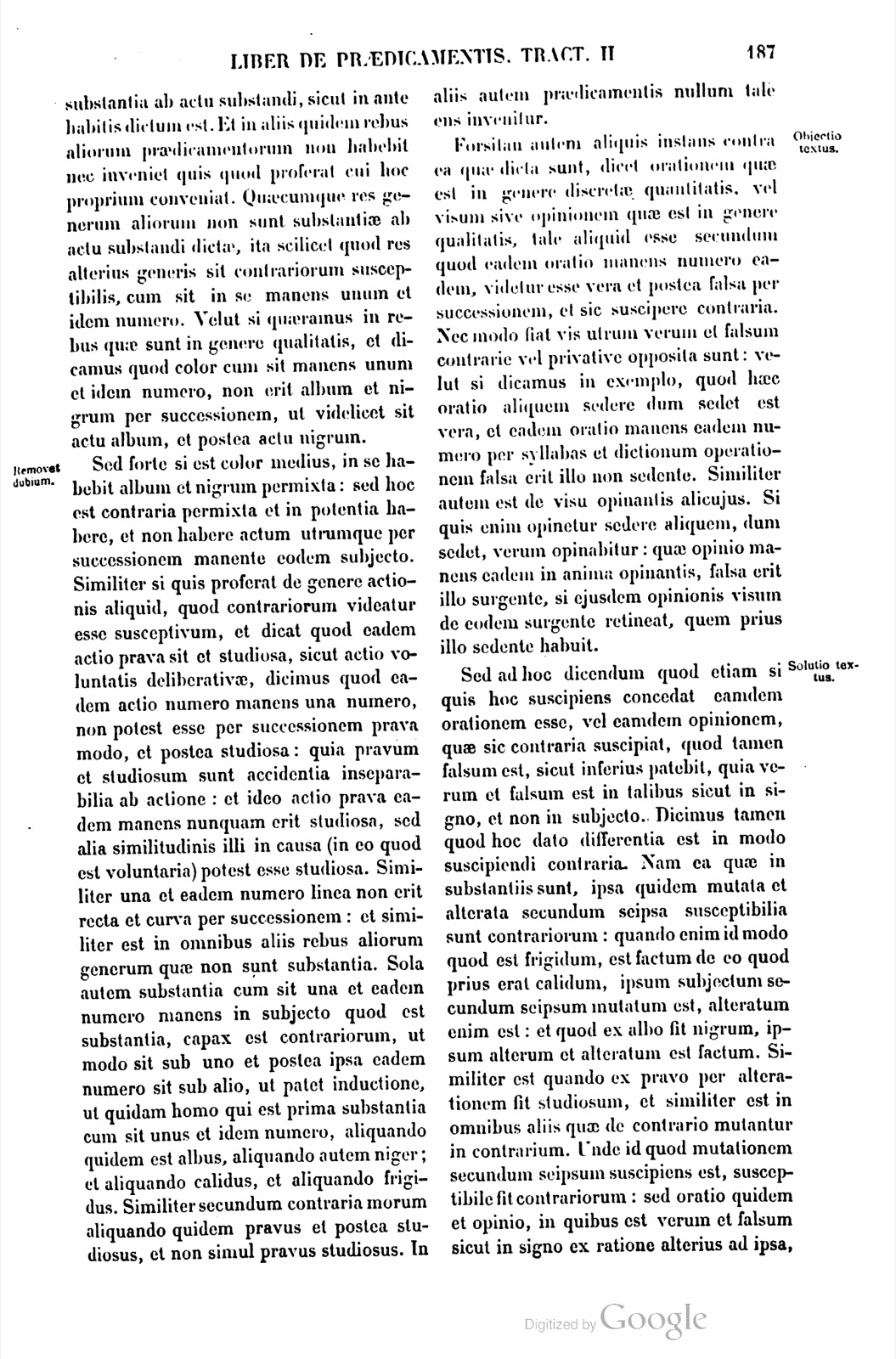
substantia ab actu substandi, sicut in ante habitis dictum est. Et in aliis quidem rebus aliorum prædicamentorum non habebit nec inveniet quis quod proferat cui hoc proprium conveniat. Quæcumque res generum aliorum non sunt substantiæ ab actu substandi dictæ, ita scilicet quod res alterius generis sit contrariorum susceptibilis, cum sit in se manens unum et idem numero. Velut si quæramus in rebus quæ sunt in genere qualitatis, et dicamus quod color cum sit manens unum et idem numero, non erit album et nigrum per successionem, ut videlicet sit actu album, et postea actu nigrum.
Sed forte si est color medius, in se habebit album et nigrum permixta: sed hoc est contraria permixta et in potentia habere, et non habere actum utrumque per successionem manente eodem subjecto. Similiter si quis proferat de genere actionis aliquid, quod contrariorum videatur esse susceptivum, et dicat quod eadem actio prava sit et studiosa, sicut actio voluntatis deliberativæ, dicimus quod eadem actio numero manens una numero, non potest esse per successionem prava modo, et postea studiosa: quia pravum et studiosum sunt accidentia inseparabilia ab actione: et ideo actio prava eadem manens nunquam erit studiosa, sed alia similitudinis illi in causa, in eo quod est voluntaria, potest esse studiosa. Similiter una et eadem numero linea non erit recta et curva per successionem: et similiter est in omnibus aliis rebus aliorum generum quæ non sunt substantia. Sola autem substantia cum sit una et eadem numero manens in subjecto quod est substantia, capax est contrariorum, ut modo sit sub uno et postea ipsa eadem numero sit sub alio, ut patet inductione, ut quidam homo qui est prima substantia cum sit unus et idem numero, aliquando quidem est albus, aliquando autem niger; et aliquando calidus, et aliquando frigidus. Similiter secundum contraria morum aliquando quidem pravus et postea studiosus, et non simul pravus studiosus. In aliis autem prædicamentis nullum tale ens invenitur.
Forsitan autem aliquis instans contra ea quæ dicta sunt, dicet orationem quæ est in genere discretæ quantitatis, vel visum sive opinionem quæ est in genere qualitatis, tale aliquid esse secundum quod eadem oratio manens numero eadem, videtur esse vera et postea falsa per successionem, et sic suscipere contraria. Nec modo fiat vis utrum verum et falsum contrarie vel privative opposita sunt: velut si dicamus in exemplo, quod hæc oratio aliquem sedere dum sedet est vera, et eadem oratio manens eadem numero per syllabas et dictionum operationem falsa erit illo non sedente. Similiter autem est de visu opinantis alicujus. Si quis enim opinetur sedere aliquem, dum sedet, verum opinabitur: quæ opinio manens eadem in anima opinantis, falsa erit illo surgente, si ejusdem opinionis visum de eodem surgente retineat, quem prius illo sedente habuit.
Sed ad hoc dicendum quod etiam si quis hoc suscipiens concedat eamdem orationem esse, vel eamdem opinionem, quæ sic contraria suscipiat, quod tamen falsum est, sicut inferius patebit, quia verum et falsum est in talibus sicut in signo, et non in subjecto. Dicimus tamen quod hoc dato differentia est in modo suscipiendi contraria. Nam ea quæ in substantiis sunt, ipsa quidem mutata et alterata secundum seipsa susceptibilia sunt contrariorum: quando enim id modo quod est frigidum, est factum de eo quod prius erat calidum, ipsum subjectum secundum seipsum mutatum est, alteratum enim est: et quod ex albo fit nigrum, ipsum alterum et alteratum est factum. Similiter est quando ex pravo per alterationem fit studiosum, et similiter est in omnibus aliis quæ de contrario mutantur in contrarium. Unde id quod mutationem secundum seipsum suscipiens est, susceptibile fit contrariorum: sed oratio quidem et opinio, in quibus est verum et falsum sicut in signo ex ratione alterius ad ipsa,
substance from the act of underlying, as was said in the things held before. And indeed in the other things of the other predicaments one will not have, nor will anyone find, something that he may put forward to which this property belongs. Whatever things of other genera are not substances called from the act of underlying, namely in such a way that a thing of another genus would be susceptible of contraries while it is remaining in itself one and the same in number. For example, if we should inquire in the things which are in the genus of quality, and should say that color, since it remains one and the same in number, will not be white and black by succession, so that namely it is white in act and afterward black in act.
But perhaps, if it is an intermediate color, it will have white and black mixed in itself; but this is to have contraries mixed and in potency, and not to have each in act by succession while the same subject remains. Similarly, if someone should put forward something from the genus of action, which seems to be susceptible of contraries, and should say that the same action is wicked and virtuous, as an action of deliberative will, we say that the same action, remaining the same in number and one in number, cannot by succession be wicked now and afterward virtuous, because wicked and virtuous are accidents inseparable from the action; and therefore a wicked action, while remaining the same, will never be virtuous, but another thing of likeness to it in cause, in that it is voluntary, can be virtuous. Similarly, one and the same line in number will not be straight and curved by succession; and similarly it is in all other things of other genera which are not substance. But substance alone, since it is one and the same in number remaining in the subject which is substance, is capable of contraries, so that now it is under one and afterward the very same in number is under another, as is clear by induction, as some man, who is first substance, since he is one and the same in number, is at one time indeed white, but at another time black, and at one time hot and at another time cold. Similarly, according to contraries of morals, at one time indeed wicked and afterward virtuous, and not at the same time wicked and virtuous. But in other predicaments no such being is found.
But perhaps someone, pressing against the things that have been said, will say that a statement which is in the genus of discrete quantity, or an appearance or opinion which is in the genus of quality, is something such that, according to it, the same statement, remaining the same in number, seems to be true and afterward false by succession, and thus to receive contraries. Nor now let force be made over whether true and false are opposed contrarily or privatively; for example, if we say by way of example that this statement, that someone is sitting while he is sitting, is true, and the same statement, remaining the same in number through the operation of syllables and expressions, will be false when he is not sitting. Similarly also it is concerning the appearance of someone opining. For if someone opines that someone is sitting while he is sitting, he will opine truly; and that opinion, remaining the same in the soul of the one opining, will be false when the other rises, if he retains the appearance of the same opinion concerning the same one rising which he had before when he was sitting.
But to this one must say that even if someone receiving this should grant that it is the same statement, or the same opinion, which thus receives contraries, which nevertheless is false, as will be clear below, because true and false are in such things as in a sign, and not in a subject. Nevertheless we say that, with this granted, there is a difference in the mode of receiving contraries. For those things which are in substances, when they themselves have been changed and altered according to themselves, are susceptible of contraries: for when that which now is cold has been made from that which before was hot, the subject itself according to itself has been changed, for it has been altered; and what from white becomes black has itself been made other and altered. Similarly it is when from wicked by alteration something becomes virtuous, and similarly it is in all other things which are changed from contrary into contrary. Hence that which is receiving change according to itself becomes susceptible of contraries; but statement indeed and opinion, in which there is true and false as in a sign from the account of another toward them,
If a page does not appear, its photograph has not been uploaded yet.